by in News

Bruegel: Without refining or delaying CBAM for electricity, EU risks market integration, security of supply

Unless the rules are refined for the electricity sector, the Carbon Border Adjustment Mechanism (CBAM) risks undermining the European electricity market integration and security of supply, Brussels-based think tank Bruegel warned.

Bruegel has analyzed the impacts of the application of CBAM, set for January 1, 2026. The tax will apply to steel, cement, iron, aluminium, fertilizers, hydrogen, electricity, and also to the cross-border trade in electricity.

The think tank proposes the application of CBAM in the electricity sector to be reconsidered, or at least for it to be postponed until 2028.

“Including electricity from January 2026 risks undermining European electricity market integration and security of energy supply, while the climate benefits are unclear. A delay could form part of a constructive compromise in an ongoing CBAM revision,” Ben McWilliams, Rouven Stubbe and Georg Zachmann wrote.

Ukraine and the Western Balkans will face implied export penalties of EUR 70-80 per MWh

The trading partners affected by CBAM on electricity are the United Kingdom, Morocco, the Western Balkans – Albania, BiH, Kosovo*, Montenegro, North Macedonia, and Serbia – Ukraine, Moldova and Turkey.

According to the analysis, Ukraine and the Western Balkans will face implied export penalties of EUR 70 per MWh to EUR 80 per MWh. It will significantly reduce trade with the EU, the authors stressed.

Ukraine’s electricity exports to the EU are expected to drop more than 60% from the level in a scenario without CBAM – from 6 TWh to 2.5 TWh, they added.

Additional trade barriers on the EU’s eastern borders would slow electricity market integration.

The export of solar power from Greece to other EU countries could also be affected by CBAM

“Falling average electricity prices, lower market values for renewables and increased price volatility would also reduce incentives to invest in renewable assets in these countries. Moreover, the Western Balkans is an important transit region for intra-European electricity trading. The export of solar power from Greece to other EU countries, for example, could also be affected by CBAM,” the analysis reads.

The authors said the policy goal of integrating Energy Community countries into the EU’s internal energy market is strategically more important than addressing carbon leakage and argued that, in the long run, it is more important from a climate perspective, too.

Not clear whether the application of CBAM to the electricity trade will deliver

They recalled that the purpose of CBAM is to reduce the risk of so-called carbon leakage, as well as to encourage third countries to implement domestic carbon pricing.

“However, it is not clear that the application of CBAM, as currently designed, to the electricity trade will deliver on either front,” the authors said. They named two reasons why carbon leakage in the electricity sector is problematic. The free allowances issued to electricity producers under the ETS were already phased out in 2013 – implying that electricity is not considered by the European Commission to be a sector at serious risk of carbon leakage.

The current CBAM legislation is not clear enough

Secondly, the current CBAM legislation is not clear enough. Unless hard-to-fulfil conditions apply, the Regulation (EU) 2023/956, which established CBAM, proposes that default carbon emission values be applied.

The outcome is that the values in question are calculated according to the last five-year average CO2 intensity of electricity produced from fossil fuels. It is problematic because electricity is exported when prices in one grid are lower than in another, which typically happens when renewables output is high, the think tank underlined in its analysis.

It is also unfair because power systems are evolving – production from fossil fuels is decreasing and renewables generation is increasing.

The coupling of the electricity markets of Energy Community countries is unlikely before 2028

Regarding CBAM’s intention to push third countries to introduce carbon pricing, the authors said that the first developments indicate some results.

However, they explained that an exemption for the electricity sectors of third countries is available under certain conditions, including electricity market coupling and the introduction of an ETS with an equivalent price to the EU ETS by 2030.

The CBAM charge sets off in January 2026, and the coupling of the electricity markets of Energy Community countries is unlikely before 2028, which means that an exemption for electricity cannot be secured before that date under current rules, the analysis underlined.

The solution

The authors pointed out that the potential gains from including electricity in CBAM are limited, compared to the frictions it will create. They suggested to the EU to follow the lead of the UK, which doesn’t plan to include electricity in its own CBAM, and thus to drop electricity from its sectoral coverage.

Otherwise, the authors proposed a revision of the calculation of default carbon emissions, and application delay until 2028 with additional analysis on the risk of carbon leakage in the electricity sector.

Regarding the default carbon emissions, five-year average CO2 intensity should be substituted for average grid emission factors calculated on an hourly or 15-minute basis, administered by the European Network of Transmission System Operators for Electricity (ENTSO-E) and national transmission system operators.

The application of CBAM to electricity should be delayed until 2028 to avoid disruption to the electricity trade and to give more time for the introduction of domestic carbon pricing and the coupling of electricity markets, the authors of the analysis concluded.
* This designation is without prejudice to positions onstatus and is in line with UNSCR 1244/99 and the ICJ Opinion on the Kosovo declaration of independence.
by in News

ACER asks Greek authorities to probe power market for manipulation

The European Union Agency for the Cooperation of Energy Regulators (ACER) is warning of signs of manipulation in Greece’s day-ahead electricity market (DAM) registered during the summer of 2024.

The region of Southeastern Europe experienced several months of high electricity prices, with average monthly levels close to EUR 200 per MWh in the case of Greece.

ACER used data from the Hellenic Energy Exchange (HEnEx) to calculate the hourly day-ahead demand and supply curves for the Greek bidding zone in the said period.

It included 93 observations, meaning 93 pairs of demand and supply curves, from June 15 to September 15 of last year.

Based on the above, four scenarios were formed, simulating and analyzing market conditions on different days and times. The baseline included all the cases and the clearing price was always above EUR 100 per MWh.

The so-called stressed scenario involved 17 observations, when prices climbed close to EUR 500 per MWh, and the critical scenario had two observations, with prices of EUR 900 per MWh.

There was even an extreme scenario,  covering September 4, when at 20:00 the price reached its maximum, with EUR 942 per MWh.

650 MWh would have made enormous difference

ACER noted that if an extra 650 MWh of energy were available during that hour, it would have reduced the price by a huge EUR 630 per MWh to EUR 311 per MWh.

The extra power could have arrived either internally from peak power plants, or through interconnections with neighboring countries.

The result is similar for the stressed scenario – 420 per MWh lower, and the baseline, when the level would have come in at 100 per MWh down from the actual prices.

Capacity withholding as a possible cause

The regulator added that during times of pressure in the system, the market power of producers became much more pronounced and their bidding behavior changed.

Based on the above, ACER reaches two conclusions. One, interconnections in the region must be utilized based on the 70% European rule to bring prices down.

Secondly, Greek authorities need to initiate a probe into whether market power was used to manipulate or abuse dominant positions, for example in the form of capacity withholding.

ACER also said data from HEnEx and the Regulatory Authority for Energy, Waste and Water (RAAEY or RAEWW) are incomplete and that more transparency is necessary moving forward.

by in News

Under Reform Agenda, BiH commits to aligning electricity prices with market

By adopting the Reform Agenda, Bosnia and Herzegovina committed to liberalizing the electricity market, aligning electricity prices with market levels, and supporting the green transition through renewable energy sources and energy efficiency.

The Council of Ministers of Bosnia and Herzegovina adopted the Reform Agenda, after a delay longer than one year, and submitted it to the European Commission. It made the move just as the deadline, set by the commission, was about to expire on September 30.

If it failed to adopt the document, BiH would have lost EUR 108 million out of a total of EUR 976.6 million that was allocated to the country under the Growth Plan for the Western Balkans, worth around EUR 6 billion overall. Due to the delay, BiH already lost EUR 108 million in July.

The first step in price harmonization is to conduct a study on different scenarios

One of the obligations from the Reform Agenda is to align household electricity prices with market prices in the region and the European Union by 2027, domestic media reported.

The measure is aimed at making price formation more transparent and integrating BiH better into the regional and European electricity markets.

The first step in price harmonization would be to conduct a study on different scenarios for price deregulation for households. It will serve as a tool to plan price increases. The study is expected to be completed before the end of the year.

The current price of electricity in BiH is below ten eurocents

According to the latest Eurostat data, for the second half of last year, the price of electricity for households in BiH was below ten eurocents. Prices in the European Union ranged from ten eurocents in Hungary to 40 in Ireland.

The European Commission is required to assess the Reform Agenda and approve it if it matches expectations. Payments are directly linked to the measures that governments in the region vow to implement.

Of note, in early July, the European Commission proposed the first tranches from the support package, worth EUR 87.7 million in total, for projects in Albania, Montenegro, and Serbia.

by in News

Von der Leyen: EU needs more homegrown renewables with nuclear as baseload

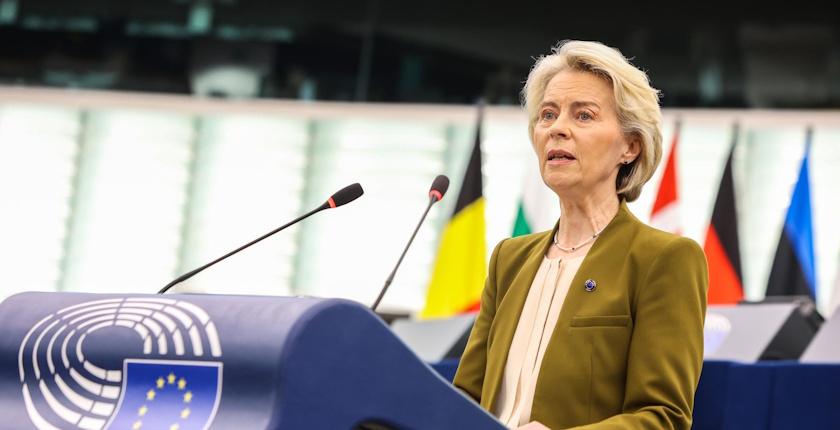
European Commission President Ursula von der Leyen delivered her 2025 State of the Union address at the European Parliament in Strasbourg. She said the single energy market would be completed and pointed out that clean homegrown energy is a tool to lower energy prices.

Ursula von der Leyen said the European Union’s greatest asset is the single market, but that it remains incomplete. The IMF, she noted, has estimated that the internal barriers within the single market are equivalent to a 45% tariff on goods, and 110% on services.

Most gaps are in three domains: finance, energy, and telecommunications.

“We need clear political deadlines. This is why we will present a single market roadmap to 2028. On capital, services, energy, telecoms,” she stated.

Energy bills are still a real source of anxiety for millions of Europeans

The EU’s top official said the commission would put forward a series of packages on affordability and the cost of living. One would be for energy.

Von der Leyen recalled that the EU managed to stabilize prices and secure supply during the energy crisis, and insisted that the 27-member bloc is now on the path to energy independence.

But, she told EU lawmakers, energy bills are still a real source of anxiety for millions of Europeans.

Von der Leyen unveiled an initiative called Energy Highways

“We know what drove prices up: dependency on Russian fossil fuels. So it is time to get rid of dirty Russian fossil fuels. And we know what brings prices down: clean homegrown energy. We need to generate more homegrown renewables – with nuclear as a baseload,” Von der Leyen stressed.

She reiterated that the commission would propose a grids package to strengthen infrastructure and speed up permitting.

Von der Leyen unveiled an initiative called Energy Highways. “We have identified eight critical bottlenecks in our energy infrastructure. From the Øresund Strait to the Sicilian Canal. We will now work to remove these bottlenecks one by one,” the European Commission president asserted.

by in News

Severe electricity price spikes in SEE in summer 2024 could have been avoided – report

If 70% of the physical capacity of all power lines had been offered for cross-zonal trade by transmission system operators, half of the most severe price spikes or 147 spikes could have been avoided in South-East Europe in the summer of 2024, according to the latest report of the EU Agency for the Cooperation of Energy Regulators (ACER).

The 2025 Monitoring Report examines the role of cross-zonal electricity trade in shaping a more integrated and efficient European Union electricity market. It also tracks progress, challenges and benefits in the implementation of the 70% requirement.

During the summer of 2024, the EU saw a significant increase in electricity prices, affecting mostly bidding zones in central and south-eastern Europe. Some countries experienced an unseen price increase on power exchanges, from 50% to 170%.

ACER noted that prices particularly spiked during the evening hours, reaching up to EUR 1,000 per MWh.

The prices were highest in Hungary, Romania, Bulgaria and Greece

Prices were the highest in Hungary, Romania, Bulgaria and Greece. At the time, Prime Minister of Greece Kyriakos Mitsotakis wrote to European Commission President Ursula von der Leyen. Greece, Romania and Bulgaria were preparing a proposal for an intervention mechanism.

According to ACER’s report, during the high-price events, spreads at several bidding zone borders in central Europe rose to unprecedented levels, signalling insufficient availability of cross-zonal capacity to accommodate the market’s need for cross-zonal exchanges.

The 70% requirement would have enabled an average reduction of peak prices by up to EUR 78 per MWh

The authors’ comparison of the average realized day-ahead prices during the evening peaks with the counterfactual scenario showed a considerable mitigation of prices.

It revealed that the implementation of the 70% requirement would have enabled an average reduction of peak prices by up to EUR 78 per MWh in central and south-east bidding zones, underlining the dampening effect of cross-zonal trade, the document reads.

According to ACER, higher availability of cross-zonal capacities in central Europe would have mitigated both the frequency and the severity of the high price events, as cross-zonal trade provides flexibility to the system.

End-2025 deadline is at risk

The 2019 Clean Energy Package introduced a legal requirement on EU electricity transmission system operators (TSOs) to offer at least 70% of their physical capacity on all lines of relevance for cross-zonal trade.

The obligation is intended to maximise cross-zonal trade and mitigate its discrimination over internal trade, ACER explained.

The 70% requirement ensures that domestic electricity flows are not prioritized over cross-border trade, mitigates price spikes, such as those seen in summer 2024 across South-East Europe, and brings significant additional welfare to EU electricity markets, it added.

The agency stressed that the end-2025 deadline is at risk.

by in News

Western Balkans power markets: hope for coupling with EU, concerns about CBAM

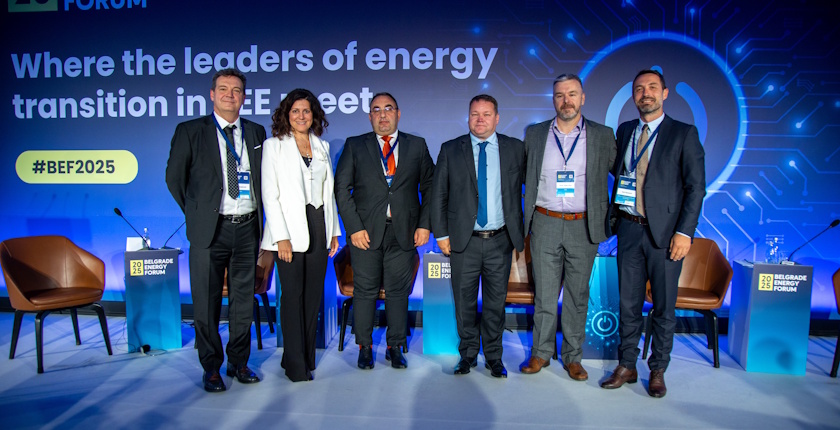
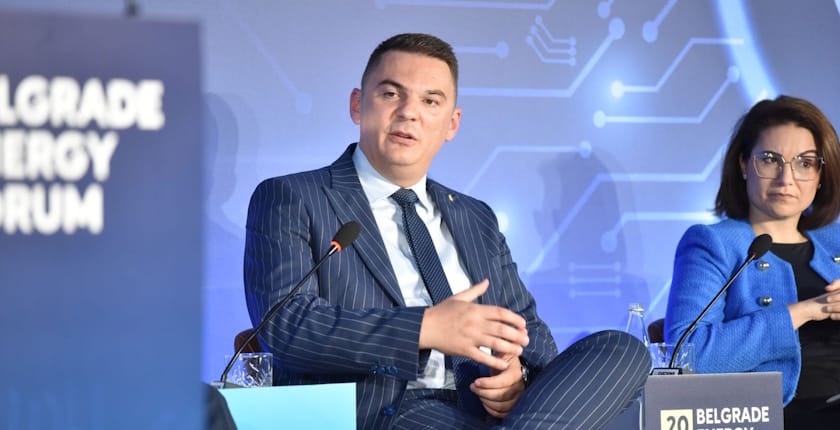
Energy Community contracting parties are doing their best to meet the challenging requirements and use the opportunity to couple their electricity markets with the European Union in Q4 2026 or Q1 2027. Apart from other benefits, coupling could represent a strong incentive for investment in renewables. However, the introduction of CBAM could be a step back for electricity markets, investments and energy transition in the region, according to representatives of transmission system operators, regulators, and power exchanges who spoke at Belgrade Energy Forum 2025.

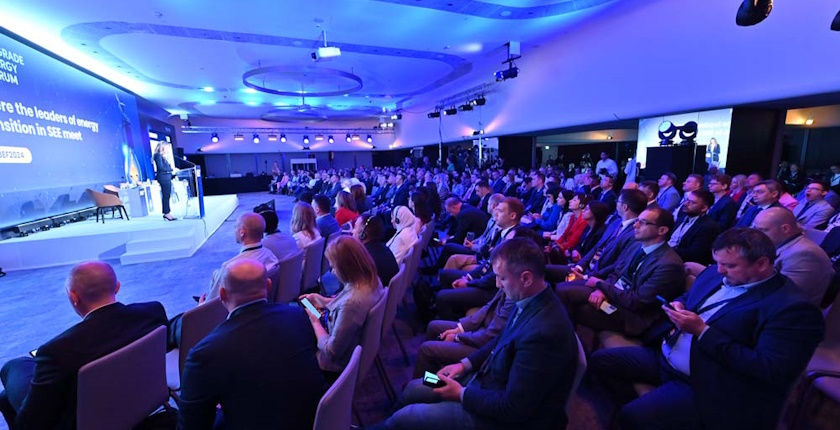
The third Belgrade Energy Forum, BEF 2025, organized by Balkan Green Energy News, welcomed four hundred participants from more than 30 countries from the region, Europe, and beyond.

Participants in the panel called Integration of Western Balkans electricity markets into internal European market through market coupling were:

  • Anže Predovnik, ADEX Group, CEO,
  • Jasmina Trhulj, Energy Community Secretariat, Head of Electricity Unit,
  • Ivan Asanović, TSO Crnogorski Elektroprenosni Sistem (CGES), CEO,
  • Marko Bislimoski, Energy, Water Services and Municipal Waste Management Services Regulatory Commission of the Republic of North Macedonia (RKE or ERC), President,
  • Zoran Vujasinović, EU Agency for the Cooperation of Energy Regulators (ACER), Policy Officer.

They discussed very hot topics including market coupling, the Carbon Border Adjustment Mechanism (CBAM), and blackouts.

Market coupling: The first go-live window scheduled for Q4 2026 or Q1 2027

Dejan Stojčevski and Jasmina Trhulj (photo: Balkan Green Energy News)

In his opening remarks, panel moderator Dejan Stojčevski, CTO of the SEEPEX power exchange, emphasized the importance of integrating the electricity markets of the Energy Community contracting parties (EnC CPs) with the EU internal electricity market as a key element in the energy transition process.

“Market coupling, which is a prerequisite for a successful energy transition, brings about greater transparency, increased competition, the establishment of a unified regional reference price, and stronger incentives for investment in renewable energy sources,” he stressed.

However, in his words, the integration is not without challenges. Countries in the region must address several issues, including the transposition of relevant regulations, the designation of nominated electricity market operators (NEMOs), and the operational connection process through the implementation of local projects, Stojčevski underlined.

Trhulj: The transposition of EIP enables accelerated electricity market integration into the single EU electricity market

The most important regulation is the Energy Integration Package (EIP). Jasmina Trhulj, Head of Electricity Unit of the Energy Community Secretariat, recalled that the transposition of EIP by the contracting parties enables their accelerated electricity market integration into the single EU electricity market before accession into the EU takes place.

To achieve that, EnC CPs have to adopt and implement the laws in a compliant manner, including extending ACER’s jurisdiction to the cross-border issues between EU member states and EnC CPs, she noted.

With regard to regional methodologies, ACER is competent to the extent that neighboring EU countries are involved, which is most often the case.

The preparation of the Market Coupling Operator Integration Plan is underway

Another important piece of the puzzle is the Market Coupling Operator Integration Plan (MCO IP), which will set guidelines and timelines for the implementation of the day-ahead and intraday market coupling of EnC CPs. Trhulj confirmed that the preparation is currently underway.

According to the draft MCO IP, the first go-live window is scheduled for Q4 2026 or potentially by Q1 2027, provided that the following prerequisites are met, she revealed.

The prerequisites are the transposition of the EIHP completed and its compliance verified; NEMO designated in a compliant manner; operational readiness of transmission system operators (TSOs) and NEMOs confirmed; and full contractual adherence completed.

“Provided that the legislation is transposed and its compliance verified and MCO IP approved by ACER, a NEMO may submit requests for accession to market coupling. This is followed by an accession process lasting up to 18 months,” Trhulj explained.

Serbia, Montenegro “locked and ready” for the first go-live window

Anže Predovnik and Zoran Vujasinović (photo: Balkan Green Energy News)

ADEX Group CEO Anže Predovnik shared Slovenia’s experience in various market coupling processes within the internal European electricity market, including different products such as day-ahead, intraday continuous, and intraday auction market coupling.

He particularly emphasized the importance of market coupling and its impact on liquidity, transparency, competition, and increased investments in renewable energy sources.

Predovnik presented HUPX’s integration into the ADEX Group, which was completed in late 2024, and highlighted the benefits ADEX brings to the market and its participants through the unification of the power exchanges of Slovenia, Serbia, and Hungary.

Enhanced transparency, the use of a unified trading and clearing technology, a single market operation, a harmonized market access process across the ADEX markets, alignment of rules, and improved client services are just some of the advantages offered by the formation of ADEX Group, he pointed out.

One immediate benefit already implemented is that market participants active in one ADEX market do not pay entry fees when accessing another market within the group.

Predovnik: Market participants active in one ADEX market don’t pay entry fees when accessing another market within the group

“Additionally, all resources within the group are contributing to the implementation of the local project for coupling the Serbian and Hungarian day-ahead markets, with the project expected to be completed at the first available slot, anticipated for Q4 2026 or Q1 2027,” Predovnik noted.

CEO of Montenegro’s TSO Crnogorski Elektroprenosni Sistem (CGES) Ivan Asanović also spoke about the market coupling project timeframe.

After compliance of the transposition of EIP is verified and provided that the necessary adaptations of the Day-ahead Operations Agreement (DAOA) and the Intraday Operations Agreement (IDOA) regarding the extension to the price zones of EnC CPs are adopted at the Market Coupling Steering Committee (MCSC) level, CGES and power exchange BELEN could sign these contracts, becoming non-operating parties in the MCSC, he revealed.

According to Asanović, obtaining the status in MCSC is a precondition for the submission of a request for change, and it is extremely important to carry it out in a timely manner, to complete the process, which lasts 18 months, until Q4 2026 or Q1 2027.

Of note, a week ago, North Macedonia’s Minister of Energy, Mining and Mineral Resources Sanja Božinovska said it is realistic to aim for coupling in the fourth quarter of 2026 or the first quarter of 2027.

CBAM and blackouts are looming

Anže Predovnik, Zoran Vujasinović and Ivan Asanović (photo: Balkan Green Energy News)

Apart from market coupling, the stakeholders in the region are also concerned about the developments regarding the Carbon Border Adjustment Mechanism (CBAM) as well as about blackouts.

Dejan Stojčevski (SEEPEX) sees the potential effect of CBAM on the electricity sector, starting on January 1, 2026, as a major issue.

The mechanism could pose a serious threat to the overall energy transition in the region, he added.

In addition, it is crucial to discuss system security and the root causes of the blackouts that recently occurred across Europe, Stojčevski pointed out.

“As there was no announcement that the application of CBAM will be postponed, we are operating under the assumption that it will apply to electricity as of January 1, 2026, given that the contracting parties will not be ready for market coupling by that date,” Jasmina Trhulj (Energy Community Secretariat) underlined.

Trhulj: There is a risk that certain stakeholders may shift their trading activities and renewable investments away from the region

In her words, it creates a number of risks to the functioning of the regional electricity market and the energy transition process that the secretariat has been raising on behalf of the contracting parties, electricity traders, power utilities, renewable energy developers, and other stakeholders.

She warned of a risk that certain stakeholders shift their trading activities and investments in renewables away from the region, thereby potentially undermining integration and decarbonization efforts.

Dejan Stojčevski, Jasmina Trhulj and Marko Bislimoski (photo: Balkan Green Energy News)

In addition, market participants are raising the issue of the considerable uncertainty regarding the exact technical implementation of CBAM for electricity – inherently unique within a group of goods, Trhulj recalled.

It is crucial for the countries in the region to speak openly with Brussels, said Marko Bislimoski, president of the Energy, Water Services and Municipal Waste Management Services Regulatory Commission of the Republic of North Macedonia. In addition, they need to come up with an action plan, together with the Energy Community Secretariat, defining the phases for the introduction of carbon pricing, in his view.

Bislimoski: We need to define the items for which we need financial assistance from the EU

“We need a serious approach and to say what we can do ourselves, and then immediately make it happen. At the same time, we need to define the items for which we will need financial assistance from the EU,” Bislimoski asserted.

The panelists agreed the region needs to present a single coordinated position on CBAM at an upcoming meeting on July 1 in Brussels.

Bislimoski recalled that North Macedonia recently adopted the new Law on Energy and added that bylaws would follow. The end goal is to provide security and stability in the transmission and distribution of electricity like in the EU, but also to lower the prices of electricity for consumers, he added.

Asanović: It is necessary to take urgent measures to improve coordination in the region

Regarding the issue of blackouts, Ivan Asanović (CGES) emphasized the importance of coordinating transmission capacities and maintenance plans for transmission lines across the wider Balkan region.

He recalled the challenging operational conditions experienced last winter, when exchanges planned along the Greece-Bulgaria-Romania-Hungary corridor were largely physically realized via the southwestern Balkans, leading to significant network stress. Such situations must be avoided through more comprehensive coordination, he warned.

It is necessary, in his words, to take urgent measures to improve coordination in the region to alleviate the current problems until the establishment of the mechanisms and structures prescribed in the CACM and SOGL regulations.

“These rules will fully harmonize the operation of the system in the region with the rest of Europe and significantly improve the security of functioning and create the necessary preconditions for connecting the markets of the WB6 countries with the single European market,” Asanović stressed.

Vujasinović (ACER): Full operational readiness of CCRs is not a prerequisite for market coupling

Zoran Vujasinović and Ivan Asanović

TSOs made a breakthrough in December. They agreed on a Joint Declaration on Regional Coordination. The declaration, facilitated by ENTSO-E, outlined a new comprehensive cooperation framework for the Western Balkans TSOs within South-East Europe.

Zoran Vujasinović, Policy Officer at the EU Agency for the Cooperation of Energy Regulators (ACER), mentioned that in January the body submitted a request to the TSOs to propose the configuration of capacity calculation regions (CCRs), incorporating the bidding zone borders of EnC CPs within the framework of the EU CCR methodology.

The TSOs’ proposal is expected by the end of July, after which ACER will issue a decision within six months, he said.

The current TSO proposal envisions:

  • the inclusion of the southeastern bidding zone borders in the Balkans into the South East Europe (SEE) region, which already includes the borders between Romania, Bulgaria, and Greece.
  • the formation of a separate region in the northwestern part (covering the mutual borders of bidding zones of Serbia, Bosnia and Herzegovina, and Montenegro, as well as their bidding zone borders with the EU), with a perspective of integration into the Central Europe region.
  • the Italy-Montenegro region and the Eastern Europe region (including Ukraine, Moldova, Poland, Slovakia, Hungary, and Romania) to remain unchanged, as defined by the CACM Regulation of the Energy Community.

According to Vujasaninović, ACER’s position is that the entire region should, over time, transition to flow-based capacity calculation and allocation methodologies. However, the initial step will be participation in market coupling based on Net Transfer Capacity (NTC) values.

“It is important to note that full operational readiness of CCRs is not a prerequisite for market coupling. The coupling can proceed based on existing NTC calculation procedures, provided that regional operational security is not compromised at any time and that maximum coordination in capacity calculation is ensured,” Vujasinović stressed.

by in News

North Macedonia aims for market coupling with EU by first quarter of 2027

North Macedonia plans to finish market coupling with Greece and the European Union in the fourth quarter of 2026 or in the first quarter of 2027, according to Minister of Energy, Mining and Mineral Resources Sanja Božinovska.

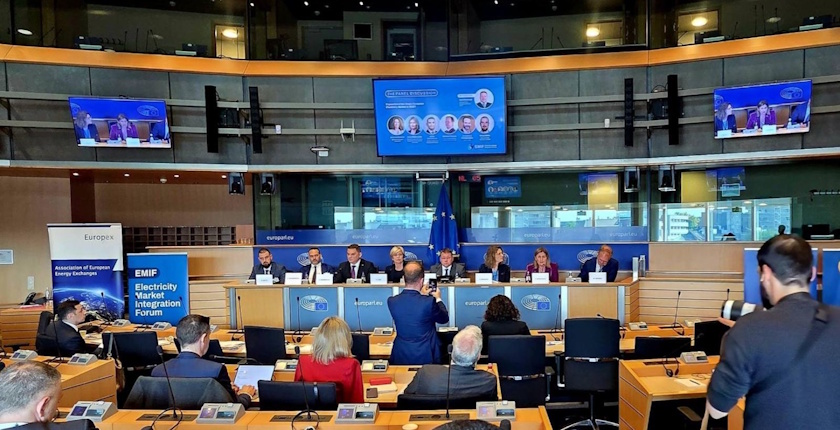
“The integration of the North Macedonian organized electricity market into the Single European Market is of strategic importance for the country,” Sanja Božinovska stressed during the second edition of the Electricity Market Integration Forum – Taking Implicit Electricity Market Coupling Beyond EU Borders, held at the European Parliament in Brussels.

The coupling, in her words, would increase market liquidity and secure competitive prices and greater security of supply. It will directly impact economic stability and predictability, Božinovska added.

Additionally, the minister noted that integration with the European market could provide protection from the financial effects of the EU’s Carbon Border Adjustment Mechanism (CBAM), which would bring significant economic benefits for North Macedonian companies.

The market coupling process began in 2017-2018

She recalled that the market coupling process began back in 2017-2018, adding it is now in a delicate phase, focusing on the transposition of EU legislation and the implementation of the market coupling operator implementation plan (MCO IP) under the jurisdiction of the European Union Agency for the Cooperation of Energy Regulators (ACER).

“Due to uncertainties surrounding the impact of CBAM, it was imperative for market coupling to occur before 2026. Although we are now beyond that timeframe, it is realistic to aim for coupling between the fourth quarter of 2026 and the first quarter of 2027,” Božinovska noted.

During the panel session dedicated to the expansion of the European electricity market by 2026, Božinovska engaged in discussions with high-level representatives from the European Parliament, ACER, regional power exchanges, and institutions from the Western Balkans.

Of note, a week ago North Macedonia adopted the Law on Energy.

It will bring numerous benefits including a liberalized electricity market ensuring fairer prices and more choice for consumers, the introduction of smart meters for more accurate consumption measurement, and daily insight for consumers into their electricity usage, according to the Government of North Macedonia.

Artur Lorkowski, director of the Energy Commnunity Secreatariat , Sanja Božinovska i Zoran Gjorgievski, MEMO CEO
by in News

Investors seek to install 5.5 GW of renewables in Montenegro – minister

Montenegro has received applications for building solar power plants and wind farms with a total capacity of 5.5 GW, Admir Šahmanović, the Minister of Energy and Mining, said at Belgrade Energy Forum 2025.

Montenegrin Minister of Energy and Mining Admir Šahmanović said the country has made significant progress in shaping its regulatory framework.

Montenegro has passed new laws on energy and renewable energy sources, while a draft law on the exchange of electricity and natural gas has been prepared.

“We are currently drafting a national energy and climate plan, which will be finalized by the end of next month,” Šahmanović stressed.

Montenegro currently has about 1,000 MW of renewable energy capacity

He also recalled that the government is preparing renewable energy auctions in collaboration with the European Bank for Reconstruction and Development (EBRD). The minister expects these auctions will significantly boost investments in renewables.

According to Šahmanović, the country has made considerable efforts to improve the investment climate.

“As a result, we have received 45 applications for the construction of renewable power plants with a combined capacity of 5.5 GW. For comparison, the country’s current capacity is slightly over 1 GW, which demonstrates our success,” he explained.

A memorandum on market coupling with Italy would be signed very soon

He said that a memorandum on market coupling with Italy would be signed next month. “We will also discuss the installation of another subsea cable for electricity transmission between Montenegro and Italy,” Šahmanović noted.

Montenegro plans to couple its day-ahead electricity market with Italy, linking it to the single European market. It previously considered two options for its first market coupling: with Serbia and with Albania, Kosovo*, North Macedonia, and Greece.

The third Belgrade Energy Forum 2025 (BEF 2025), started today welcoming four hundred participants from more than 30 countries from the region, Europe and beyond. The two-day conference is organized by Balkan Green Energy News.

by in News

Belgrade Energy Forum 2025 – 50 speakers at eight panels to track pace of SEE energy transition

The agenda of the third Belgrade Energy Forum, taking place on May 14-15, has been finalized with the addition of further prominent energy experts and companies. The conference, organized by Southeast Europe’s leading energy news portal, Balkan Green Energy News, will feature eight panels covering key topics in the energy sector, with an impressive lineup of speakers. Make sure you register on time via this link.

The Belgrade Energy Forum will once again be a meeting place for representatives of regional and international institutions and organizations, as well as the business community from across the region, Europe, and the world.

Eight panels featuring more than 50 speakers will offer an overview of the current challenges in the energy sector. Conference participants will hear in-depth analyses of the current situation, but also projections for the future. The thread that connects everything at this year’s BEF is digitalization – it permeates energy production, consumption, and storage and allows enough flexibility for the stable functioning of the energy systems of the future, where renewable energy will dominate.

Chikán: Electricity knows no borders

One of the key speakers at the conference, Alteo Group CEO Chikán Attila, will lead the company’s high-level delegation. Alteo has recently launched a regional expansion drive, aiming to establish a green platform of up to 2 GW in energy production, including operation, software, maintenance, storage, and waste management.

The Hungarian company primarily targets its home market, Slovakia, Croatia, and Serbia.

“Electricity knows no borders, therefore partnerships and collaborations among energy market players are essential, even at the regional level. Such cooperation is vital to ensuring the security and reliability of electricity supply, facilitating the integration of renewable energy sources, and providing essential digital solutions, supported by expertise and professional know-how,” Chikán stressed.

Decarbonization strategies for power generation in Southeast Europe 2040/2050

  • Dejan Paravan, CEO, GEN Energija
  • Dušan Živković, CEO, EPS
  • Eric Scotto, CEO, AKUO
  • Milutin Đukanović, Chairman, EPCG Board of Directors
  • Neda Lazendić, Country Manager, WV-International

Although at the heart of national energy systems, state-owned power utilities are faced with an environment that has changed and continues to change rapidly. The key shift is the entry of private capital into electricity production through the construction of solar power plants and wind farms.

The energy transition, at this stage, requires cooperation between state power utilities and private companies. With decarbonization as the main objective, the key challenge lies in choosing appropriate strategies and electricity generation technologies.

Moderating the panel will be Dražen Jakšić, Director of the Energy Institute Hrvoje Požar (EIHP).

“The transition to a low-carbon energy system is a key challenge for our region, demanding innovation, investment, and cooperation. As a sponsor of the Belgrade Energy Forum, EIHP is committed to fostering dialogue and driving sustainable energy solutions. I look forward to an insightful discussion,” he stressed.

Jakšić: The transition to a low-carbon energy system is a key challenge for our region, demanding innovation, investment, and cooperation

In recent years, nuclear energy has emerged as a possible alternative. There is hardly a better interlocutor on this topic in the region than Dejan Paravan, the top man of GEN Energija, the Slovenian company developing the Krško 2 nuclear power plant project.

Dušan Živković, CEO of Elektroprivreda Srbije (EPS), will tell us about the Serbian power utility’s plans when it comes to nuclear energy.

Živković: Without decarbonization, the region’s energy sector has no future

“Without decarbonization, there is no future for the region’s energy sector, and that is the biggest challenge ahead of us. It is essential to accelerate decisions and ensure sustainable project financing mechanisms that will provide energy security for every country and power utility in the decades to come. By investing in existing capacities and new renewable energy projects, EPS, as the biggest utility in the region, will make its own contribution to energy security. That’s why we have initiated a transformation process – because we need to be more profitable, more efficient, and fully prepared to tackle any challenge,” Živković pointed out.

The energy transition, in his words, is the path EPS has chosen, and all its plans will align with that goal, based on the belief that the diversification of energy sources and new technologies are essential for achieving it. “These are just some of the key messages I will share with the participants of this year’s BEF,” said Živković.

Eric Scotto, co-founder and CEO of French company Akuo, will share the latest information on the energy transition from across the globe.

The company’s portfolio consists of 1.9 GW of power plants in operation and under construction, with a further 12 GW in the pipeline in more than 20 countries around the world, including a number of countries in the Southeast Europe region.

Integration of Western Balkans electricity markets into internal European market through market coupling

  • Anže Predovnik, Director, ADEX Group
  • Ivan Asanović, Executive Director, CGES
  • Marko Bislimoski, President, Energy, Water Services and Municipal Waste Management Services Regulatory Commission of the Republic of North Macedonia
  • Zoran Vujasinović, Policy Officer, ACER

The integration of the Western Balkans’ electricity markets with the European Union (EU) markets is a process that deserves much greater public attention than it currently receives. It is safe to say that its true importance will become evident only once it is completed.

Full integration will unlock significant synergies, maximizing the benefits of a unified market by enhancing supply security, accelerating the integration of renewable energy sources, and fostering greater competition and transparency.

Moderator Dejan Stojčevski, CTO of the SEEPEX power exchange, says the panel seeks to encourage dialogue on the importance of cross-border collaboration and market efficiency in bolstering energy security and sustainability in the region.

Bislimoski: The time for inspiring speeches is over. Geopolitical developments demand action – now!

Since market integration is largely the job of regulators, the challenges they face will be analyzed by Marko Bislimoski, president of North Macedonia’s Energy and Water Services Regulatory Commission (RKE).

He says that three things are essential for the regional integration of electricity markets into a single European market: investment, investment, and nothing but investment. In his words, the energy crisis demonstrated that limitations become a reality when governments fail to prioritize the implementation of key energy infrastructure capacities in their budgets.

“This past winter, the region faced the highest electricity prices compared to the rest of Europe. Why? Because the implementation of energy investments is not just a ribbon-cutting ceremony. Today, more than ever before, the countries of the former Yugoslavia must demonstrate maturity. These are the years when energy independence will be built through action. The time for inspiring speeches is over. Geopolitical developments demand action – now!” he stressed.

Energy revolution underway – uniting efforts to deliver green, intelligent and sustainable energy solutions

  • Aleš Prešern, VP, Head of Southeast Europe, Siemens Energy
  • Maja Turković, SVP, CWP Europe
  • Ann-Catherine de Tourtier, Managing Director Mediterranean, Nordex Group

As much as contesting the energy transition may be futile, there are still those who find such a view meaningful, especially in light of certain global political developments. That’s why it is important to give the floor to some of the transition leaders and let them testify that an energy revolution is indeed underway in the region.

The panel’s moderator Mirza Kušljugić – professor, energy expert, and one of the founders of Bosnia and Herzegovina’s Centre for Sustainable Energy Transition Centre (RESET) – goes one step further to show that change is not only happening but also accelerating.

“The key words are a new energy paradigm driven by the four Ds – decarbonization, digitalization, decentralization, and democratization. But now we also have another D: disruption, or radical change in the industry and market caused by technological innovation. Of course, we must focus the discussion – from global processes (China, the US, the EU, the Global South) to where the region stands in all of this,” Kušljugić points out, providing a perfect introduction to the panel.

Turković: It’s more important than ever to have open discussions about real solutions

Aleš Prešern, Vice President and Head of Southeast Europe at Siemens Energy, has worked in the energy sector for more than 20 years. He recalls that digitalization is key, along with grid resilience and electricity transmission.

With nearly 100,000 employees in more than 90 countries, Siemens Energy develops the energy systems of the future, ensuring that the growing energy demand of the global community is met reliably and sustainably. The technologies created in the company’s research departments and factories drive the energy transition and provide the base for one sixth of the world’s electricity generation.

As a leader in renewable energy development, CWP is actively working on several large-scale projects across the SEE region with a total capacity exceeding 7 GW, positioning the company at the forefront of the region’s energy transition. Given its global expertise and insights into the regional energy market, CWP’s contribution to this year’s conference will be invaluable.

Maja Turković, Executive Vice President of CWP Europe, says that BEF 2025 is a key gathering of leading experts driving the energy transition in Southeast Europe.

“As this shift gains momentum, it’s more important than ever to have open, action-driven discussions about real solutions to the challenges and opportunities ahead,” says Turković.

PPAs as a key to renewable energy growth in SEE

  • Nikola Gazdov, Chairman, Association for production, storage and trading of electricity – APSTE
  • Natalija Ljubić, Manager PPA & BESS Transactions, Pexapark
  • Ivana Đurović, Category Manager Renewable Energy, Knauf Group

Power Purchase Agreements (PPAs) are, like flexibility, a tool for fixing the imperfections of renewable energy sources, and they are recognized as a key mechanism within the new electricity market design. They ensure price stability, attract new investment, and accelerate the decarbonization of industry.

Is the region ready for PPAs? What are the dominant models? What is the current market practice? How are PPAs viewed by financial institutions? What do they offer to end consumers and what to investors in new power plants? Answers to these questions will be sought at the panel moderated by Mislav Slade-Šilović, Energy, Utilities & Resources Consulting Leader for Southeast Europe and member of the core PPA team at consultancy PwC.

Experience with PPAs for more than 500 GWh of electricity

Slade-Šilović’s experience in concluding PPAs for the production and consumption of over 500 GWh of electricity per year in the SEE region will certainly be of help.

Nikola Gazdov, Chairman of Bulgaria’s association for electricity production, storage, and trading (APSTE) and member of the Board of Directors of the European solar industry association SolarPower Europe, has no shortage of experience either. As CEO of three companies – Enery Element GmbH, Element Power Group, and Renergy – he is involved in the development of a large number of projects.

Pexapark, a company that provides logistics to businesses in the renewable energy market, is synonymous with PPAs in Europe. Natalija Ljubić is the Manager for PPA and BESS Transactions at Pexapark, which has helped conclude contracts for facilities with a combined capacity exceeding 35 GW.

The views of electricity buyers – without whom there would be no PPAs – will be conveyed by Ivana Đurović, Category Manager for Renewable Energy at Knauf Group.

Market flexibility: the backbone of a resilient energy system

  • Roman Bernard, CEO, NGEN
  • Luka Renko, COO, KOER
  • Alteo Group representative
  • Nikolaj Candellari, Project Manager and Market Intelligence, CyberGrid
  • Marko Zarić, EMS

Moderating the panel will be Elena Boškov Kovač, co-founder and CEO of Blueprint Energy Solutions, and a leading voice on market flexibility in Europe.

She will host representatives of the sector’s leading companies: NGEN, Alteo, KOER, CyberGrid, as well as Serbia’s transmission system operator Elektromreža Srbije (EMS).

“Excited to moderate a high-impact panel on ‘Market Flexibility: The Backbone of a Resilient Energy System’ at the Belgrade Energy Forum 2025,” says Boškov Kovač, whose work has shaped smart grid strategies and digitalization innovation agendas across the EU and under ETIP SNET.

As Europe accelerates its shift to renewables, market flexibility is emerging as the cornerstone of reliable, affordable, and decarbonized energy systems. With the European flexibility market promising to unlock over EUR 20 billion in savings, this session will explore how digital tools, flexible assets, and new market designs are unlocking value and resilience across the grid.

Slovenia’s NGEN is the technology sponsor of BEF 2025

Slovenian energy company NGEN, the technology sponsor of the conference, has managed to establish itself as a significant player in European markets in just five years of operation and is now ready to enter the Western Balkans’ markets.

Specializing in premium battery storage systems and smart energy solutions, the company is developing systems with a total capacity of 1.6 GWh in European countries. Its founder, Roman Bernard, will be speaking at the panel.

Also taking part in the panel will be Luka Renko, COO of KOER, a pioneer in virtual power plants in the region.

Rounding off the lineup of exceptional panelists will be Nikolaj Candellari, who is responsible for project management at CyberGrid. The software company was acquired a few years ago by Austria’s EVN, one of the first to demonstrate that greater integration of renewable energy sources, battery storage, and prosumers is not possible without digitalization and software solutions.

In a nutshell, this innovative company stands for the digitalization of the energy sector, with a focus on virtual power plants.

by in News

BiH entities agree on electricity market law – power exchange to be established in Mostar

After ten years of negotiations, the Republic of Srpska and Federation of Bosnia and Herzegovina, the two entities of BiH, have finally agreed on a law on the electricity regulator, transmission, and market. The important piece of legislation should enable the establishment of an electricity exchange, which is one of the conditions for BiH’s exemption from the Carbon Border Adjustment Mechanism (CBAM) on electricity exports to the European Union.

The breakthrough was announced by Staša Košarac, Minister of Foreign Trade and Economic Relations of BiH and Deputy Chairperson of the Council of Ministers.

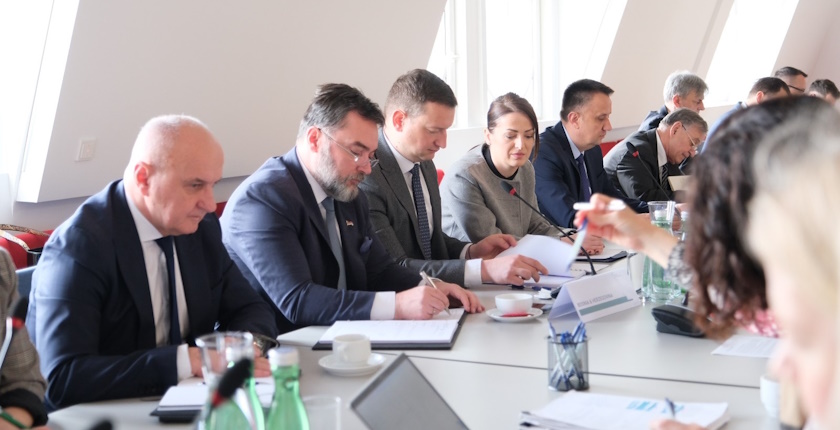
The law on the electricity regulator, transmission, and market has been agreed, Košarac said after a meeting in Vienna with Energy Community Secretariat Director Artur Lorkowski.

The meeting was attended by Minister of Energy and Mining of the Republic of Srpska Petar Đokić and the Minister of Energy, Mining and Industry of the Federation of Bosnia and Herzegovina (FBiH) Vedran Lakić.

Košarac: A serious step towards fulfilling obligations in the energy sector

“After several years of attempts, since 2017, we have finally agreed on the law,” Košarac noted.

He recalled that the said legislation is one of the conditions for the exemption of BiH from the EU’s carbon border tax.

“We made a serious step towards fulfilling our obligations in the energy sector. I am truly grateful to Ministers Đokić and Lakić, and to the Energy Community Secretariat for cooperation,” Košarac stressed.

Lakić: BiH will no longer be the only country without a law and an electricity exchange

The Ministry of Energy, Mining and Industry of the Federation of BiH pointed out that the negotiations on the law lasted ten years.

“We have reasons to be extremely satisfied with the agreement, especially related to the current circumstances in BiH, because this is an important step in the process of exempting the country from CBAM. Now we will be able to protect exporters to the EU in all parts of BiH, and to use the funds collected from the CO2 tax for projects in the country,” Lakić explained.

In his view, the law also sets an environment for the establishment of an electricity exchange, based in Mostar. BiH is no longer the only country that does not have its own law on the electricity market and power exchange, he noted.

Đokić: The key reason for the agreement is the CBAM

The Minister of Energy and Mining of the Republic of Srpska Petar Đokić recalled that the law has been discussed for more than ten years. He noted that it only legalized the current practice established by existing laws.

Elektroprenos BiH, the Independent System Operator in Bosnia and Herzegovina (NOSBiH) and the State Electricity Regulatory Commission (SERC or DERK) are already operational in line with the laws.

CBAM has been postponed for a year

The key reason for the harmonization is the establishment of the electricity exchange because it is a prerequisite for BiH to submit a request for exemption from the cross-border CO2 tax, the minister stressed.

Without the exemption, BiH would pay a tax on its electricity exports to the EU and into the EU budget, said Đokić, who will be among the speakers at Belgrade Energy Forum 2025 (BEF 2025). The entity minister recalled that the EU postponed the CBAM implementation from January 2026 to January 2027. Of note, BiH previously asked for CBAM to be postponed.

The implementation of CBAM would make companies in BiH exporting electricity uncompetitive. It would jeopardize the financial stability of government-controlled power utility Elektroprivreda Republike Srpske (ERS) in the Republic of Srpska, according to the minister.

Đokić noted that the power exchange would be established by three power companies in BiH – ERS, Elektroprivreda BiH (EPBiH) and Elektroprivreda HZHB, with the transmission system operator – NOSBiH.