by in News

North Macedonia Moves Closer to European Green Electricity Certification System

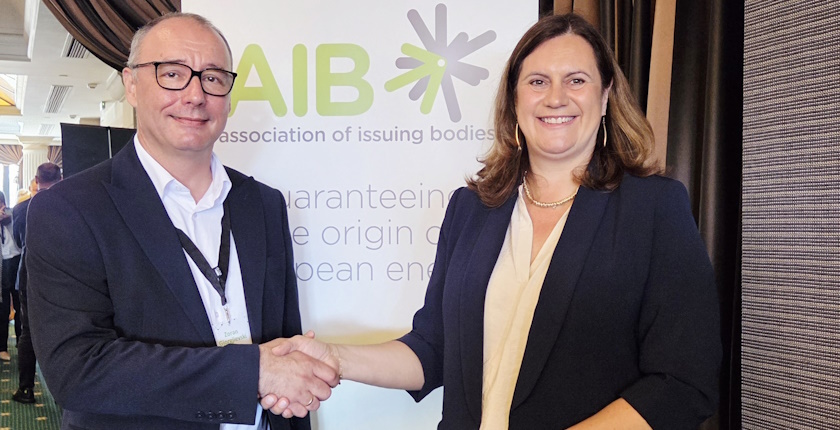
North Macedonia’s National Electricity Market Operator, MEMO, has officially joined the Association of Issuing Bodies (AIB), marking an important step toward deeper integration with the European framework for guarantees of origin and cross-border renewable electricity trade.

The decision was confirmed during the General Assembly of the Association of Issuing Bodies, where MEMO became a full member of the Brussels-based European energy certification organization. The move comes as the Ministry of Energy, Mining and Mineral Resources and the Energy Community Secretariat continue efforts to advance the mutual recognition of guarantees of origin between the European Union and Energy Community countries.

Guarantees of origin are electronic certificates proving that a specific quantity of electricity has been generated from renewable energy sources. They are increasingly important for transparent energy markets, renewable energy producers, suppliers and companies seeking to demonstrate the use of green electricity in line with ESG and decarbonisation standards.

MEMO introduced its electronic registry for guarantees of origin in April last year, in cooperation with energy certificate company Grexel and in line with European Energy Certificate System rules and AIB standards. Since then, North Macedonia has issued around 500,000 guarantees of origin, with each certificate representing 1 MWh of electricity produced from renewable sources.

According to MEMO Chief Executive Officer Zoran Gjorgjievski, AIB membership enables the Macedonian guarantees of origin system to implement the procedures required for future accession to the European Energy Certificate System. This will allow the secure, transparent and internationally recognized issuance and trading of green electricity certificates.

He emphasized that further integration of North Macedonia’s electricity market with the European energy market is essential, as it creates new opportunities for renewable energy producers, suppliers and businesses while strengthening trust, competitiveness and investment attractiveness in the country’s renewable energy sector.

Denko Rafajlovski, Head of MEMO’s Renewable Energy Support Department, noted that guarantees of origin play a key role in promoting renewable energy and giving consumers greater transparency and choice over the source of the electricity they use. Through the AIB Hub, national registries are connected, enabling the efficient cross-border transfer of green certificates between countries.

MEMO became an observer member of AIB last year as a first step toward full membership. Its accession now represents a significant milestone in the development of a modern, transparent and European-aligned electricity market in North Macedonia.

Cross-border trade in guarantees of origin will become possible once national legislation and technical requirements are fully harmonized with European Union standards.


by in News

KESCO announces the second phase: businesses enter the open electricity market.

KESCO in Kosovo has announced that, beginning 1 April 2026, the second phase of commercial consumers’ transition to the open electricity market will commence.

From that date, businesses currently supplied under the regulated market will move to the liberalized market and will be able to select their own licensed electricity supplier. The measure is intended to encourage greater competition and reflect market-based pricing.

Under the country’s Electricity Law and at the request of the regulator, businesses that employ more than 50 staff or report an annual turnover exceeding €10 million will no longer be eligible for regulated tariffs under the universal service framework. As a result, KESCO — in its role as Universal Service Supplier — will be unable to continue providing those businesses with regulated-rate supply after 1 April 2026.

According to the company, official records from the Tax Administration indicate that a number of businesses no longer meet the universal-service eligibility criteria. Affected businesses must select a licensed supplier in the open market by 1 April 2026 and initiate the supplier-switching procedure at least 21 working days before the new contract takes effect.

If a business fails to secure a contract within that timeframe, it will be supplied on a temporary basis by the Supplier of Last Resort for up to 60 days. Should no contract be concluded within that period, electricity supply may be disconnected in accordance with applicable legislation.

The company also clarified that self-consumers (prosumers) will no longer remain under the regulated-tariff scheme from the same date; the terms for energy produced and injected into the grid will be set out in the new supplier contract.

Finally, businesses are asked to confirm their employee numbers, annual turnover and active metering units with the company to ensure a smooth transition to the open market.

by in News

Bulgaria proposes changes to electricity trading rules to include new market participants

The Energy and Water Regulatory Commission of has proposed its amendments to Bulgaria’s electricity trading rules.

The changes aim to align electricity trading rules with recent updates to the country’s Energy Act and a legal and operational framework for new categories of market participants, according to law firm CMS Bulgaria.

New categories include active customers (active buyers), citizen energy communities, self-consumers (prosumers) of electricity from renewable sources, and renewable energy communities.

The Energy and Water Regulatory Commission (EWRC) held a public consultation event today on its draft changes in electricity trading rules. Representatives of the three distribution system operators (DSOs), the Sofia Municipality and the Bulgarian Association for Electrical Engineering and Electronics (BASEL) participated in the discussion.

These changes are designed to encourage electricity production for self-consumption

These changes are designed to encourage electricity production for self-consumption, minimize distribution losses, and foster more predictable energy pricing, a CMS e-alert reads. Furthermore, the amendments would ensure the Bulgarian rules comply with EU law, specifically directives 2018/2001 and 2019/944 and Regulation 2019/943.

The proposed draft introduces several specific provisions to facilitate the participation of the said new entities, CMS stressed.

It explicitly defines how new participants can join the market and the types of contracts they are permitted to conclude.

The new rules allow for the grouping of different sites for joint electricity production or consumption. They also set technical mandates for commercial metering devices, including remote reading capabilities.

The new rules also define calculation of generated, shared and sold electricity

The authors outlined procedures for registering or deregistering participants and groups with network operators. The update would impose an obligation to maintain a public register of these participants.

The proposed rules define the calculation of generated, shared and sold electricity. The framework guarantees that data is exchanged between suppliers, network operators, and group members, ensuring it is reflected in monthly bills.

Stakeholders were invited to submit their proposals from January 8 until January 22, CMS underscored.

by in News

Bulgaria proposes changes to electricity trading rules to include new market participants

The Energy and Water Regulatory Commission of has proposed its amendments to Bulgaria’s electricity trading rules.

The changes aim to align electricity trading rules with recent updates to the country’s Energy Act and a legal and operational framework for new categories of market participants, according to law firm CMS Bulgaria.

New categories include active customers (active buyers), citizen energy communities, self-consumers (prosumers) of electricity from renewable sources, and renewable energy communities.

The Energy and Water Regulatory Commission (EWRC) held a public consultation event today on its draft changes in electricity trading rules. Representatives of the three distribution system operators (DSOs), the Sofia Municipality and the Bulgarian Association for Electrical Engineering and Electronics (BASEL) participated in the discussion.

These changes are designed to encourage electricity production for self-consumption

These changes are designed to encourage electricity production for self-consumption, minimize distribution losses, and foster more predictable energy pricing, a CMS e-alert reads. Furthermore, the amendments would ensure the Bulgarian rules comply with EU law, specifically directives 2018/2001 and 2019/944 and Regulation 2019/943.

The proposed draft introduces several specific provisions to facilitate the participation of the said new entities, CMS stressed.

It explicitly defines how new participants can join the market and the types of contracts they are permitted to conclude.

The new rules allow for the grouping of different sites for joint electricity production or consumption. They also set technical mandates for commercial metering devices, including remote reading capabilities.

The new rules also define calculation of generated, shared and sold electricity

The authors outlined procedures for registering or deregistering participants and groups with network operators. The update would impose an obligation to maintain a public register of these participants.

The proposed rules define the calculation of generated, shared and sold electricity. The framework guarantees that data is exchanged between suppliers, network operators, and group members, ensuring it is reflected in monthly bills.

Stakeholders were invited to submit their proposals from January 8 until January 22, CMS underscored.

by in News

All medium, large businesses in Albania are now in free electricity market

Consumers connected to the 6 kV electricity network in Albania are legally obligated to find a private supplier on the free market by January 1, 2026. The move represents the completion of a multi-year transition for industrial and commercial users.

On January 1, 2026, all medium and large businesses in Albania will be part of the liberalized electricity market.

Scheduled to join are 2,300 firms and institutions.

The newcomers in the market must find a supplier from the list of licensed entities, Albania’s Energy Regulatory Authority (ERE) said.

The liberalization process began in 2018

Those who fail to secure a contract by the deadline will be covered by the supplier of last resort for a maximum of 60 days under regulated conditions to prevent power cuts, according to the update.

The 6 kV level is the final stage of the liberalization process, which began in 2018. It started with 35 kV, followed by 20 kV in 2024 and 10 kV in 2025.

Only small businesses and households remain under regulated supply. Regulated prices are set by ERE.

There are about 40 licensed suppliers in Albania

Small businesses, connected to the 0.4 kV grid, are still the responsibility of the universal supplier. This service is provided by Furnizuesi i Shërbimit Universal, a subsidiary of OSHEE, the state-owned power distribution operator.

ERE recently confirmed that electricity prices for universal service customers would remain unchanged until December 31, 2026.

Of note, there are about 40 licensed suppliers in Albania. Businesses can compare offers using ERE’s online platform. Of note, the Albanian Power Exchange (ALPEX) started its operations in April 2023.

Energy Community Secretariat: Complete liberalization is behind schedule

In its latest Annual Implementation Report, from November, the Energy Community Secretariat said that the complete liberalization of the retail electricity market remains behind schedule.

Households and small businesses connected to the 0.4 kV network continue to be supplied under regulated tariffs by the universal supplier, the report reads.

Consumers connected to the 6 kV network are covered by the supplier of last resort (SLR), and this regime was extended until December 31, 2025, the secretariat pointed out.

by in News

Serbia is first Energy Community contracting party to enter verification phase of market coupling

Serbia is the first Energy Community contracting party to enter the verification phase of the market coupling procedure, the Energy Community Secretariat said after the annual meeting of the Ministerial Council in Vienna.

At the Energy Community Ministerial Council, ministers addressed energy security, market integration, climate policy, and environmental protection, confirming a shared EU–contracting parties direction for Europe’s energy future, according to the secretariat.

Ministers and representatives of the secretariat also discussed the amendments to the Carbon Border Adjustment Mechanism’s regulation revealed by the European Commission yesterday. The meeting was attended by European Commissioner for Energy Dan Jørgensen.

The secretariat underlined that several contracting parties are now approaching a decisive stage in electricity market integration ahead of accession, having fully or nearly transposed the Electricity Integration Package (EIP).

The two-step verification phase for Serbia kicked off on October 22

Subject to verification of compliance by the European Commission, this progress opens the door to electricity market coupling with the EU internal market ahead of accession, it added.

“Serbia has already entered the verification phase, while Moldova has fully transposed the package. In this context, ministers underlined that the CBAM, entering into force in January,  should not pose an issue for cross-border electricity trade,” the update reads.

eu region ministerial council 2025 meeting
Photo: Energy Community Secretariat

Full electricity market integration ahead of accession offers a clear pathway to safeguarding decarbonization gains, supporting fair and efficient cross-border electricity exchanges, and attracting clean energy investment, according to the secretariat.

The two-step verification phase for Serbia kicked off on October 22. The first step is the verification by the secretariat, and the second by the commission.

The secretariat must complete the verification within three months, by January 22. The process is in the final stage, Balkan Green Energy News has learned.

The European Commission has five months to do its part

Once this is finished, the commission has five months to do its part. If the commission’s verification is positive, Serbia could meet the end-July deadline to apply for market coupling. The next phase involves technical activities, and it lasts 18 months.

“We are very deep in the process of verifying what Serbia has adopted. Now we are about to start this process for Moldova. And soon, I hope, after the remaining elements of the legislative package are adopted by Montenegro and North Macedonia, the verification can start in these two cases,” stressed Artur Lorkowski, Director of the Energy Community Secretariat.

He added that it has taken two decades of cooperation to build the momentum toward market coupling that ministers today have consolidated.

Lorkowski: The voice of the Energy Community ministers on CBAM has been heard by the commission

eu region ministerial council 2025 artur lorkowski
Artur Lorkowski (photo: Energy Community Secretariat)

Regarding the European Commission’s amendments to the CBAM regulation, he recalled that, on behalf of the ministers, the secretariat has sent a list of 11 different issues that needed to be addressed.

“The voice of the Energy Community ministers has been heard by the commission, and the progress which has been made in the contracting parties has been recognized. We see that in different amendments which are proposed. The proposal is going in a good direction. If you ask me whether this is satisfactory and whether it solves all of the problems, no, for two reasons,” he underscored.

The first reason is that it requires time, and the damage will be done from January 1, 2026, when the CBAM implementation starts.

Jørgensen: A lot of progress has happened

“We already see that, for example, the allocations of the cross-border power lines between the contracting parties and the EU member states for next year are dropping significantly,” Lorkowski explained.

The second reason is the issue of completeness. “We are still not certain whether, for example, renewables in the contracting parties can be treated equally as those in the EU,” he said, and added that the secretariat is in communication with the commission on these issues.

According to European Commissioner for Energy Dan Jørgensen, it is clear that a lot of progress has been made in what will hopefully be future EU member states or neighbors, especially in the transposition of EU energy law.

Focus on four issues

According to the secretariat, the ministers further committed to advancing a coherent and predictable framework to sustain electricity market integration while creating the enabling conditions for the clean energy transition.

The secretariat highlighted four issues.

First, contracting parties will individually pursue national carbon pricing models according to their domestic circumstances, while work continues to explore coordination possibilities and ensure coherence between national carbon pricing systems in view of their gradual alignment with the EU ETS.

Second, the Energy Community framework will further incorporate core EU legislation on nature conservation, biodiversity, and water protection into the Energy Community Treaty.

Third, to keep momentum behind the rapid growth of renewables, the contracting parties will step up efforts to secure mutual recognition of guarantees of origin with the EU.

Finally, effective coordination and implementation of national energy and climate plans (NECPs) is critical, participants agreed.

The EU’s recent agreement on the 2040 climate targets sets a clear direction, and contracting parties must follow this pathway as they develop their long-term energy and climate policies, the update reads.

by in News

Greek distribution operator slammed for wrongful power theft accusations

The Hellenic Distribution Network Operator (HEDNO or DEDDIE) has drawn severe criticism because of imposing fines for power theft in cases where no such wrongdoing took place.

Last year, HEDNO was asked by the government to step up its efforts to fight power theft, a major issue in the Greek market. In recent years, the phenomenon has worsened and is estimated to cost law-abiding consumers EUR 400 million per year. In 2022, 18% of the supplied energy was lost as a result of power theft or network losses in distribution. The number has remained high ever since.

However, the distribution system operator’s overzealous crews went over the top, fining consumers with thousands of euros, with little or no justification. In fact, there were cases where a drop in consumption as a result of irrelevant factors was considered power theft.

Households and businesses were obliged to pay, otherwise their supply would be cut off. Consequently, they must go to court to claim back the money, leading to a lengthy and costly process.

HEDNO fined by the regulator

The Regulatory Authority for Energy, Waste and Water (RAEWW or RAAEY) has stepped in to fix the problem. Ruling on a specific consumer’s complaint against HEDNO, it determined that the operator acted illegally and against provisions set by the Metering Code.

In fact, RAAEY accused HEDNO of enforcing power theft rules that it wanted added in the code, but which the regulator has not accepted. Based on the ruling, HEDNO was fined EUR 120,000.

It remains to be seen whether RAAEY will impose more fines, as the receiver of many such complaints. The body said it is not responsible for solving disputes between the operator and consumers. However, through the recent ruling it set a proper regulatory framework going forward.

by in News

Greek authorities launch electricity market probe

The Hellenic Competition Commission (HCC) and the Regulatory Authority for Energy, Waste and Water (RAAEY or RAEWW) began a double probe into the Greek electricity market.

The move follows a report by the European Union Agency for the Cooperation of Energy Regulators (ACER) concerning the formation of wholesale prices during the period between July and September 2024.

The body focused on Greece, since it is the only country in the region of Southeast Europe for which detailed market data was available from the power exchange about the offers from producers and the supply-demand curves.

ACER has called national authorities to conduct a market probe to find out whether manipulation and capacity withholding took place during the hours with the most extreme prices.

In its announcement, HCC said it was looking into possible horizontal deals or harmonized practices between companies, with the goal of preventing, limiting or degrading competition. It is focusing especially on capacity withholding and dominant market position abuse. It explained, however, that the checks do not predetermine the outcome of the procedure.

RAAEY pointed out that the goal of its probe is to protect consumers and enforce the Regulation on Wholesale Energy Market Integrity and Transparency (REMIT).

Investigation follows industry suggestions

According to Energypress, HCC conducted raids and collected data from three particular companies, namely Public Power Corporation (PPC), Heron and Enerwave (formerly Elpedison).

In fact, authorities are examining not just the three-month period of last year, but also market operations in 2025.

Industrial consumers in Greece have been claiming for the past year that there is manipulation in the market, leading to inflated prices. They have called for an investigation and interventions to restore transparency.

“ACER‘s findings are not compatible with normal market player behavior as part of the Target Model,” commented the Chairman of the Hellenic Union of Industrial Consumers of Energy (UNICEN), Antonis Kontoleon.

by in News

Montenegro adopts National Energy and Climate Plan

The Government of Montenegro has adopted the National Energy and Climate Plan, along with a bill on cross-border electricity and natural gas exchange.

The National Energy and Climate Plan (NECP) of Montenegro is the overarching strategy that clearly defines what the country should achieve by 2030: a 55% reduction in emissions, a renewable energy share of at least 50%, and substantial progress in energy efficiency, according to the Ministry of Energy and Mining.

“Over the past eight months, we have made a tremendous effort to finalize two key documents that have been awaited for years and are crucial for our European commitments,” Minister Admir Šahmanović stressed.

This is a plan that enables new investments, new renewable energy power plants, modern grid infrastructure, and a secure transition for the Pljevlja coal region, he explained.

Šahmanović: The latest European Commission report confirms Montenegro’s progress

The ministry noted that the bill on cross-border electricity and natural gas exchange is among the most important energy laws proposed by this government. Šahmanović recalled that this is not merely a technical issue.

The bill, in his words, opens the door to the single European market, directly impacts the closure of Chapter 15 of the accession negotiations with the EU, and gives full meaning to the electricity interconnection with Italy and the EU market.

It would provide greater energy security, better competition, more stable prices, and a stronger position for the country’s economy, he added.

“The latest report from the European Commission confirms that we have made progress. Today’s decisions by the government are the best confirmation of this. These are the foundations for a more energy-secure, modern, and European Montenegro, and we have reason to be satisfied with the progress we have achieved,” Šahmanović underscored.

The bill represents the most extensive reform of energy legislation in the past decade

According to the ministry, by adopting these two strategic documents, Montenegro has taken a significant step forward in aligning with EU energy rules.

The NECP integrates energy, climate, and development policies into a single framework for the first time, sets clear and measurable goals, and lays the foundation for Montenegro’s long-term energy transition.

The law on cross-border electricity and natural gas exchange represents the most extensive reform of energy legislation in the past decade, transitioning from a basic regulatory framework to a full European system of market, technical, and security rules.

Together, these two documents represent the most important reform package in the energy sector in recent years, fully aligned with European legislation and the EU’s strategic priorities, the ministry concluded.

by in News

Tens of thousands of new smart meters in Greece deemed inadequate

The rollout of smart meters in Greece has been plagued by delays and even technical mistakes in their procurement, affecting up to 250,000 measuring points.

The country is close to last in the European Union when it comes to the penetration of smart meters. In 2024, only 11% of consumers had such systems, versus 58% in Europe as a whole.

The Hellenic Distribution Network Operator (HEDNO or DEDDIE) began a gradual large-scale deployment a few years ago, with the goal of closing the gap. So far, 1.3 million smart meters have been installed in homes and businesses. The budget stands at EUR 1.4 billion up to the year 2030.

However, there appears to be a significant problem with the first meters that were procured and deployed in previous years. A few days ago, HEDNO published its proposal for the technical changes needed in the retail market codes, in order to activate dynamic pricing schemes from February 2026.

Utilizing smart metering, consumers will be able to benefit from lower prices during the day. Wholesale prices often reach zero around noon in Greece, as a result of high solar production.

Based on the document, the first batches of smart meters are not able to process real-time data and transmit them properly to HEDNO and the suppliers. It makes dynamic pricing impossible.

In total, up to 250,000 smart meters already installed and operational could be inadequate. A part of them can be adjusted through additional hardware, while for the rest no viable solution is seen except their replacement.

Complaints about wrongful power theft accusations

HEDNO also became the target of consumer complaints recently, regarding the lack of timely and proper power metering. Last year the metering period was reduced to a monthly interval. However, people complain of the operator not doing its job right, resulting in unfair charges.

Furthermore, HEDNO has been blamed of wrongly accusing consumers of power theft. Many such complaints have been filed, with claims that the operator is “trigger-happy” and that it identifies theft in cases where a simple change of consumption was located or a seal was damaged on the outside of a meter.

The Regulatory Authority for Energy, Waste and Water (RAEWW or RAAEY) has promised to take action to rectify the issues and restore balance and transparency in the market.