by in News

BYD’s electric vehicles more popular than Tesla in Croatia

Croatian companies have applied for subsidies to buy three times more electric vehicles of Chinese manufacturer BYD than of US-based Tesla.

The situation in Croatia reflects the global market. Last year, Chinese BYD surpassed Tesla, run by Elon Musk, for the first time. It has maintained the top position in electric vehicle production so far this year as well.

The data from Croatia are based on the results of a public call for subsidies for the purchase of new alternative-fuel vehicles. The program is for legal entities and is conducted by the Environmental Protection and Energy Efficiency Fund (FZOEU).

By the end of the application deadline, co-financing was requested for 2,860 vehicles, of which 78% for passenger vehicles. The data was announced at a meeting of the Motor Vehicle Trade Association, part of the Croatian Chamber of Economy (HGK).

Applications for the purchase of 2,860 units have been submitted

Aleksandar Halavanja, head of the Department for Systematic Energy Management at FZOEU, said most applications (78%) were for passenger vehicles with up to eight seats. Applications for cargo vehicles with a maximum permissible mass of 3.5 tons are second, with 12%, while mopeds have an 8% share.

BYD ranks first among brands, with 31.9%, while Tesla accounts for 10%. They are trailed by Hyundai (5.4%), Škoda (5%), Renault (4.8%), BMW (3.6%), Opel and Volkswagen (3%), Toyota (2.8%), and Peugeot (2.4%), according to Halavanja.

The fund provides subsidies of up to EUR 9,000 apiece for passenger and light commercial vehicles, but no more than 40% of the vehicle’s price. An additional condition is that the price of the EV must not exceed EUR 50,000 excluding VAT.

Miletić: Subsidies per vehicle should be reduced

Up to EUR 90,000 is for vehicles with maximum permissible mass of 3.5 tons, but no more than 40% of the vehicle’s value. Moped buyers can receive up to EUR 2,500 each.

FZOEU plans to evaluate all applications by the end of the year. If all funds are not allocated, the remainder from the EUR 21.2 million would be switched to another round until it is exhausted.

Tomislav Miletić, President of HGK’s Motor Vehicle Trade Association, underlined that its members demanded a higher amount for the co-financing of energy-efficient vehicles.

If that is not possible, the subsidy per vehicle should be reduced so that as many interested citizens and companies as possible can get funding, he stressed.


by in News

Number of electric vehicles in Serbia reaches 6,000

There are about 6,000 registered electric vehicles in Serbia, according to Filip Mitrović, coordinator of the Emobility cluster of the Serbian Chamber of Commerce and Industry (PKS).

The fleet of 6,000 electric vehicles (EVs) in Serbia is small compared to Europe, Filip Mitrović stressed at the Belgrade Energy Days conference, as quoted by Tanjug. He also identified two obstacles to further growth.

First of all, regulatory inconsistencies make it impossible to accurately charge for the electricity consumed by electric vehicles at charging stations. Billing is currently based only on the duration of e-charger use, rather than the actual amount of electricity consumed, he added.

Complex documentation is required to install an electric charger

He underlined that there is no legal way to charge for the electricity consumed per kilowatt-hour. Therefore, a time-based charging method is used for electric vehicles.

“That’s not fair,” he said, and added that anyone who has used an EV knows it is standard to be charged based on the amount of electricity consumed. Mitrović noted that different models of EVs draw varying amounts of energy from the e-charger in the same period.

The second problem, in his words, is the procedure for the installation of EV chargers. Very often, complex documentation is required, which slows down and complicates the entire process, making investors give up on the project, Mitrović stressed.

In recent years, the Government of Serbia has been awarding subsidies for what it officially calls “ecological vehicles.” Last year, it decided to stop subsidizing hybrid (HEVs) and plug-in hybrid (PHEVs) electric vehicles and to provide funding only for 100% EVs or battery electric vehicles (BEVs).

Subsidies were granted for approximately 3,300 vehicles

The criteria remained the same this year. On August 8, the Ministry of Environmental Protection said it ended approving subsidies for the purchase of new EVs for 2025. All the allocated funds have been granted, it explained.

However, the government then secured more money and resumed the procedure on August 28.

In mid-September, the ministry said that the government backed the purchase of 2,834 eco-friendly vehicles since 2020. With the applications received this year, the number has reached 3,305.

by in News

Policy changes in US will have marginal impact on global energy transition

Policy changes in the United States introduced by the administration of President Donald Trump will have only a marginal impact on the global energy transition, according to the latest Energy Transition Outlook, produced by DNV.

Norwegian consulting firm DNV pointed out in a report that energy use by artificial intelligence may seem alarming, but that it is projected to stay below booming sectors like electric vehicle (EV) charging and cooling of buildings.

“DNV’s annual Energy Transition Outlook has consistently forecast a shift from today’s 80/20 fossil/non-fossil primary energy mix to a 50/50 mix by 2050. That is still our prediction this year. Although some aspects of the transition are supercharged and progressing rapidly, other aspects have hit turbulence and are delayed. This leads to a marginally slower transition than our forecast last year,” CEO Remi Eriksen said.

According to the report, in the US, fossil fuel promotion and the reversal of clean energy support policies are slowing the nation’s transition.

However, China continues to set renewables buildout records with 390 GW of solar PV (56% share of new global capacity) and 86 GW of wind (60% share) expected to be installed this year. The country is also fueling the transition in the rest of the world with its cleantech exports.

In the meantime, Europe is seeking to balance climate action with competitiveness, the report reads.

The continent is having a slow success with harder-to-decarbonize sectors, but renewable energy buildout remains relatively strong.

In the rest of the world, most countries are embracing competitive Chinese technologies, with year-on-year growth in installations at around 25%, data showed.

Eriksen said cheap renewable electrons stored when necessary in ever-cheaper batteries are already an unstoppable force.

“We forecast that solar – both with and without storage – and wind will be 32% of the global power mix by 2030. We expect a resurgence in offshore wind by 2030, such that variable renewables will provide more than 50% of all electricity by 2040,” he stated.

Solar power is 10% of all power produced worldwide today, and DNV projected it will be 20% in 2029 and 40% in 2045. Renewables would reach 65% in the global electricity mix by 2040, the firm added.

AI’s energy demand would be lowered by efficiency effects

According to Eriksen, soaring power demand from AI data centers is placing additional strain on already congested grids, particularly in North America.

DNV ‘s analysis finds that AI’s energy demand growth is likely to become more linear over time, outpaced, for instance, by EV charging and cooling demand, even as the cognitive services of AI expand exponentially. The main reason is growing efficiency.

AI’s energy use is forecasted at only 3% of global electricity by 2040. Data center energy use will quintuple by 2040, equalling 5% of all global electricity. AI’s share would be 3%, with the remaining 2% for general purpose data centers.

The report highlighted large regional variations – AI is the biggest driver of electricity consumption growth in North America, compared to EV charging in Europe and EVs and cooling in China and India.

For the first time, this year’s analysis extends to 2060

The report noted that this year, the world reached the milestone of more than 50 million EVs on the road. Most of them, 60%, are in China, with Europe at 21%, and North America at 13%.

The point of inflection — EVs at 50% of global new passenger vehicle sales — will be reached in 2032, the report projected.

For the first time, this year’s analysis extends to 2060 to reflect the continued transformation of the energy system after 2050. The report recalled that it is now widely acknowledged that the world will not achieve net zero emissions by 2050, meaning warming would exceed 1.5 degrees Celsius.

A decarbonization of energy mix is unstoppable but too slow, setting up grave risks for future generations, Eriksen concluded.

by in News

North Macedonia kicks off project to replace taxis with electric vehicles

North Macedonia plans to subsidize the purchase of 200 electric vehicles for taxi drivers to improve urban transportation and reduce air pollution.

The country’s first move toward electrifying public transportation was announced last year by Prime Minister Hristijan Mickoski, who said 100-120 electric buses would be purchased.

Now, in Skopje, the Ministry of Environment and Spatial Planning and an association of cab drivers have presented a project to subsidize the first 200 electric vehicles for them, as part of efforts for cleaner, quieter, and more efficient urban transportation for the citizens of Skopje and the entire country.

The two sides signed a memorandum of cooperation.

The average price of electric cars in the program would be EUR 28,000

Of note, Skopje is one of the cities with the most polluted air in the world.

According to Izet Mexhiti, First Deputy Prime Minister and Minister of Environment and Spatial Planning, the project represents a concrete and important step toward transforming urban transportation. He added it is part of the strategy to fight air pollution and improve the quality of life in urban areas.

Photo: Ministry of Environment and Spatial Planning

The ministry and the union presented an electric vehicle that meets high environmental standards – without polluting emissions or noise, and with high energy efficiency. Mexhiti stressed that such vehicles would, in several phases, replace the current diesel, petrol, or natural gas vehicles, bringing significant benefits to citizens, taxi drivers, and the environment.

The average price of the said electric cars is EUR 28,000, putting a total cost for 200 vehicles at about EUR 5.6 million. The ministry’s subsidy will be 15% or around EUR 840,000 in total.

There will be a significant reduction in noise pollution

Mexhiti asserted that the replacement of cabs would result in a reduction of more than 2,700 tons of CO2 emissions annually, an effect equivalent to planting over 120,000 trees. He claimed urban noise would be substantially decreased, especially in residential areas.

The official recalled that his ministry has launched a car-sharing system in Skopje with the first 100 electric vehicles and a public system for electric scooters and bicycles in several cities.

In cooperation with the European Union, through the EU for Clean Air program, six electric buses were donated to the City of Skopje, capacities to monitor air pollution have been increased, and tens of thousands of seedlings have been planted across the country, Mexhiti added.

According to Abdullah Rushiti, the president of the union, the greatest benefit of the project is the clean air for the citizens. Three to four thousand taxi drivers operate in Skopje every day, which adds significantly to pollution, he pointed out.

by in News

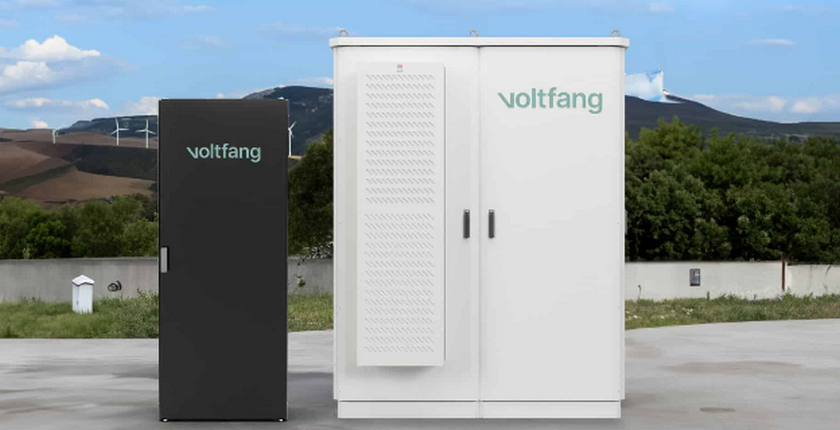
German startup Voltfang turning used EV batteries into energy storage for solar, wind

German startup Voltfang has opened a plant to manufacture energy storage units for solar and wind from used electric vehicle batteries. The company says the facility is the largest of its kind in Europe, with annual output set to reach 250 MWh in 2026.

The plant in Aachen will produce second-life battery storage systems for commercial, industrial, and large-scale applications. Its annual output is planned to rise to 1 GWh by 2030.

The facility will assemble fridge-sized energy storage units that households and companies can use to store excess electricity generated by solar panels or wind turbines.

Voltfang’s batteries can be used by homes and businesses to store energy from solar or wind facilities

The plant employs around 100 people, and Voltfang claims it is the largest facility in Europe for repurposing lithium-ion batteries.

David Oudsandji, co-founder and managing director of Voltfang, said the company’s goal is to develop high-performance battery storage systems for German and European industry.

Voltfang hopes to turn a profit by next year, but Oudsandji noted that the supply of used EV batteries is still small, as most such vehicles are only a few years old.

The supply of used electric vehicle batteries is still limited

Another obstacle is that new batteries, mainly from China, are becoming increasingly efficient and affordable, while refurbishing old ones is a complex process.

On the other hand, it is more sustainable and helps create a circular economy and ensure energy independence, according to Oudsandji.

by in News

PPC is installing 60 chargers for EVs in Romania, Greece

Public Power Corp. has received funds from the European Union for the installation of 60 chargers for electric vehicles.

Public Power Corp. (PPC) and PPC blue Romania have jointly secured up to EUR 2.76 million from the Connecting Europe Facility (CEF) funding mechanism for the installation and operation of the publicly accessible direct current (DC) fast chargers, the update reveals.

PPC blue is the e-mobility arm of PPC.

The funds for the e-chargers in Greece and Romania were obtained from the CEF’s Alternative Fuels Infrastructure Facility (AFIF) program.

Under the East Europe Electric Route (Blue Route 3E) joint project, 28 DC fast charging points, each with a minimum capacity of 150 kW, would be set up for light-duty vehicles (LDVs), while 32 ultra-fast charging points, of at least 350 kW apiece, are intended for heavy-duty vehicles (HDVs).

Babilis: We are strengthening the TEN-T in Greece and Romania

The installation at 29 locations along the Trans-European Transport Network (TEN-T) is well underway, the company revealed.

Out of the 60 units, 16 fast-charging points for electric LDVs, each with a minimum output power of 150 kW, will be installed across ten locations in Greece. The rest – 12 fast-charging points for LDVs and 32 ultra-fast charging points for HDVs – are planned in Romania.

According to Miltiades Babilis, Chief E-Mobility Officer at PPC, the infrastructure of the TEN-T in Greece and Romania is being strengthened through the Blue Route 3E project.

It is the second European funding package that PPC blue has secured through the CEF mechanism

“PPC blue is investing in the strategic development of its network by adding new hyperfast chargers at key points along the Greek road network, thus making EV travel more convenient,” he stated.

It is the second EU funding package that PPC blue has secured through the CEF mechanism, following the Electrifying South East Europe Road Transport (ESEERT) project. It is in an advanced stage of implementation and involves 34 fast-charging points for electric LDVs across 13 locations in Greece.

PPC blue has over 2,800 e-chargers in Greece and Romania.

by in News

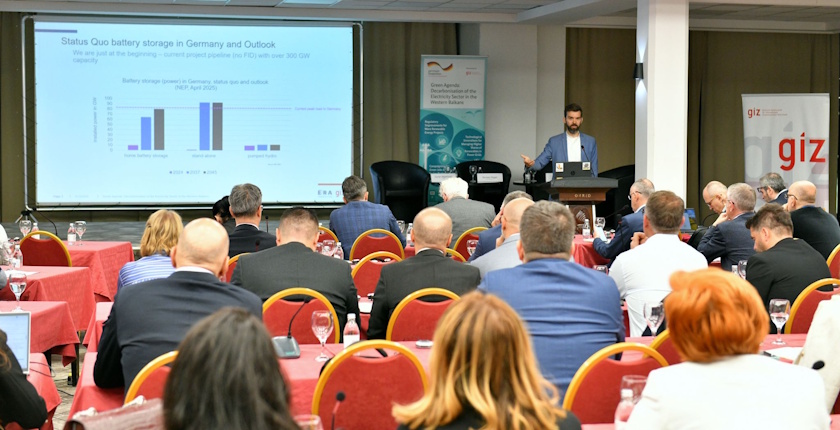
Third Regional Power Sector Exchange in Ohrid: Power grids at core of energy transition

The third Regional Power Sector Exchange of the Western Balkans in Ohrid in North Macedonia gathered over 80 energy professionals from the region to discuss the future of electricity decarbonization and the urgent need to modernize power infrastructure.

Organised under the framework of the Regional Climate Partnership between Germany and the Western Balkans, the conference brought together representatives of transmission and distribution system operators, energy regulators, and energy ministries to accelerate coordinated action toward a greener, more resilient power system.

“No grids, no glory. This slogan captures the challenge in front of us. Without investment in power grids, adaptable regulation, and skilled professionals, the renewable energy transition cannot succeed,” Project Manager at GIZ Nicolas Heger said in his welcoming remarks.

Oberhuber: The Western Balkans have the potential to become a major exporter of clean electricity

Opening addresses were delivered by David Oberhuber, GIZ Country Director in North Macedonia, Anca-Iulia Cimpeanu, European Commission (DG ENER), and Davor Bajs, Energy Community Secretariat.

In his keynote speech, Oberhuber stressed the region’s strategic importance in the Regional Climate Partnership.

The Western Balkans has the potential to become a major exporter of clean electricity to Western Europe and a hub for investment and innovation in renewable energy, he said.

North Macedonia is advancing its energy transition by expanding renewables – solar power capacity reached 506 MW in 2023 – and reducing coal dependency, although thermal power plants still accounted for 47.3% of total electricity production in early 2024.

In 2023, renewables made up 33.15% of electricity generation, with households, transport, and industry as the top energy consumers.

To accelerate the shift, tailored support projects were launched. The Energy, Water Services and Municipal Waste Management Services Regulatory Commission is tackling the surge in renewables applications. Distribution system operator (DSO) EVN is focusing on smart grids and energy quality, and transmission system operator (TSO) MEPSO is exploring options to reduce balancing costs through regional market mechanisms.

Six tailored support projects presented

The event included three sessions on tailored support projects.

Professor Nermin Suljanović presented the project Concept on Data Exchange Between System Operators in Bosnia and Herzegovina.

The data platform enables automatic data exchange among all actors in the electricity market in Bosnia and Herzegovina, ensuring data interoperability and harmonized communication interfaces, according to Suljanović.

He also outlined the project Technical Specification and Requirements for Integration of Renewables into DSO Telecommunication Network.

E-mobility is not only related to energy but also to transportation, telecommunication, data security

A project titled Procedure for Handling RES Connection Requests to the Grid – Queue Management was presented by expert Miltos Aslanoglou, and the Roadmap for Creating a Legal and Regulatory Framework for EV Charging by expert Dejan Stojadinović.

“EU legislation on this matter is a good base for the Western Balkan countries to prepare relevant legal and regulatory frameworks. E-mobility is not only related to energy but also to transportation, telecommunication, data security, and other issues,” Stojadinović said.

Goran Majstrović, Deputy Director and Head of the Energy Transmission and Distribution Department at Energy Institute Hrvoje Požar (EIHP), gave an insight into the project Feasibility Analysis and Funding Assessment for using Dynamic Line Rating (DLR) on the Kosovo* Transmission Grid.

Simplification of Procedures for Prosumer Connection to the Distribution Network in the Federation of BiH was the name of the project introduced by expert Goran Dobrić.

The need for regionally integrated networks has never been greater

Blackouts in both Southern and Southeastern Europe have highlighted vulnerabilities in grid infrastructure amidst growing shares of renewable energy. The need for modern, flexible, and regionally integrated networks has never been greater.

The event was part of a wider regional project implemented by GIZ on behalf of the German government, supporting the integration of renewables and enhancing energy security across the WB6.

In just two years, the project has supported over 30 institutions, trained more than 135 energy professionals, and facilitated the development of the Action Plan for Power Grids in the Western Balkans, in cooperation with the Energy Community Secretariat.

Network redesigns are lagging behind renewables by seven to ten years

Goran Majstrović from Energy Institute Hrvoje Požar presented the Action Plan for Power Grids in the Western Balkans.

“The path to integration of renewables is not just replacing power plants but redesigning the entire system to accommodate them. Network redesigns are lagging behind renewables by seven to ten years,” he asserted.

In the plan, the required grid investments by 2030 in the six countries of the Western Balkans (WB6) are estimated at EUR 10 billion to EUR 14 billion. Investments in primary equipment are seen at EUR 6 billion to EUR 8 billion. As for secondary equipment (digitalization), the forecasted tally is EUR 4 billion to EUR 6 billion.

Phase 2 of the project Green Agenda: Decarbonisation of the Electricity Sector in the Western Balkans is scheduled for completion in 2028. The Regional Power Sector Exchange will remain a key platform for cooperation, helping ensure the energy transition in the region is just and inclusive.

* This designation is without prejudice to positions onstatus and is in line with UNSCR 1244/99 and the ICJ Opinion on the Kosovo declaration of independence.
by in News

Horius becomes exclusive distributor of PupinEnergy chargers for Serbia

The company Horius d.o.o. has officially signed an exclusive distribution agreement, making Horius the sole authorized distributor of PupinEnergy AC electric vehicle chargers in the Republic of Serbia. This partnership marks a significant step forward for e-mobility development in the country, providing high-quality and reliable EV charging solutions inspired by the legacy of one of Serbia’s greatest scientists – Mihajlo Pupin.

PupinEnergy draws its inspiration from the work of Professor Mihajlo Idvorski Pupin, a Serbian-American scientist and inventor whose 34 patents – including the famous Pupin coil – still play a crucial role in telecommunications and electrical engineering. Honoring his legacy, PupinEnergy designs advanced chargers that combine technological sophistication, ease of use, and reliability in everyday conditions.

Product line available in Serbia

Through the partnership with Horius, customers in Serbia will have access to three key PupinEnergy charger models:

  • PowerGo MultiPlug 2000 – A portable 11 kW charger, perfect for travel and international use. Equipped with automatic fault detection, overheating protection, and an ergonomic handle for easy handling.
  • SkyCharge 500 (Lite, Ultra, Pro) – A premium ground-mounted charger available in 7 kW to 22kW variants. Designed for both residential and commercial users who demand high performance and easy installation, with weather-resistant construction.
  • WallMax 1000 (Lite, Ultra, Pro) – A wall-mounted home charger offering up to 22 kW charging power. Built for fast and reliable charging, it features a modern design, excellent weather resistance, and a three-year warranty.

Horius – a partner in sustainable energy

Horius has long been a leader in the transition to sustainable energy solutions, offering comprehensive services in the design, construction, and management of solar power plants, as well as energy trading. As PupinEnergy’s exclusive partner in Serbia, Horius further strengthens its mission toward a greener and more energy-efficient future.

With this collaboration, PupinEnergy and Horius send a clear message: the future of mobility in Serbia is electric, sustainable, and powered by cutting-edge technology rooted in local spirit and global quality.

by in News

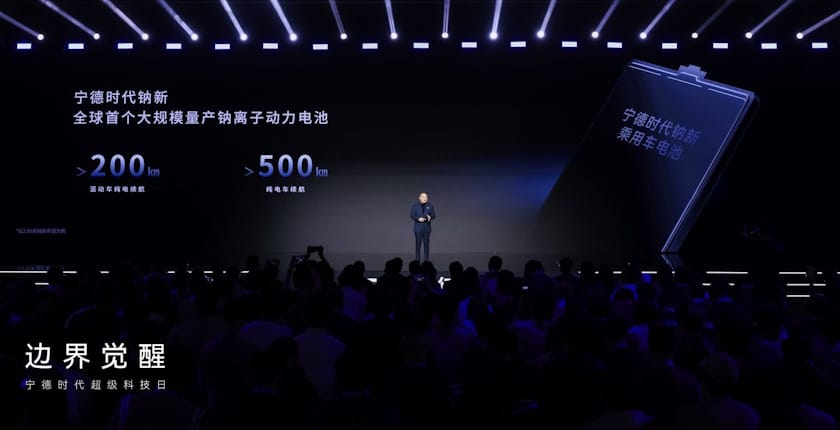
CATL: World’s first mass-produced sodium ion battery is here

Chinese battery producer CATL has unveiled Naxtra, claiming it is the world’s first mass-produced sodium ion battery. At its inaugural Super Tech Day, the company also showcased a battery that sets a new global record for superfast charging technology.

Naxtra breaks resource constraints and strengthens the foundation of the new energy industry, according to Contemporary Amperex Technology Co. Ltd. (CATL), one of the world’s biggest battery producers. Back in 2021 the company presented first generation of sodium ion batteries.

Batteries for electric vehicles and energy storage systems are predominantly made using lithium ion technology. However, the technical solution comes with environmental risks because of lithium production in mines and salt flats. The race is on to find a better one and sodium ion could be the winner.

CATL underlined that Naxtra Battery breaks through the performance boundaries of the material itself, allowing mass production of sodium ion batteries for the first time.

Naxtra Battery product line has two units

“With sodium’s inherent safety and abundant reserves, it efficiently reduces dependence on lithium resources and strengthens the foundation of new energy technologies, while promoting energy utilization from single resource dependence to energy freedom,” the press release reads.

Naxtra passenger EV Battery (photo: CATL)

The Naxtra Battery product line has two units: the Naxtra passenger EV Battery and the Naxtra 24V Heavy-Duty Truck Integrated Start-Stop Battery. Both are capable of performing across the full temperature range from minus 40 to as high as 70 degrees Celsius, redefining the extreme temperature limitations of batteries, CATL said.

The Naxtra passenger EV Battery retains 90% usable power at minus 40 degrees and achieves an energy density of 175 Wh per kilogram, the highest among sodium ion batteries worldwide, and comparable to LFP batteries, the update reads.

In terms of safety, it is a transformative breakthrough

CATL said the system provides a 500-kilometer range and that it can achieve over 10,000 cycles, significantly reducing maintenance costs. In terms of safety, it is a transformative breakthrough from “passive defense” to “intrinsic safety,” the manufacturer claimed.

According to the company, Naxtra 24V Heavy-Duty Truck Integrated Start-Stop Battery boasts over eight years of service life and reduces total lifecycle costs by 61% from the level in traditional lead-acid batteries.

Compared to lead-acid batteries, it is more efficient, eco-friendly, and economical, driving commercial vehicles into a lead-free era where vehicles and batteries age as one, the company claims.

Shenxing Superfast Charging Battery offers robust power across all temperature ranges

On the same occasion, the company presented two more “groundbreaking EV battery products,” as it called them.

The Freevoy Dual-Power Battery introduces a pioneering cross-chemistry system design that transcends the limitations of single technology paths to meet customized user needs. The second-generation Shenxing Superfast Charging Battery, with its peak 12C charging rate, sets a new global record for superfast charging technology, according to CATL.

The company stressed that Shenxing Superfast Charging Battery is the world’s first LFP system featuring both an 800-kilometer range and a 12C peak charging rate. With a peak charging power of 1.3 MW, it achieves 2.5 kilometers of range per second of charging, virtually eliminating the frustration of waiting, according to the press release.

Additionally, the device provides robust power across all temperature ranges and states of charge.

by in News

Turkey to manufacture green hydrogen, nuclear, CCS equipment

The 2030 Industry and Technology Strategy includes setting up industrial facilities in Turkey for nuclear energy, green hydrogen, battery storage and carbon capture and storage (CCS). The country is planning to establish a value chain for critical raw materials. The government vowed to support the development of semiconductor technology, autonomous and flying vehicles and cybersecurity solutions, alongside innovations for electric vehicles and solar and wind power.

With its recently unveiled 2030 Industry and Technology Strategy, Turkey announced the ambition to upgrade its industrial production to one of the most advanced in the world. As Russia’s Rosatom is completing the country’s first nuclear reactor in Akkuyu, the government is planning to develop its own technology in the segment.

The strategy involves setting up industrial clusters for equipment and infrastructure. Among the possible technologies are molten salt reactors. The Scientific and Technological Research Council of Türkiye (TÜBİTAK), Turkish Energy, Nuclear and Mineral Research Agency (TENMAK) and Istanbul Technical University (İTÜ) are tasked with establishing a nuclear tech park.

Green hydrogen mostly needed for decarbonizing hard-to-abate industrial production

TÜBİTAK is responsible for developing domestic electrolyzers as well. The national hydrogen program is set to bring support for integrating the production of green hydrogen, storage, transportation and consumption. The last of the four is especially focused on energy-intensive industries such as steel, petrochemicals and fertilizers.

Another segment that would get incentives is the use of hydrogen in fuel cell vehicles including heavy vehicles. The strategy envisages setting up pilot zones for green hydrogen production, with electrolyzers powered by wind and solar energy.

Turkey has high ambitions for high-tech exports

Turkey has revealed the goal of tripling its high-tech exports to USD 30 billion by the end of the decade. It is part of an ambition to lift industrial exports to USD 400 billion from last year’s USD 247 billion. At the same time, the government’s target for the overall valuation of domestic tech startups is USD 100 billion.

The 2030 Industry and Technology Strategy has other chapters, too, like carbon capture, utilization and storage (CCUS or just CCS), access to critical raw materials, semiconductor and battery manufacturing and cybersecurity. Officials vowed to continue prioritizing domestic electric vehicles, but with investments in autonomous operation systems and even flying cars.

Cybersecurity solar and wind turbine technologies. Turkey apparently remains dedicated to expanding the industrial base for solar panels and wind turbines as well.