by in News

SANY Renewable Energy makes successful breakthrough in European market

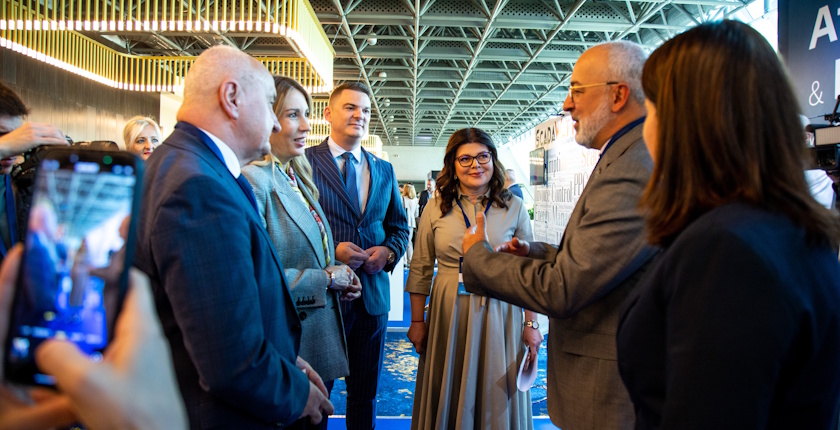
SANY Renewable Energy, one of the world’s top five onshore wind turbine manufacturers, made its debut at Belgrade Energy Forum 2025 (BEF 2025) on May 14-15, showcasing its cutting-edge wind power technology and integrated solutions to the European market.

At BEF 2025, SANY attracted significant interest from various stakeholders thanks to the Alibunar 1 and Alibunar 2 wind farm projects, the company’s first investments in Serbia, which is one of the key markets for SANY in Europe.

SANY’s attendance at BEF 2025 not only demonstrates its competitiveness in the global clean energy industry but also lays a solid foundation for further expansion in the European market.

Innovative technology attracts attention as SANY gains broad interest from developers

As the most influential energy event in Serbia and the Balkans, BEF 2025 brought together government agencies, energy companies, and industry experts to discuss Europe’s energy transformation and sustainable development. At the event’s exhibition area, SANY focused on showcasing its large-megawatt smart wind turbines, smart wind farm management systems, and energy storage solutions. Its high power generation efficiency, low levelized cost of electricity (LCOE), and intelligent operation and maintenance drew the attention of numerous participants.

Serbian Minister of Mining and Energy Dubravka Đedović Handanović said during her visit to the SANY booth that the company’s wind power technology is impressive and highly consistent with Serbia’s renewable energy development goals.

“We look forward to working with such leading international companies to accelerate the country’s green energy transformation,” stated Đedović Handanović.

Deepening European presence and supporting carbon-neutrality goals

In recent years, SANY has continued to increase its development and growth in the European market. This high-profile appearance at BEF 2025 sends a clear signal of strengthening regional cooperation. During the forum, company representatives held multiple rounds of negotiations with energy companies and investment institutions in Serbia and neighboring countries to discuss planning and possible project and technical cooperation.

“Europe is a key market for the development of renewable energy. SANY Renewable Energy’s goal is to help customers achieve economic feasibility while increasing efficiency with its high-quality products and customized services,” said Paulo Soares, Managing Director of SANY Renewable Energy Europe.

“We are looking forward to working with all stakeholders in Serbia to jointly promote the global carbon neutrality concept,” he stressed.

Industry analysts believe that as the demand for renewable energy in Europe continues to grow, SANY is expected to capture a larger market share in Europe with its high-reliability wind turbines, intelligent operation and maintenance, and localization strategy, and become an important promoter of the global green energy transformation.
by in News

Serbia to invest EUR 60 million in renewables in district heating

Serbia plans to sign an agreement by the end of the year on introducing renewable sources in district heating plants, according to the Ministry of Mining and Energy.

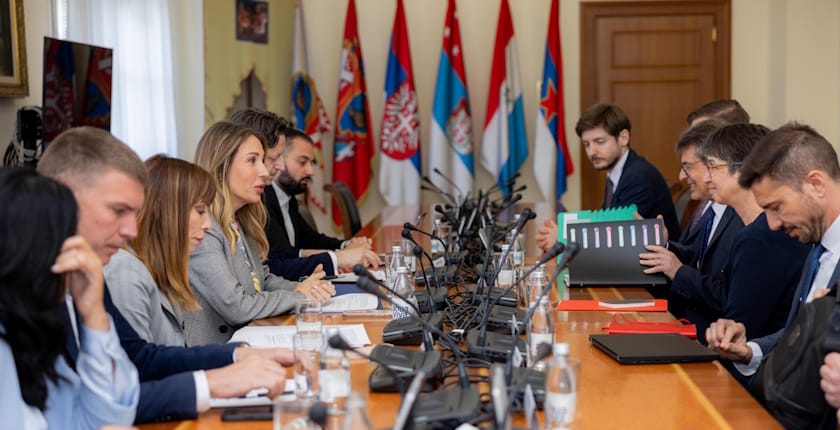
Minister of Mining and Energy Dubravka Đedović Handanović met with Ambassador of Germany Anke Konrad and Director of Germany’s KfW Development Bank for Southeast Europe and Turkey Klaus Müller.

They discussed cooperation on ongoing projects in the energy sector and a plan for further investments in renewables and energy efficiency.

The minister highlighted the successful cooperation with KfW in the construction of biomass heating plants and the introduction of renewable energy in district heating systems. She recalled that four biomass heating plants have been installed.

In the coming years, new boilers will be installed in several heating plants

She noted that in the second phase of the project, in the coming years, heating plants in Prijepolje, Novi Pazar, Niš, Rača, Vranje and Majdanpek are envisaged to get new boilers.

By the end of the year, Serbia plans to sign an agreement on the introduction of renewables in district heating plants, namely solar technology and heat pumps, Đedović Hanadanović announced.

The investment is estimated at EUR 60 million, of which EUR 20 million would be a donation, thanks to the support of KfW, she added.

Serbia and Germany plan to strengthen cooperation

Đedović Handanović stressed the importance of the climate partnership with Germany and thanked for the support that the other country provides to Serbia in the modernization of the energy sector.

“We are grateful to the German government and the KfW Development Bank for their continuous support in different subsectors in energy, from district heating and energy efficiency to the development of new capacities from renewable energy sources,” she stated.

In line with its ambitions and reform goals in energy, Serbia intends to deepen cooperation with Germany through new projects.

Of note, the four heating plants were installed in Priboj, Mali Zvornik, Novi Pazar and Majdanpek. The agreement for the second phase of the project was signed in May last year.

by in News

Serbia to soon finish study on use of nuclear energy – minister

The preliminary study on the use of nuclear energy in Serbia should be completed by the end of the second quarter, according to Dubravka Đedović Handanović, the Minister of Mining and Energy.

A preliminary technical study for considering the peaceful use of nuclear energy is being prepared by French state-owned energy utility EDF and engineering company Egis Industries. The two companies won a tender organized by the Ministry of Mining and Energy.

Minister Dubravka Đedović Handanović told public broadcaster RTS that the study focuses on three aspects. The first one is developing a roadmap for the implementation of 19 institutional and infrastructural steps for a potential nuclear program.

Experts from Serbia’s TSO EMS are involved in the preparation of the study

The roadmap, in her words, must be in line with the guidelines of the International Atomic Energy Agency (IAEA).

The second topic is an analysis of available technologies, including conventional nuclear power plants and small modular reactors (SMRs), and the third is to consider how a nuclear plant, depending on capacity, could be integrated into the country’s energy system.

Experts from Serbia’s transmission system operator Elektromreža Srbije are providing help in the third part, she noted.

Serbia would need to choose a partner for the development of a nuclear power project

According to Đedović Handanović, SMRs are a technology under development for cheaper facilities, which require less time to be built than conventional reactors.

“It is up to us to look at the advantages and disadvantages of both technologies, of which one is under development and the other is proven in the market, and say what we want to go with. Of course, if all the preconditions are met. Also, finally, with whom, as all the main developers of the technologies are certain companies from different parts of the world,” she stressed.

Baseload energy is crucial for the stability of the energy system

The minister pointed out that the IAEA prescribes clear steps each country must fulfill if it is considering the development of a nuclear program. It means no country can do anything on its own, she added.

“All those institutional and infrastructural prerequisites have to be checked, approved, verified, and ultimately monitored by the IAEA,” Đedović Handanović underlined.

Speaking about the long-term strategy, she recalled that baseload energy is crucial to secure the stability of the energy system. In Serbia it is currently provided from coal and natural gas, while nuclear plants can also play the role.

Natural gas, in her words, will serve as a transitional fuel for baseload energy for another 20-30 years, so it is necessary to find a long-term solution. Nuclear energy is one of the options, but it requires a lot of experience, time, and investment, Đedović Handanović noted.

by in News

Everything is ready for Belgrade Energy Forum 2025 – welcome!

Everything is ready for the third Belgrade Energy Forum – BEF 2025. On May 14 and 15, the conference will gather four hundred participants from more then 30 countries from the region, Europe, and beyond.

Participants of the Belgrade Energy Forum 2025 (BEF 2025) will have the opportunity to hear from speakers from the European Union and five countries in the region and exchange views. Eight panels featuring more than 50 officials, executives and prominent energy experts will try to untangle the currently most important issues in the energy sector.

Representatives of governments, regulatory agencies, regional and international institutions and organizations as well as the business community will outline their future moves, which is invaluable information given the new reality of a turbulent geopolitical landscape.

Latest information on the largest project for the installation of solar power plants in the region and beyond

Energy Community Secretariat Director Artur Lorkowski and Serbian Minister of Mining and Energy Dubravka Đedović Handanović will open the event. One of the key speakers is Christian Zinglersen, director of the EU Agency for the Cooperation of Energy Regulators (ACER).

The ministerial panel consists of ministers and other officials from Montenegro, Croatia, Hungary, Serbia, and the Republic of Srpska, which is one of the two entities making up Bosnia and Herzegovina.

Representatives of the Hyundai Engineering – UGT Renewables consortium will summarize the next steps in the largest solar power project in the region and beyond. The consortium is the diamond sponsor of the event this year as well.

It entails solar power plants with a total connected power of 1,000 MW, and battery energy storage systems (BESS) of 200 MW in overall capability and 400 MWh in capacity.

It is a joint project with Serbian state-owned power utility Elektroprivreda Srbije. The partners took another important step this week by signing a grid connection contract with the country’s transmission system operator Elektromreža Srbije.

Hitachi’s cutting-edge technological solutions are indispensable in Southeast Europe

Keynote speakers Seung-Won Lee, Vice President of Hyundai Engineering, and Chan Wo Park, Global Executive Advisor at UGT Renewables, will present the project.

Hitachi Energy‘s cutting-edge technological solutions are indispensable in Southeast Europe. Some examples of its contribution to the energy transition of the region are the largest solar power plant in the Balkans – Apriltsi in Bulgaria, of 250 MW, as well as the second wind farm in North Macedonia – Bogoslovec, with a capacity of 36 MW.

Together with the Association of Serbian Energy Intensive Industry, Hitachi Energy is in the group of silver sponsors of BEF 2025.

The association was founded by Metalfer Group, Elixir Group, Lafarge Serbia, Moravacem (part of CRH) and TITAN Cementara Kosjerić. They are producers of steel, fertilizers and cement driven by a vision of sustainable development, industrial innovation and regulatory clarity.

Zečević: Decarbonization must be shaped by strategy, not imposed by circumstance

BEF 2025 will be attended by the association’s manager Stanislava Simić, Metalfer Group president, Branko Zečević and Lafarge Serbia CEO Dimitrije Knjeginjić.

“As Europe enforces carbon accountability through CBAM, Serbia and the Western Balkans must not remain a regulatory blind spot. Without our own regionally adapted carbon border policy, we risk being overwhelmed by carbon-intensive imports, eroding both our industry and climate goals,” Zečević stressed.

The association calls for a regional, synchronized approach – one that levels the playing field, accelerates innovation, and positions the Western Balkans as a credible partner in Europe’s green transition, he added. Decarbonization must be shaped by strategy, not imposed by circumstance, according to Zečević.

Batteries are the stars of BEF 2025

The panel ‘Energy storage system market in SEE: trends and forecasts’ has attracted great interest.

One of the panelists is Ioanna Barouni, Research Associate in Aurora Energy Research, a reliable energy market analyst and a knowledge partner of the forum. The company’s analysis unveils answers to questions that everybody asks – politicians, investors and regulators alike. For instance, one burning issue is the effect of cannibalization in solar power on wholesale power prices.

Aurora recently presented its first forecast for the Western Balkans, based on investment activity. The firm now provides forecasting services for Albania, Kosovo*, North Macedonia, Montenegro, and Bosnia and Herzegovina.

Cerović: BEF is a key event bringing together industry experts

Financing battery energy storage systems is a job banks such as UniCredit Bank Serbia, a bronze sponsor of the conference.

“I’m delighted to once again represent UniCredit Bank Serbia, in BEF, a key event that brings together industry experts and leaders in the energy transition in Southeast Europe. As the global market moves towards decarbonization and greater use of renewable sources, the role of energy storage systems becomes increasingly important,” said Svetlana Cerović, Head of Specialized Lending at UniCredit Bank Serbia.

She is also last year’s winner of the Female Leader in Sustainable Energy award.

Fortis brings its vast experience in investments in energy storage

Fortis is bringing its vast experience in investments in energy storage. In February, the firm inked a deal for batteries for North Macedonia’s largest PV plant, Oslomej, while a 36 MWh battery in Serbia is in the pipeline. Fortis has also signed a framework agreement with PowerChina on joint investments in renewable energy projects.

Nikola Oklobdžija, CEO of Fortis Energy for Eastern Europe, will present the company’s vision.

Renewable Energy Insurance Broker, a bronze sponsor, was one of the key factors for the largest photovoltaic plant in Romania. It provided insurance packages for every phase of development of the 155 MW Rătești facility. REIB is a specialized insurance intermediary focused exclusively on the renewable energy sector.

Tailored insurance solutions improve project bankability and long-term security, according to the firm.

Four companies are exhibitors

BEF 2025 has an exhibition segment, too. One of the companies showcasing its activities is ScadaWatt, which develops smart and reliable solutions for power plants. The company provides remote monitoring, real-time control, and AI-powered analytics to improve efficiency and reduce losses.

SciEngineer and Zarja Elektronika will also present their services and solutions. SciEngineer is the exclusive representative of MathWorks, COMSOL, and Speedgoat in Central and Eastern Europe. Their solutions reduce development time, cut costs, improve reliability, and accelerate time-to-market.

Zarja Elektronika is a leading Slovenian company specializing in advanced fire detection and alarm systems. With over 40 years of experience, it provides innovative, reliable, and tailor-made safety solutions for industrial, commercial, and residential environments.

DRI and YEO are friends of the conference

The Chinese company SANY Renewable Energy, which owns the Alibunar 1 and Alibunar 2 wind farms, will also have an exhibition stand.

DRI and YEO are joining the group of the friends of the conference. DRI is an Amsterdam-headquartered renewables developer and a subsidiary of the DTEK Group, one of the biggest private investors in Ukraine’s energy sector.

Joffroy Beckers, Head of PPA, will speak at a panel dedicated to the topic.

In January, DRI said it planned to start building the 120 MW Ljubovo wind power plant in Croatia in 2027. It revealed it right after it completed a 60 MW solar power plant in Romania.

Turkey-based YEO is active in more than 30 countries, delivering turnkey solutions in energy and industrial systems. In the Balkans, in addition to its energy expertise role, the company invests in renewable energy projects.

* This designation is without prejudice to positions onstatus and is in line with UNSCR 1244/99 and the ICJ Opinion on the Kosovo declaration of independence.
by in News

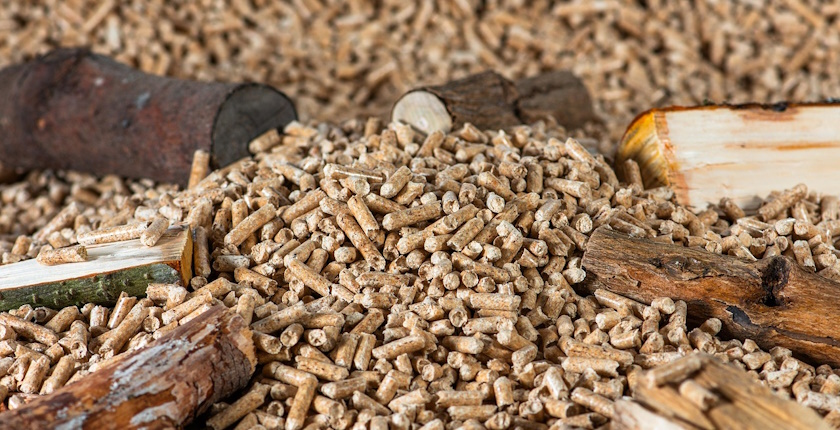
Serbia adopts first ever rulebook on standards for wood pellets

Serbia has adopted the rulebook on solid fuels from wood biomass, which for the first time regulates the quality of pellets and briquettes on the domestic market.

The rulebook on technical and other requirements for solid fuels from wood biomass sold on the Serbian market will enter into force in three months. In the meantime, an institution needs to be established for control, compliance, and corrective measures regarding the new requirements.

The rulebook introduces technical standards and mandatory laboratory analysis, defines rules for assessing compliance, and product labeling. It envisages oversight of the levels of substances affecting health and the environment, according to the Ministry of Mining and Energy.

Ministry: Only high-quality pellets will be sold on the Serbian market, in line with the standards set by the EU

“By adopting the rulebook we want to preserve the competitiveness of the pellet industry in Serbia. This document represents a fine example of the cooperation between the authorities and the businesses,” Minister Dubravka Đedović Handanović stated.

The ministry claims that the rulebook secures that only high-quality pellets can be sold on the Serbian market in line with the standards applicable in the European Union.

For the first time, the physical and chemical characteristics of wood pellets will be controlled

According to the Chamber of Commerce and Industry, only pellets with positive results from laboratory analysis and the kinds that meet strict standards on harmful substances will be allowed on the market in Serbia.

“For the first time our authorities would control physical and chemical characteristics of wood pellets such as size, shape, stability, caloric values, moisture, and ash level,” the association of Serbian firms added.

The same will apply to the substances affecting human health and the environment including heavy metals – arsenic, cadmium, chromium, copper, lead, mercury, nickel, zinc, sulfur, and nitrogen.

The association recalled that the ministry established the working group for the preparation of the rulebook upon its initiative.

by in News

Serbia allocates entire quota at second auctions, investors to install 645 MW of wind, solar

Serbia allocated the entire 424.8 MW quota in its second wind and solar power auction. According to the Ministry of Mining and Energy, the winning bids came from investors from China, the United States, France, and Serbia. They intend to install ten power plants with a total capacity of 645 MW.

The Ministry of Mining and Energy conducted the second round of renewable electricity auctions. Forty-one applications were submitted for market premiums, and 37 were declared valid. Both segments were oversubscribed. Investors in wind submitted bids for 444 MW, and the quota was 300 MW. For solar, they applied for premiums for 260 MW, compared to the available 124.8 MW.

The winners have the right to sign 15-year contracts for difference (CfDs).

Seven bids were declared valid for wind, and five filled the quota. Investors will build wind parks with an overall capacity of 468 MW, and premiums will be awarded for 300 MW, according to the proposed ranking list, published on the ministry’s website, which tracks renewable energy tender procedures. The maximum acceptable bid for wind farms was EUR 79 per MWh, and the investors offered from EUR 53.59 to EUR 68.25, according to the announcement.

These are the winning bidders: Matrix Power, owned by French developer Akuo Energy, Windvision Windfarm A, Windvision Windfarm B, Crni Vrh Power, owned by Chinese companies Shanghai Electric Power & Energy Development Limited and CMC Capital, and Jasikovo, owned by Serbian citizens.

The crowd was much bigger for the solar segment. Five projects won the right to market premiums. A total of 30 applications were valid. The quota was 124.8 MW, and the selected investors are set to install photovoltaic plants with 177 MW in combined capacity, the ministry’s proposed ranking list shows.

It said that the investors offered prices from EUR 50.9 to EUR 59 per MWh. The ceiling for electricity from photovoltaic plants was EUR 72. The following firms had winning bids: Vemi Biogas, Kobra Global, Solarina, Mona Green Energy 2, and Brankov Solar. The 150 MW Solarina project is the only large one, while Brankov Solar is an agrisolar one.

Solarina is owned by CWP Europe, and Mona Green Energy 2 by Serbia’s Mona Holding. The three other firms are owned by Serbian citizens.

The ministry noted that the total planned investments of the winning bids is EUR 782 million.

Đedović Handanović: All produced electricity will be offtaken by Serbia’s utility EPS

Minister Dubravka Đedović Handanović said the second round of auctions was highly successful in capacity and offered prices. Importantly, all electricity from the power plants that get the premiums will go to state-owned power utility Elektroprivreda Srbije (EPS) and be used to supply domestic businesses and households.

“The offered prices are very competitive, i.e. EUR 50.9 per MWh for solar and EUR 53.5 per MWh for wind, which is significantly below the market levels. According to our incentives model, this means we don’t expect power plants will be subsidized but that they will return windfall profit to the state as long as market prices are higher than those offered by the auction winners,” she stated.

The confirmation of good conditions for investment in Serbia

Đedović Handanović stressed that the high interest by investors is a confirmation of good conditions for investments in Serbia.

“In addition to domestic investors, the winners of these auctions are also investors from China, the USA, and France. It demonstrates that Serbia is globally recognized as a good destination for investment, which will be very significant in achieving our strategic goals in the energy transition process,” she said.

In 2023, the Government of Serbia adopted the incentives plan for renewables for a three-year period through 2025. It said it would award market premiums for 1.3 GW. The first round of auctions was conducted in 2023. The selected projects, for 715 MW in total capacity, are all supposed to be connected to the grid by the end of next year.

  • 1
  • 2