by in News

Serbia and Azerbaijan sign EUR 600m deal to build ~500 MW combined-cycle gas plant near Niš

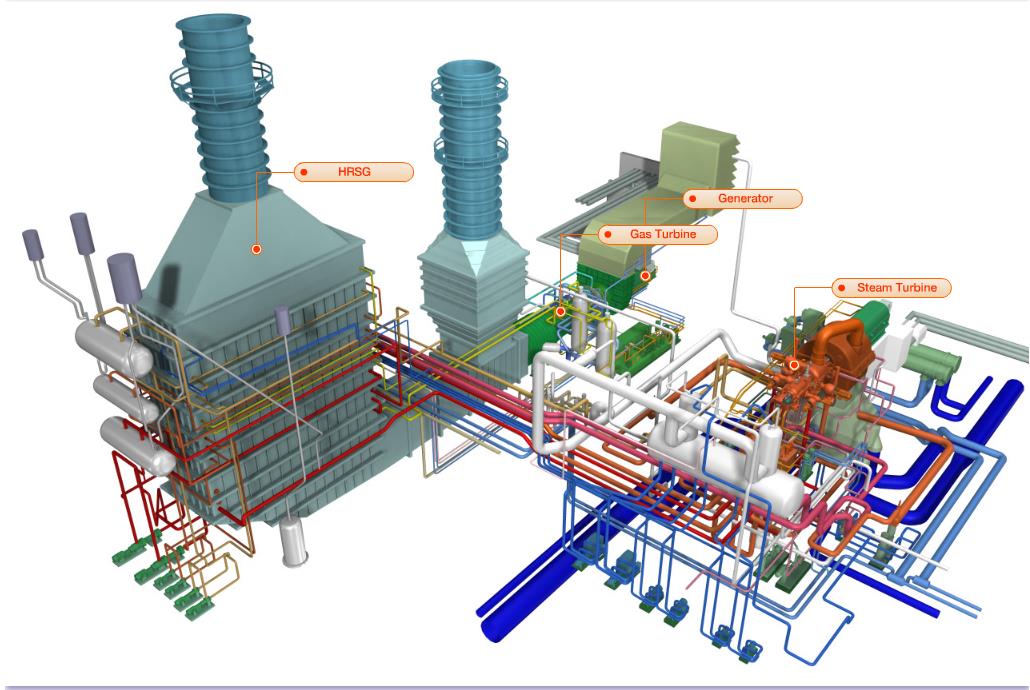
An agreement to develop, design, construct and operate a combined-cycle gas-fired power plant near the city of Niš was signed by the governments of Serbia and Azerbaijan, launching a project with an expected installed capacity of about 500 MW and an estimated investment of EUR 600 million.

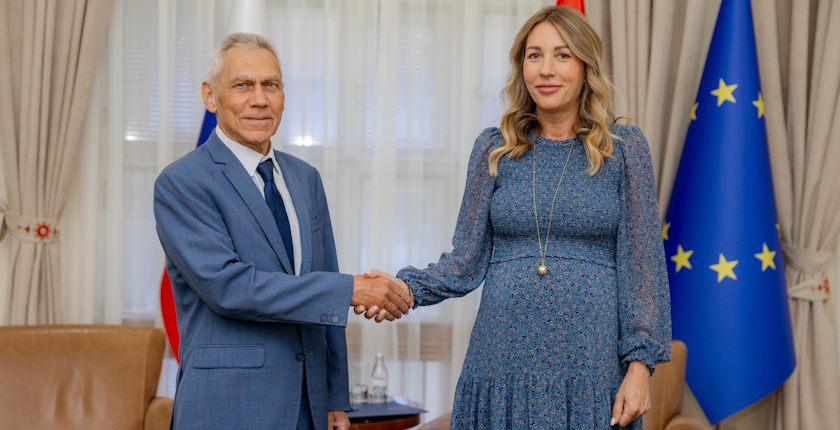
The document — exchanged between the Government of Serbia and the Government of Azerbaijan — was signed by Serbian Minister of Mining and Energy Dubravka Đedović Handanović and Azerbaijan’s Minister of Economy Mikail Jabbarov during a visit by Azerbaijani President Ilham Aliyev. Officials said the plant will supply power and heat underpinning growth in the south of Serbia, including rising electricity demand, new data centers and industrial needs.

Project details released by Serbian authorities put the plant’s output at 350 MW of electricity and 150 MW of heat, with natural gas for generation to be supplied by Azerbaijan. Serbian President Aleksandar Vučić told visiting counterparts that construction is expected to take a little more than two years. The president also described the signed document as a term sheet and said Belgrade plans to complete preparatory steps within two to three months so conceptual design work can begin.

Parliament speaker Ana Brnabić had previously indicated that negotiations on the plant were complete and reiterated the EUR 600 million investment estimate in September 2025.

Alongside the power-plant agreement, the two countries exchanged six additional documents covering cooperation in media and communications, the economy, food safety and health insurance, and they held the inaugural session of a strategic partnership council to deepen bilateral ties. Observers say the project strengthens Serbia’s energy links with Azerbaijan and complements earlier gas-supply arrangements between the two states.

The Do-to-build timeline, financing structure and operator responsibilities will now move into more detailed planning and negotiation. Government sources emphasized the strategic objective: add baseload capacity quickly while securing fuel supplies and supporting regional development.

Tags: Serbia-Azerbaijan energy deal, Niš gas power plant, combined cycle gas, EUR 600 million investment, baseload capacity, gas supply Azerbaijan, Serbian energy security, data center power, Dubravka Đedović Handanović, Mikail Jabbarov
by in News

Đedović Handanović: Construction of 1 GW solar project to start in 2026

The start of construction of solar power plants in a project for a total capacity of 1 GW is expected in 2026, Minister of Mining and Energy of Serbia Dubravka Đedović Handanović said.

State-owned power utility Elektroprivreda Srbije (EPS) announced that its shareholders’ assembly adopted the Three-Year Business Plan for the period 2026-2028.

Dubravka Đedović Handanović pointed out that the company had good production and financial results for three consecutive years. According to the adopted three-year business plan, this trend will continue in 2026, she added.

EPS will invest EUR 1 billion in 2026

The minister recalled that in 2025 EPS built its first wind farm – Kostolac, and the Petka solar power plant, with a combined capacity of 76 MW. The company also finished the construction of the desulfurization facility at its coal-fired power plant Nikola Tesla B (TENT B), allowing the reduction of sulfur dioxide (SO2) emissions by 20 to 40 times, she added.

“Investments this year have also been at a high level, 97% in fact, considering that due to the scope and complexity of preparatory activities, the start of materialization of the project for the construction of solar power plants of 1 GW is expected in 2026. The focus of investments of around EUR 1 billion in 2026 will be on maintenance and improvement of the reliability of the power system and, primarily, on increasing the share of renewable energy sources in EPS’s energy mix,” Đedović Handanović stressed.

The company will build new solar power plants as well

The largest portion of the investments, in her words, is planned for new renewable energy plants, such as the construction of solar power plants totaling GW and pumped storage hydropower plant Bistrica, as well as the development of a larger number of solar power plants on land owned by EPS.

Of note, the company is developing the 1 GW solar project, which includes batteries, in collaboration with a consortium comprising Hyundai Engineering and UGT Renewables.

EPS yesterday invited bids for a preliminary feasibility study and conceptual design for a solar power plant on the ash disposal site of TENT A.

The minister revealed that next year’s plan includes an increase in employees’ salaries.

The company will continue its transformation activities, she added. Đedović Handanović welcomed the fact that EPS didn’t take out liquidity loans this year.

by in News

Serbia backs talks on sale of NIS to Hungary’s MOL – energy minister

Serbian Minister of Mining and Energy Dubravka Đedović Handanović has confirmed that Russian shareholders are negotiating the sale of their stake in Serbia-based oil company NIS to Hungarian oil and gas company MOL, and that the Government of Serbia supports the talks. NIS is majority-owned by Russian energy giant Gazprom, whose exit from the ownership structure is a requirement for lifting US sanctions against the oil company.

Đedović Handanović added that both NIS and MOL have approached the US Office of Foreign Assets Control (OFAC). According to her, the negotiations on the exit of Russian capital from NIS’s ownership structure are supported by the Russian, Hungarian and Serbian governments.

“The Government of Hungary has supported those talks, and we, as the Government of Serbia, will also provide support, with the aim of finding a solution to lift the sanctions and to create the conditions for granting an operating license to NIS,” she stated.

NIS has applied for an OFAC license to continue operating, but has not yet received approval.

Serbia supports the sale of the Russian stake in NIS to enable the lifting of US sanctions

Recently, Serbian President Aleksandar Vučić also confirmed that information had emerged about negotiations between Gazprom and MOL, adding that Serbia had no objections to the sale of NIS to the Hungarian company.

Serbian officials previously said that the Russian side had agreed to sell the company and that negotiations were underway with several firms. According to unofficial information at the time, one of the suitors was Abu Dhabi National Oil Co. (ADNOC) from the United Arab Emirates.

The US sanctions against NIS, which supplies 70–80% of petroleum products to the Serbian market, came into effect on October 9. The sanctions have blocked NIS from importing crude oil, forcing its Pančevo refinery to halt production.

Đedović Handanović: Serbia still has enough fuel, but reserves are depleting

Đedović Handanović said that citizens have not felt the impact of the sanctions and that Serbia still has sufficient fuel, from diesel and gasoline to fuel oil and kerosene, to get through the crisis. However, she noted that these reserves are depleting and that people need to understand that Serbia lacks the logistical capacity to import the volumes of petroleum products it requires.

She stressed that Serbia will continue the dialogue to ensure that NIS can continue operating, regardless of the time required to complete the transaction between MOL and the Russian shareholders.

by in News

Đedović Handanović: Construction of 1 GW solar project to start in 2026

The start of construction of solar power plants in a project for a total capacity of 1 GW is expected in 2026, Minister of Mining and Energy of Serbia Dubravka Đedović Handanović said.

State-owned power utility Elektroprivreda Srbije (EPS) announced that its shareholders’ assembly adopted the Three-Year Business Plan for the period 2026-2028.

Dubravka Đedović Handanović pointed out that the company had good production and financial results for three consecutive years. According to the adopted three-year business plan, this trend will continue in 2026, she added.

EPS will invest EUR 1 billion in 2026

The minister recalled that in 2025 EPS built its first wind farm – Kostolac, and the Petka solar power plant, with a combined capacity of 76 MW. The company also finished the construction of the desulfurization facility at its coal-fired power plant Nikola Tesla B (TENT B), allowing the reduction of sulfur dioxide (SO2) emissions by 20 to 40 times, she added.

“Investments this year have also been at a high level, 97% in fact, considering that due to the scope and complexity of preparatory activities, the start of materialization of the project for the construction of solar power plants of 1 GW is expected in 2026. The focus of investments of around EUR 1 billion in 2026 will be on maintenance and improvement of the reliability of the power system and, primarily, on increasing the share of renewable energy sources in EPS’s energy mix,” Đedović Handanović stressed.

The company will build new solar power plants as well

The largest portion of the investments, in her words, is planned for new renewable energy plants, such as the construction of solar power plants totaling GW and pumped storage hydropower plant Bistrica, as well as the development of a larger number of solar power plants on land owned by EPS.

Of note, the company is developing the 1 GW solar project, which includes batteries, in collaboration with a consortium comprising Hyundai Engineering and UGT Renewables.

EPS yesterday invited bids for a preliminary feasibility study and conceptual design for a solar power plant on the ash disposal site of TENT A.

The minister revealed that next year’s plan includes an increase in employees’ salaries.

The company will continue its transformation activities, she added. Đedović Handanović welcomed the fact that EPS didn’t take out liquidity loans this year.

by in News

Serbia, North Macedonia seek to build gas interconnector by end-2027

Serbia and North Macedonia aim to complete the construction of a gas interconnector in late 2027 and put it into operation in early 2028, Serbian Minister of Mining and Energy Dubravka Đedović Handanović said following a meeting with North Macedonia’s Minister of Energy, Mining and Mineral Resources Sanja Božinovska. The pipeline’s projected annual capacity is 1.5 billion cubic meters of natural gas.

Following the construction of the interconnector with Bulgaria, Serbia continues to diversify its supply routes, and the gas link with North Macedonia is a priority in that context, according to Đedović Handanović.

Serbia’s portion of the interconnector with North Macedonia will be 144 kilometers long and will cost an estimated EUR 153 million to build, she said. The plan is to obtain a construction permit in mid-2026 and launch works immediately afterward, she added.

Serbia’s portion of the pipeline will cost EUR 153 million

The planned route on Serbia’s territory is Orljane – Leskovac – Vranje – the North Macedonian border, according to her.

Đedović Handanović: Serbia’s goal is a fully diversified gas supply

“The capacity of the gas interconnector with Bulgaria is 1.8 billion cubic meters per year, and with the completion of the interconnector with North Macedonia, as well as the planned interconnector with Romania, whose capacity will be between 1.6 and 2.5 billion cubic meters, we will have a fully diversified gas supply within the next few years,” said Đedović Handanović.

serbia north macedonia gas pipeline interconnection djedovic bozinovska

Photo: Ministry of Mining and Energy/Nenad Kostić

The goal is to have as many supply options as possible, not to depend on a single supplier, and to ensure greater security and a better negotiating position in terms of prices and capacity, she added.

Božinovska, for her part, said the interconnector with Serbia would ensure new gas sources for North Macedonia and strengthen regional energy stability.

Božinovska: The gas link is one of the most important regional infrastructure projects

“This is also one of the most important regional infrastructure projects – important not only for North Macedonia and Serbia, but for all of Europe. With this new energy link, both countries will gain access to alternative sources and routes, and Europe will get a stronger and better connected Balkans,” Božinovska asserted.

The two countries have completed the necessary studies, agreed on the route, ensured the European Union’s support, and defined a clear implementation timeline, according to her.

Joint efforts to secure a postponement of CBAM

The meeting also addressed the coordinated approach to the EU’s Carbon Border Adjustment Mechanism (CBAM), which is scheduled to take effect on January 1, 2026.

According to Đedović Handanović, the two sides agreed to act jointly on this issue and to request a postponement of the mechanism’s implementation.

“Letters from all contracting parties to the Energy Community will be sent next week so that we can continue the dialogue with the European Commission, which is important not only for Serbia and North Macedonia, but also for the other contracting parties,” she said.

The two sides also discussed the possibility of North Macedonia covering part of Serbia’s demand for oil derivatives, primarily in the country’s south, the Serbian Ministry of Mining and Energy said in a statement.

by in News

Serbia’s EPS starts trial operation of its first wind park Kostolac

Serbia’s state-owned power utility Elektroprivreda Srbije put the 66 MW Kostolac wind farm into trial operation.

The construction of Kostolac is complete, and Elektroprivreda Srbije’s (EPS) first wind farm has generated its first megawatt-hours, EPS announced.

Upon receiving approval for connecting to the transmission system, the substation was energized and the blades of wind turbine 1 began to spin. It marked the start of the trial operation of the new generation capacity, the company said, and added that the kickoff of the remaining wind turbines is underway.

EPS’s first wind power plant, with 20 generators, is located at sites called Drmno, Petka, Ćirikovac and Klenovnik, at an area of closed open-pit mines of its subsidiary Termoelektrane i kopovi Kostolac (TE-KO Kostolac). It operates coal-fired power plants and open-pit coal mines.

Živković: It is a historic moment for EPS

Closed coal mines are ideal locations for installing wind farms and solar power plants, due to existing infrastructure. The concept has become widespread in Balkan countries.

“This is a historic moment for EPS. In addition to energy from water, coal, and the sun, now the first wind farm is online. This is a big step toward increasing the share of renewable energy and achieving sustainable energy development for EPS and the entire Serbian energy sector,” CEO Dušan Živković underlined.

He pointed out that the wind farm is just the beginning of future intensive development of new green capacities. It is very significant that it was built on the site of an old mining landfill and that the space has been given a completely new, sustainable purpose, he added.

The wind farm is expected to produce 187 million kWh annually

serbia eps wind farm Kostolac trial operation coal mine
Photo: EPS/Zoran Gavrilović

Živković recalled that the construction of the wind farm was a major challenge, but also a real opportunity for experienced engineers and young, new professionals at EPS to gain new knowledge and experience for future projects.

The planned annual production of the wind farm is 187 million kWh, which is enough to supply about 30,000 households with green electricity, according to EPS.

The project is financed by a EUR 110 million loan from Germany’s KfW Development Bank and a EUR 30 million grant from the European Union via the Western Balkans Investment Framework (WBIF), while the company provided a part of the needed funds, EPS said.

Serbia’s Minister of Mining and Energy, Dubravka Đedović Handanović said in January 2024, at the signing of an agreement with the EU for the EUR 30 million grant, that it has completed the financing of the project.

According to WBIF’s update from December 2024, the project was valued at EUR 145.1 million. It comprised EUR 81.8 million from a KfW loan and EUR 31 from WBIF in the form of a grant, while EPS provided EUR 32.3 million.

by in News

Serbia warns of gas crisis as EU transit ban threatens Balkan Stream supply

Serbia is in a very difficult situation because, as of January 1, 2026, it won’t be able to receive Russian natural gas via Bulgaria, according to the Ministry of Mining and Energy.

Serbia receives natural gas from Russia via the Balkan Stream. The pipeline is an extension of TurkStream that passes through Bulgaria and Serbia. Bosnia and Herzegovina and Hungary, Serbia’s neighbors, are also supplied via Balkan Stream. TurkStream delivers gas from Russia across the Black Sea to Turkey.

Serbia is facing a very difficult and almost dead end situation due to the European Union’s ban on the transit of Russian gas through the EU to third countries, which will come into effect on January 1, 2026, according to Serbia’s Minister of Mining and Energy Dubravka Đedović Handanović.

Đedović Handanović: Bulgaria won’t allow the flow of Russian gas through the Balkan Stream

Bulgaria won’t allow the flow of Russian gas through Balkan Stream, which will negatively impact Serbia, she stressed.

The European Commission set out a plan in May to phase out the purchases of Russian natural gas, including in liquefied natural gas (LNG), and oil, by the end of 2027. The council now confirmed that imports of Russian gas will be prohibited from January 1, 2026, while maintaining a transition period for existing contracts.

Đedović Handanović: We are doing everything in our power, but the situation is almost hopeless, considering the current situation regarding NIS

Yesterday, the Council of the European Union agreed on its negotiating position on the European Commission’s draft regulation to phase out imports of Russian natural gas. When the European Parliament adopts its own position, it can start negotiating with the council.

When the two institutions approve a regulation, it directly applies to all member states.

Đedović Handanović expressed hope that a solution would be found due to, as she put it, President Aleksandar Vučić’s excellent relations with world leaders.

“We are doing everything in our power, but it is an almost dead end situation, considering the current situation regarding Naftna industrija Srbije [NIS]. Our country, which is not involved in any conflict, has found itself affected through no fault of its own. Despite everything, we will do our best, as we have so far, so that citizens don’t feel the problems we are facing,” Đedović Handanović underlined.

Namely, the United States imposed sanctions on October 9 against NIS, Serbia’s national oil importer, refiner, and operator of a chain of service stations.

by in News

Serbia to sign agreement on gas power plant with Azerbaijan

Serbia has completed the negotiations with Azerbaijan on the construction of a natural gas power plant near the city of Niš, according to Ana Brnabić, the Speaker of the National Assembly. She also said an agreement has been reached on additional quantities of gas that would be supplied to Serbia from the Caucasian country.

The negotiations for the construction of a gas power plant in Niš have been completed, Ana Brnabić said. She added that the facility would be a joint project between Azerbaijan and Serbia, RTS reported.

In mid-November last year President of Serbia Aleksandar Vučić revealed that the government was starting talks with Azerbaijan on a possible joint construction of a 1 GW gas power plant in Niš, or two smaller units.

The agreement would likely be signed during the first meeting of the strategic cooperation council

Speaking during her visit to Azerbaijan, Ana Brnabić underlined that the signing of the gas power plant agreement would likely occur in the first meeting of the bilateral strategic cooperation council, when it is most convenient for the presidents, Aleksandar Vučić and Ilham Aliyev.

The investment near Niš would serve as an additional, significant stimulus and guarantee for Serbia’s energy security and stability, she stressed. The gas power plant will have a capacity of around 500 MW, which is of huge significance for Serbia, according to Brnabić.

The investment is estimated at EUR 600 million, she added.

An agreement reached on additional quantities of natural gas will be signed in the coming weeks

The country’s draft 2040 energy strategy includes a plan for a gas-fired cogeneration plant in Niš of 150 MW in electricity capacity and another 100 MW for heat. Another one would be built in Novi Sad. It is envisaged at 350 MW and 100 MW, respectively.

Earlier, Serbia’s Minister of Mining and Energy Dubravka Đedović Handanović stressed that the gas power plant project is important for generating baseload energy and providing the security of supply.

Brnabić also said an agreement on additional quantities of gas has been reached and that the plan was to sign it in the coming weeks. Serbia already has quantities contracted with Azerbaijan, but additional amounts have been secured at the request of President Aleksandar Vučić for the winter months, she explained.

by in News

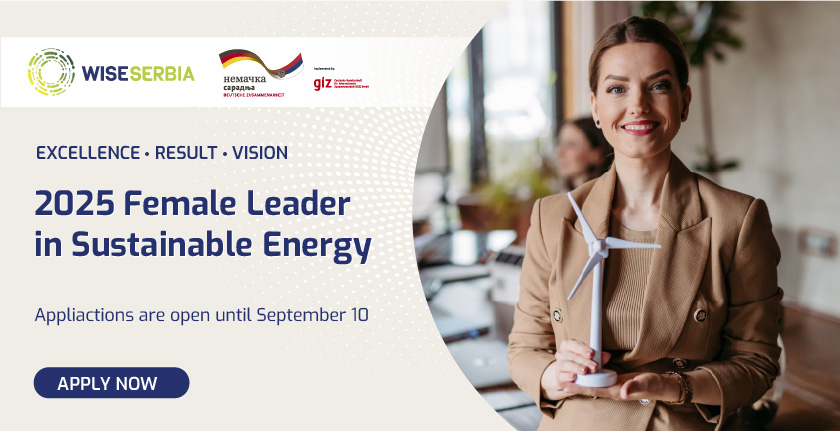
Applications for 2025 Female Leader in Sustainable Energy Award in Serbia opened

WISE Serbia, the Network of Women in Sustainable Energy, Climate Action, and Environment, under the auspices of the German development cooperation GIZ, announces the call for nominations for the 2025 Female Leader in Sustainable Energy Award. The call is intended for women who are professionally engaged in the energy and related sectors in the Republic of Serbia and who have demonstrated outstanding results in their careers. Application process is open until September 10.

The call for nominations for the 2025 Female Leader in Sustainable Energy Award aims to recognize women who, through their leadership, outstanding achievements, and vision, have demonstrated significant contribution to the sustainable development of the Serbia’s energy and related sectors, energy transition acceleration, improvement of energy efficiency, energy security, and safety, as well as the greater recognition of women in this field.

The Female Leader in Sustainable Energy award was established in 2023 by the Center for the Promotion of Sustainable Development, the founder of the WISE Serbia women’s network, under the auspices of the German development cooperation GIZ. The WISE Serbia network was established in 2018 and is among the first of its kind globally.

The recipient for the previous year, was Svetlana Cerović, Director of Specialized Financing at UniCredit Bank Serbia

The title of the Female Leader of Sustainable Energy has been awarded to several notable individuals. For 2023, the recipients are Dubravka Đedović Handanović, Minister of Mining and Energy in the Government of the Republic of Serbia; Maja Turković, Executive Vice President at CWP Global; and Ana Džokić, co-founder of the energy cooperative Elektropionir. The recipient for the previous year, 2024, was Svetlana Cerović, Director of Specialized Financing at UniCredit Bank Serbia.

Photo: GIZ’s Project Director Till Barmeier with the laureate, Svetlana Cerović from UniCredit Bank Serbia

“The Female Leader in Sustainable Energy Award is an opportunity to learn more about the achievements, initiatives, and enthusiasm of women who push boundaries through their engagement and contribution to sustainable energy. It is also an exceptional opportunity for networking and exchanging knowledge and experiences within the WISE initiative and beyond,” said Cerović.

Last year’s award winner invited all interested women to take part in this year’s award process and emphasized that she looks forward to future cooperation and joint initiatives.

Information about the Award competition

Women professionally engaged in the energy sector, climate action, or environmental protection in Serbia are eligible to apply, both citizens of Serbia and foreign nationals working in Serbia. The candidates themselves can submit applications, as well as their employers, colleagues, or teams who wish to highlight the outstanding achievements of their associates.

The pannel discussion at 2024 annual event of the WISE Serbia women’s network : pictured from left: Maja Turković, Ankica Babulov, Dušan Macura, Ana Džokić

The call is open to all profiles – decision-makers, employees in business, public enterprises, academia, civic energy, non-governmental sector, international organizations, consulting teams, legal and financial institutions, IT experts, as well as media representatives.

The call is open from August 25 to September 10.

The call for nominations for the Leader of Sustainable Energy is open from August 25 to September 10, 2025. The application needs to be emailed by September 10, 2025, to [email protected]. It needs to include:

  1. Nomination letter presenting the candidate and listing the significant results and achievements, nominating her for the selection.
  2. Professional résumé.
  3. A short nomination statement to present the shortlisted candidate to the wider public (on the WISE Serbia website and social media platforms). The statement should be up to 100 words.
  4. Photo portrait in high resolution.
  5. Contact info – email address, phone number, social network accounts that the candidate is actively using.

Applications should be sent by email to [email protected].

After processing the submitted applications, the candidates’ profiles will be published on the WISE Serbia Network website – wisesrbija.org, and the voting will be open to the public. The candidate with the highest number of votes will be awarded the title of Leader in Sustainable Energy.

The announcement ceremony for the Leader in Sustainable Energy 2025 will take place during the WISE Serbia Women’s Network annual conference in mid-October in Belgrade.

by in News

Đedović Handanović discusses Serbia’s nuclear power plan with Russian ambassador

Russia is interested in cooperating with Serbia in the nuclear energy sector. According to the authorities, the country is still a long way away from the potential construction of a nuclear power plant.

Minister of Mining and Energy of Serbia Dubravka Đedović Handanović met with the Ambassador of the Russian Federation Alexander Botsan-Kharchenko to discuss joint projects and initiatives in the energy sector. The topics included nuclear energy, natural gas and oil.

Ambassador Botsan-Kharchenko said the Russian Federation is interested in establishing cooperation with Serbia in the peaceful use of nuclear energy. Minister Đedović Handanović stressed that the preliminary technical study on the peaceful use of nuclear energy in Serbia has been completed.

The next steps in the development process have been defined, while the potential construction of a nuclear power plant remains a long way away, she stressed.

Serbia is ready to cooperate with relevant partners

She reiterated that Serbia respects the guidelines of the International Atomic Energy Agency, which are also incorporated in the country’s legal framework.

“We are currently discussing the necessary studies that would allow us, at least five years from now, to discuss the potential construction of a nuclear power plant,” she underscored.

Đedović Handanović pointed out that Serbia needs technical assistance, knowledge exchange, and capacity building to create the staff that would be capable of managing a power plant in the future. The country is eager to collaborate with relevant partners, she added.

So far, Serbia has discussed cooperation with China, France, Russia, Slovenia, South Korea and the United States.

A regulatory entity for nuclear energy will be established

Currently, the institutional framework is being prepared, primarily within the ministry, after which a regulatory entity for nuclear energy needs to be established, Đedović Handanović announced.

She stressed that Serbia aims to continue the good cooperation and finalize a new long-term natural gas supply agreement with Gazprom.

The two officials also touched upon the potential sanctions of the US Office of Foreign Assets Control (OFAC) against the national oil and gas company, Naftna Industrija Srbije (NIS). The measures have recently been postponed for the fifth time, until August 27.

Regarding the construction of the Serbia-Hungary oil pipeline, Đedović Handanović said companies NIS, Transnafta, and MOL are continuing to negotiate capacity and financial aspects of the project, and pointed out that the technical specifications of the pipeline have been agreed upon.

  • 1
  • 2