by in News

Reverse energy flows turn Slovenian distributors into power producers

On May 1 and 2 this year, for the first time ever, five Slovenian power distribution companies fed more electricity into the transmission network than they drew from it. This shift is creating challenges for distribution grid operators while also highlighting the core reality of the energy transition.

Indeed, the circumstances were extraordinary during the first two days of May, writes Slovenia’s Naš stik. The weather was clear, but not warm enough for people to use air conditioners, while solar power plants connected to the distribution grid were generating electricity at nearly full capacity.

Industrial plants were not working due to the holiday, and many people were away from home, so electricity consumption from the transmission network fell sharply, reaching only 150 MW between 12 and 1 p.m. In winter, peak hourly consumption reaches around 2,200 MW.

Pumped storage hydropower plant Avče was operating at full capacity

Pumped storage hydropower plant Avče was operating at full capacity, receiving 157 MW from the transmission network. All Slovenian power distribution companies supplied more electricity to the transmission network than they received from it.

Elektro Ljubljana and Elektro Primorska drew energy from the transmission grid, but Elektro Maribor, Elektro Celje, and Elektro Gorenjska delivered significant amounts, resulting in a negative overall balance.

For four hours, the distribution network was a net electricity producer

The distribution network as a whole was a net producer of electricity for four hours on May 1, between 11 a.m. and 3 p.m. On the same day last year, the minimum hourly load of the transmission network was 770 MW, and power distribution companies drew 450-500 MW from the grid. The same thing happened on May 2.

It is worth noting that the total capacity of solar power plants in Slovenia is 1.4 GW, half of which was installed in 2023 and 2024, with the largest part connected to the distribution grid. The overall electricity generation capacity in Slovenia is 7.47 GW.

Managing voltage profiles on the grid poses the greatest challenge

The most pronounced change in energy flows was recorded at Elektro Celje. Boštjan Turinek, director of operations and development, said that a reverse flow of energy from the distribution network to the transmission network was first recorded in July 2022. At that time, the amount was minimal, around 4 MW.

However, in 2023, the reverse flow reached 40 MW, and this year it has already hit 100 MW. The biggest challenge, he explains, is managing voltage profiles on the grid.

The distribution network was built for one-way “traffic” – toward the end user – with the highest voltage at substations and the lowest at end consumers. The mass integration of distributed energy sources has disrupted these voltage profiles, Turinek stressed.

Distributed power plants like emergency vehicles

Ordinary consumers usually don’t notice this – perhaps only a slightly shortened lifespan of their LED bulbs, he said. However, according to him, solar power plant owners often experience automatic inverter shutdowns caused by overvoltage.

Besides holidays, changes in energy flows also occur during collective shutdowns of Slovenian industrial plants during the summer and spring breaks. If the weather is sunny at that time, the output from distributed energy sources is very high.

Turinek recalls that distributed power plants have been granted the same rights as emergency vehicles, so their output always takes priority, regardless of the state of the grid.

If the power system is to be properly managed, he adds, these plants should be placed on an equal footing with all others.

The net metering system for prosumers has had many positive effects, but it has also created numerous problems, Turinek concluded.
by in News

Smart meters, wildfires, rising demand push Greek distribution grid investment plan to EUR 4.8 billion

In recent years, Greece has been experiencing extreme weather events, such as wildfires and floods, which have threatened its electricity distribution network.

Due to this new reality, caused by climate change, the Hellenic Electricity Distribution Operator (HEDNO or DEDDIE) has increased its five-year development plan for 2026-2030 to EUR 4.79 billion, around 60% up compared to EUR 3 billion allocated for 2024-2028.

The plan for the 2022-2026 period was EUR 2.2 billion.

The goal is for HEDNO to reinforce the grid against these threats and ensure its pylons do not cause wildfires as easily. Moreover, Greece has been lagging behind the European Union when it comes to smart meter penetration, and it must make fast progress in the coming years.

HEDNO has included a total of 204 projects in the new five-year plan

There is also an increased need for new user connections as a result of rising demand and the ever-present need for connecting new renewable energy plants.

To achieve these goals, HEDNO has included a total of 204 projects in the new five-year plan. Smart meters will cost EUR 1.4 billion, compared to EUR 784 million in the previous plan, so as to address the problem of power theft, which has increased in recent years, and to enable dynamic pricing in the retail market.

More specifically, EUR 195 million will be invested in 2026, followed by EUR 260-270 million in the following three years and EUR 357 million in 2030.

New user connections will cost EUR 800 million

The network reinforcement will cost EUR 991 million (EUR 608 million previously), while EUR 650 million will be spent on replacing existing lines (up from EUR 619 million). This includes projects such as underground power lines and underwater connections, as well as a focus on the protection of forests.

New user connections will cost EUR 800 million to cover the projected demand from industry, ports, data centers, and other consumers. HEDNO’s plan also includes EUR 223 million for the grid control and management.

The operator said that contracting and equipment costs have risen in recent years, affecting the size of the new five-year plan.

by in News

Greece raises fines for power theft

Power theft has become a major issue for the Greek electricity market in recent years. The government has been increasing fines for offenders.

The combined damage from power theft and network losses in distribution amounted to EUR 100 million per month in 2022, with 18% of the supplied energy being lost as a result of power theft or network losses in distribution.

It compared to an average loss of 8% in the European Union, meaning that lawful Greek consumers took a heavy burden through their bills.

Suppliers: HEDNO must shoulder power theft cost

For 2025, the Hellenic Electricity Distribution Operator (HEDNO or DEDDIE) estimates that losses will reach 11.08%. However, actual ones are believed to be much higher, as the initial numbers for previous years had to be revised retroactively.

Electricity suppliers have warned of severe consequences for the entire market if the problem is not solved. The Hellenic Association of Energy Suppliers (ESPEN) has asked for HEDNO to shoulder the initial cost of power theft, instead of them, to be motivated to reduce it.

Smart meters and fines to provide solution

In order to address power theft, the Ministry of Environment and Energy lifted fines a few months ago. Instead of 70%, offenders pay 100% more than the reference price for their category. The baseline is an average of the previous six months. Vulnerable consumers are fined 50% more than the reference price.

Based on the last update by the Greek Regulatory Authority for Energy, Waste and Water (RAEWW or RAAEY), an offender with a household connection will pay 49.45 eurocents per kilowatt-hour, up from 47.22 eurocents, while the tariff for businesses is 56.42 eurocents. It rose from 54.21 eurocents per kilowatt-hour.

The levels are revised every six months, taking into account the total cost of supply for each category, including taxes and network charges.

The ministry also counts on smart meters, since they significantly reduce opportunities for power theft. Greece has lagged behind all other European countries in smart meters. HEDNO finally began mass installation this year, expected to reach one million devices annually from 2026 onwards.

by in News

Enerjisa Enerji to rebuild grid, install solar in earthquake-hit region in Turkey

Turkish electricity distribution company Enerjisa Enerji has secured a USD 150 million loan to rebuild and modernize the power grid in the earthquake-hit Toroslar region in the country’s south, as well as to install solar power plants to supply corporate customers. The loan was provided by the European Bank for Reconstruction and Development (EBRD).

The Toroslar region accounts for about one-third of Enerjisa Enerji’s total operations. It was heavily affected by the earthquakes of February 2023, which caused widespread damage and more than 55,000 fatalities, the EBRD noted.

The 2023 earthquake caused heavy damage and killed more than 55,000 people

Enerjisa Enerji will use the EBRD loan to finance the reconstruction and modernization of the electricity distribution network, contributing to the overall reconstruction efforts in the region. The company will also install solar power plants offering sustainable energy solutions to its corporate customers, the bank said.

The company said in a press release that the five-year loan would be utilized to improve the quality of its electricity distribution services and expand its customer-focused renewable energy solutions.

The solar power plants will offer sustainable energy to Enerjisa’s corporate customers

Enerjisa Enerji is a subsidiary of Enerjisa Üretim, a joint venture between German E.ON and Turkey-based Sabanci.

Early this year, Enerjisa Enerji won the right to build and operate two wind farms totaling 750 MW, the largest projects available in Turkey’s auction for a total of 1.2 GW of wind.

The EBRD also stated that the project demonstrates its commitment to Turkey’s green agenda by helping to prevent distribution losses in the electricity network, as well as supporting the construction of renewable energy infrastructure, leading to significant reductions in carbon emissions.

Philipp Ulbrich, the CFO of Enerjisa Enerji, said that support from the EBRD strengthens the company’s strategic steps toward sustainable growth, reflecting investor interest in the energy transition in Turkey.

Turkey has secured over EUR 650 million in World Bank financing to support renewables integration

Earlier this month, the World Bank approved a financing package for Turkey’s transmission system upgrade project, aimed at enabling the integration of increased renewable energy capacity. The package includes a EUR 625 million loan from the International Bank for Reconstruction and Development (IBRD), a EUR 32.8 million loan from the Clean Technology Fund (CTF), and a USD 2 million CTF grant.

by in News

Slovenia tops EU list for most smart power meters, Croatia among laggards

Slovenia is very close to equipping all electricity consumers with smart meters, while Croatia is within reach of achieving it in the non-home segment, but far behind in the household category, according to the latest data from the EU Agency for the Cooperation of Energy Regulators (ACER).

At the top of the list of European Union member states with the highest share of smart meters, three countries are fully equipped with modern smart meters, Naš stik reported.

All consumers in Sweden, Denmark, and Italy have such devices installed. They are followed by Finland, Estonia, Latvia, Luxembourg, Spain, and Portugal, all with 99% of households and 100% of non-household consumers equipped.

Germany is at the bottom of the table, with a rollout of just 2%

Next is Slovenia, with 97% overall. France reached 94% among households and 95% in the other category, while Malta is at 93% and 87%, respectively. Slovenia is expected to complete the process by the end of the year, the article added.

The laggards are Lithuania (51%, 95%), Belgium (46%, 79%), Poland (36%, 65%), Croatia (34%, 95%), Romania (27%, 45%), and Greece (12% altogether). Germany is at the bottom of the list, with a combined total of only 2%, according to ACER’s data.

Smart meters are one of the main components of the distribution grid upgrade

Croatia’s state-owned power utility Hrvatska Elektroprivreda (HEP) launched a tender last August worth EUR 86.5 million, for the purchase of smart meters. The company said at the time that it planned to install them at all metering points in the country by the end of 2029.

Smart meters are a crucial factor for modernizing distribution networks. It is necessary for the future power system, where consumers will play a very different role, generating electricity for self-consumption and through demand response and flexibility services.

by in News

Slovenia’s EUR 150 million smart grid leap

The five electricity distribution firms in Slovenia will invest more than EUR 150 million by the end of March 2026 in upgrading the network and the addition of smart grid components.

Elektro Primorska, Elektro Ljubljana, Elektro Gorenjska, Elektro Celje, and Elektro Maribor will build 1,300 kilometers of low-voltage grid and 838 transformer stations with smart grid elements, Naš Stik reported.

Of note, the five firms are essentially performing the duties of the country’s nominal distribution system operator, ELES.

Out of the total investment, EUR 71 million was allocated from the National Recovery and Resilience Plan (NRRP). In the first public call launched by the Ministry of the Environment, Climate and Energy, the distribution companies won EUR 37.5 million, and EUR 33.5 million in the second one, for projects planned to be conducted through 2026.

Elektro Primorska received EUR 11.4 million, with total investments estimated at EUR 21 million. The firm will build 204 kilometers of low-voltage network and install 132 transformer stations, according to its website.

Among the five firms, the largest investments are planned by Elektro Maribor

Elektro Ljubljana is eligible for EUR 19 million, to build 373 kilometers of low-voltage network and 240 transformer stations. Its investments are estimated at EUR 40 million in total. The construction of 169 kilometers of low-voltage network and the installation of or reconstruction of 108 transformer stations will cost Elektro Gorenjska EUR 18.9 million. Half of the funds are secured from the NRRP.

Elektro Celje got EUR 15.1 million to build 278 kilometers of low-voltage network and install 179 transformer stations. The projects are estimated at EUR 28.5 million overall.

Elektro Maribor was granted EUR 16 million for total investments of EUR 43.5 million. The company plans to build 278 kilometers of low-voltage network and 179 transformer stations.

Ćatić: Investments to provide greater grid visibility

According to Damir Ćatić, business units and investment sector manager of Elektro Maribor, the investments will make the distribution network more reliable for end users.

The company aims to improve the quality of electricity supply and to enable the connection of solar power plants, battery energy storage systems, and chargers for electric vehicles, he emphasized.

By installing smart grid components, Elektro Maribor will gain greater visibility into the network’s condition, which will enable better management and planning, as well as adapt the network to current energy flows.

Conditions are being created for the efficient use of energy storage

They are the key factors for integrating distributed renewable energy production sources such as solar power plants, as well as e-chargers, into the distribution network, Ćatić explained.

Such an approach, in his words, allows for managing the variability of these sources, meaning it creates conditions for the efficient use of energy storage.

The use of technologies such as databases, artificial intelligence, and the IoT will enable Elektro Maribor to achieve greater efficiency, reliability, and resilience of the distribution system, as well as improved data management, Ćatić stressed.

by in News

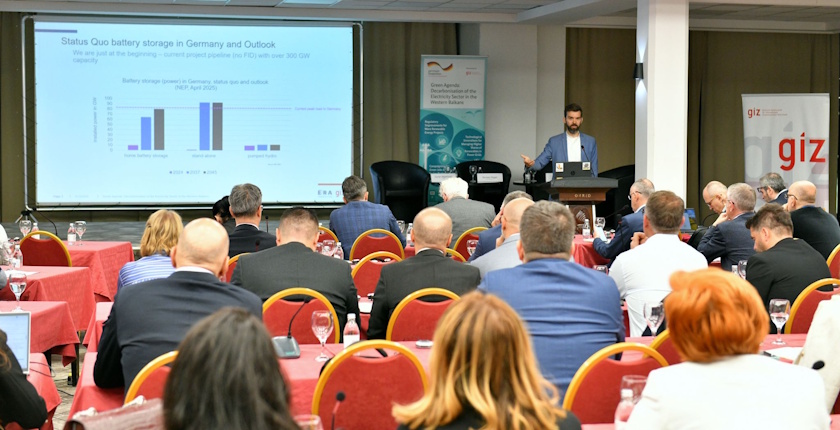
Third Regional Power Sector Exchange in Ohrid: Power grids at core of energy transition

The third Regional Power Sector Exchange of the Western Balkans in Ohrid in North Macedonia gathered over 80 energy professionals from the region to discuss the future of electricity decarbonization and the urgent need to modernize power infrastructure.

Organised under the framework of the Regional Climate Partnership between Germany and the Western Balkans, the conference brought together representatives of transmission and distribution system operators, energy regulators, and energy ministries to accelerate coordinated action toward a greener, more resilient power system.

“No grids, no glory. This slogan captures the challenge in front of us. Without investment in power grids, adaptable regulation, and skilled professionals, the renewable energy transition cannot succeed,” Project Manager at GIZ Nicolas Heger said in his welcoming remarks.

Oberhuber: The Western Balkans have the potential to become a major exporter of clean electricity

Opening addresses were delivered by David Oberhuber, GIZ Country Director in North Macedonia, Anca-Iulia Cimpeanu, European Commission (DG ENER), and Davor Bajs, Energy Community Secretariat.

In his keynote speech, Oberhuber stressed the region’s strategic importance in the Regional Climate Partnership.

The Western Balkans has the potential to become a major exporter of clean electricity to Western Europe and a hub for investment and innovation in renewable energy, he said.

North Macedonia is advancing its energy transition by expanding renewables – solar power capacity reached 506 MW in 2023 – and reducing coal dependency, although thermal power plants still accounted for 47.3% of total electricity production in early 2024.

In 2023, renewables made up 33.15% of electricity generation, with households, transport, and industry as the top energy consumers.

To accelerate the shift, tailored support projects were launched. The Energy, Water Services and Municipal Waste Management Services Regulatory Commission is tackling the surge in renewables applications. Distribution system operator (DSO) EVN is focusing on smart grids and energy quality, and transmission system operator (TSO) MEPSO is exploring options to reduce balancing costs through regional market mechanisms.

Six tailored support projects presented

The event included three sessions on tailored support projects.

Professor Nermin Suljanović presented the project Concept on Data Exchange Between System Operators in Bosnia and Herzegovina.

The data platform enables automatic data exchange among all actors in the electricity market in Bosnia and Herzegovina, ensuring data interoperability and harmonized communication interfaces, according to Suljanović.

He also outlined the project Technical Specification and Requirements for Integration of Renewables into DSO Telecommunication Network.

E-mobility is not only related to energy but also to transportation, telecommunication, data security

A project titled Procedure for Handling RES Connection Requests to the Grid – Queue Management was presented by expert Miltos Aslanoglou, and the Roadmap for Creating a Legal and Regulatory Framework for EV Charging by expert Dejan Stojadinović.

“EU legislation on this matter is a good base for the Western Balkan countries to prepare relevant legal and regulatory frameworks. E-mobility is not only related to energy but also to transportation, telecommunication, data security, and other issues,” Stojadinović said.

Goran Majstrović, Deputy Director and Head of the Energy Transmission and Distribution Department at Energy Institute Hrvoje Požar (EIHP), gave an insight into the project Feasibility Analysis and Funding Assessment for using Dynamic Line Rating (DLR) on the Kosovo* Transmission Grid.

Simplification of Procedures for Prosumer Connection to the Distribution Network in the Federation of BiH was the name of the project introduced by expert Goran Dobrić.

The need for regionally integrated networks has never been greater

Blackouts in both Southern and Southeastern Europe have highlighted vulnerabilities in grid infrastructure amidst growing shares of renewable energy. The need for modern, flexible, and regionally integrated networks has never been greater.

The event was part of a wider regional project implemented by GIZ on behalf of the German government, supporting the integration of renewables and enhancing energy security across the WB6.

In just two years, the project has supported over 30 institutions, trained more than 135 energy professionals, and facilitated the development of the Action Plan for Power Grids in the Western Balkans, in cooperation with the Energy Community Secretariat.

Network redesigns are lagging behind renewables by seven to ten years

Goran Majstrović from Energy Institute Hrvoje Požar presented the Action Plan for Power Grids in the Western Balkans.

“The path to integration of renewables is not just replacing power plants but redesigning the entire system to accommodate them. Network redesigns are lagging behind renewables by seven to ten years,” he asserted.

In the plan, the required grid investments by 2030 in the six countries of the Western Balkans (WB6) are estimated at EUR 10 billion to EUR 14 billion. Investments in primary equipment are seen at EUR 6 billion to EUR 8 billion. As for secondary equipment (digitalization), the forecasted tally is EUR 4 billion to EUR 6 billion.

Phase 2 of the project Green Agenda: Decarbonisation of the Electricity Sector in the Western Balkans is scheduled for completion in 2028. The Regional Power Sector Exchange will remain a key platform for cooperation, helping ensure the energy transition in the region is just and inclusive.

* This designation is without prejudice to positions onstatus and is in line with UNSCR 1244/99 and the ICJ Opinion on the Kosovo declaration of independence.
by in News

BiH laying groundwork for battery energy storage systems

Bosnia and Herzegovina is set to have its first battery energy storage systems installed in the transmission network, which will provide auxiliary services.

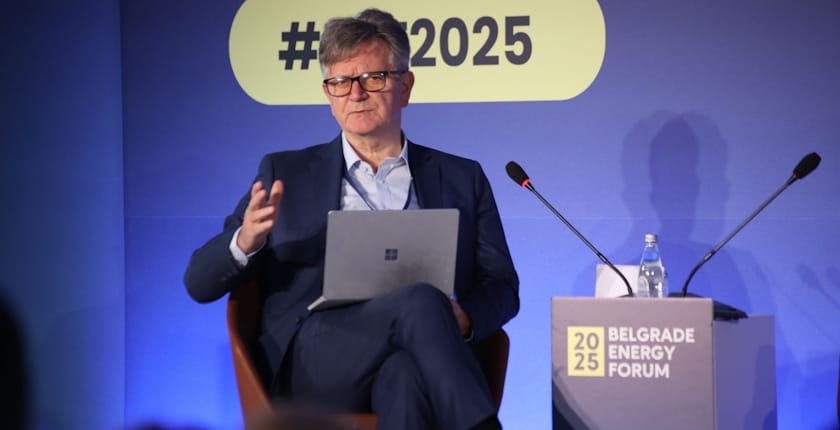
The State Electricity Regulatory Commission is drafting a decision to allow battery energy storage systems (BESS) to offer secondary frequency regulation, Mirza Kušljugić, a member of the Board of the Regional Center for Sustainable Energy Transition (RESET) from BiH, said at Belgrade Energy Forum 2025 (BEF 2025).

Since such a decision does not require a lengthy regulatory procedure, and the balancing market is already regulated, batteries could be installed very soon, he noted.

“I anticipate that private investors will take the lead in this initiative,” Kušljugić added.

He stressed the importance of experimenting with new technologies, noting that batteries represent a technology that can fundamentally transform the energy paradigm.

To be economically viable, batteries must serve multiple functions

The cost of batteries has significantly decreased in recent years. For instance, prices fell by 40% last year and have decreased by an additional 5% so far this year.

According to Kušljugić, batteries should not be limited to providing arbitrage but should also perform additional roles.

“Batteries come in various sizes – small, medium, and large – each with specific functions. They can regulate voltage or enable a black start, especially when equipped with new grid-forming inverters. This is a disruptive technology. It doesn’t matter whether it is installed on the transmission grid, the distribution grid, or behind the meter,” noted Kušljugić, who moderated the BEF panel titled Energy revolution underway – uniting efforts to deliver green, intelligent and sustainable energy solutions.

He added that batteries in the transmission system need to perform two or more functions, including frequency regulation.

Behind-the-meter batteries are also on the way

Historically, secondary regulation in BiH has been provided by any entity capable of offering flexibility, typically through tenders. So far, the service has mostly been provided by hydropower plants. However, due to lower nighttime prices, their operators were not interested in continuing to supply the service, leading to a shortage of secondary regulation. Batteries now have the potential to fill this gap.

Kušljugić believes that batteries installed behind electricity meters will soon become a reality in BiH as well. Currently, there are 300 to 350 MW of solar power capacities installed on the roofs of business premises, but their owners cannot feed excess electricity into the grid. It is only a matter of time before battery prices decrease enough to facilitate their installation, he underlined.

RESET, which advocates for citizen energy and prosumers, suggests that all solar installations should now be equipped with hybrid inverters, making them ready for future battery integration.

This approach is essential for the distribution grid to be ready to integrate excess electricity, Kušljugić concluded.

by in News

Curtailments reach new highs in Greece ahead of first battery installations

Greek renewable energy producers are fearful of any delay in the deployment of battery energy storage systems, because of high curtailments.

The sector expects that in a hypothetical scenario without the storage, the curtailments would rise to 25% by 2030, compared to last year’s 3.3%.

So far in 2025, curtailments have risen further. According to the Renewable Energy Sources Operator and Guarantees of Origin (DAPEEP), just last week they amounted to 30 GWh. Sunday, April 6, was a particularly eventful day, as over 4 GW of renewable electricity capacity was cut for multiple consecutive hours.

It also marked the first time that grid operators curtailed photovoltaic plants in the distribution network, which were formerly left unscathed. In total, 116 GWh was consumed in Greece on Sunday. Renewables gave 88.7 GWh, but one third had to be curtailed to stabilize the system.

Many producers at the distribution level receive messages from the operator every few days to turn off their photovoltaics manually. If they do not comply, they are subject to a fine of EUR 500 per MWh.

Timely storage development is crucial

Curtailments are expected to double this year, according to Aristotle University of Thessaloniki Professor Pantelis Biskas. Both the market and the Ministry of Environment and Energy expect storage to provide a solution. By the end of 2025, the first battery projects that were selected in auctions are expected to connect to the grid. However, investors have warned that strict timeframes, red tape and uncertainty in global markets could lead to harmful delays.

Large players to gain market share

Until the storage comes online and reduces curtailments, the renewable energy sector will be subject to various effects. DAPEEP’s CEO Anastasia Riga said large vertical players would probably gain more market share in the current environment. Also, the introduction of negative pricing in the balancing market adds another layer of complexity and potentially reduces profits for producers.

  • 1
  • 2