by in News

Albania’s ERE sets temporary electricity distribution tariffs for 1 May-31 December 2026

Albania’s Energy Regulatory Authority (ERE), in Board Decision No. 103 dated 14 April 2026, has set temporary electricity distribution tariffs by voltage level for the period 1 May 2026 to 31 December 2026. The decision was adopted under Articles 16, 19 and 20(c) of Law No. 43/2015 on the electricity sector, as amended, along with Decision No. 456 of 29 June 2022 on public service obligations, ERE’s internal regulations, and the tariff methodology for the distribution system operator approved by Decision No. 182 of 10 November 2017.

The authority said it reviewed the distribution operator OSSH’s audited financial statements for 2022-2024, as well as technical, economic and financial projections for 2025-2026, together with the 5-year distribution network development plan for 2023-2027, which ERE began reviewing under Decision No. 308 of 21 November 2025. The report also recalls that ERE’s Decision No. 312 of 12 December 2025 kept the previous distribution tariffs in force until 30 April 2026, based on the ongoing review process and the information OSSH was required to submit.

In its assessment, ERE said that the continuity and security of electricity distribution are critical for uninterrupted and quality service, and that the cost of outages is higher than any other cost component in the electricity supply chain. The regulator also concluded that, on the basis of the actual figures reviewed, the current distribution tariffs generate sufficient revenue to cover operating costs and support the continuity of OSSH’s activity. At the same time, the report notes that the company still needs to improve its capital structure, which remains negative and could create medium-term financial risks.

The report provides several key financial observations. Compared with ERE’s ex-ante approval for 2022, actual operating costs were around 4% lower. In 2023, those costs remained broadly stable, rising by 0.9%, while in 2024 they increased by about 7% compared with 2023. ERE also said it reviewed additional information sent by OSSH by email on 9 April 2026, in response to an ERE request dated 3 June 2026, regarding OPEX fluctuations, material and consumption expenses, and rent.

Based on the corrected required revenues and distributed energy volumes, ERE calculated an average tariff of 5.89 lek/kWh for 2026. On that basis, the temporary distribution tariffs were set at 1.55 lek/kWh for customers connected at 35 kV, 3.99 lek/kWh for customers connected at 0.6-20 kV, and 6.42 lek/kWh for customers connected at 0.4 kV. The applicable reactive energy billing price remains 1.92 lek/kVArh, the same rate approved under Decision No. 73/2022.

ERE said that the WACC and other financial parameters were kept at previous levels because updated information was not available, describing this as a temporary solution that may be reviewed later in line with the legislation in force. The regulator also said the difference between corrected required revenues and realized revenues is relatively small and therefore acceptable for the period under review. ERE added that it reserves the right to fully review OPEX and CAPEX based on actual results in future tariff processes.

The Board also instructed OSSH to keep distribution tariffs unchanged until 31 December 2026, to improve the quality and detail of the information submitted for regulatory purposes, to separate costs and revenues by voltage level, and to align financial reporting with regulatory accounting requirements. OSSH was further asked to provide detailed operating and capital costs, explanations for year-on-year fluctuations, updated financial analysis including WACC, audited 2025 financial statements, and a tariff application for the next regulatory period. The decision entered into force immediately; interested parties may request review within 7 calendar days, and appeals may be filed with the Administrative Court of Tirana within 30 calendar days of publication in the Official Gazette.


by in News

Self-consumption photovoltaic systems in Greece must add remote control devices

Solar power facilities for self-consumption in Greece now require set point equipment.

The Hellenic Distribution Network Operator (HEDNO or DEDDIE) announced that owners of self-consumption installations of over 400 kW have eight months, until September 15, to make necessary upgrades. Set point equipment includes specialized telemetering devices that the network operator uses for remote control and curtailment of solar power production.

Such equipment was first added in 2024 in other categories of photovoltaics, to ensure that HEDNO can dial down production at times when renewable energy production exceeds demand in the country. The effort is aimed at ensuring system stability and avoiding blackouts such as the one that happened in Spain last April.

According to Energypress, so far 4,300 MW of renewables units connected to the distribution network have added set-point equipment, out of a total of 5,500 MW deemed necessary. The authorities are aiming for the majority of the capacity to be ready by spring to avoid overcapacity. It’s a season that traditionally brings high renewable energy production and low demand in Greece. In 2024 and 2025, very low wholesale prices and high curtailments became a regular occurrence in the springtime.

As for the transmission network, all required renewable electricity plants have made the necessary upgrades.

Producers must comply or be disconnected

HEDNO said the new requirement includes units both in the net metering and virtual net metering regimes, as well as the ones with and without storage.

Once proper upgrades have taken place, producers must submit a notification form to the distribution operator, along with necessary technical documents. Owners who do not comply in time, will be subject to disconnection from the grid, HEDNO said.

Its goal is to make horizontal curtailments from now on, only reducing production levels across photovoltaics, without having to shut down some of them entirely.

by in News

Self-consumption photovoltaic systems in Greece must add remote control devices

Solar power facilities for self-consumption in Grece now require set point equipment.

The Hellenic Distribution Network Operator (HEDNO or DEDDIE) announced that owners of self-consumption installations of over 400 kW have eight months, until September 15, to make necessary upgrades. Set point equipment includes specialized telemetering devices that the network operator uses for remote control and curtailment of solar power production.

Such equipment was first added in 2024 in other categories of photovoltaics, to ensure that HEDNO can dial down production at times when renewable energy production exceeds demand in the country. The effort is aimed at ensuring system stability and avoiding blackouts such as the one that happened in Spain last April.

According to Energypress, so far 4,300 MW of renewables units connected to the distribution network have added set-point equipment, out of a total of 5,500 MW deemed necessary. The authorities are aiming for the majority of the capacity to be ready by spring to avoid overcapacity. It’s a season that traditionally brings high renewable energy production and low demand in Greece. In 2024 and 2025, very low wholesale prices and high curtailments became a regular occurrence in the springtime.

As for the transmission network, all required renewable electricity plants have made the necessary upgrades.

Producers must comply or be disconnected

HEDNO said the new requirement includes units both in the net metering and virtual net metering regimes, as well as the ones with and without storage.

Once proper upgrades have taken place, producers must submit a notification form to the distribution operator, along with necessary technical documents. Owners who do not comply in time, will be subject to disconnection from the grid, HEDNO said.

Its goal is to make horizontal curtailments from now on, only reducing production levels across photovoltaics, without having to shut down some of them entirely.

by in News

Slovenian DSO registers enormous interest in connecting BESS to distribution grid

Applications for 400 MW have been submitted for the connection of battery energy storage systems to the distribution grid, according to Elektro Ljubljana, one of the distribution system operators in Slovenia.

Slovenia’s distribution system operators (DSOs) are getting an increasing number of requests to connect battery storage systems directly to distribution substations. Notably, in early May, the five Slovenian DSOs fed more electricity into the transmission network than they drew from it for the first time, and for two consecutive days.

Matjaž Osvald, Executive Director of Operation and Development of the Distribution Network in DSO Elektro Ljubljana, pointed out that last summer the company observed increased investor interest in directly connecting batteries to distribution substations.

It issued installation terms for 90 MW, and requests for at least as much are waiting to be processed, he added.

Installation terms were issued for batteries with 90 MW in overall capability

However, the company estimated there could be at least 300 MW more in applications. Due to the technical limitations of existing substations, much less could be connected. Substations in the Elektro Ljubljana area are already overloaded and don’t allow additional connections of larger devices, Osvald explained.

Furthermore, upgrading or constructing new facilities is a lengthy process, he pointed out. Current delivery times for transformers alone are longer than two years, with financing also being an issue.

According to Osvald, batteries would be used to store energy from solar power plants, and three types of investors have emerged. One group wants to install batteries to provide system services for system operators on the European market or for electricity trading.

Three types of investors are submitting applications

The second and third batch aim to bring their projects to a certain stage of development and then sell them – either they would purchase land, obtain permits, and install a battery, or only buy land and obtain permits for energy storage.

Osvald expressed concern about the idea of using batteries solely to provide system services in the European market. In that case, there would be no benefits for the Slovenian distribution network, but it could create problems, he stressed.

Such use would occupy all available connection capacity in substations, which, with increasing electrification, could lead to no spare capacity for other grid users, according to Osvald.

He also pointed to the value of BESS for the distribution network in reducing peak loads and consumption.

by in News

Slovenian DSO registers enormous interest in connecting BESS to distribution grid

Applications for 400 MW have been submitted for the connection of battery energy storage systems to the distribution grid, according to Elektro Ljubljana, one of the distribution system operators in Slovenia.

Slovenia’s distribution system operators (DSOs) are getting an increasing number of requests to connect battery storage systems directly to distribution substations. Notably, in early May, the five Slovenian DSOs fed more electricity into the transmission network than they drew from it for the first time, and for two consecutive days.

Matjaž Osvald, Executive Director of Operation and Development of the Distribution Network in DSO Elektro Ljubljana, pointed out that last summer the company observed increased investor interest in directly connecting batteries to distribution substations.

It issued installation terms for 90 MW, and requests for at least as much are waiting to be processed, he added.

Installation terms were issued for batteries with 90 MW in overall capability

However, the company estimated there could be at least 300 MW more in applications. Due to the technical limitations of existing substations, much less could be connected. Substations in the Elektro Ljubljana area are already overloaded and don’t allow additional connections of larger devices, Osvald explained.

Furthermore, upgrading or constructing new facilities is a lengthy process, he pointed out. Current delivery times for transformers alone are longer than two years, with financing also being an issue.

According to Osvald, batteries would be used to store energy from solar power plants, and three types of investors have emerged. One group wants to install batteries to provide system services for system operators on the European market or for electricity trading.

Three types of investors are submitting applications

The second and third batch aim to bring their projects to a certain stage of development and then sell them – either they would purchase land, obtain permits, and install a battery, or only buy land and obtain permits for energy storage.

Osvald expressed concern about the idea of using batteries solely to provide system services in the European market. In that case, there would be no benefits for the Slovenian distribution network, but it could create problems, he stressed.

Such use would occupy all available connection capacity in substations, which, with increasing electrification, could lead to no spare capacity for other grid users, according to Osvald.

He also pointed to the value of BESS for the distribution network in reducing peak loads and consumption.

by in News

Montenegro launches second BESS tender but for drastically smaller capacity

Power utility Elektroprivreda Crne Gore has launched its second battery energy storage system procurement tender. The required capacity is drastically lower than in the first call.

The initial public procurement was canceled because state-owned energy company Elektroprivreda Crne Gore (EPCG) didn’t obtain approval from the Government of Montenegro to take a loan for a EUR 58 million project.

The new tender envisages the procurement of a battery between 100 kW and 130 kW, with 200 kWh to 260 kWh in capacity. This is a pilot project, and the procurement is valued at EUR 75,000.

The canceled purchase was for two battery energy storage systems (BESS), at 30 MW and 120 MWh each.

The battery will be used on the distribution network

Potential locations include hydropower plant (HPP) Perućica, EPCG’s steel mill Željezara Nikšić, and the Pljevlja thermal power plant.

In the new call, the winning bidder will be obliged to secure a location for installing and testing the pilot BESS, according to the documentation.

EPCG explained that over the previous three years, its projects Solari 3000+, 500+, and 5000+ enabled a strong pace of the addition of prosumer solar power plants to the low-voltage, distribution network in Montenegro.

Although distributed generation has clear financial and ecological benefits, its rapid growth simultaneously brings a string of technical challenges for the distribution network, which was historically developed solely for supplying consumers and for unidirectional energy flow, according to the tender’s documentation.

EPCG sees the installation of batteries in substations as a solution to technical challenges caused by prosumers

The company sees the installation of BESS units within 10/0.4 kV substations as the solution for these challenges.

These batteries would be charged during the hours when photovoltaic facilities have high output in order to reduce and prevent reverse power flow. The idea is to discharge BESS units during hours of peak consumption and low voltage.

The main goal is to minimize voltage deviations in areas that the substations cover, during periods of production and consumption fluctuations. It would increase the hosting capacity for new prosumers, and enhance the stability of the distribution grid under an increased PV plant integration.

Scalability of the battery is one of the conditions for the bidders set by EPCG.

by in News

Šahmanović: Second submarine cable line with Italy to be installed by 2031

The second line of the submarine cable connecting Montenegro and Italy is expected to be completed by 2031, Montenegro’s Minister of Energy and Mining Admir Šahmanović said at the European Union – Montenegro Investment Conference.

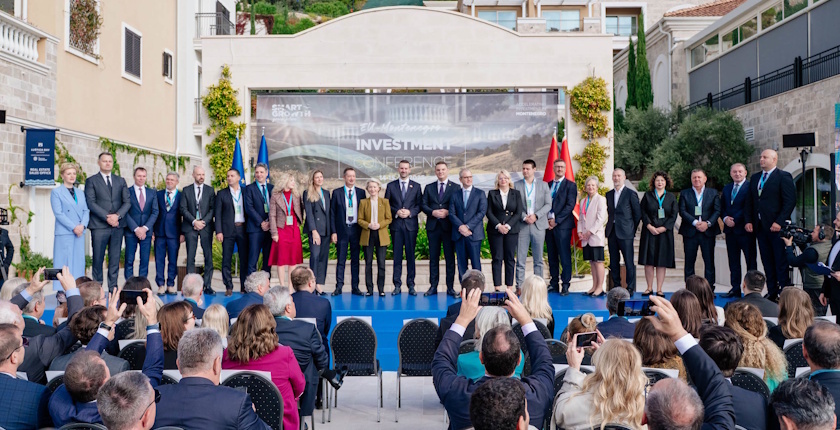
The two-day conference, titled Smart Growth, Green Future: Accelerating Investment in Montenegro, was opened yesterday in Luštica, near Tivat, by European Commission President Ursula von der Leyen and Prime Minister of Montenegro Milojko Spajić.

Fourteen cooperation projects between Montenegrin and European companies have been initiated at the conference, including investments in wind farms, solar parks, energy storage, and grids. It shows the great significance of the energy sector for investments.

A panel called Renewables: Scaling Montenegro’s Energy Transition examined the possibilities for accelerating the country’s energy transition and enhancing the sector’s attractiveness for investment in renewables.

Šahmanović: Montenegro strives to position green energy as an export product

Prominent international experts and investors took part in the discussion. Representing the Government of Montenegro, Minister of Energy and Mining Admir Šahmanović outlined the country’s renewable energy priorities and highlighted Montenegro’s role as a regional leader in clean energy.

Montenegro has fully harmonized its legislation with EU standards, creating a stable and predictable investment environment, in his words. Šahmanović highlighted the launch of the first solar power auction as a significant step forward in the development of renewables.

Photo: Đorđe Cmiljanić/Government of Montenegro

“The government invests in battery energy storage systems (BESS), ensuring the flexibility and stability of the grid. Montenegro strives to position green energy as a recognizable export product, thereby strengthening the country’s economic sustainability,” Šahmanović stated.

He revealed that Montenegro is about to sign a memorandum of understanding with Italy that would additionally position Montenegro as an energy bridge between the Western Balkans and the EU.

Montenegro is looking for strategic partners and investors ready to jointly implement capital projects in the energy sector

The government is wrapping up the work concerning the oil and gas sector to close chapter 15 in its accession negotiations with the EU, further strengthening investor trust, Šahmanović said.

“The implementation of the project for the construction of the second phase of the subsea cable link with Italy is expected by 2031, which will further strengthen Montenegro’s role in regional and European energy connectivity. Montenegro is looking for strategic partners and investors ready to jointly materialize capital projects in energy and contribute to regional energy stability,” the minister underlined. The investment is estimated at EUR 500 million, he asserted.

In a message to investors, Šahmanović said Montenegro is open for investments and added: “Now is the time for you to invest. We will be your service 24 hours a day, seven days a week.”

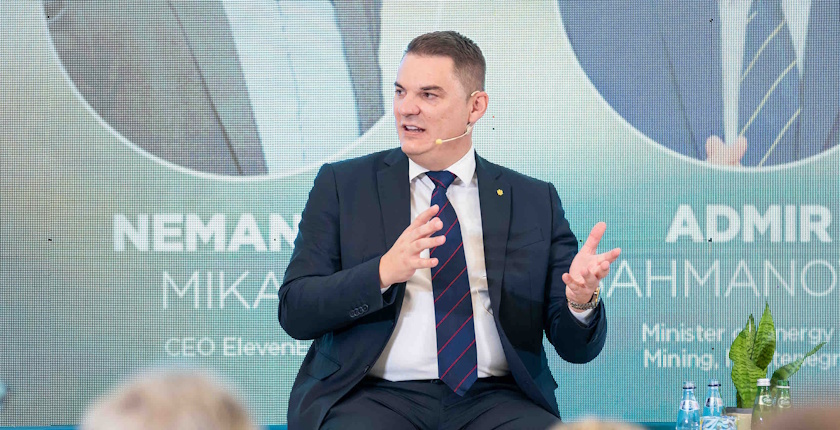
Participants at the panel included Daniel Calderon, Alcazar Energy Co-Founder and Managing Partner, Yann Guinard, EDF Director of Development for Europe, Louis Blanchard, Qair Energy President, and Nemanja Mikać, ElevenEs CEO.

Memorandum with EDF

Admir Šahmanović and Yann Guinard (photo: Ministry of Energy and Mining)

Within the conference, the Ministry of Energy and Mining of Montenegro and EDF International Networks signed a memorandum of understanding. It establishes a framework for future cooperation on modernizing the distribution network, digitizing smart grids, and integrating renewable energy sources, according to the ministry.

The memorandum foresees the implementation of pilot projects and feasibility studies that will contribute to the acceleration of the energy transition of Montenegro.

Admir Šahmanović said the deal is an important step towards strengthening green and innovative energy projects. Cooperation with EDF confirms the position of Montenegro as a country with a clear vision and open opportunities for investors, he underscored.

“EDF International Networks, as part of the global EDF Group, brings international expertise in the sector of power distribution, grid upgrade and digital transformation, which opens up space for new strategic partnerships and capital infrastructure projects,” the minister pointed out.

The memorandum confirmed the joint commitment to sustainability, integrity and energy security, with a clear focus on the well-being of citizens and the economy of Montenegro, the ministry said.

by in News

EU-Montenegro Investment Conference: 14 partnerships, MoUs signed for energy, sustainable projects

A total of 14 cooperation projects between Montenegrin and European companies have been initiated at the ongoing European Union-Montenegro Investment Conference, including investments in wind farms, solar parks, energy storage, and grids.

The two-day conference, titled Smart Growth, Green Future: Accelerating Investment in Montenegro, was opened today in Luštica, near Tivat, by the President of the European Commission, Ursula von der Leyen, and the Prime Minister of Montenegro, Milojko Spajić.

Montenegro’s growing potential for strategic, green, and sustainable investments was presented through new partnerships between leading Montenegrin and European companies, according to a press release by the Government of Montenegro.

The Conference was jointly organized by the government and the European Commission, with the support of the Montenegro Investment Agency (MIA).

State power utility EPCG has signed three memoranda of understanding

State-owned power utility Elektroprivreda Crne Gore (EPCG) has signed three memoranda of understanding (MoUs). One was signed with Akuo for the development of several renewable energy projects, including floating solar, a photovoltaic plant, and energy storage.

The second MoU, signed with SS&A Power Group, envisages the development, manufacture, and installation of thermal energy storage, while the third, with Wind Fisher, concerns a new technology for high-altitude wind power generation.

Alcazar Energy signed a memorandum with the government’s project management office for the development and financing of renewable energy projects. CWP Europe and the Montenegrin Investment Agency (MIA) signed a memorandum on the development of the Montečevo solar farm project with battery storage. The company signed a similar agreement for its project in Albania yesterday.

A memorandum was also signed between Čevo Solar and Grawert Jenny & Partner on battery energy storage systems (BESS). A 20 MW/60 MWh battery is being considered.

Four sustainable investment partnerships were also signed

The Ministry of Energy and Mining and EDF will further discuss the issue of modernizing Montenegro’s power distribution network.

Among the signed documents is an MoU on collaboration between the European Bank for Reconstruction and Development (EBRD) and Erste on a Regional Energy Efficiency Program (REEP), as well as cooperation in the field of wastewater management between Suez and MIA.

In addition, four sustainable investment partnerships were also signed: Farm2Fork Montenegro, Station M, Green Logistics Hub, and Northern Investments Compact for Ecology & Resilience (NICER). Green Logistics Hub refers to the Port of Bar, which aims to become the first net-zero port on the Adriatic. NICER concerns the just transition and is led by the Pljevlja Coal Mine.

Von der Leyen: Do not wait for accession to invest in Montenegro

Photo: Bojan Gnjidić/Vlada Crne Gore

The event brought together senior representatives of the Government of Montenegro, the European Union, international financial institutions, as well as prominent European and Montenegrin investors.

“My message is very clear: do not wait for accession to invest in Montenegro, because by then you may miss the opportunities that others will seize,” Ursula von der Leyen noted.

She stressed that by continuing its European journey with determination and speed, Montenegro is making its goal of EU accession attainable.

“Today, we are opening a new chapter of development—we are beginning a major investment cycle, strengthening our ties with the European market even before formally joining the European family. Today, we are bringing our vision of green and smart growth to life. We are doing this together with our most important strategic partner—the European Union, which is also the largest investor in our country,” Prime Minister Milojko Spajić said.

He recalled that the country plans to close all negotiating chapters with the EU by the end of 2026 and become its 28th member state in 2028.

Photo: Bojan Gnjidić/Vlada Crne Gore
by in News

Bajramović: Investments of BAM 1.4 billion needed for distribution grids in BiH

Necessary investments in Bosnia and Herzegovina’s electricity distribution grids by 2030 amount to BAM 1.4 billion (EUR 716 million), according to Zijad Bajramović, chairman of the Bosnia and Herzegovina committee of the International Council on Large Electric Systems (CIGRE).

The growing installation of power plants utilizing renewable energy sources is creating congestion in transmission and distribution networks, so the limited available capacity for their connection is an issue across the entire region, Zijad Bajramović told state news agency Fena. Nezavisne Novine republished the report.

An additional burden on the distribution network is expected from the electrification of transportation and increased electricity use for heating and cooling.

Energy storage is a solution for the problems emerging in the grid

Bajramović explained that new 110 kV substations are necessary, as is the completion of the ongoing transition to the 20 kV voltage level. Attention should also be paid to integrating prosumers, especially the households that both produce electricity, with solar panels on their roofs, and consume it.

He highlighted balancing as well as maintaining voltage conditions and supply quality as the main challenges from the rise in renewable electricity capacity on the grid. Energy storage is a solution for the issues.

Batteries can prevent renewables generation curtailments

Bajramović expects battery energy storage systems to play an increasingly significant role in relieving network congestion.

BESS, in his words, are a flexibility tool for absorbing excess generation locally, and temporarily easing the pressure on the transmission grid. They can prevent curtailments of power generation from variable renewable sources, he added.

Bajramović recalled that calculations have showed batteries of 225 MW / 450 MWh in total would be necessary to connect 1,500 MW of solar power capacity and 1,000 MW of wind power to the transmission network.

An increase in distribution network tariffs would provide funds for investment in strengthening and modernizing the distribution network, in his view.

Batteries are being installed at a rapid rate around the world as well as in the region. Not only private companies, but also state-owned utilities such as Romania’s Hidroelectrica and Montenegro’s Elektroprivreda Crne Gore (EPCG) are investing in such projects.

by in News

Montenegro’s state power utility posts EUR 24.5 million loss in H1 2025

Montenegro’s state-owned power utility, Elektroprivreda Crne Gore, posted a EUR 24.5 million loss in the first half of 2025, a 620% increase compared to the same period last year.

The main reasons for the poor results were a production halt at the Pljevlja coal power plant and a wide gap between the purchase price of imported electricity and the selling price for consumers connected to the distribution network, according to Elektroprivreda Crne Gore (EPCG).

EPCG’s total revenue in the first half of 2025 amounted to EUR 208.1 million, while total expenses reached EUR 234.7 million.

The operating result was a EUR 24.5 million loss, which is EUR 21 million more than in the first half of 2024, when the loss was EUR 3.5 million. This represents a 620% increase compared to the same period in 2024, according to EPCG’s half-year report.

Total electricity production was nearly 25% lower year-on-year

A significant factor affecting the business result was the halt in production at the Pljevlja thermal power plant from March 31 this year due to final works on environmental reconstruction and the regular annual overhaul. As a result, the plant’s utilization rate for the first six months was only 48.8%.

In the first half of 2025, TPP Pljevlja produced nearly 400 GWh of electricity, 7.9 GWh or 2.02% above the plan, but almost 18%, or around 87 GWh, less than in the same period in 2024.

The total output at hydropower plants – Piva, Perućica, and small hydropower plants (SHP) – was 658 GWh, which is 22% or 159 GWh less than in 2024.

The company spent EUR 35.8 million more on electricity imports

The total output of all power plants was 1,058 GWh, or 78.8% of the plan, according to the report. This also represents a decrease of 26%, or 278 GWh.

During the first half of 2025, EPCG imported 656 GWh of electricity for EUR 62.4 million. The average price was EUR 95.09 per MWh. In the same period last year, imports totaled 430.3 GWh, at an estimated cost of EUR 26.6 million, according to the report. This marked a 52% increase in the volume of imports.

The company has received consent to borrow EUR 50 million to finance electricity imports.

The report underlined that the price charged to consumers on the distribution grid is significantly lower than the purchase price of imported electricity. The gap has a major negative impact on EPCG’s results, the company noted.

Electricity is imported at above EUR 100 per MWh and supplied to distribution consumers at an average price of around EUR 45 per MWh, according to the report.

  • 1
  • 2