by in News

Montenegro’s CEDIS to invest EUR 30 million in distribution grid

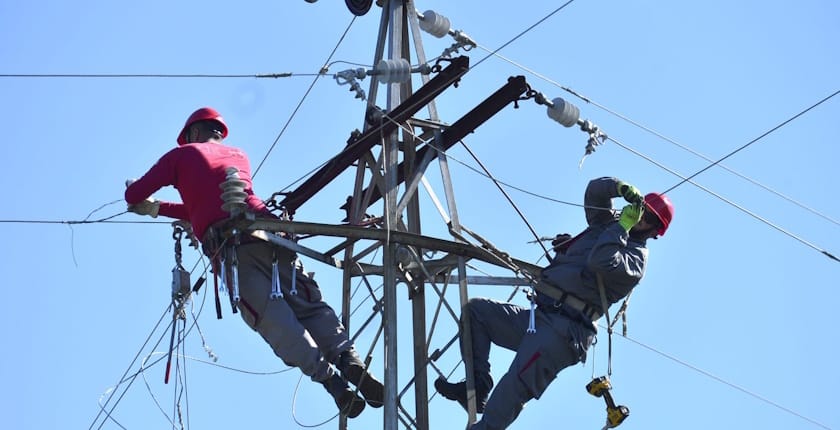
Montenegrin electricity distribution system operator CEDIS plans to invest EUR 30 million this year or EUR 6 million more than in 2024.

The increase in investments demonstrates greater ambitions year after year and that grid works are becoming more intensive and demanding, according to CEDIS.

The country’s distribution system operator (DSO) said it would increase capacity for the integration of new users, improve voltage conditions, strengthen reliability and security of power supply, and reduce losses.

The investments include projects planned to be started this year as well as ones already in motion, such as the modernization of six 35/10 kV substations.

CEDIS is building two substations

CEDIS pointed to several significant endeavors within the primary grid. The most significant ones are the construction of 35/10 kV substations Tivat 3 and Rijeka Crnojevića, and the modernization of the systems Buljarica-Kufin (110/35 kV) and Podgorica 7 (110/10 kV).

Seven 35/10 kV substations are up for reconstruction – Tuzi, Unač, Ptič, Andrijevica, Velika Plaža 1, Velika Plaža 2 and Čanj. The plan includes procuring new equipment for existing 35 kV transmission lines, worth about EUR 1.4 million.

The company is introducing SCADA and ADMS systems

CEDIS will use a EUR 35 million loan from the European Bank for Reconstruction and Development (EBRD) to roll out SCADA and ADMS systems, and to purchase smart meters.

The company highlighted SCADA and ADMS as a key step towards the modernization of the distribution network and the improvement of reliability, efficiency, and security of the power system.

Investments envisaged by the project Decarbonization of the Energy Sector of Montenegro, financed with a loan from the World Bank, are kicking off this year. Its subproject for increasing the operational efficiency of the power distribution grid comprises the reconstruction and modernization of substations, and improvement in the visibility of the distribution network.

EUR 5 million for energy infrastructure on Jaz-Tivat Boulevard

One of the largest investments is the installation of power infrastructure within the construction of the Jaz-Tivat Boulevard. The investment is estimated at EUR 5 million.

Projects within the secondary distribution grid are the construction of 268 substations of 10/0.4 kV, modernization of 10 kV transmission lines, and reconstruction of existing 10/0.4 kV substations. The planned works are valued at more than EUR 6 million.

CEDIS is continuing with the revitalization of the middle- and low-voltage grid. It earmarked EUR 9 million for this year for the purpose. The project is for the renewal of four 10 kV transmission lines and 52 substations of 10/0.4 kV and replacing 1,500 poles.

The installation of new meters and the relocation of measuring points will also be continued. The plan is to start phase 4 of the advanced metering management (AMM) project. The investment is estimated at EUR 12 million.

by in News

Montenegro labels 15 energy projects as infrastructure priorities

The most valuable priority infrastructure projects in the energy sector of Montenegro are the Komarnica and Kruševo hydropower plants, the Trans-Balkan Electricity Corridor and the Ionian-Adriatic pipeline.

The Government of Montenegro has adopted a list of priority infrastructure projects for the energy sector to fulfill the final criteria of chapter 21 – Trans-European Network, of the country’s negotiations on the accession to the European Union.

The list consists of 15 projects with a total estimated value of around EUR 1.38 billion, according to the announcement.

The EU will use list to consider financial support from the Western Balkans Investment Framework

The list was updated in line with the Western Balkans Investment Framework (WBIF) methodology. In line with priorities defined at the state level, the list is for the European Commission to select projects for financial support from the scheme.

WBIF is the main mechanism for the EU’s financial support in the region in the period from 2024 to 2027, the government noted.

The following projects are on the list:

  • HPP Komarnica – EUR 315 million
  • Ionian-Adriatic Pipeline for natural gas (IAP) – EUR 210 million
  • interconnection Italy – Montenegro – Serbia – Bosnia and Herzegovina (Trans-Balkan Electricity Corridor) – EUR 163 million
  • HPP Kruševo – EUR 160 million
  • energy efficiency in public and residential buildings – EUR 104 million
  • improving the quality of power supply in tourist regions – EUR 78 million
  • creation of conditions for the integration of renewables and the construction of a new power interconnection – EUR 73.6 million
  • solar power project Solari 10,000+ – EUR 66 million
  • Slano floating solar power plant – EUR 60 million
  • Krupac photovoltaic plant – EUR 40 million
  • smart grid and smart metering system for electricity distribution system operator CEDIS – EUR 35 million
  • A8 unit at HPP Perućica – EUR 24 million
  • smart grid program of electricity transmission system operator CGES – EUR 21 million
  • decarbonization – EUR 21 million
  • reconstruction of oil storage tanks – EUR 10 million.

Montenegro also has a list of priority infrastructure projects, including energy. It was introduced in 2018 and updated in the meantime.

Compared to the list from 2021, the Gvozd wind farm and the ecological reconstruction of the Pljevlja thermal power plant were erased, while the following projects were added: HPP Kruševo, Krupac solar power plant, decarbonization and the reconstruction of oil storage tanks.

by in News

Montenegro’s DSO CEDIS secures funds for grid digitalization

Montenegrin distribution system operator (DSO) CEDIS has secured funds for the installation of an advanced grid management system and procurement of smart meters.

The EUR 40 million package consists of a EUR 35 million loan provided by the European Bank for Reconstruction and Development (EBRD) and a EUR 5 million grant under the European Union’s Western Balkans Investment Framework (WBIF).

The funds are intended for a new supervisory control and data acquisition (SCADA) system and an advanced distribution management system (ADMS), as well as the procurement of new smart meters.

Smart meters help users and utility companies monitor and manage electricity usage more efficiently

The project is expected to reduce technical losses by 10%, decrease grid outages to approximately one sixth of the current level, allow new renewable energy sources to be integrated into the grid and enhance cyber security, according to CEDIS and EBRD.

The SCADA system will be used to monitor and control medium-voltage grid networks in real time. ADMS is an advanced platform that optimizes the management and operation of the electricity distribution system.

Smart meters help users and utility companies monitor and manage electricity usage more efficiently, reducing losses and improving reliability, the update reads.

The loan agreement was signed by the EBRD’s Head of Montenegro Remon Zakaria, CEDIS CEO Vladimir Ivanović, and Ivan Bulatović, CEO of EPCG.

Ivanović: The integration of smart meters will empower consumers to better understand and optimize their energy usage

According to Zakaria, the project represents a transformative step towards the digitalisation of the electricity distribution system in Montenegro.

Citizens will experience a more reliable electricity supply, and CEDIS will achieve substantial reductions in technical losses and gain the advanced capabilities required to swiftly detect and address technical faults, he added.

Vladimir Ivanović said SCADA and ADMS would revolutionize the way the company operates the distribution network. The integration of smart meters will empower consumers to better understand and optimize their energy usage, contributing to greater energy efficiency across the network, he stressed.

Last year Ivanović said CEDIS has reduced grid losses from 12.93% to 10.84% and that it planned to lower them below 10% by the end of December.