by in News

EU presents European Grids Package: faster permitting, stronger interconnections, lower energy bills

The European Commission presented the European Grids Package, a comprehensive plan to modernise transmission infrastructure, accelerate permitting procedures, and overcome bottlenecks in Europe’s electricity networks. It also unveiled the Energy Highways initiative, which consists of eight major infrastructure projects critical for energy security, renewable energy integration, and cross-border electricity market connectivity.

Energy infrastructure is the backbone of the energy system. Yet the EU’s energy network remains insufficiently integrated, and investment levels fall short of what is needed, a situation that directly affects household energy bills.

Ageing infrastructure and limited interconnection capacity are creating bottlenecks that slow the energy transition. Although some progress has been made within the existing EU legislative framework, the level of interconnection among member states remains inadequate. Several countries are not on track to meet the 15% interconnection target by 2030.

To address these challenges, the European Commission has presented the European Grids Package and Energy Highways initiative. The aim is to enable a more efficient flow of energy across the EU, integrate greater volumes of renewable energy into the system, and accelerate electrification.

Jørgensen: A truly interconnected energy system is the foundation of a strong and independent Europe

The Grids Package is designed to speed up permitting and ensure a fairer distribution of costs for cross-border infrastructure. It should also improve the use of existing infrastructure and accelerate the development of networks and other physical energy assets across the EU.

Among the measures is a new mechanism that allows the commission to initiate the search for additional infrastructure projects when existing initiatives do not cover identified cross-border needs.

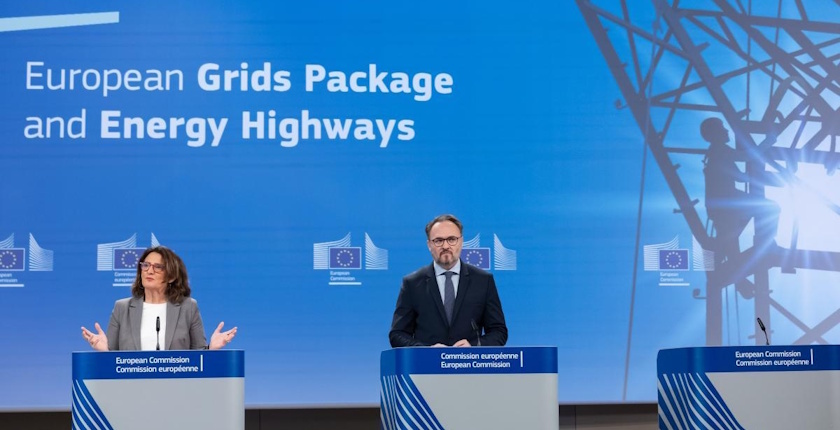
“A truly interconnected and integrated energy system is the foundation of a strong and independent Europe. To achieve it, we need an energy infrastructure network of cables, pipes and grids that is up to date, fully interconnected, and that enables clean, affordable, homegrown energy to flow freely and securely to every corner of our union. This is exactly what we are proposing today: a common European energy project that supports affordable living, economic competitiveness, security, and decarbonisation,” said Dan Jørgensen, European Commissioner for Energy and Housing.

Permitting reform

Slow permitting remains one of the biggest bottlenecks for energy infrastructure and renewable energy projects in the EU.
Obtaining permits for transmission infrastructure currently takes more than five years on average, while renewable energy projects may face delays of up to nine years.

The Grids Package introduces simplified and accelerated permitting procedures. The commissioners have proposed setting time limits within which decisions must be taken for all types of projects. If the competent authority fails to respond within the deadline, the permit would be considered granted.

Permits for smaller projects would be issued through faster and more streamlined procedures

Permits for smaller projects would be issued through faster and more streamlined procedures. All processes would have to be fully digitalised, and national administrations would be required to have adequate staffing and technical capacity to process applications.

The commission is proposing to move away from the current first-come, first-served model and introduce a system that ensures timely and non-discriminatory access to the grid, one that balances social acceptance and industrial competitiveness.

Public and private financing

According to the commission’s estimates, EUR 1.2 trillion in investment will be needed for Europe’s electricity grid by 2040. Distribution networks account for EUR 730 billion within the sum, compared to EUR 240 billion for hydrogen infrastructure.

The commission said additional financing tools are required, including cost-sharing arrangements, arguing that cross-border infrastructure generates benefits that extend beyond the territory in which a project is located.

Another suggested solution is the formation of project firms (special purpose vehicles – SPVs) to attract additional private investment.

Given that grid infrastructure is largely financed through network tariffs, part of the burden falls on consumers. To ease this pressure, the commission announced it would boost financial support through the Multiannual Financial Framework (MFF), the EU’s regular seven-year budget, including a significant expansion of the Connecting Europe Facility (CEF). The tool is designed to support investments in new cross-border energy infrastructure and upgrades or rehabilitation of existing assets.

The current 2021–2027 EU budget contained EUR 5.8 billion for cross-border projects under CEF. For the 2028–2034 period, the commission said the amount would be raised almost fivefold, to EUR 29.91 billion.

On the private side, the EU is working on its Clean Energy Investment Strategy, to launch it in 2026 by outlining measures for private sector participation including institutional investors, as well as additional support from the European Investment Bank (EIB).

Energy Highways

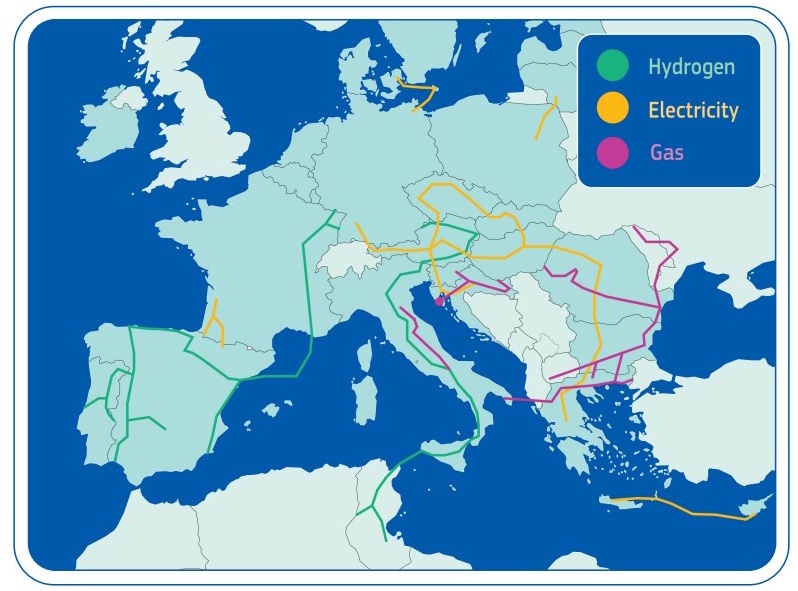
The Energy Highways initiative comprises eight of the EU’s largest and most critical infrastructure projects, essential for energy security, renewable energy integration, and cross-border electricity market connectivity.

They have already been already listed as Projects of Common Interest (PCI) or Projects of Mutual Interest (PMI), but under the new initiative, they would receive elevated political priority, accelerated financing, and faster permitting.
Energy Highways
Photo: European Commission

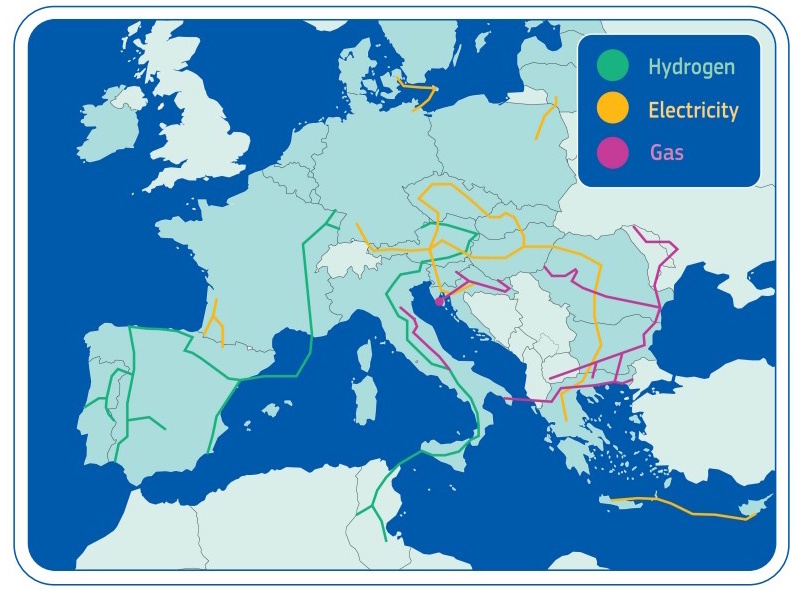
Among the projects are the reinforcement of interconnections across the Pyrenees to improve the integration of the Iberian Peninsula, the connection of Cyprus with continental Europe through the Great Sea Interconnector, as well as an upgrade of electricity links between the Baltic states, including the Harmony Link to Poland, which is essential for the full synchronisation of the region with the European grid.

The commission has also endorsed the establishment of Denmark’s hub on the island of Bornholm, which could, in the coming years, be connected to additional locations in the Baltic Sea.

Among the priorities are strengthening energy storage capacity in South-Eastern Europe

Among the priorities are strengthening energy storage capacity in South-Eastern Europe, as well as the modernisation of the Trans-Balkan Pipeline (TBP) for gas.

The list includes two hydrogen corridors. The southern one would connect Tunisia, Italy, Austria, and Germany, and the south-western corridor is a planned link between Portugal, Spain, France, and Germany. The commission has announced strong coordination and political support for the latter.

The commission views these projects as pillars of Europe’s future energy network, essential for lower electricity prices, greater system stability, and reduced dependence on fossil fuels.

In a regular legislative procedure, the proposals now move to the European Parliament and the Council of the EU for further deliberation.
by in News

Slovenian DSO registers enormous interest in connecting BESS to distribution grid

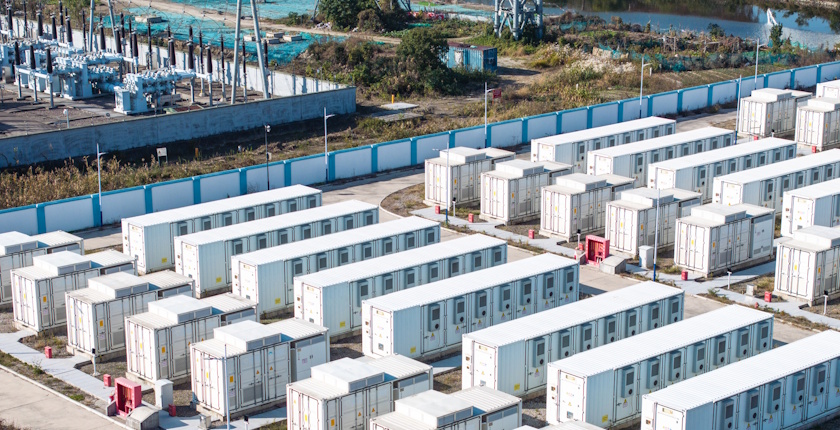
Applications for 400 MW have been submitted for the connection of battery energy storage systems to the distribution grid, according to Elektro Ljubljana, one of the distribution system operators in Slovenia.

Slovenia’s distribution system operators (DSOs) are getting an increasing number of requests to connect battery storage systems directly to distribution substations. Notably, in early May, the five Slovenian DSOs fed more electricity into the transmission network than they drew from it for the first time, and for two consecutive days.

Matjaž Osvald, Executive Director of Operation and Development of the Distribution Network in DSO Elektro Ljubljana, pointed out that last summer the company observed increased investor interest in directly connecting batteries to distribution substations.

It issued installation terms for 90 MW, and requests for at least as much are waiting to be processed, he added.

Installation terms were issued for batteries with 90 MW in overall capability

However, the company estimated there could be at least 300 MW more in applications. Due to the technical limitations of existing substations, much less could be connected. Substations in the Elektro Ljubljana area are already overloaded and don’t allow additional connections of larger devices, Osvald explained.

Furthermore, upgrading or constructing new facilities is a lengthy process, he pointed out. Current delivery times for transformers alone are longer than two years, with financing also being an issue.

According to Osvald, batteries would be used to store energy from solar power plants, and three types of investors have emerged. One group wants to install batteries to provide system services for system operators on the European market or for electricity trading.

Three types of investors are submitting applications

The second and third batch aim to bring their projects to a certain stage of development and then sell them – either they would purchase land, obtain permits, and install a battery, or only buy land and obtain permits for energy storage.

Osvald expressed concern about the idea of using batteries solely to provide system services in the European market. In that case, there would be no benefits for the Slovenian distribution network, but it could create problems, he stressed.

Such use would occupy all available connection capacity in substations, which, with increasing electrification, could lead to no spare capacity for other grid users, according to Osvald.

He also pointed to the value of BESS for the distribution network in reducing peak loads and consumption.

by in News

Slovenian DSO registers enormous interest in connecting BESS to distribution grid

Applications for 400 MW have been submitted for the connection of battery energy storage systems to the distribution grid, according to Elektro Ljubljana, one of the distribution system operators in Slovenia.

Slovenia’s distribution system operators (DSOs) are getting an increasing number of requests to connect battery storage systems directly to distribution substations. Notably, in early May, the five Slovenian DSOs fed more electricity into the transmission network than they drew from it for the first time, and for two consecutive days.

Matjaž Osvald, Executive Director of Operation and Development of the Distribution Network in DSO Elektro Ljubljana, pointed out that last summer the company observed increased investor interest in directly connecting batteries to distribution substations.

It issued installation terms for 90 MW, and requests for at least as much are waiting to be processed, he added.

Installation terms were issued for batteries with 90 MW in overall capability

However, the company estimated there could be at least 300 MW more in applications. Due to the technical limitations of existing substations, much less could be connected. Substations in the Elektro Ljubljana area are already overloaded and don’t allow additional connections of larger devices, Osvald explained.

Furthermore, upgrading or constructing new facilities is a lengthy process, he pointed out. Current delivery times for transformers alone are longer than two years, with financing also being an issue.

According to Osvald, batteries would be used to store energy from solar power plants, and three types of investors have emerged. One group wants to install batteries to provide system services for system operators on the European market or for electricity trading.

Three types of investors are submitting applications

The second and third batch aim to bring their projects to a certain stage of development and then sell them – either they would purchase land, obtain permits, and install a battery, or only buy land and obtain permits for energy storage.

Osvald expressed concern about the idea of using batteries solely to provide system services in the European market. In that case, there would be no benefits for the Slovenian distribution network, but it could create problems, he stressed.

Such use would occupy all available connection capacity in substations, which, with increasing electrification, could lead to no spare capacity for other grid users, according to Osvald.

He also pointed to the value of BESS for the distribution network in reducing peak loads and consumption.

by in News

EU presents European Grids Package: faster permitting, stronger interconnections, lower energy bills

The European Commission presented the European Grids Package, a comprehensive plan to modernise transmission infrastructure, accelerate permitting procedures, and overcome bottlenecks in Europe’s electricity networks. It also unveiled the Energy Highways initiative, which consists of eight major infrastructure projects critical for energy security, renewable energy integration, and cross-border electricity market connectivity.

Energy infrastructure is the backbone of the energy system. Yet the EU’s energy network remains insufficiently integrated, and investment levels fall short of what is needed, a situation that directly affects household energy bills.

Ageing infrastructure and limited interconnection capacity are creating bottlenecks that slow the energy transition. Although some progress has been made within the existing EU legislative framework, the level of interconnection among member states remains inadequate. Several countries are not on track to meet the 15% interconnection target by 2030.

To address these challenges, the European Commission has presented the European Grids Package and Energy Highways initiative. The aim is to enable a more efficient flow of energy across the EU, integrate greater volumes of renewable energy into the system, and accelerate electrification.

Jørgensen: A truly interconnected energy system is the foundation of a strong and independent Europe

The Grids Package is designed to speed up permitting and ensure a fairer distribution of costs for cross-border infrastructure. It should also improve the use of existing infrastructure and accelerate the development of networks and other physical energy assets across the EU.

Among the measures is a new mechanism that allows the commission to initiate the search for additional infrastructure projects when existing initiatives do not cover identified cross-border needs.

“A truly interconnected and integrated energy system is the foundation of a strong and independent Europe. To achieve it, we need an energy infrastructure network of cables, pipes and grids that is up to date, fully interconnected, and that enables clean, affordable, homegrown energy to flow freely and securely to every corner of our union. This is exactly what we are proposing today: a common European energy project that supports affordable living, economic competitiveness, security, and decarbonisation,” said Dan Jørgensen, European Commissioner for Energy and Housing.

Permitting reform

Slow permitting remains one of the biggest bottlenecks for energy infrastructure and renewable energy projects in the EU.
Obtaining permits for transmission infrastructure currently takes more than five years on average, while renewable energy projects may face delays of up to nine years.

The Grids Package introduces simplified and accelerated permitting procedures. The commissioners have proposed setting time limits within which decisions must be taken for all types of projects. If the competent authority fails to respond within the deadline, the permit would be considered granted.

Permits for smaller projects would be issued through faster and more streamlined procedures

Permits for smaller projects would be issued through faster and more streamlined procedures. All processes would have to be fully digitalised, and national administrations would be required to have adequate staffing and technical capacity to process applications.

The commission is proposing to move away from the current first-come, first-served model and introduce a system that ensures timely and non-discriminatory access to the grid, one that balances social acceptance and industrial competitiveness.

Public and private financing

According to the commission’s estimates, EUR 1.2 trillion in investment will be needed for Europe’s electricity grid by 2040. Distribution networks account for EUR 730 billion within the sum, compared to EUR 240 billion for hydrogen infrastructure.

The commission said additional financing tools are required, including cost-sharing arrangements, arguing that cross-border infrastructure generates benefits that extend beyond the territory in which a project is located.

Another suggested solution is the formation of project firms (special purpose vehicles – SPVs) to attract additional private investment.

Given that grid infrastructure is largely financed through network tariffs, part of the burden falls on consumers. To ease this pressure, the commission announced it would boost financial support through the Multiannual Financial Framework (MFF), the EU’s regular seven-year budget, including a significant expansion of the Connecting Europe Facility (CEF). The tool is designed to support investments in new cross-border energy infrastructure and upgrades or rehabilitation of existing assets.

The current 2021–2027 EU budget contained EUR 5.8 billion for cross-border projects under CEF. For the 2028–2034 period, the commission said the amount would be raised almost fivefold, to EUR 29.91 billion.

On the private side, the EU is working on its Clean Energy Investment Strategy, to launch it in 2026 by outlining measures for private sector participation including institutional investors, as well as additional support from the European Investment Bank (EIB).

Energy Highways

The Energy Highways initiative comprises eight of the EU’s largest and most critical infrastructure projects, essential for energy security, renewable energy integration, and cross-border electricity market connectivity.

They have already been already listed as Projects of Common Interest (PCI) or Projects of Mutual Interest (PMI), but under the new initiative, they would receive elevated political priority, accelerated financing, and faster permitting.

Energy Highways
Photo: European Commission

Among the projects are the reinforcement of interconnections across the Pyrenees to improve the integration of the Iberian Peninsula, the connection of Cyprus with continental Europe through the Great Sea Interconnector, as well as an upgrade of electricity links between the Baltic states, including the Harmony Link to Poland, which is essential for the full synchronisation of the region with the European grid.

The commission has also endorsed the establishment of Denmark’s hub on the island of Bornholm, which could, in the coming years, be connected to additional locations in the Baltic Sea.

Among the priorities are strengthening energy storage capacity in South-Eastern Europe

Among the priorities are strengthening energy storage capacity in South-Eastern Europe, as well as the modernisation of the Trans-Balkan Pipeline (TBP) for gas.

The list includes two hydrogen corridors. The southern one would connect Tunisia, Italy, Austria, and Germany, and the south-western corridor is a planned link between Portugal, Spain, France, and Germany. The commission has announced strong coordination and political support for the latter.

The commission views these projects as pillars of Europe’s future energy network, essential for lower electricity prices, greater system stability, and reduced dependence on fossil fuels.

In a regular legislative procedure, the proposals now move to the European Parliament and the Council of the EU for further deliberation.

by in News

Slovenia draws up first climate vulnerability, risks assessment for energy sector

In cooperation with the Jožef Stefan Institute, the Ministry of the Environment, Climate and Energy has issued the first national assessment of climate vulnerability and risks for the energy sector. The analysis shows that the sector is moderately vulnerable under current climate conditions.

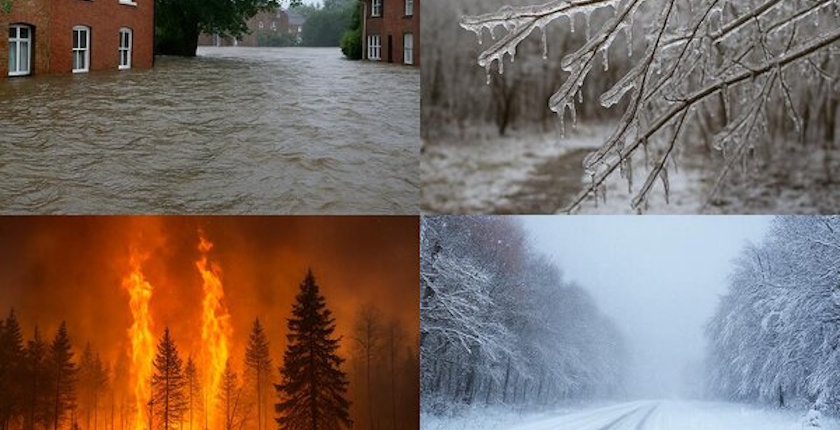
The main threats to the energy sector in Slovenia are floods, fires, storms, landslides, sleet and wet snow, heatwaves, and drought.

The assessment of climate vulnerability and risks for the energy sector was produced in line with the IPCC AR5 methodology and the national guidelines of the Faculty of Biotechnology.

The greatest threat to the energy sector are floods, which jeopardize fuel storage, substations, electricity distribution networks, and other elements of the supply chain, the ministry underscored.

The most important subsystem is liquid fuels

By using weighting and considering the current energy mix and the state of infrastructure, the most important subsystems for the functioning of the overall system are liquid fuels (34%) and electricity (33%), followed by natural gas (18%), solid fuels (10%), and heat (5%), the assessment reads.

This reflects a high dependence on imported liquid fuels and the key role of electricity in all consumption sectors, the ministry explained.
The overall weighted vulnerability score for the energy sector is 2.3 on a scale of one to five, with the electricity subsystem having the highest vulnerability, 2.6.

Electricity distribution grids, solar power plants, and fuel transport and logistic routes also show high vulnerability, according to the assessment.

Subsector ratings:

  • electricity subsector (2.6)
  • liquid fuel supply (2.2)
  • solid fuel supply (2.2)
  • natural gas supply (around 2.0)
  • heat supply (1.9)

Regarding individual elements of the sector, the most vulnerable are the electricity distribution network (3.5), electricity transmission system and imports (3), preparation of firewood, wood chips and pellets, and photovoltaic plants (3); vehicles/tanks for liquid fuels and vehicles/trucks for solid fuels, fuel stations, and other renewable energy sources (2.5).

The identified risks are expected to intensify in the future

The assessment reveals that Slovenia’s energy sector comprises critical elements whose failure could lead to significant supply disruptions.

It provides a technical basis and starting point for preparing a climate change adaptation strategy and for drafting measures such as strengthening infrastructure resilience, reviewing planning for new facilities, and incorporating climate risks into strategic documents and investment plans, according to the ministry.

Climate change scenarios indicate that the already identified risks will intensify in the future – especially floods, storms, and heatwaves.

The ministry said it would be necessary to implement adaptation measures to ensure a reliable energy supply.

by in News

Montenegro launches second BESS tender but for drastically smaller capacity

Power utility Elektroprivreda Crne Gore has launched its second battery energy storage system procurement tender. The required capacity is drastically lower than in the first call.

The initial public procurement was canceled because state-owned energy company Elektroprivreda Crne Gore (EPCG) didn’t obtain approval from the Government of Montenegro to take a loan for a EUR 58 million project.

The new tender envisages the procurement of a battery between 100 kW and 130 kW, with 200 kWh to 260 kWh in capacity. This is a pilot project, and the procurement is valued at EUR 75,000.

The canceled purchase was for two battery energy storage systems (BESS), at 30 MW and 120 MWh each.

The battery will be used on the distribution network

Potential locations include hydropower plant (HPP) Perućica, EPCG’s steel mill Željezara Nikšić, and the Pljevlja thermal power plant.

In the new call, the winning bidder will be obliged to secure a location for installing and testing the pilot BESS, according to the documentation.

EPCG explained that over the previous three years, its projects Solari 3000+, 500+, and 5000+ enabled a strong pace of the addition of prosumer solar power plants to the low-voltage, distribution network in Montenegro.

Although distributed generation has clear financial and ecological benefits, its rapid growth simultaneously brings a string of technical challenges for the distribution network, which was historically developed solely for supplying consumers and for unidirectional energy flow, according to the tender’s documentation.

EPCG sees the installation of batteries in substations as a solution to technical challenges caused by prosumers

The company sees the installation of BESS units within 10/0.4 kV substations as the solution for these challenges.

These batteries would be charged during the hours when photovoltaic facilities have high output in order to reduce and prevent reverse power flow. The idea is to discharge BESS units during hours of peak consumption and low voltage.

The main goal is to minimize voltage deviations in areas that the substations cover, during periods of production and consumption fluctuations. It would increase the hosting capacity for new prosumers, and enhance the stability of the distribution grid under an increased PV plant integration.

Scalability of the battery is one of the conditions for the bidders set by EPCG.

by in News

Serbia’s distribution system operator plans comprehensive restructuring

Serbia’s distribution system operator, Elektrodistribucija Srbije (EDS), plans a comprehensive restructuring to improve financial stability, operational efficiency, and investment planning capacity, in line with the country’s stand-by arrangement with the International Monetary Fund (IMF).

EDS has launched a tender to select a consultant to develop a restructuring plan. The deadline for submitting bids is set for November 28.

The consultant’s job will consist of two phases. The first phase involves analyzing the existing business model and designing and developing a new sustainable model. In the second phase, the consultant will support the implementation of the recommendations defined in the first phase, as well as the guidelines arising from the proposed financial restructuring plan, EDS has announced.

The consultant is to develop a restructuring plan and support its implementation

During the first phase, the consultant will analyze EDS’ current operations, including its financial position, key business processes, management structure, and IT systems. Based on the analysis, a target business model and a financial restructuring plan will be developed, including scenarios and stress tests to assess the company’s resilience to potential challenges.

The second phase will focus on implementing the recommendations and the proposed model, including coordination with internal teams, monitoring progress, evaluating the effectiveness of changes, and supporting employee training. Special attention will be given to digitalization, business process optimization, and customer service improvements.

The project should help digitalize business processes

Some elements of EDS’s operations that are expected to be improved include meter issuance and reading, as well as electricity loss management. The consultant’s job also involves mapping IT systems and projects that support the automation and digitalization of business processes, according to EDS.

The consultant will also be expected to develop a comprehensive implementation plan, including timelines, resource allocation, and project risk management strategies, and provide regular progress reports highlighting challenges and proposing steps to address them.

A final report on the restructuring efforts will also be required, including lessons learned and recommendations for future initiatives, according to EDS.

by in News

Šahmanović: Second submarine cable line with Italy to be installed by 2031

The second line of the submarine cable connecting Montenegro and Italy is expected to be completed by 2031, Montenegro’s Minister of Energy and Mining Admir Šahmanović said at the European Union – Montenegro Investment Conference.

The two-day conference, titled Smart Growth, Green Future: Accelerating Investment in Montenegro, was opened yesterday in Luštica, near Tivat, by European Commission President Ursula von der Leyen and Prime Minister of Montenegro Milojko Spajić.

Fourteen cooperation projects between Montenegrin and European companies have been initiated at the conference, including investments in wind farms, solar parks, energy storage, and grids. It shows the great significance of the energy sector for investments.

A panel called Renewables: Scaling Montenegro’s Energy Transition examined the possibilities for accelerating the country’s energy transition and enhancing the sector’s attractiveness for investment in renewables.

Šahmanović: Montenegro strives to position green energy as an export product

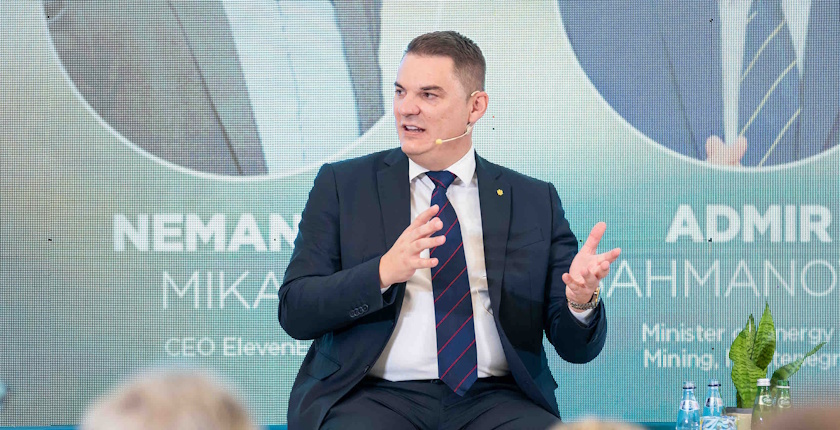
Prominent international experts and investors took part in the discussion. Representing the Government of Montenegro, Minister of Energy and Mining Admir Šahmanović outlined the country’s renewable energy priorities and highlighted Montenegro’s role as a regional leader in clean energy.

Montenegro has fully harmonized its legislation with EU standards, creating a stable and predictable investment environment, in his words. Šahmanović highlighted the launch of the first solar power auction as a significant step forward in the development of renewables.

Photo: Đorđe Cmiljanić/Government of Montenegro

“The government invests in battery energy storage systems (BESS), ensuring the flexibility and stability of the grid. Montenegro strives to position green energy as a recognizable export product, thereby strengthening the country’s economic sustainability,” Šahmanović stated.

He revealed that Montenegro is about to sign a memorandum of understanding with Italy that would additionally position Montenegro as an energy bridge between the Western Balkans and the EU.

Montenegro is looking for strategic partners and investors ready to jointly implement capital projects in the energy sector

The government is wrapping up the work concerning the oil and gas sector to close chapter 15 in its accession negotiations with the EU, further strengthening investor trust, Šahmanović said.

“The implementation of the project for the construction of the second phase of the subsea cable link with Italy is expected by 2031, which will further strengthen Montenegro’s role in regional and European energy connectivity. Montenegro is looking for strategic partners and investors ready to jointly materialize capital projects in energy and contribute to regional energy stability,” the minister underlined. The investment is estimated at EUR 500 million, he asserted.

In a message to investors, Šahmanović said Montenegro is open for investments and added: “Now is the time for you to invest. We will be your service 24 hours a day, seven days a week.”

Participants at the panel included Daniel Calderon, Alcazar Energy Co-Founder and Managing Partner, Yann Guinard, EDF Director of Development for Europe, Louis Blanchard, Qair Energy President, and Nemanja Mikać, ElevenEs CEO.

Memorandum with EDF

Admir Šahmanović and Yann Guinard (photo: Ministry of Energy and Mining)

Within the conference, the Ministry of Energy and Mining of Montenegro and EDF International Networks signed a memorandum of understanding. It establishes a framework for future cooperation on modernizing the distribution network, digitizing smart grids, and integrating renewable energy sources, according to the ministry.

The memorandum foresees the implementation of pilot projects and feasibility studies that will contribute to the acceleration of the energy transition of Montenegro.

Admir Šahmanović said the deal is an important step towards strengthening green and innovative energy projects. Cooperation with EDF confirms the position of Montenegro as a country with a clear vision and open opportunities for investors, he underscored.

“EDF International Networks, as part of the global EDF Group, brings international expertise in the sector of power distribution, grid upgrade and digital transformation, which opens up space for new strategic partnerships and capital infrastructure projects,” the minister pointed out.

The memorandum confirmed the joint commitment to sustainability, integrity and energy security, with a clear focus on the well-being of citizens and the economy of Montenegro, the ministry said.

by in News

EU-Montenegro Investment Conference: 14 partnerships, MoUs signed for energy, sustainable projects

A total of 14 cooperation projects between Montenegrin and European companies have been initiated at the ongoing European Union-Montenegro Investment Conference, including investments in wind farms, solar parks, energy storage, and grids.

The two-day conference, titled Smart Growth, Green Future: Accelerating Investment in Montenegro, was opened today in Luštica, near Tivat, by the President of the European Commission, Ursula von der Leyen, and the Prime Minister of Montenegro, Milojko Spajić.

Montenegro’s growing potential for strategic, green, and sustainable investments was presented through new partnerships between leading Montenegrin and European companies, according to a press release by the Government of Montenegro.

The Conference was jointly organized by the government and the European Commission, with the support of the Montenegro Investment Agency (MIA).

State power utility EPCG has signed three memoranda of understanding

State-owned power utility Elektroprivreda Crne Gore (EPCG) has signed three memoranda of understanding (MoUs). One was signed with Akuo for the development of several renewable energy projects, including floating solar, a photovoltaic plant, and energy storage.

The second MoU, signed with SS&A Power Group, envisages the development, manufacture, and installation of thermal energy storage, while the third, with Wind Fisher, concerns a new technology for high-altitude wind power generation.

Alcazar Energy signed a memorandum with the government’s project management office for the development and financing of renewable energy projects. CWP Europe and the Montenegrin Investment Agency (MIA) signed a memorandum on the development of the Montečevo solar farm project with battery storage. The company signed a similar agreement for its project in Albania yesterday.

A memorandum was also signed between Čevo Solar and Grawert Jenny & Partner on battery energy storage systems (BESS). A 20 MW/60 MWh battery is being considered.

Four sustainable investment partnerships were also signed

The Ministry of Energy and Mining and EDF will further discuss the issue of modernizing Montenegro’s power distribution network.

Among the signed documents is an MoU on collaboration between the European Bank for Reconstruction and Development (EBRD) and Erste on a Regional Energy Efficiency Program (REEP), as well as cooperation in the field of wastewater management between Suez and MIA.

In addition, four sustainable investment partnerships were also signed: Farm2Fork Montenegro, Station M, Green Logistics Hub, and Northern Investments Compact for Ecology & Resilience (NICER). Green Logistics Hub refers to the Port of Bar, which aims to become the first net-zero port on the Adriatic. NICER concerns the just transition and is led by the Pljevlja Coal Mine.

Von der Leyen: Do not wait for accession to invest in Montenegro

Photo: Bojan Gnjidić/Vlada Crne Gore

The event brought together senior representatives of the Government of Montenegro, the European Union, international financial institutions, as well as prominent European and Montenegrin investors.

“My message is very clear: do not wait for accession to invest in Montenegro, because by then you may miss the opportunities that others will seize,” Ursula von der Leyen noted.

She stressed that by continuing its European journey with determination and speed, Montenegro is making its goal of EU accession attainable.

“Today, we are opening a new chapter of development—we are beginning a major investment cycle, strengthening our ties with the European market even before formally joining the European family. Today, we are bringing our vision of green and smart growth to life. We are doing this together with our most important strategic partner—the European Union, which is also the largest investor in our country,” Prime Minister Milojko Spajić said.

He recalled that the country plans to close all negotiating chapters with the EU by the end of 2026 and become its 28th member state in 2028.

Photo: Bojan Gnjidić/Vlada Crne Gore
by in News

Bajramović: Investments of BAM 1.4 billion needed for distribution grids in BiH

Necessary investments in Bosnia and Herzegovina’s electricity distribution grids by 2030 amount to BAM 1.4 billion (EUR 716 million), according to Zijad Bajramović, chairman of the Bosnia and Herzegovina committee of the International Council on Large Electric Systems (CIGRE).

The growing installation of power plants utilizing renewable energy sources is creating congestion in transmission and distribution networks, so the limited available capacity for their connection is an issue across the entire region, Zijad Bajramović told state news agency Fena. Nezavisne Novine republished the report.

An additional burden on the distribution network is expected from the electrification of transportation and increased electricity use for heating and cooling.

Energy storage is a solution for the problems emerging in the grid

Bajramović explained that new 110 kV substations are necessary, as is the completion of the ongoing transition to the 20 kV voltage level. Attention should also be paid to integrating prosumers, especially the households that both produce electricity, with solar panels on their roofs, and consume it.

He highlighted balancing as well as maintaining voltage conditions and supply quality as the main challenges from the rise in renewable electricity capacity on the grid. Energy storage is a solution for the issues.

Batteries can prevent renewables generation curtailments

Bajramović expects battery energy storage systems to play an increasingly significant role in relieving network congestion.

BESS, in his words, are a flexibility tool for absorbing excess generation locally, and temporarily easing the pressure on the transmission grid. They can prevent curtailments of power generation from variable renewable sources, he added.

Bajramović recalled that calculations have showed batteries of 225 MW / 450 MWh in total would be necessary to connect 1,500 MW of solar power capacity and 1,000 MW of wind power to the transmission network.

An increase in distribution network tariffs would provide funds for investment in strengthening and modernizing the distribution network, in his view.

Batteries are being installed at a rapid rate around the world as well as in the region. Not only private companies, but also state-owned utilities such as Romania’s Hidroelectrica and Montenegro’s Elektroprivreda Crne Gore (EPCG) are investing in such projects.