by in News

DNV to acquire Automa Power & Utilities, strengthening position as global end-to-end digital operations partner for energy industry

DNV has announced the proposed acquisition of Automa Power & Utilities S.A., a prominent Brazilian technology company offering integrated monitoring, control, and performance management solutions for multi-technology power plants including renewables, transmission and distribution grids.

This strategic move strengthens DNV’s position as an end-to-end digital operations partner for utilities and independent power producers (IPPs) globally covering the full energy system. Founded in 2006 and headquartered in São Paulo, Automa has built a reputation for delivering advanced supervision and control solutions for hydro, wind, and solar power plants.

Its portfolio includes SCADA platforms, operation-support tools, and substation protection and control systems, with over 60 GW of renewable capacity under management and more than 200 substations controlled by its solutions in Brazil. In 2024, Automa expanded into Europe with an office in Porto, Portugal, and has successfully deployed systems for solar plants in France, Germany, Italy, Croatia and Poland.

The transaction has been signed and submitted to Brazil’s Administrative Council for Economic Defense, CADE (Conselho Administrativo de Defesa Econômica), for review and approval. The transaction is subject to regulatory approvals and customary closing conditions.

Digitalization is among key enablers of energy transition

Remi Eriksen, Group President and CEO, DNV, said: “The energy transition is moving forward with digitalization as a key enabler. By combining Automa’s advanced digital solutions with DNV’s global domain expertise, we are creating unique digital capabilities that will help our customers manage complexity and unlock new opportunities for growth in the energy industry.”

The transaction has been signed and submitted to Brazil’s regulatory body CADE

Ditlev Engel, CEO of Energy Systems, DNV, added: “Our vision is to be the trusted partner for the entire energy value chain. Monitoring and controlling all assets and operations in the energy system will be crucial for effective and efficient use of energy, providing secure and reliable energy to society. So, I am looking forward to welcoming 300 future colleagues from Automa. By joining forces with DNV’s existing digital and data solutions teams for Energy Systems, we will have a global digital business team of 1,200 energy experts ready to work closely with our 4,950 other energy colleagues, ensuring that our customers have an energy business partner of more than 6,150 energy experts globally, covering all parts of the energy system.

“Together, we will offer utilities and independent power producers a comprehensive suite of digital tools and services, underpinned by full energy systems thinking, to optimize real-time performance and enhance resilience.”

New chapter of growth for Automa

Juan Carlos Arévalo, Executive Vice President of the new digital and data solutions unit, highlighted: “The acquisition of Automa creates an amazing opportunity to drive meaningful change across the energy industry. By combining Automa’s expertise with DNV’s advanced software capabilities and one of the strongest energy data foundations in the sector, we look forward to provide a full suite of solutions to clients. This strategic integration will enhance our ability to help customers navigate the complexity of the global energy transition with confidence and clarity.”

Marcelo Ferreira, CEO of Automa, commented: “For Automa, the transaction represents a new chapter of growth. We will connect the experience built in Brazil and Europe with a global network of experts and technologies. The strong collaborative culture combined with technical expertise will be further strengthened, creating development opportunities for customers, partners, and employees.”

by in News

DNV to acquire Automa Power & Utilities, strengthening position as global end-to-end digital operations partner for energy industry

DNV has announced the proposed acquisition of Automa Power & Utilities S.A., a prominent Brazilian technology company offering integrated monitoring, control, and performance management solutions for multi-technology power plants including renewables, transmission and distribution grids.

This strategic move strengthens DNV’s position as an end-to-end digital operations partner for utilities and independent power producers (IPPs) globally covering the full energy system. Founded in 2006 and headquartered in São Paulo, Automa has built a reputation for delivering advanced supervision and control solutions for hydro, wind, and solar power plants.

Its portfolio includes SCADA platforms, operation-support tools, and substation protection and control systems, with over 60 GW of renewable capacity under management and more than 200 substations controlled by its solutions in Brazil. In 2024, Automa expanded into Europe with an office in Porto, Portugal, and has successfully deployed systems for solar plants in France, Germany, Italy, Croatia and Poland.

The transaction has been signed and submitted to Brazil’s Administrative Council for Economic Defense, CADE (Conselho Administrativo de Defesa Econômica), for review and approval. The transaction is subject to regulatory approvals and customary closing conditions.

Digitalization is among key enablers of energy transition

Remi Eriksen, Group President and CEO, DNV, said: “The energy transition is moving forward with digitalization as a key enabler. By combining Automa’s advanced digital solutions with DNV’s global domain expertise, we are creating unique digital capabilities that will help our customers manage complexity and unlock new opportunities for growth in the energy industry.”

The transaction has been signed and submitted to Brazil’s regulatory body CADE

Ditlev Engel, CEO of Energy Systems, DNV, added: “Our vision is to be the trusted partner for the entire energy value chain. Monitoring and controlling all assets and operations in the energy system will be crucial for effective and efficient use of energy, providing secure and reliable energy to society. So, I am looking forward to welcoming 300 future colleagues from Automa. By joining forces with DNV’s existing digital and data solutions teams for Energy Systems, we will have a global digital business team of 1,200 energy experts ready to work closely with our 4,950 other energy colleagues, ensuring that our customers have an energy business partner of more than 6,150 energy experts globally, covering all parts of the energy system.

“Together, we will offer utilities and independent power producers a comprehensive suite of digital tools and services, underpinned by full energy systems thinking, to optimize real-time performance and enhance resilience.”

New chapter of growth for Automa

Juan Carlos Arévalo, Executive Vice President of the new digital and data solutions unit, highlighted: “The acquisition of Automa creates an amazing opportunity to drive meaningful change across the energy industry. By combining Automa’s expertise with DNV’s advanced software capabilities and one of the strongest energy data foundations in the sector, we look forward to provide a full suite of solutions to clients. This strategic integration will enhance our ability to help customers navigate the complexity of the global energy transition with confidence and clarity.”

Marcelo Ferreira, CEO of Automa, commented: “For Automa, the transaction represents a new chapter of growth. We will connect the experience built in Brazil and Europe with a global network of experts and technologies. The strong collaborative culture combined with technical expertise will be further strengthened, creating development opportunities for customers, partners, and employees.”

by in News

Electrification is redefining energy: Volue appoints Stephan Sieber as CEO

Volue’s new Chief Executive Officer Stephan Sieber is responsible for the expansion and transformation ahead, to unleash the company’s expertise across data and forecasting, trading, optimization and planning, and grid operations. “Volue turns complexity into advantage, and the momentum with our customers right now is just the beginning,” he stated.

Norwegian electrification software maker Volue revealed that it has appointed Stephan Sieber as CEO and stressed that it is a pivotal moment for the energy sector. In the artificial intelligence era, the company provides real-time intelligence, automation, and optimization of assets for efficiency, precision and performance, the update adds.

“Electrification is accelerating at historic speed. Weather-dependent renewable power systems are becoming more unpredictable and data-intensive, and customers face rising operational complexity. Stephan’s mandate is to extend Volue’s market leadership and drive transformation and growth, unleashing Volue’s expertise across data and forecasting, trading, optimisation and planning, and grid operations – helping energy customers turn complexity into competitive advantage,” the announcement reads.

Market at inflection point

Europe is on track to double its electrification efforts by 2030, adding as much capacity in the next five years as in the previous three decades, Volue pointed out. It noted that the surge is driven in part by the electrification of transportation and heat, and rising digital demand from AI and data centres, fundamentally reshaping energy markets.

Power systems are no longer centralized and predictable; they are becoming distributed, volatile, and data-intensive, the company underscored. Decision windows are shrinking, markets transact continuously, and success now depends on real-time intelligence, automation, and precision, Volue said. The company has more than 800 energy customers across Europe and Japan.

Volue said it had stellar organic growth last year alongside selective mergers and acquisitions.

Stephan Sieber, CEO, Volue, said: “With electrification accelerating and system complexity rising, customers need to partner with the best technology providers. Volue turns complexity into advantage, and the momentum with our customers right now is just the beginning. I’m extremely excited about where the company, the market, and our customers are, and how quickly the impact is compounding,”

Enabling performance in volatile markets

Volue operates other companies’ assets through real-time operations intelligence, enabling market anticipation and execution, and 30% of Europe’s intraday market volume is flowing through Volue Trading solutions, the company stressed. Its AI-driven optimization is influencing decisions across 500 TWh of annual generation, representing 20% of Europe’s total power production.

The company claimed it is “the dominant partner of choice” for 40% of Europe’s independent power producers in renewables integration.

“Throughout his career, Stephan has consistently delivered exceptional results, driving growth, leading complex strategic and operational transformations, and building high-performing teams in some of the most competitive markets. He has an extraordinary ability to understand customer needs, anticipate market trends, and turn opportunities into tangible, lasting outcomes, earning him a reputation as a market-proven leader,” Chairman of Volue Pete Daffern stated.

by in News

Electrification is redefining energy: Volue appoints Stephan Sieber as CEO

Volue’s new Chief Executive Officer Stephan Sieber is responsible for the expansion and transformation ahead, to unleash the company’s expertise across data and forecasting, trading, optimization and planning, and grid operations. “Volue turns complexity into advantage, and the momentum with our customers right now is just the beginning,” he stated.

Norwegian electrification software maker Volue revealed that it has appointed Stephan Sieber as CEO and stressed that it is a pivotal moment for the energy sector. In the artificial intelligence era, the company provides real-time intelligence, automation, and optimization of assets for efficiency, precision and performance, the update adds.

“Electrification is accelerating at historic speed. Weather-dependent renewable power systems are becoming more unpredictable and data-intensive, and customers face rising operational complexity. Stephan’s mandate is to extend Volue’s market leadership and drive transformation and growth, unleashing Volue’s expertise across data and forecasting, trading, optimisation and planning, and grid operations – helping energy customers turn complexity into competitive advantage,” the announcement reads.

Market at inflection point

Europe is on track to double its electrification efforts by 2030, adding as much capacity in the next five years as in the previous three decades, Volue pointed out. It noted that the surge is driven in part by the electrification of transportation and heat, and rising digital demand from AI and data centres, fundamentally reshaping energy markets.

Power systems are no longer centralized and predictable; they are becoming distributed, volatile, and data-intensive, the company underscored. Decision windows are shrinking, markets transact continuously, and success now depends on real-time intelligence, automation, and precision, Volue said. The company has more than 800 energy customers across Europe and Japan.

Volue said it had stellar organic growth last year alongside selective mergers and acquisitions.

Stephan Sieber, CEO, Volue, said: “With electrification accelerating and system complexity rising, customers need to partner with the best technology providers. Volue turns complexity into advantage, and the momentum with our customers right now is just the beginning. I’m extremely excited about where the company, the market, and our customers are, and how quickly the impact is compounding,”

Enabling performance in volatile markets

Volue operates other companies’ assets through real-time operations intelligence, enabling market anticipation and execution, and 30% of Europe’s intraday market volume is flowing through Volue Trading solutions, the company stressed. Its AI-driven optimization is influencing decisions across 500 TWh of annual generation, representing 20% of Europe’s total power production.

The company claimed it is “the dominant partner of choice” for 40% of Europe’s independent power producers in renewables integration.

“Throughout his career, Stephan has consistently delivered exceptional results, driving growth, leading complex strategic and operational transformations, and building high-performing teams in some of the most competitive markets. He has an extraordinary ability to understand customer needs, anticipate market trends, and turn opportunities into tangible, lasting outcomes, earning him a reputation as a market-proven leader,” Chairman of Volue Pete Daffern stated.

by in News

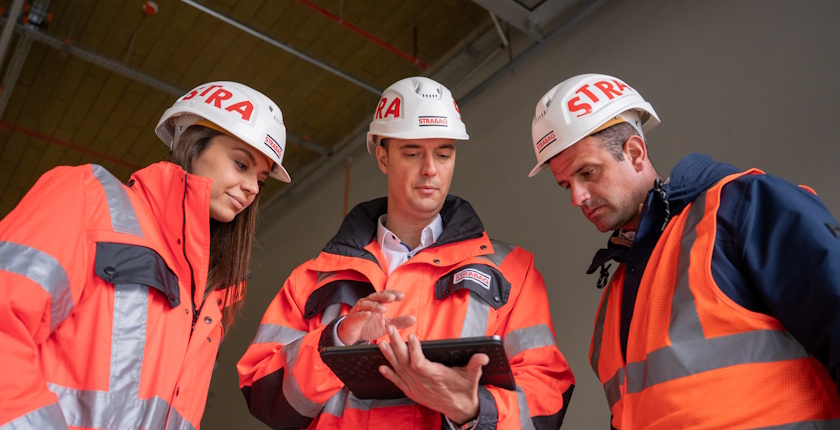
From construction waste to circular economy: how STRABAG drives green transition

Today, the construction industry is at the crossroads between tradition and transformation. Accounting for approximately 40% of the global energy consumption and for more than 35% of the overall CO₂ emissions, this sector has a huge potential, as well as a responsibility to become one of the key leaders of change in environmental protection. It is this change where STRABAG in Serbia recognises its task and opportunity: through recycling and reuse of materials, solar energy consumption, electric vehicles and digital innovation, the company demonstrates that sustainability can be an integral part of every construction phase.

Acting responsibly, objectively and ethically, STRABAG operates in accordance with the highest integrity standards. Aiming to expand business operations to new areas, they develop innovative and creative approaches within defined frameworks, utilising resources regionally, purposefully and efficiently. Their goal is to become the market leader via automation and adoption of new technologies, while pledging to achieve climate neutrality and CO₂ emission reduction.

Circular economy in practice: second life of materials

Construction waste is no longer and must not be the end of a process, but the start of a new cycle. For instance, concrete that used to end up at a landfill is now treated as a valuable resource: after separating reinforced elements and crushing, the material is reused in construction, as an aggregate for bases, foundations or access roads. This reduces the need for exploiting natural resources, the volume of waste at landfills and CO₂ emissions resulting from transport and production of new materials. The approach confirms that the construction industry can be a generator of a circular economy, rather than just its observer.

By recycling materials, STRABAG enhances processes and rationalises costs, while setting a new benchmark in responsible resource management, thus following its strategic goal of transforming every construction site into a part of a closed, sustainable construction cycle by 2040.

“Our objective is to turn every tonne of waste into a resource in the next project – that is the essence of the circular approach,” STRABAG’s representatives say.

Solar energy and electric mobility: construction sites of the future

In line with STRABAG’s Work On Progress strategy and aiming to become climate neutral by 2040, the company is introducing photovoltaic (PV) panels at its facilities, construction sites and logistics and asphalt bases in Serbia. Solar systems enable a reduction of power consumption from the grid, as well as of CO₂ emissions, thus directly contributing to the company’s global objective.

Green transition also includes the transport segment. STRABAG is modernising its vehicle fleet and introducing e-vehicles and new-generation construction machinery, decreasing its fossil fuel consumption and overall carbon footprint. By combining solar energy sources and electric mobility, construction sites become self-sustainable, with more environmentally responsible and technologically advanced daily operations.

Digital tools – less paper, more efficiency

Not only does digital transformation in STRABAG represent the implementation of new technologies, but it also changes the method of managing each segment of a construction site. By introducing the SSO (Smart Site One) application, the process of planning, monitoring and optimising operations is fully digitalised, from asphalt transport to final installation phases. The app connects people, machinery and processes in real time, thus eliminating downtime, increasing efficiency and reducing fuel consumption and waste.

Furthermore, the company has developed the 5S application (based on the 5S principles – sort, set in order, shine, standardise, sustain), aimed at monitoring order, safety and implementation of the LEAN methods at construction sites. This digital tool enables daily on-site status monitoring, design of automatic reports in order to reduce the risk of injuries, for orderly construction sites with optimal resource use, while additional values: 6S (safety), 7S (team spirit) and 8S (sustainability), facilitate further the culture of safety, team spirit and environmental awareness.

With these applications, STRABAG connects digitalisation and sustainability, showcasing that modern construction can simultaneously be precise, efficient and environmentally responsible.

Journey to climate neutrality

STRABAG in Serbia is implementing an ambitious plan, harmonised with its global ESG strategy and climate neutrality goals. The focus is both on technological innovation and systemic change in the method of construction, use of resources and day-to-day operations.

Key objectives set by the company include the following:

  • 50% of recycled materials in construction processes by 2030
  • CO₂ emission reduction of 42% per project by 2030
  • Fully electric or hybrid vehicle fleet by 2035

Besides technical and infrastructure measures, STRABAG continuously invests in employee education via LEAN and sustainability training courses (training in environmental protection), promoting the principles of sustainable construction, energy efficiency and responsible resource management. As a result, sustainability within the company goes beyond restrictions of individual initiatives, becoming a part of the corporate culture and mindset in every segment of operations.

STRABAG’s sustainability story is more than a series of projects – it is a long-term strategy that changes the future perspective of the construction sector.

“Sustainability is not a trend, but a new foundation of quality. What we are building today must last for the generations to come,” STRABAG’s representatives concluded.

by in News

From construction waste to circular economy: how STRABAG drives green transition

Today, the construction industry is at the crossroads between tradition and transformation. Accounting for approximately 40% of the global energy consumption and for more than 35% of the overall CO₂ emissions, this sector has a huge potential, as well as a responsibility to become one of the key leaders of change in environmental protection. It is this change where STRABAG in Serbia recognises its task and opportunity: through recycling and reuse of materials, solar energy consumption, electric vehicles and digital innovation, the company demonstrates that sustainability can be an integral part of every construction phase.

Acting responsibly, objectively and ethically, STRABAG operates in accordance with the highest integrity standards. Aiming to expand business operations to new areas, they develop innovative and creative approaches within defined frameworks, utilising resources regionally, purposefully and efficiently. Their goal is to become the market leader via automation and adoption of new technologies, while pledging to achieve climate neutrality and CO₂ emission reduction.

Circular economy in practice: second life of materials

Construction waste is no longer and must not be the end of a process, but the start of a new cycle. For instance, concrete that used to end up at a landfill is now treated as a valuable resource: after separating reinforced elements and crushing, the material is reused in construction, as an aggregate for bases, foundations or access roads. This reduces the need for exploiting natural resources, the volume of waste at landfills and CO₂ emissions resulting from transport and production of new materials. The approach confirms that the construction industry can be a generator of a circular economy, rather than just its observer.

By recycling materials, STRABAG enhances processes and rationalises costs, while setting a new benchmark in responsible resource management, thus following its strategic goal of transforming every construction site into a part of a closed, sustainable construction cycle by 2040.

“Our objective is to turn every tonne of waste into a resource in the next project – that is the essence of the circular approach,” STRABAG’s representatives say.

Solar energy and electric mobility: construction sites of the future

In line with STRABAG’s Work On Progress strategy and aiming to become climate neutral by 2040, the company is introducing photovoltaic (PV) panels at its facilities, construction sites and logistics and asphalt bases in Serbia. Solar systems enable a reduction of power consumption from the grid, as well as of CO₂ emissions, thus directly contributing to the company’s global objective.

Green transition also includes the transport segment. STRABAG is modernising its vehicle fleet and introducing e-vehicles and new-generation construction machinery, decreasing its fossil fuel consumption and overall carbon footprint. By combining solar energy sources and electric mobility, construction sites become self-sustainable, with more environmentally responsible and technologically advanced daily operations.

Digital tools – less paper, more efficiency

Not only does digital transformation in STRABAG represent the implementation of new technologies, but it also changes the method of managing each segment of a construction site. By introducing the SSO (Smart Site One) application, the process of planning, monitoring and optimising operations is fully digitalised, from asphalt transport to final installation phases. The app connects people, machinery and processes in real time, thus eliminating downtime, increasing efficiency and reducing fuel consumption and waste.

Furthermore, the company has developed the 5S application (based on the 5S principles – sort, set in order, shine, standardise, sustain), aimed at monitoring order, safety and implementation of the LEAN methods at construction sites. This digital tool enables daily on-site status monitoring, design of automatic reports in order to reduce the risk of injuries, for orderly construction sites with optimal resource use, while additional values: 6S (safety), 7S (team spirit) and 8S (sustainability), facilitate further the culture of safety, team spirit and environmental awareness.

With these applications, STRABAG connects digitalisation and sustainability, showcasing that modern construction can simultaneously be precise, efficient and environmentally responsible.

Journey to climate neutrality

STRABAG in Serbia is implementing an ambitious plan, harmonised with its global ESG strategy and climate neutrality goals. The focus is both on technological innovation and systemic change in the method of construction, use of resources and day-to-day operations.

Key objectives set by the company include the following:

  • 50% of recycled materials in construction processes by 2030
  • CO₂ emission reduction of 42% per project by 2030
  • Fully electric or hybrid vehicle fleet by 2035

Besides technical and infrastructure measures, STRABAG continuously invests in employee education via LEAN and sustainability training courses (training in environmental protection), promoting the principles of sustainable construction, energy efficiency and responsible resource management. As a result, sustainability within the company goes beyond restrictions of individual initiatives, becoming a part of the corporate culture and mindset in every segment of operations.

STRABAG’s sustainability story is more than a series of projects – it is a long-term strategy that changes the future perspective of the construction sector.

“Sustainability is not a trend, but a new foundation of quality. What we are building today must last for the generations to come,” STRABAG’s representatives concluded.

by in News

Energy Community calls for nominations of PECI energy infrastructure projects

Developers of cross-border energy infrastructure investments within the Energy Community or internal ones with significant cross-border dimensions can nominate them by January 19 within the selection process for projects of Energy Community Interest (PECI). In line with the Trans-European Networks for Energy (TEN-E) regulation, the mechanism is for electricity transmission and energy storage including protection, monitoring and control systems, together with smart power and gas grids, hydrogen and carbon dioxide.

The Energy Community Secretariat opened a call for promotors to submit their projects for evaluation within the 2026 PECI selection. EU regulation 2022/869 – revised TEN-E, which the Energy Community Ministerial Council adopted as 2023/02/MC-EnC, stipulates the approval of the second list of projects of Energy Community Interest (PECI) by December 31, 2026.

Nominations are received until January 19. The proposals concern the electricity and gas sectors.

In the first group are high- and extra-high-voltage overhead transmission lines and underground and submarine transmission cables. It includes equipment and installations for offshore renewable electricity.

Eligible electricity segment investments are also for energy storage, as well as protection, monitoring and control systems for all of the above and at all voltage levels.

Projects for smart power and gas grids are both in the scope of the PECI selection process. Hydrogen-based technologies, electrolyzers and CO2 projects are within the gas infrastructure list as well, the call reads.

PECIs are for cross-border energy infrastructure within the Energy Community or internal endeavors with significant cross-border dimensions.

Proposal forms are available at the call’s webpage.

Ministries, regulatory authorities and transmission system operators will be among the institutions evaluating nominated projects. The group also consists of the European Commission, Energy Community Secretariat, Energy Community Regulatory Board, the ECDSO-E entity of Energy Community distribution system operators, the European Network of Transmission System Operators for Electricity (ENTSO-E) and European Network of Transmission System Operators for Gas (ENTSOG).

The Energy Community comprises the Western Balkans, Moldova, Georgia and Ukraine.

by in News

Revolutionising retail: power of real-time energy visibility with SolarEdge ONE for C&I

As retail evolves, supermarkets are under pressure to boost efficiency and sustainability. The key enabler of this transformation is SolarEdge ONE for C&I – a comprehensive platform that delivers real-time energy visibility and management for commercial and industrial (C&I) environments.

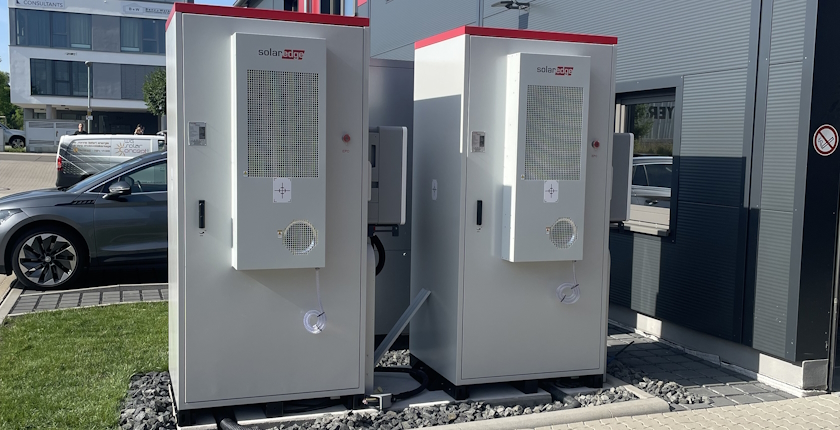
SolarEdge ONE for C&I integrates advanced solar PV, storage, and energy analytics, providing retailers with a unified “single pane of glass” to monitor, control, and optimize energy flows across their entire estate. This platform enables supermarkets to harness solar energy during peak hours, store excess power, and intelligently manage consumption, reducing reliance on the grid and lowering operational costs.

With the rise of electric vehicles and increasing electrification, supermarkets face growing energy demands. SolarEdge ONE for C&I addresses this by combining real-time data from solar panels, refrigeration, lighting, HVAC, and EV chargers. The result is a holistic view of energy usage, allowing retailers to identify inefficiencies, prevent asset failures, and take targeted actions to reduce waste and costs.

CSS-OD WG Solar Germany

Millions of sensor readings in real time

A standout feature of SolarEdge ONE for C&I is its edge-based computing, capable of processing millions of sensor readings in real time. This empowers retailers to visualize and analyze data instantly, even across hundreds of stores, warehouses, and logistics centers. The platform’s scalability means that even large retail chains can centralize energy management, ensuring consistent performance and rapid response to anomalies.

The financial benefits are significant: retailers using SolarEdge ONE for C&I have reported substantial reductions in energy costs – such as a 4.5% drop in lighting expenses – translating to millions in annual savings. The system also supports flexible energy pricing strategies, enabling retailers to shift consumption based on tariff changes, avoid penalties, and even participate in energy trading or arbitrage.

SolarEdge ONE Controller for C&I

SolarEdge ONE for C&I sets retailers on path to future

By leveraging SolarEdge ONE for C&I, supermarkets are not only meeting their sustainability goals but also gaining a competitive edge in a dynamic energy market. The platform’s advanced analytics and automation prepare retailers for the future, allowing them to optimize energy use, comply with carbon reduction targets, and unlock new revenue streams.

In summary, SolarEdge ONE for C&I is transforming retail energy management. Its real-time visibility, intelligent controls, and scalable architecture empower supermarkets to operate more efficiently, sustainably, and profitably – setting a new standard for the industry.

Find out more: SolarEdge ONE for C&I: optimizing all energy assets | SolarEdge

by in News

Energy communities reduce power bills for members, improve electricity market

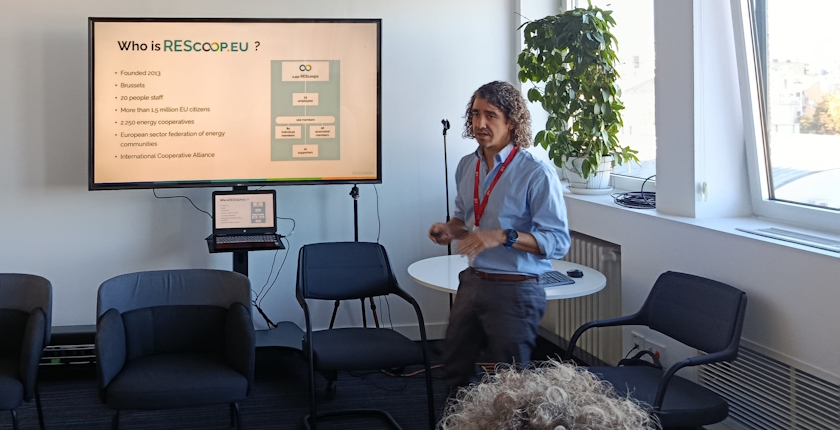
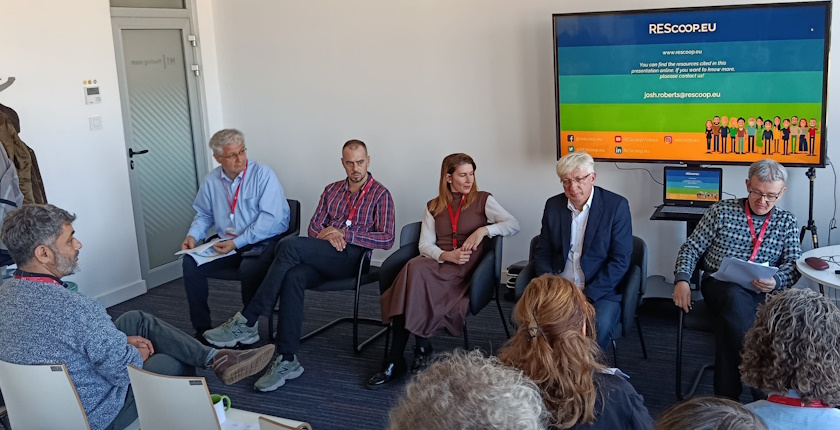
Citizen energy communities make the energy system greener and benefit society at a local level, Josh Roberts from European federation of energy communities REScoop said in his presentation, organized in Belgrade by Deutsche Gesellschaft für Internationale Zusammenarbeit (GIZ) GmbH. It is a form of association that also lowers costs for households, institutions and small firms and entrepreneurs, and contributes to the deployment of progressive technologies. Furthermore, it is a framework for democratic control.

The event included developers from the emerging segment of energy communities and cooperatives in Serbia. They outlined the current initiatives and pointed to challenges regarding market entry, financing and policies.

The establishment and operation of energy communities is arranged through the European Union’s latest legislation, as well as in Serbia and other Western Balkan countries, but they are not a new concept. For instance, such entities still accounted for almost half of wind power output in Denmark in late 1990s, according to Senior Policy Advisor Josh Roberts from REScoop, the European federation of energy communities and cooperatives.

Speaking at a gathering that GIZ organized in Belgrade he pointed to the benefits for citizens, small firms and entrepreneurs and for institutions from setting up or joining energy communities. Initiatives in Serbia were also presented, and their progress in the same field, and the event included dialogue on the necessary technical solutions for connecting to the distribution grid.

Brussels-based REScoop was founded in 2013. In its membership are organizations from 22 European countries. They include Serbian energy cooperative Elektropionir. It gained the most ground regarding association and the implementation of projects.

One coal town has put up signpost for energy communities in Slovenia

Among other examples, Roberts highlighted Slovenia’s first energy community with a rooftop solar power plant for joint use. The facility is on the roof of an elementary school. The project involves aid for people living in energy poverty and it is free to join the group.

It is in the town of Hrastnik in a former coal industry area. The participants already lowered their power bills by 30%, and the gains will be even greater when they pay off the loan, Roberts said.

There are more than 1,600 energy communities in Austria

The representative of the REScoop federation stressed that municipalities in the Belgian region of Wallonia have succeeded in obtaining the right for citizens to participate in investments in green energy projects. It resulted in the foundation of a range of energy communities.

Roberts especially commended Austria’s legal framework with regard to enabling citizens to participate. The country hosts more than 1,600 energy communities.

Udruzivanje energetske zajednice smanjuje troskove trziste elektricne energije Dzos Roberts Josh REScoop GIZ

Energy community eases grid operator’s job

Energy communities are envisaged to return the invested funds to society at the local level. Subsidies are especially favorable for that, Roberts explained. Income is directed to education, infrastructure and aid against energy poverty.

The essence is that the community controls the distribution of the proceeds. In addition, grid operators can communicate more easily with one entity than with a hundred prosumers, Roberts underscored. Prosumers – or buyers-consumers, as they are formally called in Serbia, generate electricity for their own needs.

Pooling together enables providing services in the market, where energy communities can supply and store energy as well as conduct energy efficiency services, among other activities.

It means an entity of such type can ease the evening grid load, in moments of the highest demand, using energy from its batteries. That way, price peak shaving is achieved.

Registration process must be separate from defining activity

As for the procedure, Roberts said registration needs to be only for acknowledgement, rather than for approving specific activities.

“It’s about acknowledging the legal form and it’s about checking about how that legal form ensures compliance with the eligibility criteria. We have found very complex registration procedures. This does not work. It needs to be simple,” he stressed.

There are many activities that energy communities can undertake and they need to be able to enter them gradually, without complex procedures for licenses and permits

Conversely, in some jurisdictions there are simplified ways to get a supplier license. It enables an energy community to enter the activity gradually, instead of having to fulfill the requirements for all segments, even without having a comprehensive business model, the members or a business case, Roberts said.

He mentioned at the same time that one of the basic ideas is promoting inclusiveness.

“It’s already hard to set up an energy community, but it’s even harder to involve members who may have a hard time paying their bills, or have a lot less disposable income. So we found that the best models at the moment are for energy communities either to front the membership fees or for local authorities to pay for this upfront. And in energy sharing, we’re seeing more and more of energy donated to vulnerable households,” he stated.

Energy cooperatives helping improve rural areas from which people are leaving

Energy communities are giving people an opportunity for climate action and to contribute to their community, Roberts said. He added that such projects improve the area where they are conducted, stressing that it is especially important for rural areas from which many people are leaving.

A key point is that they enable participants to control their costs, production, consumption and energy sharing.

 The main challenge in Serbia is how to obtain a grid connection, alongside the matter of accessibility of incentives and loans

Importantly, energy communities are linked to the tradition of cooperatives, for which Serbia used to be known, but there is still much left to do around the legal framework.

There was word at the said gathering with representatives of institutions about the complexity of adjusting the electricity network to the production’s decentralization, as well as about the possibility to streamline the procedure for the establishment of energy communities and their operation.

Serbia is yet to address the accessibility of subsidies and financing, while currently the main issue is how to get grid connection approvals.

Energetsko zadrugarstvo smanjuje troskove trziste elektricne energije GIZ

Enterprise, association or cooperative

The speakers and other participants in the event agreed that the electricity market isn’t complete without energy communities, while that they modernize and democratize it.

When it comes to Serbian regulations, such legal entities have the right to conduct aggregation, but they need a license for it. Notably, aggregators have balancing responsibility, so they need to cover the deviations from the forecasted output.

Energy communities were introduced in the latest version of the Law on Energy. When they become regular in practice, the framework will need to be adjusted gradually to the situation. Citizens, firms and municipal authorities establish energy communities as enterprises, associations or cooperatives.

The bottom line is to enable citizens to take part in the clean energy transition and achieve local environmental, economic and social benefits, as opposed to prioritizing profits. It implies collective ownership, democratic control and reinvestment into the community with the goal of reducing energy poverty and promote energy independence.

The basic technical requirement for members is to have a smart electricity meter.

Elektropionir pioneering agrisolar in Serbia

The event’s organizers gathered the people who achieved the first steps in Serbia – from the Sunčani krovovi (Sunny Roofs) energy cooperative, created in 2019, to Platform for Energy Transition, which participated in uniting three residential buildings in Niš, which have a joint solar power plant and electric vehicle chargers. It is one of the first six prosumers in Serbia in the category of homeowner associations.

The Elektropionir energy cooperative managed through crowdfunding to install two cooperative-owned rooftop solar power systems on the territory of the City of Pirot, on the buildings of a local community council and a cultural center. As part of the Solarna Stara project, on Mt. Stara planina, the two villages receive the income from the sale of surplus electricity.

Srem is set to become the main region in Serbia for community energy

Next, the same organization built the first agrisolar power plant in Serbia. The 20 kV facility is at an organic farm, Organela, near the city of Valjevo.

Another recent undertaking is a rooftop photovoltaic unit on a school in the town of Ruma, envisaged to be the basis for an energy community. In the same area, Elektropionir is working on the installation of several prosumer power plants on house roofs and on aggregating them, inspired by the enthusiasm and the solar system of its member Nenad Maričić.

Owners and neighbors can jointly invest and they will be able to become an energy community and share energy among themselves.

Center for Sustainable Development to integrate string of energy systems of various technologies

Near Ruma, which is in the Srem (Syrmia) region, the City of Sremska Mitrovica and Regional Development Agency Srem have launched a major project. It is for the establishment of renewable energy communities (RECs), which are essentially a subset of citizen energy communities (CECs).

The local authority provided land for research and development. It is next to the regional waste landfill and a wastewater treatment plant. The plan is that the Center for Sustainable Development builds and integrates a string of energy systems.

They would include combined heat and power (CHP) production – cogeneration – from biomass, small wind turbines and a PV plant. The project also involves heat pumps and a storage facility assembled from old batteries.

There would be a facility running on biogas from the landfill within the center, and a magnet electric generator. Residents of the adjacent village of Jarak would be able to join the energy community.

Belgrade Energy Community is focused on equity, solidarity

Another group emerging in community energy is Belgrade Energy Community. It intends to apply a model of collective self-consumption in an urban area, with a focus on trust, equity and solidarity.

Its idea is to enable people to generate, share and use green energy. The plan is to map roofs and consumption and set up the first pilot installations.

According to the Belgrade Energy Community, it will donate 5% of the output to households affected by energy poverty. It consists of a cooperative, a civil society organization, two small enterprises, several prosumers and citizens.

by in News

Skopje Declaration signed as International Forum on Energy for Sustainable Development wraps up

The 14th International Forum on Energy for Sustainable Development (IFESD-14) concluded yesterday with the signing of the Skopje Declaration. During the three-day summit, North Macedonia’s capital became a global center of dialogue, ideas, and visions for the future, according to the Ministry of Energy, Mining and Mineral Resources of North Macedonia.

This year’s edition of the International Forum on Energy for Sustainable Development (IFESD-14), themed From Goals to Action: Powering the Future with Sustainable Energy, was closed in Skopje yesterday. The event was organized by the Ministry of Energy, Mining and Mineral Resources of North Macedonia, in cooperation with the United Nations Development Programme (UNDP) and the UN’s five regional commissions – UNECE, UNESCAP, UNECLAC, UNECA, and UNESCWA.

Representatives of the UN and the five regional commissions described the organization of the event as flawless, and praised North Macedonia and Skopje as excellent hosts on the global energy scene, the Ministry pointed out.

The forum brought together over 500 participants from more than 70 countries

The forum brought together over 500 participants from more than 70 countries. Over 150 speakers took part in 35 themed sessions and panels, presenting ideas, solutions, and concrete steps for the future of the global energy transition.

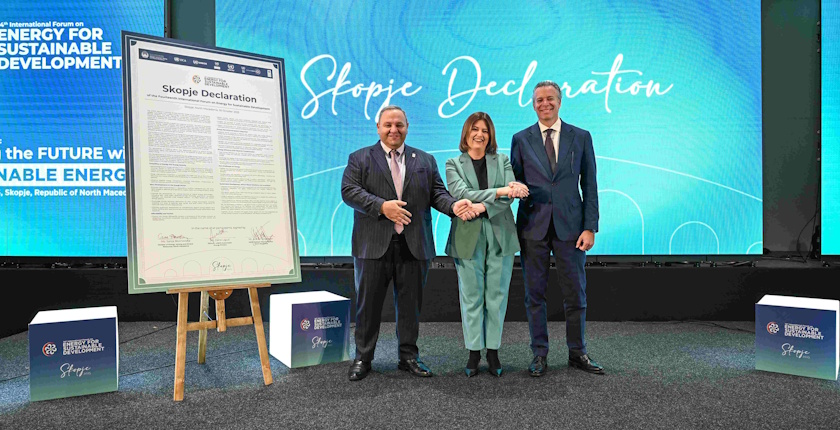
On behalf of all participants, the Declaration was signed by Minister of Energy, Mining and Mineral Resources Sanja Božinovska, UNDP Resident Representative for North Macedonia Armen Grigoryan, and Dario Liguti, Director of the Sustainable Energy Division at UNECE.

The signatories agreed that the way forward requires regional connectivity, smart investments, digital transformation, and an inclusive energy transition that leaves no one behind.

Božinovska: A new impetus for energy cooperation, solidarity, and vision

[wpcc-iframe title=”Sanja Božinovska statement on the occasion of IFEST25 Skopje and signing the Skopje Declaration” width=”500″ height=”281″ src=”https://www.youtube.com/embed/ZgcrsSuNVes?start=1&feature=oembed” frameborder=”0″ allow=”accelerometer; autoplay; clipboard-write; encrypted-media; gyroscope; picture-in-picture; web-share” referrerpolicy=”strict-origin-when-cross-origin” allowfullscreen=””]

In her closing address, Božinovska emphasized that the forum represented a turning point for the region.

“Over the past three days, Skopje has been a global stage for energy vision and dialogue on sustainable development. What we witnessed here was a wave of knowledge, cooperation, and ambition – a forum that demonstrated that when institutions, scientists, businesses, and international partners sit at the same table, change happens,” she stressed.

Božinovska emphasized that the Skopje Declaration sends a strong signal that the Western Balkan region is not just a follower of the global energy transition, but an active driver.

The future was not just discussed, but also set in motion

“I am proud that it is from Skopje, at the heart of the Balkans, that a new impetus for energy cooperation, solidarity, and vision is emerging. This is proof that North Macedonia can be a platform for ideas that will transform the region. The 14th International Forum on Energy for Sustainable Development will be remembered as the place where the future was not just discussed, but also set in motion. Let us continue to build the energy future that our citizens deserve,” said Božinovska.

Grigoryan: Skopje has demonstrated global solidarity in action

[wpcc-iframe title=”Mr Armen Grigoryan, UNDP Resident Representative, statement on IFESD25 Skopje” width=”500″ height=”281″ src=”https://www.youtube.com/embed/uH2-5cr5ju0?feature=oembed” frameborder=”0″ allow=”accelerometer; autoplay; clipboard-write; encrypted-media; gyroscope; picture-in-picture; web-share” referrerpolicy=”strict-origin-when-cross-origin” allowfullscreen=””]

Armen Grigoryan, UNDP Resident Representative for North Macedonia, said that the path to sustainable, reliable, and affordable energy is clear, but that it requires unity and vision.

According to him, it requires political will, global solidarity, and commitment.

UNDP is pleased to work together with the Government and the Ministry of Mining, Energy and Mineral Resources, as well as regional commissions, on policies, emission reduction solutions, inclusivity, and air quality improvements, according to him. UNDP invests in people and innovation to achieve measurable results that citizens can feel at home, at work, and everywhere, he added.

Liguti: The Skopje Declaration is a signal of the region’s ambition and vision

According to Dario Liguti, Director of the UNECE Sustainable Energy Division, the document signed in Skopje will remain an important reference point in global energy processes.

He said that the Skopje Declaration represents a strong signal of the regional and global cooperation and ambition, confirming the shared commitment to accelerating a just and inclusive energy transition – a transition that delivers real progress for people and the planet.

Conclusion: smart technologies, a just transition, and green investments

Božinovska, Grigorian, and Liguti (phto: Ministry of Mining, Energy and Mineral Resources)

The document states that signatories will work on integrated and inclusive energy policies; the modernization of power grids and digitalization; investments in renewable energy sources and a just transition; and the promotion of green financing and gender equality in energy.

“Together, we can transform the global energy system into one that safeguards our climate, drives innovation, ensures affordability, and delivers prosperity for all,” reads the closing paragraph of the Skopje Declaration.