by in News

BiH’s electricity imports up 4.5 times

Bosnia and Herzegovina’s electricity imports were nearly 4.5 times higher in the first half of the year than in the same period of 2024.

The step rise in power imports is another evidence of the difficult situation in the country’s utilities – Elektroprivreda BiH (EPBiH), Elektroprivreda HZHB (EPHZHB), and Elektroprivreda Republike Srpske (ERS).

The main issue is the drop in production in coal power plants and hydropower plants. For many years, BiH was the only net electricity exporter in the Western Balkans; however, it seems a change is underway. The country finished last year with 2.5 TWh in net exports – 36% less than in 2023.

Most imports occurred during the winter

According to data from the Agency for Statistics of BiH, electricity imports in the first half of last year amounted to BAM 78.8 million (EUR 40.3 million), while in the same period this year they reached BAM 344 million (EUR 175.9 million), Nezavisne novine reported. It is a 337% increase.

The data show that the majority of imports took place in the first quarter or during the winter. In the first three months of last year, import costs came in at BAM 33.7 million (EUR 17.2 million), and this year they soared to BAM 235.4 million (EUR 120.3 million) from January through March.

Exports also recorded an increase on an annual scale. In the first half of 2025, they were worth BAM 439.4 million (EUR 224.6 million), against BAM 289.3 million (EUR 147.9 million) in the equivalent period of last year. It is a 52% increase.

Coal and hydrology issues soured the foreign balance in the electricity sector

Just under half of exports were achieved in the first three months of the year.

ERS struggled with power generation in coal power plants due to longer maintenance and a lack of coal. EPBiH has also been facing coal supply problems for years. Both companies are unable to produce sufficient quantities of coal from their own mines.

An additional issue this year is the drought, which has reduced production in hydropower plants. Unfavorable hydrological conditions are affecting all three companies, but the largest pressure is on EPHZHB, which operates only hydropower plants.

Energy expert Almir Bečarević asserted that import figures reflect reality.

He explained that two thermal power plants in the Republic of Srpska were undergoing maintenance, and that EPBiH is facing issues with hydrology and its mines, which cannot supply sufficient quantities of coal.
by in News

Project underway for 81 MW solar park on coal mine in Montenegro

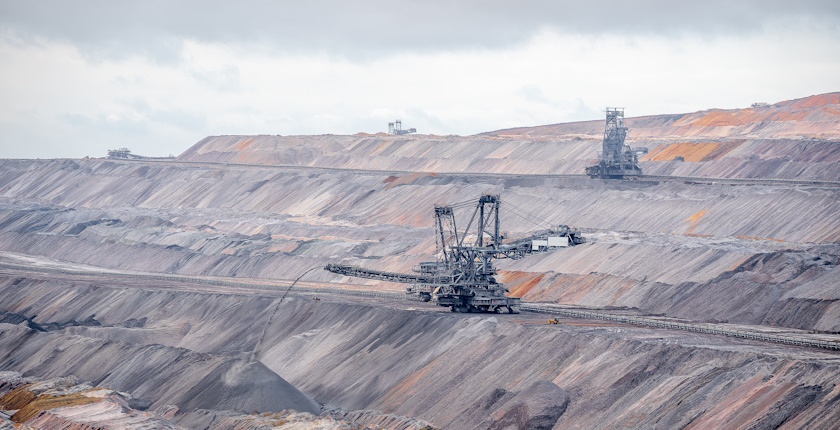
The Government of Montenegro adopted urban planning and technical conditions for a solar power plant of 81.1 MW in peak capacity in Pljevlja. The site for the facility is part of a coal mining complex.

Greece is the most successful by far in the Balkans in transforming coal land into clean energy and advanced technology hubs. The projects in the region are mostly for solar power plants. Neighboring North Macedonia is next when it comes to implementation, while Romania and Bulgaria as well as Serbia and Slovenia have made their first steps. Bosnia and Herzegovina and Kosovo* are still in the planning phase, and now Montenegro is joining them with a photovoltaic project.

The government in Podgorica adopted the urban planning and technical conditions for a solar power plant of 81.1 MW in peak capacity in Pljevlja. The facility in the country’s north called Rudnik uglja would be in the Ilino Brdo I cadastral unit, on the site of the Potrlica open cast coal mine.

According to a study submitted with the application, the connection capacity would be 62.5 MW. The coal mine’s operator and PV project developer, Rudnik uglja Pljevlja, said the location spans 62.6 hectares.

The government plans to close the Pljevlja coal plant in 2041

The firm is a subsidiary of state-owned power utility Elektroprivreda Crne Gore (EPCG), which runs the Pljevlja power plant in the same complex. It is the only coal-fired facility in Montenegro. The government plans to close the thermal power plant, currently under reconstruction, in 2041.

Rudnik uglja Pljevlja presented a just transition plan in March. It aims to establish 12 businesses to transform the region and spin them off. They include construction, transportation and the installation of a small hydropower plant called Durutovići and a photovoltaic facility.

The previous government initiated the development of a plan two years ago for an industrial complex in Pljevlja. There are several separate renewable energy projects in the area as well.

* This designation is without prejudice to positions onstatus and is in line with UNSCR 1244/99 and the ICJ Opinion on the Kosovo declaration of independence.
by in News

Serbia drafts just transition action plan

Serbia plans to invest EUR 88.8 million by 2030, through its just transition action plan, in activities aimed at mitigating the impacts of the planned reduction in coal-based energy production, and ensuring a just transition.

The Ministry of Mining and Energy has published a draft just transition action plan and launched a public debate. Within the process, it scheduled a meeting for June 9 in the Chamber of Commerce and Industry (PKS) in Belgrade.

A decarbonization plan will be subsequently defined, including for the shutdown of coal power plants and the transition of underground mines run by state-owned firm JP PEU Resavica, the document reads.

The draft includes an analysis of the planned closure of two coal power plants

The draft contains an analysis of the planned closure of coal-fired thermal power plants Kolubara A and Morava, the oldest in the country. State-owned power utility Elektroprivreda Srbije (EPS) operates them, alongside four other such facilities and open pit mining complexes Kolubara and Kostolac, while Resavica comprises nine mines.

Of note, EPS presented a preliminary plan in 2023 for shutting down its coal power plants.

A significant workforce reduction in lignite production is expected after 2030

The total number of employees in coal power plants and coal mines in Serbia is 25,288. About 20,000 are in the mines.

If the Kolubara and Morava plants were closed, about 472 jobs in the Kolubara region could be indirectly affected, mainly within subcontractors and firms in EPS’s value chain. The draft’s authors estimated that at Rembas, the largest mine within JP PEU Resavica, a total of 930 jobs could be directly affected by 2030, with an additional 958 to 1,367 jobs in indirect risk, primarily in mining subcontractors.

New jobs in the renewable energy sector

Citing Serbia’s Integrated National Energy and Climate Plan, the document adds the thermal power plants are expected to operate at reduced capacity after 2030, but that an accelerated closure is not foreseen. It would result in significant job cuts in lignite production, the draft reads.

The draft’s authors expect the transition to a green economy to create full-time jobs by 2030 and beyond, nationwide, in the construction, management, and maintenance of new renewable energy capacities.

The renewable energy industry in Serbia is projected to create up to 6,105 jobs across the country by 2030, of which 4,397 in the solar energy sector.

EUR 60 million allocated for industrial parks

Out of the planned EUR 88.6 million, the largest portion – EUR 60 million, would be allocated for the improvement of economic infrastructure in existing industrial parks. Local authorities would get grants to upgrade them, amounting to EUR 12 million.

The measure is expected to diversify local economies and attract new investments within industrial parks in affected areas.

The second-largest allocation in the draft would be EUR 12 million for an entrepreneurship and self-employment support program. It includes grants and tax incentives for starting new businesses, with investments of at least EUR 50,000 for small and medium-sized enterprises and EUR 10,000 for self-employed individuals.

Again, the initiative is expected to facilitate the creation of at least 200 businesses and support 200 self-employed individuals.

The draft is the result of a project financed by the European Bank for Reconstruction and Development (EBRD). It began in October 2021.

by in News

Romania’s plan to install 2.15 GW of gas power plants isn’t viable

Romania’s plans for new combined cycle gas turbines with a total capacity of 2.15 GW isn’t economically viable and, if constructed, the facilities should be decommissioned by 2035, according to ENTSO-E’s annual assessment of Europe’s security of electricity supply for the ten years ahead.

ENTSO-E’s European Resource Adequacy Assessment 2024 (ERAA 2024) provides an integrated pan-European perspective for the years 2026, 2028, 2030 and 2035.

The document includes comments on individual countries, specific insights provided by transmission system operators (TSOs).

According to the entry about Romania, low adequacy concerns have been identified in ERAA 2024. The findings rely on assumptions from the National Energy and Climate Plan (NECP), in place on the date of the data collection, as well as from investment plans, permits, connection requests, and available inputs from market participants.

NECP’s central reference scenario reflects the coal phase-out process and further plans for the replacement of the decommissioned capacity with, mainly, combined cycle gas turbine (CCGT) power plants, the document reads.

The results of the economic viability assessment show 2.15 GW of CCGT capacity would not be economically viable by the 2035 horizon

The commissioning of envisioned gas CCGTs is, however, highly uncertain, and national analyses reveal that the validity of the adequacy indicators depends on the implementation of generation goals, the update showed.

Uncertainties related to the commissioning date of the new capacities may have an adverse impact on Romania and, potentially, on the region, the document underlines.

Moreover, results of the economic viability assessment (EVA), part of ERAA 2024, demonstrate that the 2.15 GW of envisaged CCGT capacity would not be economically viable by the 2035 horizon and should be decommissioned in target year 2035.

Considering it is not existing capacity, but rather assumed commissioned in the 2026-2030 period, it is most likely the investments will not materialize at all and thus, the correspondent capacity should be excluded from the analysis for the earlier target years, too, not only 2035, with a negative effect on loss-of-load-expectation (LOLE) results, the authors warned.

Goal in NECP is 2.6 GW of CCGT power plants

According to Romania’s NECP, the goal is 2030 to construct at least 2.6 GW of natural gas–powered CCGTs and around 900 MW of natural-gas-fired combined heat and power (CHP) plants.

The CCGT facilities are Iernut (430 MW), Mintia (at least 860 MW, with a possibility of reaching 1.700 MW), and Ișalnița and Turceni, of 1,325 MW in total.

Investments aren’t going as planned. In January, Minister of Energy Sebastian Burduja acknowledged that the addition of gas-fired units expected in line with the restructuring plan for Complexul Energetic Oltenia – CE Oltenia has been delayed.

Burduja: Mintia to be operational next year

Tenders were launched, such as the one for Ișalnița, but not a single offer was submitted, he added. In Burduja’s words, it is one of the reasons why the operation of coal power plants should be extended.

State-owned CE Oltenia is the largest producer of coal power and the third-largest producer of electricity in the country. Its restructuring plan envisages lignite-based electricity production to be replaced with natural gas, in Işalniţa and Turceni, and renewables.

The Mintia project got the construction permit in January. In March, Burduja said it would be commissioned next year, according to Romania Insider.

  • 1
  • 2