by in News

Serbia’s power utility EPS boosts profit to over EUR 360 million in 2025

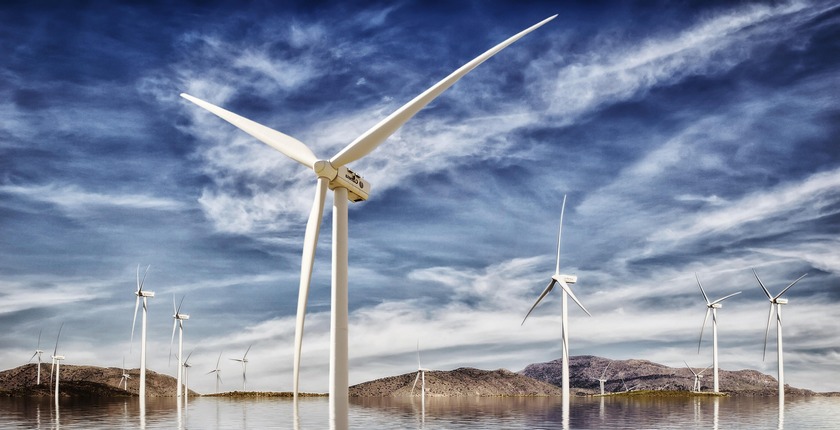
Serbian state-owned power utility Elektroprivreda Srbije (EPS) posted a RSD 42.3 billion (EUR 360.3 million) profit for 2025, a significant increase from RSD 26.1 billion the previous year, though still well below the record RSD 114 billion, achieved in 2023. At the EPS shareholder meeting, Serbia’s minister of energy and mining recalled that construction of 1 GW of solar with battery storage is expected to begin this year.

Minister of Energy and Mining Dubravka Đedović Handanović said EPS’s three consecutive years of profitable operations were the result of “prudent and rational management.”

She stressed that 2025 was a year of challenges and reforms and pointed to increased coal production and higher electricity output from thermal power plants. The minister recalled that 76 MW of renewable energy capacity was brought online last year, and that, for the first time, EPS’s power generation portfolio now includes wind and solar.

EPS commissioned 76 MW of renewable energy capacity in 2025

Đedović Handanović also recalled that EPS completed the trial operation of a flue-gas desulfurization system at coal-fired power plant TENT A, as well as the construction of a similar facility at TENT B.

She added that EPS’s investments in 2025 amounted to RSD 52.7 billion, or 97% of the plan, of which RSD 44.97 billion came from its own funds.

The minister said that most of the overhaul work on the second unit of pumped storage hydropower plant Bajina Bašta was completed last year, and that the facility will contribute to Serbia’s energy security at full capacity starting in March.

Đedović Handanović: Pumped storage hydropower plant Bajina Bašta will operate at full capacity from March

She also called for stepping up efforts on the project to build the Bistrica pumped storage hydropower plant, as well as solar power plants.

Construction of 1 GW of solar with batteries should begin this year

Speaking about the 1 GW solar power project with battery storage, Đedović Handanović said that its implementation is expected to begin in 2026 “due to the scope and complexity of the preparatory activities.”

In October 2024, Serbia signed an agreement with the Hyundai Engineering – UGT Renewables consortium on building solar power plants with a total connection capacity of 1,000 MW (1,200 MW in nameplate capacity), along with battery energy storage systems of up to 200 MW in overall capability and a capacity of 400 MWh.

 

by in News

BiH’s electricity imports double to record EUR 321.6 million in 2025

Electricity imports into Bosnia and Herzegovina in 2025 reached a record BAM 629 million (EUR 321.6 million), twice as much as the previous year. The surge was due to production halts caused by coal shortages, power plant maintenance, and changes in electricity prices. On the other hand, exports were significantly higher than in 2024, but still well below the record levels seen in previous years.

The exact value of electricity imports into BiH in 2025 was BAM 628,956,500, compared with BAM 312,612,000 in 2024, Capital reported, citing data from the Indirect Taxation Authority of BiH.

The largest share of imported electricity in 2025 came from Croatia (BAM 267 million) and Slovenia (BAM 108 million), followed by Albania (BAM 89 million) and Serbia (BAM 86.7 million). 

The largest share of imported electricity in 2025 came from Croatia

In previous years, electricity imports fluctuated but remained significantly lower than in 2025, amounting to BAM 215.9 million in 2023, BAM 393.5 million in 2022, BAM 218.8 million in 2021, and just BAM 96.3 million in 2020.

In May and June 2025, two thermal power plants, which together produce 65% of electricity in the Republic of Srpska, one of the two political entities of BiH, were offline simultaneously for about 10 days during maintenance. Due to the overlapping overhauls of the two facilities, Ugljevik and Gacko, state-owned power utility Elektroprivreda Republike Srpske (ERS) was forced to import large quantities of electricity, Capital noted.

The planned annual overhaul at Ugljevik was carried out from April 21 to June 5, lasting 45 days, while the major, five-year overhaul at Gacko took 70 days, from May 24 to August 2.

Both entities of Bosnia and Herzegovina are struggling with coal shortages

In addition, Ugljevik halted production several times last year due to a lack of coal.

Coal shortages, coupled with outdated thermal power plants, are also a problem in the other BiH entity, the Federation of BiH, where electricity production has decreased by almost a quarter over the past four years, Capital recalled.

Electricity exports also rose, but 2022 and 2023 remain record years

When it comes to exports, Bosnia and Herzegovina sold electricity worth BAM 868.8 million in 2025, compared with BAM 669.8 million the previous year.

In 2022 and 2023, the country posted record electricity exports, over BAM 1 billion each. In 2022, the value of exports was 1.056 billion, and the following year, BAM 1.075 billion.

by in News

Coal plant Kakanj in BiH halts electricity production amid record air pollution

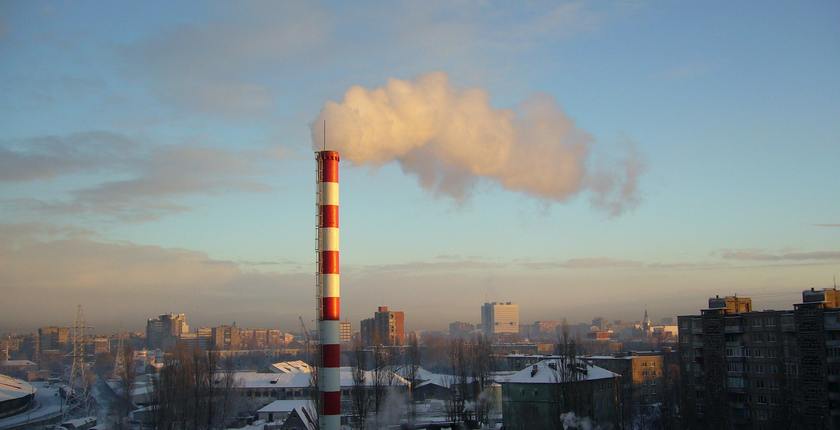
Due to record air pollution levels in recent days, the Municipality of Kakanj requested that the local coal-fired power plant’s activity be reduced to supplying thermal energy for district heating only. The thermal power plant says it has already done so.

After “unprecedented” amounts of pollutants were measured in Kakanj, Mayor Mirnes Bajtarević asked the management of the Kakanj thermal power plant and state power utility Elektroprivreda Bosne i Hercegovine (EPBiH), as well as Federation of BiH Minister of Environment and Tourism Nasiha Pozder, to ensure that the operation of the power plant is urgently reduced to a minimum, only for the needs of the district heating system in Kakanj.

The power plant said that since Sunday, the only block in operation has been Unit 6, which supplies thermal energy for district heating in Kakanj, news portal Akta reported.

Kakanj, the second-largest electricity producer in the EPBiH portfolio, has three operational units with a total capacity of 450 MW. Unit 6 has a capacity of 110 MW.

The municipal authorities said in the statement that, if necessary, it would invite residents to protest in front of the thermal power plant, which is seen as the main culprit for the alarming air pollution levels in recent months.

The local cement plant is urged to stop using alternative fuels

According to BiH media reports, recent sulfur dioxide (SO₂) levels in Kakanj have exceeded all permitted limits, posing an immediate threat to public health.

The municipality also issued a fresh request to the FBiH inspection body to inspect the operation of the thermal power plant, as well as Heidelberg Materials Cement, which has been asked to stop using alternative fuels.

The municipality will also demand a report on the desulfurization project at Kakanj

The municipality said it would demand that the thermal power plant provide a report on the progress and timeline of works on the ongoing desulfurization project, including the expected completion date.

EPBiH is implementing the desulfurization project at units 6 and 7 at Kakanj, hoping to reduce SO2 emissions by about 98.5%. SO2 emissions will be reduced to below 150 mg/Nm3, or nearly 60 times lower than current levels, EPBiH said in October.

Last year, the company was the largest power producer in BiH. Kakanj generated 1,431 GWh or 27% of EPBiH’s output.

One of the largest SO2 emitters in the region

Three years ago, the Energy Community Secretariat opened a case against Bosnia and Herzegovina for failing to shut down two units at the Kakanj and Tuzla thermal power plants despite the expiry of the 20,000 operating hours permitted after January 1, 2018, under the opt-out mechanism.

Kakanj was also mentioned in Bankwatch’s annual Comply or Close report, published in June this year.

According to the report, six power generation units in the Western Balkans exceeded their individual ceilings for SO2 emissions by more than ten times – Ugljevik, Gacko, Tuzla 6 and Kakanj 7 in Bosnia and Herzegovina; Kostolac A2 in Serbia; and Bitola B1 and B2 in North Macedonia.

by in News

Bulgaria’s coal regions to get further EUR 808 million for just transition

Bulgaria’s coal regions will receive BGN 1.58 billion (EUR 808 million) through the Just Transition program, under the European Union’s Just Transition Fund (JTF), for energy efficiency, renewable energy, and green hydrogen projects, as well as for converting mining areas for commercial use.

With a EUR 598 million program already underway, total investments in the economic transformation during and after the country’s coal phaseout would reach EUR 1.38 billion. They cover coal regions Stara Zagora, Kyustendil, and Pernik and the municipalities of Nova Zagora, Yambol, Simeonovgrad, Harmanli, Topolovgrad, Dimitrovgrad, Haskovo, Elhovo, Sliven and Tundzha.

Grants from the JTF are intended to help coal regions shut down mines and coal-fired power plants, rehabilitate land, switch to a circular and climate-neutral economy, and lift households out of energy poverty.

By the end of the year, the Bulgarian Ministry of Regional Development and Public Works will launch three new procedures for the allocation of grants, according to Deputy Minister Yura Vitanova.

One, worth EUR 153.4 million, will focus on energy communities and energy efficiency in public buildings. Another, worth EUR 72.6 million, will help small and medium-sized enterprises (SMEs) install solar panels and energy storage systems for both self-consumption and commercial use.

A third call, with a budget of EUR 242.9 million, will support the socio-economic transformation, including projects to convert mining areas into business and industrial zones.

Green hydrogen projects will be backed with EUR 134.5 million

Additionally, EUR 134.5 million will be used to fund the development of hydrogen production and transportation infrastructure in Stara Zagora. It includes the construction of a green hydrogen production complex and hydrogen charging stations, the procurement of hydrogen vehicles and hydrogen trailers, and the construction of supporting infrastructure, including photovoltaic systems and energy storage facilities.

The current JTF program in Bulgaria’s coal regions focuses on renovating residential buildings, supporting SMEs, and developing industrial and logistics parks. It also funds training and retraining programs for workers affected by the energy transition, as well as production investments in large enterprises.

by in News

Climate won’t suffer if Romanian coal power plants keep running – energy minister

The Romanian government is in talks on postponing the coal power plant closures envisaged under the National Recovery and Resilience Plan (NRRP), according to Energy Minister Bogdan Ivan. The current deadline for decommissioning these plants is the end of 2025, but Romania is hoping to push it back to 2030.

Ivan noted that Romania’s gas and coal power generation has dropped by 56% over the past decade, with around 7,000 MW of capacity closed and only 1,200 MW replaced.

“Now I am convinced that the world’s climate will not suffer so much if Romania continues to keep its coal-fired power plants in the Jiu Valley,” the minister said, according to Profit.ro.

Ivan: Keeping the Jiu Valley coal power plants operational will not hurt the global climate

He also stressed that Romania has pursued the most aggressive decarbonization policy in the European Union, choosing 2025 as a deadline to eliminate coal-fired electricity generation, compared to Poland or Germany, which intend to use coal until 2040–2050.

Ivan explained that wind and solar capacity in Romania has been growing, but that the country needs more battery storage to better utilize its output.

Romania needs more battery storage for the growing wind and solar capacities

Romania’s former energy minister, Sebastian Burduja, said earlier this year that the country intended to extend the operation of coal-fired power plants because there was no other option to ensure energy security and replace existing capacities.

He said in January that the operating period of coal-fired power plants was expected to be extended by three years.

According to earlier reports, Romania intends to stop coal mining by 2032 at the latest, while replacing conventional power plants in the meantime. Romania’s largest producer of coal-based electricity is state-owned power utility CE Oltenia, based in Târgu Jiu. It is also the country’s third-largest producer of electricity.

by in News

CE Oltenia to set up subsidiary to take over coal power plants slated for closure

Romanian state-controlled coal power utility Complexul Energetic Oltenia (CE Oltenia) is preparing to establish a subsidiary to take over its lignite-fired thermal power plants slated for closure and the coal mining operations that supply them.

CE Oltenia’s “lignite subsidiary” is envisaged under a restructuring and decarbonization plan approved by the European Commission, according to Profit.ro.

The subsidiary will incorporate and operate the existing lignite-based power generation units and related assets that are not planned to switch to natural gas or renewable energy sources, according to the European Commission’s decision from 2022 approving state aid for CE Oltenia’s restructuring.

The state aid Romania planned to grant CE Oltenia amounted to EUR 2.66 billion.

The subsidiary will operate coal-fired plants that are not planned to switch to gas or renewables

CE Oltenia’s decision to start the separation of lignite-related activities into a separate subsidiary was adopted as early as 2023, but nothing has been done since then.

Now, the company has launched a procedure to select a consultant and intends to award a contract by winter, with a deadline of about six months for the delivery of services.

The new firm is to be created before the end of CE Oltenia’s restructuring period, i.e. before the end of 2026, according to the commission’s decision. It further states that the lignite capacities in question should decrease over time and eventually be phased out, in accordance with the national coal phase-out timetable.

CE Oltenia is building 550 MW of solar power plants at former coal mines

Earlier this year, a joint venture between CE Oltenia and oil and gas company OMV Petrom signed an agreement with contractors to design and install four solar power plants at former coal mines, with a combined capacity of about 550 MW.

According to Profit.ro, Romanian Energy Minister Bogdan Ivan said last month that Romania was in talks with Brussels on a 5-year postponement of the deadline for closing lignite-fired power plants, envisaged by the country’s National Recovery and Resilience Plan.

by in News

Worrying results of coal, overburden production in BiH’s power utility

Coal deliveries to thermal power plants in the first half of the year reached 73% of the plan, while only 43% of the overburden excavation target was achieved, warned Sanel Buljubašić, CEO of Bosnia and Herzegovina’s state-owned power utility Elektroprivreda Bosne i Hercegovine (EPBiH).

Increasing coal production is the only way to stabilize the energy system in the Federation of Bosnia and Herzegovina (FBiH), Sanel Buljubašić told state news agency Fena. Focus.ba republished the report.

FBiH is one of the two entities making up BiH. The other one is the Republic of Srpska.

The chief executive pointed to the significance of coal, stressing that 80% of EPBiH’s production comes from coal power plants, with hydropower plants providing the remainder.

Of note, the company recorded a loss of BAM 45.47 million (EUR 23.25 million) for the first half of this year. BiH’s electricity imports were 4.5 times higher than in the same period of 2024.

Buljubašić: We will fulfill our obligations only if the mines fulfill theirs

Buljubašić recalled that the Government of FBiH raised the price of coal at the beginning of 2024 and signed a new collective agreement in the mining sector to demonstrate its commitment to improving working conditions for miners and their status.

The coal mines are operating under an entity called EPBiH Concern. They must produce the planned quantities of coal, which have been jointly agreed and contracted, the CEO underscored and added that EPBiH would meet its obligations only if the mines do the same.

Buljubašić said RMU Breza and RMU Đurđevik are facing the most pressing issues while that RU Kreka is making its best result of the past three years. Coal mine operators RU Kreka, RMU Kakanj, and RMU Abid Lolić have increased production, he added.

Of the nearly 5,000 workers, 1,226 are occupationally disabled

The company head said EPBiH Concern’s mines employ 4,967 workers, of whom 1,226 are occupationally disabled. Additionally, on average, between 1,500 and 1,700 employees are absent every day for various reasons, such as annual leave or sick leave.

In his words, restructuring would imply a program for surplus workers at RMU Zenica, closing mines that are technologically and economically unviable and continuing investments by procuring equipment for economically viable mines to increase productivity.

One of the main problems is the devastated coal deposits, a result of years of delay in overburden excavation, Buljubašić stressed.

Just transition includes mine shutdowns, installation of solar power, batteries, and the use of biomass

The just transition project in BiH’s coal regions, estimated at BAM 160 million (EUR 81.8 million), is being implemented with a World Bank loan. Most of the funds will be spent on closing mines and taking care of surplus employees of RMU Zenica, repurposing RU Kreka’s land, building the 12.2 MW Dubrave photovoltaic plant, repurposing the land of RMU Banovići and installing another solar power plant, of 15 MW, the CEO explained.

He pointed out that the authorities are preparing a law on the closure of Zenica mines — the first such legislation in BiH.

Green investments within a just transition platform for coal regions can include the construction of battery energy storage systems (BESS) and fast-growing biomass plantations, according to Buljubašić.

He announced that EPBiH would soon present its Prosumer 5000+ project and a long-term development plan for EPBiH for the period 2025-2050, within the energy sector development strategy.

by in News

Renewables keep top spot in Greece’s power mix despite surge in curtailments

Renewable energy sources continued to rank first in Greece’s electricity mix despite significant curtailments in the first half of 2025, which more than doubled against the same period a year earlier. At the same time, gas-fired power generation hit a 10-year high, while coal’s share in covering domestic demand fell to the lowest level in at least a decade, according to a recent analysis by the Green Tank.

In the year through June, curtailments totaled 1,327 GWh, equivalent to 9.6% of Greece’s overall renewables output, compared to 513 GWh in the same period last year and 899 GWh in the whole of 2024.

Curtailments in June 2025 reached 351.7 GWh, which means renewable energy generation could have been 12.3% higher. The level compares to only 59.5 GWh, or 2.5%, rejected in June 2024. Most curtailments in June occurred between 10 am and 3 pm, with the highest daily amount, of 32.7 GWh, recorded on June 1.

In May 2025, curtailments were 382.5 GWh, up from 127.3 GWh a year earlier, and in April they totaled 359.1 GWh, compared to 253.3 GWh in the same month of 2024. In March, the grid rejected 229 GWh of renewable electricity, up from 73.3 GWh in March 2024, while curtailments in February and January amounted to 3.4 GWh and 1.3 GWh, respectively, compared to zero in the first two months of 2024.

Renewables covered 46% of Greece’s electricity demand in H1 2025

Greece’s electricity demand in the first half of 2025 reached 27,038 GWh, with renewables covering 46%. The only equivalent period so far when the share was higher was last year. In June, electricity demand jumped 22% against May, to 5,094 GWh. The average market price remained low, at EUR 85.4 per MWh, the Green Tank noted.

Renewables ranked first in electricity generation in H1 2025, with a total of 12,435 GWh, a marginal increase from 12,354 GWh in H1 2024.

Gas-fired power generation reached 10,925 GWh in the first half of 2025 or 19.3% more than one year before, hitting a 10-year high. The rise was mostly driven by an increase in net exports and electricity demand. A drop in output in the segments of hydropower lignite and oil also contributed, together with an expansion of the gas power fleet.

Gas covered 40.4% of electricity demand in the first six months of the year, after 34.1% in the comparable period of 2024.

Coal power production fell steadily from January to June

Coal, on the other hand, covered just 5.2% of Greece’s power demand in H1 2025. It was the lowest share in at least a decade. Electricity production from lignite declined steadily in the first six months of the year, from 511 GWh in January to just 66 GWh in June.

by in News

Bosnia and Herzegovina’s power utility keeps posting losses amid weak output, increased imports

State power utility Elektroprivreda Bosne i Hercegovine (EPBiH) failed to stabilize its operations and turn a profit in the first half of 2025, posting a loss of BAM 45.47 million (EUR 23.25 million) instead. The poor performance was largely due to reduced electricity production and increased imports caused by a coal shortage.

EPBiH’s target for the first six months of 2025 was BAM 11 million in profit. Instead, the state power utility generated a loss that was by BAM 18.76 million higher than in the same period of 2024, when the loss amounted to BAM 26.71 million, according to Biznisinfo.

EPBiH suffered a net loss of EUR 29.4 million in 2024, following a EUR 170 million loss in the previous year.

In the first half of this year, EPBiH’s hydropower plants generated 121.8 GWh less electricity than planned, while output at its thermal power plants fell short of the target by as much as 651.4 GWh amid a coal shortage. At the same time, due to the lower production in its own power plants, EPBiH’s expenditure on electricity purchases was several times higher than planned.

The lower production and losses were mainly due to the coal shortage

In H1 2025, Bosnia and Herzegovina imported almost 4.5 times more electricity than it did in the same period in 2024, reflecting the difficult state of EPBiH and the other two power utilities in the country – Elektroprivreda HZHB (EPHZHB) and Elektroprivreda Republike Srpske (ERS).

EPBiH recorded a loss despite higher revenues

EPBiH recorded the six-month loss despite an increase in total revenues, from BAM 561.8 million in H1 2024 to BAM 745.1 million in the first half of this year. Revenues from power purchase agreements grew from BAM 549.3 million to BAM 733.3 million.

Total expenditures, however, increased to BAM 790.6 million from BAM 588.5 million in the first half of last year.

by in News

Serbia adopts Just Energy Transition Plan until 2030

Serbia now has a Just Energy Transition Plan until 2030. The document contains suggested measures for the mitigation of the impact of reducing fossil fuel use, primarily coal, so that workers, firms and communities aren’t left behind.

Following last month’s completion of the public consultation process regarding the proposed Just Transition Action Plan, the Government of Serbia passed, at its last session, the Just Energy Transition Plan of the Republic of Serbia until 2030. The document leans on the Integrated National Energy and Climate Plan (INECP or NECP)

It lays out sustainable energy policy measures that would need or could be undertaken. The point is in reducing fossil fuel dependence and improving security and efficiency of electricity supply by switching to renewable energy sources, and in an energy efficiency boost.

A just transition aims to promote environmentally sustainable economies in a way that is fair and inclusive for all

“A just transition aims to promote environmentally sustainable economies in a way that is fair and inclusive for all – workers, businesses and communities – by creating opportunities for decent work and leaving no one behind. This initiative should not be seen as a fixed set of rules, but as a dynamic process based on dialogue with a focus on addressing the concerns and needs of local populations and affected stakeholders,” the plan reads.

The approach is based on mitigating the negative effects of the energy transition process. It implies significant investments in retraining and reskilling, to assist workers in adjusting to new industries, as well as education, the plan adds.

It highlights the importance of incentivizing the development of new industries, and supporting small and medium-sized enterprises, which can enable alternative sources of income and employment.

Electricity system collapse in December 2021 marked as turning point?

Until December 2021, domestic electricity production met domestic needs, although even before that, the power system had been making maximum efforts for many years to provide sufficient amounts of electricity or, rather, provide sufficient amounts of coal for the operation of thermal power plants, the document notes.

There is no elaboration on the time reference, but that’s when a major outage struck coal-fired thermal power plants of state-owned power utility Elektroprivreda Srbije (EPS). Of note, it was one in a string of serious incidents in the electricity system.

Coal plants are old and they mostly don’t comply with environmental standards

“The fact is that existing electricity generation plants are old and most of them are not in line with new operating conditions and standards when it comes to environmental protection. Therefore, it is quite clear that in the case of the Serbian energy sector, the energy transition should lead to a radical change in the structure of sources and methods of electricity production,” according to the plan.

Coal plants, open pit mines could be replaced with wide range of activities from culture to gas power plants

Listed among the possibilities for repurposing coal plants and coal mine land after shutting them down are green power plants (but also gas-fueled energy facilities), launching industrial production, logistical and commercial activities, together with sports, culture, education, agriculture, tourism and waste management.

In 2023. there were 25,288 employees in thermal power plants (22.2%) and coal mines (77.8%), the document notes. The oldest coal plant, Kolubara A of 239 MW, was built in 1956, and the newest unit is Kostolac B3, of 350 MW. It came online last year.

“Social dialogue mechanisms should be established to ensure that the voices of all stakeholders are heard and their concerns are addressed. This includes consultations with trade unions, local self-governments and civil society organisations,” the Just Energy Transition Plan of the Republic of Serbia until 2030 suggests.

Expenses are envisaged at EUR 75.4 million, of which EUR 12 million would be for incentives for entrepreneurship and self-employment and EUR 60 million for improving business structure at existing industrial parks.

Carbon pricing system to make coal power plants in Serbia increasingly uncompetitive

One section covers the upcoming rollout of charges within the European Union’s Carbon Border Adjustment Mechanism (CBAM). The tax affects imports of a group of raw materials and electricity. Third countries can be exempted if they establish their own carbon pricing and emissions trading systems.

“In order to balance the economic and environmental impacts of the introduction of domestic carbon pricing in Serbia, a phased approach could be adopted, starting with a modest carbon price and gradually increasing it. Support for affected industries, such as subsidies for low-carbon technologies and worker retraining programs, along with recycling revenues to finance green projects and providing direct rebates to citizens, can mitigate negative effects,” the plan adds.

NGOs have criticized the action plan draft for only describing preparatory activities

Actually, proceeds from greenhouse gas emissions allowances in the EU are used only for the green economic transition, and it is similar with most environmental levies.

The introduction of a carbon tax mechanism will make domestic coal-fired power plants increasingly uncompetitive, especially in regional electricity markets, the government warned.

Nongovernmental organizations and associations earlier criticized the draft, arguing that it delays the energy transition until 2030, only lists preparatory activities and that, inter alia, there is no targeted date for ending the use of coal for electricity production.

In any case, a just energy transition requires defining deadlines and projects and securing funds exclusively for the said purposes. Otherwise the market will trample coal plants and mines, and it will probably happen abruptly, which would jeopardize energy security and employment. Such effects are already tangible in Southeastern Europe, especially in Bosnia and Herzegovina, as well as in Bulgaria and Slovenia.

  • 1
  • 2