by in News

BEF 2025: Regional cooperation can facilitate energy transition, energy security

Montenegro, Serbia, and the Republic of Srpska don’t have a problem attracting investments in electricity production, but they do have issues when it comes to investments in transmission networks. If the introduction of CBAM is not postponed, it will greatly burden their economies. Hungary is interested in strengthening energy ties with them as well as the rest of the Western Balkans, which would bolster energy security for the whole region. Croatia could also assist it in strengthening employment in the green technologies sector, to counter the loss of jobs due to decarbonization. These are the main messages from the High-ministerial panel on SEE regional cooperation and energy transition strategies.

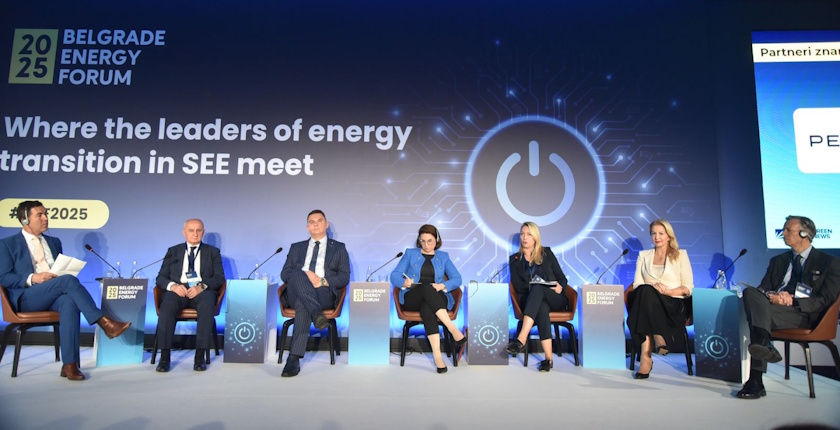
The ministerial panel was the first of eight at this year’s Belgrade Energy Forum 2025 (BEF 2025). The conference, organized by Balkan Green Energy News, welcomed four hundred participants from more than 30 countries from the region, Europe, and beyond.

The panel featured representatives of the governments of Montenegro, Croatia, Hungary, the Republic of Srpska – one of the two political entities in Bosnia and Herzegovina – Serbia, and the United Nations Economic Commission for Europe (UNECE). The moderator of the panel was Dirk Buschle, who until recently was a key figure in the Energy Community Secretariat, and now is a partner at law firm Becker Büttner Held.

He noted it is a mistake to say that the contracting parties of the Energy Community are lagging behind EU countries in the energy transition. They all face the same issues, which are energy accessibility, supply security, and sustainability, Buschle added.

Additional proof, in his words, are the similar issues faced by investors – in grid connections and permitting.

Investments in production are coming, the issues are grids, CBAM

Dirk Buschle, Petar Đokić and Admir Šahmanović

According to Minister of Energy and Mining of the Republic of Srpska Petar Đokić, the entity has made significant progress in defining a regulatory framework that aligns with the rules of the Energy Community and the European Union.

He noted that with the help of the Energy Community Secretariat, the two entities of BiH recently reached an agreement on adopting a law on the electricity regulator, transmission, and market. It is one of the cornerstones for establishing an organized electricity market.

The Republic of Srpska was successful in attracting investments in green energy in recent years, Đokić added. It established concessions and partnerships for the construction of 2,200 MW of renewable energy power plants – wind, solar, and hydropower.

However, large investments in transmission networks are also necessary, he pointed out and said he expects assistance from the European Union’s financial institutions such as the European Bank for Reconstruction and Development (EBRD) and the European Investment Bank (EIB), as well as the World Bank.

Đokić: CBAM to hit hard BiH’s economy

The minister called on them to set up such partnerships.

Regarding the EU’s Carbon Border Adjustment Mechanism (CBAM), he said that measures have been taken to change the domestic energy mix. Until recently, the share of fossil fuels was 62%, but it has now dropped to 54%, he recalled.

By 2028, the Republic of Srpska will have two new hydropower plants, of 159 MW and 36 MW, and new solar power plants with a total capacity of 250 MW, the minister asserted. It would additionally green the energy mix, Đokić said.

CBAM, in his words, could harm the economy of the Republic of Srpska and BiH.

If it is applied the way it is apparently envisaged, it would result in a significant increase in costs, with a severe negative impact, he underlined. Đoković expressed hope that the rollout would be separately discussed in the case of BiH.

Šahmanović: Montenegro is finishing its NECP

Montenegro also enjoys great interest from investors. It has received applications for building solar power plants and wind farms with a total capacity of 5.5 GW, said Admir Šahmanović, Minister of Energy and Mining.

The country’s current capacity is slightly over 1 GW.

It is, in his words, the result of improving the regulatory framework including the adoption of laws on renewable energy sources and energy. However, investment in the transmission grid is also necessary. The government plans to discuss with Italy the possibility of installing another subsea cable for electricity transmission, while the national energy and climate plan (NECP) will be completed by the end of next month, the minister revealed.

Montenegro is requesting a postponement of CBAM until 2030

In addition, renewable energy auctions are being prepared with the EBRD, and a memorandum on market coupling with Italy will be signed, he added.

As for CBAM, the minister stressed that Montenegro doesn’t believe the EU wants to harm its economy, but argued that the country isn’t ready for the mechanism’s implementation.

“Perhaps we are now in a situation similar to where our EU partners were 20 years ago. So, we need to invest a lot in our production capacities, grid, storage. It will take years, so if we don’t receive an exemption by 2030, I believe we won’t be able to handle this challenge,” Šahmanović stressed.

Secure supply of the national market is the highest priority

Boglárka Illés, Admir Šahmanović and Jovana Joksimović

Jovana Joksimović, Serbian assistant minister of mining and energy for international cooperation, European integration, and project management, expressed the opinion that the energy transition is a long and intensive process, technically, operationally, and financially.

Since October 2022, renewable energy in the energy mix has increased by 83%, which demonstrates the progress of the energy transition in Serbia, Joksimović asserted.

“We need to be realistic, as well as socially aware, because a fair and sustainable transition is something that should be carefully considered when changing the energy mix, where coal accounts for 60%,” she noted.

Joksimović: The priority is to ensure a sufficient supply of electricity at the most affordable prices for citizens and the economy

It is necessary, in her words, to be ambitious and dedicated to the energy transition goals, but she is convinced that there is a higher objective.

At the country level, it is to ensure enough electricity at the most affordable prices for both citizens and the economy, she underlined. “That’s what our top priority is,” Joksimović underscored.

Guided by the said goal, Serbia is also considering the use of nuclear energy and a study on possible options is currently being prepared.

Boglárka Illés, State Secretary for Bilateral Relations at Hungary’s Ministry of Foreign Affairs and Trade, also stressed that the government’s primary duty is to ensure not only climate neutrality and sustainable energy but also affordable energy with a stable supply for households and businesses.

She pointed out that diversifying energy imports and the energy mix plays a key role in securing energy sovereignty. It is the reason why cooperation with the Western Balkans, and especially Serbia, is important to Hungary, Illés asserted.

Illés: Europe’s energy security has been demolished

A few days before, Hungary’s Prime Minister Viktor Orbán said the EU has abandoned a successful economic strategy, based on cheap Russian gas and advanced German technology.

“And now we don’t see any other strategy within the EU,” she stated.

Due to ideologically driven sanctions against Russia, and the European Green Deal, the energy security of Europe is demolished, in Illés’s opinion. The region is located at the intersection of essential energy routes, connecting the East and the West, and also South and North, she underlined.

“We, as an EU member country, can act as a bridge between non-EU member countries and also the EU,” the state secretary stressed.

As an example of good cooperation with Serbia, she highlighted the supply of gas through the TurkStream pipeline and the Pannonian Corridor project for doubling the capacity for power exchange between the two countries.

The energy transition is an opportunity

Jovana Joksimović, Marija Pujo Tadić and Dario Liguti

In one respect, Marija Pujo Tadić, Special Envoy for Climate Action from the Government of Croatia, doesn’t share the opinion of the Hungarian official. She argued it isn’t true that Europe lacks a plan.

The EU has a clear plan and a well-defined strategy – it is the Clean Industrial Deal, she stressed.

She highlighted two important strategies relevant to the region: the Paris Agreement and the Green Agenda for the Western Balkans.

As a member of the scientific advisory board for the COP 29 presidency, she recalled that this year a review of nationally determined contributions (NDCs) would be conducted. It is an assessment of how countries are meeting their plans for lowering CO2 emissions.

Pujo Tadić: Education and workforce specialization are essential

She underlined the Green Agenda for the Western Balkans also envisages reducing net greenhouse gas emissions to zero by 2050, which is essentially the shared goal of the EU.

However, Pujo Tadić expressed the belief that policies and laws alone are not enough. Public education and workforce specialization are also necessary because the transition will create many new jobs, she added.

Croatia could be of great support to the Western Balkans, having launched such educational programs five years ago, according to Pujo Tadić.

The link between the energy transition and the creation of new jobs was also stressed by Dario Liguti, Director of Sustainable Energy at UNECE. In his view, the region has a huge opportunity to become part of the supply chains for green technologies by greening the domestic power generation and by leaning on the EU’s energy transition.

He sees the main factors for it in the region’s geographic proximity to the large European market, and the large, skilled workforce that can be educated for other tasks. Liguti drew a connection with the expected job loss from decarbonization measures and the related need for a just transition.

Liguti: There is great potential for energy efficiency in the region

Liguti praised the forthcoming investments in renewable energy production, but warned it is only one side of the story, arguing that the other one is energy efficiency. He reminded the audience that the region’s energy intensity is high, saying there is room for savings.

The installation of big solar plants and wind farms, in his words, is great because it’s very visible.

“It’s a great investment and makes a lot of sense. The harder part is making energy efficiency investments, whether in buildings or the industrial processes in large, small, or medium enterprises,” Liguti stated.

As an example, he recalled that UNECE is running a project with the EBRD in North Macedonia to support households and small and medium enterprises to lower the costs of liquid fuels and electricity.
by in News

Belgrade Energy Forum 2025 – energy market reforms accelerate integration into EU

Electricity market coupling with neighbors in the European Union is a major factor in the EU integration of Energy Community contracting parties and the Western Balkans, alongside deeper coordination within the region, the establishment of energy interconnections, investments in renewables and progress in carbon pricing, top officials pointed out at the opening of Belgrade Energy Forum – BEF 2025.

Founder and Editor of Balkan Green Energy News Branislava Jovičić said the current changes in the energy sector can already be called an energy revolution.

The third Belgrade Energy Forum, BEF 2025, started today in Serbia’s capital city, welcoming four hundred participants from more than 30 countries from the region, Europe and beyond. The two-day conference, organized by Balkan Green Energy News, features eight panels with over 50 officials, executives and prominent energy experts.

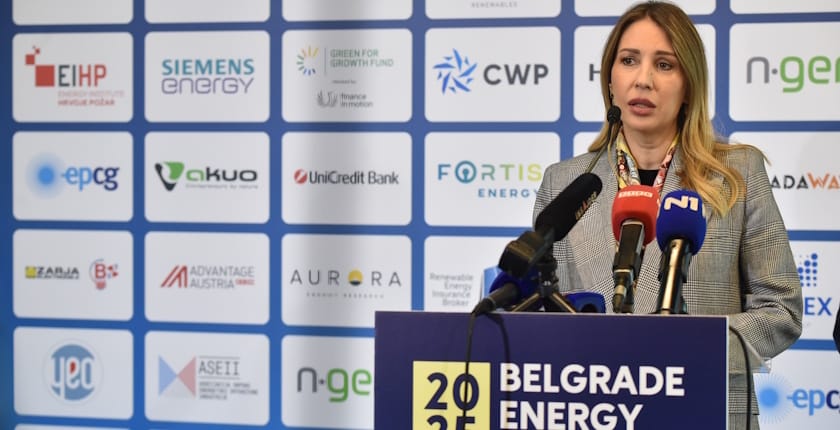
Serbia was the first in the region to meet the preconditions for electricity market coupling with neighboring countries in the European Union and Energy Community, said Minister of Mining and Energy Dubravka Đedović Handanović. She added that the technical process would be completed within 18 months after the EU Agency for the Cooperation of Energy Regulators (ACER) and European Network of Transmission System Operators for Electricity (ENTSO-E) conduct the necessary steps.

Electricity market coupling will be completed within 18 months when the technical process starts

“It will be a historic event for our country for its benefits for citizens and companies, as it will ensure a more stable electricity supply and access to more affordable energy prices. It will turn us into an equal member within the region but also the EU as concerns the energy sector,” Đedović Handanović stated.

The SEEPEX power exchange has already prepared implementation projects with its counterparts in Hungary and Bulgaria for market coupling on their borders, the minister stressed.

Up to EUR 15 billion needs to be invested in energy

Đedović Handanović also pointed out that domestic and European regulators certified Serbia’s gas transmission system operator Transportgas for the first time. The start of construction of the Serbia-Hungary oil pipeline is expected to begin early next year at the latest, the minister said.

The baseline for the development plan for energy infrastructure and energy efficiency should be completed by the end of May, she revealed. It identifies the need for EUR 14 billion to EUR 15 billion in investments in the next ten years, according to Đedović Handanović. Renewables and new hydropower potential account for EUR 7 billion, she said.

Serbia will double the electricity transmission capacity with Hungary and increase it with Bulgaria, the minister asserted.

Serbia is frontrunner in region with its progress toward market coupling

As the Western Balkan region confronts the trailing trilemma of decarbonization, affordability, and energy security, the need for an accelerated integration with the European Union has never been more urgent, Energy Community Secretariat Director Artur Lorkowski said.

The organization provides a platform for the process, a strategic window of opportunity to inspire market confidence now, not in years or months to come, he explained. Lorkowski said it implies deeper coordination among Energy Community contracting parties in removing cross-border bottlenecks and harmonizing market operations.

Above all, there is an urgent need to move forward on electricity market integration with the EU, so the region can fully benefit from it in 2027, he noted, underscoring that Serbia is the frontrunner.

Exporters of electricity to the EU can attend a technical consultative meeting in Brussels on July 1

The Carbon Border Adjustment Mechanism (CBAM) is another urgent priority, Lorkowski said. He announced that the Energy Community Secretariat and European Commission would organize a technical consultative meeting in Brussels on July 1 for electricity exporters to the EU.

The establishment of domestic carbon pricing mechanisms is inevitable, Lorkowski warned. The question is how to introduce domestic carbon pricing and keep energy prices affordable for households and competitive for businesses, he told the audience at BEF 2025.

“The way forward is clearly defined, and the conditions linked to energy market reform and decarbonization are well known. And I’m, frankly speaking, very optimistic that progress on these issues can be substantive in months and years to come,” the secretariat’s head stressed.

Jovičić: Energy revolution underway

Energy and climate issues are among the most important ones in the world today, as well as in Southeastern Europe, Founder and Editor of Balkan Green Energy News Branislava Jovičić said. All stakeholders, aware of the necessity of rapid changes and prudent solutions, are working toward a secure energy supply and decarbonization, she added.

“Last year we spoke about the energy transition. This year we can freely call the changes in the energy sector an energy revolution,” Jovičić stated. The five pillars of the energy revolution are solar and wind power, battery storage, digitalization, nuclear energy and decentralized generation and consumption, she stressed.

Balkan Green Energy News is a leading energy media website in the region and one of the top 50 in the world, Branislava Jovičič said.

by in News

Aurora forecasts Western Balkans power capacity growth of 20 GW by 2040

The Western Balkans could see a 20 GW increase in installed capacity by 2040, with nearly 65% coming from renewables, Aurora Energy Research found. Short-term volatility and increased costs of commodities are expected to keep electricity prices near or over EUR 100 per MWh until 2030.

Aurora Energy Research issued its first forecast for the Western Balkans, eyeing investor movement. The firm expanded its market forecasting services, now offering full granularity modeling for Albania, Kosovo*, North Macedonia, Montenegro and Bosnia and Herzegovina, available in its Western Balkans Power and Renewables Market Forecast.

The announcement follows the conclusion of a multiclient study comprising three workshops, the results of which reveal increased investor interest in the region.

Photovoltaics have the fastest growth rate and biggest capacity in the forecast

The combined installed capacity in the Western Balkans excluding Serbia is expected to grow by 20 GW by 2040 and by as much as 35 GW by 2060 from the current levels, leading to tens of billions in investments, Aurora said. Renewables account for the lion’s share with nearly 65% while battery energy storage systems (BESS), interconnectors and hydrogen-fired combined-cycle gas turbines (CCGT) make up the remaining capacity additions.

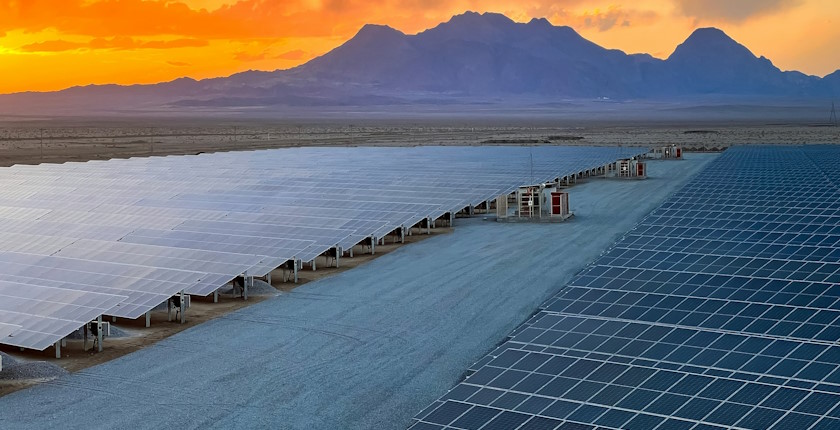
Solar power shows the fastest rate of growth and absolute capacity value, according to the global power market analytics provider.

Electricity market prices returning below EUR 100 per MWh only after 2030

Looking into wholesale prices, the analysis expects the Western Balkans to follow similar trends as other SEE markets but with regional nuances, based on the local energy system evolution. Short-term volatility and increased commodities are foreseen to keep prices near or over the EUR 100 per MWh mark until 2030 while long-term baseload prices under Aurora’s central scenario are expected at between EUR 70 per MWh and EUR 80 per MWh, driven by high commodity prices, while an increasing renewables’ penetration acts in the opposite direction.

Early movers have an advantage as cannibalization looms

Renewable energy assets capture prices will benefit from lower cannibalization levels in the early years compared to other SEE countries, as there is less capacity in the system, giving early movers an advantage, the analysis reads. Over time, the momentum for storage seen in SEE likely spreads to the Western Balkans.

Coal phaseout seen by 2045

The speed of decarbonization in the region largely depends on the implementation of the European Union’s Carbon Border Adjustment Mechanism (CBAM) or alignment with the EU Emissions Trading System (EU ETS). The shift away from lignite could take time, Aurora’s experts say, with a full exit expected by 2045, but its share in the power system is expected to decrease significantly in the next decade due to pressure from CBAM and carbon taxes.

“The Western Balkans are Europe’s most rapidly changing power markets. Ageing thermal fleets, liberalisation of markets, policy support schemes, and strong fundamental economics are poised to bring the Western Balkans at the forefront of developers’ agendas,” said Panos Kefalas, Research Lead at Aurora Energy Research.

The Western Balkans Power and Renewables Market Forecast provides in-depth insights, detailed market analysis, and data-driven projections for investors, developers, and stakeholders.

Established in 2013, Aurora Energy Research provides power market forecasting and analytics for investment and financing decisions. Headquartered in Oxford, it operates out of 16 offices worldwide covering Europe, North and South America, Asia, and Australia. The firm’s services include market outlook for energy industry participants, advisory support, and software solutions.

* This designation is without prejudice to positions onstatus and is in line with UNSCR 1244/99 and the ICJ Opinion on the Kosovo declaration of independence.
by in News

BiH entities agree on electricity market law – power exchange to be established in Mostar

After ten years of negotiations, the Republic of Srpska and Federation of Bosnia and Herzegovina, the two entities of BiH, have finally agreed on a law on the electricity regulator, transmission, and market. The important piece of legislation should enable the establishment of an electricity exchange, which is one of the conditions for BiH’s exemption from the Carbon Border Adjustment Mechanism (CBAM) on electricity exports to the European Union.

The breakthrough was announced by Staša Košarac, Minister of Foreign Trade and Economic Relations of BiH and Deputy Chairperson of the Council of Ministers.

The law on the electricity regulator, transmission, and market has been agreed, Košarac said after a meeting in Vienna with Energy Community Secretariat Director Artur Lorkowski.

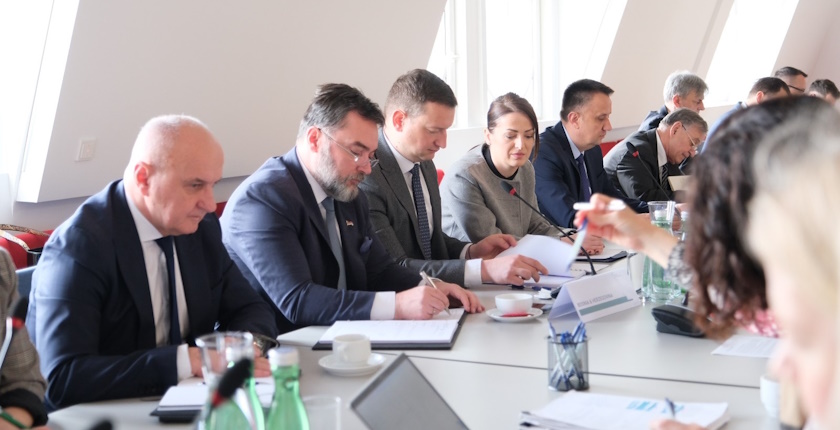
The meeting was attended by Minister of Energy and Mining of the Republic of Srpska Petar Đokić and the Minister of Energy, Mining and Industry of the Federation of Bosnia and Herzegovina (FBiH) Vedran Lakić.

Košarac: A serious step towards fulfilling obligations in the energy sector

“After several years of attempts, since 2017, we have finally agreed on the law,” Košarac noted.

He recalled that the said legislation is one of the conditions for the exemption of BiH from the EU’s carbon border tax.

“We made a serious step towards fulfilling our obligations in the energy sector. I am truly grateful to Ministers Đokić and Lakić, and to the Energy Community Secretariat for cooperation,” Košarac stressed.

Lakić: BiH will no longer be the only country without a law and an electricity exchange

The Ministry of Energy, Mining and Industry of the Federation of BiH pointed out that the negotiations on the law lasted ten years.

“We have reasons to be extremely satisfied with the agreement, especially related to the current circumstances in BiH, because this is an important step in the process of exempting the country from CBAM. Now we will be able to protect exporters to the EU in all parts of BiH, and to use the funds collected from the CO2 tax for projects in the country,” Lakić explained.

In his view, the law also sets an environment for the establishment of an electricity exchange, based in Mostar. BiH is no longer the only country that does not have its own law on the electricity market and power exchange, he noted.

Đokić: The key reason for the agreement is the CBAM

The Minister of Energy and Mining of the Republic of Srpska Petar Đokić recalled that the law has been discussed for more than ten years. He noted that it only legalized the current practice established by existing laws.

Elektroprenos BiH, the Independent System Operator in Bosnia and Herzegovina (NOSBiH) and the State Electricity Regulatory Commission (SERC or DERK) are already operational in line with the laws.

CBAM has been postponed for a year

The key reason for the harmonization is the establishment of the electricity exchange because it is a prerequisite for BiH to submit a request for exemption from the cross-border CO2 tax, the minister stressed.

Without the exemption, BiH would pay a tax on its electricity exports to the EU and into the EU budget, said Đokić, who will be among the speakers at Belgrade Energy Forum 2025 (BEF 2025). The entity minister recalled that the EU postponed the CBAM implementation from January 2026 to January 2027. Of note, BiH previously asked for CBAM to be postponed.

The implementation of CBAM would make companies in BiH exporting electricity uncompetitive. It would jeopardize the financial stability of government-controlled power utility Elektroprivreda Republike Srpske (ERS) in the Republic of Srpska, according to the minister.

Đokić noted that the power exchange would be established by three power companies in BiH – ERS, Elektroprivreda BiH (EPBiH) and Elektroprivreda HZHB, with the transmission system operator – NOSBiH.

by in News

Turkey-based Yıldırım building 109 MW solar park in Kosovo* for its ferronickel plant

Yıldırım Energy laid the foundation stone in Kosovo* for the first phase of its 150 MW solar farm. The Turkish company intends to produce electricity for its ferronickel plant, which exports its entire output.

A renewable energy investment of more than EUR 43 million is underway in Gllogovc (also known as Glogovac and Drenas). Yıldırım Group’s subsidiary Yıldırım Energy marked its expansion to Kosovo* by inaugurating the construction works on a 109 MW solar park.

The facility will reduce electricity costs and facilitate sustainable production at the NewCo Ferronikeli plant, its General Manager Cemil Acar said. The ferronickel production complex exports all its products, he pointed out. The photovoltaic plant is due to come online early next year, he revealed.

Company’s solar park is among largest ones in construction in Western Balkans

Using renewable energy in production would enable the group to be exempted from paying the European Union’s CO2 import levy, imposed through the Carbon Border Adjustment Mechanism or CBAM. Ferronickel is a ferroalloy, consisting of iron and nickel.

With the new photovoltaic plant, the group will get cheap electricity for its production lines and it can also exempt it from the EU’s carbon border tax system

Separately, the government in Prishtina said the first section of the solar power plant would have over 54 MW in capacity. The company’s target is to reach 150 MW by 2026, it added. It would make it the biggest in the Western Balkans so far, though Solar Energy Group Europe (SEGE) said a year ago that it launched the construction of an agrisolar power plant of 150 MW in peak capacity in Gjakova (Đakovica), also in Kosovo*.

The Ministry of Economy recently completed its first solar power auction, for a plant of up to 117 MW in peak terms. In comparison, government-controlled power utility Kosovo Energy Corp. (KEK) has a PV project of 120 MW underway. The facility will be built at a former ash dump of its Kosovo A power plant.

Energy crisis knocked out Ferronikeli in 2021

NewCo Ferronikeli resumed production last June after a break of almost two years. It was caused by a surge in electricity prices amid the energy crisis. The group entered ownership in 2022.

Yıldırım Energy trades power and gas, conducts electrification services and produces renewable energy, focused on hydropower, solar and wind. The firm is building a solar panel plant in Kocaeli in Turkey, according to its website. It also operates in North Macedonia and Albania.

The group, founded in 1963, is active in 57 countries. Its operations are based in Istanbul and the financial headquarters are in Amsterdam.

* This designation is without prejudice to positions onstatus and is in line with UNSCR 1244/99 and the ICJ Opinion on the Kosovo declaration of independence.
by in News

BiH, Montenegro ask EU to delay CBAM

Bosnia and Herzegovina and Montenegro requested at the meeting of the Energy Community Ministerial Council for the introduction of the CBAM cross-border CO2 tax, scheduled for January 1, 2026, to be postponed.

The rollout of payments within the European Union’s Carbon Border Adjustment Mechanism (CBAM) is going to affect companies in the region – in Albania, Bosnia and Herzegovina, Montenegro, North Macedonia, Kosovo*, and Serbia.

The countries can be exempted from the CBAM on electricity. However, they are too slow in fulfilling the requirements. The results so far show there is no chance any of them can get an exception before January 1, 2026.

Staša Košarac (photo: Energy Community)

After the latest meeting of the Ministerial Council, the Minister of Foreign Trade and Economic Relations of BiH Staša Košarac said his country has drafted a harmonized law on electricity for the transposition of the EU’s Third Energy Package. In his words, it was success enabled by the cooperation of the energy ministries of BiH’s both entities: the Republic of Srpska and Federation of BiH.

Košarac: We want to help businesses continue exporting without CO2 tax

The country also demonstrated good cooperation between the entity ministries by asking the Energy Community Secretariat to seek a postponement of the implementation of CBAM, Košarac noted, citing a specificity of activities carried out not only by BiH but also the other contracting parties.

He told Balkan Green Energy News the parties backed his proposal. BiH is asking to delay CBAM to allow domestic exporters to continue exporting to the EU without paying a carbon tax, Košarac added.

Mujović: Postponement until Montenegro completes electricity market coupling with the EU

Saša Mujović (photo: Energy Community)

Montenegrin Minister of Energy Saša Mujović confirmed for Balkan Green Energy News that he also requested a CBAM delay for a certain period.

The country is seeking an exemption from January 1, 2026, until it completes electricity market coupling with the EU, which is expected in the fourth quarter of that year, he explained.

Mujović added he supported an initiative for a longer postponement as well.

According to Vijesti, Mujović said his requests would be forwarded to the European Commission. He stressed that the ministry made and that it would continue to make efforts toward the implementation of the energy package – consisting of laws on renewables, energy, and cross-border exchange of electricity and gas – and coupling the domestic electricity market with the EU.

A postponement would save Montenegro EUR 350 million per year

With the current pace, Montenegro could finish coupling by the fourth quarter of 2026, according to Mujović. Starting the payments within CBAM on January 1, 2026, could be a huge financial burden for coal power plant Pljevlja, he said.

To achieve an exemption from CBAM, Montenegro and all other contracting parties must conduct market coupling with EU member states, so Mujović is asking for a postponement until the final quarter of 2026, when the market coupling could be completed.

He noted that a positive response from the EU would save the country EUR 350 million per year and enable Pljevlja to operate profitably.

Lorkowski: The European Commission will probably respond to the request

Artur Lorkovski (photo: Energy Community)

The secretariat’s director Artur Lorkowski confirmed that BiH minister Košarac raised the issue of a CBAM postponement. “But, CBAM isn’t our legislation. The Energy Community isn’t a proper address for that request. It was well noted by the representative of the European Commission,” he stressed.

Lorkowski assumes that follow-ups or an answer to the request are expected.

“It is the proposition of the BiH, as minister Košarac said”, he added.