by in News

North Macedonia Launches Intraday Electricity Market as Regional Power Trading Evolves

North Macedonia has taken another significant step toward deeper integration with the European electricity market following the launch of its intraday power market by the National Electricity Market Operator (MEMO). The development represents a major advancement in the country’s electricity market liberalization process and strengthens operational flexibility within the regional energy system.

The official launch ceremony gathered senior representatives from the government, energy institutions, market participants, and international partners. The intraday trading platform and clearing infrastructure were delivered by Slovenia’s BSP Energy Exchange, continuing its cooperation with MEMO after supporting the establishment of North Macedonia’s day-ahead market. Intraday trading operates through Deutsche Börse’s M7 trading system, one of Europe’s widely adopted electricity trading platforms.

The introduction of intraday trading comes three years after the launch of the country’s day-ahead market and reflects the increasing sophistication of North Macedonia’s power sector. Intraday markets play a critical role in modern electricity systems by enabling market participants to adjust positions closer to the actual delivery hour. This improves balancing efficiency, reduces imbalance costs, and enhances the integration of variable renewable energy sources such as solar and wind.

Prime Minister Hristijan Mickoski described the launch as evidence of tangible reform progress in the national energy sector. According to him, energy security and resilience have become strategic priorities for all European economies amid accelerating market transformation and geopolitical uncertainty.

“At a time when energy is one of the most critical issues for every country, our obligation is to create a system that is secure, competitive, and resilient to global challenges,” Mickoski stated during the event.

He emphasized that North Macedonia intends to actively participate in European energy flows and policy frameworks rather than remain on the periphery of the continent’s ongoing energy transition.

Minister of Energy, Mining and Mineral Resources Sanja Božinovska underlined that the intraday market is only one phase of a broader market integration strategy. She reiterated the government’s commitment to future market coupling with the European Union and the continued development of regional electricity trading mechanisms.

“This is just the starting point for our full integration into the European energy family,” Božinovska said, adding that authorities will continue advancing regional cooperation and aligning domestic market structures with EU standards.

MEMO Chief Executive Officer Zoran Gjorgjievski highlighted the operational significance of intraday trading in a rapidly changing electricity environment increasingly shaped by renewable generation and real-time balancing requirements.

“From today, our market not only plans for tomorrow – it operates in real time. The intraday market is a direct response to the dynamics of the modern energy sector,” Gjorgjievski noted.

He stressed that transparent and efficient price formation remains essential for optimal resource allocation, prudent investment decisions, and effective risk management across the electricity value chain.

Gjorgjievski also warned that emerging European regulatory frameworks, particularly the Carbon Border Adjustment Mechanism (CBAM), could introduce additional pressure on domestic electricity producers and potentially affect regional market liquidity. While supporting decarbonization objectives, he argued that the energy transition must remain economically sustainable and carefully managed to avoid undermining market competitiveness.

The launch of the intraday market is also viewed as an important preparatory step toward integration into the single European electricity market. Chairman of the Management Board of ADEX Group and CEO of BSP Energy Exchange Anže Predovnik said the project reflects strong institutional cooperation, strategic government support, and MEMO’s operational commitment.

“What lies ahead is integration into the single European market. Together, we will build a more connected and competitive future,” Predovnik stated.

North Macedonia’s intraday market currently includes 21 participants, demonstrating growing interest among regional traders and electricity companies.

According to Martin Martinovski, electricity and statistics expert at the Energy Community Secretariat, the operational intraday market strengthens North Macedonia’s role within the regional balancing framework. As integration with the EU electricity market progresses, the country could increasingly contribute low-carbon flexibility to neighboring systems while benefiting from cross-border balancing support.

Market growth figures indicate a rapid expansion in trading activity since the launch of organized electricity trading in the country. Trading volumes increased from 335 GWh by the end of 2023 to nearly 970 GWh in 2024, before surpassing 1.37 TWh last year. MEMO currently counts forty active market members, while first-quarter 2026 trading volumes were 19% higher compared to the same period a year earlier. 

by in News

Albania’s Hydropower Surge Strengthens Its Position in Regional and EU Energy Markets

The first three months of 2026 marked a substantial increase in electricity generation in Albania, driven primarily by a sharp rise in hydropower output. Production from hydropower plants was 70% higher in January–March 2026 compared to the same period a year earlier.

According to data published in the report of the Energy Community on the Carbon Border Adjustment Mechanism (CBAM), Albania gained a clear advantage over other regional countries in exporting electricity generated from renewable sources.

Specifically, the first quarterly report on CBAM implementation highlights that Albania’s hydropower generation increased significantly, positioning the country as a far more aggressive net exporter of electricity to both the regional market and the European Union.

“Hydropower production in Albania increased by 1.34 TWh (+70%) in the first quarter of 2026 compared to the same period in 2025, rising from 1.93 TWh to 3.27 TWh,” the report states. This growth was concentrated in January and February, with increases of +72% and +84% respectively, reflecting exceptionally favorable hydrological conditions.

This surplus translated directly into higher exports. Albania increased scheduled electricity exports by approximately 4,100 MWh per day to Greece, 3,700 MWh per day to Kosovo, and 2,000 MWh per day to Montenegro.

The report estimates that “these shifts in trade flows represent a net movement of approximately 1.2 TWh of Albanian electricity exported in the first quarter of 2026,” a volume that closely matches the incremental increase in hydropower generation.

The economic impact is further amplified by how CBAM treats Albanian electricity. Unlike Serbia, Bosnia and Herzegovina, or Montenegro, Albania benefits from a zero emissions factor. This means its electricity exports to the European Union are not subject to additional carbon costs.

“Electricity imported into the European Union from Albania was not financially affected by CBAM,” the report notes, adding that this “created a commercial incentive to import Albanian electricity into EU markets.”

Such dynamics position Albania as a preferential energy corridor դեպի the European market, particularly through Greece and onward to Italy. The report observes that exports from Albania to Greece intensified, with Albanian electricity—combined with strong Greek domestic production—subsequently redirected toward Bulgaria and Italy.

The Energy Community further warns that hydropower-dominated systems like Albania’s “appear to be in a structurally more competitive position,” suggesting that CBAM is already creating long-term winners and losers in the region. In contrast, countries with higher coal-based generation face substantial financial penalties.

For example, Montenegro pays approximately €73.8 per MWh of electricity exported to the European Union, while Albania pays zero. “The contrast between Albania and Montenegro illustrates how country-level emission factors shape cross-border electricity trade,” the report concludes, placing Albania firmly on the side of Europe’s evolving energy transition.

by in News

The Border Wall of Carbon: How CBAM Rewrote Balkan Power Trade in Q1 2026

Q1 2026 marked an abrupt break in Southeast Europe’s electricity market structure. Exceptional hydro output pushed WB6 prices down, but CBAM prevented the old price convergence mechanism from doing its job. The result was a wider-than-usual spread of more than €30/MWh between WB6 and EU benchmarks, a 25% drop in scheduled cross-border commercial exchanges, and a visible re-routing of trade toward CBAM-free corridors. The data suggest that CBAM did not merely tax imports; it changed the geography of trade.

Origin of imported electricity Default value (tCO2eq/MWh) CBAM cost per imported MWh (€)
Albania 0 0
Bosnia and Herzegovina 1.148 86.513
Kosovo* 0.984 74.154
Moldova 0.530 39.941
Montenegro 0.979 73.777
North Macedonia 0.887 66.844
Serbia 1.041 78.450
Ukraine 0.907 68.352

Table 1. CBAM default factors and implied import costs in Q1 2026

The Hydro Paradox

The irony of Q1 2026 is that the region’s own luck partly disguised CBAM’s first-quarter damage. Hydro generation surged across the WB6 and neighbouring markets, rising regionally by 33% year on year, with Albania alone up 70%. That flood of carbon-free output softened domestic prices and kept some markets liquid, which made the underlying CBAM shock look less severe than it would have in a normal hydrological quarter. The report itself warns that these results are preliminary and heavily shaped by exceptional water conditions, not just the new carbon border regime.

Figure 1. Hydro vs coal generation in Q1 2026 versus Q1 2025

Figure 1. Hydro vs coal generation in Q1 2026 versus Q1 2025

But the same hydro boom also exposed a second vulnerability: it showed how quickly the region can swing from shortage to surplus, which matters for solar and wind investment signals. The Energy Community Secretariat notes that growing solar capacity may generate renewed surplus conditions in spring and summer, even as hydro declines. That means renewable developers are now financing into a market where merchant upside can be sharply altered by a carbon border charge on exports, especially in systems that are not as clean as Albania.

Technical Deep-Dive: Trade Diverges from Physics

The most unsettling finding in the report is the widening gap between commercial schedules and physical reality. Commercially, WB6-EU trade contracted and transit-based trading weakened. Physically, however, electricity still moved according to network physics, not trader preferences. The report gives concrete examples: Albanian export schedules to Greece rose strongly, yet physical flows did not align proportionally; power continued to move through Albania toward Montenegro and Bosnia and Herzegovina and onward to EU border countries.

That divergence is not just a bookkeeping issue. It creates operational risk. The report links the pattern to unscheduled and loop flows, less efficient transmission capacity use, and a growing burden on balancing and security management. It also explicitly recalls the June 21, 2024 blackout, when near-simultaneous outages on 400 kV lines in Montenegro and Albania exposed the fragility of the South-North corridor and the costs of weak cross-border coordination. In the current setting, the same corridor could again become heavily loaded, but with less predictable commercial schedules to guide system operation.

Market Fragmentation: The Rise of CBAM-Free Routing

The report reads like a map of avoidance behaviour. Intra-WB6 exchanges intensified, while trade moved toward routes that do not trigger CBAM exposure. Albania’s zero default emission factor made it a natural winner, with export routes to Greece gaining importance. Greece then became a bridge to Bulgaria and Italy, effectively allowing some power to bypass the more exposed WB6 transit geography.

Figure 2. Average day-ahead prices across the region

Figure 2. Average day-ahead prices across the region

This is why the Secretariat’s “CBAM-free route” language matters. It suggests that the market is not simply shrinking; it is reorganising itself around carbon liability. Transit-based trading through the WB6 is becoming less attractive, and that is a structural problem for regional integration because the WB6 has historically functioned not only as a set of markets, but also as a corridor between larger EU systems.

Financial Outlook

For project finance, the message is straightforward: ETS-linked carbon costs are now a core merchant-risk variable in the Western Balkans. The report states that the relevant Q1 2026 CBAM certificate price was based on an EU ETS quarterly weighted average of €75.36/tCO2eq, and that this price fell sharply after an initial increase as political debate over ETS reform intensified. That level of volatility matters because it directly changes export economics quarter by quarter.

Figure 3. Scheduled commercial exchanges between the WB6 and the EU

For EBRD-style underwriting, this means more conservative assumptions are unavoidable. Revenue cases for new renewable projects in the WB6 should be stress-tested not only against power-price volatility and hydrology, but also against CBAM-induced basis risk on export routes. Projects that depend on merchant access to EU markets will need stronger carbon-risk sensitivity, more robust route diversification, and a clearer view of whether they are selling into a CBAM-exposed corridor or a CBAM-free one. The report’s core warning is that low-carbon systems may send stronger investment signals, while more carbon-intensive systems face a worsening structural handicap.

Strategic Recommendations

The Secretariat’s own policy direction is the right one: better clarity in CBAM electricity rules, stronger coordination between market participants and TSOs, and continued alignment of carbon pricing and market design across the region. Building on that, the practical priorities are clear. WB6 TSOs need tighter coordinated capacity calculation, stronger congestion management, and more transparent handling of transit flows. Policymakers should also close the information gap around proof of transit and improve rules that currently reward route avoidance over efficient system use.

The deeper objective is to stop the region from sliding into transit-based trading collapse. That means preserving market integration even as carbon policy changes the economics of exchange. If WB6 markets are left to fragment into isolated hydro winners and carbon-heavy losers, the region will not simply lose trade; it will lose the very interoperability that made its system valuable in the first place.

by in News

CBAM go-live: no electricity imports in week one

Iron and steel dominated the CBAM imports declared in the first reporting window, January 1-6, according to the European Commission.

The European Union’s Carbon Border Adjustment Mechanism entered into force on January 1. The European Commission used the January 1 to January 6 period for initial data collection to monitor and report on the CBAM go-live.

From the beginning of this year, firms in the EU that import aluminum, cement, electricity, iron and steel, hydrogen and fertilizers from non-EU countries are obliged to pay a carbon price under CBAM. But, the deadline to submit CBAM certificates for 2026 is May 31, 2027.

CBAM successfully entered into force on January 1, 2026, according to the commission.

CBAM imports declared in the first reporting window from January 1 to January 6 covered 1.655.613 tonnes

The full implementation followed a coordinated deployment across all EU member states, seamlessly integrating the CBAM Registry with national customs import systems, Taric and EU Customs Single Window, the commission explained.

This seamless interconnection ensured real-time data exchange, efficient validation of declarants, and uninterrupted import procedures at EU external borders, the EU’s executive arm claims.

CBAM imports declared in the first reporting window, from January 1 to January 6, covered 1.655.613 tonnes. This is the sectoral breakdown:

  • Iron and steel: 98%
  • Fertilizers: 1.2%
  • Cement: 0.5%
  • Aluminium: 0.3%
  • Electricity and hydrogen: 0%.

The main countries of origin of CBAM-covered imports included Turkey, China, India, Canada, Taiwan, and Vietnam. On the other hand, top importing member states are Belgium, Spain, Romania, the Netherlands, France, and Germany.

In total, more than 12,000 economic operators submitted applications for CBAM authorization by January 7.

The commission invited entities that have not yet submitted their CBAM authorization applications to do so as soon as possible via the CBAM Registry.

National authorities report stable processing times, supported by harmonized digital workflows, according to the commission.

Of note, in mid-December last year, the commission published implementing acts and amendments to the CBAM Regulation.

by in News

CBAM go-live: no electricity imports in week one

Iron and steel dominated the CBAM imports declared in the first reporting window, January 1-6, according to the European Commission.

The European Union’s Carbon Border Adjustment Mechanism entered into force on January 1. The European Commission used the January 1 to January 6 period for initial data collection to monitor and report on the CBAM go-live.

From the beginning of this year, firms in the EU that import aluminum, cement, electricity, iron and steel, hydrogen and fertilizers from non-EU countries are obliged to pay a carbon price under CBAM. But, the deadline to submit CBAM certificates for 2026 is May 31, 2027.

CBAM successfully entered into force on January 1, 2026, according to the commission.

CBAM imports declared in the first reporting window from January 1 to January 6 covered 1.655.613 tonnes

The full implementation followed a coordinated deployment across all EU member states, seamlessly integrating the CBAM Registry with national customs import systems, Taric and EU Customs Single Window, the commission explained.

This seamless interconnection ensured real-time data exchange, efficient validation of declarants, and uninterrupted import procedures at EU external borders, the EU’s executive arm claims.

CBAM imports declared in the first reporting window, from January 1 to January 6, covered 1.655.613 tonnes. This is the sectoral breakdown:

  • Iron and steel: 98%
  • Fertilizers: 1.2%
  • Cement: 0.5%
  • Aluminium: 0.3%
  • Electricity and hydrogen: 0%.

The main countries of origin of CBAM-covered imports included Turkey, China, India, Canada, Taiwan, and Vietnam. On the other hand, top importing member states are Belgium, Spain, Romania, the Netherlands, France, and Germany.

In total, more than 12,000 economic operators submitted applications for CBAM authorization by January 7.

The commission invited entities that have not yet submitted their CBAM authorization applications to do so as soon as possible via the CBAM Registry.

National authorities report stable processing times, supported by harmonized digital workflows, according to the commission.

Of note, in mid-December last year, the commission published implementing acts and amendments to the CBAM Regulation.

by in News

EU’s amendments to CBAM: possibility of relief, but January 1 brought market uncertainty

Long-awaited implementing acts and amendments to the CBAM Regulation brought only a minor relief for the Western Balkans, investors in renewables, and electricity traders. Balkan Green Energy News has analyzed the documents that the European Commission published in December 2025, and the impact of the proposed measures on Energy Community contracting parties – Albania, BiH, Kosovo*, Montenegro, North Macedonia and Serbia.

From January 1, European firms importing aluminum, cement, electricity, iron and steel, hydrogen and fertilizers are obliged to pay a carbon price within the European Union’s Carbon Border Adjustment Mechanism (CBAM).

Last year, the CBAM Regulation was criticized by experts from the Western Balkans (Ljubo Maćić, Zoran Gjorgjievski), European think-tanks (Bruegel), and organizations (Energy Traders Europe). Even the European Network of Transmission System Operators for Electricity (ENTSO-E) requested that the transitional period be prolonged.

They said charging the tax, which started on January 1 as scheduled, would harm countries outside the EU, but also EU member states, market coupling of Western Balkan countries, and electricity trade.

Uncertainty surrounding electricity transit and trade remains high

The analysis showed that the European Commission is proposing changes to the CBAM regulation that would introduce a more favorable method for calculating the national emissions factor and actual emissions values. This benefits non-EU countries that export electricity to the EU, owners of operational renewable energy power plants in these countries, and future green energy investments.

The proposal foresees amendments to the procedure for market coupling, but it is unclear whether these will bring any concrete changes. The commission didn’t propose changes regarding transit, and consequently, electricity trading.

Provided that the proposal is accepted as proposed, it will bring the said positive changes in calculating the national emissions factor and actual emissions values only by the end of the year, meaning that uncertainty in the market will persist until then.

Uncertainty surrounding electricity transit and trade remains high. The impact on the Western Balkans, as well as on the EU member states Bulgaria, Croatia, Greece, Hungary, Romania, and Slovenia, will become clear in the coming weeks and months.

There are two legislative streams

There are two relevant streams currently ongoing in EU legislation for CBAM for electricity. The first are the so-called implementing acts, which are similar to secondary legislation in national law. They further define the technical details of the CBAM regulation.

The other part is the commission’s proposal to amend the CBAM Regulation itself. It will become part of the law when the other co-legislators in the EU – the Council of the EU, which includes the member states, and the European Parliament – together agree on it.

Nobody can say exactly when that process will be finished, but most likely not before the autumn.

National emissions factors, actual emission values: improvement

eu western balkans cbam electricity market coupling amendments
Photo: iStock

There is a proposal to change the way the national emission factors are calculated in the main CBAM Regulation. Currently it only includes the part of the electricity mix based on fossil fuels, regardless of their share in the country’s power generation mix.

For example, for Serbia, a contracting party of the Energy Community, this factor is 1.04. If the national power mix is taken into account, it would go down to 0.7, making the cost of CBAM about 40% lower.

The commission proposed to replace the electricity mix based on fossil fuels, in its accounting system, with one encompassing all energy sources.

The commission also intends to change the requirements for switching to actual emission values

The commission also intends to change the requirements for switching to actual emission values. These are relevant for the producers of renewable energy in non-EU countries. Current conditions are very strict and, to some stakeholders, not achievable.

For example, if a wind farm in the Western Balkans, owned by a domestic or foreign investor, cannot meet these conditions the CBAM payments for the electricity from the facility exported to the neighboring Croatia would be calculated based on the national emissions factor.

The commission suggested that an importer shouldn’t need to have a power purchase agreement (PPA) with a producer directly, which is one of the conditions, but that it could be done through intermediaries. It also proposed the removal of the requirements related to congestion.

These proposals could remove negative impacts on renewable electricity exports and development in non-EU countries, including contracting parties.

Transit: nothing new

The issue of transit hasn’t been addressed in the acts and amendments.

Under the CBAM Regulation, it is unclear how electricity transit costs would be calculated. For example, from Bulgaria to Hungary via Serbia, and who would be required to cover them.

The commission clarified several times that transit isn’t subject to CBAM. However, the physical, practical implementation is the problem.

For example, a trader buys electricity from Greece, transits it through North Macedonia, and puts it on the Serbian SEEPEX power exchange. Somebody else buys it and sells it in Hungary.

It would be very difficult or impossible to say that electricity from Greece was sold into Hungary.

This is why stakeholders take a conservative approach and say that they cannot prove. So, most likely they wouldn’t opt for these countries – non-EU countries, like contracting parties – for transit.

Retroactivity: possibility for improvement

eu western balkans electricity market cbam amendments
Photo: iStock

One of the provisions in the commission’s proposal to amend the CBAM Regulation is that the changes in the electricity sector could apply retroactively, starting from January 2026.

Just as a reminder, EU firms are obliged since the start of this month to pay a CBAM fee for importing designated goods and raw materials and electricity via purchasing so-called CBAM certificates.

Obviously, an importer will try to pass on this cost partly or fully to its counterparts in the third countries. But, importantly, EU firms won’t be able to purchase CBAM certificates yet this year, but only from February 1, 2027.

If the amendment on national emissions factor is adopted, for example in October, this could mean lower CBAM costs for EU importers of electricity from non-EU countries.

Without details on the path forward, market participants lack certainty about the level of CBAM costs

The commission intended to remedy some of the negative impacts on the electricity markets with amendments with retroactive effect. But without details on the path forward, market participants lack certainty about the level of CBAM costs to be paid for 2026.

Based on the current rules, CBAM costs for countries which have lignite in their generation mix could be EUR 70 per MWh to EUR 80 per MWh if the EU ETS price is around 80 EUR per ton of CO2. In some cases, the fee is almost 100% above the electricity price itself.

It is clear that it would rarely make sense to import electricity to the EU from third countries. The price difference, let’s say between Hungary and Serbia, would need to be more than EUR 70 per MWh to EUR 80 per MWh to make the business case.

Market coupling: nothing new or possibility for improvement

eu cbam western balkans electricity market amendments
Photo: Sergio Cerrato – Italia from Pixabay

There are several references to market coupling in the proposal. Energy Community contracting parties are in different phases of market coupling with EU countries.

The commission has proposed signing memoranda of understanding with third countries. It would set out the timeline and conditions for an exemption from CBAM on electricity.

This could be done after the commission approves the so-called verification process of a contracting party’s transposition of the Electricity Integration Package (EIP). It would be a green light for the next stage, which entails the technical tests, leading up to the completion of market coupling.

The current wording in the proposal leaves room for various interpretations

The current wording in the proposal leaves room for various interpretations, one being that the MoU may open the door for an exemption already when the “point of no return” is reached. It is when the contracting party has done all its homework and only the technical tests remain.

However, the commission didn’t propose the other conditions for CBAM exemption to be changed, such as the development of a roadmap on the introduction of a CO2 price that would be equivalent to the level in the EU’s Emissions Trading System (EU ETS).

The question is what the MoU would exactly be about, and if “equivalent” could be defined more precisely.

Why is this important?

No contracting party has yet met the conditions to receive a CBAM exemption in the electricity sector. A critical requirement is to agree to charge an emissions price from 2030 equivalent to the EU ETS.

The CBAM regulation says that the tax cannot technically be implemented on a market which is coupled with the EU internal energy market

If equivalent means the same price, here is the outcome for Serbia, for example: The current CO2 price in the EU is EUR 80 per ton of CO2 equivalent, but is expected to rise to above EUR 100 by 2030, or even reach EUR 150. It would raise prices to consumers by about EUR 75 per MWh and EUR 110, respectively.

The CBAM regulation says that the tax cannot technically be implemented on a market which is coupled with the EU internal energy market. This is why there is a possibility for an exemption for electricity for imports from those countries which are coupled until a technical solution is found how to implement CBAM.

Starting from January 1, any country that is ready to be coupled would in parallel also need to qualify for and receive an exemption from CBAM for electricity. If you fulfil the conditions, you get coupled and get an exemption and CBAM will disappear.

What next?

It could be said that CBAM implementation as of January 1 will certainly affect market integration in the sense that people, businesses would react to market uncertainty.

Trade will be impacted; imports from contracting parties to the EU will be expected to disappear. Of course, contracting parties will continue to import electricity from the EU member states.

The weeks and months ahead will show to what extent the prices and liquidity would be affected in the contracting parties and neighboring EU member states Bulgaria, Croatia, Greece, Hungary, Romania, Slovenia.

For example, Greece would have only the Bulgaria-Romania route to export electricity, and it is already congested. Greece could face curtailments in renewable electricity.

We will also see what the effect on the renewables deployment in contracting parties will be. Are investors going to postpone investments until they see if the changes proposed by the commission are adopted, or are they going to leave for other markets?


Pozsgai: Amendments point in the right direction

Péter Pozsgai, Lead of the EU Carbon Border Adjustment Mechanism Readiness Task Force in the Energy Community Secretariat:

“The European Commission’s proposed amendments point in the right direction, reflecting a consideration of the progress of contracting parties in electricity market coupling, and better outlining the operational details of an exemption via an MoU. The refinement of the rules on national emission factors and the conditions for using actual emission values also demonstrate the intention to minimize the unintended impacts of CBAM on renewable development in contracting parties”.


by in News

EU’s amendments to CBAM: possibility of relief, but January 1 brought market uncertainty

Long-awaited implementing acts and amendments to the CBAM Regulation brought only a minor relief for the Western Balkans, investors in renewables, and electricity traders. The documents has been analyzed that the European Commission published in December 2025, and the impact of the proposed measures on Energy Community contracting parties – Albania, BiH, Kosovo*, Montenegro, North Macedonia and Serbia.

From January 1, European firms importing aluminum, cement, electricity, iron and steel, hydrogen and fertilizers are obliged to pay a carbon price within the European Union’s Carbon Border Adjustment Mechanism (CBAM).

Last year, the CBAM Regulation was criticized by experts from the Western Balkans (Ljubo Maćić, Zoran Gjorgjievski), European think-tanks (Bruegel), and organizations (Energy Traders Europe). Even the European Network of Transmission System Operators for Electricity (ENTSO-E) requested that the transitional period be prolonged.

They said charging the tax, which started on January 1 as scheduled, would harm countries outside the EU, but also EU member states, market coupling of Western Balkan countries, and electricity trade.

Uncertainty surrounding electricity transit and trade remains high

The analysis showed that the European Commission is proposing changes to the CBAM regulation that would introduce a more favorable method for calculating the national emissions factor and actual emissions values. This benefits non-EU countries that export electricity to the EU, owners of operational renewable energy power plants in these countries, and future green energy investments.

The proposal foresees amendments to the procedure for market coupling, but it is unclear whether these will bring any concrete changes. The commission didn’t propose changes regarding transit, and consequently, electricity trading.

Provided that the proposal is accepted as proposed, it will bring the said positive changes in calculating the national emissions factor and actual emissions values only by the end of the year, meaning that uncertainty in the market will persist until then.

Uncertainty surrounding electricity transit and trade remains high. The impact on the Western Balkans, as well as on the EU member states Bulgaria, Croatia, Greece, Hungary, Romania, and Slovenia, will become clear in the coming weeks and months.

There are two legislative streams

There are two relevant streams currently ongoing in EU legislation for CBAM for electricity. The first are the so-called implementing acts, which are similar to secondary legislation in national law. They further define the technical details of the CBAM regulation.

The other part is the commission’s proposal to amend the CBAM Regulation itself. It will become part of the law when the other co-legislators in the EU – the Council of the EU, which includes the member states, and the European Parliament – together agree on it.

Nobody can say exactly when that process will be finished, but most likely not before the autumn.

National emissions factors, actual emission values: improvement

eu western balkans cbam electricity market coupling amendments
Photo: iStock

There is a proposal to change the way the national emission factors are calculated in the main CBAM Regulation. Currently it only includes the part of the electricity mix based on fossil fuels, regardless of their share in the country’s power generation mix.

For example, for Serbia, a contracting party of the Energy Community, this factor is 1.04. If the national power mix is taken into account, it would go down to 0.7, making the cost of CBAM about 40% lower.

The commission proposed to replace the electricity mix based on fossil fuels, in its accounting system, with one encompassing all energy sources.

The commission also intends to change the requirements for switching to actual emission values

The commission also intends to change the requirements for switching to actual emission values. These are relevant for the producers of renewable energy in non-EU countries. Current conditions are very strict and, to some stakeholders, not achievable.

For example, if a wind farm in the Western Balkans, owned by a domestic or foreign investor, cannot meet these conditions the CBAM payments for the electricity from the facility exported to the neighboring Croatia would be calculated based on the national emissions factor.

The commission suggested that an importer shouldn’t need to have a power purchase agreement (PPA) with a producer directly, which is one of the conditions, but that it could be done through intermediaries. It also proposed the removal of the requirements related to congestion.

These proposals could remove negative impacts on renewable electricity exports and development in non-EU countries, including contracting parties.

Transit: nothing new

The issue of transit hasn’t been addressed in the acts and amendments.

Under the CBAM Regulation, it is unclear how electricity transit costs would be calculated. For example, from Bulgaria to Hungary via Serbia, and who would be required to cover them.

The commission clarified several times that transit isn’t subject to CBAM. However, the physical, practical implementation is the problem.

For example, a trader buys electricity from Greece, transits it through North Macedonia, and puts it on the Serbian SEEPEX power exchange. Somebody else buys it and sells it in Hungary.

It would be very difficult or impossible to say that electricity from Greece was sold into Hungary.

This is why stakeholders take a conservative approach and say that they cannot prove. So, most likely they wouldn’t opt for these countries – non-EU countries, like contracting parties – for transit.

Retroactivity: possibility for improvement

eu western balkans electricity market cbam amendments
Photo: iStock

One of the provisions in the commission’s proposal to amend the CBAM Regulation is that the changes in the electricity sector could apply retroactively, starting from January 2026.

Just as a reminder, EU firms are obliged since the start of this month to pay a CBAM fee for importing designated goods and raw materials and electricity via purchasing so-called CBAM certificates.

Obviously, an importer will try to pass on this cost partly or fully to its counterparts in the third countries. But, importantly, EU firms won’t be able to purchase CBAM certificates yet this year, but only from February 1, 2027.

If the amendment on national emissions factor is adopted, for example in October, this could mean lower CBAM costs for EU importers of electricity from non-EU countries.

Without details on the path forward, market participants lack certainty about the level of CBAM costs

The commission intended to remedy some of the negative impacts on the electricity markets with amendments with retroactive effect. But without details on the path forward, market participants lack certainty about the level of CBAM costs to be paid for 2026.

Based on the current rules, CBAM costs for countries which have lignite in their generation mix could be EUR 70 per MWh to EUR 80 per MWh if the EU ETS price is around 80 EUR per ton of CO2. In some cases, the fee is almost 100% above the electricity price itself.

It is clear that it would rarely make sense to import electricity to the EU from third countries. The price difference, let’s say between Hungary and Serbia, would need to be more than EUR 70 per MWh to EUR 80 per MWh to make the business case.

Market coupling: nothing new or possibility for improvement

eu cbam western balkans electricity market amendments
Photo: Sergio Cerrato – Italia from Pixabay

There are several references to market coupling in the proposal. Energy Community contracting parties are in different phases of market coupling with EU countries.

The commission has proposed signing memoranda of understanding with third countries. It would set out the timeline and conditions for an exemption from CBAM on electricity.

This could be done after the commission approves the so-called verification process of a contracting party’s transposition of the Electricity Integration Package (EIP). It would be a green light for the next stage, which entails the technical tests, leading up to the completion of market coupling.

The current wording in the proposal leaves room for various interpretations

The current wording in the proposal leaves room for various interpretations, one being that the MoU may open the door for an exemption already when the “point of no return” is reached. It is when the contracting party has done all its homework and only the technical tests remain.

However, the commission didn’t propose the other conditions for CBAM exemption to be changed, such as the development of a roadmap on the introduction of a CO2 price that would be equivalent to the level in the EU’s Emissions Trading System (EU ETS).

The question is what the MoU would exactly be about, and if “equivalent” could be defined more precisely.

Why is this important?

No contracting party has yet met the conditions to receive a CBAM exemption in the electricity sector. A critical requirement is to agree to charge an emissions price from 2030 equivalent to the EU ETS.

The CBAM regulation says that the tax cannot technically be implemented on a market which is coupled with the EU internal energy market

If equivalent means the same price, here is the outcome for Serbia, for example: The current CO2 price in the EU is EUR 80 per ton of CO2 equivalent, but is expected to rise to above EUR 100 by 2030, or even reach EUR 150. It would raise prices to consumers by about EUR 75 per MWh and EUR 110, respectively.

The CBAM regulation says that the tax cannot technically be implemented on a market which is coupled with the EU internal energy market. This is why there is a possibility for an exemption for electricity for imports from those countries which are coupled until a technical solution is found how to implement CBAM.

Starting from January 1, any country that is ready to be coupled would in parallel also need to qualify for and receive an exemption from CBAM for electricity. If you fulfil the conditions, you get coupled and get an exemption and CBAM will disappear.

What next?

It could be said that CBAM implementation as of January 1 will certainly affect market integration in the sense that people, businesses would react to market uncertainty.

Trade will be impacted; imports from contracting parties to the EU will be expected to disappear. Of course, contracting parties will continue to import electricity from the EU member states.

The weeks and months ahead will show to what extent the prices and liquidity would be affected in the contracting parties and neighboring EU member states Bulgaria, Croatia, Greece, Hungary, Romania, Slovenia.

For example, Greece would have only the Bulgaria-Romania route to export electricity, and it is already congested. Greece could face curtailments in renewable electricity.

We will also see what the effect on the renewables deployment in contracting parties will be. Are investors going to postpone investments until they see if the changes proposed by the commission are adopted, or are they going to leave for other markets?


Pozsgai: Amendments point in the right direction

Péter Pozsgai, Lead of the EU Carbon Border Adjustment Mechanism Readiness Task Force in the Energy Community Secretariat:

“The European Commission’s proposed amendments point in the right direction, reflecting a consideration of the progress of contracting parties in electricity market coupling, and better outlining the operational details of an exemption via an MoU. The refinement of the rules on national emission factors and the conditions for using actual emission values also demonstrate the intention to minimize the unintended impacts of CBAM on renewable development in contracting parties”.


by in News

Serbia, North Macedonia seek to build gas interconnector by end-2027

Serbia and North Macedonia aim to complete the construction of a gas interconnector in late 2027 and put it into operation in early 2028, Serbian Minister of Mining and Energy Dubravka Đedović Handanović said following a meeting with North Macedonia’s Minister of Energy, Mining and Mineral Resources Sanja Božinovska. The pipeline’s projected annual capacity is 1.5 billion cubic meters of natural gas.

Following the construction of the interconnector with Bulgaria, Serbia continues to diversify its supply routes, and the gas link with North Macedonia is a priority in that context, according to Đedović Handanović.

Serbia’s portion of the interconnector with North Macedonia will be 144 kilometers long and will cost an estimated EUR 153 million to build, she said. The plan is to obtain a construction permit in mid-2026 and launch works immediately afterward, she added.

Serbia’s portion of the pipeline will cost EUR 153 million

The planned route on Serbia’s territory is Orljane – Leskovac – Vranje – the North Macedonian border, according to her.

Đedović Handanović: Serbia’s goal is a fully diversified gas supply

“The capacity of the gas interconnector with Bulgaria is 1.8 billion cubic meters per year, and with the completion of the interconnector with North Macedonia, as well as the planned interconnector with Romania, whose capacity will be between 1.6 and 2.5 billion cubic meters, we will have a fully diversified gas supply within the next few years,” said Đedović Handanović.

serbia north macedonia gas pipeline interconnection djedovic bozinovska

Photo: Ministry of Mining and Energy/Nenad Kostić

The goal is to have as many supply options as possible, not to depend on a single supplier, and to ensure greater security and a better negotiating position in terms of prices and capacity, she added.

Božinovska, for her part, said the interconnector with Serbia would ensure new gas sources for North Macedonia and strengthen regional energy stability.

Božinovska: The gas link is one of the most important regional infrastructure projects

“This is also one of the most important regional infrastructure projects – important not only for North Macedonia and Serbia, but for all of Europe. With this new energy link, both countries will gain access to alternative sources and routes, and Europe will get a stronger and better connected Balkans,” Božinovska asserted.

The two countries have completed the necessary studies, agreed on the route, ensured the European Union’s support, and defined a clear implementation timeline, according to her.

Joint efforts to secure a postponement of CBAM

The meeting also addressed the coordinated approach to the EU’s Carbon Border Adjustment Mechanism (CBAM), which is scheduled to take effect on January 1, 2026.

According to Đedović Handanović, the two sides agreed to act jointly on this issue and to request a postponement of the mechanism’s implementation.

“Letters from all contracting parties to the Energy Community will be sent next week so that we can continue the dialogue with the European Commission, which is important not only for Serbia and North Macedonia, but also for the other contracting parties,” she said.

The two sides also discussed the possibility of North Macedonia covering part of Serbia’s demand for oil derivatives, primarily in the country’s south, the Serbian Ministry of Mining and Energy said in a statement.

by in News

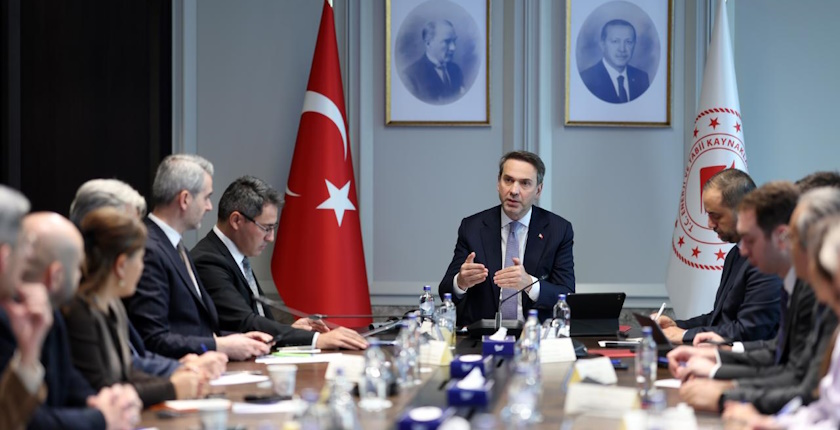
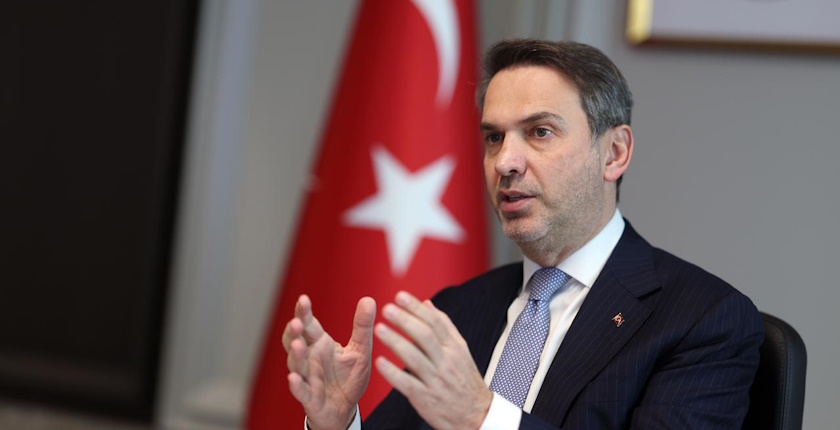
Turkey to launch carbon market, sign deals for large renewables projects in 2026

Turkey will launch a national carbon trade market, sign intergovernmental agreements on large-scale renewable energy projects and connect 2,000 MW of energy storage to the grid in 2026. These moves will be accompanied by the historic start of electricity production at the country’s first nuclear power plant Akkuyu, and a doubling of domestic natural gas production from the Sakarya field.

These developments represent the core of the 2026 vision for energy and mining in Turkey, revealed by Minister of Energy and Natural Resources Alparslan Bayraktar.

Large-scale projects will be launched next year through intergovernmental agreements, he stressed.

The deals include solar and other renewable energy technologies and storage, Bayraktar explained.

According to the minister, Turkey remains committed to its emission reduction targets. The government plans to launch a carbon trade center and market in 2026 within the Energy Exchange Istanbul (EXIST or EPİAŞ), he said.

Of note, Turkey’s imports of a group of goods and electricity to the European Union will be subject to the CBAM carbon border tax from January 1, 2026.

Energy storage facilities totaling 2,000 MW will be commissioned in 2026

Bayraktar recalled that the country issued permits for the installation of an overall 33,500 MW of energy storage. A very small portion has been implemented so far, but 2,000 MW will be commissioned in 2026, he underlined.

The minister said Turkey is considering the introduction of Storage Resources Zones or Depolama Alanları (DEKA) in 2026.

It would be similar to Renewable Energy Zones mechanism – REZ or YEKA – for support for solar and wind projects.

Bayraktar mentioned that a 5,000 MW solar power arrangement with Saudi Arabia-based ACWA is being discussed. Of note, it is equivalent to between 30% and 40% of Turkey’s current photovoltaic capacity.

Locations for the 2,000 MW solar project are in Sivas and Taşeli

He expressed belief that the agreement for the first phase, which envisages 2,000 MW, would be finalized in the first quarter of 2026. The plan is for 1,000 MW in Sivas and 1,000 MW in Taşeli.

A solar-plus-storage project with another company from a different country in the Persian Gulf is also under consideration, Bayraktar revealed. The investment is estimated at EUR 1.5 billion to EUR 2 billion.

A floating solar power plant of about 3,000 MW will be built as soon as possible, according to Bayraktar

In Bayraktar’s view, there is great potential in floating solar power plants. The country intends to implement a floating solar power plant of about 3,000 MW as soon as possible, the minister underlined.

The partners in this endeavour could be private companies or Turkish government-controlled Electricity Generation Corp. (EÜAŞ), the minister said. He claimed significant plans have been developed for offshore wind projects for 2026.

“We are considering a model similar to YEKA for offshore wind,” he added.

Russia to provide USD 9 billion for Akkuyu

turkey 2026 vision energy Alparslan Bayraktar brifing
Photo: Ministry of Energy and Natural Resources

The Akkuyu project is entering its final stages, according to the minister.

The country secured a USD 9 billion financing package from Russia for the investment, of which USD 4 billion to USD 5 billion is intended to be drawn in 2026.

Simultaneously, the ministry is in talks with South Korea, the US, China, and Russia for nuclear projects in Sinop and Thrace.

The Sakarya gas field is expected to double its current output in 2026, to 7.5 billion cubic meters, Bayraktar underscored.

This surge will prevent approximately USD 3.2 billion in energy imports, he explained.

by in News

Turkey to launch carbon market, sign deals for large renewables projects in 2026

Turkey will launch a national carbon trade market, sign intergovernmental agreements on large-scale renewable energy projects and connect 2,000 MW of energy storage to the grid in 2026. These moves will be accompanied by the historic start of electricity production at the country’s first nuclear power plant Akkuyu, and a doubling of domestic natural gas production from the Sakarya field.

These developments represent the core of the 2026 vision for energy and mining in Turkey, revealed by Minister of Energy and Natural Resources Alparslan Bayraktar.

Large-scale projects will be launched next year through intergovernmental agreements, he stressed.

The deals include solar and other renewable energy technologies and storage, Bayraktar explained.

According to the minister, Turkey remains committed to its emission reduction targets. The government plans to launch a carbon trade center and market in 2026 within the Energy Exchange Istanbul (EXIST or EPİAŞ), he said.

Of note, Turkey’s imports of a group of goods and electricity to the European Union will be subject to the CBAM carbon border tax from January 1, 2026.

Energy storage facilities totaling 2,000 MW will be commissioned in 2026

Bayraktar recalled that the country issued permits for the installation of an overall 33,500 MW of energy storage. A very small portion has been implemented so far, but 2,000 MW will be commissioned in 2026, he underlined.

The minister said Turkey is considering the introduction of Storage Resources Zones or Depolama Alanları (DEKA) in 2026.

It would be similar to Renewable Energy Zones mechanism – REZ or YEKA – for support for solar and wind projects.

Bayraktar mentioned that a 5,000 MW solar power arrangement with Saudi Arabia-based ACWA is being discussed. Of note, it is equivalent to between 30% and 40% of Turkey’s current photovoltaic capacity.

Locations for the 2,000 MW solar project are in Sivas and Taşeli

He expressed belief that the agreement for the first phase, which envisages 2,000 MW, would be finalized in the first quarter of 2026. The plan is for 1,000 MW in Sivas and 1,000 MW in Taşeli.

A solar-plus-storage project with another company from a different country in the Persian Gulf is also under consideration, Bayraktar revealed. The investment is estimated at EUR 1.5 billion to EUR 2 billion.

A floating solar power plant of about 3,000 MW will be built as soon as possible, according to Bayraktar

In Bayraktar’s view, there is great potential in floating solar power plants. The country intends to implement a floating solar power plant of about 3,000 MW as soon as possible, the minister underlined.

The partners in this endeavour could be private companies or Turkish government-controlled Electricity Generation Corp. (EÜAŞ), the minister said. He claimed significant plans have been developed for offshore wind projects for 2026.

“We are considering a model similar to YEKA for offshore wind,” he added.

Russia to provide USD 9 billion for Akkuyu

turkey 2026 vision energy Alparslan Bayraktar brifing
Photo: Ministry of Energy and Natural Resources

The Akkuyu project is entering its final stages, according to the minister.

The country secured a USD 9 billion financing package from Russia for the investment, of which USD 4 billion to USD 5 billion is intended to be drawn in 2026.

Simultaneously, the ministry is in talks with South Korea, the US, China, and Russia for nuclear projects in Sinop and Thrace.

The Sakarya gas field is expected to double its current output in 2026, to 7.5 billion cubic meters, Bayraktar underscored.

This surge will prevent approximately USD 3.2 billion in energy imports, he explained.