by in News

Albania’s Hydropower Surge Strengthens Its Position in Regional and EU Energy Markets

The first three months of 2026 marked a substantial increase in electricity generation in Albania, driven primarily by a sharp rise in hydropower output. Production from hydropower plants was 70% higher in January–March 2026 compared to the same period a year earlier.

According to data published in the report of the Energy Community on the Carbon Border Adjustment Mechanism (CBAM), Albania gained a clear advantage over other regional countries in exporting electricity generated from renewable sources.

Specifically, the first quarterly report on CBAM implementation highlights that Albania’s hydropower generation increased significantly, positioning the country as a far more aggressive net exporter of electricity to both the regional market and the European Union.

“Hydropower production in Albania increased by 1.34 TWh (+70%) in the first quarter of 2026 compared to the same period in 2025, rising from 1.93 TWh to 3.27 TWh,” the report states. This growth was concentrated in January and February, with increases of +72% and +84% respectively, reflecting exceptionally favorable hydrological conditions.

This surplus translated directly into higher exports. Albania increased scheduled electricity exports by approximately 4,100 MWh per day to Greece, 3,700 MWh per day to Kosovo, and 2,000 MWh per day to Montenegro.

The report estimates that “these shifts in trade flows represent a net movement of approximately 1.2 TWh of Albanian electricity exported in the first quarter of 2026,” a volume that closely matches the incremental increase in hydropower generation.

The economic impact is further amplified by how CBAM treats Albanian electricity. Unlike Serbia, Bosnia and Herzegovina, or Montenegro, Albania benefits from a zero emissions factor. This means its electricity exports to the European Union are not subject to additional carbon costs.

“Electricity imported into the European Union from Albania was not financially affected by CBAM,” the report notes, adding that this “created a commercial incentive to import Albanian electricity into EU markets.”

Such dynamics position Albania as a preferential energy corridor դեպի the European market, particularly through Greece and onward to Italy. The report observes that exports from Albania to Greece intensified, with Albanian electricity—combined with strong Greek domestic production—subsequently redirected toward Bulgaria and Italy.

The Energy Community further warns that hydropower-dominated systems like Albania’s “appear to be in a structurally more competitive position,” suggesting that CBAM is already creating long-term winners and losers in the region. In contrast, countries with higher coal-based generation face substantial financial penalties.

For example, Montenegro pays approximately €73.8 per MWh of electricity exported to the European Union, while Albania pays zero. “The contrast between Albania and Montenegro illustrates how country-level emission factors shape cross-border electricity trade,” the report concludes, placing Albania firmly on the side of Europe’s evolving energy transition.

by in News

The Border Wall of Carbon: How CBAM Rewrote Balkan Power Trade in Q1 2026

Q1 2026 marked an abrupt break in Southeast Europe’s electricity market structure. Exceptional hydro output pushed WB6 prices down, but CBAM prevented the old price convergence mechanism from doing its job. The result was a wider-than-usual spread of more than €30/MWh between WB6 and EU benchmarks, a 25% drop in scheduled cross-border commercial exchanges, and a visible re-routing of trade toward CBAM-free corridors. The data suggest that CBAM did not merely tax imports; it changed the geography of trade.

Origin of imported electricity Default value (tCO2eq/MWh) CBAM cost per imported MWh (€)
Albania 0 0
Bosnia and Herzegovina 1.148 86.513
Kosovo* 0.984 74.154
Moldova 0.530 39.941
Montenegro 0.979 73.777
North Macedonia 0.887 66.844
Serbia 1.041 78.450
Ukraine 0.907 68.352

Table 1. CBAM default factors and implied import costs in Q1 2026

The Hydro Paradox

The irony of Q1 2026 is that the region’s own luck partly disguised CBAM’s first-quarter damage. Hydro generation surged across the WB6 and neighbouring markets, rising regionally by 33% year on year, with Albania alone up 70%. That flood of carbon-free output softened domestic prices and kept some markets liquid, which made the underlying CBAM shock look less severe than it would have in a normal hydrological quarter. The report itself warns that these results are preliminary and heavily shaped by exceptional water conditions, not just the new carbon border regime.

Figure 1. Hydro vs coal generation in Q1 2026 versus Q1 2025

Figure 1. Hydro vs coal generation in Q1 2026 versus Q1 2025

But the same hydro boom also exposed a second vulnerability: it showed how quickly the region can swing from shortage to surplus, which matters for solar and wind investment signals. The Energy Community Secretariat notes that growing solar capacity may generate renewed surplus conditions in spring and summer, even as hydro declines. That means renewable developers are now financing into a market where merchant upside can be sharply altered by a carbon border charge on exports, especially in systems that are not as clean as Albania.

Technical Deep-Dive: Trade Diverges from Physics

The most unsettling finding in the report is the widening gap between commercial schedules and physical reality. Commercially, WB6-EU trade contracted and transit-based trading weakened. Physically, however, electricity still moved according to network physics, not trader preferences. The report gives concrete examples: Albanian export schedules to Greece rose strongly, yet physical flows did not align proportionally; power continued to move through Albania toward Montenegro and Bosnia and Herzegovina and onward to EU border countries.

That divergence is not just a bookkeeping issue. It creates operational risk. The report links the pattern to unscheduled and loop flows, less efficient transmission capacity use, and a growing burden on balancing and security management. It also explicitly recalls the June 21, 2024 blackout, when near-simultaneous outages on 400 kV lines in Montenegro and Albania exposed the fragility of the South-North corridor and the costs of weak cross-border coordination. In the current setting, the same corridor could again become heavily loaded, but with less predictable commercial schedules to guide system operation.

Market Fragmentation: The Rise of CBAM-Free Routing

The report reads like a map of avoidance behaviour. Intra-WB6 exchanges intensified, while trade moved toward routes that do not trigger CBAM exposure. Albania’s zero default emission factor made it a natural winner, with export routes to Greece gaining importance. Greece then became a bridge to Bulgaria and Italy, effectively allowing some power to bypass the more exposed WB6 transit geography.

Figure 2. Average day-ahead prices across the region

Figure 2. Average day-ahead prices across the region

This is why the Secretariat’s “CBAM-free route” language matters. It suggests that the market is not simply shrinking; it is reorganising itself around carbon liability. Transit-based trading through the WB6 is becoming less attractive, and that is a structural problem for regional integration because the WB6 has historically functioned not only as a set of markets, but also as a corridor between larger EU systems.

Financial Outlook

For project finance, the message is straightforward: ETS-linked carbon costs are now a core merchant-risk variable in the Western Balkans. The report states that the relevant Q1 2026 CBAM certificate price was based on an EU ETS quarterly weighted average of €75.36/tCO2eq, and that this price fell sharply after an initial increase as political debate over ETS reform intensified. That level of volatility matters because it directly changes export economics quarter by quarter.

Figure 3. Scheduled commercial exchanges between the WB6 and the EU

For EBRD-style underwriting, this means more conservative assumptions are unavoidable. Revenue cases for new renewable projects in the WB6 should be stress-tested not only against power-price volatility and hydrology, but also against CBAM-induced basis risk on export routes. Projects that depend on merchant access to EU markets will need stronger carbon-risk sensitivity, more robust route diversification, and a clearer view of whether they are selling into a CBAM-exposed corridor or a CBAM-free one. The report’s core warning is that low-carbon systems may send stronger investment signals, while more carbon-intensive systems face a worsening structural handicap.

Strategic Recommendations

The Secretariat’s own policy direction is the right one: better clarity in CBAM electricity rules, stronger coordination between market participants and TSOs, and continued alignment of carbon pricing and market design across the region. Building on that, the practical priorities are clear. WB6 TSOs need tighter coordinated capacity calculation, stronger congestion management, and more transparent handling of transit flows. Policymakers should also close the information gap around proof of transit and improve rules that currently reward route avoidance over efficient system use.

The deeper objective is to stop the region from sliding into transit-based trading collapse. That means preserving market integration even as carbon policy changes the economics of exchange. If WB6 markets are left to fragment into isolated hydro winners and carbon-heavy losers, the region will not simply lose trade; it will lose the very interoperability that made its system valuable in the first place.

by in News

EU’s amendments to CBAM: possibility of relief, but January 1 brought market uncertainty

Long-awaited implementing acts and amendments to the CBAM Regulation brought only a minor relief for the Western Balkans, investors in renewables, and electricity traders. Balkan Green Energy News has analyzed the documents that the European Commission published in December 2025, and the impact of the proposed measures on Energy Community contracting parties – Albania, BiH, Kosovo*, Montenegro, North Macedonia and Serbia.

From January 1, European firms importing aluminum, cement, electricity, iron and steel, hydrogen and fertilizers are obliged to pay a carbon price within the European Union’s Carbon Border Adjustment Mechanism (CBAM).

Last year, the CBAM Regulation was criticized by experts from the Western Balkans (Ljubo Maćić, Zoran Gjorgjievski), European think-tanks (Bruegel), and organizations (Energy Traders Europe). Even the European Network of Transmission System Operators for Electricity (ENTSO-E) requested that the transitional period be prolonged.

They said charging the tax, which started on January 1 as scheduled, would harm countries outside the EU, but also EU member states, market coupling of Western Balkan countries, and electricity trade.

Uncertainty surrounding electricity transit and trade remains high

The analysis showed that the European Commission is proposing changes to the CBAM regulation that would introduce a more favorable method for calculating the national emissions factor and actual emissions values. This benefits non-EU countries that export electricity to the EU, owners of operational renewable energy power plants in these countries, and future green energy investments.

The proposal foresees amendments to the procedure for market coupling, but it is unclear whether these will bring any concrete changes. The commission didn’t propose changes regarding transit, and consequently, electricity trading.

Provided that the proposal is accepted as proposed, it will bring the said positive changes in calculating the national emissions factor and actual emissions values only by the end of the year, meaning that uncertainty in the market will persist until then.

Uncertainty surrounding electricity transit and trade remains high. The impact on the Western Balkans, as well as on the EU member states Bulgaria, Croatia, Greece, Hungary, Romania, and Slovenia, will become clear in the coming weeks and months.

There are two legislative streams

There are two relevant streams currently ongoing in EU legislation for CBAM for electricity. The first are the so-called implementing acts, which are similar to secondary legislation in national law. They further define the technical details of the CBAM regulation.

The other part is the commission’s proposal to amend the CBAM Regulation itself. It will become part of the law when the other co-legislators in the EU – the Council of the EU, which includes the member states, and the European Parliament – together agree on it.

Nobody can say exactly when that process will be finished, but most likely not before the autumn.

National emissions factors, actual emission values: improvement

eu western balkans cbam electricity market coupling amendments
Photo: iStock

There is a proposal to change the way the national emission factors are calculated in the main CBAM Regulation. Currently it only includes the part of the electricity mix based on fossil fuels, regardless of their share in the country’s power generation mix.

For example, for Serbia, a contracting party of the Energy Community, this factor is 1.04. If the national power mix is taken into account, it would go down to 0.7, making the cost of CBAM about 40% lower.

The commission proposed to replace the electricity mix based on fossil fuels, in its accounting system, with one encompassing all energy sources.

The commission also intends to change the requirements for switching to actual emission values

The commission also intends to change the requirements for switching to actual emission values. These are relevant for the producers of renewable energy in non-EU countries. Current conditions are very strict and, to some stakeholders, not achievable.

For example, if a wind farm in the Western Balkans, owned by a domestic or foreign investor, cannot meet these conditions the CBAM payments for the electricity from the facility exported to the neighboring Croatia would be calculated based on the national emissions factor.

The commission suggested that an importer shouldn’t need to have a power purchase agreement (PPA) with a producer directly, which is one of the conditions, but that it could be done through intermediaries. It also proposed the removal of the requirements related to congestion.

These proposals could remove negative impacts on renewable electricity exports and development in non-EU countries, including contracting parties.

Transit: nothing new

The issue of transit hasn’t been addressed in the acts and amendments.

Under the CBAM Regulation, it is unclear how electricity transit costs would be calculated. For example, from Bulgaria to Hungary via Serbia, and who would be required to cover them.

The commission clarified several times that transit isn’t subject to CBAM. However, the physical, practical implementation is the problem.

For example, a trader buys electricity from Greece, transits it through North Macedonia, and puts it on the Serbian SEEPEX power exchange. Somebody else buys it and sells it in Hungary.

It would be very difficult or impossible to say that electricity from Greece was sold into Hungary.

This is why stakeholders take a conservative approach and say that they cannot prove. So, most likely they wouldn’t opt for these countries – non-EU countries, like contracting parties – for transit.

Retroactivity: possibility for improvement

eu western balkans electricity market cbam amendments
Photo: iStock

One of the provisions in the commission’s proposal to amend the CBAM Regulation is that the changes in the electricity sector could apply retroactively, starting from January 2026.

Just as a reminder, EU firms are obliged since the start of this month to pay a CBAM fee for importing designated goods and raw materials and electricity via purchasing so-called CBAM certificates.

Obviously, an importer will try to pass on this cost partly or fully to its counterparts in the third countries. But, importantly, EU firms won’t be able to purchase CBAM certificates yet this year, but only from February 1, 2027.

If the amendment on national emissions factor is adopted, for example in October, this could mean lower CBAM costs for EU importers of electricity from non-EU countries.

Without details on the path forward, market participants lack certainty about the level of CBAM costs

The commission intended to remedy some of the negative impacts on the electricity markets with amendments with retroactive effect. But without details on the path forward, market participants lack certainty about the level of CBAM costs to be paid for 2026.

Based on the current rules, CBAM costs for countries which have lignite in their generation mix could be EUR 70 per MWh to EUR 80 per MWh if the EU ETS price is around 80 EUR per ton of CO2. In some cases, the fee is almost 100% above the electricity price itself.

It is clear that it would rarely make sense to import electricity to the EU from third countries. The price difference, let’s say between Hungary and Serbia, would need to be more than EUR 70 per MWh to EUR 80 per MWh to make the business case.

Market coupling: nothing new or possibility for improvement

eu cbam western balkans electricity market amendments
Photo: Sergio Cerrato – Italia from Pixabay

There are several references to market coupling in the proposal. Energy Community contracting parties are in different phases of market coupling with EU countries.

The commission has proposed signing memoranda of understanding with third countries. It would set out the timeline and conditions for an exemption from CBAM on electricity.

This could be done after the commission approves the so-called verification process of a contracting party’s transposition of the Electricity Integration Package (EIP). It would be a green light for the next stage, which entails the technical tests, leading up to the completion of market coupling.

The current wording in the proposal leaves room for various interpretations

The current wording in the proposal leaves room for various interpretations, one being that the MoU may open the door for an exemption already when the “point of no return” is reached. It is when the contracting party has done all its homework and only the technical tests remain.

However, the commission didn’t propose the other conditions for CBAM exemption to be changed, such as the development of a roadmap on the introduction of a CO2 price that would be equivalent to the level in the EU’s Emissions Trading System (EU ETS).

The question is what the MoU would exactly be about, and if “equivalent” could be defined more precisely.

Why is this important?

No contracting party has yet met the conditions to receive a CBAM exemption in the electricity sector. A critical requirement is to agree to charge an emissions price from 2030 equivalent to the EU ETS.

The CBAM regulation says that the tax cannot technically be implemented on a market which is coupled with the EU internal energy market

If equivalent means the same price, here is the outcome for Serbia, for example: The current CO2 price in the EU is EUR 80 per ton of CO2 equivalent, but is expected to rise to above EUR 100 by 2030, or even reach EUR 150. It would raise prices to consumers by about EUR 75 per MWh and EUR 110, respectively.

The CBAM regulation says that the tax cannot technically be implemented on a market which is coupled with the EU internal energy market. This is why there is a possibility for an exemption for electricity for imports from those countries which are coupled until a technical solution is found how to implement CBAM.

Starting from January 1, any country that is ready to be coupled would in parallel also need to qualify for and receive an exemption from CBAM for electricity. If you fulfil the conditions, you get coupled and get an exemption and CBAM will disappear.

What next?

It could be said that CBAM implementation as of January 1 will certainly affect market integration in the sense that people, businesses would react to market uncertainty.

Trade will be impacted; imports from contracting parties to the EU will be expected to disappear. Of course, contracting parties will continue to import electricity from the EU member states.

The weeks and months ahead will show to what extent the prices and liquidity would be affected in the contracting parties and neighboring EU member states Bulgaria, Croatia, Greece, Hungary, Romania, Slovenia.

For example, Greece would have only the Bulgaria-Romania route to export electricity, and it is already congested. Greece could face curtailments in renewable electricity.

We will also see what the effect on the renewables deployment in contracting parties will be. Are investors going to postpone investments until they see if the changes proposed by the commission are adopted, or are they going to leave for other markets?


Pozsgai: Amendments point in the right direction

Péter Pozsgai, Lead of the EU Carbon Border Adjustment Mechanism Readiness Task Force in the Energy Community Secretariat:

“The European Commission’s proposed amendments point in the right direction, reflecting a consideration of the progress of contracting parties in electricity market coupling, and better outlining the operational details of an exemption via an MoU. The refinement of the rules on national emission factors and the conditions for using actual emission values also demonstrate the intention to minimize the unintended impacts of CBAM on renewable development in contracting parties”.


by in News

EU’s amendments to CBAM: possibility of relief, but January 1 brought market uncertainty

Long-awaited implementing acts and amendments to the CBAM Regulation brought only a minor relief for the Western Balkans, investors in renewables, and electricity traders. The documents has been analyzed that the European Commission published in December 2025, and the impact of the proposed measures on Energy Community contracting parties – Albania, BiH, Kosovo*, Montenegro, North Macedonia and Serbia.

From January 1, European firms importing aluminum, cement, electricity, iron and steel, hydrogen and fertilizers are obliged to pay a carbon price within the European Union’s Carbon Border Adjustment Mechanism (CBAM).

Last year, the CBAM Regulation was criticized by experts from the Western Balkans (Ljubo Maćić, Zoran Gjorgjievski), European think-tanks (Bruegel), and organizations (Energy Traders Europe). Even the European Network of Transmission System Operators for Electricity (ENTSO-E) requested that the transitional period be prolonged.

They said charging the tax, which started on January 1 as scheduled, would harm countries outside the EU, but also EU member states, market coupling of Western Balkan countries, and electricity trade.

Uncertainty surrounding electricity transit and trade remains high

The analysis showed that the European Commission is proposing changes to the CBAM regulation that would introduce a more favorable method for calculating the national emissions factor and actual emissions values. This benefits non-EU countries that export electricity to the EU, owners of operational renewable energy power plants in these countries, and future green energy investments.

The proposal foresees amendments to the procedure for market coupling, but it is unclear whether these will bring any concrete changes. The commission didn’t propose changes regarding transit, and consequently, electricity trading.

Provided that the proposal is accepted as proposed, it will bring the said positive changes in calculating the national emissions factor and actual emissions values only by the end of the year, meaning that uncertainty in the market will persist until then.

Uncertainty surrounding electricity transit and trade remains high. The impact on the Western Balkans, as well as on the EU member states Bulgaria, Croatia, Greece, Hungary, Romania, and Slovenia, will become clear in the coming weeks and months.

There are two legislative streams

There are two relevant streams currently ongoing in EU legislation for CBAM for electricity. The first are the so-called implementing acts, which are similar to secondary legislation in national law. They further define the technical details of the CBAM regulation.

The other part is the commission’s proposal to amend the CBAM Regulation itself. It will become part of the law when the other co-legislators in the EU – the Council of the EU, which includes the member states, and the European Parliament – together agree on it.

Nobody can say exactly when that process will be finished, but most likely not before the autumn.

National emissions factors, actual emission values: improvement

eu western balkans cbam electricity market coupling amendments
Photo: iStock

There is a proposal to change the way the national emission factors are calculated in the main CBAM Regulation. Currently it only includes the part of the electricity mix based on fossil fuels, regardless of their share in the country’s power generation mix.

For example, for Serbia, a contracting party of the Energy Community, this factor is 1.04. If the national power mix is taken into account, it would go down to 0.7, making the cost of CBAM about 40% lower.

The commission proposed to replace the electricity mix based on fossil fuels, in its accounting system, with one encompassing all energy sources.

The commission also intends to change the requirements for switching to actual emission values

The commission also intends to change the requirements for switching to actual emission values. These are relevant for the producers of renewable energy in non-EU countries. Current conditions are very strict and, to some stakeholders, not achievable.

For example, if a wind farm in the Western Balkans, owned by a domestic or foreign investor, cannot meet these conditions the CBAM payments for the electricity from the facility exported to the neighboring Croatia would be calculated based on the national emissions factor.

The commission suggested that an importer shouldn’t need to have a power purchase agreement (PPA) with a producer directly, which is one of the conditions, but that it could be done through intermediaries. It also proposed the removal of the requirements related to congestion.

These proposals could remove negative impacts on renewable electricity exports and development in non-EU countries, including contracting parties.

Transit: nothing new

The issue of transit hasn’t been addressed in the acts and amendments.

Under the CBAM Regulation, it is unclear how electricity transit costs would be calculated. For example, from Bulgaria to Hungary via Serbia, and who would be required to cover them.

The commission clarified several times that transit isn’t subject to CBAM. However, the physical, practical implementation is the problem.

For example, a trader buys electricity from Greece, transits it through North Macedonia, and puts it on the Serbian SEEPEX power exchange. Somebody else buys it and sells it in Hungary.

It would be very difficult or impossible to say that electricity from Greece was sold into Hungary.

This is why stakeholders take a conservative approach and say that they cannot prove. So, most likely they wouldn’t opt for these countries – non-EU countries, like contracting parties – for transit.

Retroactivity: possibility for improvement

eu western balkans electricity market cbam amendments
Photo: iStock

One of the provisions in the commission’s proposal to amend the CBAM Regulation is that the changes in the electricity sector could apply retroactively, starting from January 2026.

Just as a reminder, EU firms are obliged since the start of this month to pay a CBAM fee for importing designated goods and raw materials and electricity via purchasing so-called CBAM certificates.

Obviously, an importer will try to pass on this cost partly or fully to its counterparts in the third countries. But, importantly, EU firms won’t be able to purchase CBAM certificates yet this year, but only from February 1, 2027.

If the amendment on national emissions factor is adopted, for example in October, this could mean lower CBAM costs for EU importers of electricity from non-EU countries.

Without details on the path forward, market participants lack certainty about the level of CBAM costs

The commission intended to remedy some of the negative impacts on the electricity markets with amendments with retroactive effect. But without details on the path forward, market participants lack certainty about the level of CBAM costs to be paid for 2026.

Based on the current rules, CBAM costs for countries which have lignite in their generation mix could be EUR 70 per MWh to EUR 80 per MWh if the EU ETS price is around 80 EUR per ton of CO2. In some cases, the fee is almost 100% above the electricity price itself.

It is clear that it would rarely make sense to import electricity to the EU from third countries. The price difference, let’s say between Hungary and Serbia, would need to be more than EUR 70 per MWh to EUR 80 per MWh to make the business case.

Market coupling: nothing new or possibility for improvement

eu cbam western balkans electricity market amendments
Photo: Sergio Cerrato – Italia from Pixabay

There are several references to market coupling in the proposal. Energy Community contracting parties are in different phases of market coupling with EU countries.

The commission has proposed signing memoranda of understanding with third countries. It would set out the timeline and conditions for an exemption from CBAM on electricity.

This could be done after the commission approves the so-called verification process of a contracting party’s transposition of the Electricity Integration Package (EIP). It would be a green light for the next stage, which entails the technical tests, leading up to the completion of market coupling.

The current wording in the proposal leaves room for various interpretations

The current wording in the proposal leaves room for various interpretations, one being that the MoU may open the door for an exemption already when the “point of no return” is reached. It is when the contracting party has done all its homework and only the technical tests remain.

However, the commission didn’t propose the other conditions for CBAM exemption to be changed, such as the development of a roadmap on the introduction of a CO2 price that would be equivalent to the level in the EU’s Emissions Trading System (EU ETS).

The question is what the MoU would exactly be about, and if “equivalent” could be defined more precisely.

Why is this important?

No contracting party has yet met the conditions to receive a CBAM exemption in the electricity sector. A critical requirement is to agree to charge an emissions price from 2030 equivalent to the EU ETS.

The CBAM regulation says that the tax cannot technically be implemented on a market which is coupled with the EU internal energy market

If equivalent means the same price, here is the outcome for Serbia, for example: The current CO2 price in the EU is EUR 80 per ton of CO2 equivalent, but is expected to rise to above EUR 100 by 2030, or even reach EUR 150. It would raise prices to consumers by about EUR 75 per MWh and EUR 110, respectively.

The CBAM regulation says that the tax cannot technically be implemented on a market which is coupled with the EU internal energy market. This is why there is a possibility for an exemption for electricity for imports from those countries which are coupled until a technical solution is found how to implement CBAM.

Starting from January 1, any country that is ready to be coupled would in parallel also need to qualify for and receive an exemption from CBAM for electricity. If you fulfil the conditions, you get coupled and get an exemption and CBAM will disappear.

What next?

It could be said that CBAM implementation as of January 1 will certainly affect market integration in the sense that people, businesses would react to market uncertainty.

Trade will be impacted; imports from contracting parties to the EU will be expected to disappear. Of course, contracting parties will continue to import electricity from the EU member states.

The weeks and months ahead will show to what extent the prices and liquidity would be affected in the contracting parties and neighboring EU member states Bulgaria, Croatia, Greece, Hungary, Romania, Slovenia.

For example, Greece would have only the Bulgaria-Romania route to export electricity, and it is already congested. Greece could face curtailments in renewable electricity.

We will also see what the effect on the renewables deployment in contracting parties will be. Are investors going to postpone investments until they see if the changes proposed by the commission are adopted, or are they going to leave for other markets?


Pozsgai: Amendments point in the right direction

Péter Pozsgai, Lead of the EU Carbon Border Adjustment Mechanism Readiness Task Force in the Energy Community Secretariat:

“The European Commission’s proposed amendments point in the right direction, reflecting a consideration of the progress of contracting parties in electricity market coupling, and better outlining the operational details of an exemption via an MoU. The refinement of the rules on national emission factors and the conditions for using actual emission values also demonstrate the intention to minimize the unintended impacts of CBAM on renewable development in contracting parties”.


by in News

CBAM tests market integration and green investments

Author: Zoran Gjorgjievski, CEO of North Macedonia’s National Electricity Market Operator MEMO

This text reflects a personal viewpoint and represents an attempt to present the Macedonian position in an argument-based manner — with respect for European objectives, but also with a clear message that the implementation of CBAM must be just, proportionate, and based on clearly defined implementation phases.

The Carbon Border Adjustment Mechanism (CBAM), which is scheduled to enter into force on 1 January 2026, represents one of the most ambitious instruments within the European climate package. Its objective – to create a level playing field between industries within the European Union and those outside the Union – is, at a theoretical level, justified and logical. However, the application of CBAM to electricity in regions such as ours, where market and regulatory conditions are still transforming, raises serious risks and challenges that deserve careful assessment. This is particularly relevant given the increased volume of investments in renewable energy sources (RES) recorded in recent years, accompanied by ambitious plans for their further expansion through active institutional support.

For Macedonia, which has invested significant efforts in the development of an organized electricity market – currently operating at the day-ahead level and, as of next year, also at the intraday level – as well as in its gradual integration with the single European market, the application of CBAM may create structural imbalances.

Changes in the structure of electricity generation and price formation on European markets in recent years indicate high volatility, which is even more pronounced in markets of a similar size to ours, primarily due to limited liquidity and the specific characteristics of the generation mix. The introduction of an additional carbon component, based on indirect verification methodologies, may introduce further unpredictability and reduce the competitiveness of domestic RES producers.

At the same time, subjecting exports to CBAM could create pressure during hours of low consumption and increased RES production – periods in which the majority of electricity exports from our country are concentrated. This could lead to a paradoxical situation in which RES producers are forced to curtail or suspend production in order to avoid imbalance costs.

Risks for the organized electricity market

Although initial analyses suggest that an increase in trading volumes on the day-ahead market may be expected in the short term, the inability to place total production through the organized market will encourage market participants to seek alternative channels. This carries the potential to undermine the development of a transparent and competitive market and to reduce trading liquidity.

For a young market like ours, which has recorded significant liquidity growth of over 40% and a record number of active participants in just the past year, this could represent a real slowdown of its development momentum.

The energy crisis of the 2021–2023 period clearly demonstrated that security of supply and price stability cannot be ensured without functional, liquid, and investment-attractive electricity markets. Under such conditions, the application of CBAM to electricity, without taking into account the specific characteristics of organized markets in non-EU countries, may produce the opposite effect: reduced liquidity, increased uncertainty, and delayed investments in renewable energy.

Differing speeds of two interrelated mechanisms – market coupling and CBAM – call into question the integration of electricity markets

This is particularly important given that regional integration into the single European market has been slowed by a number of objective and subjective factors, both in the Energy Community Contracting Parties and within the EU itself, and cannot proceed at the same pace as the implementation of CBAM. These differing speeds of two interrelated mechanisms – market coupling and CBAM – call into question the very rationale of the Energy Community, namely the integration of electricity markets.

It thus becomes evident that introducing CBAM without adequate progress in market integration with the EU creates a structural imbalance, whereby Energy Community countries incur additional costs without fully benefiting from an integrated market. Therefore, accelerating market coupling and aligning the start of CBAM implementation accordingly is a key prerequisite for mitigating the economic and investment impacts of CBAM.

Potential slowdown of renewable energy investments

Although CBAM is theoretically intended to stimulate green investments, in practice, there is a risk that it could have the opposite effect on already implemented projects, primarily due to the seasonal and daily characteristics of RES generation and the limited capacities for electricity storage.

A premature and insufficiently calibrated introduction of CBAM for electricity may create a perception of increased regulatory risk

This situation may place serious pressure on the financing sources of RES projects, exposing them to increased credit risk, especially in cases where expected returns on investment (ROI) are brought into question due to CBAM-related effects. This analysis does not even address the distorted investment expectations created during the energy crisis, when extreme electricity price growth further skewed investment projections.

Furthermore, Macedonia’s energy transition largely depends on private capital and strategic investors, who expect a stable, predictable, and competitive market environment. A premature and insufficiently calibrated introduction of CBAM for electricity exports by the EU may create a perception of increased regulatory risk, which could result in the postponement or redirection of investments to other markets.

Need for a transitional period and regional coordination

Despite the challenges outlined above, it is important to emphasize that Macedonia supports the objectives of European decarbonization and is already making substantial efforts to align with EU policies. What is essential is the provision of an appropriate transitional period, aligned with the pace of integration into the single European market.

Such a transitional period would allow the domestic industry and the energy sector to adapt gradually, without compromising already established market instruments and ongoing investments.

The regional context is equally important. The electricity systems of the Western Balkans are highly interconnected, and the risk of destabilization in one country can easily spill over into others. Therefore, it is necessary for the European Commission to consider a model that rewards reforms, supports the gradual phase-out of coal, and enables the integration of electricity markets without creating new barriers.

Where is the market headed?

Although CBAM has a clear climate and economic rationale, the question remains whether its application at this point in time is aligned with the realities in the countries of the Energy Community.

Macedonia demonstrates a clear commitment: market liquidity is increasing, renewable energy sources are developing dynamically, and concrete steps are being taken toward market coupling with the EU. Excessive rigidity in the application of CBAM could undermine this positive trajectory.

by in News

EU simplifying CBAM exemption for electricity, improving emissions calculation

The European Union is further simplifying the Carbon Border Adjustment Mechanism (CBAM), but with stricter oversight and an extension to 180 steel- and aluminium-intensive downstream products. From January 1, importers of designated goods and commodities will be paying the emissions tax.

Among the novelties, countries in the Energy Community that transposed the relevant EU regulations are getting an opportunity for exemptions for CBAM for electricity earlier than initially planned. The new legislation is tackling the hurdles for electricity transit as well. The calculation of emissions on national levels in the same sector is becoming more favorable for the payers of the cross-border CO2 tax. There is even a possibility, in theory for now, to declare the actual emissions level, which would suit renewable energy producers.

In response to feedback from industrial producers and other stakeholders, the European Commission proposed measures to prevent circumvention of CBAM and strengthen its efficacy. The next step is to expand it to 180 manufactured products with high steel or aluminum content, 79% on average. The list mostly consists of machinery and hardware, and 6% of the items are household appliances.

From January 1, importers will be paying a carbon price within the Carbon Border Adjustment Mechanism, which is tied to the Emissions Trading System (EU ETS). It concerns aluminum, cement, electricity, iron and steel, hydrogen and fertilizers, and the expenses will spill over to their suppliers in third countries such as the Western Balkans and Turkey.

The charge for downstream products is planned to be rolled out in January 2028.

Striving for level playing field

The system gradually levels the field, by the beginning 2034, with producers of the same goods and commodities in the EU. The measures are introduced in the form of delegated and implementing acts. They enter into force if other institutions responsible for them, like the European Parliament, don’t block them.

Hoekstra: Our system was too broad, too clunky and had too many loopholes.

“CBAM makes sure there is a level playing field – that we’re not asking anything more, or asking anything less for those goods that come into the EU. And in doing so, we’re rewarding investments in low carbon… We’re not going to ask anything more from others, than we’re asking from ourselves. During the CBAM transition period, we learned important lessons. Our system was too broad, too clunky and had too many loopholes,” said European Commissioner for Climate, Net Zero and Clean Growth Wopke Hoekstra.

Thoroughly against evasion

The tax level is envisaged to be proportional to an established quantity of greenhouse gases released in production. However, if the authorities notice attempts to evade the levy, they can make the process of providing evidence stricter and, in the meantime, switch to a charge under the emissions factor of the particular country of origin.

“If I had to summarize these points in a few words, I would say: a simpler CBAM, more robust in its application, and fairer in its scope,” said the European Commission’s Executive Vice-President for Prosperity and Industrial Strategy Stéphane Séjourné.

Shortcut to exemption from CBAM for electricity

One of the measures is intended for easing the administrative burden for countries in the process of electricity market coupling with the EU, namely the Energy Community contracting parties.

There is going to be a possibility to sign an MoU with the European Commission with a detailed schedule

The commission may sign a memorandum of understanding with a third country, once the commission has assessed that the country has fully transposed the electricity market acquis, the proposal reads. The document would lay down details on the timeline for the CBAM exemption, including in relation to technical work still to be carried out between transmission system operators (TSOs), and for implementing a carbon pricing instrument equivalent to the EU ETS as far as electricity generation is concerned.

Hoekstra said technical adjustments to CBAM would be made to facilitate market coupling when the relevant countries are ready.

Import tax for electricity from Energy Community to be 30% lower on average

Stakeholder feedback and the experience with the implementation of CBAM during the transitional period – before the actual charge – demonstrated that the rules for electricity imports are overly rigid, the European commissioners added. In particular, they ascertained that progress in decarbonizing electricity production isn’t sufficiently acknowledged or encouraged.

Unlike with the goods, for electricity there is a default country-specific emissions value. It is based on production from fossil fuels and a five-year average. Coal is mostly dominant in the Western Balkans, except for Albania, which has a completely green mix. In addition, the conditions which must be met to declare actual emissions of electricity have proven to be almost impossible.

The proposed package is introducing solutions for electricity transit and cross-border PPAs

In the new setting, the national value will reflect the carbon intensity of all sources of electricity. The estimated taxes in the Energy Community would be over 30% lower on average.

The procedure is being streamlined for declaring actual emissions. On the other hand, at least in the Western Balkans, there has been almost no progress in that area. The proposed package is also introducing solutions for the hurdles in electricity transit through Energy Community Contracting Parties and cross-border power purchase agreements (PPAs).

Power imports from the Western Balkans account for 1% of the EU’s demand, but their share in Croatia, Bulgaria and Greece is significant, the European Commission explained. Importantly, exports of electricity to the EU represent some 58% of Montenegro’s exports to the EU, compared to 5% for Serbia and Albania.

Funds for maintaining competitiveness of domestic industrial producers in third countries

A fund has been launched to temporarily support EU producers of CBAM goods and mitigate carbon leakage risks. It addresses the competitiveness loss in third-country markets with a weaker climate policy and lower costs. Potential beneficiaries will have to demonstrate decarbonization efforts.

Th European commission is also preparing proposals for limiting scrap aluminum exports and using more scrap metal. Furthermore, it said pre-consumer metals scrap, from manufacturing, would come under CBAM.

by in News

Energy Community: Serbia best in Western Balkans in alignment with EU regulations

Integration with the European Union is advancing in practice, and the decade ahead must sustain the momentum with focus and determination, Energy Community Secretariat Director Artur Lorkowski pointed out in this year’s Annual Implementation Report.

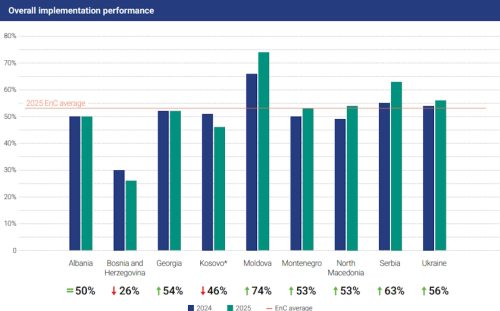
Serbia fares best in the Western Balkans, as it advanced to 63% from 55%. Bosnia and Herzegovina is at the bottom of the entire Energy Community chart, with alignment at just 26%.

Following the 2025 CBAM Readiness Tracker, the Energy Community Secretariat also published its Annual Implementation Report 2025. The international organization marked its 20th anniversary this year.

“The message from Athens was clear: integration with the European Union is advancing in practice, and the decade ahead must sustain this momentum with focus and determination. The 2025 Implementation Report reflects this direction. It shows a region taking decisive steps toward alignment with the EU acquis and strengthening the foundations required for accelerated integration. It also highlights where further effort is needed for gradual integration with the EU energy markets – completing the electricity market coupling, boosting the cross-border trade in renewables, eliminating bottlenecks for gas flows, synchronising energy infrastructure development and gradual alignment of carbon pricing mechanisms,” Energy Community Secretariat Director Artur Lorkowski stressed.

He added that electricity integration remains central. Several contracting parties completed the required transposition of the European Union’s Electricity Integration Package (EIP), while others advanced significantly.

Deadline for requests for 2028 market coupling to expire in seven months

Intensive market coupling efforts throughout 2025 by contracting parties and EU stakeholders have laid the groundwork for a compliant and sustainable integration process, according to the Annual Implementation Report. Of note, market coupling is the requirement for an exemption from the EU’s Carbon Border Adjustment Mechanism (CBAM) for electricity.

Contracting parties aiming to go live in 2028 must submit a formal request by July, the secretariat warned.

Energy Community Serbia best score Western Balkans
Photo: Energy Community Secretariat

Montenegro, North Macedonia advance slightly to match average

Five main indicators measure the integration with the EU energy markets and they are combined into an overall score. The Energy Community as a whole is at 53%.

Moldova has advanced the most in the process by far, climbing eight points from last year to reach 74%. Serbia fares best in the Western Balkans, as it advanced to 63% from 55%. It ranked the highest last year as well. Bosnia and Herzegovina is at the lowest level again. It retreated four points, to just 26%.

Montenegro and North Macedonia advanced slightly, both to 53%, to match the Energy Community average. Kosovo* has weakened to 46% while Albania remained at 50%.

At 61%, North Macedonia is in the lead in the Western Balkans in the markets and integration segment. Serbia reached the highest level in the Energy Community in energy sector decarbonization, 83%.

* This designation is without prejudice to positions onstatus and is in line with UNSCR 1244/99 and the ICJ Opinion on the Kosovo declaration of independence.
by in News

EU considering Montenegro’s proposals for changes to CBAM

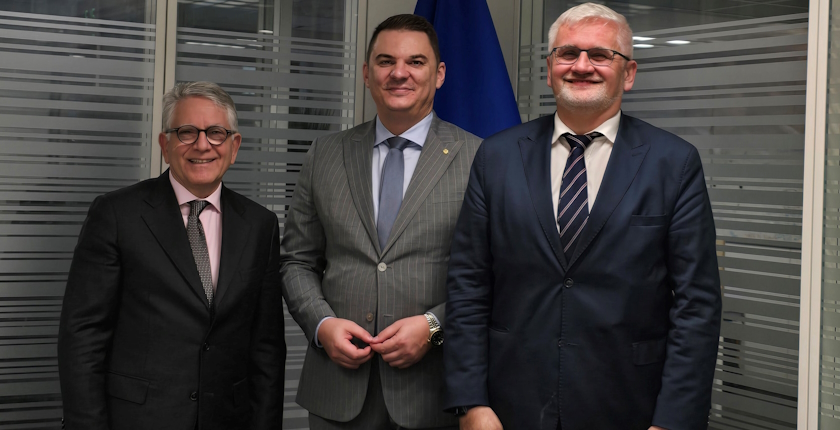
Minister of Energy and Mining of Montenegro Admir Šahmanović met with several senior officials of the European Commission. The messages in Brussels regarding the Carbon Border Adjustment Mechanism (CBAM) were encouraging – changes in the regulation are being considered, including Montenegro’s demands, according to the ministry.

Minister of Energy and Mining of Montenegro Admir Šahmanović led a delegation that visited the European Commission’s headquarters. They met with Director General for Taxation and Customs Union Thomas Gerassimos, Deputy Director-General for Climate Action Jan Dusík and Director for Western Balkans Valentina Superti and Head of the Unit for Bosnia and Herzegovina and Montenegro Barbara Jésus-Gimeno, both from the Directorate-General for Enlargement and Eastern Neighbourhood.

The focus of the discussions was on key processes in the energy sector and especially on the Carbon Border Adjustment Mechanism (CBAM), which is currently Montenegro’s main priority, the ministry said. Šahmanović presented the reforms that the country conducted and stressed that the government is almost entirely aligned with its European requirements in the legal and strategic sense.

CBAM is now Montenegro’s priority

Over the last eight months, Montenegro adopted a new Law on Energy alongside dozens of bylaws, including some tied to the Law on the Use of Energy from Renewable Sources. The government launched the first renewable energy auction, for solar power, and signed a memorandum of understanding on market coupling with Italy, with which talks continue on the construction of the second wire in the undersea cable. Laws on cross-border energy exchange and the construction of cross-border energy assets are drafted, the update adds.

The minister said Montenegro is finalizing its National Energy and Climate Plan.

More flexible models for CBAM to be considered

The European Commission’s representatives acknowledged Montenegro’s progress and asserted that it is in the lead in the region as concerns the degree of compliance in the energy sphere, the ministry said.

“Within the same context it was agreed that discussions would be continued on a technical level in the following weeks to consider the possible, more flexible models of applying CBAM and to enable candidate states to adjust to the mechanism faster and more efficiently. A special focus will be on the elaboration of compromise solutions – especially the ones that enable a gradual, just and predictable implementation, with a minimal burden on the Montenegrin energy sector, which is significantly reliant on electricity exports,” the update reads.

EU’s cross-border tax on greenhouse gases to have weaker impact than in earlier projections

The European Commission conveyed encouraging messages: a smaller impact from CBAM is expected than in earlier projections, and amendments to the regulation are being considered, including demands from Montenegro from the consultations, according to the ministry.

Minister Šahmanović said Montenegro is remaining fully dedicated to its European obligations, but that it expects an acknowledgment of the results that it achieved, so that the implementation of CBAM is harmonized with the realities of the country’s energy system and its strong renewables investment cycle.

by in News

Serbia rolls out taxes on greenhouse gas emissions, imported carbon-intensive products

The Serbian Law on Greenhouse Gas Emissions Tax and Law on Carbon-Intensive Product Imports Tax, both at EUR 4 per ton of CO2 equivalent, are coming into effect on January 1. It is the country’s answer to and equivalent of, respectively, the European Union’s Carbon Border Adjustment Mechanism (CBAM). Notably, several bylaws are still required for the new legislation to be enforced.

The National Assembly of Serbia passed the Law on Greenhouse Gas Emissions Tax and Law on Carbon-Intensive Product Imports Tax today, without accepting any of the opposition’s proposals for changes in the two bills.

On January 1, importers of electricity, cement, iron and steel, aluminum, hydrogen and fertilizers to the European Union will start paying the CBAM carbon dioxide tax. If the country of origin also has a CO2 pricing system and the EU recognizes it, the sum will be deducted from CBAM.

The domestic greenhouse gas emissions tax is Serbia’s answer to the cross-border levy, while with the new import tax it is establishing a corresponding mechanism. Both are EUR 4 per ton of CO2 equivalent, covering also nitrous oxide (N2O) and perfluorocarbons (PFCs).

They are intended to lower pollution, improve energy efficiency, incentivize the deployment of renewable energy and secure a more equal position for the Serbian industry in the domestic and international markets, according to the sidenotes.

Both laws to enter into force on January 1, when EU also starts charging CBAM

The first of the two taxes is for big industrial emitters in the sectors of cement, fertilizers, iron and steel, aluminum and electricity. Both laws are coming into effect on January 1, just like the CBAM charge. However, several bylaws are still required for Serbia to enforce the new legislation.

The CBAM tax is envisaged to rise every year until in 2034 it becomes equal as the prices of greenhouse gas emission certificates in the EU’s Emissions Trading System (EU ETS). Electricity is different, as the amount will from the start correspond to the carbon intensity of the country of origin’s entire production mix.

According to Special Advisor at Serbia’s Economics Institute Ljubo Maćić, charging CBAM will prevent power market coupling between Serbia, other Energy Community contracting parties and the European Union, and discourage investment in renewables.

Of note, the administration in Brussels plans to expand the mechanism to other segments that EU ETS covers.

No electricity in carbon imports tax

The Law on Carbon-Intensive Product Imports Tax doesn’t cover electricity because of technical limitations and a lack of a precise taxing methodology.

The tax on imported carbon-intensive products covers only the entities that import five or more tons of the designated products per year

Importers are taxed based on emissions embedded in the production of the goods from abroad, but they will be able to use tax credits if an emissions levy has already been paid in the country of origin, similar to the EU system. The obligation is only for companies importing five or more tons of designated products per year.

Serbia imports an estimated 3.5 million tons of carbon-intensive products per year.

CO2 tax scope limited to larger producers

The CO2 tax law will be applied to firms obligated to have a license for emissions from their plants. Mostly they are large and medium-sized companies. Fifty companies have obtained such licenses for 92 facilities. They measure emissions data, in line with the Law on Climate Change, and send them to the Ministry of Environmental Protection.

The production of synthetic fertilizers and nitrogen compounds, cement, pig iron, steel and ferroalloys, aluminum and electricity accounts for over 57% of emissions in Serbia and more than 90% within the national monitoring and reporting system.

Tax deductions for large electricity producers that invest in decarbonization

A payer of the greenhouse emissions tax that predominantly generates electricity, accounting for at least 80% of its income in the previous annual tax period, is eligible for a tax credit amounting to 20% of the sum that it invested in decarbonization measures, the law stipulated.

The deduction can’t exceed 80% of the due tax. The government determines the said measures.

The greenhouse gas emissions tax envisages incentives for the taxpayers to finance green projects, the just transition and protection of vulnerable households

In addition, entities that pay the tax are eligible for incentives, from the state budget, for financing climate and energy transformation through investing in renewables and energy efficiency, innovative low-carbon technologies, decarbonization of industrial production, green construction and support to the just transition and protection of vulnerable households.

Proceeds from the tax “can be invested in green transition projects,” the sidenote reads, while there is still no dedicated decarbonization fund.

by in News

Bruegel: Without refining or delaying CBAM for electricity, EU risks market integration, security of supply

Unless the rules are refined for the electricity sector, the Carbon Border Adjustment Mechanism (CBAM) risks undermining the European electricity market integration and security of supply, Brussels-based think tank Bruegel warned.

Bruegel has analyzed the impacts of the application of CBAM, set for January 1, 2026. The tax will apply to steel, cement, iron, aluminium, fertilizers, hydrogen, electricity, and also to the cross-border trade in electricity.

The think tank proposes the application of CBAM in the electricity sector to be reconsidered, or at least for it to be postponed until 2028.

“Including electricity from January 2026 risks undermining European electricity market integration and security of energy supply, while the climate benefits are unclear. A delay could form part of a constructive compromise in an ongoing CBAM revision,” Ben McWilliams, Rouven Stubbe and Georg Zachmann wrote.

Ukraine and the Western Balkans will face implied export penalties of EUR 70-80 per MWh

The trading partners affected by CBAM on electricity are the United Kingdom, Morocco, the Western Balkans – Albania, BiH, Kosovo*, Montenegro, North Macedonia, and Serbia – Ukraine, Moldova and Turkey.

According to the analysis, Ukraine and the Western Balkans will face implied export penalties of EUR 70 per MWh to EUR 80 per MWh. It will significantly reduce trade with the EU, the authors stressed.

Ukraine’s electricity exports to the EU are expected to drop more than 60% from the level in a scenario without CBAM – from 6 TWh to 2.5 TWh, they added.

Additional trade barriers on the EU’s eastern borders would slow electricity market integration.

The export of solar power from Greece to other EU countries could also be affected by CBAM

“Falling average electricity prices, lower market values for renewables and increased price volatility would also reduce incentives to invest in renewable assets in these countries. Moreover, the Western Balkans is an important transit region for intra-European electricity trading. The export of solar power from Greece to other EU countries, for example, could also be affected by CBAM,” the analysis reads.

The authors said the policy goal of integrating Energy Community countries into the EU’s internal energy market is strategically more important than addressing carbon leakage and argued that, in the long run, it is more important from a climate perspective, too.

Not clear whether the application of CBAM to the electricity trade will deliver

They recalled that the purpose of CBAM is to reduce the risk of so-called carbon leakage, as well as to encourage third countries to implement domestic carbon pricing.

“However, it is not clear that the application of CBAM, as currently designed, to the electricity trade will deliver on either front,” the authors said. They named two reasons why carbon leakage in the electricity sector is problematic. The free allowances issued to electricity producers under the ETS were already phased out in 2013 – implying that electricity is not considered by the European Commission to be a sector at serious risk of carbon leakage.

The current CBAM legislation is not clear enough

Secondly, the current CBAM legislation is not clear enough. Unless hard-to-fulfil conditions apply, the Regulation (EU) 2023/956, which established CBAM, proposes that default carbon emission values be applied.

The outcome is that the values in question are calculated according to the last five-year average CO2 intensity of electricity produced from fossil fuels. It is problematic because electricity is exported when prices in one grid are lower than in another, which typically happens when renewables output is high, the think tank underlined in its analysis.

It is also unfair because power systems are evolving – production from fossil fuels is decreasing and renewables generation is increasing.

The coupling of the electricity markets of Energy Community countries is unlikely before 2028

Regarding CBAM’s intention to push third countries to introduce carbon pricing, the authors said that the first developments indicate some results.

However, they explained that an exemption for the electricity sectors of third countries is available under certain conditions, including electricity market coupling and the introduction of an ETS with an equivalent price to the EU ETS by 2030.

The CBAM charge sets off in January 2026, and the coupling of the electricity markets of Energy Community countries is unlikely before 2028, which means that an exemption for electricity cannot be secured before that date under current rules, the analysis underlined.

The solution

The authors pointed out that the potential gains from including electricity in CBAM are limited, compared to the frictions it will create. They suggested to the EU to follow the lead of the UK, which doesn’t plan to include electricity in its own CBAM, and thus to drop electricity from its sectoral coverage.

Otherwise, the authors proposed a revision of the calculation of default carbon emissions, and application delay until 2028 with additional analysis on the risk of carbon leakage in the electricity sector.

Regarding the default carbon emissions, five-year average CO2 intensity should be substituted for average grid emission factors calculated on an hourly or 15-minute basis, administered by the European Network of Transmission System Operators for Electricity (ENTSO-E) and national transmission system operators.

The application of CBAM to electricity should be delayed until 2028 to avoid disruption to the electricity trade and to give more time for the introduction of domestic carbon pricing and the coupling of electricity markets, the authors of the analysis concluded.

* This designation is without prejudice to positions onstatus and is in line with UNSCR 1244/99 and the ICJ Opinion on the Kosovo declaration of independence.