by in News

SANY Renewable Energy makes successful breakthrough in European market

SANY Renewable Energy, one of the world’s top five onshore wind turbine manufacturers, made its debut at Belgrade Energy Forum 2025 (BEF 2025) on May 14-15, showcasing its cutting-edge wind power technology and integrated solutions to the European market.

At BEF 2025, SANY attracted significant interest from various stakeholders thanks to the Alibunar 1 and Alibunar 2 wind farm projects, the company’s first investments in Serbia, which is one of the key markets for SANY in Europe.

SANY’s attendance at BEF 2025 not only demonstrates its competitiveness in the global clean energy industry but also lays a solid foundation for further expansion in the European market.

Innovative technology attracts attention as SANY gains broad interest from developers

As the most influential energy event in Serbia and the Balkans, BEF 2025 brought together government agencies, energy companies, and industry experts to discuss Europe’s energy transformation and sustainable development. At the event’s exhibition area, SANY focused on showcasing its large-megawatt smart wind turbines, smart wind farm management systems, and energy storage solutions. Its high power generation efficiency, low levelized cost of electricity (LCOE), and intelligent operation and maintenance drew the attention of numerous participants.

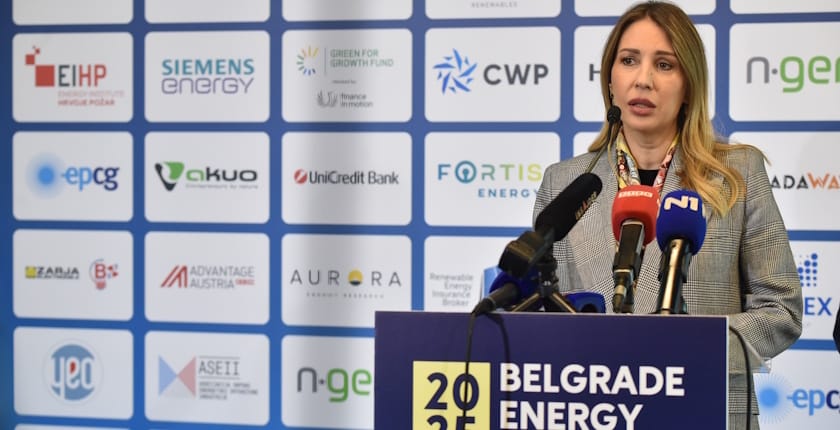
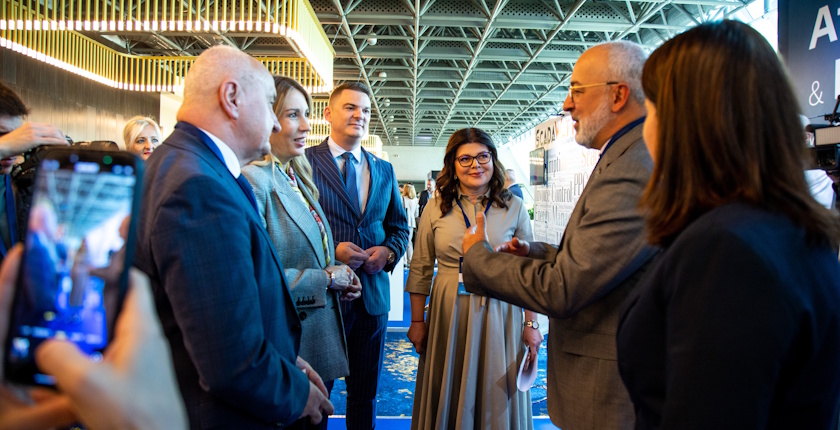
Serbian Minister of Mining and Energy Dubravka Đedović Handanović said during her visit to the SANY booth that the company’s wind power technology is impressive and highly consistent with Serbia’s renewable energy development goals.

“We look forward to working with such leading international companies to accelerate the country’s green energy transformation,” stated Đedović Handanović.

Deepening European presence and supporting carbon-neutrality goals

In recent years, SANY has continued to increase its development and growth in the European market. This high-profile appearance at BEF 2025 sends a clear signal of strengthening regional cooperation. During the forum, company representatives held multiple rounds of negotiations with energy companies and investment institutions in Serbia and neighboring countries to discuss planning and possible project and technical cooperation.

“Europe is a key market for the development of renewable energy. SANY Renewable Energy’s goal is to help customers achieve economic feasibility while increasing efficiency with its high-quality products and customized services,” said Paulo Soares, Managing Director of SANY Renewable Energy Europe.

“We are looking forward to working with all stakeholders in Serbia to jointly promote the global carbon neutrality concept,” he stressed.

Industry analysts believe that as the demand for renewable energy in Europe continues to grow, SANY is expected to capture a larger market share in Europe with its high-reliability wind turbines, intelligent operation and maintenance, and localization strategy, and become an important promoter of the global green energy transformation.

by in News

GGF’s Kostadinov: Western Balkans responded to energy crisis with innovation, ambition (video)

The past three to four years have been nothing short of transformational when it comes to the energy transition in the Western Balkans, said Borislav Kostadinov, Finance in Motion’s Fund Director for the Green for Growth Fund, in a keynote address at Belgrade Energy Forum. The region has responded to the energy crisis with innovation, ambition and resilience, he pointed out. The challenge in the energy transition is understood and so is the solution, Kostadinov stressed.

Borislav Kostadinov, a Fund Director at Finance in Motion, gave a keynote speech at Belgrade Energy Forum (BEF 2025). He leads the Green for Growth Fund, or GGF, the company’s flagship green finance fund.

Finance in Motion is an impact asset manager based in Frankfurt with over 20 years of experience and more than EUR 4 billion in assets under management (AUM). It specializes in blended finance vehicles that deliver positive social and environmental impact. GGF has delivered over EUR 500 million in green finance to almost 50,000 beneficiaries in the Balkans. As of the end of last year, it was above EUR 1 billion in size.

Renewables have become mainstream investments

The breadth and flexibility of the fund’s model allow it to support a wide spectrum of the energy transition, which has enabled it to expand to over 19 markets along the European Union’s borders, Kostadinov explained.

The past three to four years have been nothing short of transformational when it comes to the energy transition in the Western Balkans, he underscored.

“I would not be the first to say that we are at a key juncture in the energy transition. At this stage, the challenge is understood and so is the solution. Renewables have become mainstream investments, championed by the public and private sectors, and are the foundation of a future that is not only sustainable but cost-efficient, competitive, and secure. The question now becomes how quickly and how completely we can deliver on this vision over the next five, fifteen and 25 years,” Kostadinov stated. In terms of energy systems and climate change, it is not much time, he pointed out.

[wpcc-iframe title=”Belgrade Energy Forum 2025 Borislav Kostadinov, Fund Director Green for Growth Fund, Finance in Moti” width=”500″ height=”281″ src=”https://www.youtube.com/embed/TJFTOD-1keQ?feature=oembed” frameborder=”0″ allow=”accelerometer; autoplay; clipboard-write; encrypted-media; gyroscope; picture-in-picture; web-share” referrerpolicy=”strict-origin-when-cross-origin” allowfullscreen=””]

Western Balkans are broad-based renewables growth story

For several years now, there has been a broad-based renewables growth story across the region: from utility-scale project finance transactions, to large installations for captive use by industry and manufacturing, to photovoltaics on the roofs of households, Kostadinov recalled.

“What is driving this shift? Certainly, the energy crisis jolted all of Europe, and the Western Balkans have responded with innovation, ambition, and resilience. In a short time, we have improved policy, strengthened regulatory frameworks and prioritized the sector with clearer strategies and market mechanisms,” he said.

GGF’s director praised the countries in the region for embracing transparent, competitive auctions as a foundation for market-based deployment of renewables.

Kostadinov particularly highlighted Serbia for leading the way. “Its recent auctions for wind and solar have been consistent, well-communicated, credible and investor friendly, drawing broad investor participation. Most importantly, they’ve been successful, and we are proud to have contributed to this achievement alongside our longstanding partner UniCredit Bank, through its investment in the landmark Čibuk 2 wind farm,” he told the audience at BEF 2025.

Corporate PPAs, guarantees of origin deepen markets while also expanding them

The public sector must continue strengthening markets and frameworks and develop and roll out mechanisms such as corporate power purchase agreements (PPAs) and guarantees of origin, which deepen and expand markets, Kostadinov said.

“We need more purely private projects, such as the GGF-backed 50 MW Project Blue solar plant in Albania. As the largest non-subsidized solar project in the Western Balkans, and developed without a long-term PPA from the utility, it is the type of investment that we hope to increasingly catalyse in the region,” he asserted.

The three principles for the next five years are speed, integration, and resilience, Kostadinov says

In Kostadinov’s view, the three principles for the next five years are speed, integration, and resilience.

“We must continue to improve the speed, transparency and bureaucratic process when it comes to permitting, approving and bringing projects online. This is true in the EU, and it is true in the Western Balkans, in particular for construction permitting and grid connections,” he said.

The necessary investments in the integration of energy markets in the EU and the region will create scale, meaning larger markets, deeper spot markets, and more varied offtake, Kostadinov added. His message to energy producers in the Balkans is that they would be able to diversify and address a larger market by supplying Europe’s industrial base.

The recent blackout in Spain is a cautionary tale, but the story is not a failure of renewables but rather a failure of grid resilience, Kostadinov said.

by in News

Alteo’s Chikán: Aggregators have AI solutions for grid stability, production optimization (video)

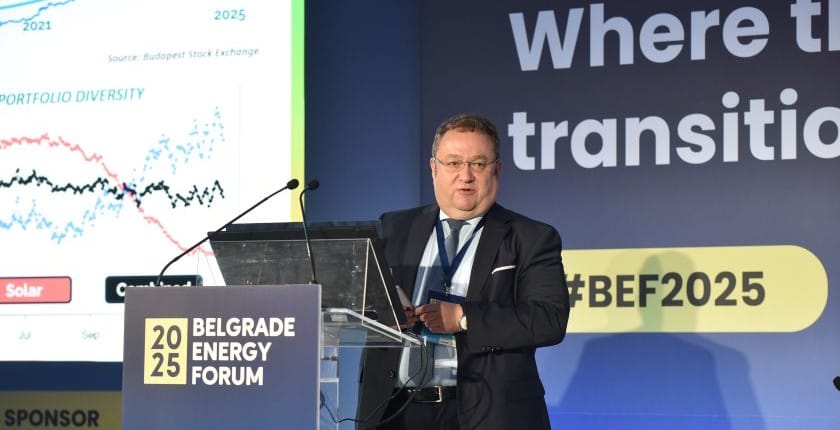
Factors like power price volatility, the global shift in policy making and the need for flexible solutions for the integration of renewables are creating an important momentum for developers and aggregators, Chief Executive Officer of Alteo, Attila Chikán, said at Belgrade Energy Forum 2025. The company is expanding in Central and Southeastern Europe with investments in power plants and its AI-backed platform for operating third-party assets.

The electricity system needs to become more and more flexible to accommodate weather-dependent, intermittent sources – solar, wind and hydropower, Alteo’s CEO and Chairman of the Board Attila Chikán said and pointed out that the outage in Spain and Portugal on April 28 highlighted the need for investing in grid stability and upgrades.

In his keynote speech at Belgrade Energy Forum (BEF 2025), he stressed that a global shift in policy making in the sector, particularly in the United States and Europe, is bringing both challenges and opportunities. In Chikán’s view, the situation creates an important momentum for developers and aggregators.

[wpcc-iframe title=”Belgrade Energy Forum 2025 – Attila Chikan Jr., CEO and President of the Board, ALTEO Plc” width=”500″ height=”281″ src=”https://www.youtube.com/embed/FZCrhx8yh6E?feature=oembed” frameborder=”0″ allow=”accelerometer; autoplay; clipboard-write; encrypted-media; gyroscope; picture-in-picture; web-share” referrerpolicy=”strict-origin-when-cross-origin” allowfullscreen=””]

“In the past five years we have seen a great deal of price volatility on the markets in the region. If you look into the future, taking into account the impact of the ambitious plans of regional countries to expand renewable power, one might expect even more pressure on balancing price volatility,” he asserted.

Role of international initiatives

Alteo’s CEO said tailored incentive mechanisms are essential for developing a balanced energy mix. There are also major endeavors on an international scale, Chikán added: connecting markets with diverse geographical characteristics, power plant portfolios and different supply-demand balances.

He explained that cross-border initiatives such as PICASSO and the Blue Sky project bring electricity exchanges in the region closer together. Interconnectors like the Pannonian Corridor and the proposed Black Sea green cable contribute to balancing and the management of energy price volatility, Chikán noted.

Future-proof tech solutions required for risk mitigation

In risk mitigation, the energy system’s stability benefits from future-proof technological solutions as well, namely smart metering, advanced weather forecasting and artificial intelligence–based production optimization, he said. This is where aggregator companies like Alteo come into the picture, its chief underscored.

As for its hardware, the company based in Budapest operates a diverse and balanced production portfolio of gas power plants and renewables, combined with storage, Chikán added.

Alteo runs a portfolio of gas power plants, renewables and storage facilities

“Sounds good, but without a well-designed and functional software, any hardware is purely a collection of materials. And even if they do operate, for sure they operate in a suboptimal way, without synchronization,” he stated.

That’s why Alteo developed its own production management platform, which it offers as a software-as-a-service (SaaS) solution as well. The company also supports the operation of 2 GW in third-party capacity, mostly photovoltaics.

“We optimize production in an automated way, using artificial intelligence, integrating real-time weather forecast data, capacity data and market data,” Chikán stressed.

The platform includes executing trading activities. The partners don’t have to deal with scheduling and the balancing energy costs, he said. The company makes a renewable electricity product closer to baseload, Alteo’s head asserted.

Slovakia, Croatia, Serbia are primary investment destinations in Alteo’s regional expansion

Early this year, the company unveiled a strategy for expansion in Hungary as well as into Slovakia, Croatia and Serbia as primary investment destinations. Alteo revealed it is interested in Poland, Czechia, Slovenia, Bosnia and Herzegovina, Montenegro and North Macedonia, too.

Chikán said it also aims to position itself in operations and maintenance (O&M), among other segments. Alteo is particularly seeking stable and reliable AI-based aggregator partnerships, he noted. The company has an investment target of up to EUR 3.5 billion by the end of the decade.

by in News

Weakness in Serbian energy system is no option

Serbia’s state-owned power utility Elektroprivreda Srbije (EPS) is committed to its own and the country’s goals for green energy and emission cuts, but it is sustainable only if it doesn’t jeopardize energy security, Chief Executive Officer Dušan Živković said. Weakness in the energy system is not an option, he underscored.

The recent blackout in entire Spain and Portugal and the one last year in the Balkans have imposed the topic of large energy storage facilities which would support the integration of renewables, CEO of EPS Dušan Živković said at Belgrade Energy Forum (BEF 2025). The company is committed to its own and the country’s goals for green energy and emission cuts, he asserted.

“We will work on that, of course, believing in these objectives, but without compromising energy security and the energy sovereignty of the state of Serbia. It was proven to be the only sustainable path and that if we don’t follow it, it can result in situations that are not a good message toward consumers, and they are not a good message toward investors either. Weakness in the energy system is certainly not an option”, Živković stated.

In its Integrated National Energy and Climate Plan (INECP or NECP), Serbia is targeting for 2030 a 45.2% share of renewable energy sources in electricity production and a decrease of greenhouse gases by 40.3% from the 1990 level.

Decarbonization is not easy without serious storage

Among its other activities, EPS is working on its small green energy projects on open cast coal mines, while the strategic partner, a consortium of UGT Renewables (UGTR) and Hyundai Engineering, is tasked with building a group of solar power plants of 1 GW in combined connection capacity alongside 200 MW of battery energy storage, and transfer them to Serbia’s government-controlled power utility, Živković noted. But the process of decarbonization with necessary renewable energy capacity won’t be easy “without serious storage,” he stressed.

Serbia hosts fossil fuel power plants of 4 GW in total

Big energy storage projects are financially challenging, only marginally cost effective, and they are not easy to build, EPS’s head claims. They are necessary to be able to draw enough baseload energy, and in Serbia they need to contribute replacing a large fossil fuel capacity – currently it amounts to 4 GW, Živković said.

Pumped storage hydropower project Bistrica, existing facility Bajina Bašta enable comfort for signing PPAs

EPS primarily focuses on the Bistrica pumped storage hydropower project and the possibility to develop the one for Đerdap 3, he added. That way conditions would be created for the facilities to provide new services in the market, so “the region feels safer, too,” Živković underscored.

Counting on Bistrica and the existing pumped storage hydropower plant, Bajina Bašta, EPS is in “a comfortable zone” for signing power purchase agreements (PPA) with companies for their green power plants, Živković explained. Bajina Bašta is undergoing the second half of reconstruction works.

Turning back to the April 28 collapse of the Iberian electricity system, Živković pointed to the adverse interest of private investors – get profit in the short term – and companies responsible for energy security. In his view, it is necessary to act “more intergenerationally responsibly” and very important to find balance in relation to profits.

by in News

BiH laying groundwork for battery energy storage systems

Bosnia and Herzegovina is set to have its first battery energy storage systems installed in the transmission network, which will provide auxiliary services.

The State Electricity Regulatory Commission is drafting a decision to allow battery energy storage systems (BESS) to offer secondary frequency regulation, Mirza Kušljugić, a member of the Board of the Regional Center for Sustainable Energy Transition (RESET) from BiH, said at Belgrade Energy Forum 2025 (BEF 2025).

Since such a decision does not require a lengthy regulatory procedure, and the balancing market is already regulated, batteries could be installed very soon, he noted.

“I anticipate that private investors will take the lead in this initiative,” Kušljugić added.

He stressed the importance of experimenting with new technologies, noting that batteries represent a technology that can fundamentally transform the energy paradigm.

To be economically viable, batteries must serve multiple functions

The cost of batteries has significantly decreased in recent years. For instance, prices fell by 40% last year and have decreased by an additional 5% so far this year.

According to Kušljugić, batteries should not be limited to providing arbitrage but should also perform additional roles.

“Batteries come in various sizes – small, medium, and large – each with specific functions. They can regulate voltage or enable a black start, especially when equipped with new grid-forming inverters. This is a disruptive technology. It doesn’t matter whether it is installed on the transmission grid, the distribution grid, or behind the meter,” noted Kušljugić, who moderated the BEF panel titled Energy revolution underway – uniting efforts to deliver green, intelligent and sustainable energy solutions.

He added that batteries in the transmission system need to perform two or more functions, including frequency regulation.

Behind-the-meter batteries are also on the way

Historically, secondary regulation in BiH has been provided by any entity capable of offering flexibility, typically through tenders. So far, the service has mostly been provided by hydropower plants. However, due to lower nighttime prices, their operators were not interested in continuing to supply the service, leading to a shortage of secondary regulation. Batteries now have the potential to fill this gap.

Kušljugić believes that batteries installed behind electricity meters will soon become a reality in BiH as well. Currently, there are 300 to 350 MW of solar power capacities installed on the roofs of business premises, but their owners cannot feed excess electricity into the grid. It is only a matter of time before battery prices decrease enough to facilitate their installation, he underlined.

RESET, which advocates for citizen energy and prosumers, suggests that all solar installations should now be equipped with hybrid inverters, making them ready for future battery integration.

This approach is essential for the distribution grid to be ready to integrate excess electricity, Kušljugić concluded.

by in News

Consortium completing spatial plan for solar-BESS strategic partnership in Serbia

Representatives of Hyundai Engineering and UGT Renewables, the companies developing a solar power project in Serbia of 1.2 GW in total, and with batteries, said the strategic partnership is a step toward expansion in the surrounding region. Spatial planning is nearly complete.

Following the signing of grid connection contracts last week, the Hyundai Engineering – UGT Renewables consortium is advancing the design and permitting procedures within its strategic partnership in Serbia.

The two companies are tasked with building a group of photovoltaic plants of 1.2 GW in total peak capacity and connections of 1 GW overall, alongside battery energy storage systems (BESS) with a combined 200 MW in operational power and a maximum 400 MWh in capacity.

Group of hybrid power plants to be transferred to EPS

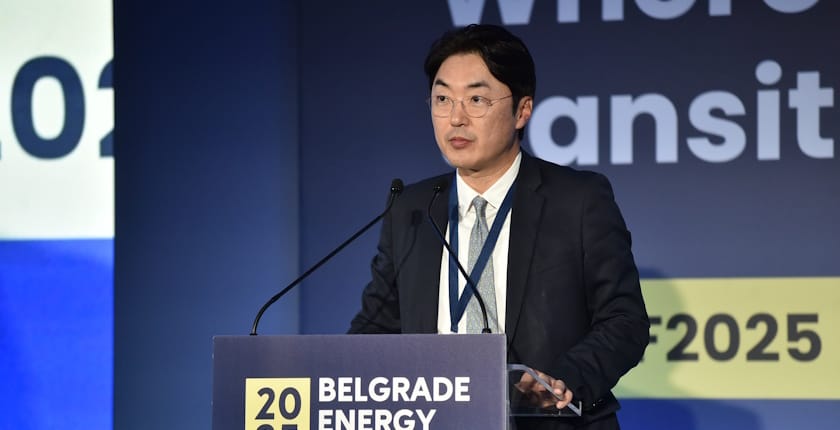
In a keynote speech at Belgrade Energy Forum – BEF 2025, Vice President of Hyundai Engineering Seung-Won Lee revealed that the consortium is finalizing the special plans for special purpose areas. The facilities will be handed over to Serbia’s state-owned power utility Elektroprivreda Srbije (EPS), he noted.

The representative of the South Korea–based company added that the PV plants would generate 1.5 TWh per year and offset more than one million tons of carbon dioxide emissions. It is one of the largest renewable energy projects in Europe and a cornerstone for Hyundai Engineering, Lee pointed out.

UGT Renewables has project pipeline of 20 GW

Global Executive Advisor of UGT Renewables Chan-Woo Park said it is the largest renewable energy developer, internationally, in the United States. Its portfolio of companies is operating on four continents, he added. The regions include Southern Africa, the Middle East and Latin America, Park underscored.

The solar power and energy infrastructure projects under development account for 20 GW, UGT’s representative asserted.


It has established partnerships worth over USD 30 billion altogether, with Hyundai Engineering and other companies including Nextracker, Shoals Technologies, Hitachi Energy and Tesla Energy, Park stressed.

According to the update, the strategic partnership in Serbia is the beginning of the consortium’s regional expansion in the surrounding region.

by in News

Belgrade Energy Forum 2025 – energy market reforms accelerate integration into EU

Electricity market coupling with neighbors in the European Union is a major factor in the EU integration of Energy Community contracting parties and the Western Balkans, alongside deeper coordination within the region, the establishment of energy interconnections, investments in renewables and progress in carbon pricing, top officials pointed out at the opening of Belgrade Energy Forum – BEF 2025.

Founder and Editor of Balkan Green Energy News Branislava Jovičić said the current changes in the energy sector can already be called an energy revolution.

The third Belgrade Energy Forum, BEF 2025, started today in Serbia’s capital city, welcoming four hundred participants from more than 30 countries from the region, Europe and beyond. The two-day conference, organized by Balkan Green Energy News, features eight panels with over 50 officials, executives and prominent energy experts.

Serbia was the first in the region to meet the preconditions for electricity market coupling with neighboring countries in the European Union and Energy Community, said Minister of Mining and Energy Dubravka Đedović Handanović. She added that the technical process would be completed within 18 months after the EU Agency for the Cooperation of Energy Regulators (ACER) and European Network of Transmission System Operators for Electricity (ENTSO-E) conduct the necessary steps.

Electricity market coupling will be completed within 18 months when the technical process starts

“It will be a historic event for our country for its benefits for citizens and companies, as it will ensure a more stable electricity supply and access to more affordable energy prices. It will turn us into an equal member within the region but also the EU as concerns the energy sector,” Đedović Handanović stated.

The SEEPEX power exchange has already prepared implementation projects with its counterparts in Hungary and Bulgaria for market coupling on their borders, the minister stressed.

Up to EUR 15 billion needs to be invested in energy

Đedović Handanović also pointed out that domestic and European regulators certified Serbia’s gas transmission system operator Transportgas for the first time. The start of construction of the Serbia-Hungary oil pipeline is expected to begin early next year at the latest, the minister said.

The baseline for the development plan for energy infrastructure and energy efficiency should be completed by the end of May, she revealed. It identifies the need for EUR 14 billion to EUR 15 billion in investments in the next ten years, according to Đedović Handanović. Renewables and new hydropower potential account for EUR 7 billion, she said.

Serbia will double the electricity transmission capacity with Hungary and increase it with Bulgaria, the minister asserted.

Serbia is frontrunner in region with its progress toward market coupling

As the Western Balkan region confronts the trailing trilemma of decarbonization, affordability, and energy security, the need for an accelerated integration with the European Union has never been more urgent, Energy Community Secretariat Director Artur Lorkowski said.

The organization provides a platform for the process, a strategic window of opportunity to inspire market confidence now, not in years or months to come, he explained. Lorkowski said it implies deeper coordination among Energy Community contracting parties in removing cross-border bottlenecks and harmonizing market operations.

Above all, there is an urgent need to move forward on electricity market integration with the EU, so the region can fully benefit from it in 2027, he noted, underscoring that Serbia is the frontrunner.

Exporters of electricity to the EU can attend a technical consultative meeting in Brussels on July 1

The Carbon Border Adjustment Mechanism (CBAM) is another urgent priority, Lorkowski said. He announced that the Energy Community Secretariat and European Commission would organize a technical consultative meeting in Brussels on July 1 for electricity exporters to the EU.

The establishment of domestic carbon pricing mechanisms is inevitable, Lorkowski warned. The question is how to introduce domestic carbon pricing and keep energy prices affordable for households and competitive for businesses, he told the audience at BEF 2025.

“The way forward is clearly defined, and the conditions linked to energy market reform and decarbonization are well known. And I’m, frankly speaking, very optimistic that progress on these issues can be substantive in months and years to come,” the secretariat’s head stressed.

Jovičić: Energy revolution underway

Energy and climate issues are among the most important ones in the world today, as well as in Southeastern Europe, Founder and Editor of Balkan Green Energy News Branislava Jovičić said. All stakeholders, aware of the necessity of rapid changes and prudent solutions, are working toward a secure energy supply and decarbonization, she added.

“Last year we spoke about the energy transition. This year we can freely call the changes in the energy sector an energy revolution,” Jovičić stated. The five pillars of the energy revolution are solar and wind power, battery storage, digitalization, nuclear energy and decentralized generation and consumption, she stressed.

Balkan Green Energy News is a leading energy media website in the region and one of the top 50 in the world, Branislava Jovičič said.

by in News

Belgrade Energy Forum 2025 – top delegations coming from EU, Southeast European countries

Final preparations are underway for the third Belgrade Energy Forum, BEF 2025. Energy Community Secretariat Director Artur Lorkowski and Serbian Minister of Mining and Energy Dubravka Đedović Handanović will open the event. One of the key speakers is Director Christian Zinglersen of the EU Agency for the Cooperation of Energy Regulators (ACER). The ministerial panel consists of ministers and representatives of the governments of Montenegro, Croatia, Hungary, Serbia and the Republic of Srpska, which is one of the two entities making up Bosnia and Herzegovina.

Senior delegations from the European Union and five countries in the region, eight panel discussions and more than 50 distinguished speakers – energy experts and representatives of energy companies – all prove that the third Belgrade Energy Forum (BEF 2025) will host key stakeholders in Southeast Europe’s energy transition on May 14 and 15.

The conference, organized by the region’s leading energy portal Balkan Green Energy News, will be the meeting point of the representatives of regional and international institutions and organizations as well as the representatives of the business community from the region, Europe and the world. Register in time via this link.

The participants in the first panel at BEF 2025, called ‘High-ministerial panel on SEE regional cooperation and energy transition strategies’, are:

  • Petar Đokić, Minister of Energy and Mining, Government of Republic of Srpska
  • Admir Šahmanović, Minister of Energy and Mining, Government of Montenegro
  • Dr. Illés Boglárka, State Secretary for Bilateral Relations, Ministry of Foreign Affairs and Trade, Government of Hungary
  • Jovana Joksimović, Assistant Minister, Ministry of Mining and Energy, Republic of Serbia
  • Marija Pujo Tadić, Special Envoy for Climate Action, Government of the Republic of Croatia
  • Dario Liguti, Director, Sustainable Energy, UNECE

Director of EU Agency for the Cooperation of Energy Regulators (ACER) Christian Zinglersen will deliver one of the keynote speeches. It is one of the European Union’s most important institutions in the energy sector. He is coming to BEF 2025 at a very important moment for the Energy Community contracting parties and the transposition of the EU’s energy regulations into national law.

Đedović Handanović: The energy transition knows no borders

Ahead of her participation at BEF 2025, Minister Dubravka Đedović Handanović stressed that the energy transition knows no borders and that it is why regional cooperation is of key importance.

“I am glad that energy experts from the entire region will convene in Belgrade, as only through a coordinated approach we can secure a more stable energy market, faster decarbonization and greater investments in renewable energy sources,” Đedović Handanović stated.

In addition to participating in the high-ministerial panel, Montenegrin Minister of Energy and Mining Admir Šahmanović will hold several bilateral meetings in Belgrade.

Šahmanović: The goal is not only clean energy, but just transition as well

“The energy transition is not just a technical challenge – it is a development opportunity and a civilizational leap. For the Western Balkans it is a chance for us to build an economy based on sustainability, connectivity and responsibility toward future generations. Montenegro believes that a successful transition depends on our capability to act together – through the planning of joint capacities, exchanging green energy surpluses and a coordinated approach toward partners and investors”, he said.

Šahmanović underscored that the goal is not only clean energy, but also a just transition – one that creates jobs, lowers poverty and brings growth to every part of the region. “We are ready to be a reliable partner in that joint future,” he added.

Đokić: Through joint efforts to an energy future that is economically stable, environmentally acceptable and socially responsible

The Ministry of Energy and Mining of the Republic of Srpska is again an institutional partner of BEF 2025, which, in the words of Minister Petar Đokić, represents proof of the ministry’s dedication to promoting energy sustainability, improvement of regional cooperation and attracting investments in the energy sector.

“The ministry and I have been actively contributing from the start to the work and discussions of this significant event, which gathers the most important players in the energy sector – institutions, investors, experts and other stakeholders. The forum stands out as a platform bolstering the exchange of ideas and experiences, and the results of these discussions contribute to identifying concrete solutions for challenges in energy,” Đokić pointed out.

He expressed confidence that joint efforts can result in the creation of an energy future that is economically stable, environmentally acceptable and socially responsible.

by in News

Nordex Group – from a sketch on the wall to a leading Western wind turbines developer

Nordex Group, one of the largest wind turbine manufacturers in the world, is celebrating its 40th anniversary. The company’s portfolio in Croatia, Serbia and Montenegro recently reached a total of 1 GW in installed capacity and projects under development, underscoring Nordex’s strong commitment to supporting Southeastern Europe’s energy transition goals.

Nordex will participate in the leading regional conference, the Belgrade Energy Forum, and take this opportunity to mark this milestone. At the event, Anne-Catherine de Tourtier, Vice-President Mediterranean, will contribute to discussions as a panelist, and the company will host an anniversary celebration.

It was back in the early eighties, in Denmark, that Flemming Pedersen and his two sons, Carsten and Jens, had a vision: develop innovative products that could generate electricity in a cost-effective way while protecting environment. To put this idea into practice, they devised a wind turbine which they first sketched on a wall.

They built the first 65 kW turbine, installed on the family property and made it work.

This was the starting signal ; in 1985, Carsten and Jens Pedersen founded Nordex A/S in Give, laying the foundations for Nordex as a company.

The founders had a vision to generate cost-effective power with no impact on the environment

A lot has changed in 40 years. Nordex Group has become one of the world’s leading Western manufacturers of wind turbines, successful around the globe and the market leader in Europe. Technology and the industry have been developed at an impressive pace.

Electricity from wind power has become cost competitive. A strong focus on innovation and cost of energy (COE) has significantly reduced the cost per kilowatt-hour, turning wind into the cheapest source of electricity in many regions.

A crucial role in protecting the planet from climate change

One thing has not changed in the four decades of the Nordex story: Developing and delivering clean power plants that make 100% renewable energy a reality for the world, is still the shared mission and driver of today’s more than 10,900 Nordex Group employees, and its valued partners and clients around the globe.

The company kicked off the 40th anniversary series by thanking its customers, suppliers, colleagues and friends who have made its journey of innovation and growth possible.

“A special thank you to the Pedersen family for following a vision and believing in a technology that was once perceived by many as an utopian dream, and today recognized as playing a crucial role in protecting our planet from climate change, safeguarding it for generations to come!” said Vice-President Mediterranean Anne-Catherine de Tourtier, who will participate at Belgrade Energy Forum next month.

The first Nordex-branded wind turbine

In 1986, just one year after the company was founded, the first Nordex-branded wind turbine started to produce energy. Developed by the visionary Pedersen brothers and Nordex’s inaugural employee, Knud Buhl Nielsen, the N27 marked the beginning of a groundbreaking journey towards sustainable energy production.

The firm rented the tallest crane in Denmark to lift the first N27 turbine in 1986

Looking back on this milestone, Carsten Pedersen fondly recalls“The first real Nordex turbine was the N27 with a rotor diameter of 27 meters, on a 30-meter tubular tower which we erected at our factory in 1986. At that time, it was one of the biggest turbines on the market and we thought that it was really big. We had to rent the tallest crane in Denmark to erect it.”

From today’s perspective, the whole development process in the early stages of Nordex seems truly adventurous. In the absence of a computer, the design was done by hand, and the loads were calculated using a pocket calculator.

However, it’s safe to say that both processes were conducted thoroughly and expertly. “The turbine actually kept running for 30 years, as we did not dismantle it until 2016,” remembers Jens Pedersen.

Three decades since the company’s first 1 MW wind turbine

Looking back, based on the first steps with the N27, it seems that “thinking big” was the beginning of the Nordex Group natural approach. A further humble milestone was accomplished today: 30 years of producing turbines of the megawatt class. In 1995, Nordex introduced the worldwide first series-produced megawatt turbine, the N52, with 1 MW.

Today, Nordex’s Delta4000 series boasts a rated power more than 45 times that of the N27, showcasing the remarkable advancements in technology and engineering expertise. Over the past 40 years, the rotor diameter has increased 6.5-fold, reaching an impressive 175 meters, with its swept area increasing accordingly by a factor of 42. Today, Nordex wind turbines are manufactured with capacities ranging from 4 MW to 7 MW.

Anniversary celebration at BEF 2025 is affirming Nordex’s commitment to the Balkans

The global company is marking its 40th anniversary at the upcoming Belgrade Energy Forum, affirming its commitment to the Balkans.

Vice-President Mediterranean Anne-Catherine de Tourtier is one of the speakers in the panel discussion ‘Energy revolution underway – uniting efforts to deliver green, intelligent and sustainable energy solutions’.

Organized by Balkan Green Energy News, BEF 2025 will be held on May 14 and 15 in Serbia’s capital city.

Belgrade Energy Forum is a central meeting point for representatives of regional and international institutions, organizations and the business community from the region, Europe, and beyond.

Make sure you register on time via this link.

In the evening on May 14, Nordex is organizing its anniversary celebration party for all the participants at the conference.

The group is actively focusing on the Balkan market, with a robust presence across the region, currently involved in six projects in Croatia, three in Serbia, and one in Montenegro.

“We have successfully contracted 1 GW in Serbia, Croatia, and Montenegro, encompassing 222 wind turbines across 16 wind farms. Our team in the Balkans region has grown to over 30 employees, reflecting our significant investment in local talent and development,” said Managing Director for Serbia Vladimir Kolarević.

Nordex highlighted the Balkans as one of its key growth areas, with several ongoing projects in other countries within the region as well. As a crucial partner in the energy transition, the wind turbine manufacturer leverages its footprint and network in Croatia, Serbia, and Montenegro to enter new markets and drive sustainable development, according to the update.

The company is listed on the Frankfurt Stock Exchange, and has installed so far 57 GW of wind power capacity in over 40 markets.

In Turkey, one of its manufacturing hubs, Nordex received orders for more than 1 GW in 2024. And then 750 MW was booked in the country just in the first quarter of this year.

As for the other markets tracked by Balkan Green Energy News, a notable example is Greece, where Nordex surpassed 1 GW.

by in News

Three hydropower plants on Bistrica river to be finished by end-2026

Three hydropower plants on the Bistrica river near Foča are expected to be completed by the end of 2026, according to Petar Đokić, the Minister of Energy and Mining of the Republic of Srpska, one of the two entities of Bosnia and Herzegovina.

Chinese company AVIC is in charge of building the three hydropower plants, with a total capacity of 39 MW. State power utility Elektroprivreda Republike Srpske (ERS) will operate the facilities once they are completed, according to public broadcaster RTRS.

The three small hydropower plants on the Bistrica river, a tributary of the Drina, are being intensively built, with all works targeted for completion by the end of 2026, said Minister Petar Đokić, who will be among the speakers at Belgrade Energy Forum 2025 (BEF 2025).

The Hidroelektrane Bistrica hydropower system will consist of three cascading plants installed in the river canyon along the Foča-Sarajevo road. The construction of the facilities officially began in December 2021.

The total project cost is estimated at EUR 103 million

Once completed, the system will have a total installed capacity of 39 MW and an annual electricity output of 152 GWh. Đokić also said that the signed contract values the project at EUR 102.8 million.

Last year, the Government of the Republic of Srpska and the Chinese contractor AVIC signed an agreement on financing the construction of the three hydropower plants on the Bistrica.

Photo: The Ministry of Energy and Mining of the Republic of Srpska

During a visit to the construction site, Đokić revealed that there may be certain changes during implementation, but noted that the project will provide exceptional value for the energy system of the Republic of Srpska.

The three hydropower plants include nearly ten kilometers of tunnels

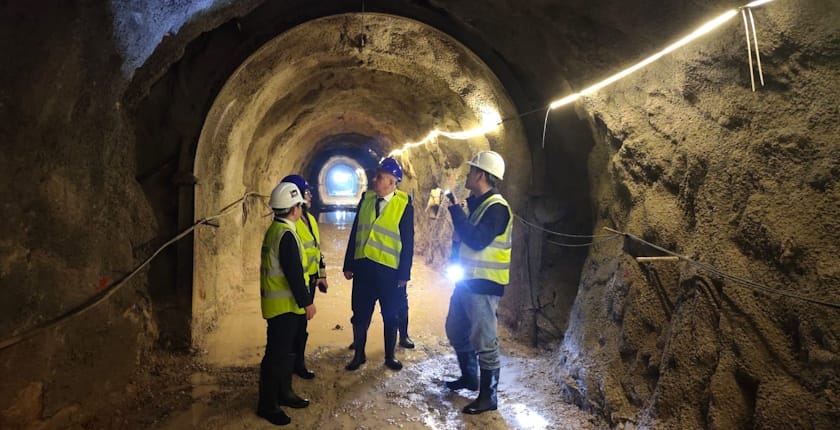
Site manager Feng Xiong from AVIC noted that the project encompasses three hydropower plants with a total of 9,800 meters of tunnels. Only 600 meters of tunnel work remains unfinished, he said, adding that he believes the project will be completed as scheduled.

Dejan Pavlović, CEO of Hidroelektrane Bistrica, stated that 9.2 kilometers of tunnels has been completed. Bistrica’s high water levels have slowed down the construction, he noted.

The companies investing in the three hydropower plants include Hidroelektrane Bistrica and Hidroelektrane na Drini, the majority owner of the project. The financial backing was secured by ERS.