by in News

Hitachi Energy: Game-changing solutions for a sustainable energy future

Hitachi Energy, a global leader in energy technology, develops system solutions and offers products and services that actively contribute to sustainable energy and a better future, Igor Anđelković, the company’s Country Marketing and Sales Leader in Serbia, said at Belgrade Energy Forum 2025. Game-changing technologies for high-voltage grids and transportation, along with solutions for renewables integration, support decarbonization efforts and deliver added value to both clients and local communities.

Multinational company Hitachi Energy, a silver sponsor of the BEF 2025 conference, is present in the Southeast Europe region through its Balkan Cluster, which covers seven markets – Albania, Bosnia and Herzegovina, Montenegro, Croatia, Kosovo*, North Macedonia, and Serbia.

[wpcc-iframe title=”Igor Andjelkovic, Country Lead Serbia, Hitachi Energy at the Belgrade Energy Forum 2025″ width=”500″ height=”281″ src=”https://www.youtube.com/embed/KVbO8HI5oLk?feature=oembed” frameborder=”0″ allow=”accelerometer; autoplay; clipboard-write; encrypted-media; gyroscope; picture-in-picture; web-share” referrerpolicy=”strict-origin-when-cross-origin” allowfullscreen=””]

Inspiring the next era of sustainable energy

Since 2010, Hitachi Energy has implemented eco-efficient solutions for high-voltage grids of up to 550kV. The company’s innovative and eco-efficient EconiQ® high-voltage portfolio applies revolutionary technology free of sulfur hexafluoride (SF6) and proven to significantly reduce carbon footprint throughout the life cycle.

The high-voltage EconiQ® roadmap demonstrates the scalability of this technology, which allows customers and industry to quickly transition to eco-efficient solutions.

Photo (Hitachi Energy): Hitachi Energy has implemented eco-efficient solutions for high-voltage grids of up to 550kV

Now more than ever, pioneering technologies like EconiQ are needed to advance a sustainable energy future, says Anđelkovic.

Efficient renewables integration

In the renewable energy segment, Hitachi Energy offers a range of substation solutions that help to efficiently integrate renewable energy into the transmission grid and distribution network. This includes grid connection solutions for all types of renewables power plants.

Hitachi solutions are used in a large number of wind projects in Southeast Europe

The major projects in Southeast Europe, completed or in the implementation phase, which use Hitachi Energy’s technology are wind farms Pupin and Crni Vrh in Serbia, Gvozd in Montenegro, Komanje Brdo and Ivan Sedlo in Bosnia and Herzegovina, and Pometeno Brdo and Korlat in Croatia.

Photo (Hitachi Energy): Hitachi Energy offers a range of substation solutions that help to efficiently integrate renewable energy into the transmission grid and distribution network

Driving transportation and energy towards carbon neutrality

Hitachi Energy is also committed to decarbonizing the transportation sector. Its revolutionary ‘grid-to-plug’ electric vehicle charging system, called Grid-eMotion® Fleet, is a smart mobility solution that enables operators to efficiently scale up their operations and is expected to contribute to sustainable society for millions living in urban areas.

Grid-eMotion® Fleet marks a game-changing shift from a charger-product based approach to a charging-system based approach, which helps to accelerate the future of smart mobility.

Hitachi Energy has been pioneering EV charging solutions since 2013, when it first introduced innovative flash-charging eBus solutions in Geneva and Nantes.

Advanced technologies for smart airports

With its innovative solutions, Hitachi Energy has made significant advancements in air traffic as well, with the development of smart airports being one of its key innovations. This includes advanced technologies such as artificial intelligence (AI), video analytics, and 3D LiDAR to improve the passenger experience and improve airport operational efficiency.

Hitachi Energy also helps airport to decarbonize and become more sustainable with its electrification and digitization solutions.
* This designation is without prejudice to positions onstatus and is in line with UNSCR 1244/99 and the ICJ Opinion on the Kosovo declaration of independence.
by in News

Dimitar Dimitrov: Battery developers should seek insurance in early project stages

Investors and developers of battery energy storage systems (BESS) should engage with insurers or specialized brokers as early as the development phase to effectively manage risks and ensure bankability, advised Dimitar Dimitrov, Business Development Manager at Renewable Energy Insurance Broker (REIB), during Belgrade Energy Forum 2025.

With over 4 GWh of energy storage systems across four continents, REIB offers bespoke insurance solutions tailored to the needs of utility-scale developments. Dimitrov emphasized that REIB’s portfolio includes dedicated products for BESS, covering business interruption, cyber threats, and technical malfunctions.

Speaking at the storage panel, Dimitrov underscored the importance of insuring against business interruption, especially due to outages that may compromise grid connections. He also highlighted the value of cargo insurance and robust fire protection strategies, noting these are key concerns from the insurer’s standpoint.

[wpcc-iframe title=”Dimitar Dimitrov, Business Development Manager, Renewable Energy Insurance Broker, at BEF 2025″ width=”500″ height=”281″ src=”https://www.youtube.com/embed/obGw8_zdj4U?feature=oembed” frameborder=”0″ allow=”accelerometer; autoplay; clipboard-write; encrypted-media; gyroscope; picture-in-picture; web-share” referrerpolicy=”strict-origin-when-cross-origin” allowfullscreen=””]

“As both a broker and an investor in renewable energy projects, we have first-hand knowledge of what developers go through,” said Dimitrov. “This dual perspective enables us to anticipate risk points during different phases and recommend solutions that align with actual project needs.”

REIB has developed specialized insurance products for BESS projects

REIB offers specialized insurance coverage for renewable energy and BESS projects, including tailor-made solutions for Business Interruption, Reduced Yield Coverage, Cyber Risk, and Third-Party Liability.

The company has more than 14 years of experience in renewable energy and currently insures over 60% of the PV market and more than 80% of BESS projects (installed and under construction) in Bulgaria, and cover more than 30% of the solar sector in Romania.

As an investor, REIB is familiar with all the requirements developers and contractors should meet

Having gone through the procedures of installing solar power plans and battery storage systems as an investor, REIB is familiar with all the requirements that developers, power producers, and contractors should meet. “In this way, we definitely can give the right recommendations to companies,” Dimitrov asserted.

REIB partners exclusively with A+ rated insurance companies, recognized as market leaders in both the US and Europe. This strategic approach ensures that all coverage options meet the highest standards of reliability and financial strength.

“The company also has strong exposure in the European Union market, which allows us to secure A-rated insurance policies that are fully aligned with bank requirements and enhance project bankability,” Dimitrov emphasized.

by in News

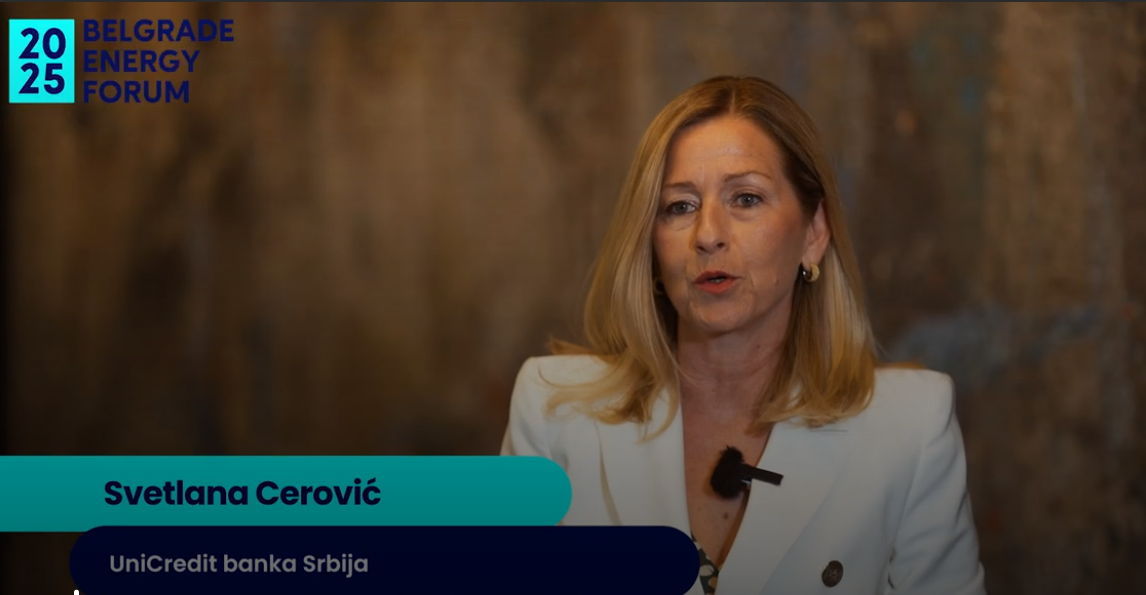
Svetlana Cerović: Serbia should consider the role of batteries in next renewables auction

Serbia is expected to finish drafting its energy storage regulations by the end of the year, completing its already strong regulatory framework for renewables, according to Svetlana Cerović, Head of Specialized Lending at UniCredit Bank Serbia. In the next auction for market premiums, Serbia should consider recognizing the contribution of projects involving energy storage, she said at Belgrade Energy Forum 2025.

The two renewable energy auctions Serbia has held so far have shown that its regulatory framework is exceptionally good, Svetlana Cerović said on the sidelines of BEF 2025, adding that it is very important for a third auction to take place to ensure the development of additional renewable energy capacities.

[wpcc-iframe title=”Svetlana Cerovic, Head of specialized lending, UniCredit Bank Serbia, at Belgrade Energy Forum 2025″ width=”500″ height=”281″ src=”https://www.youtube.com/embed/014aj5PLOx0?feature=oembed” frameborder=”0″ allow=”accelerometer; autoplay; clipboard-write; encrypted-media; gyroscope; picture-in-picture; web-share” referrerpolicy=”strict-origin-when-cross-origin” allowfullscreen=””]

Initiating and financing investments in renewable energy requires a stable, predictable, and transparent regulatory framework, she stressed.

When it comes to regulations covering energy storage, Cerović said she was encouraged to hear that they were being drafted quickly and could be finalized before the end of this year.

“When we talk about renewable energy sources, we talk about long-term financing. Most of these projects are financed through project financing without the right of recourse, and in this sense, the regulatory framework and the predictability of cash flows are very important,” she reiterated.

UniCredit, as a pioneer in the field of renewable energy financing, offers various types of services and has already supported several projects that have been awarded market premiums and guarantees, according to Cerović. “We continue to actively finance these projects and remain open to dialogue,” she said.

UniCredit has financed several projects that have won market premiums

Speaking at a panel on energy storage in Southeast Europe, Cerović said that Serbia should consider involving energy storage in the next auction for market premiums and facilitate flexibility services, adding that the first renewables projects in Serbia that are required to include energy storage are already negotiating financing.

Cerović: The state should subsidize batteries for prosumers and back smaller renewables projects

She also recommended subsidizing battery storage for prosumers as an energy efficiency measure and allocating part of the auction quota for smaller renewables projects, which find it difficult to secure long-term power purchase agreements (PPA).

Talking about BEF 2025, she said the forum had demonstrated its exceptional significance and relevance by bringing together key players in the financing and development of energy projects. The conference was extremely useful for UniCredit, allowing it to make important contacts and initiate potential partnerships, according to her.

by in News

ScadaWatt seeks partners in Serbia to deploy its energy digitalization systems

Electronic equipment and software company ScadaWatt, which currently manages a portfolio of 800 MW of solar power plants worldwide, is looking for partners in Serbia to deploy its energy digitalization systems. ScadaWatt, a bronze sponsor of the Belgrade Energy Forum 2025, provides remote monitoring and control systems for solar power plants.

“We are here to make new collaborations in digital transformation in the energy sector and to build new partnerships,” said Esma Şahin, ScadaWatt’s representative at BEF 2025.

[wpcc-iframe title=”Esma Sahin, Quality Engineer, ScadaWatt at the Belgrade Energy Forum 2025″ width=”500″ height=”281″ src=”https://www.youtube.com/embed/aavqS6Tj80o?feature=oembed” frameborder=”0″ allow=”accelerometer; autoplay; clipboard-write; encrypted-media; gyroscope; picture-in-picture; web-share” referrerpolicy=”strict-origin-when-cross-origin” allowfullscreen=””]

“In Serbia, we are currently launching a local service with multilingual support, and we offer fast, reliable technical support with our local service team,” she stated on the sidelines of the conference.

Around 800 MW of solar power plants worldwide are currently managed completely by ScadaWatt’s management and monitoring systems, according to Şahin.

ScadaWatt’s systems are monitoring 800 MW of solar power plants worldwide

The Turkish company’s flagship product is ScadaWatt solar power plant monitoring automation, which represents the culmination of extensive experience gained in the solar energy sector. The company’s products enable users to simultaneously compare data from sensors such as inverters, energy analyzers, and electric meters, according to its website.

ScadaWatt designs and manufactures energy efficiency solutions, including SCADA (supervisory control and data acquisition) devices, sensors, and protection relays.

“We provide monitoring and control systems for solar power plants. Also in our portfolio, we have meteorological sensors, protection relays, and RTU (remote terminal unit) devices,” said Şahin.

The company’s Zero Injection Module enables the dynamic proportional-integral-derivative (PID) control of inverters, measuring consumption values and adjusting electricity production to match consumption. This ensures that no energy is fed back into the grid, according to ScadaWatt’s website.

by in News

Billot: Balkans is key region for Nordex

This year Nordex Group is celebrating its 40th anniversary as one of the largest wind turbine manufacturers in the world. “We’re number one in Europe and the Balkans is actually a key region for us,” Christopher Billot, Sales Director for the Mediterranean region of Nordex Group, said at Belgrade Energy Forum 2025.

Nordex installed its first N27 turbine with a capacity of 250 kW in 1986, just one year after the company was founded. In 1995, it became the first in the world to start serial production of a megawatt-class turbine. Today, the capacity of its units ranges from 4 MW to 7 MW.

Christopher Billot noted that the company has been manufacturing wind turbines for the last 40 years.

Nordex entered the Balkans 10 years ago

“We’re number one in Europe and the Balkans is actually a key region for us where we focus intensively. We’ve been there for the last 10 years, and so far we have achieved up to 1 GW of wind turbine installation but also construction across Croatia, Montenegro, and Serbia,” Billot stated.

Nordex is spreading within the region and that’s key, in his words, for the company and its future in the region and overall.

[wpcc-iframe title=”Christopher Billot, Director Sales Region Mediterranean, Nordex Group at Belgrade Energy Forum 2025″ width=”500″ height=”281″ src=”https://www.youtube.com/embed/rUDrekSnYGI?feature=oembed” frameborder=”0″ allow=”accelerometer; autoplay; clipboard-write; encrypted-media; gyroscope; picture-in-picture; web-share” referrerpolicy=”strict-origin-when-cross-origin” allowfullscreen=””]

“We’re happy to be a silver sponsor of the Belgrade Energy Forum. This is for us a great opportunity to network and to basically partner with all the institutions, clients, and continue to grow and build the network for growth in the Balkans,” Billot stressed.

The global company has marked its 40th anniversary at the recently held Belgrade Energy Forum 2025 (BEF 2025), affirming its commitment to the region.

Helping the pioneering steps in renewables development

Nordex installed and contracted an overall 1 GW in Croatia, Montenegro, and Serbia, encompassing 222 wind turbines across 16 wind farms. Looking at the company’s portfolio, it can be said that it plays a pioneering role in the development of renewable energy sources in the region.

Here are a few examples.

In November last year, it signed an agreement with Montenegro’s state-owned power utility Elektroprivreda Crne Gore (EPCG) for its first wind farm, Gvozd, with a capacity of 54.6 MW. The contract is worth EUR 46.4 million.

A few months earlier, it was announced that Nordex would participate in the expansion of the largest wind farm in Serbia. It received an order for 22 turbines with a total capacity of 154 MW for the Čibuk 2 project. The investors are Masdar and Taaleri SolarWind III Fund.

Nordex was also a partner to Croatian state-owned Hrvatska Elektroprivreda (HEP) in building its first wind power plant. The contract for the delivery of 18 wind turbines with a total capacity of 58 MW for the Korlat wind farm was signed in July 2019.

by in News

Association of Serbian Energy Intensive Industry is actively participating in decarbonization dialogue

The Association of Serbian Energy Intensive Industry (ASEII), founded in September 2024, advocates for a coordinated national and regional approach to decarbonization that ensures the process strengthens rather than erodes competitiveness. “We believe it is very important that energy-intensive industries have their place in the dialogue around decarbonization, not only as passive observers but as active participants,” Director Svetlana Simić said at Belgrade Energy Forum 2025.

The Association of Serbian Energy Intensive Industry was established at a time when the domestic industry is facing complex challenges associated with the energy transition. Its five founding members represent the core of Serbia’s real economy, operating in the steel, fertilizer, and cement sectors.

“These are five leading companies in their respective fields: Metalfer, Elixir, Lafarge, Titan, and Moravacem. Our mission is clear: to be the voice of industry in the era of the energy transition. We believe it is very important that energy-intensive industries have their place in the dialogue around decarbonization, not only as passive observers but as active participants,” Director of ASEII Svetlana Simić said at Belgrade Energy Forum 2025 (BEF 2025).

The companies can offer solutions through their capacities, know-how, and experience, she underscored.

[wpcc-iframe title=”Stanislava Simic, Director, Association of Serbian Energy Intensive Industry” width=”500″ height=”281″ src=”https://www.youtube.com/embed/LM69KRWjkm4?feature=oembed” frameborder=”0″ allow=”accelerometer; autoplay; clipboard-write; encrypted-media; gyroscope; picture-in-picture; web-share” referrerpolicy=”strict-origin-when-cross-origin” allowfullscreen=””]

State and industry need to be partners in decarbonization

The Association of Serbian Energy Intensive Industry was founded in September. It advocates for a coordinated national and regional approach: one that protects strategic sectors, fosters low-carbon investment, and ensures that decarbonization strengthens rather than erodes competitiveness.

ASEII was a silver sponsor of this year’s conference, organized by Balkan Green Energy News. “We are at Belgrade Energy Forum today to highlight the importance of partnership between the state, the industry, and other stakeholders. We are also facing a serious challenge: the introduction of CBAM,” Simić stated.

Simić: We need legislative mechanisms that recognize how much companies are investing in their processes and innovation to reduce emissions

CBAM – the European Union’s Carbon Border Adjustment Mechanism, is a levy on carbon dioxide emissions for foreign cement, iron and steel, aluminum, fertilizers, hydrogen and electricity. The administration in Brussels launched it to protect its economy from imports from third countries with less stringent or no carbon pricing. CBAM charges are due to be introduced gradually, starting in January.

Serbia, like the entire region, must act wisely, strategically, and swiftly, Simić pointed out. “We need legislative mechanisms that recognize how much companies are investing in their processes and innovation to reduce emissions and secure an equal footing in the market,” she said.

Zečević: Many companies have been preparing for CBAM

Branko Zečević, president of Metalfer Group and one of the founders of the Association of Serbian Energy Intensive Industry, was one of the panelists at BEF 2025, in a session titled Addressing carbon pricing in the Western Balkans – Turning decarbonisation challenges into opportunities through collaboration, innovation and competitiveness.

He said CBAM’s effects on Serbian exports can’t be quantified easily yet, but that many companies have been preparing for it and investing in decarbonization. In Zečević’s view, a much bigger threat for the industry in Serbia and the region is an expected flood of goods that will not be able to enter the EU market anymore. He stressed that a domestic carbon pricing system is necessary.

by in News

Maja Turković: Technology is our strongest card

The technological solutions needed to increase the share of renewable sources in Southeast Europe are already available and accessible, according to Maja Turković, Senior Vice President of CWP Europe. Countries in the region now need to adopt regulations to boost the deployment of battery storage and hybrid power plants, she said on the sidelines of Belgrade Energy Forum 2025.

“I believe that technology is our strongest card,” said Maja Turković, adding that its cost is decreasing, as are financing costs. Speaking at the panel on the ongoing energy revolution, she suggested that more financial resources are available than there are eligible projects.

The cost of technologies is decreasing, as are financing costs

Prices of solar panels have dropped 60% over the last two years, while battery costs fell by 40% by the end of 2024 and by a further 5% this year, to under EUR 100,000 per MWh, Turković pointed out at the panel, titled Energy revolution underway – uniting efforts to deliver green, intelligent and sustainable energy solutions.

[wpcc-iframe title=”Maja Turkovic, Executive Vice President, CWP Europe at Belgrade Energy Forum 2025″ width=”500″ height=”281″ src=”https://www.youtube.com/embed/qp8wwaYre0g?feature=oembed” frameborder=”0″ allow=”accelerometer; autoplay; clipboard-write; encrypted-media; gyroscope; picture-in-picture; web-share” referrerpolicy=”strict-origin-when-cross-origin” allowfullscreen=””]

She said that integrating batteries with solar power plants is the latest trend, but that transmission system operators in the region still do not allow it. However, in some countries, a grid connection approved for solar can also be used for batteries, she noted.

Integrating solar with batteries is the latest trend

Turković expressed the hope that regulations in the region will follow the technological evolution. “We hope to improve the preparedness of countries in the region to adopt appropriate regulations and to increase the capacity of battery storage and hybrid power plants in general, which are far more desirable for the system itself,” she stressed.

Talking about CWP Europe, Turković recalled that the company is developing projects for wind power plants, solar power plants, and battery storage in nine countries, and that it has also begun diversifying into hybrid power plants. She added that the company is also developing its own battery management software for short-term power markets.

CWP Europe recently signed the largest single power purchase agreement (PPA) for a solar project with Serbia’s state-owned power utility Elektroprivreda Srbije (EPS), marking a major milestone in the country’s energy transition. The PPA was signed for the 150 MW Solarina photovoltaic park that CWP Europe is developing in eastern Serbia.

by in News

Eric Scotto: Falling storage and renewables costs will help meet rising electricity demand

Declining energy storage costs and expanding renewables capacity will enable Europe to meet the challenge of intensified electrification and rising consumption, according to Eric Scotto, CEO of Akuo Energy. Thanks to falling costs, renewable energy has already won the race against nuclear power, he emphasized at Belgrade Energy Forum 2025.

The price of energy storage today is ten times lower than it was ten years ago, and the density of storage has tripled in the last three years, Eric Scotto said. Speaking at a panel on decarbonization in Southeast Europe, he explained that the operating power of a battery system in a standard TEU container, twenty feet or 6.1 meters long, now reaches 6 MW.

“Today, the challenge is flexibility. We know how to produce cheap, but what is important is to reconcile offer and demand… Thanks to storage, we can do that today,” Scotto said on the sidelines of the conference.

Renewables have already won the race against nuclear energy

Talking about the cost of generation from renewable sources and nuclear power, he argued that the race has already been decided. “It’s over. We won the race. Renewable is the cheapest way to produce energy,” he underscored.

[wpcc-iframe title=”Eric Scotto, CEO, Akuo Energy at the Belgrade Energy Forum” width=”500″ height=”281″ src=”https://www.youtube.com/embed/ZVg8ole0VaM?feature=oembed” frameborder=”0″ allow=”accelerometer; autoplay; clipboard-write; encrypted-media; gyroscope; picture-in-picture; web-share” referrerpolicy=”strict-origin-when-cross-origin” allowfullscreen=””]

Scotto emphasized that the Balkan region, which is lagging in the energy transition, can now enjoy the benefits of the latest and cheapest renewable energy and storage technologies. “This morning, some people were saying that we are late in the Balkans, and that’s the best news we could get this morning because renewables are the cheapest way to produce energy, so we’re going to benefit from the latest and most efficient technologies… from solar, from wind, from hydro, and storage,” claims the top man of the French renewable energy company.

The slow energy transition is good news for the Balkans

Scotto stressed the importance of collaboration among Western Balkan countries, adding that he hopes to see more of it in the coming days, weeks, and months. “We have the skills and we have the know-how in those countries. We need to share, we need to work more together, and, of course, we need more international interconnection,” he said.

Akuo Energy has secured a PPA for its Bela Anta 2 wind project in Serbia

Talking about Akuo Energy, Scotto said that it brings to the region its knowledge and experience from numerous project around the world. The France-based independent global renewable energy producer recently signed a power purchase agreement (PPA) with Serbia’s state-owned power utility Elektroprivreda Srbije (EPS) for the Bela Anta 2 wind project.

With a total installed capacity of 80 MW, Bela Anta 2 was among the awarded projects in Serbia’s second round of renewable energy auctions, held in early 2025, securing a contract for difference (CfD).

by in News

Maja Maćić: Alcazar Energy expands presence in Western Balkans

Alcazar Energy is an independent sustainable infrastructure fund focused on renewable energy in emerging markets. It has been present in the Balkans since 2022 and is developing projects in Serbia, Montenegro, and North Macedonia. Maja Maćić, Balkans Platform Head of Alcazar Energy, said at Belgrade Energy Forum (BEF 2025) that the company expects to launch construction activities for some of its projects later this year.

Alcazar plays a significant role in the development of the renewable energy sector in MENAT (Middle East, North Africa, and Turkey) and the Balkans, including projects in Montenegro, Serbia, and North Macedonia.

The company’s presence in the Western Balkans began with the Bijela wind farm project in Montenegro, planned at 118.8 MW. According to Maja Maćić, Alcazar Energy is in the final stages of preparing the technical and other required documentation for the construction permit.

The Bijela wind farm will be in operation by the end of 2028.

“We expect to have the fully permitted project in the third quarter of this year and to close financing by the end of the year, to initiate some early construction activities within this year, but to have construction in 2026 and 2027, with the main aim to have the operational project by the end of 2028,” Maćić said.

[wpcc-iframe title=”Maja Macic, Balkans Platfrom Head and Country Manager Serbia, Alcazar Energy at the Belgrade Energy” width=”500″ height=”281″ src=”https://www.youtube.com/embed/X_WsAfo_TwQ?feature=oembed” frameborder=”0″ allow=”accelerometer; autoplay; clipboard-write; encrypted-media; gyroscope; picture-in-picture; web-share” referrerpolicy=”strict-origin-when-cross-origin” allowfullscreen=””]

The Celzijus wind farm project is one of the largest in the region

By acquiring the largest wind power project in North Macedonia, for the Štip wind farm, Alcazar Energy has expanded its regional presence by 400 MW.

According to Maćić, the company expects to secure all required permits by the end of the year and begin construction. “Due to an improved legislation framework, we have made significant progress in North Macedonia and Montenegro, and we are proud that soon we will have construction activities and engage local companies on the sites,” she stated.

Last year, Alcazar Energy acquired the Celsius 1 wind farm project in Serbia, for 200 MW in capacity. It signed a deal with RP Global, which was developing the project before that. Their transaction includes a portfolio of additional wind and solar projects, totaling 768 MW. The investment in Celsius 1 is estimated at USD 300 million, which would make it one of the largest wind farms in the region.

“We believe that we will also manage to make significant progress in Serbia in order to deploy local companies and international companies, fulfilling the highest international standards and our local policies,” Maćić said.

by in News

Western Balkans power markets: hope for coupling with EU, concerns about CBAM

Energy Community contracting parties are doing their best to meet the challenging requirements and use the opportunity to couple their electricity markets with the European Union in Q4 2026 or Q1 2027. Apart from other benefits, coupling could represent a strong incentive for investment in renewables. However, the introduction of CBAM could be a step back for electricity markets, investments and energy transition in the region, according to representatives of transmission system operators, regulators, and power exchanges who spoke at Belgrade Energy Forum 2025.

The third Belgrade Energy Forum, BEF 2025, organized by Balkan Green Energy News, welcomed four hundred participants from more than 30 countries from the region, Europe, and beyond.

Participants in the panel called Integration of Western Balkans electricity markets into internal European market through market coupling were:

  • Anže Predovnik, ADEX Group, CEO,
  • Jasmina Trhulj, Energy Community Secretariat, Head of Electricity Unit,
  • Ivan Asanović, TSO Crnogorski Elektroprenosni Sistem (CGES), CEO,
  • Marko Bislimoski, Energy, Water Services and Municipal Waste Management Services Regulatory Commission of the Republic of North Macedonia (RKE or ERC), President,
  • Zoran Vujasinović, EU Agency for the Cooperation of Energy Regulators (ACER), Policy Officer.

They discussed very hot topics including market coupling, the Carbon Border Adjustment Mechanism (CBAM), and blackouts.

Market coupling: The first go-live window scheduled for Q4 2026 or Q1 2027

Dejan Stojčevski and Jasmina Trhulj (photo: Balkan Green Energy News)

In his opening remarks, panel moderator Dejan Stojčevski, CTO of the SEEPEX power exchange, emphasized the importance of integrating the electricity markets of the Energy Community contracting parties (EnC CPs) with the EU internal electricity market as a key element in the energy transition process.

“Market coupling, which is a prerequisite for a successful energy transition, brings about greater transparency, increased competition, the establishment of a unified regional reference price, and stronger incentives for investment in renewable energy sources,” he stressed.

However, in his words, the integration is not without challenges. Countries in the region must address several issues, including the transposition of relevant regulations, the designation of nominated electricity market operators (NEMOs), and the operational connection process through the implementation of local projects, Stojčevski underlined.

Trhulj: The transposition of EIP enables accelerated electricity market integration into the single EU electricity market

The most important regulation is the Energy Integration Package (EIP). Jasmina Trhulj, Head of Electricity Unit of the Energy Community Secretariat, recalled that the transposition of EIP by the contracting parties enables their accelerated electricity market integration into the single EU electricity market before accession into the EU takes place.

To achieve that, EnC CPs have to adopt and implement the laws in a compliant manner, including extending ACER’s jurisdiction to the cross-border issues between EU member states and EnC CPs, she noted.

With regard to regional methodologies, ACER is competent to the extent that neighboring EU countries are involved, which is most often the case.

The preparation of the Market Coupling Operator Integration Plan is underway

Another important piece of the puzzle is the Market Coupling Operator Integration Plan (MCO IP), which will set guidelines and timelines for the implementation of the day-ahead and intraday market coupling of EnC CPs. Trhulj confirmed that the preparation is currently underway.

According to the draft MCO IP, the first go-live window is scheduled for Q4 2026 or potentially by Q1 2027, provided that the following prerequisites are met, she revealed.

The prerequisites are the transposition of the EIHP completed and its compliance verified; NEMO designated in a compliant manner; operational readiness of transmission system operators (TSOs) and NEMOs confirmed; and full contractual adherence completed.

“Provided that the legislation is transposed and its compliance verified and MCO IP approved by ACER, a NEMO may submit requests for accession to market coupling. This is followed by an accession process lasting up to 18 months,” Trhulj explained.

Serbia, Montenegro “locked and ready” for the first go-live window

Anže Predovnik and Zoran Vujasinović (photo: Balkan Green Energy News)

ADEX Group CEO Anže Predovnik shared Slovenia’s experience in various market coupling processes within the internal European electricity market, including different products such as day-ahead, intraday continuous, and intraday auction market coupling.

He particularly emphasized the importance of market coupling and its impact on liquidity, transparency, competition, and increased investments in renewable energy sources.

Predovnik presented HUPX’s integration into the ADEX Group, which was completed in late 2024, and highlighted the benefits ADEX brings to the market and its participants through the unification of the power exchanges of Slovenia, Serbia, and Hungary.

Enhanced transparency, the use of a unified trading and clearing technology, a single market operation, a harmonized market access process across the ADEX markets, alignment of rules, and improved client services are just some of the advantages offered by the formation of ADEX Group, he pointed out.

One immediate benefit already implemented is that market participants active in one ADEX market do not pay entry fees when accessing another market within the group.

Predovnik: Market participants active in one ADEX market don’t pay entry fees when accessing another market within the group

“Additionally, all resources within the group are contributing to the implementation of the local project for coupling the Serbian and Hungarian day-ahead markets, with the project expected to be completed at the first available slot, anticipated for Q4 2026 or Q1 2027,” Predovnik noted.

CEO of Montenegro’s TSO Crnogorski Elektroprenosni Sistem (CGES) Ivan Asanović also spoke about the market coupling project timeframe.

After compliance of the transposition of EIP is verified and provided that the necessary adaptations of the Day-ahead Operations Agreement (DAOA) and the Intraday Operations Agreement (IDOA) regarding the extension to the price zones of EnC CPs are adopted at the Market Coupling Steering Committee (MCSC) level, CGES and power exchange BELEN could sign these contracts, becoming non-operating parties in the MCSC, he revealed.

According to Asanović, obtaining the status in MCSC is a precondition for the submission of a request for change, and it is extremely important to carry it out in a timely manner, to complete the process, which lasts 18 months, until Q4 2026 or Q1 2027.

Of note, a week ago, North Macedonia’s Minister of Energy, Mining and Mineral Resources Sanja Božinovska said it is realistic to aim for coupling in the fourth quarter of 2026 or the first quarter of 2027.

CBAM and blackouts are looming

Anže Predovnik, Zoran Vujasinović and Ivan Asanović (photo: Balkan Green Energy News)

Apart from market coupling, the stakeholders in the region are also concerned about the developments regarding the Carbon Border Adjustment Mechanism (CBAM) as well as about blackouts.

Dejan Stojčevski (SEEPEX) sees the potential effect of CBAM on the electricity sector, starting on January 1, 2026, as a major issue.

The mechanism could pose a serious threat to the overall energy transition in the region, he added.

In addition, it is crucial to discuss system security and the root causes of the blackouts that recently occurred across Europe, Stojčevski pointed out.

“As there was no announcement that the application of CBAM will be postponed, we are operating under the assumption that it will apply to electricity as of January 1, 2026, given that the contracting parties will not be ready for market coupling by that date,” Jasmina Trhulj (Energy Community Secretariat) underlined.

Trhulj: There is a risk that certain stakeholders may shift their trading activities and renewable investments away from the region

In her words, it creates a number of risks to the functioning of the regional electricity market and the energy transition process that the secretariat has been raising on behalf of the contracting parties, electricity traders, power utilities, renewable energy developers, and other stakeholders.

She warned of a risk that certain stakeholders shift their trading activities and investments in renewables away from the region, thereby potentially undermining integration and decarbonization efforts.

Dejan Stojčevski, Jasmina Trhulj and Marko Bislimoski (photo: Balkan Green Energy News)

In addition, market participants are raising the issue of the considerable uncertainty regarding the exact technical implementation of CBAM for electricity – inherently unique within a group of goods, Trhulj recalled.

It is crucial for the countries in the region to speak openly with Brussels, said Marko Bislimoski, president of the Energy, Water Services and Municipal Waste Management Services Regulatory Commission of the Republic of North Macedonia. In addition, they need to come up with an action plan, together with the Energy Community Secretariat, defining the phases for the introduction of carbon pricing, in his view.

Bislimoski: We need to define the items for which we need financial assistance from the EU

“We need a serious approach and to say what we can do ourselves, and then immediately make it happen. At the same time, we need to define the items for which we will need financial assistance from the EU,” Bislimoski asserted.

The panelists agreed the region needs to present a single coordinated position on CBAM at an upcoming meeting on July 1 in Brussels.

Bislimoski recalled that North Macedonia recently adopted the new Law on Energy and added that bylaws would follow. The end goal is to provide security and stability in the transmission and distribution of electricity like in the EU, but also to lower the prices of electricity for consumers, he added.

Asanović: It is necessary to take urgent measures to improve coordination in the region

Regarding the issue of blackouts, Ivan Asanović (CGES) emphasized the importance of coordinating transmission capacities and maintenance plans for transmission lines across the wider Balkan region.

He recalled the challenging operational conditions experienced last winter, when exchanges planned along the Greece-Bulgaria-Romania-Hungary corridor were largely physically realized via the southwestern Balkans, leading to significant network stress. Such situations must be avoided through more comprehensive coordination, he warned.

It is necessary, in his words, to take urgent measures to improve coordination in the region to alleviate the current problems until the establishment of the mechanisms and structures prescribed in the CACM and SOGL regulations.

“These rules will fully harmonize the operation of the system in the region with the rest of Europe and significantly improve the security of functioning and create the necessary preconditions for connecting the markets of the WB6 countries with the single European market,” Asanović stressed.

Vujasinović (ACER): Full operational readiness of CCRs is not a prerequisite for market coupling

Zoran Vujasinović and Ivan Asanović

TSOs made a breakthrough in December. They agreed on a Joint Declaration on Regional Coordination. The declaration, facilitated by ENTSO-E, outlined a new comprehensive cooperation framework for the Western Balkans TSOs within South-East Europe.

Zoran Vujasinović, Policy Officer at the EU Agency for the Cooperation of Energy Regulators (ACER), mentioned that in January the body submitted a request to the TSOs to propose the configuration of capacity calculation regions (CCRs), incorporating the bidding zone borders of EnC CPs within the framework of the EU CCR methodology.

The TSOs’ proposal is expected by the end of July, after which ACER will issue a decision within six months, he said.

The current TSO proposal envisions:

  • the inclusion of the southeastern bidding zone borders in the Balkans into the South East Europe (SEE) region, which already includes the borders between Romania, Bulgaria, and Greece.
  • the formation of a separate region in the northwestern part (covering the mutual borders of bidding zones of Serbia, Bosnia and Herzegovina, and Montenegro, as well as their bidding zone borders with the EU), with a perspective of integration into the Central Europe region.
  • the Italy-Montenegro region and the Eastern Europe region (including Ukraine, Moldova, Poland, Slovakia, Hungary, and Romania) to remain unchanged, as defined by the CACM Regulation of the Energy Community.

According to Vujasaninović, ACER’s position is that the entire region should, over time, transition to flow-based capacity calculation and allocation methodologies. However, the initial step will be participation in market coupling based on Net Transfer Capacity (NTC) values.

“It is important to note that full operational readiness of CCRs is not a prerequisite for market coupling. The coupling can proceed based on existing NTC calculation procedures, provided that regional operational security is not compromised at any time and that maximum coordination in capacity calculation is ensured,” Vujasinović stressed.