by in News

Sunotec advances Germany’s largest EEG hybrid power plant

Sofia-based solar and battery developer Sunotec announced a key milestone in the construction of the Hybrid Power Plant Zerbst. The company claims it is set to become Germany’s largest solar-battery hybrid power plant under the Renewable Energy Sources Act (EEG).

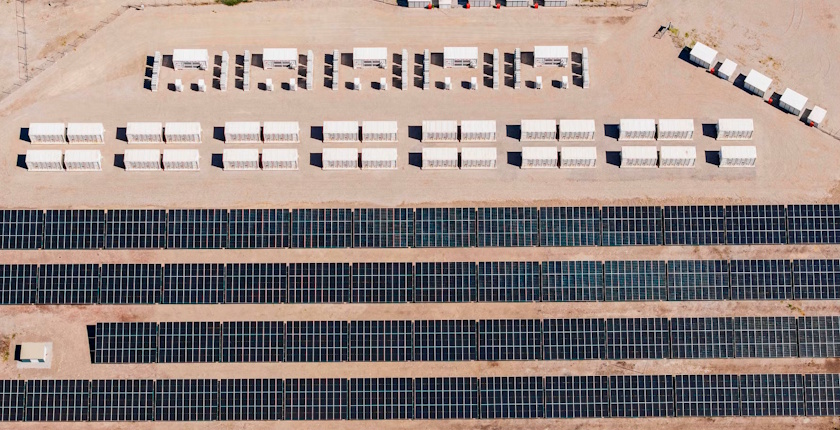
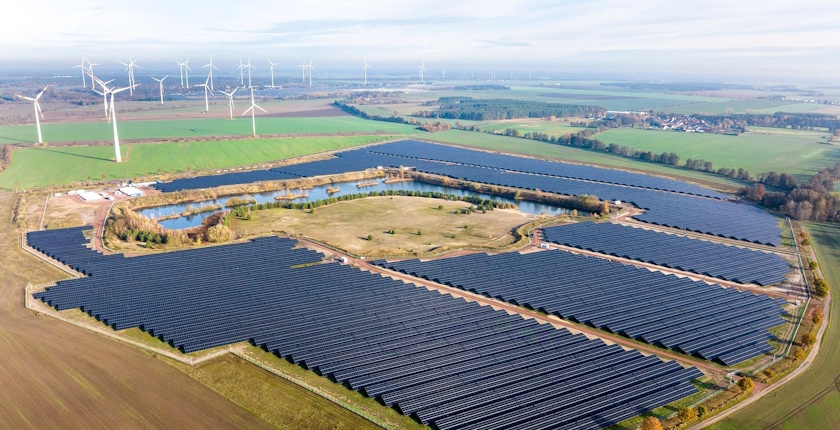
Located on a 41-hectare former gravel pit, the site combines 73,000 solar modules with a capacity of 46.4 MWp and a 57 MWh battery energy storage system (BESS).

The facility is designed and built to operate as a fully co-located hybrid asset, providing grid-supportive, dispatchable renewable power, Sunotec explained.

The project is being developed by Statkraft

The project is being developed by Statkraft. The Hybrid Power Plant Zerbst will deliver 50,000 MWh of renewable electricity per year. It is sufficient for 14,000 households.

This is the company’s first hybrid power plant in Germany and a proof of concept for its fully integrated, beyond-EPC delivery model, according to Sunotec.

The model is different from a traditional EPC contract. Sunotec implemented the core phases of the Zerbst hybrid power plant internally, including engineering, geotechnical assessments, and environmental planning.

Following completion, Sunotec will continue to manage the operations and maintenance of the PV plant.

​Atanasov-Lankes: we demonstrate the strength of Sunotec’s integrated model

This integrated approach reduces interfaces, eliminates fragmentation, and guarantees high-quality delivery, the company said.

“With the Hybrid Power Plant Zerbst, we demonstrate the strength of Sunotec’s integrated model and our ability to deliver complex systems at scale,” Zharin Atanasov-Lankes, Managing Director of Sunotec Germany, stressed.

He underscored that the project reflects the engineering depth and execution capability of the firm’s teams.

Over the last six months, Sunotec has made major steps in developing its operations in Europe.

In November 2025 the company signed an agreement with oil and gas major Shell on the development of battery energy storage systems in Central Eastern Europe. In July it has agreed with China-based Sungrow to install 2.4 GWh of BESSs.
by in News

Sunotec advances Germany’s largest EEG hybrid power plant

Sofia-based solar and battery developer Sunotec announced a key milestone in the construction of the Hybrid Power Plant Zerbst. The company claims it is set to become Germany’s largest solar-battery hybrid power plant under the Renewable Energy Sources Act (EEG).

Located on a 41-hectare former gravel pit, the site combines 73,000 solar modules with a capacity of 46.4 MWp and a 57 MWh battery energy storage system (BESS).

The facility is designed and built to operate as a fully co-located hybrid asset, providing grid-supportive, dispatchable renewable power, Sunotec explained.

The project is being developed by Statkraft

The project is being developed by Statkraft. The Hybrid Power Plant Zerbst will deliver 50,000 MWh of renewable electricity per year. It is sufficient for 14,000 households.

This is the company’s first hybrid power plant in Germany and a proof of concept for its fully integrated, beyond-EPC delivery model, according to Sunotec.

The model is different from a traditional EPC contract. Sunotec implemented the core phases of the Zerbst hybrid power plant internally, including engineering, geotechnical assessments, and environmental planning.

Following completion, Sunotec will continue to manage the operations and maintenance of the PV plant.

​Atanasov-Lankes: we demonstrate the strength of Sunotec’s integrated model

This integrated approach reduces interfaces, eliminates fragmentation, and guarantees high-quality delivery, the company said.

“With the Hybrid Power Plant Zerbst, we demonstrate the strength of Sunotec’s integrated model and our ability to deliver complex systems at scale,” Zharin Atanasov-Lankes, Managing Director of Sunotec Germany, stressed.

He underscored that the project reflects the engineering depth and execution capability of the firm’s teams.

Over the last six months, Sunotec has made major steps in developing its operations in Europe.

In November 2025 the company signed an agreement with oil and gas major Shell on the development of battery energy storage systems in Central Eastern Europe. In July it has agreed with China-based Sungrow to install 2.4 GWh of BESSs.

by in News

EU’s new power pricing interval boosts BESS profit potential – analysis

The rollout of the European Union’s new power pricing system in October, with prices set every 15 minutes, rather than every hour, has increased the profit potential of battery energy storage systems (BESS). In several countries, BESS profits now have the potential to rise by more than 15%, according to an analysis by research and energy intelligence company Rystad Energy.

Thanks to the 15-minute trading interval, arbitrage potential on the EU’s day-ahead power markets has increased by an average of 14%, with some countries, such as Austria and Slovakia, recording gains of over 20%, according to the analysis.

In Germany, quarter-hour arbitrage was 16% more profitable than hourly arbitrage, while in Lithuania, the improvement was 14%.

The new system brings the greatest benefits in countries with less flexibility

The new trading intervals, known as 15-minute Market Time Units (MTUs), bring the greatest benefits in countries with less flexibility in power generation and consumption, where a high share of intermittent renewables can cause large price swings, according to Sepehr Soltani, senior analyst for energy storage at Rystad.

Rystad estimates that if a battery earns around 20% more each year due to these price swings, its total return on investment can increase by about 3% over 20 years.

A 20% annual profit gain could raise return on investment by 3% over 20 years

In contrast, in places with a flexible electricity supply, such as Norway with hydropower and Portugal with hydropower and gas, prices are more stable over an hour, so the difference between profits from 15-minute and hourly trading is much smaller, he explained.

This is why in Portugal, Norway, and Sweden, the new system has brought only minor improvements in BESS profitability potential.

Rystad noted, however, that today’s unusually high arbitrage margins, of over USD 150 per MWh, are not expected to persist over the next 10–20 years. A more realistic long-term average is around USD 60 per MWh, according to the analysis.

by in News

Europe’s energy storage capacity to reach 100 GW this year, more than double by 2030

Energy storage in Europe has been expanding rapidly since 2020, with the total installed capacity in the European Union, the United Kingdom, Norway, and Switzerland set to reach 100 GW by the end of November. Pumped hydro storage has the largest share of the existing capacity, 50.6 GW, followed by batteries, with 44.8 GW of operating power, according to an analysis by LCP Delta and Energy Storage Europe.

All energy storage technologies combined are expected to grow by 115%, to 215 GW, by 2030, expanding at a rate of 20 GW to 25 GW per year, according to the report, titled the European Market Monitor on Energy Storage. On November 1, the cumulative figure stood at 99.3 GW.

Battery storage capacity has seen stronger growth than pumped storage hydropower plants this year, with 4 GW of new utility-scale installations, and is projected to expand to 163 GW by 2030.

Battery storage capability is expected to reach 163 GW by 2030

Of the total 44.8 GW of battery capacity, large-scale systems connected to the grid (front of the meter) account for 17 GW, and systems installed on the customer’s side (behind the meter) for 27.8 GW.

According to the report, 18 million homes have a solar system, and four million have battery storage. Residential battery sales are now stabilizing following the 2022-2023 peak, with recovery expected from 2027, supported by a rebounding PV market, rising electrification of homes and transportation, dynamic tariffs, and new financing models.

Europe has 18 million solar homes and four million homes with batteries

Germany has the largest number of home battery systems, 2.1 million, followed by Italy, with 780,000, the UK, with 280,000, Austria, with 200,000, and Belgium, with 160,000.

Jacopo Tosoni, Head of Policy at Energy Storage Europe, hailed energy storage as the fastest-growing clean technology in Europe, with the potential to become the engine of its competitiveness, according to a press release from the association.

Silvestros Vlachopoulos, Energy Storage Research Lead at LCP Delta, said that reaching the 100 GW energy storage capacity marks a key moment for the industry, setting the stage for an even faster renewable energy growth in the coming years.

LCP Delta and Energy Storage Europe believe the energy storage industry is only just getting started and will continue to make a substantial contribution to Europe’s energy transition, according to a press release from the association.

by in News

Sunotec, Shell join forces to develop BESS in Europe

Sofia-based Sunotec signed an agreement with oil and gas major Shell on the development of battery energy storage systems in Central Eastern Europe.

Sunotec is developing projects for large solar and battery energy storage systems (BESS) in Europe while Shell is one of the leading oil and gas companies in the world.

Sunotec said it signed a cross-border agreement with Shell Energy Europe B.V. It marks a milestone in advancing innovative financial mechanisms for the development of battery energy storage systems in Central Eastern Europe, the Bulgaria-based company added.

The five-year agreement is linked to a 600 MW BESS project owned by Sunotec. The battery is under development and expected to enter commercial operation by Q2 2026, the update reads.

The deal helps Shell to diversify its wider power portfolio in the region

“The agreement provides long-term price stability for the project, supporting its financial viability. For Shell, the deal helps to diversify its wider power portfolio in the region. The agreement was facilitated by Enery Portfolio Optimisation,” Sunotec said.

The transaction is among the first of its kind in Central Eastern Europe and it helps to establish battery project development in the region, according to the renewables developer.

Kaloyan Velichkov, Sunotec founder and CEO, stressed that agreements like the one with Shell highlight the company’s commitment to working with leading energy players who share its vision for a sustainable and forward-looking energy future.

Velichkov: The agreement demonstrates the power of collaboration in advancing flexibility and renewable-energy driven independence

“This pioneering agreement demonstrates the power of collaboration in advancing flexibility and renewable-energy driven independence. By uniting technical expertise with financial ingenuity, we are helping to build a more resilient and integrated energy system,” he underlined.

The transaction demonstrates how cross-border cooperation and forward-looking financial mechanisms can enhance regional energy market integration and facilitate the deployment of large-scale renewable energy assets, in Kaloyan’s view.

Of note, Sunotec has been very active in the market over the last few months.

In October, the firm secured financing for a portfolio of seven projects in Bulgaria.

Three months prior, it signed an agreement with Sungrow on installing 2.4 GWh of BESS in Europe.

by in News

Batteries totaling 5,899 MWh in grid connection procedure in Serbia

Investors in Serbia are obtaining approvals for connecting their planned battery energy storage systems of an overall 2,021 MW and 5,899 MWh to the grid. The projects are for standalone batteries and ones that would be co-located with power plants.

Battery energy storage systems (BESS) are rapidly expanding worldwide, and Southeast Europe is no exception. European Union member states in the region such as Bulgaria and Romania are making major strides, while the other countries are trying to catch up. For example, Bosnia and Herzegovina, Montenegro, North Macedonia and Serbia.

As of September 29, Serbia’s transmission system operator (TSO) Elektromreža Srbije (EMS) received a total of 12 applications for the development of connection studies for standalone BESS, Nebojša Vučinić, manager of the Development Division of EMS, told Balkan Green Energy News.

Two applications were submitted in January for the study development interval of March 1 to June 30, 2025, and ten more were received for the current interval, which lasts from September 1 to December 31. Out of the first two applications, the one from Green BESS KV is no longer valid, because the firm didn’t submit a bank guarantee.

EMS develops connection studies every year in two intervals.

The following companies are in the process of connecting standalone BESS:

  • MKBDP Energy
  • Green Land New Energy
  • Green Mountain New Energy
  • BP WPP
  • Blue BESS KV
  • Red BESS KV
  • Yellow BESS KV
  • ENLIGHTNES PV OPERATIONS
  • ENLIGHTNES PV PARK
  • Gridflex

As for the status of their applications, MKBDP Energy has submitted a bank guarantee, and the signing of the grid connection contract is expected.

For the other ten requests, the grid connection studies are underway. They are expected to be completed by December 31.

Standalone storage facilities are planned in Valjevo, Vranje, Subotica, Kovačica, Vršac, Leskovac, Kragujevac, Kruševac, Jagodina, and Ćuprija.

A total of 55 battery projects are in the connection procedure

The 11 standalone storage projects amount to 1,072.66 MW and 2,981.98 MWh altogether, Vučinić said.

The 44 storage facilities that would be co-located with power plants utilizing variable renewable energy sources would have 948.46 MW and 2,917.31 MWh, as stipulated in the Law on the Use of Renewable Energy Sources.

All battery storage projects in the grid connection process amount to 2,021.12 MW and 5,899.29 MWh, Vučinić stressed.

MKBDP Energy’s project has advanced the most in the connection process

According to Vučinić, implementation of BESS projects depends on the progress that an investor achieves. Currently, MKBDP Energy’s investment has passed the most milestones in the connection process, he added.

EMS noted that the grid connection process for standalone battery storage is defined by the Law on Energy and bylaws.

The deployment of standalone batteries complements the integration of power plants running on variable renewable sources

The state-owned company sees no obstacles to integrating standalone BESS into the transmission system. The TSO expressed commitment to assisting investors while maintaining the safety of the entire power system’s operation.

EMS also called the increase in applications for standalone batteries a positive development.

The emergence of standalone batteries complements the integration of power plants utilizing variable renewable energy, and since a large number of such power plants are expected to be connected, the integration of standalone storage helps the power system’s flexibility and safety, Vučinić underlined.

by in News

Montenegro’s power utility seeks contractor for two battery storage systems

Montenegro’s state-owned power utility, Elektroprivreda Crne Gore, has launched a tender for the procurement and installation of two battery energy storage systems with a total capacity of 60 MW/240 MWh.

Elektroprivreda Crne Gore (EPCG) is seeking a partner for the design, supply, installation, testing, and commissioning of two battery energy storage systems (BESS), each with a capacity of 30 MW and 120 MWh, with an output voltage of 35 kV.

The estimated value of the procurement is EUR 48 million excluding VAT, according to the public call.

The EPC (Engineering, Procurement, and Construction) contract for the batteries is a comprehensive turnkey agreement covering all phases of project development, including design, equipment procurement and delivery, permitting, construction, and commissioning.

The contract also includes training for EPCG personnel

Technical staff training is included to ensure the proper and safe operation of the facilities, as well as to validate their performance in accordance with the contracted terms, which will be mutually confirmed by signing a technical acceptance report.

The EPC covers all technical, engineering, logistical, and construction details, workplace health and safety, environmental protection, and responsibilities for performance guarantees and technical maintenance of the facility, according to the public call.

According to previous announcements, EPCG intends to utilize existing infrastructure for connection to the transmission grid. Potential locations include the 60 MWh hydropower plant Perućica, EPCG’s steel mill Željezara Nikšić with two 60 MWh units, and the 60 MWh Pljevlja thermal power plant.

The first two battery systems will be installed at the Željezara site.

EPCG held talks with several investors

In March, the company announced it had held discussions with several companies and financiers from the region, Europe, and beyond.

EPCG initially announced its intention to install batteries in early September last year. At that time, the EPCG Board of Directors adopted a project task proposal for adding BESS capacities.

According to the project task, EPCG aims to optimize the utilization of all renewable energy sources, alongside numerous new renewable energy projects.

The company plans to secure the flexibility of the power system with energy storage systems based on lithium-ion batteries, according to EPCG.

by in News

Nova Power & Gas to install 200 MW BESS in Romania

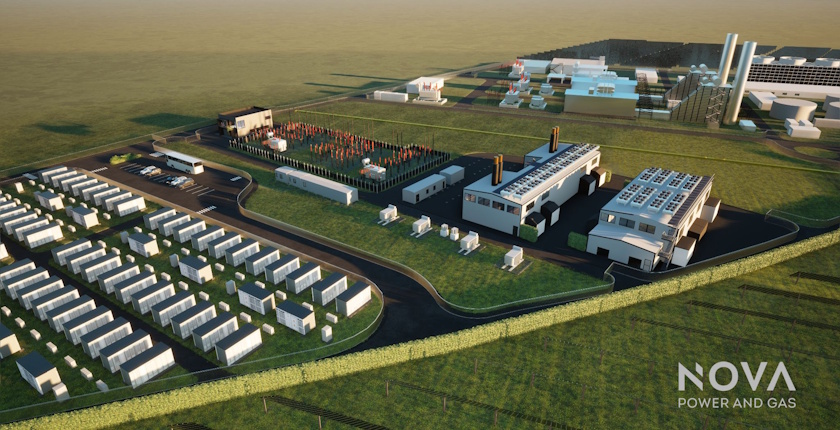
Amid a battery investment frenzy in Romania, Nova Power & Gas is about to build a battery energy storage system that would double the current total capacity in the country. In addition, the company is beginning the construction of a 150 MW gas power plant.

Nova Power & Gas claims it is currently the national leader in energy storage capacity, with 240 MWh already operational. According to the latest data published by Transelectrica, the current total battery energy storage capacity in Romania is 398.8 MWh.

Part of the Romanian E-Infra Group, Nova Power & Gas announced the launched of the largest battery energy storage project in Romania.

The installation in Florești, Cluj county, will have 200 MW in operational power and a capacity of 400 MWh, and is expected to become operational by the end of 2025, according to the firm.

The first phase of the gas power plant is scheduled to become operational by December 2026

Once completed, the facility will double Romania’s current total energy storage capacity, directly contributing to the stability of the national grid and the integration of renewable sources, the company added.

Apart from the BESS, Nova Power & Gas said it is starting to build a 150 MW gas-fired power plant in Câmpia Turzii, with the first phase set to come online by December 2026.

By 2028, the company plans to install one more gas power plant, of 200 MW, and energy storage systems of another 600 MW / 1,200 MWh overall.

Costea: Investments in gas plants to support balance and flexibility in the energy system

“Through these investments, we aim to maintain and strengthen our leadership in energy storage, while making substantial investments in gas-fired electricity generation to support balance and flexibility in the national energy system,” Septimiu Costea, CTO of Nova Power & Gas, stated.

The company is also active in the region, with subsidiaries in Bulgaria, Serbia, Hungary, and Moldova.

Contractors picked for two more investments over the last two weeks

Over the past two weeks, there were two major announcements regarding BESS investments.

Romanian engineering and technology company Simtel said it would install a 98.6 MW / 196.4 MWh system for Turkey-based Güriş.

Simtel noted that the size of the facility is significant, considering that the total battery energy storage capacity in Romania was 398.8 MWh at that moment.

Another firm, Visual Fan, plans to build a 65 MWh energy storage unit for Renovatio Trading in Toplița in Romania’s Harghita county.

by in News

Visual Fan to install BESS facility of 65 MWh for Renovatio Trading

Visual Fan will install a 65 MWh energy storage for Renovatio Trading in Toplița in Romania’s Harghita county.

The batteries market in Romania is very active these days.

The battery energy storage system  (BESS) will be built by Allview Energy, Visual Fan’s division specialized in the development of large-scale photovoltaic parks, including storage capacities.

It is the first major contract for the implementation of a power storage system, Allview said.

The contract is valued at EUR 9.2 million. It is set to be implemented in association with partners Enersec Technology and TQM Services.

The implementation period for the contract is seven months

The project includes state-of-the-art technologies in terms of batteries and energy flow control, according to Allview.

The implementation period is seven months. The deal includes all stages of the project – engineering, procurement and execution, full integration into the energy system and the successful completion and testing.

The goal is to help balance the national grid and accelerate the integration of green energy into daily consumption, Allview added.

“The signing of this contract marks a defining moment in Visual Fan’s development journey, reflecting the company’s strategic maturity and the market’s growing confidence in our skills. Since the end of 2024 and the beginning of 2025, the company has entered a new stage of consolidation and expansion, by attracting major projects, which validate the management’s strategic vision, the team’s expertise and the ability to implement complex solutions on a large scale,” said Christina Munteanu, Economic Director of Visual Fan.

Peticilă: Thec ontract is a confirmation of the active role that Visual Fan has in Romania’s energy future

According to Visual Fan CEO Lucian Peticilă, the signing of the contract is a confirmation of the company’s strategic vision and the active role it has in Romania’s energy future.

Visual Fan is happy to build this path together with Renovatio Trading, guided by the same vision: a clean, balanced and sustainable energy future for Romania, he added.

Of note, a few days ago the National Energy Regulatory Authority of Romania (ANRE) approved a regulation eliminating double taxation of energy storage, to accelerate the deployment of solutions for storing electricity.

by in News

Energy storage in focus: How custom insurance solutions are fueling Southeast Europe’s green transition

Battery energy storage is becoming increasingly central to the energy transition in Southeast Europe and beyond, thanks to its key role in enabling renewables integration while ensuring grid flexibility and resilience. However, as battery energy storage systems (BESS) become more advanced and technologically complex, the risks involved exceed those of traditional renewable energy projects, making tailor-made insurance vital to their bankability, safety, and profitability. We discuss the importance of energy storage for the region’s green transition, as well as the critical role of custom-made insurance solutions in the success of BESS projects, with Delyan Iliev, Managing Director of Renewable Energy Insurance Broker (REIB), a market leader in BESS insurance in Southeast Europe.

Why storage is becoming central to Europe’s energy strategy

As Europe accelerates its energy transition, solar is leading the charge. In 2024 alone, 21.9 GWh of new battery energy storage systems (BESS) were installed across the continent, marking a 15% year-on-year growth. With storage now considered essential for grid flexibility, market stability, and renewable integration, Southeast Europe is beginning to recognize its strategic value.

“Energy storage is not a side note anymore, it’s quickly becoming a pillar of the energy system,” says Delyan Iliev, Managing Director of Renewable Energy Insurance Broker (REIB). “We’re proud to help accelerate that shift. In the first half of 2025, we’ve already insured over 5 GWh of battery projects across Europe – including in Bulgaria, Germany, and the UK. That scale shows how far the market has come, and how much trust there is in high-quality insurance.”

In Serbia, solar deployment is gaining pace, and developers are preparing for large-scale projects. Regulatory frameworks are evolving to support hybrid models that combine generation with storage. BESS is no longer just a technical upgrade; it’s a strategic enabler for grid stability, revenue optimization, and investor confidence.

What makes BESS riskier than traditional energy projects?

As storage projects become more complex, so do the risks. Unlike conventional solar or wind installations, BESS introduces specific technical and operational challenges—from thermal runaway and fire risk to cyber threats, component failure, and yield degradation. These are real risks requiring serious attention from insurers and developers alike.

Poor system design, such as insufficient spacing between battery units and PV modules, can also trigger insurance exclusions or delay permitting. “In emerging markets like Serbia, where regulations are still catching up with technology, project design and compliance can make or break an investment,” says Iliev.

This is why traditional, off-the-shelf insurance is no longer adequate. Storage requires a more nuanced approach – one that aligns with each project’s structure, revenue model, and operational realities.

REIB’s approach: Insurance that mirrors project reality

Recognizing this need, Renewable Energy Insurance Broker has created tailor-made insurance solutions designed specifically for energy storage systems. A cornerstone of its model is Business Interruption (BI) insurance – not a standard add-on, but a fully customized product. Rather than applying generic compensation formulas, REIB designs the BI structure around how each project actually earns revenue, whether through tolling agreements, profit-share arrangements, or hybrid mechanisms.

This precision ensures fair and effective compensation, not only when a system completely fails, but also when partial degradation or performance issues occur. Furthermore, the BI coverage accounts for income loss, not just profit, delivering significantly higher payouts in case of disruption. Indemnity periods can be extended up to 18 months, supporting the financial stability of a project well beyond initial damage control.

Why early-stage insurance is so critical for BESS

One of the most critical features in REIB’s offering is early-stage protection. The company insures storage projects from the installation phase, well before grid connection. This phase, often excluded by traditional policies, is one of the riskiest stages in a project’s lifecycle. By covering this early gap, REIB offers peace of mind to both developers and investors.

In addition, REIB’s policies include protection against underperformance (reduced yield), cyber risk coverage for systems managed via EMS or SCADA, and third-party liability, including sudden environmental pollution, which is increasingly relevant for permitting and compliance in European markets.

Applicable to co-located and stand-alone storage

While co-located solar + storage projects dominate the market, stand-alone BESS is gaining traction in Serbia and other Southeast European countries. These projects play a crucial role in grid balancing, frequency regulation, and capacity markets, especially in areas where renewable generation is unevenly distributed.

REIB’s insurance framework applies to both co-located and stand-alone BESS systems, adjusting coverage parameters to meet the distinct operational and revenue profiles of each. Whether tied to a solar plant or operating independently, these assets face risks that must be managed holistically.

What gives REIB its unique market perspective?

REIB is more than a broker, it’s also an investor. The company is directly involved in PV+BESS projects like the 4.1 MWp solar plant with 4MW/8 MWh BESS in Nikolichevtsi and the 5 MWp + 6MW/12 MWh BESS in Bagrentsi. “We don’t just assess risk from a distance,” says Iliev. “We experience it firsthand, and that’s what helps us design smarter coverage.”

How insurance can drive the BESS market forward

For REIB, insurance is not just a regulatory requirement; it’s a strategic lever. “Well-structured insurance improves bankability, secures investor confidence, and unlocks access to financing,” says Iliev. “In a sector like BESS, that can be the difference between stalled progress and market leadership.”

As Serbia and its neighbors move toward a new energy reality, battery systems will be central to the equation. Making them bankable, and insurable is where REIB steps in, helping to turn risk into resilience and innovation into long-term value.

For more information about tailor-made insurance solutions for BESS projects, contact the REIB team to explore how they can support your next project.

  • 1
  • 2