by in News

Europe has record battery storage capacity growth in 2024 but expansion slows

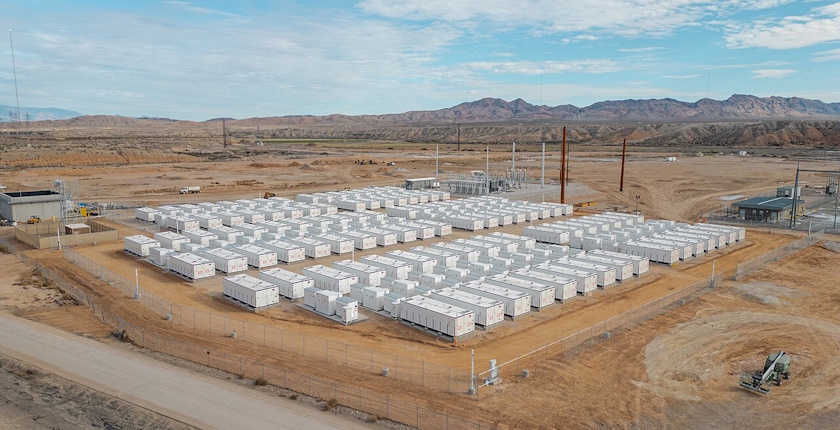
New battery storage installations last year in Europe came in at an all-time high 21.9 GWh in capacity, though the leap wasn’t as impressive as in the previous years. The total reached 61.1 GWh. “If Europe has already entered the solar age, the battery storage age is just beginning,” said Walburga Hemetsberger, CEO of SolarPower Europe, which issued the annual report.

Europe marked the eleventh consecutive year of record-breaking battery storage installations – in capacity terms, the addition was 21.9 GWh. According to SolarPower Europe’s update, the new capacity was 15% bigger than in 2023, after effectively doubling for several years in a row.

The battery fleet ended December at 61.1 GWh. The growth rate in 2024 was 56%, compared to the 94% registered one year before.

The region that was tracked consists of the European Union, United Kingdom and Switzerland. The EU alone closed 2024 with 18.5 GWh in newly installed battery storage capacity.

“If Europe has already entered the solar age, the battery storage age is just beginning. With solar energy mainstreaming across the continent, now is the time for European decision makers to put batteries at the centre of a flexible, electrified energy system,” the organization’s Chief Executive Officer Walburga Hemetsberger stated.

She urged the European Commission to double down on its efforts and adopt an action plan as part of a broader energy system flexibility package. “The recent electricity outage in the Iberian Peninsula is a stark reminder of why this is important,” Hemetsberger pointed out.

BESS projection puts EU likely below 2030 target

In the most likely scenario, 29.7 GWh of battery storage will be installed this year, translating to a 36% annual growth in new capacity and 49% in total. The report anticipates a sixfold increase to 118 GWh added in 2029. It would bring the entirety of battery energy storage systems (BESS) to 399 GWh, of which 334 GWh in the EU.

However, it is far below the levels required to meet flexibility needs in a renewables-driven energy system, the annual report’s authors warned. A study showed that the EU needs 780 GWh by 2030 to fully support the transition.

This year the share of the new front-of-meter BESS, in the utility scale segment, is seen at 55%, against last year’s 40%. The absolute level would nearly double. As for behind the meter, commercial and industrial (C&I) systems grow to 12% from 10% of the new fleet while residential installations decline from 50% to 33% in 2025.

Drop in power prices from crisis levels faded appeal of battery storage capacity

Residential battery deployment declined by 11% in 2024 after years of rapid growth. The report attributes it to the drop in electricity prices when the energy crisis subsided, the removal or reduction of subsidies in key markets and a parallel decline in the deployment of residential solar power units.

Home batteries account for 57% of the whole cumulative level.

New large-scale grid batteries surged 79% against 2023, marking a turning point for utility-scale storage.

Last year new C&I installations were 17% bigger, remain below their potential and holding at one tenth of the whole capacity for several years now, the document shows. Companies in the segment generally invest in battery storage to maximize self-consumption from on-site photovoltaics, avoid peak demand charges and reduce reliance on backup diesel generators.

Additionally, solar and storage allow businesses to meet corporate sustainability targets by reducing carbon footprint of operations. Lastly, the electrification of production processes, heating, and transport fleets is driving unique use cases and a need for storage.

Spain lags but seen rebounding, reaching top five in 2025

The top growers and their positions in the chart were the same as in 2023: Germany (6.2 GWh), Italy (6 GWh), the United Kingdom (2.9 GWh), Austria (1.1 GWh) and Sweden (1 GWh). Together they had a 78% share in both new and cumulative installations.

Germany added slightly less on an annual scale than in 2023 amid a drop in newly installed residential units. Italy’s home battery segment also decreased, but the large-scale segment’s capacity surge brought the market to new heights. The UK experienced a temporary slump due to project delays at the large-scale level.

Last year Spain added less than 250 MWh in battery storage capacity, making it the 14th-biggest market in Europe. Overall it reached 1.7 GWh, of which 90% were small-scale systems.

The country’s new battery installations were 41% lower than in 2023. The Spanish market has been declining since 2022, but it is expected to enter the top five this year, with 1.3 GWh, amid a utility-scale segment’s revival.

BESS market requires level playing field

SolarPower Europe said the authorities need to encourage the participation of hybrid projects of solar and BESS in renewable energy auctions.

“Contracts for difference must be settled based on energy production rather than energy injection. This will allow the asset operator to receive the CfD for the PV asset while generating additional market-based revenues from the BESS. These extra revenues will eventually lead to lower bids from developers and reduce the support costs for society,” the document reads.

The EU must ensure transmission system operators (TSOs) procure balancing services in market-based procedures in which batteries can compete on a level playing field, the organization added. Some EU markets still rely on bilateral contracts that limit fair competition and exclude smaller storage assets, it underscored.
by in News

Turkey to manufacture green hydrogen, nuclear, CCS equipment

The 2030 Industry and Technology Strategy includes setting up industrial facilities in Turkey for nuclear energy, green hydrogen, battery storage and carbon capture and storage (CCS). The country is planning to establish a value chain for critical raw materials. The government vowed to support the development of semiconductor technology, autonomous and flying vehicles and cybersecurity solutions, alongside innovations for electric vehicles and solar and wind power.

With its recently unveiled 2030 Industry and Technology Strategy, Turkey announced the ambition to upgrade its industrial production to one of the most advanced in the world. As Russia’s Rosatom is completing the country’s first nuclear reactor in Akkuyu, the government is planning to develop its own technology in the segment.

The strategy involves setting up industrial clusters for equipment and infrastructure. Among the possible technologies are molten salt reactors. The Scientific and Technological Research Council of Türkiye (TÜBİTAK), Turkish Energy, Nuclear and Mineral Research Agency (TENMAK) and Istanbul Technical University (İTÜ) are tasked with establishing a nuclear tech park.

Green hydrogen mostly needed for decarbonizing hard-to-abate industrial production

TÜBİTAK is responsible for developing domestic electrolyzers as well. The national hydrogen program is set to bring support for integrating the production of green hydrogen, storage, transportation and consumption. The last of the four is especially focused on energy-intensive industries such as steel, petrochemicals and fertilizers.

Another segment that would get incentives is the use of hydrogen in fuel cell vehicles including heavy vehicles. The strategy envisages setting up pilot zones for green hydrogen production, with electrolyzers powered by wind and solar energy.

Turkey has high ambitions for high-tech exports

Turkey has revealed the goal of tripling its high-tech exports to USD 30 billion by the end of the decade. It is part of an ambition to lift industrial exports to USD 400 billion from last year’s USD 247 billion. At the same time, the government’s target for the overall valuation of domestic tech startups is USD 100 billion.

The 2030 Industry and Technology Strategy has other chapters, too, like carbon capture, utilization and storage (CCUS or just CCS), access to critical raw materials, semiconductor and battery manufacturing and cybersecurity. Officials vowed to continue prioritizing domestic electric vehicles, but with investments in autonomous operation systems and even flying cars.

Cybersecurity solar and wind turbine technologies. Turkey apparently remains dedicated to expanding the industrial base for solar panels and wind turbines as well.

by in News

Two PV parks of 117 MW in total coming online near Bucharest

Eximprod Grup is about to commission a 65 MW photovoltaic facility in Prahova county, north of Bucharest, before adding a battery system, and Simtel obtained financing for the completion of a 52 MW solar power plant in Giurgiu, south of Romania’s capital city. Additionally, the developer of a project of a similar size in Alba county in Transylvania, including energy storage, applied for an environmental permit.

Eximprod Group said it completed a solar park of 49.5 MW in connection capacity in Ciorani, Prahova county, north of Bucharest. Commissioning and grid integration are underway.

According to its documentation, the facility has 65 MW in peak capacity. It consists of five units with 9.9 MW in grid connections each.

The PV plant is coming online through a 20/110 kV power station and a single metering point. Eximprod, controlled by investors Manole Gheorghe and Vasile Domente, thanked Transelectrica, DEER, Ostenweg Sysplan SRL and Alive Capital for cooperation in the project. The company bought 590 W solar panels.

Eximprod has won a EUR 13.4 million grant for the Ciorani project from NRRP

The EUR 56.2 million endeavor includes a grant of EUR 13.4 million from the National Recovery and Resilience Plan (NRRP or, in Romanian, PNRR). It is part of the European Union’s Recovery and Resilience Facility (RRF).

Eximprod invested in the solar park, which features trackers, through its project firm Solar System Project. The facility was built on an 89-hectare land plot. It is located next to a solar power plant of the same owners, with a 15.5 MW connection and 20 MW in peak capacity.

The company plans to add a 21 MW battery energy storage system to the Ciorani PV park. Eximprod recently completed the first of seven foundations of a 38.4 MW wind park in Galați county in the region of Western Moldavia.

Banca Transilvania approves loans for large solar power project in Giurgiu

The Giurgiu county, west and south of Romania’s capital city, is emerging as one of the country’s solar power and energy storage hubs. Major projects are being materialized in other areas around Bucharest as well. Engineering company Simtelhttps://balkangreenenergynews.com/imports-from-china-dont-exceed-26-of-pv-project-costs-in-romania/ said it has signed financing contracts for a PV plant of 52 MW in peak capacity, which is 80% finished.

Annual output is estimated at 69 GWh.

Banca Transilvania, Romania’s largest, has approved a ten-year investment loan of EUR 16 million and a bridge loan of EUR 12.2 million. The latter is denominated in local currency and matures in March 2026.

Simtel has completed its first three smaller PV plants

“Since 2023, with the completion of our first proprietary photovoltaic park in Pleșoiu, our company has entered a new stage of development, becoming an electricity producer. The Giurgiu project represents an important step in this direction, as it covers more than half of the total capacity we aim to have completed and operational in our portfolio by mid-2026,” said Simtel Team’s Chief Executive Officer Mihai Tudor.

Romania has supported the investment in Giurgiu through NRRP. The bridge loan covers the financing needs before the company collects the grant.

Simtel, which is also a contractor, has completed three of its PV projects – in Pleșoiu, Salonta, and Iacobeni. Four others are in various stages of construction or permitting – in Anina, Ianca, Mangalia, and Movilița. Together with the facility in Giurgiu, their combined peak capacity is above 83 MW. The eight units will generate an estimated 111 GWh per year.

The company is listed on the main market of the Bucharest Stock Exchange (BSE). Simtel offers consultancy services, authorization, design, engineering, construction, maintenance, operation, measurement, control, and energy supply. It was founded in 2010 by Iulian Nedea, Sergiu Bazarciuc and Radu Vilău.

Solar-BESS hybrid power plant project on monastery land in Alba is worth EUR 53.1 million

As for other relevant news in Romania, Bucharest-based Ponor Energy requested an environmental approval for a solar power project of 56.7 MW in peak capacity, which would include batteries. The site is in Ponor commune in Transylvania’s Alba county, spanning 48.6 hectares. The firm leased monastery land for 25 years.

The facility would consist of 166 Huawei inverters of 49.8 MW in total and Trina Solar’s 85,852 bifacial panels of 660 W. The battery segment would have 81.5 MWh in capacity.

Excluding value-added tax, the investment is worth an estimated EUR 53.1 million.

by in News

Bulgaria grants EUR 587 million to 82 battery storage projects

Developers of 82 standalone battery storage projects in Bulgaria, for an overall 9.71 GWh in capacity, got approval for EUR 587 million in subsidies from the Ministry of Energy. Another 30 landed below the line, but the government intends to boost the program by EUR 120 million.

More than four months after the deadline for applications, the Ministry of Energy of Bulgaria ranked 112 projects for standalone battery energy storage systems (BESS). Through the RESTORE call for grants, it approved EUR 587 million for 82 of them, exhausting the budget.

The scheme is part of the National Recovery and Resilience Plan (NRRP), under the Recovery and Resilience Facility (RRF), which the European Commission controls.

The selected investments envisage an overall 9.71 GWh of storage capacity, compared to the target of at least 3 GWh. The aim is to provide balancing to enable a significant increase in the share of wind and solar power in the energy mix, as well as to ensure the security and stability of the country’s electricity system. The facilities will be connected to the grid at both the transmission and distribution levels.

Notably, Bulgaria is struggling to meet the conditions and deadlines for NRRP funding, including for battery projects. Moreover, the ministry apparently decided not to move forward with a second call for subsidies for households for solar panels with or without batteries, and for solar collectors. It risks losing the European Union’s funding.

Project underway for 125 MW battery system in Burgas

The largest selected investment is BESS Burgas. The project is worth EUR 90 million, of which the grant would cover 26.5%. The proposed facility would have 125 MW in operating power and a four-hour duration, translating to 500 MWh.

The list lacks data on planned capacities for many of the projects. Among them is the one from ContourGlobal Maritsa East 3 (Maritsa iztok 3), the operator of a coal power plant that recently ceased operations. The company intends to invest EUR 74.5 million, the fifth-highest amount. The ministry said it would provide 40% of the total.

The owner of the recently closed Maritsa East 3 coal power plant won a 40% subsidy for its EUR 74.5 million BESS proposal

Weapons and ammunition producer Arsenal 2000 won a 44% subsidy for its EUR 48.9 million project. It intends to install a BESS of 80 MW and 350 MWh. One of the selected proposals is called Verila Solar Park 2. The share of the approved grant in the EUR 65.7 million investment is 32%.

Toki Storage stands out among the beneficiaries with 11 approved projects of the same size and valuation: 10 MW, 40 MWh and EUR 6 million each. The grants would cover 30% to 39.3%.

NEK fails to qualify with its project for battery system at Topolnitsa hydropower plant

Out of 151 applications, 118 initially passed to the ranking stage. The ministry said they were worth a combined EUR 838 million. The 30 projects in reserve are worth EUR 212 million, it added.

They include proposals from coal plant operators Toplofikatsiya Pernik and Bobov Dol. The ministry rejected four projects, of which one from state-owned National Electricity Co. (NEK), for a 20 MWh battery unit at its Topolnitsa hydropower plant.

According to consulting firm New I, involved in more than 40% of the winners in the call, they are worth EUR 1.59 billion altogether, Bulgarian language EU Funds website reported. Requested support ranges between just below EUR 40,000 per MWh and EUR 80,000 per MWh, and the weighted average came in at EUR 60,000 per MWh, it revealed.

Many of the 151 projects were duplicated, the article adds.

Importantly, the government has proposed increasing the RESTORE program by EUR 120.6 million, which would be sufficient for at least 20 projects in the reserve group.

The ministry was supposed to select the beneficiaries by January. The deadline for drawing the EU funds is June next year, so the developers must rush to install their battery systems – but first they need to sign contracts with the government.

by in News

Solar park of 46.6 MW integrated with Turkey’s fifth-largest wind farm

The newest hybrid power plant in Turkey consists of wind turbines of 168 MW and a solar park with 46.6 MW in capacity. Polat Enerji is about to expand the Geycek facility with a 10 MW battery energy storage system.

Hybrid power plants are all the rage in Turkey and the ones coming online are bigger and bigger. The latest addition to the fleet is Polat Enerji’s Geycek facility. It is the country’s fifth-largest wind park, and now it also features a 46.6 MW photovoltaic unit. It is classified as an auxiliary source in domestic law.

That’s not all. The company, which has been pioneering the technology in Turkey, contracted a battery energy storage system (BESS) two months ago. T Dinamik Enerji’s subsidiary Tegnatia is tasked with installing a Sungrow unit with 10 MW in operating power and 13.4 MWh in capacity.

Polat Enerji is turning Geycek into Turkey’s first utility-scale hybrid of wind, solar power and BESS

It would be the country’s first wind-solar-battery hybrid on a utility scale. Polat Enerji said it would be commissioned “in the near future.”

Geycek is in Mucur district in the province of Kırşehir, southeast of Ankara. The wind park has 168 MW.

The contractor for the solar power segment was SPI (Schmid Pekintaş Investments) Energy Solutions. The Schmid Pekintaş joint venture supplied the PV panels.

Polat also operates Turkey’s largest wind power plant – Soma. It recently expanded it by 8.4 MW in nameplate capacity, or 8 MW effectively, reaching 328.9 MW and 304.1 MW, respectively. It is the first such facility in the country with over 300 MW on the grid.

The Soma wind park includes a small BESS unit – 4 MW of capability and a one-hour duration, translating to 4 MWh.

Polat Enerji is a joint venture of Polat Holding and İş Enerji Yatirimlari, each holding 50%. The latter is a subsidiary of Türkiye İş Bankası, the largest private sector bank in Turkey.

by in News

Aurora forecasts Western Balkans power capacity growth of 20 GW by 2040

The Western Balkans could see a 20 GW increase in installed capacity by 2040, with nearly 65% coming from renewables, Aurora Energy Research found. Short-term volatility and increased costs of commodities are expected to keep electricity prices near or over EUR 100 per MWh until 2030.

Aurora Energy Research issued its first forecast for the Western Balkans, eyeing investor movement. The firm expanded its market forecasting services, now offering full granularity modeling for Albania, Kosovo*, North Macedonia, Montenegro and Bosnia and Herzegovina, available in its Western Balkans Power and Renewables Market Forecast.

The announcement follows the conclusion of a multiclient study comprising three workshops, the results of which reveal increased investor interest in the region.

Photovoltaics have the fastest growth rate and biggest capacity in the forecast

The combined installed capacity in the Western Balkans excluding Serbia is expected to grow by 20 GW by 2040 and by as much as 35 GW by 2060 from the current levels, leading to tens of billions in investments, Aurora said. Renewables account for the lion’s share with nearly 65% while battery energy storage systems (BESS), interconnectors and hydrogen-fired combined-cycle gas turbines (CCGT) make up the remaining capacity additions.

Solar power shows the fastest rate of growth and absolute capacity value, according to the global power market analytics provider.

Electricity market prices returning below EUR 100 per MWh only after 2030

Looking into wholesale prices, the analysis expects the Western Balkans to follow similar trends as other SEE markets but with regional nuances, based on the local energy system evolution. Short-term volatility and increased commodities are foreseen to keep prices near or over the EUR 100 per MWh mark until 2030 while long-term baseload prices under Aurora’s central scenario are expected at between EUR 70 per MWh and EUR 80 per MWh, driven by high commodity prices, while an increasing renewables’ penetration acts in the opposite direction.

Early movers have an advantage as cannibalization looms

Renewable energy assets capture prices will benefit from lower cannibalization levels in the early years compared to other SEE countries, as there is less capacity in the system, giving early movers an advantage, the analysis reads. Over time, the momentum for storage seen in SEE likely spreads to the Western Balkans.

Coal phaseout seen by 2045

The speed of decarbonization in the region largely depends on the implementation of the European Union’s Carbon Border Adjustment Mechanism (CBAM) or alignment with the EU Emissions Trading System (EU ETS). The shift away from lignite could take time, Aurora’s experts say, with a full exit expected by 2045, but its share in the power system is expected to decrease significantly in the next decade due to pressure from CBAM and carbon taxes.

“The Western Balkans are Europe’s most rapidly changing power markets. Ageing thermal fleets, liberalisation of markets, policy support schemes, and strong fundamental economics are poised to bring the Western Balkans at the forefront of developers’ agendas,” said Panos Kefalas, Research Lead at Aurora Energy Research.

The Western Balkans Power and Renewables Market Forecast provides in-depth insights, detailed market analysis, and data-driven projections for investors, developers, and stakeholders.

Established in 2013, Aurora Energy Research provides power market forecasting and analytics for investment and financing decisions. Headquartered in Oxford, it operates out of 16 offices worldwide covering Europe, North and South America, Asia, and Australia. The firm’s services include market outlook for energy industry participants, advisory support, and software solutions.

* This designation is without prejudice to positions onstatus and is in line with UNSCR 1244/99 and the ICJ Opinion on the Kosovo declaration of independence.
by in News

Bulgaria suspends ill-designed solar energy support program

The Ministry of Energy of Bulgaria doesn’t intend to publish the second call for subsidies for households for solar panels with batteries and solar collectors. The program is partly covered by the European Union’s Recovery and Resilience Facility, so now the country risks losing the funds.

The Ministry of Energy of Bulgaria told Kapital that it does not plan to launch a second procedure to support households in purchasing and installing rooftop photovoltaic panels and solar water heaters. The measure was one of the few for citizens in the National Recovery and Resilience Plan (NRRP) rather than businesses or municipalities.

Through the first call, 1,500 households were selected for grants, worth some EUR 20.5 million in total. There is EUR 123 million for the entire scheme, called Support for Renewable Energy for Households. The solar power panel segment includes an option to install batteries as well.

Procedure too complicated

Initially there were fears that there would be more applications than the sum can cover, the article adds. But the procedure turned out to be so complicated that few people actually submitted documentation, the news outlet wrote. So now Bulgaria is about to lose the funds, after the European Commission already blocked the second NRRP tranche late last year.

The Ministry of Energy said it expects all the remaining contracts from the first round to be signed by the end of the month.

The program covers up to 70% of the costs for PV panels and 100% for solar collectors

According to Balin Balinov from Greenpeace, the government is once again demonstrating lack of commitment when it comes to energy poor households.

The program covers up to 70% of the costs for PV panels and 100% for solar collectors. But beneficiaries must buy them on their own and get reimbursed afterward. Notably, people who can afford such devices don’t want to deal with the bureaucracy, the report adds.

Installers struggling with backlogs amid tight deadlines

Moreover, Balinov said, there are hardly any firms available at the moment for installing solar panels, and the deadlines are short. Another issue is the lack of a net metering mechanism for rooftop and balcony photovoltaics. In such a setting, the electricity that beneficiaries generate would be subtracted from their bills.

The draft Law on Energy from Renewable Sources, currently in procedure in the National Assembly of Bulgaria includes the introduction of virtual net metering for prosumers and renewable energy communities. The deadline for approving an application for the installation of a solar power system of up to 20 kW would be just one month, the ministry pointed out.

Moreover, to get a grid connection, prosumers with up to 10.8 kW would only be required to notify the operator.

by in News

Romania’s Hidroelectrica picks contractors for 36 MW battery system at its only wind farm

Prime Batteries Technology and Enevo Group won Hidroelectrica’s tender for the installation of a battery energy storage system of 36 MW with a two-hour duration at the power utility’s Crucea Nord wind park.

A renewable energy hub is in the making in the small communes of Crucea and Pantelimon in the Dobruja (Dobrogea) province in Romania’s east. The area is home to state-owned hydropower producer Hidroelectrica’s only wind farm, Crucea Nord, but it includes several sites for projects of other companies, too.

The facility has been operating at a significant loss due to unfavorable balancing requirements. Hidroelectrica launched a small battery first, only to publish a tender four months ago for contractors for a system of 36 MW in operating power and 72 MWh in capacity.

Contract is worth EUR 16 million excluding VAT

The news is that the utility signed a EUR 16 million deal with Prime Batteries Technology and Enevo Group, the consortium with the best bid. The deadline is 12 months. Hidroelectrica initially estimated the investment at EUR 20.3 million plus excluding value-added tax.

Prime Batteries manufactures lithium ion batteries and provides energy storage solutions for the automotive, smart grids, and industrial sectors. The startup is headquartered in Cernica near Bucharest. The other company is Romanian as well.

Primary idea is to reduce imbalances

Crucea Nord, commissioned in 2014, has 108 MW in capacity. The battery energy storage system needs to be built at the substation.

“The primary objective of this investment is to reduce internal imbalances at the wind farm within Hidroelectrica’s portfolio, provide system balancing services for the national energy grid, improve the performance of the wind turbines, and decrease the wear on the electromechanical systems of the turbines,” Hidroelectrica said. It would be its first lithium ion battery.

The company operates 188 hydropower plants with a combined capacity of 6.4 GW.

Romania and neighboring Bulgaria are racing to boost battery capacity within deadlines for subsidies from the European Union. Both achieved robust growth rates in the solar power sector, so balancing needs are also surging.

by in News

Kosovo* receives financing for 120 MW solar power plant on coal ash dump

The European Investment Bank is providing a EUR 33 million loan for a solar power plant of 120 MW in peak capacity. Government-controlled power utility KEK plans to install it on its former coal ash dump near Prishtina.

The European Investment Bank (EIB) signed a EUR 33 million investment loan for the construction of a photovoltaic plant in Kosovo* with a connection to the grid of up to 100 MW, translated to 120 MW in peak capacity.

The financing package for the Solar4Kosovo project is part of the European Union’s Economic and Investment Plan for the Western Balkans of EUR 9 billion in grants. It is aimed at mobilizing a total of EUR 30 billion.

Solar power project involves EUR 32 million EU grant

The proposed facility is expected to produce 169 GWh per year, EIB said. The location, owned by government-controlled Kosovo Energy Corp. (KEK), is on the former ash dump of its Kosovo A power plant. The electricity producer is also getting a EUR 32 million grant via the EU’s Western Balkans Investment Framework.

“As one of the largest renewable energy developments in the region under Team Europe, this project will help Kosovo* achieve its energy security and renewable energy goals. Together with the European Commission and other partners, we are glad to be able to jointly help Kosovo* lay the groundwork for the decarbonisation of the local economy and diversification of the energy mix, in line with the EU Green Agenda,” said EIB’s Vice-President Kyriacos Kakouris.

Investment valued at EUR 107 million in total

Germany’s KfW Development bank is providing a EUR 29 million loan. The project’s total value, including KEK’s own funds, is estimated at EUR 107 million. The solar power plant between the towns of Obiliq/Obilić and Fushë Kosova (called Kosovo Polje in Serbian), near Prishtina, would have an underground connection to the existing substation at the Kosovo A thermal power plant.

“This project, the largest of its kind in the region, not only guarantees a sustainable energy production method but also accelerates Kosovo’s shift from conventional energy sources,” according to Kosovo’s Minister of Finance, Labour and Transfers Hekuran Murati.

Kosovo* is dependent on obsolete Kosovo A and Kosovo B coal plants for almost all its electricity. Renewables projects are gradually gaining traction.

The other part of the Solar4Kosovo project is for a solar thermal facility for the nearby capital city’s district heating system. The site is in the village of Shkabaj (Orlović) in Obiliq municipality.

In other news, the government in Prishtina established Energy Storage Corp. or ESCorp. It will manage the project for batteries with total operating power of 125 MW and 250 MWh in capacity. It is funded by the Millennium Challenge Corp. (MCC) of the United States.

The remaining 45 MW (90 MWh) is expected to be owned by Transmission, System and Market Operator (KOSTT). The battery systems are envisaged to store surplus electricity and stabilize the frequency in the transmission system. They are valued at USD 180 million altogether.

* This designation is without prejudice to positions onstatus and is in line with UNSCR 1244/99 and the ICJ Opinion on the Kosovo declaration of independence.
by in News

Kosovo* adopts Law on the Promotion of the Use of Renewable Energy Sources

Only after the first auction was held, lawmakers in Prishtina enabled subsidizing renewable electricity plants through contracts for difference (CfDs). Passing the Law on the Promotion of the Use of Renewable Energy Sources, they also cleared the way for the introduction of guarantees of origin, a renewable energy operator and support fund, energy communities and energy storage in Kosovo*. The legislation includes provisions on self-consumption.

Kosovo’s parliament adopted the Law on the Promotion of the Use of Renewable Energy Sources. It won praise from the Energy Community Secretariat for aligning the legal framework with the Renewable Energy Directive. The international organization based in Vienna also commended the move toward sustainable energy development.

“This law will bring benefits to the private sector, through new concepts of consumer involvement in the energy sector and through the definition of procedures that must be done competitively. In this way, all enterprises are treated equally, benefiting from their competition which leads to lower prices and affordable costs for citizens,” the Ministry of Energy said.

Provisions for green heating, cooling, transportation

Among the objectives are increasing the security of supply and protecting the environment. The Law on the Promotion of the Use of Renewable Energy Sources includes provisions on the combined generation of heat and power (CHP or cogeneration).

The legislation covers the electricity sector, heating and cooling and transportation. The law cleared the way for incentivizing consumers to produce, store and sell the surplus of renewable electricity.

A system for guarantees of origin of electricity is envisaged to be rolled out as well. Notably, the Energy Regulatory Office (ERO) expects to establish a registry in June. The law stipulates that a renewable energy operator would be founded. The entity would manage a renewable energy support fund.

Liquid day-ahead market was necessary to have reference prices for CfDs

In addition, the legislation defines energy communities, energy storage activities and behind-the-meter installations for renewables self-consumers. Such units wouldn’t be able to inject electricity into the grid.

The adoption of the law was apparently on hold until the Albanian Power Exchange (ALPEX) set up a liquid day-ahead market. Kosovo* and Albania jointly launched the bourse. The reference price set in trading is necessary for obligations determined in contracts for difference (CfDs). The subsidies are awarded in renewable energy auctions.

On the other hand, the first such competitive bidding process was completed late last month, before the Law on the Promotion of the Use of Renewable Energy Sources was passed.

The Government of North Macedonia sent a similar bill to the national assembly a month ago.

* This designation is without prejudice to positions onstatus and is in line with UNSCR 1244/99 and the ICJ Opinion on the Kosovo declaration of independence.