by in News

Albania’s 2026 Electricity Law: Powering a Competitive, Secure, and Green Energy Future

The new draft Law on the Electricity Sector (2026) aims to overhaul Albania’s power framework for a competitive, secure and green market. Its stated objectives include guaranteeing secure and sustainable supply, deepening market liberalisation and consumer choice, and supporting climate goals. Government spokespeople emphasize moving “away from a centralized model” toward “a more open, more competitive, more flexible” market aligned with EU norms. Similarly, the Energy Community stresses that Albania must shore up security of supply (through EU-aligned risk-preparedness planning) and fully integrate its electricity market regionally. As one official put it, Albania needs to “shore up security of supply through EU-aligned risk-preparedness plans and achieve full market coupling with the EU”. In line with climate targets (Albania’s 2050 neutrality goal), the law also promotes renewables, efficiency and low-carbon flexibility. For example, a separate 2023 Renewables Law explicitly targets increased renewable use, reduced greenhouse gas emissions and sustainable rural energy access. The 2026 electricity law complements this by facilitating renewables integration (e.g. grid access, storage) while also formalizing consumer-friendly concepts like smart meters and dynamic pricing for a low-carbon economy.

Institutional Framework and the Regulator

A key element is the Energy Regulatory Authority (ERE). Under the draft law, ERE remains the independent regulator for electricity (and gas) with strengthened powers. Official briefings note that the new law “expands and makes more important” ERE’s role, explicitly giving it major competencies “for developing market rules, monitoring their operation and ensuring competition”. In practice, ERE already issues tariffs, licenses, and technical codes; the law likely reaffirms its authority over grid tariffs, network access and licensing. EU rules (Electricity Directive 2019/944 Art.59) require national regulators to be fully independent and impartial, and the Energy Community has advised Albania to “strengthen the independence and capacities of all authorities” including ERE. The draft law reportedly aligns with this: it clearly vests regulatory tasks in ERE, separating them from political control. Nonetheless, implementation depends on ERE’s capacity to handle new duties (e.g. oversight of cross-border markets) and to enforce the complex EU-aligned regime. The law will also designate the energy ministry as the risk-preparedness authority (see below), but ERE is expected to coordinate in emergencies and in implementing EU network codes.

Market Design and Competition

The new law fundamentally repackages the market model. Under the current 2015 law, Albania began liberalising in 2021–2025, opening the market by threshold and establishing the ALPEX exchange. Today, large consumers can choose suppliers, and ALPEX operates a day-ahead and intraday auction. The draft law continues this trend: it formally mandates third-party access to networks and the full operation of wholesale markets (day-ahead, intraday, balancing, and even derivatives trading) to ensure transparent price formation. In April 2023 Albania launched its day-ahead market, which in January 2024 was successfully coupled with Kosovo’s market – the first electricity market coupling in the Energy Community. Regional intraday auctions (so-called CRIDAs) between Albania and Kosovo followed in late 2024. The new law codifies these developments and sets the stage for eventual coupling with EU markets, subject to completing EU-market rules. Indeed, Energy Community analysts note that full alignment with EU rules (the Electricity Integration Package) through this law is essential for Albania to join the EU’s single day-ahead and intraday coupling.

At the same time, the law removes many legacy distortions. The current public service obligations (PSOs) – such as requiring the state generator KESH to supply the universal service provider (FSHU) at a government-set price – will be phased out or restructured. Ministry statements emphasize moving away from a model where “state actors had the largest decision-making” and towards one where competition is the basis of the market. In practice, this means eliminating price-setting interventions: for example, Albania’s wholesale market until now has been burdened by non-market contracts for network losses and for supplying captive consumers, which “does not meet the requirements” of EU market rules. The new law should require all grid services (transmission and distribution losses) to be procured on organized markets under competitive principles. It also formally establishes the market operator (ALPEX) as a Nominated Electricity Market Operator (NEMO) under EU law and extends ALPEX’s remit to ancillary markets. Unbundling is enforced: Albania’s transmission operator (OST) is already ownership-unbundled and ENTSO-E member, and distribution (OSSH) is a separate DSO. Clear rules on independent operation of networks and transparent tariff-setting are included to meet EU requirements.

Renewable Energy Integration and Low-Carbon Transition

Although Albania’s generation is dominated by hydropower, renewable integration is a priority. The new law addresses intermittency and grid flexibility: it introduces concepts like energy storage, active prosumers, aggregation and energy communities. For instance, it explicitly provides a legal basis for energy storage systems (to smooth renewable output) and for “active customers” who both consume and generate power. These mirror EU Directive 2019/944 provisions (articles on prosumers, dynamic tariffs and communities) that Albania has not yet fully transposed. The law also encourages technologies such as smart meters and even electric vehicle charging (“electromobility”) as flexibility tools. A separate Law 24/2023 already incentivises renewable deployment (through auctions, PPAs and CfDs) with the goal of reducing fossil imports and emissions. The electricity law complements this by guaranteeing renewables’ grid access and balancing: for example, under the renewables law temporarily-stored solar power is treated as delivered for subsidy purposes, a useful flexibility clause. In short, the legal framework is shifting to support a low-carbon mix: renewables get priority access to networks, and the market must accommodate their variability via storage and demand-side response. Energy efficiency is implicitly supported through demand participation measures, though detailed efficiency obligations remain part of separate legislation.

Security of Supply and Reliability

Ensuring continuous supply is a core aim. The law reportedly designates the infrastructure minister as the authority for risk preparedness and obliges that ministry to adopt a national risk-preparedness plan. This reflects EU Regulation 2019/941 (on gas supply risks), which Albania had missed implementing by its 2023 deadline. The draft law includes initial steps toward compliance: it provides for a risk plan and emergency protocols. In practice, this means formalising procedures for crisis response, including strategic reserves and demand curtailment rules. The law likely retains provisions for last-resort supply and universal service to protect consumers in shortages: under the current system, for example, the state generator KESH sells power to the universal supplier FSHU and to cover network losses. These contracts (often via contract-for-difference at regulated prices) are to be reformed.

Cross-border integration also enhances security. By coupling with neighbours, Albania gains access to wider regional capacity during droughts. Energy Community officials emphasize that full market coupling with Kosovo and eventually the EU “creates larger, more resilient markets” protecting against shocks. Albania’s new law strengthens this by setting clear rules for allocating cross-border capacity and operating bidding zones. Additional stress on reliability is addressed through mandated reserve capacities and balancing mechanisms: the law provides for the TSO to procure reserves and conduct redispatch if needed.

Nonetheless, challenges remain. Albania’s heavy reliance on hydropower (with seasonal rainfall variability) requires backup sources or storage. The law does not itself build new plants, so its impact on resource adequacy depends on fostering investment. Moreover, while emergency oil-stock regulations remain outdated (outside electricity law’s scope), the focus here is on electricity reserves. Overall, the draft law marks progress toward EU-style security measures, but full implementation will require secondary rules and investments in new capacity (or demand response) to ensure true reliability.

Consumer Rights and Protection

The draft law places consumers at the centre of the market. It acknowledges that consumers can also be producers, and it explicitly incorporates EU ideas of active customers, dynamic pricing contracts and citizen energy communities. In practice, Albania has already liberalized retail supply for most customers: all households and businesses above low-voltage can choose supplier. The state supply company FSHU (formerly OSHEE retail) continues as the universal service provider for small (0.4 kV) customers, and has been designated the supplier of last resort for larger low-voltage customers. Under the new law, these protections persist but in more defined forms. For vulnerable groups, the framework is improving: Albania now defines “energy-poor” and “vulnerable” households, bans disconnection for them, and offers subsidies (for heating and electricity) to the poorest. The law is expected to enshrine such protections, in line with EU norms (Directive 2019/944 requires special safeguards for vulnerable consumers).

However, some consumer-rights provisions must still be fleshed out. The Energy Community notes that novel rights – such as aggregation services, transparent billing, and consumer-driven demand response – have not yet been fully enacted. Similarly, current pricing interventions (like keeping FSHU rates regulated) “do not comply with” EU criteria, implying the law will need transitional rules to liberalize prices over time. To ensure transparency, the law should mandate clear billing, easy switching procedures and robust complaint mechanisms (all EU requirements). In sum, the draft law advances consumer empowerment (even heralding a “democratization” of the sector through communities and active customers), but its effectiveness will hinge on accompanying regulations detailing consumer rights, metering standards, and social safeguards as per EU directives.

Harmonization with EU Energy Acquis

A principal motive is alignment with the EU’s Clean Energy Package. The draft law explicitly aims to fulfill Albania’s energy chapter (15) accession commitments. It transposes key elements of the Electricity Directive and Regulation (2019/944 and 2019/943) – together known as the Electricity Integration Package – which govern market design, unbundling, and cross-border trade. For example, secondary legislation under these acts is already underway: in 2025 ERE approved a capacity allocation regulation (adopting CACM Regulation 2015/1222) to manage congestion. The law also enshrines EU-style unbundling (Albania’s OST was certified under ownership unbundling in 2017) and prepares for implementing remaining EU network codes (intra-day auctions 2017/1719 and balancing code 2017/2195 are in process).

Multiple EU directives come into play. Besides the electricity-specific rules, the law must be consistent with the Renewable Energy Directive (now RED II, 2018/2001, as partially reflected in Law 24/2023) and the Energy Efficiency Directive (2018/2002). It must meet EU requirements on state aid neutrality and competition as well. The Energy Community’s recent report underscores that Albania “should complete transposition of the EIP and… strengthen the independence and capacities of all authorities”. In sum, the 2026 law appears designed to maximize convergence: officials claim it will “ensure a high degree of alignment” with EU law. Yet gaps remain (EU country reports note missing adoption of e.g. Regulation 2019/941 on security of supply). The new law closes many gaps, but full compliance will require follow-up secondary legislation (grid codes, consumer rules, capacity markets) to operationalize EU norms.

Implementation Challenges and Outlook

Achieving the law’s vision will be challenging. Legacy market distortions must be unraveled carefully: KESH’s dominance and the public-service contracts for losses and captive load are deeply entrenched, and removing them could face resistance or temporary supply risks. The Energy Community warned that Albania’s PSOs, originally “temporary measures” during crises, still “threaten to impede efficient competition”. Regulatory capacity is another concern: the new regime is complex, and ERE and the ministry must issue numerous secondary rules (e.g. network codes, imbalance settlement procedures, risk plans) quickly. Reports note that even now, some network code implementations (like 15-minute settlement) have been postponed by ERE.

Integration efforts require investment. Building transmission links (to Greece, Macedonia, Italy) and reinforcing grids for bidirectional flow will determine how well cross-border trade can alleviate domestic shortages. Financing remains an issue: regulators and government must coordinate to fund smart metering and storage projects (as envisaged in the law). Socially, the phase-out of price controls must be balanced with protection for the poor; gaps between this law and existing subsidy programs could cause confusion if not harmonized. Finally, political commitment will be tested: the law’s success depends on steady implementation amid changing governments.

In summary, the draft law sets a forward-looking framework: it promises a liberalized, EU-harmonized market with empowered consumers and high renewable integration. If fully enacted and backed by robust secondary measures, it should significantly advance Albania’s goals of a competitive, secure and sustainable electricity sector. However, the road from law to reality involves filling regulatory gaps and overcoming institutional inertia; without that follow-through, key objectives (market liquidity, EU coupling, consumer protections) may fall short. Overall, the 2026 Electricity Law represents a critical step toward a modern Albanian power market – one that, if implemented effectively, aligns closely with best practices in the EU

by in News

Albania’s Day-Ahead Power Market Is Operational, but Still Not Mature Enough for CfD Support

Albania’s electricity market is making measurable progress, but it is not yet ready to serve as the reference price for modern renewable support mechanisms. That is the central conclusion of ERE’s first assessment of the ALPEX day-ahead market (DAM), which evaluates whether the market is sufficiently liquid and competitive to underpin the future conversion of renewable PPAs into contracts for difference (CfDs). Under Albania’s renewable energy law, ERE is required to carry out such periodic assessments, and it approved the market-readiness methodology in November 2025.

The report’s logic is straightforward: a day-ahead market can only act as a reliable CfD benchmark if it produces a frequent, stable, and credible price signal. To test that, ERE examined price availability, churn, bid-ask spreads, market depth, competition, and the effect of Albania’s coupling with Kosovo. It also benchmarked ALPEX against selected EU markets at the stage when those countries first introduced CfDs, choosing Poland, Hungary, and Croatia as comparators. This approach places Albania in a relevant policy context rather than comparing it with the most mature European exchanges.

The assessment does contain important signs of institutional progress. ALPEX generated a market-clearing price in every hour of the 12-month review period, from 1 November 2024 to 31 October 2025, which satisfies ERE’s criterion for continuous price availability over at least 10 months. The market also appears to be functioning as a shared Albanian-Kosovar trading platform, with coupled prices in more than 99% of hours. In policy terms, that is a meaningful achievement: the market is operational, regional, and capable of producing a continuous price signal.

Yet the core liquidity indicators show that ALPEX remains materially underdeveloped relative to the comparison markets. The churn factor is only 0.102, below HUPX, CROPEX, and TGE, indicating that the ratio of traded volume to total consumption is still weak. The bid-ask spread is also wide: the median is 9.7% of the average market-clearing price, the mean is 17.4%, and the 75th percentile reaches 19.2%. By contrast, the report shows that HUPX had a median spread of just 1.2% and a mean of 3.7%. These figures point to a market that can clear prices, but still struggles to do so efficiently and consistently.

Market depth provides the same message in a different form. ERE finds that in 25% of hours, ALPEX would not have been able to absorb more than about 146 MW of new zero-marginal-cost supply while still maintaining a positive clearing price. That is a critical limitation for a power system that is expected to integrate more renewable generation, especially as photovoltaic capacity continues to expand. In practical terms, the report suggests that the market may face stress at times of low demand or high renewable output, when additional capacity needs a deeper and more resilient trading environment.

Competition is stronger than the liquidity indicators alone might suggest. ERE reports 32 sellers and 33 buyers, with an HHI of 853 on the sell side and 1,220 on the buy side. It interprets this as a competitive sell-side structure and a moderately concentrated buy side. That is an important distinction: the market has participants, but participation has not yet translated into the degree of depth and turnover required for a robust reference price.

The broader policy conclusion is therefore cautious but clear. ALPEX is moving in the right direction, but it is not yet sufficiently liquid to support the transition to CfD-based renewable support. ERE explicitly concludes that the ALPEX DAM is not yet ready to be used as the reference price for support contracts in Albania. At the same time, the report treats this not as a failure, but as a transitional stage: the market has a continuous price signal, a reasonable participant base, and a functioning regional coupling, which are all necessary foundations for future readiness. ERE is expected to continue periodic assessments as the market deepens and matures.

In strategic terms, the report captures Albania’s power-market transition at an important midpoint. The system is no longer at the stage of market creation, but it has not yet reached the level of liquidity, depth, and price stability that would allow it to anchor modern renewable support instruments. For policymakers, the message is that market coupling and institutional setup are advancing faster than commercial liquidity. For investors, especially in renewables, the implication is equally clear: Albania’s market architecture is improving, but the price environment is still not mature enough to be treated as a fully reliable CfD benchmark.

by in News

Fuel Importers Warn of Supply Disruptions as Government Price Caps Fall Below Cost in Albania

Following yesterday’s decision by the Transparency Board, which set retail fuel prices in the country at 203 lek per liter for diesel and 175 lek per liter for gasoline, down from 214 and 199 lek respectively, and wholesale prices at 191 and 163 lek per liter, major fuel importers have responded.

They have warned the Ministry of Finance and Economy and the Ministry of Infrastructure and Energy that, in order to avoid selling below cost and suffering very large losses, they are forced to take temporary measures, specifically:

  • Suspending and limiting wholesale sales of diesel and gasoline;
  • Slowing down and restricting the customs clearance process for fuel in Porto Romano until further notice.

Monitor is in possession of at least two letters that the importing companies sent today to the Ministry of Finance and Economy and the Ministry of Infrastructure and Energy.

The importers justify this decision by arguing that the retail prices set by the Transparency Board are below cost.

In the letter, they explain that following the latest publication of prices by the Transparency Board on March 26, 2026, which set the ceiling wholesale price for diesel at 191 lek/liter and for gasoline at a maximum of 163 lek/liter, they wish to inform the authorities of the significant issues related to the method used to calculate these prices.

According to the importers, the calculation is based on the formula used in 2022, which does not reflect current market conditions and, in particular, the contracts currently in force with our suppliers. As a result, the prices set do not reflect the actual costs that currently determine the price of one liter of diesel and gasoline for wholesale trade.

Market close on March 26, 2026:

Diesel = $1,402.5/ton, up by $134.75/ton
Gasoline = $1,037.25/ton, up by $49.25/ton

Based on the current premiums we have:

Diesel = CIF + $55/ton
Gasoline = CIF + $75/ton

Today’s costs are:

Diesel = 206.2 lek/liter
Gasoline = 169.7 lek/liter

With a gross margin of 3 lek/liter, today’s wholesale selling prices should be:

Diesel = 209.2 lek/liter
Gasoline = 172.7 lek/liter

Therefore, there is a very large gap between the prices that should apply today and the selling prices set by the Transparency Board. Specifically, diesel is 18.2 lek/liter higher, while gasoline is 9.7 lek/liter higher, the importers state in the letter obtained by Monitor.

In their letters, the importers have requested that the “Transparency Board for the temporary limitation of wholesale/retail prices of petroleum subproducts and gas” be convened as soon as possible to approve new selling prices for gasoil and gasoline.

They also call for a revision of the calculation methodology, so that the price is applied under CIF Med conditions, with the premium for gasoil calculated at +$50/ton and for gasoline at +$75/ton.

2- Gross margins should be calculated as follows: for gasoil, +3.5/liter wholesale and +15/liter retail; for gasoline, +4.5/liter wholesale and +16/liter retail.

Retail prices were reduced today

Earlier today, following the Transparency Board’s decision, retail diesel prices at fuel stations fell by 11 lek per liter. From 214 lek per liter, diesel is now being sold at 203 lek per liter. A price drop was also recorded for gasoline: from 199 lek per liter previously, the price today has fallen to 175 lek per liter.

Earlier, importers had warned that if prices were reduced to cost, they would suspend supply, since the government cannot pass on all the costs of the war to them. “Cost cannot be what is determined by a board, but what is actual, proven by contract, supplier invoice, and therefore by the value of the transaction, and this value is used as a reference by customs for VAT purposes. No board or entity has the legitimacy to order a business to sell below cost,” said Luigj Aliaj of the Association of Hydrocarbon Companies.

In Albania, fuel prices are 30–40% higher than in neighboring countries, but according to importers this is explained by the heavy tax burden applied to fuel prices. In total, an Albanian currently pays 1.16 euros in taxes per liter of diesel, or 53% of the final price; a Macedonian citizen pays 0.58 euros per liter, or 36% of the final price; a Montenegrin pays 0.55 euros, or 35%; and a citizen of Kosovo pays 0.67 euros, or 38.5% of the final price. Importers also say that the 20% excise tax reduction, which was expected to lower diesel prices by 8–10 lek per liter, has not yet entered into force.

This has led many vehicle users to refuel in neighboring countries, spending up to 1 million euros per day.

by in News

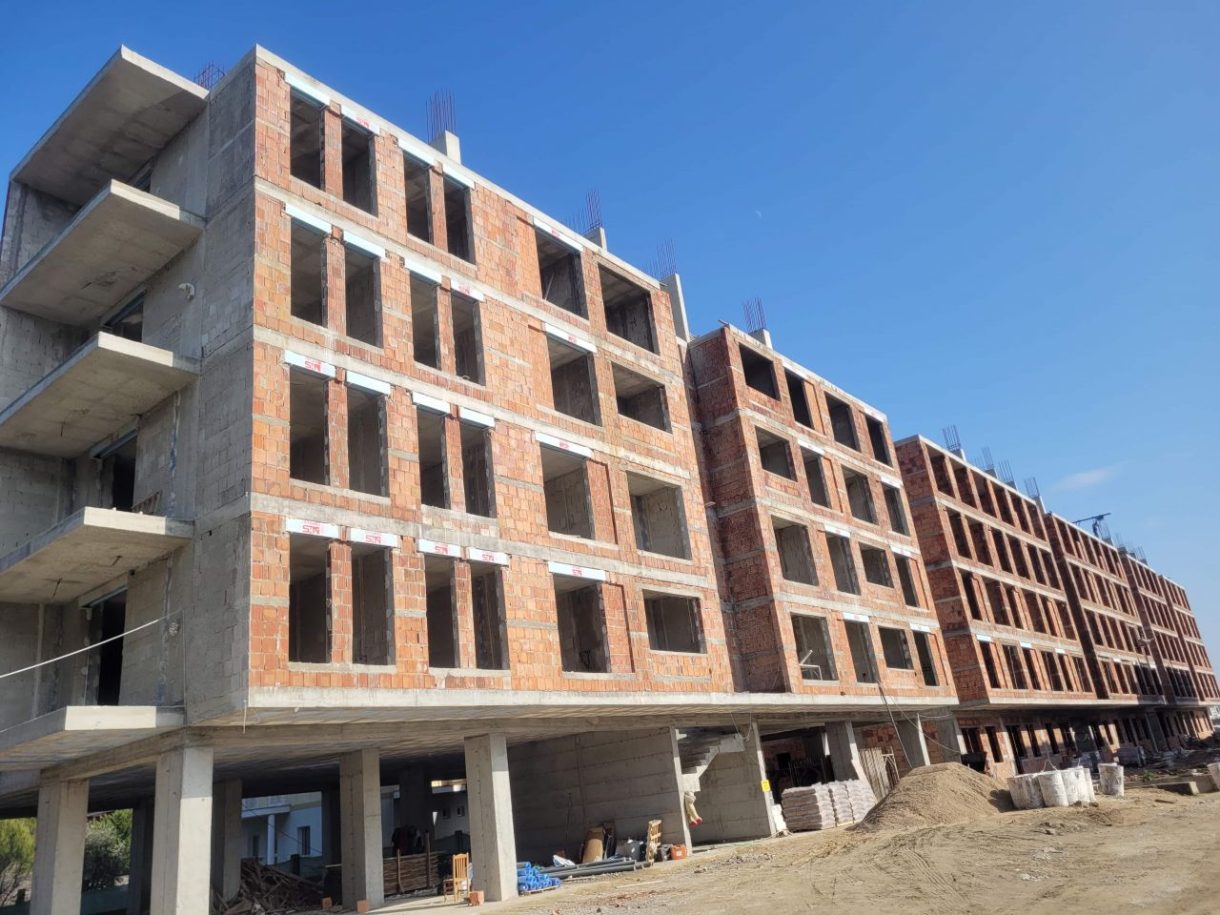
Safety at construction sites: IKMT intervenes in Golem and Qerret, only two out of 55 entities are legally compliant.

The Golem and Qerret areas have emerged as some of the most problematic regions regarding compliance with legal obligations for technical safety at construction sites. The Chief Inspector of the National Inspectorate of Territory Protection (IKMT), Afrim Qendro, accompanied by the Mayor of Kavajë, Fisnik Qosja, held a meeting today with entrepreneurs operating within this territory.

“Currently, there are 55 active development permits here. Initial inspections conducted by the National Inspectorate of Territory Protection revealed that only two projects comply with legal criteria, while the remainder are classified as ‘poor’ or ‘very poor.’ I urge you to take immediate measures, as this is your obligation. It is unacceptable for tourism in this area to be compromised by these 55 construction sites. The fact that two businesses are in full compliance proves that meeting these standards is possible for everyone,” stated Chief Inspector Afrim Qendro.

According to Qendro, Golem, Qerret, and Kavajë host hundreds of thousands of permanent residents in addition to the influx of tourists. “If we do not operate in harmony with them—if we do not guarantee their safety—then you are failing not only yourselves but the entire community that surrounds you,” Qendro noted.

Furthermore, he criticized the performance of the local Territory Protection Inspectorate (IMT) of the Municipality of Kavajë.

“I want to address the Director of IMT Kavajë directly: If you had performed your duties properly, we would not be here today. You must rise to the level of responsibility required to execute this task,” Qendro emphasized.

The Chief Inspector announced that a follow-up inspection of all construction sites in the area will commence next week.

“If the entities have not fulfilled their technical safety obligations, severe measures will be taken as provided by law. We are providing a sufficient grace period. If you fail to react, there will be zero tolerance for anyone,” Qendro declared.

The Mayor of Kavajë, Fisnik Qosja, thanked the IKMT for its commitment ahead of the peak tourist season and called upon businesses to take immediate action.

“Given the tourism we anticipate in this region, it is inexcusable not to take the necessary precautions and properly secure construction perimeters to guarantee technical safety,” Qosja concluded.

by in News

Albania to Launch New Renewable Energy Auction in Q3 2026

Albania is preparing to launch a new renewable energy auction in the third quarter of 2026, as the focus of its energy policy increasingly shifts toward strengthening the transmission grid and international interconnections.

Speaking at an event with foreign investors, the Minister of Energy and Infrastructure, Enea Karakaçi, emphasized that geopolitical developments have rendered the sector one of the most exposed to external shocks. “Dealing with global crises has now become routine; today, once again, due to a war far from our borders, the energy sector is being placed in a stressful and difficult situation,” he stated.

According to the Minister, this situation requires a rapid response and stronger institutional coordination to guarantee energy security. In this regard, the government has undertaken reforms to build a more resilient system and attract investment, moving beyond the standard obligations of European integration. “This is not only a result of the need for EU alignment but also a necessity to attract investments,” the Minister added.

Diversification and Private Investment

One of the primary pillars of this transformation remains the diversification of energy sources. Since 2019, Albania has built a more balanced energy portfolio, where solar energy is steadily gaining ground. “Approximately 10 percent of domestic production now comes from solar energy, reducing our dependence on hydropower plants,” he underlined.

The sector’s development has been increasingly supported by private investments that extend beyond state support schemes. According to the Minister, the market now includes both projects realized through formal auctions and independent private investments.

Strengthening the Transmission Grid

However, recent developments in Europe have highlighted a structural vulnerability: the critical importance of the transmission network. “Energy security is not only about production but also about transmission. If we build generation capacities, we must simultaneously build the corresponding transmission infrastructure,” he said.

In this framework, Albania is accelerating regional interconnection projects, including the link with North Macedonia, the doubling of capacity with Greece, and a strategic project with Italy. These investments aim to increase flexibility and enable more efficient utilization of production resources.

Strategic Goals for 2030

Another strategic objective remains the country’s transformation from a net importer to a net exporter of energy by 2030. “Our goal is for Albania to become a net exporter of energy,” the Minister declared.

In parallel, the government aims to increase energy efficiency through dedicated financial instruments. “We will create a financing fund for energy efficiency,” he said, noting that approximately 400 MW of self-production capacity has already been installed by businesses and households.

Investments will not be limited to infrastructure alone. The Minister emphasized the need for human capital development, announcing the creation of an Energy Academy with international support. Simultaneously, major public projects are being planned, including the development of dams and storage technologies such as “pumped storage,” aimed at increasing overall system flexibility.

The upcoming 2026 renewable energy auction is expected to be a significant step toward market consolidation and capacity growth, reflecting an integrated approach between energy production and transmission.

by in News

Albania Government Subsidies for Water Utilities Reach €3.5 Million, Majority Spent on Electricity Costs

Water supply and sewerage companies received 350 million lek, or more than €3.5 million, in government subsidies last year. Official data show that most of this amount was used to pay for electricity. The share of this expense in total subsidies was 88.8%. The remainder was allocated to compensate vulnerable groups.

“For 2025, the Central Government has distributed subsidies totalling 350 million lek to twelve Regional Water Utilities, out of the fourteen established so far, as well as to the Vorë Water Utility.

The distribution of subsidies has been carried out in accordance with Instruction No. 1 of the Ministry of Infrastructure and Energy, dated 04.07.2025, ‘On the approval of the methodology, criteria, and procedures for the allocation and use of state subsidies for service providers in the water supply and sewerage sector for the 2025 budget year.’

Based on point 6(a) of this instruction, the subsidy fund is used to grant a 100% monthly discount on water supply and sewerage tariffs for vulnerable categories, as defined in point 3 of the methodology, to compensate for the consumption of the minimum vital quantity of up to 5 m³/month,” the document from the Water Regulatory Authority states.

For 2025, the amount used for vulnerable groups for the 12 Regional Water Utilities and the Vorë Water Utility is 39 million lek.

Meanwhile, the Authority clarifies that based on point 6(b) of the same instruction, the remaining part of the subsidy fund is used to settle electricity obligations for companies that have more than 75% of water production through mechanical pumping. This criterion has been applied to subsidize the Regional Water Utilities of Fier, Shkodër, Elbasan, Sarandë, Durrës, and the Vorë Water Utility.

“For companies that have not completed the regionalization process, according to the provisions of Council of Ministers Decision No. 302 specifically the Tirana and Kamëz Water Utilities, which are expected to be consolidated into the structure of the Tirana Regional Utility no subsidies were allocated in 2025 for covering electricity costs or supporting vulnerable groups.

This situation is linked to the strategic orientation of the central government to prioritize financial support for water utilities that have become part of the regionalization reform, in accordance with Decision No. 302, where the Ministry of Infrastructure and Energy/AKUK holds 51% of the shares. It also appears that during 2025, two regional water utilities, namely Gjirokastër and Dibër, did not benefit from subsidies,” the document states.

by in News

Tariff Methodologies in the Energy Community: Convergence, Cost Recovery, and Albania’s Reform Trajectory (ECRB 2025–2026 Analysis)

The Energy Community was created to extend EU electricity and gas market rules to the Western Balkans, Moldova, Georgia, and Ukraine through a legally binding framework. Within that system, the Energy Community Regulatory Board (ECRB) serves as the regional voice of regulators and, under Article 18 of the Electricity Regulation, prepares a biannual best-practice report on transmission and distribution tariff methodologies. The March 2026 report is the second such exercise and is explicitly designed to reduce market fragmentation by comparing how Contracting Parties set, update, and structure network tariffs.

That matters because tariff methodology is not just a technical exercise. It determines whether TSOs and DSOs recover efficient costs, whether users see price signals that reward efficiency and flexibility, and whether the network can absorb renewables, storage, EV charging, and other new uses without shifting hidden costs onto captive customers. The report frames tariff design around cost reflectivity, transparency, security of supply, and system efficiency, which is exactly where electricity-market reform and energy transition policy intersect.

Regional overview: nine Contracting Parties, one broad direction, uneven speed

Across the nine Contracting Parties—Albania, Bosnia and Herzegovina, Georgia, Kosovo*, Moldova, Montenegro, North Macedonia, Serbia, and Ukraine—the strongest common trend is not full harmonization but gradual convergence toward more incentive-based regulation. Since 2022, almost all regulators have introduced some form of change to improve cost reflectivity, investment incentives, or quality-of-service regulation; the most notable reforms are in Moldova, North Macedonia, Montenegro, Kosovo*, and Ukraine.

A useful way to read the region is by regulatory “maturity” rather than by simple tariff levels. Albania is the clearest price-cap case; Georgia has a sophisticated hybrid “building-blocks” design; Moldova and Kosovo* are moving toward more explicit EIP-aligned frameworks; North Macedonia and Montenegro are actively redesigning components of the charge to reflect flexibility, quality, and capacity; Bosnia and Herzegovina and Serbia remain more conservative and largely cost-plus on transmission; and Ukraine sits between emergency constraints and structural reform, with a major unbundling of renewable-support costs underway.

Table 1. Regional regulatory snapshot by country

Country Transmission regulation Distribution regulation Update cycle / tariff revision Transparency / stakeholder involvement Main reform direction
Albania Price-cap oriented, incentive-based Price-cap oriented, with quality factor 3-year D-cycle; T updates mostly at end of period or via extraordinary review Public consultations; tariffs and methodology publicly available Incremental updates, quality, cost-reflectivity
Bosnia and Herzegovina Cost-plus Cost-plus / regulatory methodologies by entity No fixed regulatory period; revisions when justified Public and specific consultations; info public, incl. English Stability, modest modernization
Georgia Hybrid cost-plus + revenue-cap “building blocks” Hybrid 5-year regulatory period Public/specific consultations; info public incl. English Fixed/capacity elements under review
Kosovo* Allowed-revenue, annual approval under ex-ante regulation New principles adopted in 2024; full methodology expected in 2026 5-year regulatory period Public consultations New users, injection tariffs, capacity signals
Moldova Incentive-based revenue cap Incentive-based, new methodology in 2025 Methodology indefinite; tariff updates annual Public + specific consultations; multi-authority review EIP alignment and innovation
Montenegro Hybrid incentive/performance-based Hybrid; now includes power-based distribution injection charge Flexible multi-year practice; current period 2023–2025 Public consultations Quality, storage, AIT/SAIDI, cost reflectivity
North Macedonia Revenue cap; t-2 base year Revenue cap; t-2 and lump sum access fee 3-year cycle Public and specific consultations Time-of-use, locational and flexibility signals
Serbia Cost-plus Cost-plus / mixed user basis 1-year cycle Public consultations Flexibility services under new by-laws
Ukraine Cost-plus transitional; incentive-based not fully applied Mostly incentive-based for most DSOs 1-year cycle for cost-plus DSOs; special periods for incentive regulation Public and specific consultations Separate RES-support costs; new connection logic

Deep dive: Albania

Albania is the report’s most important “special case” because it combines a comparatively mature regulatory philosophy with a relatively static formal methodology. The transmission methodology, approved in 2017, has not been materially amended since then. The report describes Albania’s transmission regime as price-cap oriented and incentive-based, with allowed revenue built from forecast OPEX and CAPEX, and with cost recovery limited to transmission-related items such as metering, maintenance, losses, ancillary services, third-party services, and taxes.

The distribution methodology is also rooted in a 2017 framework, but unlike transmission it has been incrementally adjusted since 2022 to reflect operational costs, investment plans, and, importantly, quality-of-service indicators. ERE now adds a performance-improvement factor to the D tariff formula, which is a meaningful step toward incentive regulation that is closer to EU practice. The report also notes that Albanian transmission tariffs are updated mainly at the end of the regulatory period unless extraordinary circumstances justify re-evaluation.

That said, Albania is not the most modern tariff system in the region. It remains strongly volumetric on the demand side, with no major transmission-methodology overhaul since 2017 and no reported planned reform program in the report. Compared with peers, Albania is ahead on the clarity of its price-cap logic and on the integration of quality signals, but behind Georgia, Moldova, Montenegro, and North Macedonia in methodological renewal and in preparing for capacity-based and flexibility-related network use.

Table 2. Albania in regional context

Dimension Albania Regional comparison
Transmission framework 2017 methodology, price-cap oriented Less updated than Moldova, Kosovo*, North Macedonia, Montenegro
Distribution framework 2017 methodology, gradually refined More advanced than purely static systems because of quality factor
Quality incentives Yes, D tariff includes performance-improvement factor In line with Georgia, Kosovo*, Montenegro, Ukraine
Injection charges No transmission/distribution injection charges More conservative than Montenegro, and ahead of countries that have not introduced them
Modernization pace Incremental, not transformational Middle of the pack: prudent but not frontrunner

Cost structure and cost recovery: the region still relies on the classic network model

Across the Energy Community, the default cost model remains the “average cost” approach: allowed revenue is divided by forecast volumes of energy or capacity. The report does not find meaningful adoption of incremental or fully forward-looking cost models. That means most systems still recover costs in a way that is structurally familiar, but not always well suited to emerging flexibility services or highly dynamic network use.

On the cost side, all Contracting Parties recover CAPEX, OPEX, and distribution losses through D tariffs, while TSOs also recover losses and ancillary services through T tariffs in most systems. The main divergence lies in “extra” categories: costs for data hubs, redispatching, market coupling, ENTSO-E contributions, R&D, and support schemes are only partially recognized or not recognized at all in many countries. The report is explicit that network charges should not absorb unrelated policy costs, and Ukraine is the clearest example of moving to separate renewable-support costs from the transmission tariff.

Investment treatment is also uneven. Loans are broadly recognized in tariffs and/or RAB, while grants are usually excluded from return. Anticipatory investments are rare in distribution and still selective in transmission, but Kosovo*, Moldova, Montenegro, and North Macedonia are already using forward-looking logic for strategic projects. That is a significant marker of policy maturity because it shows the region is beginning to treat network tariff design as an infrastructure-planning tool, not only a cost-pass-through mechanism.

Table 3. 2024 average transmission tariffs and 2020–2024 change

Country 2024 transmission tariff (EUR/MWh) 2020 tariff Change 2020–2024
Albania 8.44 6.06 +39.3%
Bosnia and Herzegovina 5.25 4.97 +5.7%
Georgia 7.07 5.85 +20.8%
Kosovo* 9.58 5.37 +78.4%
Moldova 9.48 7.43 +27.6%
Montenegro* 27.97 29.99 -6.7%
North Macedonia 4.77 2.86 +66.8%
Serbia 5.21 4.25 +22.6%
Ukraine 12.16 6.46 +88.2%

* Montenegro’s figure is not directly comparable to all others because distribution-connected consumers are charged capacity fees without a clean T/D breakdown.

The tariff series show three striking facts. First, Ukraine and Kosovo* experienced the fastest transmission tariff growth, and by 2024 Ukraine had the highest clearly comparable T tariff among the nine CPs. Second, North Macedonia, Albania, and Moldova also show strong upward movement, reflecting reform and/or cost pressure. Third, Montenegro is a structural outlier because of its capacity-fee design and very high reported average transmission-related value.

Table 4. 2024 household and non-household distribution tariffs

Country HH D tariff 2024 (EUR/MWh) 2020 Change Non-HH D tariff 2024 (EUR/MWh) 2020 Change
Albania 58.21 38.69 +50.5% N/A N/A N/A
Bosnia and Herzegovina 30.20 28.75 +5.0% 21.24 15.66 +35.6%
Georgia 30.99 19.54 +58.6% 30.99 12.80 +142.1%
Kosovo* 25.49 25.24 +1.0% 22.54 22.32 +1.0%
Moldova 33.22 27.00 +23.0% 33.22 27.00 +23.0%
Montenegro* 30.60 35.76 -14.4% 27.10 31.25 -13.3%
North Macedonia 38.96 25.03 +55.7% 38.96 25.03 +55.7%
Serbia 36.64 30.19 +21.4% 22.92 20.35 +12.6%
Ukraine 37.00 22.00 +68.2% 29.00 16.00 +81.3%

The distribution data show that Albania, North Macedonia, and Ukraine have seen especially strong growth in household distribution tariffs, while Georgia’s non-household tariff rose sharply. In contrast, Montenegro is the only country with a clear decline in both household and non-household distribution values over the 2020–2024 period. The cross-country average in 2024 is about EUR 35.7/MWh for household D tariffs and EUR 28.2/MWh for non-household D tariffs, underscoring how distribution still dominates the final network bill.

Tariff design and charges: the region is still dominated by withdrawal charges

All Contracting Parties apply withdrawal tariffs on both transmission and distribution. Injection charges are the exception, not the rule: they exist on transmission only in Bosnia and Herzegovina, Montenegro, and Ukraine, and on distribution only in Montenegro. Kosovo* and Georgia are explicitly preparing reforms in this direction.

The tariff base is also revealing. Transmission withdrawal tariffs are energy-only in Albania, Georgia, Moldova, and Ukraine, but energy-plus-power in Bosnia and Herzegovina, Kosovo*, Montenegro, North Macedonia, and Serbia. Distribution withdrawal tariffs are energy-only in Albania, Georgia, Kosovo*, Moldova, and Ukraine; energy-plus-power in Bosnia and Herzegovina, Montenegro, North Macedonia, and Serbia; and lump-sum elements are now visible in Bosnia and Herzegovina, Montenegro, and North Macedonia. That makes the latter three countries the most structurally diversified on D-tariff design.

Injection charges are particularly important because they show whether a country is moving away from the historic assumption that only consumers cause network costs. Montenegro is the clearest example of a system where producers share transmission and distribution costs in a measurable way: 34% of transmission costs are allocated to producers, and 0.16% of DSO costs are recovered from distribution-connected producers. Bosnia and Herzegovina and Kosovo* also recover part of transmission costs through injection charges, but Ukraine uses its dispatch tariff primarily to recover system-operation and ancillary-service costs.

Connection charges are another area where the region is differentiating. Albania and Montenegro use shallow connection charges at transmission and Albania uses a detailed multi-component D connection fee. Bosnia and Herzegovina and Ukraine use deep connection logic in several cases, while Georgia and Kosovo* are moving toward more detailed and differentiated rules for producers, small generators, EV charging, and storage. The policy message is clear: connection methodology is becoming a central instrument for shaping the next wave of grid users.

Table 5. Tariff-design signals and network-user treatment

Feature Leaders / current practice Where it is still limited
Injection charges Montenegro; parts of BiH and Ukraine; future plans in Georgia and Kosovo* Most CPs still have none
Time-of-use T tariffs Montenegro and Serbia Not widely applied elsewhere
Time-of-use D tariffs Bosnia and Herzegovina, Montenegro, Serbia No broader rollout yet
Locational signals None currently applied All CPs
Reactive charges Widely used on D level; selective on T level Many are administrative, not cost-based
New users (storage, EVs, prosumers) Kosovo*, North Macedonia, Ukraine, Georgia moving fastest Most systems still adapting

Energy transition and future trends

The report’s most important forward-looking conclusion is that tariff methodology is now being pulled into the energy-transition agenda. The EIP requires tariffs to reflect new users and new services, including flexibility, storage, distributed generation, smart grids, and renewable-energy communities. On that criterion, North Macedonia, Montenegro, Moldova, Serbia, Ukraine, Georgia, and Kosovo* are all in active reform mode, though with different starting points.

Ukraine is the clearest case of structural transition: renewable-support costs are being separated from the transmission tariff under a roadmap extending to 2030, which is the right direction if the goal is to remove unrelated policy costs from network charges. North Macedonia is preparing to empower time-of-use tariffs and locational signals under its new Energy Law. Montenegro plans AIT- and SAIDI-based incentives from 2027, while Moldova and Serbia are tasked to develop new EIP-aligned methodologies in 2025–2026. Georgia is considering fixed and/or power-based components in future regulatory periods, and Kosovo* has already adopted the principles that will underpin a new distribution-use-of-system methodology.

Comparative insights

The best-performing systems are not necessarily the cheapest. They are the ones that combine transparency, incentive compatibility, and room for new network users. On that basis, Georgia, Moldova, Montenegro, and North Macedonia are the most dynamic reformers; Albania is strong on regulatory clarity and quality signals; Kosovo* is making a significant methodological leap; and Ukraine is undertaking the most consequential structural separation of non-network costs.

The lagging systems are those where the methodology is still heavily cost-plus, the revision process is relatively static, and the tariff structure has not yet been redesigned for storage, EVs, distributed generation, or flexibility. Bosnia and Herzegovina and Serbia are the clearest examples on transmission; Albania is the clearest example of a system that is stable but too static; and Ukraine, while reform-minded, remains constrained by wartime conditions and transitional cost recovery.

There is also a visible convergence trend. Most CPs now publicly disclose tariff-related information, consult stakeholders, and use incentive-based language even where the practical model remains cost-plus. But there is still divergence in three areas: the share of cost recovered from producers, the treatment of losses, and the introduction of capacity-based or time-differentiated charges. Those are likely to be the decisive battlegrounds of the 2025–2027 reform cycle.

Conclusions and recommendations

The report shows a region that is no longer debating whether tariff methodology should change, but how fast and in what direction. The best systems are moving from simple volumetric pass-through toward more nuanced designs that reward efficient use of the grid, preserve cost recovery, and prepare for flexibility, storage, and electrification. The most important policy lesson is that network tariffs must stop carrying unrelated policy costs and must begin sending clearer signals to both consumers and producers.

For the region, the priority should be to widen the use of capacity-based and time-differentiated charges where smart metering and system conditions justify them; to standardize transparent treatment of losses and investment recovery; and to ensure that injection charges, where used, are designed around clear cost causation rather than purely administrative objectives. Regulators should also accelerate methodology updates so that storage, EV charging, demand response, and renewable-energy communities are not forced into legacy tariff rules.

For Albania specifically, the recommendation is not radical deregulation but methodological modernization. ERE should preserve the strengths of its price-cap framework and quality factor, but update the transmission methodology so it can explicitly accommodate new cost categories, emerging users, and possibly limited capacity-based or time-differentiated elements. Albania should also improve the linkage between tariff design and network modernization, because its current framework is credible but comparatively static beside Moldova, North Macedonia, Montenegro, and Kosovo*.

If Albania uses the next reform cycle to combine price-cap discipline with a more explicit treatment of flexibility, data, and new users, it can remain one of the region’s clearest regulatory references while closing the gap with the most dynamic reformers. That would align well with the Energy Community acquis and with the report’s central message: tariff methodology is now a core instrument of energy-transition governance, not a back-office accounting exercise.

by in News

Albania Proposes Strategic Shift: State to Take Over Emergency Oil Reserves from Private Sector

Enea Karakaçi, Minister of Infrastructure and Energy (Ministry of Infrastructure and Energy), stated that one of the ministry’s principal priorities remains ensuring the uninterrupted supply of fuel to the market.

Minister Karakaçi announced that a new draft law on the oil reserve, expected to be approved by the government within two to three weeks, will transfer physical custody of the reserve from private operators to a state agency for up to 90 days.

“With respect to the reserve obligation, which is calculated based on last year’s daily turnover, we have notified all operators that they are required to hold a 30-day reserve, with the remainder contracted by other means, to ensure there is no shortage of hydrocarbons.

The blockade of the Strait of Hormuz has not affected supplies to our country.

The new draft law on the oil reserve, prepared in accordance with the European Union directive, will be adopted by the government within two to three weeks. Under the draft law, oil reserves will no longer be held by companies but by a state agency that will ensure the physical availability of hydrocarbons for up to 90 days.”

Minister Karakaçi also reported that retail inspections indicate no abuse in fuel pricing, and that company profit margins ranging from 13 to 14 lekë per litre are acceptable.

“The final retail price in Albania is largely determined by import costs, which makes domestic prices volatile. A cost of 147 lekë excluding VAT reflected the real cost of the product. This indicates a gross profit of 13 to 14 lekë, which is an acceptable margin. We have not observed price abuse, and therefore did not find it justified to convene the board.”

Prime Minister Edi Rama added that Albania does not produce petroleum suitable for final retail use, because the oil we extract is heavy crude. Processing it for consumer-grade fuel would require a refinery and entail high costs for conversion to a usable product.

“As history has shown, this oil has not proven suitable for direct consumer use, except for certain industrial applications.”

by in News

Environmental monitoring in 2026 put to the test: Albania has 59 stations on paper, only 9 operational

The government-approved National Environmental Monitoring Program for 2026 promises a nationwide network of measurement stations for air, water, soil and biodiversity but the gap between design and reality is stark. On paper the plan foresees 59 urban air-quality monitoring stations; in practice only nine are currently functioning, concentrated mainly in Tirana and a handful of other major cities. That shortfall makes 2026 a decisive year for whether the monitoring system will deliver real, transparent environmental data to the public and policy-makers.

Map of the distribution of monitoring stations for environmental indicators in the territory of Albania

Under the Program, urban air monitoring is to cover the principal pollutants: PM10 and PM2.5 (particulate matter), benzene, nitrogen oxides, sulfur dioxide, ozone and carbon monoxide, along with priority heavy metals such as lead and arsenic. Noise monitoring is also a component: a planned national network of 67 noise-monitoring stations contrasts with current coverage of 43 stations across 11 urban centers; noise measurements will follow 14-day and continuous 24-hour cycles to assess daytime and nighttime population exposure.

Surface-water monitoring (rivers, lakes, lagoons, coastal waters) and groundwater are included in the Program with standard indicators — total suspended solids, dissolved oxygen, total phosphorus, heavy metals and other priority substances and a monitoring frequency calibrated to basin and water-type characteristics. The Program also calls for an annual emissions inventory by economic sector (industry, energy, transport, services) following international methodologies under the Convention on Long-Range Transboundary Air Pollution, plus greenhouse-gas emission tracking for 2020–2030. Biodiversity and forest monitoring components list systematic sampling plots for threatened species, migration monitoring for key bird species, wildlife surveillance in protected areas and targeted monitoring where chemical or heavy-metal concentrations are high.

Crucially, the Program states that collected data will be processed and incorporated into an annual State of the Environment Report to serve both national policy formulation and reporting obligations to the European Environment Agency. Whether the monitoring network can be brought up to its planned capacity and whether the resulting data will be published with full transparency and timely accessibility remains the central test for 2026

by in News

The Green Backbone: Albania and Western Balkan Partners Unveil Strategic Energy Projects for 2026 EU Funding

The Energy Community has officially opened the public consultation for the 2026 list of Projects of Energy Community Interest (PECI), marking a pivotal moment for the Western Balkans’ energy infrastructure. Running from March 16 to April 17, 2026, the consultation evaluates eight critical projects designed to dismantle cross-border bottlenecks and pave the way for a massive influx of renewable energy.

For Albania and its neighbours, Kosovo, North Macedonia, Montenegro, and Bosnia and Herzegovina the selected projects represent a shift from traditional hydroelectric production to a sophisticated, integrated system of large-scale storage and high-voltage transmission corridors. These projects are now positioned to seek diverse financing, including EU grants, Western Balkans Investment Framework (WBIF) funds, and favourable loans from international financial institutions.

Below is a detailed technical and strategic breakdown of the flagship projects currently in the PECI selection pipeline.

1. Project E12: Moglice Pumped-Storage – The Balkans’ “Giant Battery”

At the heart of Albania’s green transition is the Moglice Extension Pumped-Storage Hydropower Plant (PSH). Developed by Devoll Hydropower Sh.A. (part of the Statkraft Group), this project is set to become one of the largest flexibility assets in the region.

  • Technical Parameters:

    • Maximum Power (Pmax): 1,620 MW (with a dynamic operational range of -1,620 MW to +1,620 MW).

    • Storage Capacity: 30,000 MWh (approx. 30 GWh).

    • Voltage: 400 kV.

    • Efficiency: 77% roundtrip efficiency.

  • Strategic Role: The plant will function as a “green battery,” utilizing the existing Moglice reservoir (380 million m³) and a new upper reservoir (25 million m³). It is designed to store surplus energy during periods of high production and release it during peak demand, providing critical balancing services to Albania and neighboring EU markets like Greece and Italy.

  • Timeline: Currently in the economic feasibility stage, with the earliest commissioning targeted for 2033.

2. Project E04: The 220 kV Balkan Triangle Rehabilitation

To ensure the reliability of the “Balkan Triangle” (Albania, Montenegro, and Bosnia & Herzegovina), the rehabilitation of the aging 220 kV Trebinje–Vau i Dejës corridor has been prioritized. This line is a vital artery that has recently struggled with congestion due to new solar and hydro capacities.

  • Technical Parameters:

    • Voltage: 220 kV.

    • Length: 162.92 km.

    • Transmission Power: Upgraded to carry 1,500 A using specialized high-capacity conductors.

    • Promoters: NOS BiH, Elektroprijenos-Elektroprenos BiH, and CGES (Montenegro).

  • Strategic Role: The project addresses severe climatic challenges and infrastructure depreciation. By replacing OPGW, insulation, and conductors on existing poles without increasing mechanical load, the project will increase Net Transfer Capacity (NTC) and resolve long-standing congestions between BA–ME, ME–AL, and AL–BA.

  • Timeline: Currently in the Detail Design Study phase, with an expected commissioning date of 2030.

3. Project E05 & Regional Corridors: Integrating Wind and Strengthening East-West Links

The expansion of the 400 kV network is a two-pronged strategy: strengthening regional East-West ties and unlocking wind potential in Northeast Albania.

A. The East-West Western Section (Project E05)

Connecting Kosovo and North Macedonia, this 103 km interconnector is a key link in the regional transmission “rings.”

  • Technical Parameters: 400 kV; 1330 MW Pmax.

  • Objective: Connecting the upgraded Prizren (XK) substation to a new substation in Tetovo (MK). This project enhances the security of supply and supports the large-scale integration of Renewable Energy Sources (RES) across the corridor.

  • Timeline: Expected commissioning by 2035.

B. The Albania–Kosovo Interconnection (Strategic Link)

As highlighted by recent strategic filings, Albania is pushing for a new 400 kV interconnection between Fierza (AL) and Prizren (XK).

  • Strategic Role: This link is deemed essential to facilitate the integration of over 1 GW of planned wind energy capacity in Northeast Albania. It will alleviate existing 220 kV grid overloads and significantly boost regional energy trading.

Financing the Future

These PECI projects are governed by the revised EU TEN-E Regulation, which streamlines the path toward final approval in December 2026. Because these projects provide cross-border benefits, they are eligible for a “blended” financing model. This includes state budget allocations, private investment from promoters like Statkraft and KOSTT, and significant support from European Union grants and loans.

As the Western Balkans move away from coal and toward a renewable-heavy mix, these projects—Moglice’s storage, the 220 kV rehabilitation, and the 400 kV corridors—form the essential hardware of a modernized, secure, and decarbonized European energy market.