by in News

Greek authorities launch electricity market probe

The Hellenic Competition Commission (HCC) and the Regulatory Authority for Energy, Waste and Water (RAAEY or RAEWW) began a double probe into the Greek electricity market.

The move follows a report by the European Union Agency for the Cooperation of Energy Regulators (ACER) concerning the formation of wholesale prices during the period between July and September 2024.

The body focused on Greece, since it is the only country in the region of Southeast Europe for which detailed market data was available from the power exchange about the offers from producers and the supply-demand curves.

ACER has called national authorities to conduct a market probe to find out whether manipulation and capacity withholding took place during the hours with the most extreme prices.

In its announcement, HCC said it was looking into possible horizontal deals or harmonized practices between companies, with the goal of preventing, limiting or degrading competition. It is focusing especially on capacity withholding and dominant market position abuse. It explained, however, that the checks do not predetermine the outcome of the procedure.

RAAEY pointed out that the goal of its probe is to protect consumers and enforce the Regulation on Wholesale Energy Market Integrity and Transparency (REMIT).

Investigation follows industry suggestions

According to Energypress, HCC conducted raids and collected data from three particular companies, namely Public Power Corporation (PPC), Heron and Enerwave (formerly Elpedison).

In fact, authorities are examining not just the three-month period of last year, but also market operations in 2025.

Industrial consumers in Greece have been claiming for the past year that there is manipulation in the market, leading to inflated prices. They have called for an investigation and interventions to restore transparency.

“ACER‘s findings are not compatible with normal market player behavior as part of the Target Model,” commented the Chairman of the Hellenic Union of Industrial Consumers of Energy (UNICEN), Antonis Kontoleon.
by in News

Uncompetitiveness holding EU far behind green hydrogen targets

Several high-profile green hydrogen projects have been canceled in the past year, and major companies reduced their decarbonization ambitions, the European Union Agency for the Cooperation of Energy Regulators (ACER) said in its new report. The technology is four times more expensive than production from fossil gas through steam reforming.

Investments are far behind EU targets and trailing even the contracted demand. However, an acceleration of existing projects would change the picture substantially. On that note, the European Hydrogen Bank is receiving submissions for its third auction.

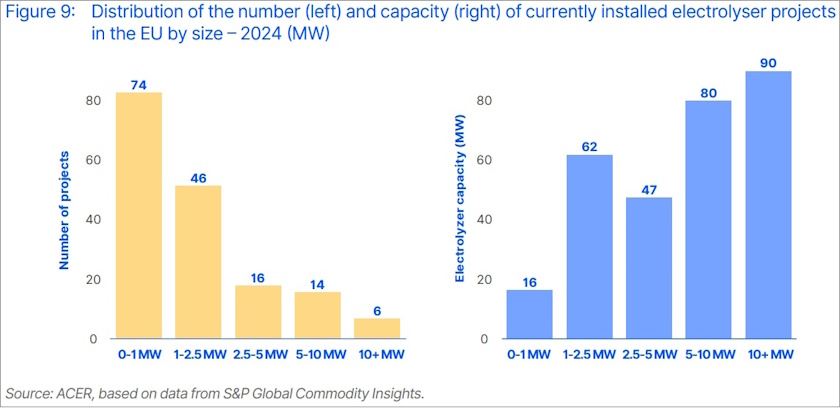
Electrolyser capacity in the EU jumped 51% last year to 308 MW, while 1.8 GW was under construction in October 2025, expected to be commissioned within two years. The numbers are from the European Hydrogen Markets – 2025 Monitoring Report, issued by the EU Agency for the Cooperation of Energy Regulators (ACER). It pointed out that the total falls well short of the trajectory toward the 2030 target of 40 GW, or the 48 GW to 54 GW range in member states’ plans.

Of note, while some other databases show similar figures, the Renewable Hydrogen Coalition has calculated that operational projects amount to 600 MW, though “across Europe,” and not just in the EU. Another 3 GW is under construction, its update reads.

The European Hydrogen Strategy aimed at 6 GW by 2024.

Sweden, Germany in strongest expansion

Sweden and Germany account for two thirds of the capacity under construction (742 MW and 414 MW, respectively), ACER said. In addition, EWE has just marked the start of construction of an electrolyzer facility of a whopping 320 MW, which would eclipse the fleet that is currently producing green or renewable hydrogen. The site is in Emden, in Germany.

Domestically produced renewable hydrogen contracted, 270,000 tons, would require 3.7 GW of electrolysers.

Several high-profile green hydrogen projects have been canceled in the past year, and major companies have reduced their decarbonization ambitions, the agency warned. Importantly, all existing projects, in any stage of development and with a 2030 target, are for 62 GW in total, indicating the potential for acceleration.

An electrolyzer under construction in Germany is set to surpass the combined capacity of the current EU fleet

As for Southeastern Europe, Romania targets 2.1 GW of electrolyzer capacity for 2030. Croatia is aiming for between 0.1 GW and 1.3 GW, while the remaining countries are at just 0.1 GW or 0.2 GW. Greece was the only country with any capacity in construction in October, 50 MW. Interconnections are planned between Greece, Bulgaria, Romania and Hungary.

Citing the European Hydrogen Observatory, ACER said Germany has added 46 MW last year. With Denmark (18 MW) and Hungary (11 MW), it was 72% of the annual growth.

Only six plants were bigger than 10 MW at the end of 2024, amounting to 90 MW altogether.

ACER Uncompetitiveness holds EU far behind green hydrogen targets

Gray hydrogen remains dominant

Steam methane reforming (SMR) remains the dominant production technology, accounting for 89% of the total capacity in the EU. It is colloquially called gray hydrogen.

The share of electrolytic hydrogen, made using electricity from all sources, not necessarily renewables, is marginal. So is the overall capacity for blue hydrogen. It is also from fossil gas, but the process involves carbon capture and storage, CCS.

Green hydrogen, one of so-called renewable fuels of non-biological origin (RFNBO), costs some EUR 8 per kilogram, against just over EUR 2 per kilogram of conventional, gray hydrogen.

Expectations for liquefied natural gas (LNG) and carbon dioxide emission allowance price levels favor fossil fuel hydrogen in the short term, the report’s authors stressed. Meanwhile, slower deployment of electrolyzers limits economies of scale, delaying the anticipated reductions in related capital costs.

Projected prices of LNG and CO2 allowances are favoring fossil fuel hydrogen

With current production cost estimates at just below EUR 3 per kilo, low-carbon hydrogen with carbon capture is more competitive than renewable hydrogen. Nevertheless, the additional costs for CO2 transport and storage are highly uncertain.

“The buildout of CO2 infrastructure may pose additional challenges. Moreover, the long-term gas offtake contracts required for such projects could lock in fossil fuel dependence and exposure to price volatility in the global natural gas market,” the authors said.

By definition, low-carbon hydrogen results in at least 70% lower emissions than the conventional one from fossil fuels. The segment includes electrolysis running on nuclear power.

The EU also counts hydrogen from biogas and biomass processing as renewable, if the technology complies with sustainability requirements.

Electricity supply costs, excluding grid tariffs, may account for up to 50% of the levelized cost of renewable hydrogen, with substantial regional variations across the EU. Regions with abundant renewable resources and strong renewables integration, such as Spain, already provide advantageous conditions for renewable hydrogen production, the document adds.

Electricity accounts for 60% to 70% of renewable hydrogen cost

The Renewable Hydrogen Coalition said electrolyzer manufacturing capacity has surged from 1 GW within a few years. It expects it to hit 15 GW in 2026.

Electricity accounts for 60% to 70% of renewable hydrogen costs, with taxes and levies reaching 30% to 40% of the electricity cost itself, according to the group. It is also urging for incentives and an improvement in the legal framework.

“With the right enabling policies put in place, altogether, our coalition members could put online close to 18 GW of renewable hydrogen production projects between 2026 and 2032,” the declaration reads.

On that note, the European Hydrogen Bank has launched the call to its third auction for hydrogen production, worth EUR 1.3 billion. Spain is adding EUR 415 million, while Germany will match the EU with another EUR 1.3 billion within the auctions-as-a-service segment.

The IF25 Hydrogen Auction is designed to provide cost-efficient support for the production of RFNBO hydrogen or electrolytic low-carbon hydrogen. Producers of hydrogen with maritime or aviation offtakers can apply as well.

The call is part of a package under the Innovation Fund, using revenues from the EU Emissions Trading System (EU ETS). A EUR 2.9 billion segment for net-zero technologies, IF25 NZT, includes hydrogen production.

by in News

ACER asks Greek authorities to probe power market for manipulation

The European Union Agency for the Cooperation of Energy Regulators (ACER) is warning of signs of manipulation in Greece’s day-ahead electricity market (DAM) registered during the summer of 2024.

The region of Southeastern Europe experienced several months of high electricity prices, with average monthly levels close to EUR 200 per MWh in the case of Greece.

ACER used data from the Hellenic Energy Exchange (HEnEx) to calculate the hourly day-ahead demand and supply curves for the Greek bidding zone in the said period.

It included 93 observations, meaning 93 pairs of demand and supply curves, from June 15 to September 15 of last year.

Based on the above, four scenarios were formed, simulating and analyzing market conditions on different days and times. The baseline included all the cases and the clearing price was always above EUR 100 per MWh.

The so-called stressed scenario involved 17 observations, when prices climbed close to EUR 500 per MWh, and the critical scenario had two observations, with prices of EUR 900 per MWh.

There was even an extreme scenario,  covering September 4, when at 20:00 the price reached its maximum, with EUR 942 per MWh.

650 MWh would have made enormous difference

ACER noted that if an extra 650 MWh of energy were available during that hour, it would have reduced the price by a huge EUR 630 per MWh to EUR 311 per MWh.

The extra power could have arrived either internally from peak power plants, or through interconnections with neighboring countries.

The result is similar for the stressed scenario – 420 per MWh lower, and the baseline, when the level would have come in at 100 per MWh down from the actual prices.

Capacity withholding as a possible cause

The regulator added that during times of pressure in the system, the market power of producers became much more pronounced and their bidding behavior changed.

Based on the above, ACER reaches two conclusions. One, interconnections in the region must be utilized based on the 70% European rule to bring prices down.

Secondly, Greek authorities need to initiate a probe into whether market power was used to manipulate or abuse dominant positions, for example in the form of capacity withholding.

ACER also said data from HEnEx and the Regulatory Authority for Energy, Waste and Water (RAAEY or RAEWW) are incomplete and that more transparency is necessary moving forward.

by in News

Severe electricity price spikes in SEE in summer 2024 could have been avoided – report

If 70% of the physical capacity of all power lines had been offered for cross-zonal trade by transmission system operators, half of the most severe price spikes or 147 spikes could have been avoided in South-East Europe in the summer of 2024, according to the latest report of the EU Agency for the Cooperation of Energy Regulators (ACER).

The 2025 Monitoring Report examines the role of cross-zonal electricity trade in shaping a more integrated and efficient European Union electricity market. It also tracks progress, challenges and benefits in the implementation of the 70% requirement.

During the summer of 2024, the EU saw a significant increase in electricity prices, affecting mostly bidding zones in central and south-eastern Europe. Some countries experienced an unseen price increase on power exchanges, from 50% to 170%.

ACER noted that prices particularly spiked during the evening hours, reaching up to EUR 1,000 per MWh.

The prices were highest in Hungary, Romania, Bulgaria and Greece

Prices were the highest in Hungary, Romania, Bulgaria and Greece. At the time, Prime Minister of Greece Kyriakos Mitsotakis wrote to European Commission President Ursula von der Leyen. Greece, Romania and Bulgaria were preparing a proposal for an intervention mechanism.

According to ACER’s report, during the high-price events, spreads at several bidding zone borders in central Europe rose to unprecedented levels, signalling insufficient availability of cross-zonal capacity to accommodate the market’s need for cross-zonal exchanges.

The 70% requirement would have enabled an average reduction of peak prices by up to EUR 78 per MWh

The authors’ comparison of the average realized day-ahead prices during the evening peaks with the counterfactual scenario showed a considerable mitigation of prices.

It revealed that the implementation of the 70% requirement would have enabled an average reduction of peak prices by up to EUR 78 per MWh in central and south-east bidding zones, underlining the dampening effect of cross-zonal trade, the document reads.

According to ACER, higher availability of cross-zonal capacities in central Europe would have mitigated both the frequency and the severity of the high price events, as cross-zonal trade provides flexibility to the system.

End-2025 deadline is at risk

The 2019 Clean Energy Package introduced a legal requirement on EU electricity transmission system operators (TSOs) to offer at least 70% of their physical capacity on all lines of relevance for cross-zonal trade.

The obligation is intended to maximise cross-zonal trade and mitigate its discrimination over internal trade, ACER explained.

The 70% requirement ensures that domestic electricity flows are not prioritized over cross-border trade, mitigates price spikes, such as those seen in summer 2024 across South-East Europe, and brings significant additional welfare to EU electricity markets, it added.

The agency stressed that the end-2025 deadline is at risk.

by in News

Slovenia tops EU list for most smart power meters, Croatia among laggards

Slovenia is very close to equipping all electricity consumers with smart meters, while Croatia is within reach of achieving it in the non-home segment, but far behind in the household category, according to the latest data from the EU Agency for the Cooperation of Energy Regulators (ACER).

At the top of the list of European Union member states with the highest share of smart meters, three countries are fully equipped with modern smart meters, Naš stik reported.

All consumers in Sweden, Denmark, and Italy have such devices installed. They are followed by Finland, Estonia, Latvia, Luxembourg, Spain, and Portugal, all with 99% of households and 100% of non-household consumers equipped.

Germany is at the bottom of the table, with a rollout of just 2%

Next is Slovenia, with 97% overall. France reached 94% among households and 95% in the other category, while Malta is at 93% and 87%, respectively. Slovenia is expected to complete the process by the end of the year, the article added.

The laggards are Lithuania (51%, 95%), Belgium (46%, 79%), Poland (36%, 65%), Croatia (34%, 95%), Romania (27%, 45%), and Greece (12% altogether). Germany is at the bottom of the list, with a combined total of only 2%, according to ACER’s data.

Smart meters are one of the main components of the distribution grid upgrade

Croatia’s state-owned power utility Hrvatska Elektroprivreda (HEP) launched a tender last August worth EUR 86.5 million, for the purchase of smart meters. The company said at the time that it planned to install them at all metering points in the country by the end of 2029.

Smart meters are a crucial factor for modernizing distribution networks. It is necessary for the future power system, where consumers will play a very different role, generating electricity for self-consumption and through demand response and flexibility services.

by in News

Director Christian Zinglersen is leaving ACER

The European Union Agency for the Cooperation of Energy Regulators (ACER) needs to appoint a new director as Christian Pilgaard Zinglersen is becoming deputy secretary general of the European Investment Bank (EIB) Group.

ACER’s current chief is leaving in the autumn. Outgoing Director Christian Pilgaard Zinglersen says he is carrying on his duties until then under a business-as-usual approach. His leadership spanned a defining period of intense, significant turmoil and pressures on EU energy markets, policy and regulation, ACER pointed out.

EU Agency for the Cooperation of Energy Regulators underwent an organisational reset, doubled its human and tripled its financial resources, reflecting the increasing number of tasks from EU co-legislators and the European Commission, according to the update.

Zinglersen has served for the past five and a half years. His initial five-year mandate was renewed at the end of 2024.

Zinglersen served for five and a half years

It’s been an honour to lead ACER as its only second director after Alberto Pototschnig, who, alongside the other pioneers, built the agency from scratch, Zinglersen stressed.,

“Let’s not sugarcoat it: It has been a challenging, yet also exciting time for more or less everything ACER has had its hands on over these last five-and-a-half years. With the EU going from demand shock to supply shock to … (well, let’s see what the next shock is); with our energy system facing new demands, whether induced by rapid technological or systemic change; with geopolitics rearing its often-ugly head, most significantly via Russia’s aggressive war waged on Ukraine. Never a dull moment, they say,” he wrote.

At ACER, everybody is somebody, and it remains the benchmark, Zinglersen underscored. He praised collegiality, inclusiveness and the “low on hierarchy, high on impact” approaches.

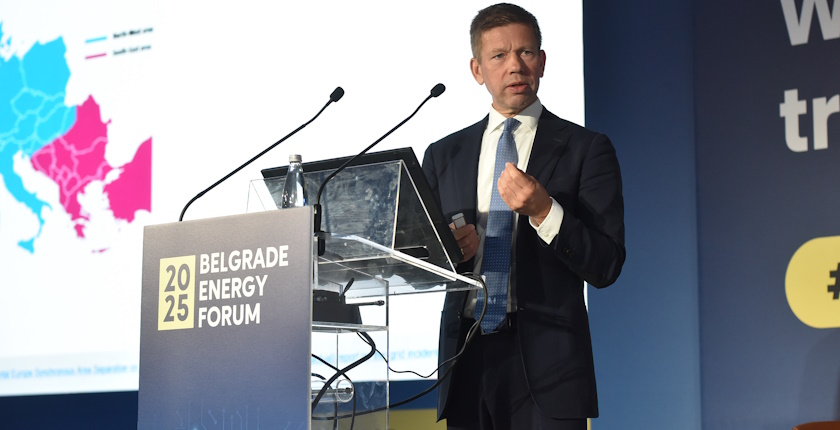
Zinglersen was one of the keynote speakers at this year’s edition of Belgrade Energy Forum, organized by Balkan Green Energy News.

by in News

ACER opens applications for traineeship program

The European Union Agency for the Cooperation of Energy Regulators (ACER) has launched a call for applications for its traineeship program, inviting motivated and qualified university graduates to seize a valuable professional development opportunity in Ljubljana, Slovenia.

ACER was established in March 2011 to foster cooperation among the national regulatory authorities (NRAs) for energy in the EU and help ensure that a single European market for electricity, and similarly natural gas, functions well.

The organization’s traineeship program is open to university graduates who have completed at least three years of studies, a bachelor’s degree or equivalent, in EU member states, Norway, Iceland or Liechtenstein. Applicants must demonstrate strong proficiency in at least two EU languages, one of which is English.

All interested candidates can apply by filling out the traineeship application form

Traineeships last between three and six months and can be extended once for up to an additional six months, offering a total potential duration of one year. Participants gain technical and operational experience by contributing to the agency’s daily work, while deepening their knowledge of EU structures and ACER’s procedures.

Trainees who are not already receiving a salary, scholarship, or other form of financial support will get a monthly grant of EUR 1,268.18. Additional support includes reimbursement of travel expenses for the trainees who completed at least a three-month traineeship period. All trainees are granted a monthly public transport pass for use within Ljubljana.

All interested candidates can apply by filling out the traineeship application form, attaching a copy of their diploma, and sending it to Traineeship(at)acer.europa.eu

This is a unique chance to join a diverse and intellectually engaging workplace while contributing to the energy future of Europe.

by in News

Western Balkans power markets: hope for coupling with EU, concerns about CBAM

Energy Community contracting parties are doing their best to meet the challenging requirements and use the opportunity to couple their electricity markets with the European Union in Q4 2026 or Q1 2027. Apart from other benefits, coupling could represent a strong incentive for investment in renewables. However, the introduction of CBAM could be a step back for electricity markets, investments and energy transition in the region, according to representatives of transmission system operators, regulators, and power exchanges who spoke at Belgrade Energy Forum 2025.

The third Belgrade Energy Forum, BEF 2025, organized by Balkan Green Energy News, welcomed four hundred participants from more than 30 countries from the region, Europe, and beyond.

Participants in the panel called Integration of Western Balkans electricity markets into internal European market through market coupling were:

  • Anže Predovnik, ADEX Group, CEO,
  • Jasmina Trhulj, Energy Community Secretariat, Head of Electricity Unit,
  • Ivan Asanović, TSO Crnogorski Elektroprenosni Sistem (CGES), CEO,
  • Marko Bislimoski, Energy, Water Services and Municipal Waste Management Services Regulatory Commission of the Republic of North Macedonia (RKE or ERC), President,
  • Zoran Vujasinović, EU Agency for the Cooperation of Energy Regulators (ACER), Policy Officer.

They discussed very hot topics including market coupling, the Carbon Border Adjustment Mechanism (CBAM), and blackouts.

Market coupling: The first go-live window scheduled for Q4 2026 or Q1 2027

Dejan Stojčevski and Jasmina Trhulj (photo: Balkan Green Energy News)

In his opening remarks, panel moderator Dejan Stojčevski, CTO of the SEEPEX power exchange, emphasized the importance of integrating the electricity markets of the Energy Community contracting parties (EnC CPs) with the EU internal electricity market as a key element in the energy transition process.

“Market coupling, which is a prerequisite for a successful energy transition, brings about greater transparency, increased competition, the establishment of a unified regional reference price, and stronger incentives for investment in renewable energy sources,” he stressed.

However, in his words, the integration is not without challenges. Countries in the region must address several issues, including the transposition of relevant regulations, the designation of nominated electricity market operators (NEMOs), and the operational connection process through the implementation of local projects, Stojčevski underlined.

Trhulj: The transposition of EIP enables accelerated electricity market integration into the single EU electricity market

The most important regulation is the Energy Integration Package (EIP). Jasmina Trhulj, Head of Electricity Unit of the Energy Community Secretariat, recalled that the transposition of EIP by the contracting parties enables their accelerated electricity market integration into the single EU electricity market before accession into the EU takes place.

To achieve that, EnC CPs have to adopt and implement the laws in a compliant manner, including extending ACER’s jurisdiction to the cross-border issues between EU member states and EnC CPs, she noted.

With regard to regional methodologies, ACER is competent to the extent that neighboring EU countries are involved, which is most often the case.

The preparation of the Market Coupling Operator Integration Plan is underway

Another important piece of the puzzle is the Market Coupling Operator Integration Plan (MCO IP), which will set guidelines and timelines for the implementation of the day-ahead and intraday market coupling of EnC CPs. Trhulj confirmed that the preparation is currently underway.

According to the draft MCO IP, the first go-live window is scheduled for Q4 2026 or potentially by Q1 2027, provided that the following prerequisites are met, she revealed.

The prerequisites are the transposition of the EIHP completed and its compliance verified; NEMO designated in a compliant manner; operational readiness of transmission system operators (TSOs) and NEMOs confirmed; and full contractual adherence completed.

“Provided that the legislation is transposed and its compliance verified and MCO IP approved by ACER, a NEMO may submit requests for accession to market coupling. This is followed by an accession process lasting up to 18 months,” Trhulj explained.

Serbia, Montenegro “locked and ready” for the first go-live window

Anže Predovnik and Zoran Vujasinović (photo: Balkan Green Energy News)

ADEX Group CEO Anže Predovnik shared Slovenia’s experience in various market coupling processes within the internal European electricity market, including different products such as day-ahead, intraday continuous, and intraday auction market coupling.

He particularly emphasized the importance of market coupling and its impact on liquidity, transparency, competition, and increased investments in renewable energy sources.

Predovnik presented HUPX’s integration into the ADEX Group, which was completed in late 2024, and highlighted the benefits ADEX brings to the market and its participants through the unification of the power exchanges of Slovenia, Serbia, and Hungary.

Enhanced transparency, the use of a unified trading and clearing technology, a single market operation, a harmonized market access process across the ADEX markets, alignment of rules, and improved client services are just some of the advantages offered by the formation of ADEX Group, he pointed out.

One immediate benefit already implemented is that market participants active in one ADEX market do not pay entry fees when accessing another market within the group.

Predovnik: Market participants active in one ADEX market don’t pay entry fees when accessing another market within the group

“Additionally, all resources within the group are contributing to the implementation of the local project for coupling the Serbian and Hungarian day-ahead markets, with the project expected to be completed at the first available slot, anticipated for Q4 2026 or Q1 2027,” Predovnik noted.

CEO of Montenegro’s TSO Crnogorski Elektroprenosni Sistem (CGES) Ivan Asanović also spoke about the market coupling project timeframe.

After compliance of the transposition of EIP is verified and provided that the necessary adaptations of the Day-ahead Operations Agreement (DAOA) and the Intraday Operations Agreement (IDOA) regarding the extension to the price zones of EnC CPs are adopted at the Market Coupling Steering Committee (MCSC) level, CGES and power exchange BELEN could sign these contracts, becoming non-operating parties in the MCSC, he revealed.

According to Asanović, obtaining the status in MCSC is a precondition for the submission of a request for change, and it is extremely important to carry it out in a timely manner, to complete the process, which lasts 18 months, until Q4 2026 or Q1 2027.

Of note, a week ago, North Macedonia’s Minister of Energy, Mining and Mineral Resources Sanja Božinovska said it is realistic to aim for coupling in the fourth quarter of 2026 or the first quarter of 2027.

CBAM and blackouts are looming

Anže Predovnik, Zoran Vujasinović and Ivan Asanović (photo: Balkan Green Energy News)

Apart from market coupling, the stakeholders in the region are also concerned about the developments regarding the Carbon Border Adjustment Mechanism (CBAM) as well as about blackouts.

Dejan Stojčevski (SEEPEX) sees the potential effect of CBAM on the electricity sector, starting on January 1, 2026, as a major issue.

The mechanism could pose a serious threat to the overall energy transition in the region, he added.

In addition, it is crucial to discuss system security and the root causes of the blackouts that recently occurred across Europe, Stojčevski pointed out.

“As there was no announcement that the application of CBAM will be postponed, we are operating under the assumption that it will apply to electricity as of January 1, 2026, given that the contracting parties will not be ready for market coupling by that date,” Jasmina Trhulj (Energy Community Secretariat) underlined.

Trhulj: There is a risk that certain stakeholders may shift their trading activities and renewable investments away from the region

In her words, it creates a number of risks to the functioning of the regional electricity market and the energy transition process that the secretariat has been raising on behalf of the contracting parties, electricity traders, power utilities, renewable energy developers, and other stakeholders.

She warned of a risk that certain stakeholders shift their trading activities and investments in renewables away from the region, thereby potentially undermining integration and decarbonization efforts.

Dejan Stojčevski, Jasmina Trhulj and Marko Bislimoski (photo: Balkan Green Energy News)

In addition, market participants are raising the issue of the considerable uncertainty regarding the exact technical implementation of CBAM for electricity – inherently unique within a group of goods, Trhulj recalled.

It is crucial for the countries in the region to speak openly with Brussels, said Marko Bislimoski, president of the Energy, Water Services and Municipal Waste Management Services Regulatory Commission of the Republic of North Macedonia. In addition, they need to come up with an action plan, together with the Energy Community Secretariat, defining the phases for the introduction of carbon pricing, in his view.

Bislimoski: We need to define the items for which we need financial assistance from the EU

“We need a serious approach and to say what we can do ourselves, and then immediately make it happen. At the same time, we need to define the items for which we will need financial assistance from the EU,” Bislimoski asserted.

The panelists agreed the region needs to present a single coordinated position on CBAM at an upcoming meeting on July 1 in Brussels.

Bislimoski recalled that North Macedonia recently adopted the new Law on Energy and added that bylaws would follow. The end goal is to provide security and stability in the transmission and distribution of electricity like in the EU, but also to lower the prices of electricity for consumers, he added.

Asanović: It is necessary to take urgent measures to improve coordination in the region

Regarding the issue of blackouts, Ivan Asanović (CGES) emphasized the importance of coordinating transmission capacities and maintenance plans for transmission lines across the wider Balkan region.

He recalled the challenging operational conditions experienced last winter, when exchanges planned along the Greece-Bulgaria-Romania-Hungary corridor were largely physically realized via the southwestern Balkans, leading to significant network stress. Such situations must be avoided through more comprehensive coordination, he warned.

It is necessary, in his words, to take urgent measures to improve coordination in the region to alleviate the current problems until the establishment of the mechanisms and structures prescribed in the CACM and SOGL regulations.

“These rules will fully harmonize the operation of the system in the region with the rest of Europe and significantly improve the security of functioning and create the necessary preconditions for connecting the markets of the WB6 countries with the single European market,” Asanović stressed.

Vujasinović (ACER): Full operational readiness of CCRs is not a prerequisite for market coupling

Zoran Vujasinović and Ivan Asanović

TSOs made a breakthrough in December. They agreed on a Joint Declaration on Regional Coordination. The declaration, facilitated by ENTSO-E, outlined a new comprehensive cooperation framework for the Western Balkans TSOs within South-East Europe.

Zoran Vujasinović, Policy Officer at the EU Agency for the Cooperation of Energy Regulators (ACER), mentioned that in January the body submitted a request to the TSOs to propose the configuration of capacity calculation regions (CCRs), incorporating the bidding zone borders of EnC CPs within the framework of the EU CCR methodology.

The TSOs’ proposal is expected by the end of July, after which ACER will issue a decision within six months, he said.

The current TSO proposal envisions:

  • the inclusion of the southeastern bidding zone borders in the Balkans into the South East Europe (SEE) region, which already includes the borders between Romania, Bulgaria, and Greece.
  • the formation of a separate region in the northwestern part (covering the mutual borders of bidding zones of Serbia, Bosnia and Herzegovina, and Montenegro, as well as their bidding zone borders with the EU), with a perspective of integration into the Central Europe region.
  • the Italy-Montenegro region and the Eastern Europe region (including Ukraine, Moldova, Poland, Slovakia, Hungary, and Romania) to remain unchanged, as defined by the CACM Regulation of the Energy Community.

According to Vujasaninović, ACER’s position is that the entire region should, over time, transition to flow-based capacity calculation and allocation methodologies. However, the initial step will be participation in market coupling based on Net Transfer Capacity (NTC) values.

“It is important to note that full operational readiness of CCRs is not a prerequisite for market coupling. The coupling can proceed based on existing NTC calculation procedures, provided that regional operational security is not compromised at any time and that maximum coordination in capacity calculation is ensured,” Vujasinović stressed.

by in News

ACER’s Zinglersen: Integrate electricity markets to bolster flexibility as new era is already here

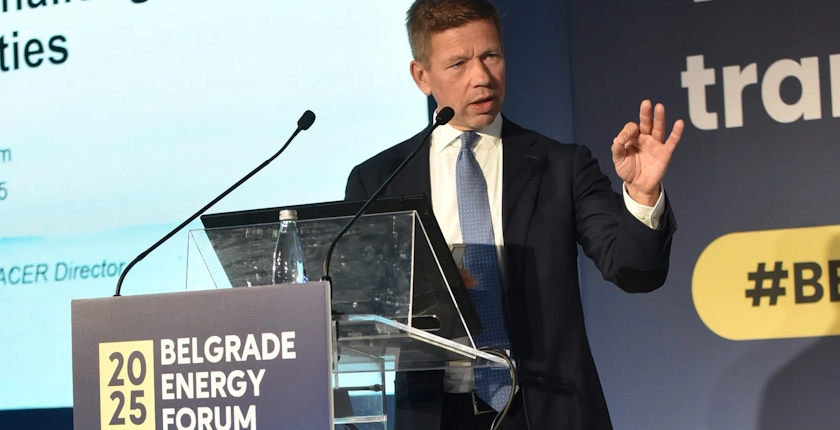
The surge in the number of hours with negative wholesale electricity prices in Europe made 2024 the second consecutive record year. According to ACER’s Director Christian Zinglersen, it means a new era is here. Speaking at Belgrade Energy Forum – BEF 2025, he called on governments, regulators and system operators to tackle the issue with more flexibility and reap the benefits of integrated electricity markets.

At EUR 81 per MWh, the average day-ahead power price in the European Union and Norway was lower last year than in 2021, when the energy crisis began. This is good news, but there are significant differences in price averages across the continent, Director of the EU Agency for the Cooperation of Energy Regulators (ACER) Christian Zinglersen asserted.

In a keynote speech at Belgrade Energy Forum, BEF 2025, he also pointed out that the percentage of days with significant price swings remained elevated. “This suggests that we need much more short-term flexibility in the system,” Zinglersen said.

[wpcc-iframe title=”Belgrade Energy Forum 2025 Christian Zinglersen, Director, ACER” width=”500″ height=”281″ src=”https://www.youtube.com/embed/c2JGLvLEInQ?feature=oembed” frameborder=”0″ allow=”accelerometer; autoplay; clipboard-write; encrypted-media; gyroscope; picture-in-picture; web-share” referrerpolicy=”strict-origin-when-cross-origin” allowfullscreen=””]

Prices in Romania, Bulgaria, Greece, Hungary among highest in Europe

In 2024, the share of time when prices were above EUR 150 per MWh landed at 6.1%, compared to 11.3% in the previous year and 66.7% in 2022. The number of days with price swings greater than EUR 50 per MWh accounted for a strong 70.4% of the total, though down from 77.1% in 2023 and 87.8% one year before.

The average price in Romania was virtually unchanged in 2024. It fell only 1% in Bulgaria and 5% in Hungary. Conversely, the drop was the strongest in Sweden, Norway, France and Belgium: 22% to 39%.

The average day-ahead electricity price in Romania was virtually unchanged last year, while in several countries it tumbled by at least 22%

Last year, prices were the highest across Italy, between EUR 106 per MWh and EUR 112 MWh, in Ireland (EUR 109 per MWh), Romania (EUR 104 per MWh), Bulgaria (EUR 103 per MWh) and Greece and Hungary (both EUR 101 per MWh).

Importantly, 2024 was the second consecutive record year in the number of hours with negative wholesale prices. Their share jumped to 2.8% from 1.9%.

“This is very significant and it shows we are already, in my view, in a new era. We’re not just embarking upon it. We’re there,” Zinglersen stressed.

Photo: ACER

Share of very low wholesale prices rallies back to level from 2020

As for the share of time with very low wholesale prices, it surged last year to 8.8%. The level was last seen in 2020, when the pandemic erupted and resulted in an unprecedented demand shock, ACER’s chief noted. He called on governments, regulators and system operators to tackle the issues with more flexibility.

Grid tariffs increasingly need to show what the system needs, in his view: more time nuance and more locational nuance. “That combination of an energy signal and a tariff signal should hopefully enable us to build more of what we need in the right places, as opposed to build what we don’t need, in the wrong places,” Zinglersen stated.

Integrated markets bring benefits

A policy brief that Brussels-based think tank Bruegel published last year pointed to the benefits of the integration of electricity markets. Among other factors, there is more security with fewer backup power plants and more flexibility with less investment in energy storage, together with lower capital costs. In 2022, ACER, based in Ljubljana, estimated benefits from cross-border trade alone at EUR 34 billion in the EU.

“It has very significant security of supply implications as well, to be in a very integrated-type jurisdiction,” Zinglersen underscored. But integrated markets come with tradeoffs, he said.

One of the examples is an incident in 2021 that split the Continental Europe synchronous area into two parts for an hour and reserves were pulled from across the continent. “But you can also bring the system much more quickly back together again,” Zinglersen said at the conference.

The same goes for the June 2024 blackout in the Balkans.

There are many solutions in Europe, but they are not evenly distributed

ACER’s director also recalled the power price decorrelation that affected Southeastern Europe and Hungary from July to September. He attributed some of the spikes in day-ahead prices to the lack of short-term flexibility, for instance batteries.

There are lots of technical solutions and frameworks in place across Europe, but they are not very evenly distributed, he added.

Zinglersen pointed to the opportunities and benefits of further integrating the electricity market of the Western Balkans region and the EU.

by in News

North Macedonia aims for market coupling with EU by first quarter of 2027

North Macedonia plans to finish market coupling with Greece and the European Union in the fourth quarter of 2026 or in the first quarter of 2027, according to Minister of Energy, Mining and Mineral Resources Sanja Božinovska.

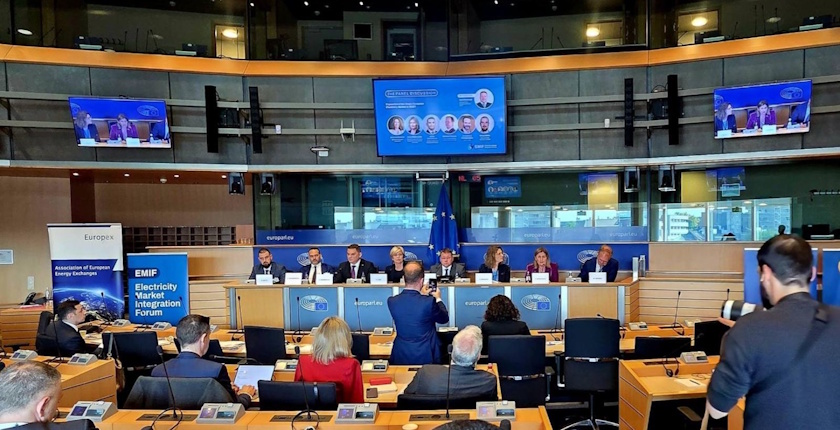
“The integration of the North Macedonian organized electricity market into the Single European Market is of strategic importance for the country,” Sanja Božinovska stressed during the second edition of the Electricity Market Integration Forum – Taking Implicit Electricity Market Coupling Beyond EU Borders, held at the European Parliament in Brussels.

The coupling, in her words, would increase market liquidity and secure competitive prices and greater security of supply. It will directly impact economic stability and predictability, Božinovska added.

Additionally, the minister noted that integration with the European market could provide protection from the financial effects of the EU’s Carbon Border Adjustment Mechanism (CBAM), which would bring significant economic benefits for North Macedonian companies.

The market coupling process began in 2017-2018

She recalled that the market coupling process began back in 2017-2018, adding it is now in a delicate phase, focusing on the transposition of EU legislation and the implementation of the market coupling operator implementation plan (MCO IP) under the jurisdiction of the European Union Agency for the Cooperation of Energy Regulators (ACER).

“Due to uncertainties surrounding the impact of CBAM, it was imperative for market coupling to occur before 2026. Although we are now beyond that timeframe, it is realistic to aim for coupling between the fourth quarter of 2026 and the first quarter of 2027,” Božinovska noted.

During the panel session dedicated to the expansion of the European electricity market by 2026, Božinovska engaged in discussions with high-level representatives from the European Parliament, ACER, regional power exchanges, and institutions from the Western Balkans.

Of note, a week ago North Macedonia adopted the Law on Energy.

It will bring numerous benefits including a liberalized electricity market ensuring fairer prices and more choice for consumers, the introduction of smart meters for more accurate consumption measurement, and daily insight for consumers into their electricity usage, according to the Government of North Macedonia.

Artur Lorkowski, director of the Energy Commnunity Secreatariat , Sanja Božinovska i Zoran Gjorgievski, MEMO CEO
  • 1
  • 2