AEA-Albania Energy Association
  • Main
  • About Us
  • Services
  • Sectors
  • News
  • EventsEvents
  • PublicationPublication
  • Contact Us
AEA-Albania Energy Association
  • Main
  • About Us
  • Services
  • Sectors
  • News
  • EventsEvents
  • PublicationPublication
  • Contact Us
AEA-Albania Energy Association
  • Home Page
  • About Us
  • Sectors
  • Our Services
  • News
  • Contact Us
January 7, 2026
by AEA in News

Electrica issues call for contractors for large PV parks in Romania

Romanian electricity supplier and distributor Electrica, in which the government holds almost 50%, published tenders via its subsidiaries for the second time for ready-to-build solar power projects. The peak capacities are 62.5 MW and 77.6 MW, and the second investment also involves battery storage. The company launched production in November at its Satu Mare 2 solar power plant, also known as Sunwind, of 27 MW.

Companies with the most advantageous offers from the technical and economic point of view will get the contracts for the construction of photovoltaic systems Satu Mare 3 and Bihor 1. Electrica, the investor, issued both calls a year ago, but canceled them in the meantime.

The Romanian Government owns 49.8% of the company, a power supplier and distributor, which also invests in renewables.

Electrica’s subsidiary New Trend Energy is responsible for the Satu Mare 3 project, of 62.5 MW in peak capacity. It is located in the commune of Doba in the Satu Mare county in the northwest. Inverters would enable the delivery of 57.9 MW to the grid.

The investment is estimated at RON 176.6 million (EUR 34.7 million) excluding value-added tax. Electrica expects to generate 70.2 MWh per annum. The deadline for applications is February 17.

BESS project is for 16.5 MWh in capacity and a 4 MW in operating power

Foton Power Energy, another subsidiary of Electrica, is seeking a contractor for a turnkey deal for Bihor 1. The PV plant would have 77.6 MW in peak capacity, and 77.4 MW in alternating current terms. It would consist of Trina’s bifacial solar panels of 595 W each.

The selected company will need to build a battery energy storage system as well, together with a transformer and fences, according to the document.

Both projects, with sites in northwestern Romania, have won subsidies from the Modernisation Fund

The BESS project is for 16.5 MWh in capacity and a 4 MW in operating power, earlier documents show. It would consist of eight Huawei units with a nominal size of 2.06 MWh each, the special purpose vehicle said. The project envisages the possibility of expansion of the battery storage facility to 75 MW and 150 MWh.

Total expected annual output amounts to 87.5 GWh. Foton Power Energy estimated the project at RON 220 million without VAT, which is EUR 43.2 million. Its site is in the communes of Cefa and Mădăraș in Bihor county, also in Romania’s northwest. Interested firms can submit bids by February 12.

Both Satu Mare 3 and Bihor 1 received state support via the European Union’s Modernisation Fund.

Electrica completed its third PV plant last month

In November, the company completed its Satu Mare 2 solar farm of 27 MW in peak capacity. The project firm is called Sunwind Energy. Electrica also operates PV plants Stănești and Vuturul with peak capacities at 7.5 MW and 12 MW, respectively.

The Crucea Est wind power project, worth eur 253 million, is for up to 138 MW and a BESS of 15 MW and 60 MWh.

In the report on the first nine months of 2025, Electrica wrote that it was developing four energy storage projects of 169.5 MWh altogether. In mid-October it initiated the procedures for 15 BESS facilities of 1 GWh in total.

Before that, in early September, the company signed a memorandum of understanding with Romgaz on the development of 400 MW in solar and storage. Electrica would be the main partner and the other company would hold a minority interest.

The projects are financed from a green bond issuance, which was the largest in Romania.
Post Views:119
January 7, 2026
by AEA in News

China completes grid connection of world’s largest open sea PV plant

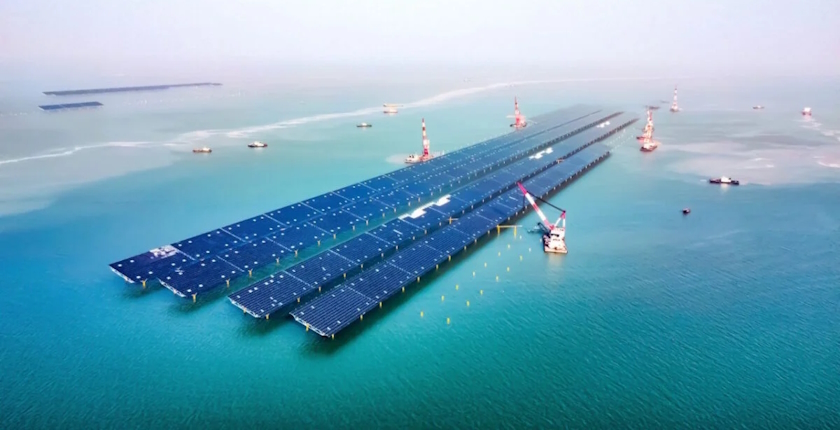
CHN Energy declared a 1 GW solar power system that it built off the coast of China’s Shandong province, on the open sea, fully connected to the grid. The facility consists of steel truss platforms on bottom-fixed piles. Just in the past month, the state-owned company commissioned solar power plants of 600 MW and 425 MW, a coal power station of 4 GW and China’s largest gas power unit.

China continues to dominate the energy realm with the world’s largest projects and innovative design. The latest example, on the open sea, is eight kilometers from Kenli district in the city of Dongying in the country’s east. It is a giant solar power plant, but not a floating one.

The Shandong Dongying Kenli (Guohua HG14) facility is on steel truss platforms on bottom-fixed piles. China Energy Investment Corp., also known as CHN Energy, declared the photovoltaic system fully connected to the grid. The initial project of the state-owned enterprise was for 1 GW.

China State Construction Engineering Corp. (CSCEC) so far installed 930 platforms out of 2,934 planned. Each is on four piles, at water depth of one to four meters.

The project on the open sea off Shandong province spans 1,223 hectares. Its developer is CHN Energy’s subsidiary Guohua Energy Investment Co.

Project involves 100 MW in battery storage

According to the latest reports, Guohua HG14 consists of bifacial double-glass modules of 710 W and the annual output, when the facility is completed, is estimated at 1.78 TWh. In earlier updates, 2.37 million monocrystalline solar panels of 550 W each were planned, translating to 1.3 GW in peak capacity. Total investment was valued at CNY 8.1 billion (USD 1.16 billion).

The company reportedly switched to stronger, bifacial solar modules for the project offshore Dongying

The offshore solar power plant on the open sea is connected to the mainland grid with a 66 kV cable. Its first segment came online in November 2024. The project involves a battery energy storage system of 100 MW in capability and 200 MWh in capacity.

Giant solar plant comes online at altitude of 3,000 meters

Just in the past month, CHN Energy commissioned several landmark facilities. A new 600 MW solar power plant is in the Xinjiang province in the west, in Qitai county, near the border with Mongolia.

The company completed another PV system, of 425 MW, via Qinghai Gonghe Co. Part of a 1 GW project with storage, called Guoneng Canadian Solar Hainan, it is located in Gonghe county in Qinghai Province. It is at an altitude of 3,000 meters and above.

Just last week, CHN Energy put into operation the fourth and last 1 GW unit of its coal-fired Guangxi Beihai Power Plant. The complex in Guangxi province in southern China includes a 27.3 MW solar power plant for electric car chargers.

The utility has also launched regular production of the first of two units in its gas power plant Anji in Zhejiang province. It is the largest and most efficient in the country, CHN Energy pointed out. When the second unit comes online in early 2026, the power plant will have 1.69 GW in capacity.

Post Views:959
January 7, 2026
by AEA in News

Đedović Handanović: Construction of 1 GW solar project to start in 2026

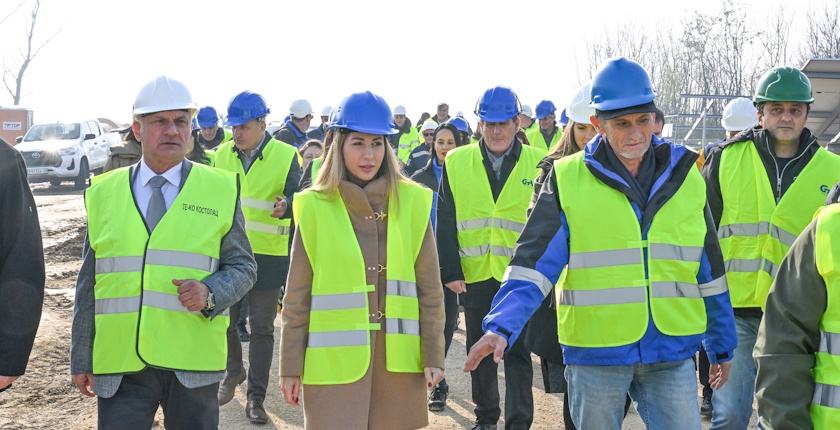
The start of construction of solar power plants in a project for a total capacity of 1 GW is expected in 2026, Minister of Mining and Energy of Serbia Dubravka Đedović Handanović said.

State-owned power utility Elektroprivreda Srbije (EPS) announced that its shareholders’ assembly adopted the Three-Year Business Plan for the period 2026-2028.

Dubravka Đedović Handanović pointed out that the company had good production and financial results for three consecutive years. According to the adopted three-year business plan, this trend will continue in 2026, she added.

EPS will invest EUR 1 billion in 2026

The minister recalled that in 2025 EPS built its first wind farm – Kostolac, and the Petka solar power plant, with a combined capacity of 76 MW. The company also finished the construction of the desulfurization facility at its coal-fired power plant Nikola Tesla B (TENT B), allowing the reduction of sulfur dioxide (SO2) emissions by 20 to 40 times, she added.

“Investments this year have also been at a high level, 97% in fact, considering that due to the scope and complexity of preparatory activities, the start of materialization of the project for the construction of solar power plants of 1 GW is expected in 2026. The focus of investments of around EUR 1 billion in 2026 will be on maintenance and improvement of the reliability of the power system and, primarily, on increasing the share of renewable energy sources in EPS’s energy mix,” Đedović Handanović stressed.

The company will build new solar power plants as well

The largest portion of the investments, in her words, is planned for new renewable energy plants, such as the construction of solar power plants totaling GW and pumped storage hydropower plant Bistrica, as well as the development of a larger number of solar power plants on land owned by EPS.

Of note, the company is developing the 1 GW solar project, which includes batteries, in collaboration with a consortium comprising Hyundai Engineering and UGT Renewables.

EPS yesterday invited bids for a preliminary feasibility study and conceptual design for a solar power plant on the ash disposal site of TENT A.

The minister revealed that next year’s plan includes an increase in employees’ salaries.

The company will continue its transformation activities, she added. Đedović Handanović welcomed the fact that EPS didn’t take out liquidity loans this year.

Post Views:122
January 7, 2026
by AEA in News

Serbia backs talks on sale of NIS to Hungary’s MOL – energy minister

Serbian Minister of Mining and Energy Dubravka Đedović Handanović has confirmed that Russian shareholders are negotiating the sale of their stake in Serbia-based oil company NIS to Hungarian oil and gas company MOL, and that the Government of Serbia supports the talks. NIS is majority-owned by Russian energy giant Gazprom, whose exit from the ownership structure is a requirement for lifting US sanctions against the oil company.

Đedović Handanović added that both NIS and MOL have approached the US Office of Foreign Assets Control (OFAC). According to her, the negotiations on the exit of Russian capital from NIS’s ownership structure are supported by the Russian, Hungarian and Serbian governments.

“The Government of Hungary has supported those talks, and we, as the Government of Serbia, will also provide support, with the aim of finding a solution to lift the sanctions and to create the conditions for granting an operating license to NIS,” she stated.

NIS has applied for an OFAC license to continue operating, but has not yet received approval.

Serbia supports the sale of the Russian stake in NIS to enable the lifting of US sanctions

Recently, Serbian President Aleksandar Vučić also confirmed that information had emerged about negotiations between Gazprom and MOL, adding that Serbia had no objections to the sale of NIS to the Hungarian company.

Serbian officials previously said that the Russian side had agreed to sell the company and that negotiations were underway with several firms. According to unofficial information at the time, one of the suitors was Abu Dhabi National Oil Co. (ADNOC) from the United Arab Emirates.

The US sanctions against NIS, which supplies 70–80% of petroleum products to the Serbian market, came into effect on October 9. The sanctions have blocked NIS from importing crude oil, forcing its Pančevo refinery to halt production.

Đedović Handanović: Serbia still has enough fuel, but reserves are depleting

Đedović Handanović said that citizens have not felt the impact of the sanctions and that Serbia still has sufficient fuel, from diesel and gasoline to fuel oil and kerosene, to get through the crisis. However, she noted that these reserves are depleting and that people need to understand that Serbia lacks the logistical capacity to import the volumes of petroleum products it requires.

She stressed that Serbia will continue the dialogue to ensure that NIS can continue operating, regardless of the time required to complete the transaction between MOL and the Russian shareholders.

Post Views:141
January 7, 2026
by AEA in News

Slovenian DSO registers enormous interest in connecting BESS to distribution grid

Applications for 400 MW have been submitted for the connection of battery energy storage systems to the distribution grid, according to Elektro Ljubljana, one of the distribution system operators in Slovenia.

Slovenia’s distribution system operators (DSOs) are getting an increasing number of requests to connect battery storage systems directly to distribution substations. Notably, in early May, the five Slovenian DSOs fed more electricity into the transmission network than they drew from it for the first time, and for two consecutive days.

Matjaž Osvald, Executive Director of Operation and Development of the Distribution Network in DSO Elektro Ljubljana, pointed out that last summer the company observed increased investor interest in directly connecting batteries to distribution substations.

It issued installation terms for 90 MW, and requests for at least as much are waiting to be processed, he added.

Installation terms were issued for batteries with 90 MW in overall capability

However, the company estimated there could be at least 300 MW more in applications. Due to the technical limitations of existing substations, much less could be connected. Substations in the Elektro Ljubljana area are already overloaded and don’t allow additional connections of larger devices, Osvald explained.

Furthermore, upgrading or constructing new facilities is a lengthy process, he pointed out. Current delivery times for transformers alone are longer than two years, with financing also being an issue.

According to Osvald, batteries would be used to store energy from solar power plants, and three types of investors have emerged. One group wants to install batteries to provide system services for system operators on the European market or for electricity trading.

Three types of investors are submitting applications

The second and third batch aim to bring their projects to a certain stage of development and then sell them – either they would purchase land, obtain permits, and install a battery, or only buy land and obtain permits for energy storage.

Osvald expressed concern about the idea of using batteries solely to provide system services in the European market. In that case, there would be no benefits for the Slovenian distribution network, but it could create problems, he stressed.

Such use would occupy all available connection capacity in substations, which, with increasing electrification, could lead to no spare capacity for other grid users, according to Osvald.

He also pointed to the value of BESS for the distribution network in reducing peak loads and consumption.

Post Views:54
January 6, 2026
by AEA in News

Đedović Handanović: Construction of 1 GW solar project to start in 2026

The start of construction of solar power plants in a project for a total capacity of 1 GW is expected in 2026, Minister of Mining and Energy of Serbia Dubravka Đedović Handanović said.

State-owned power utility Elektroprivreda Srbije (EPS) announced that its shareholders’ assembly adopted the Three-Year Business Plan for the period 2026-2028.

Dubravka Đedović Handanović pointed out that the company had good production and financial results for three consecutive years. According to the adopted three-year business plan, this trend will continue in 2026, she added.

EPS will invest EUR 1 billion in 2026

The minister recalled that in 2025 EPS built its first wind farm – Kostolac, and the Petka solar power plant, with a combined capacity of 76 MW. The company also finished the construction of the desulfurization facility at its coal-fired power plant Nikola Tesla B (TENT B), allowing the reduction of sulfur dioxide (SO2) emissions by 20 to 40 times, she added.

“Investments this year have also been at a high level, 97% in fact, considering that due to the scope and complexity of preparatory activities, the start of materialization of the project for the construction of solar power plants of 1 GW is expected in 2026. The focus of investments of around EUR 1 billion in 2026 will be on maintenance and improvement of the reliability of the power system and, primarily, on increasing the share of renewable energy sources in EPS’s energy mix,” Đedović Handanović stressed.

The company will build new solar power plants as well

The largest portion of the investments, in her words, is planned for new renewable energy plants, such as the construction of solar power plants totaling GW and pumped storage hydropower plant Bistrica, as well as the development of a larger number of solar power plants on land owned by EPS.

Of note, the company is developing the 1 GW solar project, which includes batteries, in collaboration with a consortium comprising Hyundai Engineering and UGT Renewables.

EPS yesterday invited bids for a preliminary feasibility study and conceptual design for a solar power plant on the ash disposal site of TENT A.

The minister revealed that next year’s plan includes an increase in employees’ salaries.

The company will continue its transformation activities, she added. Đedović Handanović welcomed the fact that EPS didn’t take out liquidity loans this year.

Post Views:89
January 5, 2026
by AEA in News

Major industrial polluters in Serbia continue to pollute air, soil, water without control

Around 150 companies in Serbia, potentially major polluters of water, air, and soil, have not obtained their integrated pollution prevention and control permits by December 31, 2024. It means they are violating the Law on Integrated Pollution Prevention and Control and, more importantly, that no one controls how much they pollute the environment, according to the analysis of the basic premises of the Draft Law on Integrated Pollution Prevention and Control, produced by the Renewables and Environmental Regulatory Institute (RERI).

About 220 operators are required to own an integrated pollution prevention and control (IPPC) permit for their industrial and intensive agricultural facilities, such as power plants, oil refineries, large chemical and metal facilities, as well as farms.

Ones that haven’t fulfilled their legal obligation include large and profitable companies such as power utility Elektroprivreda Srbije (EPS) and Serbia Zijin Copper.

The Law on Integrated Pollution Prevention and Control has been in force since 2004. Its aim was to introduce integrated pollution prevention and control, as well as to transpose the European Union’s Industrial Emissions Directive (IED).

The draft of the new law was recently published

The deadline for obtaining IPPC permits was initially the end of 2020, but it was then postponed to the end of 2024. The basic premises for the new law were published in February. The draft law, recently published as well, is in the public consultation phase.

Programme Director of RERI Mirko Popović stressed that citizens should be aware that there are major polluters and that they are the most profitable and wealthiest companies in Serbia. In his view, they are exempted from the application of the law, to the detriment of the citizens, because they pollute the environment – air, water, soil.

Popović: We want to protect people’s health, property, and rights

Citizens should be aware that when EPS emits 300,000 tons of sulfur dioxide (SO2), it goes into the atmosphere and partially turns into fine particulate matter that pollutes the air and enters the lungs, Popović noted. Some of it becomes acid rain that falls on the soil, making agricultural land less fertile, he added.

“Citizens are obliged to pay taxes, to obey the law, but these polluters aren’t,” Popović pointed out.

According to RERI’s programme director, citizens should know that RERI, an NGO dealing with these problems, doesn’t want to eliminate jobs, close factories, or hinder development.

“We want to protect the health, property, and rights of people,” Popović underscored.

Minić: Pollution reduces economic growth in the long term

serbia ippc permits reri report law
Photo: RERI

When a company has an IPPC permit, it means that it is obliged to implement best available techniques (BAT) while its operations are monitored for comprehensive reduction of air, water, and soil pollution and for compliance with strict emission limit values.

When a company doesn’t have one, the environment is exposed to greater, uncontrolled pollution, since the law doesn’t apply to it.
The legislation stipulates strict emission limit values, defined maximum levels of pollutants, including heavy metals, SO2 and nitrogen oxides (NOx) that a facility is allowed to emit into the air, water, or soil.

Pollution has a negative impact on GDP

According to Slobodan Minić, Senior Economist at Fiscal Council, everything regarding the IPPC law is based on the paradigm that investing in BAT, or technologies that minimize harm to the environment and human health, increases costs and slows growth.

“However, it has been overcome in the world at least a decade ago, because as data on air and environmental pollution became available, more and more research has been conducted on how it affects health. The public in Serbia now knows well what the impact is, between 10,000 and 15,000 premature deaths annually. According to economic literature, pollution also adversely affects GDP,” he stated.

We must think of this not as a cost, but as an investment

He recalled that an OECD study showed that an increase in the average concentration of PM2.5 by one microgram reduces GDP by 0.98%.

“If we want to break out of this vicious circle, we must think of this not as a cost, but as an investment. Not just in the production facility, but in human capital, because it contributes to economic growth, instead of hindering it. Otherwise, in the long term, society and the economy will suffer,” Minić concluded.

Vojvodić: The initial principles do not promise changes in the new law

serbia ippc permits reri report law popovic vojvodic minic
Slobodan Minić, Mirko Popović and Hristina Vojvodić (photo: RERI)

Public consultations on the draft law, which began on November 27, last until December 15.

Hristina Vojvodić, legal advisor in RERI, pointed out that core problems aren’t addressed.

The basic premises of the draft law should have identified the shortcomings of the existing law, based on the 20 years of its implementation, in her view. It isn’t good that these premises were defined without the participation of the members of the working group for the draft law, she explained.

This is a signal to the public, experts, members of the working group that the problems that have been identified were sidelined, Vojvodić asserted.

Of note, RERI produces reports on the implementation of IPPC law to help reduce pollution originating from industry. The organization also defines recommendations for improving the enforcement of regulations and sanctions for polluters.

According to RERI, the research for the latest analysis went beyond the scope of the basic premises. It decided to expand the report to include the issues in the implementation of the law and offer fact-based solutions.

Post Views:294
January 5, 2026
by AEA in News

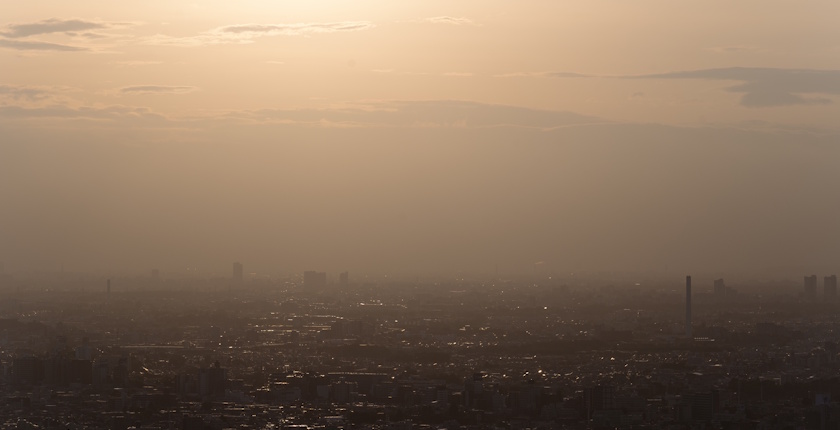
More than 330,000 Europeans died due to air pollution in 2023

Air pollution remains one of the greatest threats to the health of Europeans. According to the latest report by the European Environment Agency (EEA), 333,000 cases of premature death in 2023 were linked to exposure to particulate matter, ozone, and nitrogen dioxide. The Western Balkans are among the most affected regions, with more than 22,000 premature deaths caused by air pollution, despite an average 50% decrease in PM2.5-related mortality between 2005 and 2023.

The European Environment Agency has published the report Harm to human health from air pollution in Europe: burden of disease status, 2025.

The report analyses three pollutants—particulate matter (PM2.5), nitrogen dioxide (NO2), and ozone (O3)—and their contribution to premature mortality and health impacts in 41 European countries.

In 2023, Europeans were exposed to concentrations of these pollutants far exceeding the levels recommended by the World Health Organization (WHO). Recommended maximum concentrations are 5 micrograms of PM2.5 per cubic metre of outdoor air, 60 micrograms for O3, and 10 micrograms per cubic metre for NO2.

The number of premature deaths in the EU linked to fine particulate matter decreased by 57% between 2005 and 2023

The number of premature deaths associated with fine particulate matter in the EU fell by 57% between 2005 and 2023, surpassing the EU Zero Pollution Action Plan target for 2030, set at 55%. The revised Ambient Air Quality Directive (AAQD), which entered into force last year, brings the EU’s limit values more in line with WHO recommendations.

Still, 95% of residents in European cities remain exposed to levels above these guidelines.

At the EU level alone, compliance with WHO guidelines in 2023 would have prevented 182,000 deaths linked to PM2.5, another 63,000 caused by ozone, and 34,000 resulting from NO2 exposure.

Across the 40 countries covered by the report, 206,000 deaths were attributed to PM2.5 concentrations above recommended levels. Turkey was excluded because the number of monitoring stations with available data was too low to create concentration maps. O3 exposure caused 71,000 deaths, and nitrogen dioxide caused 56,000.

Across the whole of Europe, a total of 333,000 people died prematurely.

People in Southeastern Europe suffer the greatest health impacts due to high pollution levels

Across all 40 countries, the highest number of PM2.5-related deaths in 2023 occurred in Italy, Poland, and Germany. However, the highest relative impact—measured in years of life lost per 100,000 inhabitants over 30 years—was recorded in Southeastern Europe. Years of life lost represent the estimated average number of additional years people would statistically live if they did not die before reaching life expectancy.

Residents of North Macedonia, Bosnia and Herzegovina, and Albania lost the most years of life. Among EU member states, Bulgaria ranked first, followed by Greece and Romania.

The highest absolute number of NO2-related deaths in 2023 was recorded in Turkey, Italy, and Germany. In terms of years of life lost, the greatest burden fell on populations in Turkey, Cyprus, Greece, Serbia, and Italy.

Germany, Italy, and France recorded the highest number of deaths linked to O3 emissions. The highest number of years of life lost per 100,000 inhabitants over 25 years occurred in Bosnia and Herzegovina, Montenegro, Albania, Croatia, and Hungary.

In the Western Balkans, particulate matter caused 22,426 premature deaths

In the Western Balkans, exposure to particulate matter caused 22,426 premature deaths. The highest number was recorded in Serbia (8,735), followed by Bosnia and Herzegovina (4,783), Albania (3,551), North Macedonia (2,667), Kosovo* (2,135), and Montenegro (555).

However, significant progress has been recorded since 2005. Mortality linked to PM2.5 fell the most in North Macedonia (57.2%), followed by Kosovo* (55.3%), Montenegro (53.6%), Albania (53.2%), and Serbia (50.2%). The smallest improvement was observed in Bosnia and Herzegovina (34.8%). On average, across all six Western Balkan countries, mortality associated with PM2.5 decreased by 50.72% during this period.

Air pollution can cause dementia

In addition to premature mortality, the report analyses diseases linked to air pollution and their impact on quality and length of life.

According to the findings, PM2.5 contributes the most to the burden of ischaemic heart disease, stroke, diabetes, lung cancer, chronic obstructive pulmonary disease (COPD), and childhood asthma. For NO2, the greatest health impacts occur in diabetes, followed by stroke, COPD, and asthma in both children and adults. Ozone exposure is linked to 7,000 deaths from COPD—the only disease included in the analysis for this pollutant.

Each additional 10 micrograms of PM2.5 per cubic metre increases the risk of dementia by 17%

For diseases caused or worsened by pollution, such as asthma, the primary impact is reduced health and well-being. For others, such as ischaemic heart disease and lung cancer, the result is premature death.

New evidence shows that air pollution may also cause dementia, whose burden is estimated to be greater than that of other relevant diseases. Research conducted this year by scientists at the University of Cambridge found that the risk of dementia increases by 17% for every additional 10 micrograms of PM2.5 per cubic metre of air.

Post Views:272
* This designation is without prejudice to positions onstatus and is in line with UNSCR 1244/99 and the ICJ Opinion on the Kosovo declaration of independence.
January 5, 2026
by AEA in News

EPS plans to build solar power plant on TENT A ash dump

Serbia’s state power utility, Elektroprivreda Srbije (EPS), has invited bids for producing a preliminary feasibility study and conceptual design for a solar power plant on the ash disposal site of the Nikola Tesla A (TENT A) thermal power plant in Obrenovac.

The study should assess the feasibility and viability of the project, as well as the total solar potential of the site. The estimated value of the contract is RSD 14.91 million, and the deadline to submit bids is 23 January 2026.

The document must clearly define the proposed capacity of the planned solar power plant, the grid connection method, and the expected operating regime, according to the public call.

The capacity of the future solar power plant will be determined by the study

The project aims to expand EPS’ renewable energy capacities, reduce dependence on fossil fuels, and remediate the ash disposal site.

In July, EPS connected to the grid its first larger photovoltaic facility, the 10 MW Petka solar power plant. The plant is located in the Kostolac coal mining complex east of Belgrade, next to a 66 MW wind farm, which was put into trial operation in late November.

The design of the planned solar power plant at the TENT A ash disposal site should allow for integration with TENT’s existing safety and SCADA systems, while energy stability should be ensured through backup power sources, including solar panels with battery storage and/or an uninterruptible power supply (UPS) system.

The project should envisage battery energy storage

The photovoltaic panels should have a minimum power of 600 Wp, a minimum efficiency of 24%, and guaranteed production over 30 years of operation, while the efficiency of the inverters must be around 98% by European standards.

The part of the TENT A ash disposal site allocated for the solar power plant is slated for closure, and its usable area is about 67.2 hectares. The exact usable area will be determined following the completion of the study.

The selected bidder will be required to complete the task within six months of receiving all necessary documentation from EPS.

Post Views:87
January 5, 2026
by AEA in News

Electrica issues call for contractors for large PV parks in Romania

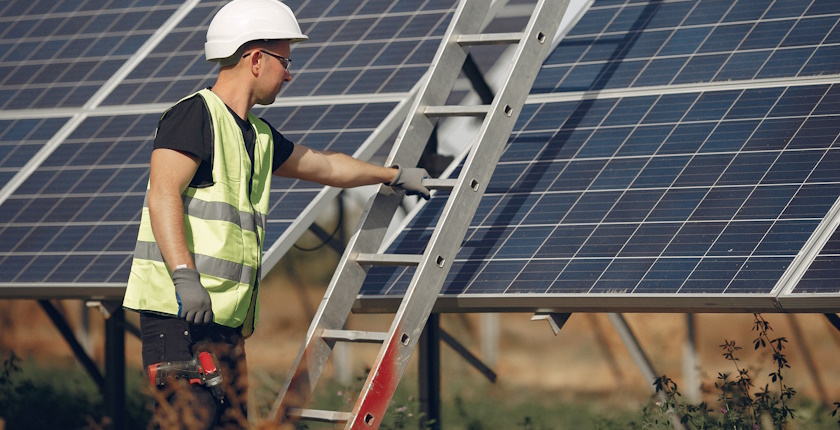
Romanian electricity supplier and distributor Electrica, in which the government holds almost 50%, published tenders via its subsidiaries for the second time for ready-to-build solar power projects. The peak capacities are 62.5 MW and 77.6 MW, and the second investment also involves battery storage. The company launched production in November at its Satu Mare 2 solar power plant, also known as Sunwind, of 27 MW.

Companies with the most advantageous offers from the technical and economic point of view will get the contracts for the construction of photovoltaic systems Satu Mare 3 and Bihor 1. Electrica, the investor, issued both calls a year ago, but canceled them in the meantime.

The Romanian Government owns 49.8% of the company, a power supplier and distributor, which also invests in renewables.

Electrica’s subsidiary New Trend Energy is responsible for the Satu Mare 3 project, of 62.5 MW in peak capacity. It is located in the commune of Doba in the Satu Mare county in the northwest. Inverters would enable the delivery of 57.9 MW to the grid.

The investment is estimated at RON 176.6 million (EUR 34.7 million) excluding value-added tax. Electrica expects to generate 70.2 MWh per annum. The deadline for applications is February 17.

BESS project is for 16.5 MWh in capacity and a 4 MW in operating power

Foton Power Energy, another subsidiary of Electrica, is seeking a contractor for a turnkey deal for Bihor 1. The PV plant would have 77.6 MW in peak capacity, and 77.4 MW in alternating current terms. It would consist of Trina’s bifacial solar panels of 595 W each.

The selected company will need to build a battery energy storage system as well, together with a transformer and fences, according to the document.

Both projects, with sites in northwestern Romania, have won subsidies from the Modernisation Fund

The BESS project is for 16.5 MWh in capacity and a 4 MW in operating power, earlier documents show. It would consist of eight Huawei units with a nominal size of 2.06 MWh each, the special purpose vehicle said. The project envisages the possibility of expansion of the battery storage facility to 75 MW and 150 MWh.

Total expected annual output amounts to 87.5 GWh. Foton Power Energy estimated the project at RON 220 million without VAT, which is EUR 43.2 million. Its site is in the communes of Cefa and Mădăraș in Bihor county, also in Romania’s northwest. Interested firms can submit bids by February 12.

Both Satu Mare 3 and Bihor 1 received state support via the European Union’s Modernisation Fund.

Electrica completed its third PV plant last month

In November, the company completed its Satu Mare 2 solar farm of 27 MW in peak capacity. The project firm is called Sunwind Energy. Electrica also operates PV plants Stănești and Vuturul with peak capacities at 7.5 MW and 12 MW, respectively.

The Crucea Est wind power project, worth eur 253 million, is for up to 138 MW and a BESS of 15 MW and 60 MWh.

In the report on the first nine months of 2025, Electrica wrote that it was developing four energy storage projects of 169.5 MWh altogether. In mid-October it initiated the procedures for 15 BESS facilities of 1 GWh in total.

Before that, in early September, the company signed a memorandum of understanding with Romgaz on the development of 400 MW in solar and storage. Electrica would be the main partner and the other company would hold a minority interest.

The projects are financed from a green bond issuance, which was the largest in Romania.
Post Views:83
  • 1
  • …
  • 23
  • 24
  • 25
  • 26
  • 27
  • …
  • 140

AEA – Albania Energy Association is a industry association dedicated to representing the interests of Albanian and West Balkan for energy producers and consumers. AEA works to advance the development and adoption of sustainable energy solutions in Albania and the Western Balkans, supporting the region’s transition toward a cleaner, more secure, and more competitive energy future. AEA is registered by decision of the Court of Tirana, DECISION NO. 3032, (VAT:L11827451K).

[email protected]

Address
Blv Zogu 1
Tirana
1057
ALBANIA

LinkedIn  |  Facebook
Events
May 25, 2022 Connecting Green Hydrogen Europe 2022
May 25, 2022 Energy Week Western Balkans 2022
Copyright © Albania Energy Association