AEA-Albania Energy Association
  • Main
  • About Us
  • Services
  • Sectors
  • News
  • EventsEvents
  • PublicationPublication
  • Contact Us
AEA-Albania Energy Association
  • Main
  • About Us
  • Services
  • Sectors
  • News
  • EventsEvents
  • PublicationPublication
  • Contact Us
AEA-Albania Energy Association
  • Home Page
  • About Us
  • Sectors
  • Our Services
  • News
  • Contact Us
January 9, 2026
by AEA in News

Croatia launches subsidy call for electric taxi, delivery, car-sharing vehicles

The Government of Croatia has launched a public call to grant subsidies for the purchase of electric vehicles intended for use in taxi, delivery, and car-sharing services.

This is the first public call in Croatia for co-funding for the purchase of electric vehicles for taxi, delivery, and car-sharing services.

The program for the allocation of non-refundable aid was published by the Croatian Ministry of Environment and Green Transition. The call is part of a mechanism for investments in road transport with zero emissions.

The grants were secured via the European Union’s Modernisation Fund.

There is EUR 22 million earmarked for taxi drivers,

From the entire EUR 45 million package, taxi drivers are entitled to EUR 22 million, versus EUR 20 million for delivery vehicles, while EUR 3 million is set for car sharing providers, according to the public call.

The ministry aims to support the purchase of zero-emission vehicles – EVs of categories M1 or N1, to achieve a reduction in greenhouse gas emissions in the transport sector by 20.99% by 2030 from the 2005 level.

In category M1 are passenger vehicles with a maximum of nine seats, and N1 are light commercial vehicles with a maximum permissible weight of 3.5 tons. The maximum subsidy per vehicle is EUR 9,000, meaning the call should co-finance the purchase of at least 5,000 EVs.

North Macedonia is supporting the purchase of EVs for taxi drivers

The submission of applications kicks off on January 15, 2026. It lasts until the funds are exhausted, or at the latest until September 30, 2026.

Three months ago a subsidiy program for taxi services was launched in North Macedonia.

The Ministry of Environment and Spatial Planning and an association of cab drivers are implementing a project to subsidize 200 EVs.

It is a part of efforts for cleaner, quieter, and more efficient urban transportation for the citizens of Skopje and the entire country. It is one of the cities with the most polluted air in the world.

Post Views:320
January 9, 2026
by AEA in News

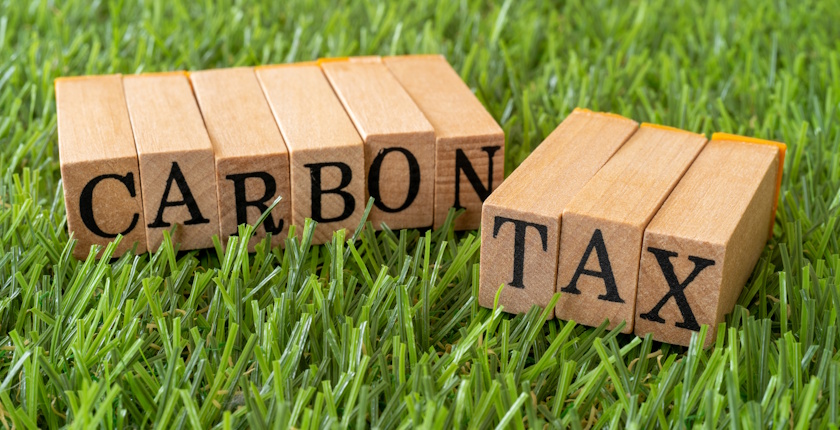
EU’s amendments to CBAM: possibility of relief, but January 1 brought market uncertainty

Long-awaited implementing acts and amendments to the CBAM Regulation brought only a minor relief for the Western Balkans, investors in renewables, and electricity traders. The documents has been analyzed that the European Commission published in December 2025, and the impact of the proposed measures on Energy Community contracting parties – Albania, BiH, Kosovo*, Montenegro, North Macedonia and Serbia.

From January 1, European firms importing aluminum, cement, electricity, iron and steel, hydrogen and fertilizers are obliged to pay a carbon price within the European Union’s Carbon Border Adjustment Mechanism (CBAM).

Last year, the CBAM Regulation was criticized by experts from the Western Balkans (Ljubo Maćić, Zoran Gjorgjievski), European think-tanks (Bruegel), and organizations (Energy Traders Europe). Even the European Network of Transmission System Operators for Electricity (ENTSO-E) requested that the transitional period be prolonged.

They said charging the tax, which started on January 1 as scheduled, would harm countries outside the EU, but also EU member states, market coupling of Western Balkan countries, and electricity trade.

Uncertainty surrounding electricity transit and trade remains high

The analysis showed that the European Commission is proposing changes to the CBAM regulation that would introduce a more favorable method for calculating the national emissions factor and actual emissions values. This benefits non-EU countries that export electricity to the EU, owners of operational renewable energy power plants in these countries, and future green energy investments.

The proposal foresees amendments to the procedure for market coupling, but it is unclear whether these will bring any concrete changes. The commission didn’t propose changes regarding transit, and consequently, electricity trading.

Provided that the proposal is accepted as proposed, it will bring the said positive changes in calculating the national emissions factor and actual emissions values only by the end of the year, meaning that uncertainty in the market will persist until then.

Uncertainty surrounding electricity transit and trade remains high. The impact on the Western Balkans, as well as on the EU member states Bulgaria, Croatia, Greece, Hungary, Romania, and Slovenia, will become clear in the coming weeks and months.

There are two legislative streams

There are two relevant streams currently ongoing in EU legislation for CBAM for electricity. The first are the so-called implementing acts, which are similar to secondary legislation in national law. They further define the technical details of the CBAM regulation.

The other part is the commission’s proposal to amend the CBAM Regulation itself. It will become part of the law when the other co-legislators in the EU – the Council of the EU, which includes the member states, and the European Parliament – together agree on it.

Nobody can say exactly when that process will be finished, but most likely not before the autumn.

National emissions factors, actual emission values: improvement

eu western balkans cbam electricity market coupling amendments
Photo: iStock

There is a proposal to change the way the national emission factors are calculated in the main CBAM Regulation. Currently it only includes the part of the electricity mix based on fossil fuels, regardless of their share in the country’s power generation mix.

For example, for Serbia, a contracting party of the Energy Community, this factor is 1.04. If the national power mix is taken into account, it would go down to 0.7, making the cost of CBAM about 40% lower.

The commission proposed to replace the electricity mix based on fossil fuels, in its accounting system, with one encompassing all energy sources.

The commission also intends to change the requirements for switching to actual emission values

The commission also intends to change the requirements for switching to actual emission values. These are relevant for the producers of renewable energy in non-EU countries. Current conditions are very strict and, to some stakeholders, not achievable.

For example, if a wind farm in the Western Balkans, owned by a domestic or foreign investor, cannot meet these conditions the CBAM payments for the electricity from the facility exported to the neighboring Croatia would be calculated based on the national emissions factor.

The commission suggested that an importer shouldn’t need to have a power purchase agreement (PPA) with a producer directly, which is one of the conditions, but that it could be done through intermediaries. It also proposed the removal of the requirements related to congestion.

These proposals could remove negative impacts on renewable electricity exports and development in non-EU countries, including contracting parties.

Transit: nothing new

The issue of transit hasn’t been addressed in the acts and amendments.

Under the CBAM Regulation, it is unclear how electricity transit costs would be calculated. For example, from Bulgaria to Hungary via Serbia, and who would be required to cover them.

The commission clarified several times that transit isn’t subject to CBAM. However, the physical, practical implementation is the problem.

For example, a trader buys electricity from Greece, transits it through North Macedonia, and puts it on the Serbian SEEPEX power exchange. Somebody else buys it and sells it in Hungary.

It would be very difficult or impossible to say that electricity from Greece was sold into Hungary.

This is why stakeholders take a conservative approach and say that they cannot prove. So, most likely they wouldn’t opt for these countries – non-EU countries, like contracting parties – for transit.

Retroactivity: possibility for improvement

eu western balkans electricity market cbam amendments
Photo: iStock

One of the provisions in the commission’s proposal to amend the CBAM Regulation is that the changes in the electricity sector could apply retroactively, starting from January 2026.

Just as a reminder, EU firms are obliged since the start of this month to pay a CBAM fee for importing designated goods and raw materials and electricity via purchasing so-called CBAM certificates.

Obviously, an importer will try to pass on this cost partly or fully to its counterparts in the third countries. But, importantly, EU firms won’t be able to purchase CBAM certificates yet this year, but only from February 1, 2027.

If the amendment on national emissions factor is adopted, for example in October, this could mean lower CBAM costs for EU importers of electricity from non-EU countries.

Without details on the path forward, market participants lack certainty about the level of CBAM costs

The commission intended to remedy some of the negative impacts on the electricity markets with amendments with retroactive effect. But without details on the path forward, market participants lack certainty about the level of CBAM costs to be paid for 2026.

Based on the current rules, CBAM costs for countries which have lignite in their generation mix could be EUR 70 per MWh to EUR 80 per MWh if the EU ETS price is around 80 EUR per ton of CO2. In some cases, the fee is almost 100% above the electricity price itself.

It is clear that it would rarely make sense to import electricity to the EU from third countries. The price difference, let’s say between Hungary and Serbia, would need to be more than EUR 70 per MWh to EUR 80 per MWh to make the business case.

Market coupling: nothing new or possibility for improvement

eu cbam western balkans electricity market amendments
Photo: Sergio Cerrato – Italia from Pixabay

There are several references to market coupling in the proposal. Energy Community contracting parties are in different phases of market coupling with EU countries.

The commission has proposed signing memoranda of understanding with third countries. It would set out the timeline and conditions for an exemption from CBAM on electricity.

This could be done after the commission approves the so-called verification process of a contracting party’s transposition of the Electricity Integration Package (EIP). It would be a green light for the next stage, which entails the technical tests, leading up to the completion of market coupling.

The current wording in the proposal leaves room for various interpretations

The current wording in the proposal leaves room for various interpretations, one being that the MoU may open the door for an exemption already when the “point of no return” is reached. It is when the contracting party has done all its homework and only the technical tests remain.

However, the commission didn’t propose the other conditions for CBAM exemption to be changed, such as the development of a roadmap on the introduction of a CO2 price that would be equivalent to the level in the EU’s Emissions Trading System (EU ETS).

The question is what the MoU would exactly be about, and if “equivalent” could be defined more precisely.

Why is this important?

No contracting party has yet met the conditions to receive a CBAM exemption in the electricity sector. A critical requirement is to agree to charge an emissions price from 2030 equivalent to the EU ETS.

The CBAM regulation says that the tax cannot technically be implemented on a market which is coupled with the EU internal energy market

If equivalent means the same price, here is the outcome for Serbia, for example: The current CO2 price in the EU is EUR 80 per ton of CO2 equivalent, but is expected to rise to above EUR 100 by 2030, or even reach EUR 150. It would raise prices to consumers by about EUR 75 per MWh and EUR 110, respectively.

The CBAM regulation says that the tax cannot technically be implemented on a market which is coupled with the EU internal energy market. This is why there is a possibility for an exemption for electricity for imports from those countries which are coupled until a technical solution is found how to implement CBAM.

Starting from January 1, any country that is ready to be coupled would in parallel also need to qualify for and receive an exemption from CBAM for electricity. If you fulfil the conditions, you get coupled and get an exemption and CBAM will disappear.

What next?

It could be said that CBAM implementation as of January 1 will certainly affect market integration in the sense that people, businesses would react to market uncertainty.

Trade will be impacted; imports from contracting parties to the EU will be expected to disappear. Of course, contracting parties will continue to import electricity from the EU member states.

The weeks and months ahead will show to what extent the prices and liquidity would be affected in the contracting parties and neighboring EU member states Bulgaria, Croatia, Greece, Hungary, Romania, Slovenia.

For example, Greece would have only the Bulgaria-Romania route to export electricity, and it is already congested. Greece could face curtailments in renewable electricity.

We will also see what the effect on the renewables deployment in contracting parties will be. Are investors going to postpone investments until they see if the changes proposed by the commission are adopted, or are they going to leave for other markets?


Pozsgai: Amendments point in the right direction

Péter Pozsgai, Lead of the EU Carbon Border Adjustment Mechanism Readiness Task Force in the Energy Community Secretariat:

“The European Commission’s proposed amendments point in the right direction, reflecting a consideration of the progress of contracting parties in electricity market coupling, and better outlining the operational details of an exemption via an MoU. The refinement of the rules on national emission factors and the conditions for using actual emission values also demonstrate the intention to minimize the unintended impacts of CBAM on renewable development in contracting parties”.


Post Views:109
January 9, 2026
by AEA in News

New auction announced in Greece for 600 MW for electricity for vulnerable households

The Greek government specified terms and conditions for participation in a new kind of renewable energy auction, covering both wind and solar energy.

The auction comes as part of the Apollo initiative, aimed at reducing energy costs for vulnerable households across the country and fighting energy poverty. In total, 200 MW of solar plus batteries and 400 MW of wind will be auctioned.

Wind power projects of at least 60 kW may participate, with no limit set for photovoltaics. All applicants must have final connection terms from the distribution or transmission operator. Their remuneration will be based on a contract for difference (CfD). Investors can also gain a grant from European Union programs, the National Development Plan or other sources, according to the decree.

This will be a single-step static auction, with the offer price ceiling set at EUR 80 per MWh for wind projects and EUR 75 per MWh for photovoltaics with battery storage.

Equally important, the competition level is 40%, meaning that 60% of the offered capacity will be awarded up to a maximum of 600 MW. On top of that, at least three projects from different investors must participate in the process. Furthermore, no participant can apply for more than 25% of the total offered capacity, to ensure a level playing field.

Steep timeframe for selected projects

Concerning next steps, the Regulatory Authority for Energy, Waste and Water (RAEWW or RAAEY) is expected to officially proclaim the auction in the next few weeks, before the end of January. The regulator will also specify the letter of guarantee investors will have to submit, as well as the rest of the details. The submission of offers is expected to last by the end of February.

The ministry said the construction of solar farms with batteries must be completed by the end of 2027, while wind farms need to come online by September 2028.

Consumers who will benefit from cheaper renewable electricity will be notified via their power suppliers about their eligibility.

Post Views:52
January 9, 2026
by AEA in News

Why nobody in Slovenia bothers to remove snow from solar panels

The snow that has blanketed much of Europe over the past few days has also covered solar panels, preventing the absorption of sunlight and, consequently, electricity production. However, Slovenian solar power plant operators are not attempting to remove the snow, as doing so would cause more harm than good.

The main reason for not clearing the snow is the risk of damage to solar panels. Primož Tručl, CEO of solar power plant operator Moja elektrarna and a member of the board of the Slovenian Photovoltaic Association (ZSFV), told Naš stik that removing snow from solar modules while avoiding scratching their surface would be time-consuming and expensive. It would outweigh the benefits of potential production given the low levels of sunshine in winter, according to him.

Removing snow without damaging solar panels would cost more than the electricity generated at this time of year

Stellar, the operator of a hybrid solar power plant near Črnomelj, also considers such an intervention economically unjustified, as production losses due to temporary snow cover are relatively small and short-lived.

In most cases, snow melts or slides off the surface quickly thanks to the inclination of the panels and the heating of the modules under sunlight, Naš stik was told at the company.

Snow slides off on its own very quickly and outages are short-lived

In addition, manually removing snow with shovels, brooms, scrapers, or other equipment can damage the glass on solar panels. Even softer tools can cause micro-scratches, reducing the efficiency of the panels.

“Any damage to the glass also means an increased risk of moisture ingress and, consequently, module failure,” the company explained.

State-owned energy utility GEN energija has told Naš stik that most of its solar power plants are built on slopes, allowing snow to slide off the modules relatively quickly when the sun shines.

Letting snow slide off on its own also has an upside, as it helps clean solar panels by carrying away most of the dirt accumulated on the surface, according to GEN energija.

Post Views:44
January 8, 2026
by AEA in News

After adding PV unit, Slovenian gas power plant TEB launches battery project

The management of the Brestanica gas power plant in Slovenia has decided to diversify its activities by installing a battery energy storage system (BESS) of 40 MW in operating power and 80 MWh in capacity. The project follows the construction of a ground-mounted solar power plant on the facility’s premises and photovoltaic units on roofs and a parking canopy.

Brestanica Thermal Power Plant – Termoelektrarna Brestanica (TEB) is contributing to the flexibility of Slovenia’s energy system with its investments, Naš stik reported. Due to preventive maintenance and rapid response, electricity output reached 35 GWh in 2025, compared to the planned 25 GWh, the report adds.

The firm issued its development strategy for 2025 to 2030 last year and, based on it, decided to launch a project for a two-hour 40 MW battery energy storage system. It translates to 80 MWh in capacity.

The project will strengthen the flexibility of the energy system, enable more efficient integration of renewable sources and confirm TEB’s focus on modern and sustainable solutions, the article adds. “With the investment in the battery storage facility, we are laying the foundations for a reliable and flexible energy future,” Brestanica Thermal Power Plant said.

Among the other priorities for this year are corporate and cybersecurity.

Brestanica Thermal Power Plant is part of state-owned GEN Group. GEN energija, their parent company, operates the Krško nuclear power plant, also known by the acronym NEK and, in Slovenian, JEK. The gas power plant is also in the municipality of Krško, near Slovenia’s border with Croatia.

TEB put into operation a ground-mounted 466 kW solar power plant on its premises last year. Before that, in 2009 and 2010, the gas plant’s operator built two rooftop PV units and one on a parking canopy. They have 170 kW in combined peak capacity.

Post Views:64
January 8, 2026
by AEA in News

D.Trading to offtake 200 MW of solar in PPA with Econergy in Romania

D.Trading, the pan-European trading arm of DTEK Group, signed a renewable electricity offtake deal for 200 MW of installed solar power capacity in Romania with renewable energy developer and operator Econergy. The power purchase agreement (PPA) includes the country’s largest photovoltaic plant.

D.Trading announced that it would purchase electricity from solar power plants Rătești and Părău in Romania. The deal for Econergy’s assets is for 200 MW. The PPA reflects growing market demand for structured renewable offtake products and marks an important milestone in the commercialisation of the two photovoltaic facilities, the announcement adds.

“Partnering with leading companies such as Econergy supports our long-term strategy of expanding renewable energy integration across the region. This agreement strengthens our green power portfolio and represents another step more towards becoming the leading provider of solutions for renewable assets and battery storage in Eastern Europe,” said Head of D.Trading Power Desk EU Stanislav Dudka.

The company operates in Central, Eastern, and Southeastern Europe. D.Trading is the pan-European trading arm of DTEK Group, which also owns DRI.

Econergy is planning to add a 120 MW battery energy storage system to its Rătești solar power plant

As Romania’s power market continues to evolve, shaped by price volatility, regulatory development, and the growing need for flexible solutions to support grid stability, Econergy has successfully executed multiple bankable commercial agreements, the update reads.

Rătești, Romania’s largest solar power plant, was completed in late 2023. The facility northwest of Bucharest, in Argeș county, has 155 MW in peak capacity. Econergy is planning to add a 120 MW battery energy storage system.

Părău was commissioned in late 2024. The PV plant of 92 MW is in Brașov county in the central part of Romania.

The Părău 2 project is for 342 MW, together with 150 MW of battery storage. It won a 15-year contract for difference (CfD) at the country’s first round of renewable energy auctions.

Post Views:64
January 8, 2026
by AEA in News

Montenegro’s TSO CGES to invest EUR 200 million

Montenegrin transmission system operator Crnogorski Elektroprenosni Sistem plans to invest EUR 200 million over the next five years, according to Ranko Redžić, manager of the company’s national dispatching center.

CGES is constantly improving and modernizing the system, as well as training employees, MINA reported.

According to Ranko Redžić, this yields results. One of them is a very low transmission system loss rate, which ranges from 1.6% to 1.7%, in line with the most efficient European systems, he added.

The most significant capital projects the company completed last year include the reconstruction of the Pljevlja 1 substation and the construction of the 150-kilometer Lastva-Pljevlja transmission line, which is expected to become operational soon.

The power line completes a 400 kV ring that will significantly improve the operational security of both the Montenegrin and neighboring transmission systems, Redžić stressed.

The completion of two 110 kV transmission lines in the north – Brezna-Žabljak and Žabljak-Pljevlja – is also planned

The completion of the project also creates conditions for connecting a significant number of renewable energy power plants, he explained.

Among the major projects is the upgrade of Lastva substation, which resolves the problem of excessively high voltages in the Montenegrin system. The issue is evident throughout the region.

The upgraded substation is expected to be put into operation by the end of January.

Redžić estimated that the total value of investments over the next five years will exceed EUR 200 million.

Among the upcoming projects, there is the completion of two 110 kV transmission lines in the north – Brezna-Žabljak and Žabljak-Pljevlja. CGES also intends to install the 400 kV Brezna substation, which would also enable the connection of significant renewable energy capacity.

The 400 kV link with Serbia would complete the Trans-Balkan Corridor

The reconstruction of the 220 kV transmission line from Bosnia and Herzegovina through Montenegro to Albania is also planned, along with the reconstruction of the substation at the Perućica hydropower plant and the replacement of transformers at Pljevlja 2 substation.

The upcoming construction of a 400 kV interconnection with Serbia, completing the Trans-Balkan Corridor, would create the conditions for a second line of the submarine cable between Montenegro and Italy, Redžić underscored.

The onshore transmission line would allow the installation of a number of new substations, enabling the connection of additional consumers and renewable electricity plants to the distribution network.

Redžić stressed that the expected date for coupling the Montenegrin and Italian electricity markets is the beginning of 2028.

Post Views:44
January 7, 2026
by AEA in News

Workplace Safety Under Scrutiny After Years of Fatal Accidents in Albania’s Energy Sector

A spate of workplace accidents over the past decade has claimed dozens of lives in Albania’s energy and natural resources industries, highlighting persistent safety shortcomings. From high-voltage electrical lines to deep chrome mines, workers have faced deadly hazards with distressing regularity. Recent incidents – including a landslide that killed two hydropower construction workers in May 2025 and a string of mining accidents in Bulqizë – underscore the ongoing risks and have prompted calls for stronger safety enforcement.

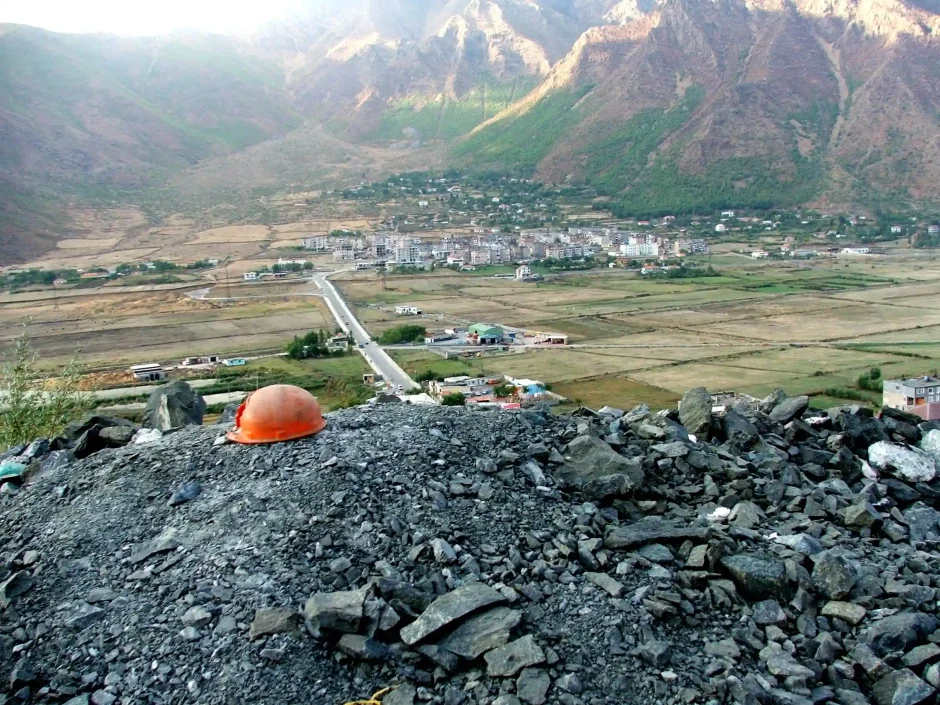
In the chrome mining hub of Bulqizë, northeastern Albania, fatal accidents have become tragically routine. Miners working in unstable underground galleries have been victims of rock falls and gas explosions. In one concession alone, six miners died within a seven-month period (2017–2018) due to collapsing rock or asphyxiating blast. More recently, in September 2025, a 38-year-old miner was killed in Bulqizë’s Zone D galleries while working for a private chrome company. Such incidents illustrate what union leaders call chronic neglect of safety standards in the mining sector. Although police often arrest lower-level supervisors after deadly incidents, higher-level accountability is rare – no mine owners were prosecuted in the last three years despite numerous deaths.

The energy sector has seen its own share of tragedy. HV line workers with Albania’s public power company (OSHEE) regularly perform perilous maintenance on the country’s aging electrical grid. In one case, a 23-year-old electrician fell to his death from a power pole in 2016. During 2024 another foreign Egyptian worker, working for DOKO shpk died during construction of 400kV transmission line Fier-Elbasan-Qafe Thane.  During half of 2021 six electrical workers died during their work where two OST workers died in Roskovec HV tower demolition, and in April–May 2025, two OSHEE technicians were fatally electrocuted in separate incidents (in Mirditë and Divjakë) while attempting to restore electricity. Two other crew members were injured in the Mirditë accident, which occurred as they worked on a high-voltage line to supply a voting center. Investigations blamed lapses in safety protocols and protective equipment, pointing to the need for better training and oversight for electrical workers. OSHEE currently tops the list for workplace accidents among Albanian companies, according to official data.

Industrial projects backed by foreign investors have not been immune either. In 2014, three workers (two Albanians and an Italian) died when a rockslide struck the Moglicë hydropower project site in southern Albania. The project’s Norwegian developer, Statkraft, halted work to review safety after the incidents. Likewise, at the Ballsh oil refinery  a major energy installation a massive explosion in November 2016 killed one operator and badly burned five others.  Authorities suspect that inadequate maintenance and a failure to observe safety rules led to the blast in a fuel processing unit. These disasters highlight that even large-scale energy operations, which are expected to follow international standards, can falter on safety measures in Albania.

Despite each tragedy, systemic improvements have lagged. Over the five years alone (2016–2021), 133 people lost their lives to workplace accidents in Albania,  roughly half of them in construction, mining, or energy jobs. Government inspectors have handed out fines to companies for more than 600 penalties in that period and in some cases police have detained site managers after fatal accidents. Yet enforcement is widely seen as ineffective. Observers point to political connections and economic pressures that lead to corners being cut. For example, a 2019 accident in which an 18-year-old off-the-books worker was electrocuted at a small hydropower plant in Tamara was initially covered up as a “natural death”, allegedly to protect the concession owner. Such cases fuel public skepticism about regulators’ commitment to worker safety.

An electrical lineman in Albania working on power lines. OSHEE and OST field workers face high risks from falls and electrocution if safety protocols are not strictly followed.

Officials acknowledge the problem: The State Labour Inspectorate cites poor safety culture and lack of training as major issues, and only specific high-risk professions (miners, oil drillers) are required by law to carry life insurance. In response to recent accidents, the Ministry of Energy and infrastructure companies have promised new measures ranging from better protective gear for workers at height, to stricter monitoring of mining operations. There are some signs of progress: major foreign-led projects like the Trans-Adriatic Gas Pipeline were completed in 2020 without publicized fatalities, and Albania’s onshore oilfields have ramped up safety drills after the 2016 refinery blast.

However, critics say these efforts remain piecemeal.

Worker advocates and unions are urging a comprehensive overhaul of workplace safety enforcement. They want more surprise inspections, tougher fines and legal consequences for negligent executives, and greater empowerment of workers to refuse unsafe work. “Every Albanian who leaves for work in the morning deserves to come home safely,” one miners’ representative said at a recent vigil in Bulqizë. As Albania continues to develop its energy and mining resources  building roads, dams, power lines, and extracting minerals  the stakes are high. The country’s ambitious economic plans depend on these sectors, but each incident erodes public trust and devastates families.

For now, the rash of accidents has cast a spotlight on an uncomfortable reality: economic growth in Albania has been built on risky, sometimes deadly labor. The challenge ahead is translating the lessons of each tragedy into preventive action. Observers note that 2025, marked by multiple high-profile accidents, could be a turning point. The government has pledged to bolster the Work Inspectorate and update safety regulations in line with EU standards. Albania’s workforce, meanwhile, is watching closely to see if those promises result in safer conditions on the ground  in the mines, on the power lines, and at all hazardous job sites  so that such workplace tragedies become a thing of the past.

January 7, 2026
by AEA in News

Shared power, shared security: Nordic lessons for Europe’s energy resilience

Author: Parvathy Sobha, Brida Mbuwir and Bart Overdevest,EUSEW Young Energy Ambassadors

Renewables are transforming Europe’s energy landscape, but the rapid green transition is testing grid stability. The Iberian blackout exposed the risks of ambition outpacing the system’s flexibility. Yet the story looks different in the north. Nordic countries have integrated vast shares of renewables while keeping the lights on, proof that reliability and decarbonisation can go hand in hand. What can the rest of Europe learn from the Nordics to safeguard its energy security in a net-zero grid?

Europe’s energy security test

As wind and solar replace conventional power plants that once provided system inertia, maintaining voltage and frequency stability grows more fragile. Recent fuel market volatility and supply shocks have also exposed the limits of isolated national grids. This is no reason to slow the green transition, but a reminder that Europe must now build a power system that combines scale, resilience and low carbon intensity.

The Nordic blueprint

The Nordic countries—Sweden, Norway, Finland and Denmark—have built one of the world’s most reliable and decarbonised power systems, known for their unique combination of resources, coordination and market integration. A complementary energy mix forms its backbone: dispatchable hydropower balances variable wind, while nuclear and bioenergy add stability and seasonal flexibility. This is further complemented by growing contributions from batteries and demand response.

Moreover, the cross-border links allow electricity to flow to where it is most needed, easing local shortages and damping price volatility. Additionally, strong regional cooperation, harmonised grid codes, shared market rules and coordinated system planning enable national operators to function as a single, interconnected network. Finally, deeply integrated day-ahead, intraday and balancing markets turn variability into an asset by smoothing prices, reducing reserve needs and strengthening reliability as renewable shares rise.

Author, Parvathy Sobha, Brida Mbuwir and Bart Overdevest, EUSEW Young Energy Ambassadors

Adapting Nordic lessons for Europe’s energy future

Adopting the Nordic model requires adaptation to Europe’s diverse realities. Not every region has the hydropower that underpins the Nordics’ flexibility. Balancing variable renewables in other parts of Europe will depend on smarter combinations of storage, flexible demand and interconnections. The Nordic example shows that strong coordination, consistent investment and shared market rules can overcome resource disparities and geography alike. Infrastructure gaps, uneven market maturity and regulatory differences remain obstacles, but none are insurmountable.

The EU must strengthen not only its physical grids but also the cooperation that connects them. Accelerating interconnectors and internal reinforcements through programmes such as TEN-E and REPowerEU will allow renewable electricity to flow across borders, turning surplus wind in one region into stability in another. Equally important is market integration. Deepening day-ahead, intraday and balancing market coupling will ensure that flexibility—whether storage, demand response, or variable renewables—reaches where it creates the greatest value. Treating flexibility as core infrastructure and valuing fast frequency response and grid-scale storage within capacity and balancing mechanisms, will anchor reliability in a cleaner and more dynamic power mix.

Operational harmony will be the glue that binds this system together. Aligning grid codes, planning standards and market rules across Member States can enable transmission and distribution operators to act as one coordinated European network. A shared digital backbone, built on real-time data, forecasting and automation will add the visibility and speed needed to manage decentralised generation. Citizens remain central to this transformation. Cross-border projects must deliver tangible local benefits: fair prices, clean air and sustainable jobs. Earning public trust through transparency and equitable outcomes will sustain momentum and legitimacy.

This opinion editorial is produced in co-operation with the European Sustainable Energy Week 2026. See ec.europa.eu/eusew for open calls.

Disclaimer: This article is a contribution from a partner. All rights reserved. Neither the European Commission nor any person acting on behalf of the Commission is responsible for the use that might be made of the information in the article. The opinions expressed are those of the author(s) only and should not be considered as representative of the European Commission’s official position.

Post Views:52
January 7, 2026
by AEA in News

Slovenian DSO registers enormous interest in connecting BESS to distribution grid

Applications for 400 MW have been submitted for the connection of battery energy storage systems to the distribution grid, according to Elektro Ljubljana, one of the distribution system operators in Slovenia.

Slovenia’s distribution system operators (DSOs) are getting an increasing number of requests to connect battery storage systems directly to distribution substations. Notably, in early May, the five Slovenian DSOs fed more electricity into the transmission network than they drew from it for the first time, and for two consecutive days.

Matjaž Osvald, Executive Director of Operation and Development of the Distribution Network in DSO Elektro Ljubljana, pointed out that last summer the company observed increased investor interest in directly connecting batteries to distribution substations.

It issued installation terms for 90 MW, and requests for at least as much are waiting to be processed, he added.

Installation terms were issued for batteries with 90 MW in overall capability

However, the company estimated there could be at least 300 MW more in applications. Due to the technical limitations of existing substations, much less could be connected. Substations in the Elektro Ljubljana area are already overloaded and don’t allow additional connections of larger devices, Osvald explained.

Furthermore, upgrading or constructing new facilities is a lengthy process, he pointed out. Current delivery times for transformers alone are longer than two years, with financing also being an issue.

According to Osvald, batteries would be used to store energy from solar power plants, and three types of investors have emerged. One group wants to install batteries to provide system services for system operators on the European market or for electricity trading.

Three types of investors are submitting applications

The second and third batch aim to bring their projects to a certain stage of development and then sell them – either they would purchase land, obtain permits, and install a battery, or only buy land and obtain permits for energy storage.

Osvald expressed concern about the idea of using batteries solely to provide system services in the European market. In that case, there would be no benefits for the Slovenian distribution network, but it could create problems, he stressed.

Such use would occupy all available connection capacity in substations, which, with increasing electrification, could lead to no spare capacity for other grid users, according to Osvald.

He also pointed to the value of BESS for the distribution network in reducing peak loads and consumption.

Post Views:54
  • 1
  • …
  • 22
  • 23
  • 24
  • 25
  • 26
  • …
  • 140

AEA – Albania Energy Association is a industry association dedicated to representing the interests of Albanian and West Balkan for energy producers and consumers. AEA works to advance the development and adoption of sustainable energy solutions in Albania and the Western Balkans, supporting the region’s transition toward a cleaner, more secure, and more competitive energy future. AEA is registered by decision of the Court of Tirana, DECISION NO. 3032, (VAT:L11827451K).

[email protected]

Address
Blv Zogu 1
Tirana
1057
ALBANIA

LinkedIn  |  Facebook
Events
May 25, 2022 Connecting Green Hydrogen Europe 2022
May 25, 2022 Energy Week Western Balkans 2022
Copyright © Albania Energy Association