AEA-Albania Energy Association
  • Main
  • About Us
  • Services
  • Sectors
  • News
  • EventsEvents
  • PublicationPublication
  • Contact Us
AEA-Albania Energy Association
  • Main
  • About Us
  • Services
  • Sectors
  • News
  • EventsEvents
  • PublicationPublication
  • Contact Us
AEA-Albania Energy Association
  • Home Page
  • About Us
  • Sectors
  • Our Services
  • News
  • Contact Us
April 16, 2025
by AEA in News

Alcazar joins forces with IFC to develop Štip wind farm project

Alcazar Energy Partners has signed a development support agreement with the International Finance Corporation, a member of the World Bank Group. The company intends to develop the largest renewable energy platform in the Western Balkans.

Alcazar Energy Partners (AEP) said the agreement provides access to development assistance funding for phase 1 of the Štip wind farm, the largest wind power project in North Macedonia, reinforcing both parties’ commitment to mobilizing private capital for sustainable infrastructure in strategic growth markets.

The start of construction of the first phase of the EUR 500 million Štip wind farm is envisaged later this year. The total installed capacity, once all phases are complete, would be approximately 400 MW.

According to Alcazar, the project will provide clean, reliable power to over 100,000 households and mitigate up to 690,000 CO2-equivalent tons emissions each year, marking a significant step towards strengthening North Macedonia’s energy security and renewable energy objectives.

Štip wind farm is AEP’s first project in North Macedonia

Štip wind farm is AEP’s first project in North Macedonia. It reflects the firm’s strategy to expand its presence across the Western Balkans, where it has already acquired a 1.5 GW pipeline of greenfield onshore wind and solar assets, delivering renewable energy infrastructure that supports national ambitions and global climate goals.

The project was launched ten months ago. The sites for more than 50 turbines are on the territories of the municipalities of Karbinci, Radoviš, and Štip, southeast of the capital city of Skopje.

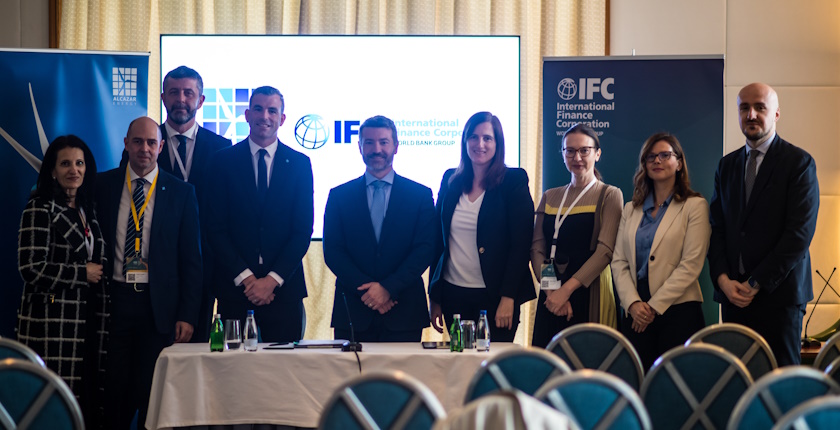
The signing ceremony took place on the sidelines of the ESG Adria Summit in Porto Montenegro.

AEP is currently advancing a detailed project design

“Our continued partnership with IFC is instrumental as we progress with the Štip wind farm. Together, we’re not only advancing the energy transition but also supporting economic development and long-term energy security. We look forward to delivering a project that brings lasting value to communities and reinforces North Macedonia’s sustainability ambitions,” Co-Founder and Managing Partner of Alcazar Energy Partners Daniel Calderon stated.

AEP, currently advancing a detailed project design, has engaged leading engineering, environmental, legal, and social advisors to ensure the project meets the highest international standards.

Avato: The Štip wind Farm in North Macedonia is a natural extension of our collaboration

According to Patrick Avato, IFC’s Manager for Infrastructure and Energy in Europe, the two sides built a strategic partnership over more than a decade, working together to advance sustainable energy projects across emerging markets.

“The Štip wind farm in North Macedonia is a natural extension of this collaboration, aimed at expanding access to affordable, clean energy—essential for economic competitiveness and growth. In addition to strengthening the country’s energy security, the project also reflects IFC’s commitment to supporting sustainable energy solutions that meet international standards and contribute to a just energy transition in the region,” he asserted.

The signing was also attended by Tim Sheahan, Senior Director at AEP.

Alcazar Energy Partners is an independent infrastructure fund manager focused on the development, financing, construction, and operation of utility-scale renewable energy projects in growth markets since 2014. It now has a cumulative renewable energy portfolio of more than 4 GW, reads the press release.
Post Views:73
April 16, 2025
by AEA in News

Serbia adopts first ever rulebook on standards for wood pellets

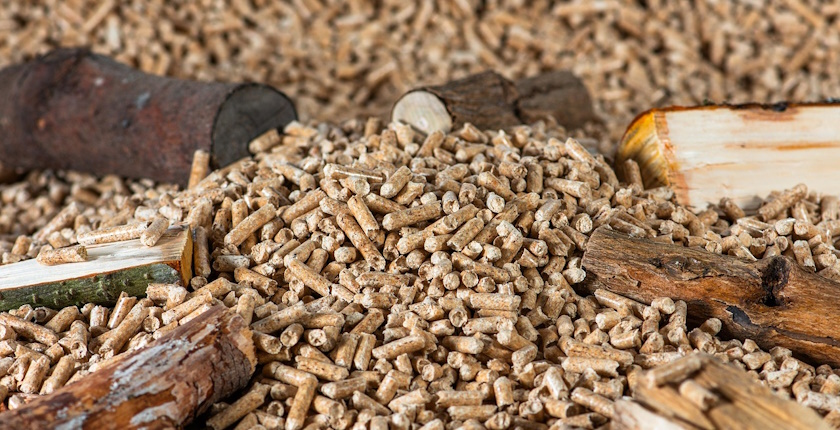
Serbia has adopted the rulebook on solid fuels from wood biomass, which for the first time regulates the quality of pellets and briquettes on the domestic market.

The rulebook on technical and other requirements for solid fuels from wood biomass sold on the Serbian market will enter into force in three months. In the meantime, an institution needs to be established for control, compliance, and corrective measures regarding the new requirements.

The rulebook introduces technical standards and mandatory laboratory analysis, defines rules for assessing compliance, and product labeling. It envisages oversight of the levels of substances affecting health and the environment, according to the Ministry of Mining and Energy.

Ministry: Only high-quality pellets will be sold on the Serbian market, in line with the standards set by the EU

“By adopting the rulebook we want to preserve the competitiveness of the pellet industry in Serbia. This document represents a fine example of the cooperation between the authorities and the businesses,” Minister Dubravka Đedović Handanović stated.

The ministry claims that the rulebook secures that only high-quality pellets can be sold on the Serbian market in line with the standards applicable in the European Union.

For the first time, the physical and chemical characteristics of wood pellets will be controlled

According to the Chamber of Commerce and Industry, only pellets with positive results from laboratory analysis and the kinds that meet strict standards on harmful substances will be allowed on the market in Serbia.

“For the first time our authorities would control physical and chemical characteristics of wood pellets such as size, shape, stability, caloric values, moisture, and ash level,” the association of Serbian firms added.

The same will apply to the substances affecting human health and the environment including heavy metals – arsenic, cadmium, chromium, copper, lead, mercury, nickel, zinc, sulfur, and nitrogen.

The association recalled that the ministry established the working group for the preparation of the rulebook upon its initiative.

Post Views:35
April 16, 2025
by AEA in News

Rörig (E.ON): Croatia charges up to six times higher e-waste fees on solar panels than other EU states

Croatia charges a waste fee on solar panels of EUR 300 per ton, up to six times more than other European Union countries. The levy slows down the expansion of solar energy, Andreas Rörig, president of the Management Board of E.ON Croatia, told Balkan Green Energy News.

In addition to the one-off e-waste management fee, hindering investments, another issue is that Croatia doesn’t have a system for collecting and recycling solar panels.

Andreas Rörig’s post on LinkedIn received a lot of public attention. He wrote that in Croatia high fees and regulatory barriers, including the ones related to waste, are holding back solar’s potential. With a waste fee of EUR 0.3 per kilogram (EUR 300 per ton), the profitability of solar investments is at risk, he added.

The fee in other EU countries ranges from EUR 50 to EUR 150

Rörig explained that a comparison with other EU member states demonstrates that fees in Croatia are significantly higher than in neighboring countries. For example, they range from EUR 50 to EUR 150 in the Netherlands, Belgium, Slovenia, and Hungary.

The fee is paid on total weight, which is more than 20 kilograms per panel, according to E.ON. Even more concerning is the disproportionate taxation: 80% to 90% of a solar panel’s mass consists of easily recyclable materials that aren’t classified as e-waste, yet the fee is charged on the total weight.

“This approach discourages investment, slows Croatia’s progress toward energy transition, and contradicts the country’s goals of reducing emissions and increasing energy efficiency. A practical example of why solar energy accounts for less than 2% of Croatia’s energy mix – far below its true potential,” Rörig stated.

There are signs that things are about to change

Therefore he recommended reducing the electronic waste management fee for solar panels and suspending the obligation until a functional disposal system is in place. He confirmed there is currently no functional system for the collection, processing, and recycling of e-waste from solar panels in Croatia.

“However, there are positive indications that the fee will be reduced and that the system will be established. We believe that the Environmental Protection and Energy Efficiency Fund or FZOEU has recognized the needs of the industry. E.ON supports such measures because we believe that they will fix the problem and enable easier waste management,” Rörig stressed.

Post Views:37
April 15, 2025
by AEA in News

Upgrade for prosumers to avoid grid curtailments costs up to EUR 1,000

To use electricity from their photovoltaic systems in periods when grid operators disconnect them to stabilize the system, citizens can install equipment that costs EUR 300 to EUR 1,000. Cyprus passed a bill enabling prosumers to switch to a zero-export mode.

Cyprus, the only non-interconnected European Union member state, is struggling to maintain the stability of its electricity system. Rapid growth of solar power capacity is increasing the episodes of overloads, when grid operators have to curtail their production. At the same time, sometimes sudden weather changes push production to a critically low level, which can also cause outages before oil-fired power plants step in to cover the deficit.

Still, the island country passed amendments last week to protect the right of prosumers to an interrupted power supply for their own needs. On the other hand, implementation isn’t cheap, and for some of them it would not be cost-effective.

Upgrading a PV system with a zero-export mode is not cost-effective if no one is usually home during work hours

Minister of Energy, Commerce and Industry George Papanastasiou said prosumers need to upgrade their photovoltaic systems to be able to keep consuming their electricity during curtailments. A switch for cutting off the solar panels from the grid, and leaving them directly connected to the home, costs some EUR 300, he added. But a prosumer will need to pay EUR 1,000 if the inverter doesn’t support the conversion, the minister explained.

Owners of PV systems need to calculate the curtailment costs and compare them to the investment that enables operating them in a so-called zero-export mode.

If no one is home on weekdays during work hours, when solar panels generate electricity, there are no substantial benefits, unless there is also a battery. And it makes the intervention much more expensive. Conversely, the new option is much more useful for most businesses.

Cyprus is rushing to introduce energy storage capacities and expand the curtailment systems throughout the power system.

Post Views:16
April 15, 2025
by AEA in News

Eurowind Energy completes its 60.2 MW solar park in Romania

Eurowind Energy’s 60.2 MW photovoltaic park in Transylvania will be put into operation in late April, Minister of Energy Sebastian Burduja said. The facility is joining the almost 600 MW in new capacity funded from the National Recovery and Resilience Plan. In addition, the ministry prepared a EUR 450 million package of grants for companies for energy efficiency and self-consumption.

After 14 years of doing business in Romania, Denmark-based European Energy is materializing its first major endeavors in the country. Minister of Energy Sebastian Burduja revealed that the company’s solar power plant in Teiuş would be commissioned by the end of the month.

The location is in the Transylvania region. Eurowind Energy received EUR 15 million from the government for the project. It costs EUR 47.2 million in total, or EUR 55 million with value-added tax. Construction began a year ago. The system in Alba county will generate an estimated 104 GWh per year.

Burduja said almost 600 MW of capacity has been commissioned within the projects that Romania funds through the National Recovery and Resilience (NRRP or, in Romanian, PNRR).

Eurowind Energy has major renewables projects lined up in Romania, Bulgaria

Eurowind Energy, based in Hobro, Denmark, is one of the biggest wind and solar power developers in Romania.

The Danish company recently signed a 12-year virtual power purchase agreement (PPA) with Autoliv in Romania, for the supply of electricity from the Pecineaga wind park. Eurowind Energy is preparing to put the facility into operation.

It is also building a 238 MW solar power plant in Yambol in neighboring Bulgaria, with Renalfa IPP. They plan to add wind turbines and batteries.

EUR 450 million available for firms for energy efficiency, self-consumption

At the same event, Burduja said the ministry is launching two calls worth EUR 450 million combined. They are intended for support to the energy-intensive industry.

The package for is for companies. It consists of EUR 150 million for energy efficiency – the replacement of outdated equipment – and more than EUR 300 million for the production of electricity for self-consumption.

The Ministry of Energy has set an extremely ambitious target of 2.5 GW of new capacity to be put into operation this year, Burduja stressed. It is two times more than in 2023. Active energy storage capacity is nearing 400 MWh, he added.

In the energy efficiency call, fims can receive as much as EUR 30 million each from the Modernisation Fund. The self-consumption segment is for the ones with available land and projects for photovoltaic parks or even wind farms and micro hydropower plants.

According to the International Renewable Energy Agency (IRENA), Romania increased its solar power capacity at the end of last year by 57% to 4.7 GW. Most of it is from prosumers. The wind power segment is picking up, but slowly, after a stagnation that began a decade ago.

Post Views:23
April 15, 2025
by AEA in News

Croatia changing law on renewables – new rules for prosumers, decentralized power production

The Government of Croatia has adopted the amendments to the law on renewable energy sources and high-efficiency cogeneration. They change rules for consumers producing electricity for self-consumption, facilitate the establishment of citizen energy communities and regulate decentralized energy production.

The amendments align the Croatian legislation with the European Union’s Renewable Energy Directive and bring benefits to citizens, entrepreneurs, and investors, the Ministry of Economy said.

One of important innovations is a new scheme for the production of energy for self-consumption. Instead of the current net metering mechanism, the new law introduces net billing. It values more fairly the surplus electricity that prosumers deliver to the grid, according to the ministry.

The grid costs charged to prosumers will be aligned with the actual amount of electricity that they take from the grid

Consumers – citizens and entrepreneurs that produce energy for their own needs, will pay grid costs matching the amount of electricity they actually take from it, enabling a sustainable and fair system for all users, the ministry added.

Existing prosumers will have ten years for the transition to the new scheme.

The bill enables the production of electricity for self-consumption in remote locations, provided that all metering points are registered with the same consumer. The ministry expects the measure to pave the way for greater investments, flexibility, and decentralized energy production.

Waste separation is a condition for granting incentives for waste incineration

The rules for establishing citizen energy communities have been simplified, to further strengthen their role in the energy transition. The amendments stricten the criteria for the sustainability of biofuels and they prohibit incentivizing the incineration of waste not from a system of separate collection.

The upcoming law sets the basis for a plan for the development of electricity infrastructure and storage capacities. It will create the conditions for greater integration of renewable energy sources into the grid, the ministry stressed.

“With this law we are taking an important step forward in the energy transition, ensuring a balance between the interests of citizens, the economy, and the energy system, and creating the foundations for a sustainable development of the Croatian energy sector in the long term,” Minister Ante Šušnjar stated.

Post Views:25
April 15, 2025
by AEA in News

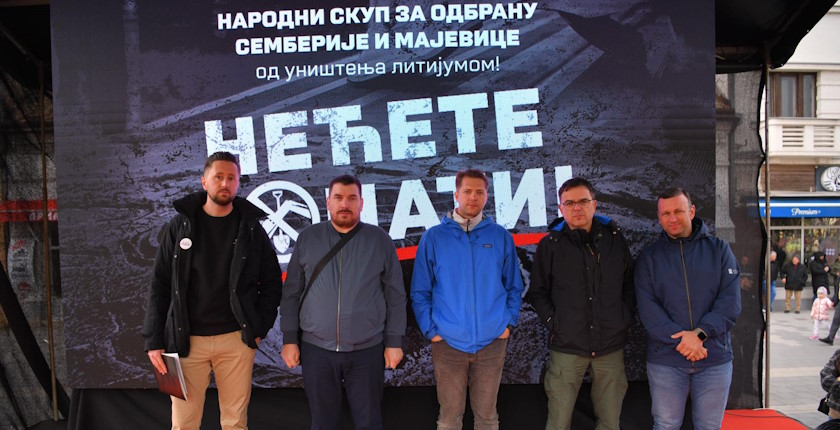
Activists in northeastern BiH to obstruct Majevica lithium mining project

Switzerland-based Arcore and Canadian company Rock Tech Lithium are planning to excavate lithium, boron and magnesium ore and process it near Lopare in northeastern Bosnia and Herzegovina. Citizens and activists from the area surrounding the Majevica mountain are opposing the project, together with people from the border area in neighboring Serbia.

Supported by the local authority, citizens from both entities in BiH and environmental activists have gathered in the city of Bijeljina at another protest against the plans to mine lithium as well as rare metals. Among the participants were the inhabitants of border areas in neighboring Serbia, where Rio Tinto is developing a controversial project for mining and processing jadarite, a unique lithium mineral. Based on the results of its exploration, Swiss firm Arcore submitted a request to the Government of the Republic of Srpska in February for a concession for a mine on the Majevica mountain.

Around the same time, it also agreed with Canadian company Rock Tech Lithium to establish a joint venture that would include the location in northeastern BiH.

Investors want to produce lithium sulfate on site

According to the partners, they plan to start delivering in 2030 the lithium sulfate produced on site to Rock Tech Lithium’s future converter in Guben, Germany. The facility would process the raw material to get battery-grade lithium hydroxide.

The lithium, boron and magnesium deposit is in Lopare municipality, they added. The investment in Brandenburg was in the final financing phase when the agreement was signed, the two companies have revealed. They estimated that 600,000 tons of lithium carbonate equivalent can be obtained from the proposed mine.

The next step is to complete the prefeasibility study. Rock Tech Lithium holds 75% of the JV. Arcore claims that the location contains at least two million tons of lithium carbonate and that it can be exploited for 65 years.

In addition, President of the Republic of Srpska Milorad Dodik said in early March that the entity and Hungary are preparing an agreement on mining rare metals.

Bijeljina, Lopare and Majevica are all in the Republic of Srpska. The country’s other entity is called the Federation of Bosnia and Herzegovina, where activists in the nearby city of Tuzla and municipalities like Čelić are warning of the potential environmental impact of lithium mining and other shady projects.

Environmentalists demand Majevica to be protected as nature park

Environmentalist groups earlier requested from the Republic of Srpska to impose a moratorium on geological exploration and mining on the mountain.

Environmentalist associations submitted a petition with over 6,000 signatures for a moratorium on geological exploration and mining in Majevica

“This gathering was envisaged to have a regional character as today the citizens of several cities and municipalities have come together. Entire northeastern BiH is in the scope, as Majevica is our joint mountain. We all share the same water, same air and we live on the same land. We organized a civic initiative and we collected more than six thousand signatures and demanded for Majevica to become a nature park,” said Snežana Jagodić Vujić from the Eko put association based in Bijeljina.

In her opinion, the rich part of the world is building for its clean energy while destroying the environment and people in the poorer part of the world.

Semberija plain and Sava basin area are under threat as well

Head of the Municipality of Lopare Rado Savić said opening a mine in Majevica would jeopardize Lopare as well as Semberija, Posavina – areas around the river Sava, all wildlife downstream from its tributary Gnjica, and the Janja, which flows into the Drina river. “Unless there are other development projects, we don’t need mining either,” he added.

Machines shall not pass through any village, Adi Selman from Tuzla-based activist group Karton revolucija told the crowd. “We promise tonight that, if it is necessary, we will be chasing them away with our pickaxes and hoes and that, even if we are left all alone in this world, we will never give up on the fight to save our Majevica, Semberija and Posavina”, he stressed.

There is no rich mining town in the world and no lithium mine near a populated place or in a nature park, Bijeljina Mayor Ljubiša Petrović claims. “We won’t allow a handful of strongmen to destroy, for other people’s interests and profits, what was created for generations – our water, land and life,” he stated.

Post Views:75
April 15, 2025
by AEA in News

Bulgaria suspends ill-designed solar energy support program

The Ministry of Energy of Bulgaria doesn’t intend to publish the second call for subsidies for households for solar panels with batteries and solar collectors. The program is partly covered by the European Union’s Recovery and Resilience Facility, so now the country risks losing the funds.

The Ministry of Energy of Bulgaria told Kapital that it does not plan to launch a second procedure to support households in purchasing and installing rooftop photovoltaic panels and solar water heaters. The measure was one of the few for citizens in the National Recovery and Resilience Plan (NRRP) rather than businesses or municipalities.

Through the first call, 1,500 households were selected for grants, worth some EUR 20.5 million in total. There is EUR 123 million for the entire scheme, called Support for Renewable Energy for Households. The solar power panel segment includes an option to install batteries as well.

Procedure too complicated

Initially there were fears that there would be more applications than the sum can cover, the article adds. But the procedure turned out to be so complicated that few people actually submitted documentation, the news outlet wrote. So now Bulgaria is about to lose the funds, after the European Commission already blocked the second NRRP tranche late last year.

The Ministry of Energy said it expects all the remaining contracts from the first round to be signed by the end of the month.

The program covers up to 70% of the costs for PV panels and 100% for solar collectors

According to Balin Balinov from Greenpeace, the government is once again demonstrating lack of commitment when it comes to energy poor households.

The program covers up to 70% of the costs for PV panels and 100% for solar collectors. But beneficiaries must buy them on their own and get reimbursed afterward. Notably, people who can afford such devices don’t want to deal with the bureaucracy, the report adds.

Installers struggling with backlogs amid tight deadlines

Moreover, Balinov said, there are hardly any firms available at the moment for installing solar panels, and the deadlines are short. Another issue is the lack of a net metering mechanism for rooftop and balcony photovoltaics. In such a setting, the electricity that beneficiaries generate would be subtracted from their bills.

The draft Law on Energy from Renewable Sources, currently in procedure in the National Assembly of Bulgaria includes the introduction of virtual net metering for prosumers and renewable energy communities. The deadline for approving an application for the installation of a solar power system of up to 20 kW would be just one month, the ministry pointed out.

Moreover, to get a grid connection, prosumers with up to 10.8 kW would only be required to notify the operator.

Post Views:83
April 15, 2025
by AEA in News

Romania’s Hidroelectrica picks contractors for 36 MW battery system at its only wind farm

Prime Batteries Technology and Enevo Group won Hidroelectrica’s tender for the installation of a battery energy storage system of 36 MW with a two-hour duration at the power utility’s Crucea Nord wind park.

A renewable energy hub is in the making in the small communes of Crucea and Pantelimon in the Dobruja (Dobrogea) province in Romania’s east. The area is home to state-owned hydropower producer Hidroelectrica’s only wind farm, Crucea Nord, but it includes several sites for projects of other companies, too.

The facility has been operating at a significant loss due to unfavorable balancing requirements. Hidroelectrica launched a small battery first, only to publish a tender four months ago for contractors for a system of 36 MW in operating power and 72 MWh in capacity.

Contract is worth EUR 16 million excluding VAT

The news is that the utility signed a EUR 16 million deal with Prime Batteries Technology and Enevo Group, the consortium with the best bid. The deadline is 12 months. Hidroelectrica initially estimated the investment at EUR 20.3 million plus excluding value-added tax.

Prime Batteries manufactures lithium ion batteries and provides energy storage solutions for the automotive, smart grids, and industrial sectors. The startup is headquartered in Cernica near Bucharest. The other company is Romanian as well.

Primary idea is to reduce imbalances

Crucea Nord, commissioned in 2014, has 108 MW in capacity. The battery energy storage system needs to be built at the substation.

“The primary objective of this investment is to reduce internal imbalances at the wind farm within Hidroelectrica’s portfolio, provide system balancing services for the national energy grid, improve the performance of the wind turbines, and decrease the wear on the electromechanical systems of the turbines,” Hidroelectrica said. It would be its first lithium ion battery.

The company operates 188 hydropower plants with a combined capacity of 6.4 GW.

Romania and neighboring Bulgaria are racing to boost battery capacity within deadlines for subsidies from the European Union. Both achieved robust growth rates in the solar power sector, so balancing needs are also surging.

Post Views:38
April 15, 2025
by AEA in News

Turkey’s renewables failing to cover power demand growth despite solar boom

Turkey switched in 2024 from a net electricity importer to net exporter, but renewables are still not growing fast enough to meet rising domestic power demand – one of the highest in the world, Ember found. The country has become Europe’s biggest coal power producer and there are plans for more such capacity.

Wind and solar generated 18% of electricity last year or 62 TWh, according to data from Ember’s Türkiye Electricity Review 2025. Together they were higher than domestic coal again, at 47 TWh, after surpassing it for the first time in 2023. But imports account for 61% of coal power production in the country.

Solar power growth spiked 39% in Turkey or by 7.3 TWh and the capacity reached 19.8 GW by the end of 2024. It compares to the global rise of 29% in output.

Photovoltaics had a 7.5% share, after 5.7% one year earlier. The wind power item advanced by only 0.1 percentage point, to 10.7%.

Government’s ambitions for renewables would result in 49% combined solar, wind power share in production

At 5.5%, Turkey had one of the highest increases in power demand last year in the world, mostly because of record meteorological heat pushing up cooling needs. The amount was 18 TWh and the total reached 342 TWh.

The rise in domestic electricity generation totaled 23 TWh and Turkey achieved a switch from a net power importer to net exporter. Nevertheless, wind and solar are still not growing fast enough to meet rising demand, translating to costly imported fossil fuel power generation, the report points out. The situation is similar on a worldwide scale.

The 7.3 TWh increase in solar accounted for 32% of the jump in electricity generation, compared to 40.2% on a global scale. The ambitious renewables targets for 2035 would result in a share of fossil fuels of 20%, and wind and solar at 49% in combination.

“Although demand growth has slowed in recent years, it is still outpacing the rate of new wind and solar additions. Demand increased by 42 TWh in the last five years, compared to 31 TWh of additional wind and solar. The rest of demand is met by imported coal and gas,” said Ufuk Alparslan, the report’s author and the energy think tank’s regional lead for Turkey and the Caucasus.

‍Romania beats Turkey in solar power production share

In the group of 20 countries with the highest electricity demand in Europe, Turkey surpassed Switzerland in solar electricity generation in 2024. On the other hand, it fell one position behind Romania, which is ranked 12th, as it doubled its solar power share to 7.8% in 2024.

The first in the list is Hungary, with 24.9%, followed by Greece (21.5%) and Spain (21.2%).

Adding solar to hydroelectric plants with dams mitigates drought impact

From 2020, solar power plants can be installed as an auxiliary source in power plants in Turkey, which creates hybrid power plants. Making more use of solar and wind power plants, which have a complementary generation profile to hydroelectricity, will play a key role in ensuring Türkiye’s energy security, the report reads.

Terrestrial and floating solar power plants as secondary sources to existing hydroelectric power plants reduce the risk of a shortfall from hydro in dry years, it added.

Although the amount of incoming water in 2024 was very close to the previous two years, hydroelectric power generation with dams increased by 29%. Total hydropower generation was 75 TWh or 17% more than in 2023 and it was the third-highest result so far.

Turkey is largest coal power producer in Europe

Despite a jump in electricity generation from coal by 3.4% to 122 TWh, its share in electricity mix declined from 36.9% to 35.6%. With coal-fired power generation continuing to decline across Europe, Turkey overtook Germany to become number one. Meanwhile, gas power fell by 4%. It brought the share of fossil fuels in production to 55% — the lowest level since 1993.

There are no coal-fired power plants under construction, but several projects remain. There is a plan to expand the largest facility in the fleet, Afşin Elbistan A (1.36 GW), by two units of an overall 688 MW.

Germany’s coal power output fell 17% to 104 TWh while in Poland, the third in the list, it declined 8% to 91 TWh. As for the share in domestic electricity production, Poland is first, with 53.6%, followed by Czechia (36.5%), Turkey (35.6%), Germany (21.8%), Bulgaria (21.6%), Romania (13%) and Greece, with just 5.7% last year.

As for the Western Balkans, Kosovo* is ranked the highest in the world, now at 92%. Serbia and Bosnia and Herzegovina are fifth and sixth, respectively, both at 63% on a rounded basis.

Post Views:40
* This designation is without prejudice to positions onstatus and is in line with UNSCR 1244/99 and the ICJ Opinion on the Kosovo declaration of independence.
  • 1
  • …
  • 103
  • 104
  • 105
  • 106
  • 107
  • …
  • 140

AEA – Albania Energy Association is a industry association dedicated to representing the interests of Albanian and West Balkan for energy producers and consumers. AEA works to advance the development and adoption of sustainable energy solutions in Albania and the Western Balkans, supporting the region’s transition toward a cleaner, more secure, and more competitive energy future. AEA is registered by decision of the Court of Tirana, DECISION NO. 3032, (VAT:L11827451K).

[email protected]

Address
Blv Zogu 1
Tirana
1057
ALBANIA

LinkedIn  |  Facebook
Events
May 25, 2022 Connecting Green Hydrogen Europe 2022
May 25, 2022 Energy Week Western Balkans 2022
Copyright © Albania Energy Association