by in News

Scatec Secures €121M Financing to Build 189.7 MW Solar Portfolio in Romania

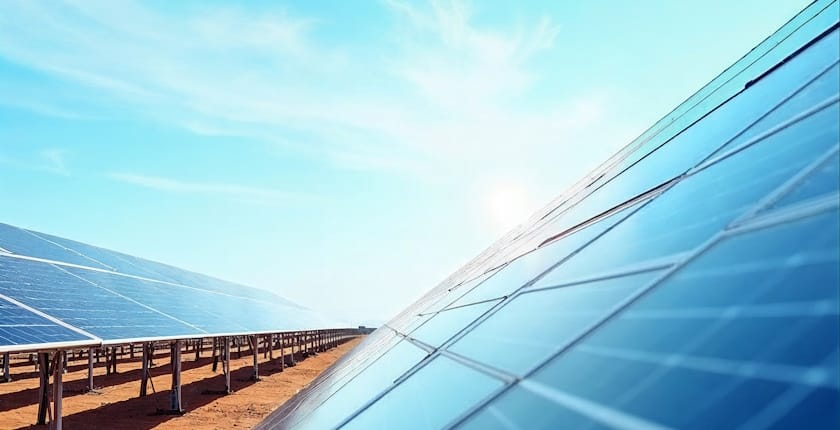
The Scatec has reached financial close for a 189.7 MW photovoltaic portfolio in Romania, enabling the company to commence construction on the three-site project. Most of the planned capacity—in which Defic Globe is a minority shareholder—is covered by contracts-for-difference (CfDs).

A financing package led by the European Investment Bank (EIB), the European Bank for Reconstruction and Development (EBRD) and Banca Comercială Română (BCR) — part of the Erste Group — underpins the development of the Romanian solar portfolio. Equinor, the Norwegian energy company, is the largest shareholder in Scatec. Total capital expenditure for the portfolio is EUR 121 million, to be financed through a mix of non-recourse project debt and equity with roughly 70% leverage.

EBRD and the EIB each allocated EUR 34 million to the financing, while BCR committed EUR 17.3 million in long-term lending alongside other financing components. Scatec said it will procure key components representing about 35% of total capex and will assume responsibility for operations, maintenance and asset management. The company reported a target commercial-operation date in the second half of 2027.

“Reaching financial close and starting construction of our first projects in Romania confirms the market’s attractiveness and the strength of the CfD framework,” said Terje Pilskog. “With long-term revenue visibility and a robust financing structure, the projects are well positioned for construction and delivery. We look forward to advancing them with our partner Defic Globe and contributing to Romania’s energy transition.”

Scatec secured 15-year CfD contracts covering 70% of production for two of the three projects under the country’s first auction for such contracts; the remaining output will be sold in the wholesale market. The sites are located in southern Romania: one in the commune of Dobrun commune, Olt County, Romania and another in the commune of Sadova commune, Dolj County, Romania. CfD-backed capacity totals 127.8 MW, with a further 61.9 MW planned to operate under full merchant exposure, according to the EBRD.

Defic Globe — a joint venture owned by YEO Technology (51%) and Emsolt Investments — holds a 35% stake in the portfolio and has been appointed to deliver turnkey engineering, procurement and construction (EPC) services. The project companies are registered as Solar World, RB Solar Energy and Energie Soleil.

Listed on the Oslo Stock Exchange, Scatec now has 6.2 GW of capacity in operation and under construction across five continents.
by in News

YEO invests in ARC Clean Technology to pave way for SMRs in Turkey

YEO Technology’s strategic investment in ARC Clean Technology, which develops advanced small modular reactors, brings potential cooperation opportunities for the deployment of the technology in Turkey. The startup with headquarters in Canada and the United States has closed a series B financing round, with a focus on its advanced sodium-cooled fast reactor of 100 MW.

Amid its push into other sectors and markets, Istanbul-based YEO Technology (YEO Teknoloji Enerji ve Endüstri) aspires to be an early mover in advanced small modular reactor (aSMR) technologies, counting on Turkey’s upcoming investments in nuclear power. The company revealed that it invested in ARC Clean Technology, valuing the startup at USD 60.4 million.

Advanced small modular reactors are expected to become a complementary solution for baseload power demand, the update adds. YEO said it expects the transaction to open the way for cooperation with the startup, which has headquarters both in Canada and the United States, in the deployment of the technology in Turkey and the surrounding region.

The investment is strategic, in line with the company’s goals of early positioning in future energy technologies, access to carbon-free and sustainable energy solutions, and long-term value creation, according to the announcement. YEO didn’t reveal other details.

ARC counts on rising demand for AI computing

ARC Clean Technology is developing the ARC-100, a generation 4 sodium-cooled fast reactor. It originates from the Experimental Breeder Reactor-II (EBR-II), which worked for 30 years at Idaho National Laboratory.

Using metallic uranium-zirconium fuel, ARC-100 provides 100 MW of electricity capacity, from 286 MW of heat. It is also intended for supplying steam for industrial processes as well as powering electrolyzers in hydrogen production and data and artificial intelligence (AI) centers.

The ARC-100 would only need to be refueled after 20 years

The startup is targeting a 20-year refueling cycle and a design life of 60 years.

Just last week, ARC Clean Technology said it closed its series B financing round. It involved new and existing investors from the energy, infrastructure and technology sectors. The proceeds are for advancing commercialization programs for the ARC-100.

Additionally, the funding will support work with the US Department of Energy, the collaboration agreement with Korea Hydro and Nuclear Power (KHNP) for global aSMR fleet deployment, and continuation of a Canadian project supported by strategic partner Hatch.

Global search for partners for nuclear reactors in Turkey

Turkey expects to put the first reactor at the Akkuyu nuclear power plant into operation in 2026. While developing the legal framework for small modular reactors (SMRs), the government is also considering a partnership with South Korea and the US for the second conventional nuclear plant, in Sinop.

Discussions about small reactors and a large nuclear power plant in Eastern Thrace are also underway with China and Russia. Turkish officials earlier mentioned contacts with Canada, France and the United Kingdom as well. The country aims to reach 7.2 GW in nuclear power capacity by 2035 and 20 GW by 2050.

The capacity of Reap Battery’s new LFP battery production facility is 5 GWh per year

Of note, YEO’s subsidiary Reap Battery launched production in mid-December of lithium-iron-phosphate (LFP) battery energy storage systems (BESS) in Tuzla, Istanbul.

In addition to the domestic market, the facility with an annual capacity of 5 GWh is targeting the US, Europe, the Middle East, Central Asia and Africa. It manufactures systems for renewable energy projects, the power grid, mobility, commercial and industrial applications, and residential energy storage.

by in News

YEO invests in ARC Clean Technology to pave way for SMRs in Turkey

YEO Technology’s strategic investment in ARC Clean Technology, which develops advanced small modular reactors, brings potential cooperation opportunities for the deployment of the technology in Turkey. The startup with headquarters in Canada and the United States has closed a series B financing round, with a focus on its advanced sodium-cooled fast reactor of 100 MW.

Amid its push into other sectors and markets, Istanbul-based YEO Technology (YEO Teknoloji Enerji ve Endüstri) aspires to be an early mover in advanced small modular reactor (aSMR) technologies, counting on Turkey’s upcoming investments in nuclear power. The company revealed that it invested in ARC Clean Technology, valuing the startup at USD 60.4 million.

Advanced small modular reactors are expected to become a complementary solution for baseload power demand, the update adds. YEO said it expects the transaction to open the way for cooperation with the startup, which has headquarters both in Canada and the United States, in the deployment of the technology in Turkey and the surrounding region.

The investment is strategic, in line with the company’s goals of early positioning in future energy technologies, access to carbon-free and sustainable energy solutions, and long-term value creation, according to the announcement. YEO didn’t reveal other details.

ARC counts on rising demand for AI computing

ARC Clean Technology is developing the ARC-100, a generation 4 sodium-cooled fast reactor. It originates from the Experimental Breeder Reactor-II (EBR-II), which worked for 30 years at Idaho National Laboratory.

Using metallic uranium-zirconium fuel, ARC-100 provides 100 MW of electricity capacity, from 286 MW of heat. It is also intended for supplying steam for industrial processes as well as powering electrolyzers in hydrogen production and data and artificial intelligence (AI) centers.

The ARC-100 would only need to be refueled after 20 years

The startup is targeting a 20-year refueling cycle and a design life of 60 years.

Just last week, ARC Clean Technology said it closed its series B financing round. It involved new and existing investors from the energy, infrastructure and technology sectors. The proceeds are for advancing commercialization programs for the ARC-100.

Additionally, the funding will support work with the US Department of Energy, the collaboration agreement with Korea Hydro and Nuclear Power (KHNP) for global aSMR fleet deployment, and continuation of a Canadian project supported by strategic partner Hatch.

Global search for partners for nuclear reactors in Turkey

Turkey expects to put the first reactor at the Akkuyu nuclear power plant into operation in 2026. While developing the legal framework for small modular reactors (SMRs), the government is also considering a partnership with South Korea and the US for the second conventional nuclear plant, in Sinop.

Discussions about small reactors and a large nuclear power plant in Eastern Thrace are also underway with China and Russia. Turkish officials earlier mentioned contacts with Canada, France and the United Kingdom as well. The country aims to reach 7.2 GW in nuclear power capacity by 2035 and 20 GW by 2050.

The capacity of Reap Battery’s new LFP battery production facility is 5 GWh per year

Of note, YEO’s subsidiary Reap Battery launched production in mid-December of lithium-iron-phosphate (LFP) battery energy storage systems (BESS) in Tuzla, Istanbul.

In addition to the domestic market, the facility with an annual capacity of 5 GWh is targeting the US, Europe, the Middle East, Central Asia and Africa. It manufactures systems for renewable energy projects, the power grid, mobility, commercial and industrial applications, and residential energy storage.

by in News

North Macedonia’s third wind farm enters trial operation

According to the Energy Regulatory Commission (ERC or RKE) of North Macedonia, a 44 MW wind power plant has entered trial operation in Demir Kapija. Almost three years ago, Kaltun Enerji hired YEO Technology, also based in Turkey, to build the first part of the Dren wind farm. It is the third such facility in the country, but another one was built nearby and is about to be commissioned.

North Macedonia added 210 MW from renewable sources to the electricity grid this year through November, of which 44 MW is a wind power plant in Demir Kapija that entered trial operation, President of RKE Marko Bislimoski revealed. According to the body, officially called the Energy, Water Services, and Municipal Waste Management Services Regulatory Commission, the rest are photovoltaics.

Given that solar power capacity amounted to 848 MW at the end of 2024, it means that it has recently surpassed 1 GW.

The share of renewables in production capacity was 55% last year, while they generated 40% of domestic electricity, Bislimoski added.

Dren wind power plant has nine turbines

In early 2023, Kaltun Enerji hired YEO Technology (YEO Teknoloji Enerji ve Endüstri) for its 44 MW wind power plant project in Dren in North Macedonia. Both companies are based in Turkey. The eponymous village is in the municipality of Demir Kapija, but parts of the area are in the neighboring Negotino and Gevgelija, which borders Greece.

Kaltun Enerji obtained licenses this year for the trial operation of Dren 1 (33.6 MW) and Dren 2 (9.6 MW). They consist of seven and two Goldwind turbines, respectively, of 4.8 MW each.

North Macedonia’s first wind power plant, Bogdanci, is nearby.

Nearby wind park awaiting commissioning

Project firm Park na veterni elektrani Perun, formerly known as Euroing, received a temporary license from RKE in April for electricity production for a 30 MW wind power plant, also known as Rosoman facility. The location is in the Bogdanci municipality, in the same area. The wind park comprises five Siemens Gamesa turbines. According to the latest updates, it was about to be commissioned.

The country’s second wind power plant, put into operation last year, is called Bogoslovec.

Alcazar Energy Partners held a groundbreaking ceremony in July for its Štip wind farm in North Macedonia. At 400 MW, it would be the biggest in the Western Balkans.

Of note, Bislimoski said that RKE has started amending the licenses for solar power plants that added battery storage, but also pointed out that he doesn’t expect power surpluses this winter. Consumption is increasing, especially among households, as a large share uses electricity for heating, he added.

by in News

YEO’s Defic Globe buys projects for 219 MW in Romania amid rebranding

Defic Globe, YEO’s Istanbul-based joint venture with Emsolt Investments, acquired 15 project firms developing plans for power plants of 219 MW in total. The portfolio also brings a potential 320 MWh in battery energy storage systems (BESS). Separately, YEO launched its CALL Energy brand, which aims to build 1 GW in capacity by 2030.

Through its subsidiary Defic Globe, YEO Technology (YEO Teknoloji Enerji ve Endüstri) is continuing its expansion in Romania. The Istanbul-based joint venture with Emsolt Investments took over 15 special purpose vehicles (SPVs) or firms for particular investments. They are developing projects for power plants of 218.7 MW in overall peak capacity.

The facilities would be of different sizes and in various locations around Romania, the company said. In addition, the new portfolio brings the possibility for building BESS units with a combined capacity of 320 MWh, according to the update.

YEO, which holds 51% of Defic Globe, estimated the total investment at EUR 220 million. It said the acquisition grows its project portfolio in Romania to 590 MW in peak capacity. Some facilities are operational or under construction, and the others are in the planning phase.

The group comprises direct investments and joint endeavors with Shanghai Electric Power, Scatec and other international companies.

New brand CALL Energy investing up to USD 1 billion

YEO is active in more than 30 countries, delivering turnkey solutions in energy and industrial systems. In the Balkans, in addition to its energy expertise role, it invests in renewable energy projects.

The company carries out projects in areas from advanced energy storage solutions to power grids, high voltage transformer centers, renewable energy plants, industrial, commercial facilities and household energy conversion to hydrogen. YEO was a friend of this year’s edition of Belgrade Energy Forum, organized by Balkan Green Energy News.

Separately, the company launched its CALL Energy brand, formerly YEO Energy (YEO Enerji), and appointed Sacit Akbaş as the subsidiary’s chief executive officer. It aims to invest between USD 750 million and USD 1 billion, of which up to 70% abroad, to build 1 GW in capacity by 2030.

Projects for 1.5 GW in ten countries

Under the slogan CALL to Renewable Energy, the firm intends to develop large-scale projects, especially in Europe. The target growth markets are the eastern part of Europe and the Sub-Saharan regions of Africa, it revealed.

YEO Technology’s renewable energy arm operates 32.6 MW in peak capacity in Romania and Italy. It is about to boost the Romanian part to over 190 MW in peak capacity this year, with two power plants under construction. The project portfolio amounts to 1.5 GW.

YEO Technology’s renewable energy arm counts on growth through EPC services as well

CEO Akbaş came from Enerjisa, where he was the energy solutions director for more than two years. He said more than 30 projects are underway in ten countries on three continents.

CALL Energy also sees growth opportunities in contracting engineering, procurement and construction (EPC) services through the said endeavors. It added that it would engage in asset management as well.

The firm highlighted its preliminary licenses for nine battery-backed solar power projects in Turkey, of 346 MW in total connection capacity. It slated two of them for the start of construction next year. Furthermore, permitting is nearly complete for four hydropower projects of 32 MW altogether. The sites are on the Aras river in eastern Turkey.

by in News

Everything is ready for Belgrade Energy Forum 2025 – welcome!

Everything is ready for the third Belgrade Energy Forum – BEF 2025. On May 14 and 15, the conference will gather four hundred participants from more then 30 countries from the region, Europe, and beyond.

Participants of the Belgrade Energy Forum 2025 (BEF 2025) will have the opportunity to hear from speakers from the European Union and five countries in the region and exchange views. Eight panels featuring more than 50 officials, executives and prominent energy experts will try to untangle the currently most important issues in the energy sector.

Representatives of governments, regulatory agencies, regional and international institutions and organizations as well as the business community will outline their future moves, which is invaluable information given the new reality of a turbulent geopolitical landscape.

Latest information on the largest project for the installation of solar power plants in the region and beyond

Energy Community Secretariat Director Artur Lorkowski and Serbian Minister of Mining and Energy Dubravka Đedović Handanović will open the event. One of the key speakers is Christian Zinglersen, director of the EU Agency for the Cooperation of Energy Regulators (ACER).

The ministerial panel consists of ministers and other officials from Montenegro, Croatia, Hungary, Serbia, and the Republic of Srpska, which is one of the two entities making up Bosnia and Herzegovina.

Representatives of the Hyundai Engineering – UGT Renewables consortium will summarize the next steps in the largest solar power project in the region and beyond. The consortium is the diamond sponsor of the event this year as well.

It entails solar power plants with a total connected power of 1,000 MW, and battery energy storage systems (BESS) of 200 MW in overall capability and 400 MWh in capacity.

It is a joint project with Serbian state-owned power utility Elektroprivreda Srbije. The partners took another important step this week by signing a grid connection contract with the country’s transmission system operator Elektromreža Srbije.

Hitachi’s cutting-edge technological solutions are indispensable in Southeast Europe

Keynote speakers Seung-Won Lee, Vice President of Hyundai Engineering, and Chan Wo Park, Global Executive Advisor at UGT Renewables, will present the project.

Hitachi Energy‘s cutting-edge technological solutions are indispensable in Southeast Europe. Some examples of its contribution to the energy transition of the region are the largest solar power plant in the Balkans – Apriltsi in Bulgaria, of 250 MW, as well as the second wind farm in North Macedonia – Bogoslovec, with a capacity of 36 MW.

Together with the Association of Serbian Energy Intensive Industry, Hitachi Energy is in the group of silver sponsors of BEF 2025.

The association was founded by Metalfer Group, Elixir Group, Lafarge Serbia, Moravacem (part of CRH) and TITAN Cementara Kosjerić. They are producers of steel, fertilizers and cement driven by a vision of sustainable development, industrial innovation and regulatory clarity.

Zečević: Decarbonization must be shaped by strategy, not imposed by circumstance

BEF 2025 will be attended by the association’s manager Stanislava Simić, Metalfer Group president, Branko Zečević and Lafarge Serbia CEO Dimitrije Knjeginjić.

“As Europe enforces carbon accountability through CBAM, Serbia and the Western Balkans must not remain a regulatory blind spot. Without our own regionally adapted carbon border policy, we risk being overwhelmed by carbon-intensive imports, eroding both our industry and climate goals,” Zečević stressed.

The association calls for a regional, synchronized approach – one that levels the playing field, accelerates innovation, and positions the Western Balkans as a credible partner in Europe’s green transition, he added. Decarbonization must be shaped by strategy, not imposed by circumstance, according to Zečević.

Batteries are the stars of BEF 2025

The panel ‘Energy storage system market in SEE: trends and forecasts’ has attracted great interest.

One of the panelists is Ioanna Barouni, Research Associate in Aurora Energy Research, a reliable energy market analyst and a knowledge partner of the forum. The company’s analysis unveils answers to questions that everybody asks – politicians, investors and regulators alike. For instance, one burning issue is the effect of cannibalization in solar power on wholesale power prices.

Aurora recently presented its first forecast for the Western Balkans, based on investment activity. The firm now provides forecasting services for Albania, Kosovo*, North Macedonia, Montenegro, and Bosnia and Herzegovina.

Cerović: BEF is a key event bringing together industry experts

Financing battery energy storage systems is a job banks such as UniCredit Bank Serbia, a bronze sponsor of the conference.

“I’m delighted to once again represent UniCredit Bank Serbia, in BEF, a key event that brings together industry experts and leaders in the energy transition in Southeast Europe. As the global market moves towards decarbonization and greater use of renewable sources, the role of energy storage systems becomes increasingly important,” said Svetlana Cerović, Head of Specialized Lending at UniCredit Bank Serbia.

She is also last year’s winner of the Female Leader in Sustainable Energy award.

Fortis brings its vast experience in investments in energy storage

Fortis is bringing its vast experience in investments in energy storage. In February, the firm inked a deal for batteries for North Macedonia’s largest PV plant, Oslomej, while a 36 MWh battery in Serbia is in the pipeline. Fortis has also signed a framework agreement with PowerChina on joint investments in renewable energy projects.

Nikola Oklobdžija, CEO of Fortis Energy for Eastern Europe, will present the company’s vision.

Renewable Energy Insurance Broker, a bronze sponsor, was one of the key factors for the largest photovoltaic plant in Romania. It provided insurance packages for every phase of development of the 155 MW Rătești facility. REIB is a specialized insurance intermediary focused exclusively on the renewable energy sector.

Tailored insurance solutions improve project bankability and long-term security, according to the firm.

Four companies are exhibitors

BEF 2025 has an exhibition segment, too. One of the companies showcasing its activities is ScadaWatt, which develops smart and reliable solutions for power plants. The company provides remote monitoring, real-time control, and AI-powered analytics to improve efficiency and reduce losses.

SciEngineer and Zarja Elektronika will also present their services and solutions. SciEngineer is the exclusive representative of MathWorks, COMSOL, and Speedgoat in Central and Eastern Europe. Their solutions reduce development time, cut costs, improve reliability, and accelerate time-to-market.

Zarja Elektronika is a leading Slovenian company specializing in advanced fire detection and alarm systems. With over 40 years of experience, it provides innovative, reliable, and tailor-made safety solutions for industrial, commercial, and residential environments.

DRI and YEO are friends of the conference

The Chinese company SANY Renewable Energy, which owns the Alibunar 1 and Alibunar 2 wind farms, will also have an exhibition stand.

DRI and YEO are joining the group of the friends of the conference. DRI is an Amsterdam-headquartered renewables developer and a subsidiary of the DTEK Group, one of the biggest private investors in Ukraine’s energy sector.

Joffroy Beckers, Head of PPA, will speak at a panel dedicated to the topic.

In January, DRI said it planned to start building the 120 MW Ljubovo wind power plant in Croatia in 2027. It revealed it right after it completed a 60 MW solar power plant in Romania.

Turkey-based YEO is active in more than 30 countries, delivering turnkey solutions in energy and industrial systems. In the Balkans, in addition to its energy expertise role, the company invests in renewable energy projects.

* This designation is without prejudice to positions onstatus and is in line with UNSCR 1244/99 and the ICJ Opinion on the Kosovo declaration of independence.