by in News

Saudi Arabia to build 2 GW of solar power in Turkey within 5 GW deal

After extended negotiations, Saudi Arabia has signed an agreement enabling its companies to develop solar power plants totaling 2 GW across two provinces in Turkey. The move forms part of a broader bilateral framework covering 5 GW of photovoltaic and wind capacity.

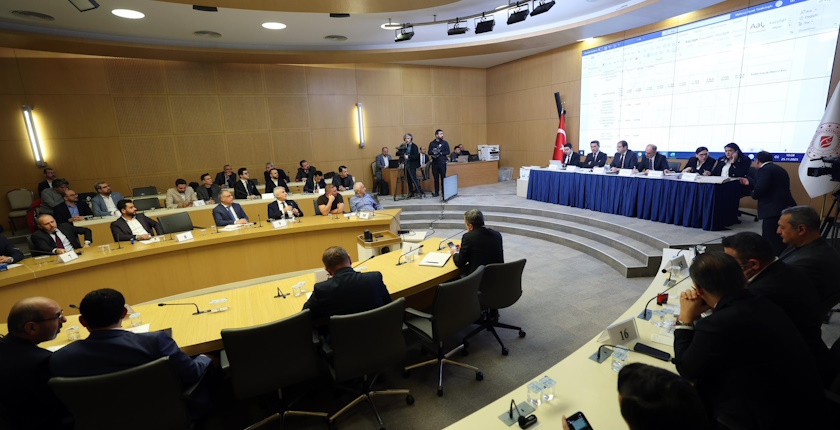
Turkey’s Minister of Energy and Natural Resources, Alparslan Bayraktar, and Saudi Arabia’s Minister of Energy, Abdulaziz bin Salman Al Saud, signed an intergovernmental agreement focused on renewable electricity generation. Bayraktar said the objective is to deliver a combined 5 GW of solar and wind power plants in Turkey with Saudi Arabian companies.

In the first phase, two 1 GW solar projects are planned: one in Taşeli in Karaman province and another in Sivas province, Bayraktar said.

Bilateral agreements positioned as a new model for large-scale projects

Bayraktar noted that tenders under Turkey’s state-backed Renewable Energy Zones mechanism (REZ/YEKA) are continuing, alongside investments in self-consumption power plants and energy storage projects. He described intergovernmental and bilateral agreements as a new model for delivering large-scale electricity generation projects, adding that such structures can secure electricity at significantly lower prices over long periods. He made the remarks in Riyadh, where the negotiations were concluded.

Bayraktar reiterated Turkey’s target to triple its combined wind and solar PV capacity to 120 GW by 2035.

He also said the investments—described as a major example of foreign direct investment in Turkey’s energy sector—would be financed externally, with loans expected from international financial institutions.

25-year offtake terms and pricing

Bayraktar stated that electricity from the Karaman solar plant would be purchased for 25 years at 1.995 euro cents per kilowatt-hour (EUR 19.95 per MWh), while power from the Sivas project would be priced at 2.3415 euro cents per kilowatt-hour. He said both levels are the lowest among Turkey’s renewable electricity plants.

He added that the projects are expected to support Turkey’s electrical equipment and services sectors through a 50% locality rate. Bayraktar estimated the first two solar power plants will require around USD 2 billion in investment and will cover the electricity needs of 2.1 million households.

According to Bayraktar, foundations are scheduled to be laid in 2027, with overall completion targeted across 2028 and 2029.

Bayraktar previously said Turkey had been in talks with Saudi partly state-owned utility ACWA.

Turkey had 25.1 GW of solar capacity and 14.8 GW of wind capacity at the end of last year, within a total installed power capacity of 122.5 GW. Bayraktar also said last week that 3.5 GW of self-consumption capacity would be allocated this year, prioritising local authorities, public institutions, and strategic and export-oriented sectors.


by in News

Turkey to launch carbon market, sign deals for large renewables projects in 2026

Turkey will launch a national carbon trade market, sign intergovernmental agreements on large-scale renewable energy projects and connect 2,000 MW of energy storage to the grid in 2026. These moves will be accompanied by the historic start of electricity production at the country’s first nuclear power plant Akkuyu, and a doubling of domestic natural gas production from the Sakarya field.

These developments represent the core of the 2026 vision for energy and mining in Turkey, revealed by Minister of Energy and Natural Resources Alparslan Bayraktar.

Large-scale projects will be launched next year through intergovernmental agreements, he stressed.

The deals include solar and other renewable energy technologies and storage, Bayraktar explained.

According to the minister, Turkey remains committed to its emission reduction targets. The government plans to launch a carbon trade center and market in 2026 within the Energy Exchange Istanbul (EXIST or EPİAŞ), he said.

Of note, Turkey’s imports of a group of goods and electricity to the European Union will be subject to the CBAM carbon border tax from January 1, 2026.

Energy storage facilities totaling 2,000 MW will be commissioned in 2026

Bayraktar recalled that the country issued permits for the installation of an overall 33,500 MW of energy storage. A very small portion has been implemented so far, but 2,000 MW will be commissioned in 2026, he underlined.

The minister said Turkey is considering the introduction of Storage Resources Zones or Depolama Alanları (DEKA) in 2026.

It would be similar to Renewable Energy Zones mechanism – REZ or YEKA – for support for solar and wind projects.

Bayraktar mentioned that a 5,000 MW solar power arrangement with Saudi Arabia-based ACWA is being discussed. Of note, it is equivalent to between 30% and 40% of Turkey’s current photovoltaic capacity.

Locations for the 2,000 MW solar project are in Sivas and Taşeli

He expressed belief that the agreement for the first phase, which envisages 2,000 MW, would be finalized in the first quarter of 2026. The plan is for 1,000 MW in Sivas and 1,000 MW in Taşeli.

A solar-plus-storage project with another company from a different country in the Persian Gulf is also under consideration, Bayraktar revealed. The investment is estimated at EUR 1.5 billion to EUR 2 billion.

A floating solar power plant of about 3,000 MW will be built as soon as possible, according to Bayraktar

In Bayraktar’s view, there is great potential in floating solar power plants. The country intends to implement a floating solar power plant of about 3,000 MW as soon as possible, the minister underlined.

The partners in this endeavour could be private companies or Turkish government-controlled Electricity Generation Corp. (EÜAŞ), the minister said. He claimed significant plans have been developed for offshore wind projects for 2026.

“We are considering a model similar to YEKA for offshore wind,” he added.

Russia to provide USD 9 billion for Akkuyu

turkey 2026 vision energy Alparslan Bayraktar brifing
Photo: Ministry of Energy and Natural Resources

The Akkuyu project is entering its final stages, according to the minister.

The country secured a USD 9 billion financing package from Russia for the investment, of which USD 4 billion to USD 5 billion is intended to be drawn in 2026.

Simultaneously, the ministry is in talks with South Korea, the US, China, and Russia for nuclear projects in Sinop and Thrace.

The Sakarya gas field is expected to double its current output in 2026, to 7.5 billion cubic meters, Bayraktar underscored.

This surge will prevent approximately USD 3.2 billion in energy imports, he explained.

by in News

Turkey to launch carbon market, sign deals for large renewables projects in 2026

Turkey will launch a national carbon trade market, sign intergovernmental agreements on large-scale renewable energy projects and connect 2,000 MW of energy storage to the grid in 2026. These moves will be accompanied by the historic start of electricity production at the country’s first nuclear power plant Akkuyu, and a doubling of domestic natural gas production from the Sakarya field.

These developments represent the core of the 2026 vision for energy and mining in Turkey, revealed by Minister of Energy and Natural Resources Alparslan Bayraktar.

Large-scale projects will be launched next year through intergovernmental agreements, he stressed.

The deals include solar and other renewable energy technologies and storage, Bayraktar explained.

According to the minister, Turkey remains committed to its emission reduction targets. The government plans to launch a carbon trade center and market in 2026 within the Energy Exchange Istanbul (EXIST or EPİAŞ), he said.

Of note, Turkey’s imports of a group of goods and electricity to the European Union will be subject to the CBAM carbon border tax from January 1, 2026.

Energy storage facilities totaling 2,000 MW will be commissioned in 2026

Bayraktar recalled that the country issued permits for the installation of an overall 33,500 MW of energy storage. A very small portion has been implemented so far, but 2,000 MW will be commissioned in 2026, he underlined.

The minister said Turkey is considering the introduction of Storage Resources Zones or Depolama Alanları (DEKA) in 2026.

It would be similar to Renewable Energy Zones mechanism – REZ or YEKA – for support for solar and wind projects.

Bayraktar mentioned that a 5,000 MW solar power arrangement with Saudi Arabia-based ACWA is being discussed. Of note, it is equivalent to between 30% and 40% of Turkey’s current photovoltaic capacity.

Locations for the 2,000 MW solar project are in Sivas and Taşeli

He expressed belief that the agreement for the first phase, which envisages 2,000 MW, would be finalized in the first quarter of 2026. The plan is for 1,000 MW in Sivas and 1,000 MW in Taşeli.

A solar-plus-storage project with another company from a different country in the Persian Gulf is also under consideration, Bayraktar revealed. The investment is estimated at EUR 1.5 billion to EUR 2 billion.

A floating solar power plant of about 3,000 MW will be built as soon as possible, according to Bayraktar

In Bayraktar’s view, there is great potential in floating solar power plants. The country intends to implement a floating solar power plant of about 3,000 MW as soon as possible, the minister underlined.

The partners in this endeavour could be private companies or Turkish government-controlled Electricity Generation Corp. (EÜAŞ), the minister said. He claimed significant plans have been developed for offshore wind projects for 2026.

“We are considering a model similar to YEKA for offshore wind,” he added.

Russia to provide USD 9 billion for Akkuyu

turkey 2026 vision energy Alparslan Bayraktar brifing
Photo: Ministry of Energy and Natural Resources

The Akkuyu project is entering its final stages, according to the minister.

The country secured a USD 9 billion financing package from Russia for the investment, of which USD 4 billion to USD 5 billion is intended to be drawn in 2026.

Simultaneously, the ministry is in talks with South Korea, the US, China, and Russia for nuclear projects in Sinop and Thrace.

The Sakarya gas field is expected to double its current output in 2026, to 7.5 billion cubic meters, Bayraktar underscored.

This surge will prevent approximately USD 3.2 billion in energy imports, he explained.

by in News

Turkey awards 1.15 GW in wind power auctions – all at just EUR 35 per MWh

The six winners from the latest round of wind power auctions under the YEKA state support mechanism in Turkey will have at least EUR 35 per MWh guaranteed from the sale of electricity in the first six years. It was the floor price in the bidding. After it was reached for each zone, the remaining participants had to compete by offering to pay for the right to sign the contract.

Delays and the lack of money for the construction of high-voltage, transmission lines is one of the main hurdles slowing the uptake of wind and solar power. Turkey’s approach has turned out to be successful, as it allows investors to compete to pay one-off fees for available predetermined projects in auctions. At the same time, the beneficiaries get guaranteed prices for the future sales of their electricity.

The country has earned EUR 530 million overall this year from two rounds for solar and two for wind power, Minister of Energy and Natural Resources Alparslan Bayraktar said. It includes EUR 208 million just from the latest bidding under the Renewable Energy Zones (REZ) state support mechanism, he claimed. It is better known by its Turkish acronym YEKA.

The winners are getting grid connections for 49 years

The ministry awarded zones for six projects for 1.15 GW in total connection capacity. The winners are getting grid connections for 49 years, a minimum price during the six-year open market sale period and power purchase agreements (PPAs) at the same level for another 20 years.

Entire capacity allocated at floor price

In the bidding in the REZ WPP 2025 (YEKA RES 2025) round, the ceiling price was EUR 55 per MWh. With 75 applications altogether, 30 companies participated – between six and 20 per zone.

In all cases, the bottom price of EUR 35 per MWh was reached, so the remaining bidders were switched to the second phase. The YEKA auctions are broadcast live.

The winners need to pay between EUR 56,000 per MW and a stunning EUR 312,000 per MW of capacity, or from EUR 23.8 million to EUR 34.3 million for each zone. Combined, the contribution fees amount to EUR 173 million, or some EUR 470 million for all auctions held this year.

Bayraktar estimated total investments in projects involved in the last wind power round at USD 1.1 billion.

Eksim, Polat among winners

The Kütahya zone of 120 MW went to İçdaş Elektrik Enerjisi, for EUR 222,000 per MW. Stone Enerji snatched the Aydın-Denizli project of 140 MW with a winning bid of EUR 170,000 per MW. The firm was a winner at the recent solar power auctions as well.

For the Sivas area, the largest of all (500 MW), Kanat Rüzgar Enerji will be required to pay EUR 56,000 per MW, which is the lowest level.

Three zones are in Balıkesir province. Eksim Energy (Enerji) committed the most of all winners, EUR 312,000 per MW, for the Balıkesir-3 project. It is for 110 MW. Balıkesir-2, of 120 MW, was won by Balıkesir Elektrik. It offered a contribution fee of EUR 218,000 per MW.

The Balıkesir-1 area is for 160 MW in connection capacity. Polat Enerji’s subsidiary Soma Enerji was the best bidder, with EUR 212,000 per MW.

Turkey hosts wind power plants of more than 14 GW combined, of more than 121 GW in total electricity capacity.

by in News

Turkey earns EUR 84.8 million upfront from solar power auction

Investors in photovoltaic projects were mostly willing to pay large sums at Turkey’s latest YEKA auction to secure a minimum guaranteed price for five years, followed by 20-year power purchase agreements. The government earned EUR 84.8 million overall from the secondary bidding for 650 MW, split into six areas. One zone is for a floating solar power plant.

According to Turkey’s Minister of Energy and Natural Resources Alparslan Bayraktar, domestic electricity demand is on a trajectory to triple to 1.05 PWh in the next 30 years. It follows an almost threefold jump of the last two decades, while natural gas is rising even faster, he pointed out.

The minister has urged investors to keep up the momentum, noting that the national goal for 2035 for solar and wind power is 120 GW in total.

One of the pillars of the government’s measures to incentivize such endeavors are renewable energy auctions. Notably, the obligatory domestic content rates are high, to boost manufacturing in the sector.

The latest solar power auction under the Renewable Energy Zones (REZ) state support mechanism even brought substantial earnings for Turkey, for the second time. The bidding was initiated at the ceiling price, EUR 55 per MWh, and when the floor level was reached at EUR 32.5 per MWh, the remaining competitors were switched to another auction.

They offered so-called contribution shares, starting at a stunning 10,000 per MW of planned connection capacity. The quota for the REZ SPP 2025 (YEKA GES 2025) round was 650 MW, split into eight zones. Two zones were taken off the table after the call, due to delays in permitting.

Highest fee was EUR 285,000 per MW

In total, Turkey cashed in EUR 84.8 million or EUR 130,400 per MW of connection capacity, excluding value-added tax.

The Eskişehir zone, 260 MW, went for EUR 105,000 per MW to Efor Holding. The company was successful at the previous wind power auction as well, early this year.

Stone Enerji won the Erzurum 1 segment, of 100 MW, by pledging EUR 100,000 per MW. Sertaş Turizm took Erzurum 3, at 85 MW, for EUR 120,000 per MW.

The Ministry of Energy and Natural Resources included a floating solar power plant project for the first time

The 50 MW Bolu zone went to Ecogreen Enerji. The company is paying 44,000 per MW, the least of all winners.

Kahramanmaraş, of 40 MW, was awarded to Güçlü GES Enerji. It pledged EUR 285,000 per MW, which was the highest contribution fee. Aydede Enerji has obtained the Mardin zone for EUR 208,000 per MW while Zincir GES Enerji managed to win the Van solar power project for EUR 187,000 per MW. Both are for 40 MW.

The auction also featured the first zone for a floating solar power plant. Demirköprü Yüzer GES in Manisa province, for 35 MW, was taken by a firm with the same name. It is paying EUR 225,000 per MW, the ministry has revealed.

Solar power auction facilitates USD 400 million in investments

There were 77 applications altogether, from 38 companies.

The winners will be able to sell electricity on the free market for five years. However, they are guaranteed at least their contracted price, which in all cases is the floor price – EUR 32.5 per MWh. The second period, 20 years, is with a power purchase agreement.

Bayraktar estimated that the solar power auction facilitated investments worth a combined USD 400 million. The projected annual output is equivalent to the electricity needs of half a million households.

The minister pointed out that 8 GW of solar and wind power would come online this year in total. The combined capacity on the grid from the two technologies amounts to some 39 GW out of 121 GW overall.

Also of note, the Energy Storage Industries Association (EDEDER) has forecasted that 1.5 GWh of storage capacity would be commissioned next year in Turkey.

by in News

One of biggest PV parks on Earth expanding to 1.85 GW

A solar power plant of 500.5 MW in peak capacity will be built just south of the existing Kalyon Karapınar photovoltaic park in Turkey’s Konya province. It is already one of the biggest in the world, especially excluding China. Kalyon Enerji said it would become a 1.85 GW complex.

Turkey hosts Europe’s largest solar power plant. Or rather, it hosts the largest PV plant among all European countries, because Kalyon Karapınar is located in Konya province in Asia Minor.

At 1.35 GW in peak capacity and a 1 GW grid connection, it is one of the biggest in the world, especially if China is excluded. Namely, according to available data, most of the top 20 PV parks are located there. Kalyon Enerji, a joint venture of Kalyon Holding and International Holding Co. (IHC), based in the United Arab Emirates, completed the facility in 2023.

The company recently began groundworks on its expansion by 500.5 MW in peak terms, translating to 385 MW on the high-voltage network. Kalyon Enerji expects to finish it by the end of next year. It is already building the transformer as well.

Spanning 643 hectares, the site is just south of Kalyon Karapınar. The company expects the new unit to account for over 1 TWh of the estimated 4 TWh in annual output at the solar power complex.

With nearly one million new panels, total number would climb to more than four million.

Kalyon Karapınar introduced agrisolar concept to Turkey

Kalyon Karapınar was the winning project at Turkey’s first renewable energy auction, in 2017. The company won state support for the 500.5 MW extension in February this year, also under the Renewable Energy Zones (REZ or YEKA) mechanism.

Construction of the existing facility started in August 2020 on degraded and desert land. The operator’s affiliate Kalyon PV manufactured the solar panels, with a content rate of 80%. In the meantime, it reportedly climbed to some 90%.

Kalyon PV manufactures solar panels with a 90% domestic content rate

The solar power plant features single-axis trackers, moving the panels east to west along the sun’s path.

According to Kalyon Enerji, increased shading and the soil’s higher water retention capability enabled the creation of a microclimate with lower temperatures and more biodiversity. The giant PV system in Konya was the first in Turkey to allow farmers in the area to use it for sheep grazing, the company said

Wind, solar reach 39 GW in total

Notably, another round of auctions was completed this week, with 650 MW awarded across seven provinces. The authorities earlier canceled the bidding for two YEKA zones due to permitting delays.

Minister of Energy and Natural Resources Alparslan Bayraktar said the combined capacity of wind and photovoltaics in Turkey has reached 39 GW. It means that solar power climbed to around 25 GW.

by in News

Turkey launches solar, wind power auctions with November deadlines

The Ministry of Energy and Natural Resources of Turkey issued a public call for solar and wind power auctions for 2 GW in total. It will receive the applications on November 4 and November 18, respectively. One competitive bidding process is for a floating solar power project of 35 MW.

Following the successful auctions for renewable energy projects that were completed early this year, Turkey kicked off another round. It is also for 2 GW of overall connection capacity, in light of the country’s ambition to grow its combined solar and wind power capacity to 120 GW by 2035. The two technologies reached 37.1 GW together a month ago, out of 120.2 GW in total.

Auctions are held under the Renewable Energy Zones (REZ) state support mechanism. The scheme is better known by its Turkish acronym YEKA.

Ten solar power areas in eight provinces

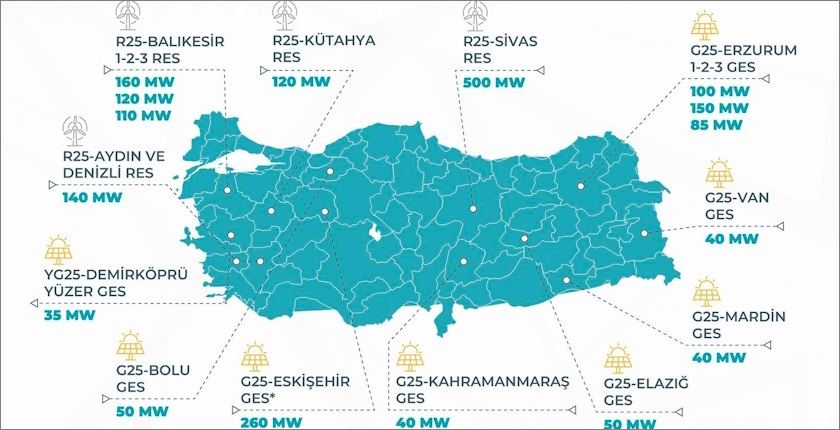
The upcoming solar energy auctions, REZ SPP 2025 (YEKA GES 2025), are for 850 MW altogether. There are ten areas in eight provinces designated for bidding: Kahramanmaraş, Mardin and Van, with 40 MW each, Bolu and Elazığ (50 MW each), Erzurum 1-3 (100 MW, 150 MW and 85 MW), Eskişehir (260 MW) and Demirköprü in Manisa province, with 35 MW.

The upcoming solar power auctions will include Turkey’s first bidding for a floating photovoltaic plant

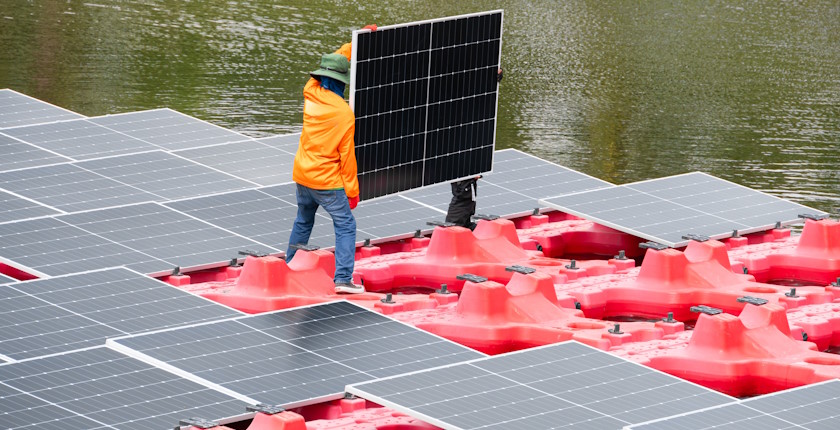
Notably, the last one is for a planned floating solar power plant on the reservoir of the Demirköprü hydropower plant. The facility on the Gediz river, east of Izmir, is owned by state-owned Electricity Generation Corp. (EÜAŞ). Turkey now hosts only two small floating photovoltaic units, and the auction will be the first of its kind.

Applications will be received on November 4, the ministry said and added it would subsequently publish a schedule for bidding.

Wind power capacity quota is 1.15 GW

Participants can apply on November 18 for the wind energy round of auctions, REZ WPP 2025 (YEKA RES 2025). It is for an overall 1.15 GW in six areas.

Investors will compete for 500 MW in Sivas province, a 140 MW project in Aydın and Denizli, 120 MW in Kütahya and three areas in Balıkesir – 160 MW, 120 MW and 110 MW.

Winners to submit guarantees of EUR 75,000 per MW for PV projects, EUR 100,000 per MW for wind

Potential bidders will pay a fee of EUR 1,550 for each auction they apply for. They must submit letters of guarantee lasting one year and worth EUR 15,000 per MW for photovoltaics and EUR 20,000 per MW for wind power. Winners will submit 10-year guarantees before signing their contracts: EUR 75,000 per MW and EUR 100,000 per MW, respectively.

The ceiling or starting price is EUR 55 per MWh and the floor prices are EUR 32.5 per MWh for solar power and EUR 35 per MWh for wind. If bids hit the floor, another auction will be held between the competitors, like in the previous round. It is for a so-called contribution share that they are ready to pay. The minimum is EUR 10,000 per MW of planned capacity and the highest bid wins.

Successful participants can sell electricity on the free market for five years in the case of solar power plants, while the period lasts six years for wind. After that, both categories enter a 20-year scheme with a guaranteed price.

Turkey tops 120 GW in total electricity capacity

At the end of July, electricity capacity in Turkey totaled 120.2 GW, the ministry revealed. Hydropower accounted for 26.9% or 32.3 GW, compared to 23.4 GW in photovoltaics (19.5%) and 13.7 GW of wind power, translating to 11.4%.

The share of biofuel and waste was 1.9%, with 2.34 GW, and geothermal power plants had 1.73 GW altogether, which is 1.4%. Gas power plants in Turkey had 24.7 GW in combined capacity (20.6%). The remainder is coal: 21.9 GW or 18.3%.

by in News

Turkey selects first hydropower reservoir for YEKA floating solar power auction

The reservoir of state-owned Electricity Generation Corp.’s Demirköprü hydropower plant is the first proposed area for Turkey’s planned floating solar power auction. The YEKA support mechanism provides grid permits for several decades and a period with guaranteed prices.

Within its ambition to grow the solar and wind power capacity to 120 GW in total by 2035, the Turkish government is counting on floating photovoltaics as well. The Ministry of Energy and Natural Resources proposed the reservoir of the Demirköprü hydropower plant for the first dedicated auction for the technology.

Detailed studies of the area are underway under the framework for the Renewable Energy Zones (REZ) state support mechanism, the announcement revealed. The scheme is better known by its Turkish acronym YEKA.

Demirköprü is on the Gediz river, east of Izmir, in Manisa province. Its owner is state-owned Electricity Generation Corp. (Elektrik Üretim A.Ş. – EÜAŞ). The 69 MW hydropower plant’s dam holds a reservoir with a regular surface of just under 48 square kilometers.

The Demirköprü hydropower plant’s reservoir spans almost 48 square kilometers under regular conditions

The country’s second floating solar power plant came online early this year. The only other such facilities in the region that Balkan Green Energy News covers are in Romania and Albania.

Turkey held auctions for 7.85 GW in total for wind and solar power, of which 3.8 GW for PV projects. Winners get grid permits for several decades and a period with guaranteed prices.

The country’s total electricity production capacity reached 119.3 GW by the end of May, of which 72.5 GW ran on renewable sources. Solar power accounted for 22.6 GW, compared to 20.4 GW in mid-February.

The ministry selected the first offshore wind power zones in August 2023.

by in News

Wind power investments in Turkey surge as major plants inaugurated in May

Investments in wind power in Turkey are on an upward trajectory – this year they are expected to surpass USD 1.5 billion, translating to 1.5 GW of new capacity, President of the Turkish Wind Energy Association (TÜREB) Ibrahim Erden estimated. Among other factors, the country has an extensive manufacturing base for the equipment. Several major wind farms were inaugurated last month.

The first wind turbine in Turkey was installed in 1998, and now total capacity is nearing 14 GW. The growth rate is picking up amid administrative reforms and state support through renewable energy auctions, requiring a high rate of domestically sourced equipment.

President of the Turkish Wind Energy Association (TÜREB) Ibrahim Erden said investments last year amounted to USD 1.3 billion, with 1.3 GW installed. The figure will top USD 1.5 billion in 2025, resulting in over 1.5 GW of new capacity, in his view.

Erden attributed the expansion to new licenses for projects with storage and projects from the YEKA mechanism of renewable energy auctions coming online. Investors from the Middle East and China participated in the bidding, he pointed out.

TÜREB’s chief said he expects 2 GW next year and gradual growth to 3.5 GW by 2028 or 2029.

There are 150 manufacturers in Turkish wind industry

There are 150 manufacturers of wind turbine components and accompanying gear in Turkey, covering 65% of the technology. The country reportedly hosts some 380 wind power plants, with more than ten turbines each on average.

The Grand National Assembly is expected to vote soon on legislation aimed at cutting the permitting process by half, to 24 months or less.

Hundreds of megawatts spring up in western provinces

Several big wind farms were inaugurated last month. Atares-2, in the Karacabey district of Bursa in Turkey’s northwest, has 113 MW. It consists of 23 turbines and the investment is worth almost EUR 150 million. CABA, the investor, expects to generate 400 GWh per year.

Eksim expanded its wind power plant in the Geyve district, southeast of Istanbul, in Sakarya province. The original facility had 11 turbines of 52.8 MW in total. The company’s project is for another 14 turbines of 7 MW apiece.

According to Eksim’s website, the combined installed capacity reached 129.8 MW out of 150.8 MW planned overall.

Enerjisa’s Uygar project would at the moment be the second-biggest wind farm in Turkey

Yıldızlar Group and ERN Holding built a 148.8 MW wind farm in Denizgöründü in the Çanakkale district and province. The location is near the Dardanelles Strait, on the country’s Asian side. The companies earlier said the Gülpınar facility would reach 194 MW.

Enerjisa Üretim, which won most of the capacity at the last YEKA auction, launched production at the first part of its 30th power plant. The Uygar wind farm in Balıkesir is set to grow to 250 MW. Currently, it would make it the second-biggest in the country, after Soma.

The Uygar site also spans parts of the neighboring provinces of Manisa, where Soma is located, and Izmir. Its 60 turbines are seen generating 1 TWh per year, according to the project. Enerjisa Üretim is a joint venture between German E.ON and Turkey-based Sabanci.

City of Kayseri builds first municipal wind park in Turkey

In addition, the Kayseri Metropolitan Municipality in central Turkey inaugurated its three wind turbines in Incesu district. They were built to cover the local trams and electric buses, the local authority said.

The municipal transportation firm is operating the 21 MW facility, which will produce 60 GWh per year. It is the first municipal wind farm among 30 largest cities. Kayseri also has its own solar power plants.