by in News

Germany’s energy and climate cooperation with Serbia improves people’s lives

Projects implemented by Deutsche Gesellschaft für Internationale Zusammenarbeit (GIZ) GmbH and the KfW Development Bank in Serbia have introduced modern heating systems to many towns, improved insulation in public buildings and promoted renewable energy to benefit citizens and local communities. Anke Konrad, the German Ambassador to Serbia highlighted these achievements during the interview with the Balkan Green Energy News, commemorating the 25th anniversary of the German Development Cooperation in the country. She emphasized that these initiatives enhance people’s quality of life, reduce emissions and contribute to environmental protection.

Ambassador Konrad also pointed out that the long-term Regional Climate Partnership with the Western Balkans is based on shared values and goals, aimed at investing in more secure and climate-resilient future.

Ambitious reductions of harmful emissions go hand in hand with a strong economy, German Ambassador to Serbia Anke Konrad says. GIZ and KfW are supporting the country’s green transition, which includes a rising solar power capacity, she noted and called it an enormous success.

Climate action is not a cost, but a strategic investment, Ambassador Konrad pointed out.

This year marks the 25th anniversary of development cooperation between the Federal Republic of Germany and the Republic of Serbia. What are the cornerstones of this partnership, and what significant achievements have been realised over the years?

This year, we look back with pride on 25 years of successful development cooperation that has delivered tangible benefits to people all over Serbia, has brought our two countries closer together, and Serbia closer to the European Union. From the outset, Germany’s support has focused on strengthening institutions, supporting economic growth, and improving living standards. Together with our Serbian partners, we have achieved progress in training and vocational education, good governance, environmental protection, and infrastructure development.

For example, thousands of students and hundreds of companies participate in dual education programmes every year. In digitalization projects, more than 2,000 small and medium-sized companies improved their productivity and competitiveness through digitalizing internal procedures. Another great example are digital services for individuals, such as the seasonal worker portal or the Register of Administrative Procedures, an online register for all administrative services with over 2.2 million registered “e-citizens”.

We look forward to continuing to implement projects that will improve the lives for people in Serbia and support Serbia on its path towards the EU

In 2022, the installed capacity for solar energy generation was at 6 MW. Now it stands at 84.4 MW. This equals a reduction of 118,000 tons of CO2 emissions per year. Where there were 400 solar energy prosumers in 2022, now there are almost 4,000. This represents an enormous success toward combating climate change and creating a sustainable economy. We have supported this transition both through technical advice by GIZ and investments by KfW.

What makes our partnership special is its continuity, reliability and spirit of co-creation. We work together with Serbian partners and citizens, building on a strong foundation of dialogue, cooperation and shared responsibility. In this spirit, we look forward to continuing to implement projects that will improve the lives for people in Serbia and support Serbia on its path towards the EU.

Let us turn our attention to energy and climate-related matters. Germany plays a vital role as one of Serbia’s primary partners in supporting the country’s energy transition and climate efforts. Which specific areas of collaboration would you like to highlight?

Combatting climate change and the transition to green energy are some of the most pressing questions of our time. As we are following the 30th UN Climate Change Conference taking place in Brazil in November, it’s clear that international partnerships, innovation and practical initiatives to reduce emissions are key to preserving our environment and, with that, our prosperity and security. Reduction of CO2 emissions will lead to significant health benefits as a result of cleaner air.

That is one of the reasons why energy and climate cooperation has become one of the most visible parts of our partnership with Serbia. Together, we are enabling Serbian citizens to use more clean energy from wind, sun and water, and to make homes, schools and businesses more sustainable and more energy efficient.

Through our projects that are implemented by GIZ and KfW, many towns now have modern heating systems, better-insulated public buildings, and new renewable energy projects that benefit local communities.

This work is not only about technology – it is about improving people’s daily lives, lowering harmful emissions, and protecting the environment for future generations.
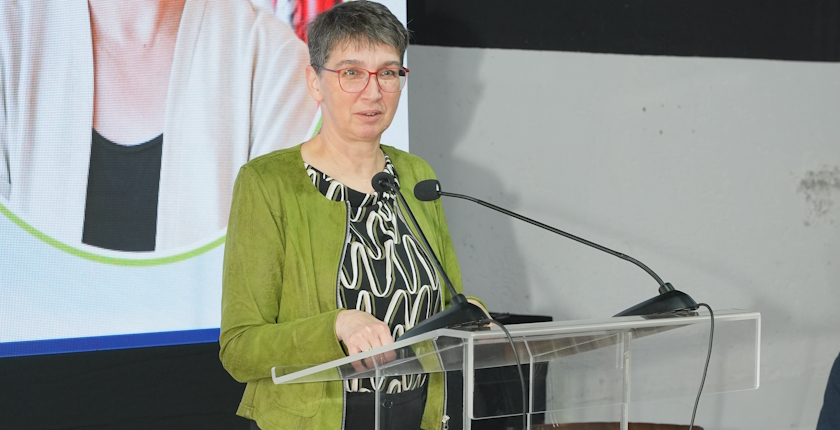
Germany energy climate cooperation Serbia improves people lives Ambassador Anke Konrad interview
Anke Konrad, the German Ambassador to Serbia delivered a speech at the opening ceremony of the annual event of WISE Serbia network of women in sustainable energy, climate action and environmental protection (photo: Balkan Green Energy News)

What is the current landscape for German companies operating in Serbia’s energy sector? We have noticed a notable presence of technology firms compared to development companies, which raises questions about the level of interest from German investors in Serbia and the wider Western Balkan region. What factors might contribute to this observed reluctance among German investors?

German investors very much believe in Serbia, its business environment and its progress on the path towards the European Union. That is a major factor why over 900 companies with German capital are operating in Serbia.

Altogether, they account for 6% of Serbia’s GDP and provide employment to over 80,000 people. German companies in Serbia are here to stay.

Future investment decisions will depend on a wide variety of factors. Apart from global developments and trends, Serbia’s reform efforts, the efficiency of public institutions, transparency, rule of law and the fight against corruption are important factors when it comes to investment decisions. A predictable and fair investment environment and steady progress towards the EU offer the best prospects for growth and prosperity.

The ongoing efforts to decarbonise the energy sector and transform the economy towards greener and more climate-friendly solutions have been pivotal in the policies of both the European Union and the German government, which is an integral member of the EU. In light of the current economic stagnation and heightened security concerns that are impacting the budget, will Germany continue to uphold its commitment to this crucial agenda to the same extent?

The European Union aims to become climate-neutral by 2050. This binding goal is enshrined in the EU Climate Law and it is the basis for our commitment to reduce emissions and achieve climate targets. Germany will continue to lead by example. We want to demonstrate that ambitious emissions reductions go hand in hand with a strong economy. And we will continue to invest in climate action worldwide because decarbonization offers vast potential for innovation and economic development.

Here in the region, we have partnered with the Western Balkans to establish Germany’s first regional climate partnership in 2022. At the 2022 summit of the Berlin Process, Germany has pledged EUR 1.5 billion by 2030 to support the fight against climate change and the use of renewable energy in the region. Much of this support has already been commissioned.

Much of the EUR 1.5 billion in Germany’s support for climate action and renewable energy has been materialized

We see climate action not as a cost, but as a strategic investment in our future. It contributes to diversification of energy sources and helps with energy security and thus stability. It can have a positive impact on long-term economic competitiveness. Crucially, joint climate action protects our planet as a place where we can all continue to prosper.

Within the Regional Climate Partnership, we have a structured dialogue on carbon-pricing readiness, renewable energy deployment, power market integration and just transition. This long-term cooperation aims to help partners in the region to advance their energy and climate goals in line with EU standards, ensuring that the benefits of the energy transition reach citizens, communities, and businesses. For Germany, this is a long-term partnership grounded in shared values, shared goals, and an investment in a more secure and climate-resilient future considering the need for strong interconnectivity within Europe.
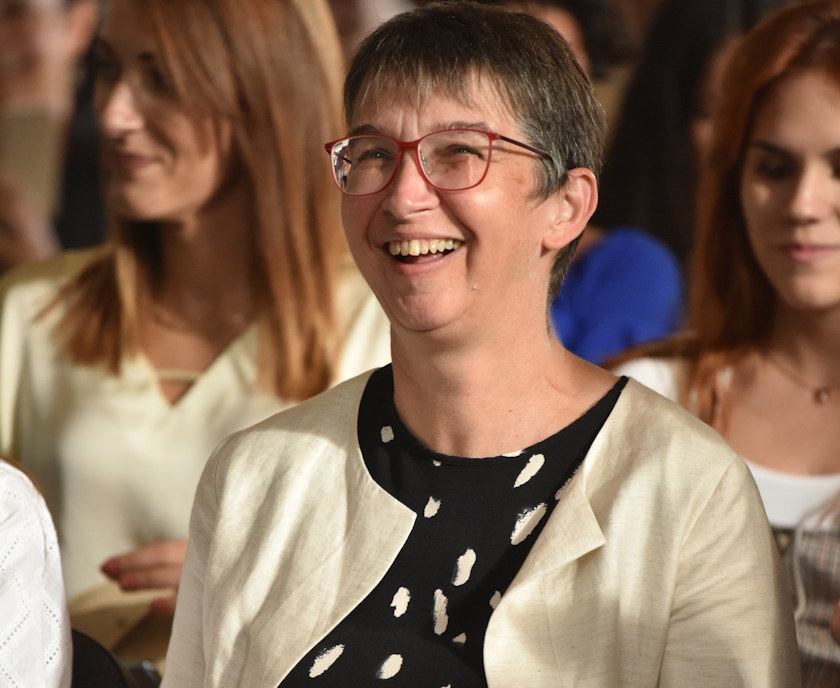
Anke Konrad, the German Ambassador to Serbia (photo: Balkan Green Energy News)

Germany is Europe’s solar and wind energy front-runner. What valuable insights can be gleaned from this experience that may be beneficial for Serbia in its pursuit of renewable energy advancements?

Germany’s experience shows that the energy transition is achievable when there is clear political will, a stable regulatory environment, and strong public participation. Success depends on combining large-scale renewable projects with opportunities for citizens and municipalities to invest and benefit directly.

Serbia has great potential to apply these insights, building on its natural resources, skilled engineers, and growing public interest in clean energy.

GIZ has been actively supporting WISE Serbia, a network dedicated to empowering women in the fields of sustainable energy, climate action, and environmental protection. In your opinion, does the energy sector provide equitable opportunities for both men and women in Serbia and globally? Also, would you advise girls and young women to pursue careers in those industries?

The energy sector is changing rapidly, and this transformation opens new doors for women to take leading roles in technology, management, and innovation. While there is still progress to be made, both in Serbia and globally, we already see many talented women engineers, researchers, and entrepreneurs shaping the transition to clean energy.

To give some perspective, change is already very visible at the university level, where around 40% of power engineering students at the University of Belgrade are women.

Initiatives such as WISE Serbia play a key role in giving visibility, confidence, and networks to women

We can look to role models in this field, such as this year’s recipient of the Female Leader in Sustainable Energy award, Ljiljana Velimirović. Initiatives such as WISE Serbia play a key role in giving visibility, confidence, and networks to women in this field, which still has great further potential.

My advice to girls and young women is clear: follow your curiosity and ambition, the energy transition needs your creativity and commitment just as much as it needs new technology.
by in News

Ljiljana Velimirović is the Female Leader in Sustainable Energy for 2025

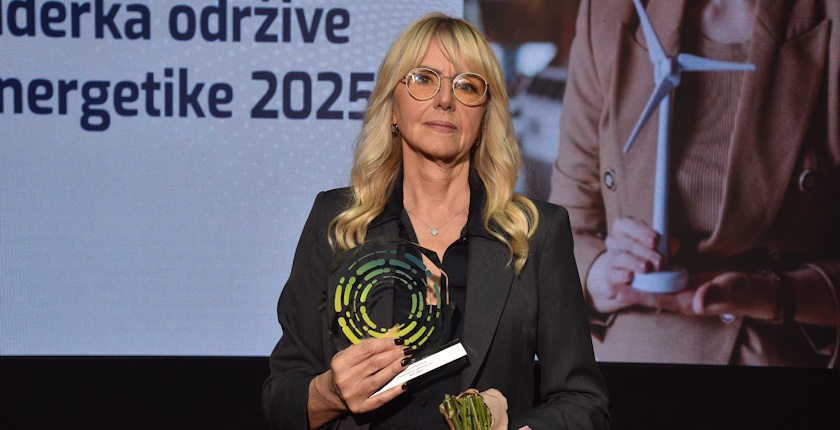
Ljiljana Velimirović, Project Manager 1, Investment Sector, Serbian state-owned power utility Elektroprivreda Srbije, received the Female Leader in Sustainable Energy 2025 award. The award recognizes outstanding results and dedication in advancing the energy sector in the Republic of Serbia.

At the annual event of WISE Serbia Women’s Network in sustainable energy, climate action, and environmental protection, Ljiljana Velimirović received the Female Leader in Sustainable Energy 2025 award. The announcement of the leader has been organized for the third consecutive year with the support of Deutsche Gesellschaft für Internationale Zusammenarbeit (GIZ) GmbH.

WISE Serbia has existed since 2018. It is one of the first networks of its kind in the world, with over 250 members currently.

The award competition featured 10 remarkable women whose leadership, exceptional achievements, and vision play a key role in the sustainable development of the sector, accelerating the energy transition, improving energy security and safety, and promoting greater recognition of women in the field.

During the public voting process, which was held from September 24 to October 10, a total of 2,842 votes were cast. Ljiljana Velimirović, a mechanical engineer with over 35 years of professional experience, received the highest number of votes. GIZ Project Director Till Barmeier presented the award.

Photo: GIZ Project Director Till Barmeier with the laureate Ljiljana Velimirović, Project Manager 1, Investment Sector, EPS

On receiving the award, Velimirović thanked the WISE network for its dedication and for promoting women in energy, as well as all her colleagues, whom she highlighted as her greatest support.

“I am very proud to have been chosen to represent Elektroprivreda Srbije in the Female Leader in Sustainable Energy of 2025 competition. It is an honor that, by leading projects to build desulfurization plants in our largest thermal power plants, I have contributed to the ecological modernization not only of EPS but of the entire Serbian energy sector,” Velimirović said.

The event was officially opened by Branislava Jovičić, co-founder of WISE Serbia, founder and editor of the Balkan Green Energy News portal, and director of the Belgrade Energy Forum conference, H.E. Anke Konrad, Ambassador of the Federal Republic of Germany to Belgrade, and Jovana Joksimović, Assistant Minister for International Cooperation, European Integration, and Project Management, Ministry of Mining and Energy.

Jovičić: WISE network has built a strong community of women over eight years

In her speech, Branislava Jovičić emphasized that over seven years, WISE Serbia has built a strong community of 250 professionals whose knowledge, experience, and vision contribute to the development of sustainable energy and climate policy in Serbia.

Thanks to the support of international partners and the dedication of its members, the network has conducted two major studies on the role of women in energy, launched a mentoring program connecting different generations of professionals, and become an important platform for knowledge exchange, inspiration, and joint initiatives.

Photo: Branislava Jovičić, co-founder of WISE Serbia, founder and editor of the Balkan Green Energy News portal, and director of the Belgrade Energy Forum conference

“Today, when dark clouds of geopolitical turmoil and denial of climate reality hang over the world, I dare say that the fight for sustainability, climate, and peace is a task that each of us must embrace, regardless of our profession. This is our generational mission. Our responsibility to ourselves and future generations,” Jovičić said.

Konrad: Women Remain Undervalued Drivers of Change

Sustainable strengthening of energy supply is important in Serbia, Germany, and around the world, emphasized German Ambassador Anke Konrad in her speech.

“The energy transition requires organizations that symbolize this transition. Therefore, I thank the Center for the Promotion of Sustainable Development through the WISE Serbia project for their engagement over the past years, which the German Federal Government has supported through GIZ for many years.”

Photo: H. E. Anke Konrad, Ambassador of the Federal Republic of Germany in Serbia

Konrad highlighted that people are the most important factor in the energy transition and reminded that women remain undervalued drivers of change.

Konrad: The Female Leader in Sustainable Energy award shows what can be achieved when leadership, innovation, and social responsibility go hand in hand

“The WISE project has evolved into a unique platform, a space where professionals build networks, share knowledge, mentor young talents, and create visible role models. The Female Leader in Sustainable Energy award shows what can be achieved when leadership, innovative strength, and social responsibility go hand in hand,” she concluded.

Jovana Joksimović, at the opening, noted that she has been a member of WISE Serbia since its foundation, highlighting the importance of unity and support among women in the energy sector.

Emphasizing that the green transition is not only about meeting international obligations, Joksimović reminded that the plan is for every second megawatt produced by 2030 to come from renewable sources, leading to a cleaner and healthier environment for current and future generations.

Jovana Joksimović, Assistant Minister for International Cooperation, European Integration, and Project Management, Ministry of Mining and Energy

Citing data from the International Renewable Energy Agency (IRENA), Joksimović pointed out that women make up 32% of employees in the global renewable energy sector, but their share is still below the global average of 45.9% of women in the overall economy.

“Every percentage point of women’s participation reminds us how much more progress can be made, and how much we have already achieved. I am proud of every one of us who is part of the energy transition—in wind farms, solar power plants, banking, engineering, management, innovation, education, and law.”

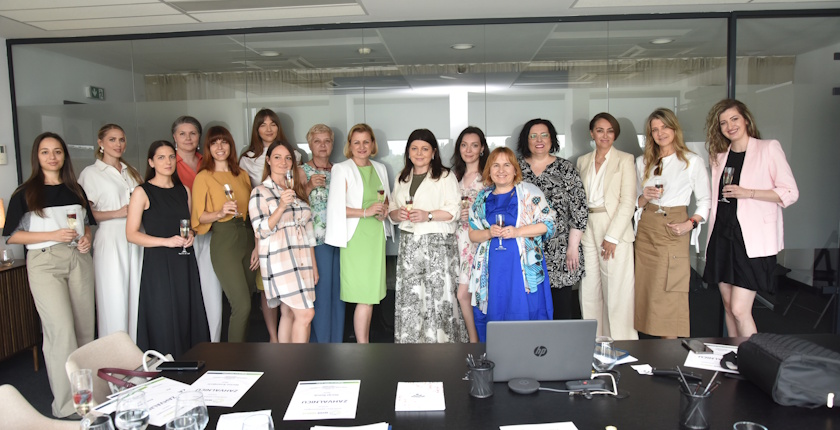
Photo: WISE Serbia women’s network and nominees for Female Leader in Sustainable Energy 2025 award

Women’s Leadership in Times of Geopolitical Challenges – Excellence, Achievements, and a Sustainable Vision

After the award ceremony, a panel discussion was held under the title “Women’s Leadership in Times of Geopolitical Challenges – Excellence, Achievements, and a Sustainable Vision.” The panel was moderated by Maja Turković, Executive Vice President of CWP Europe and recipient of the Female Leader in Sustainable Energy award in 2023.

Photo: Panel discussion “Women’s Leadership in Times of Geopolitical Challenges – Excellence, Achievements, and a Sustainable Vision”

Panel participants included Svetlana Cerović, Director of the Specialized Financing Department at UniCredit Bank Serbia and last year’s Female Leader in Sustainable Energy 2025 award; Marija Rošulj, Credit Risk and ESG Specialist at ProCredit Bank and participant in the WISE mentoring program; Jasmina Grbović Novaković, Director of the Center for Excellence in Hydrogen and Renewable Energy at the Vinča Institute of Nuclear Sciences; and Amalija Pavić, Deputy Executive Director at AmCham Serbia.

The panelists shared their experiences on the role of women in shaping the energy transition in a complex geopolitical environment, emphasizing the importance of collaboration and leadership based on knowledge and sustainability values.

by in News

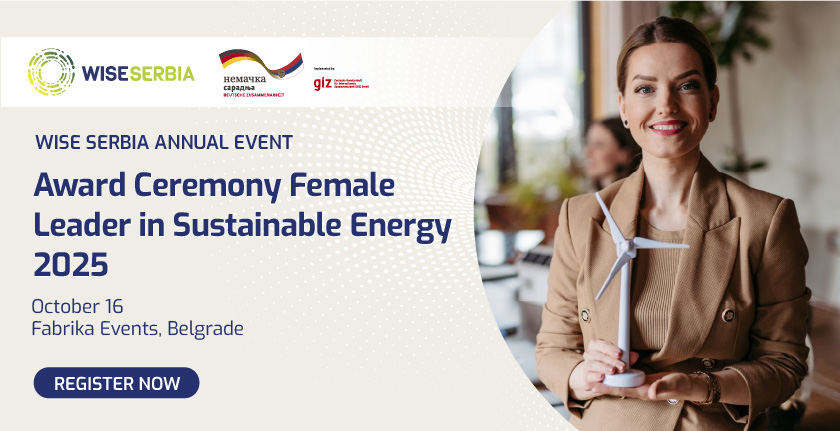
WISE Serbia Annual Women’s Network Event – October 16 in Belgrade

The Center for the Promotion of Sustainable Development and Deutsche Gesellschaft für Internationale Zusammenarbeit (GIZ) GmbH are organizing the annual WISE Serbia Women’s Network event, which will take place on October 16 at Fabrika Events in Belgrade.

The WISE Serbia Women’s Network in sustainable energy, climate action, and environmental protection has been in existence since 2018 and is one of the first networks of its kind worldwide. WISE Serbia brings together over 250 female experts from the energy sector and related fields, promoting their role in the energy transition, as well as in the democratization and decentralization of the energy sector. The network is recognized as a platform that connects knowledge, experience, and vision of women shaping a sustainable energy and climate future in Serbia.

Registration is open until October 10 or until places are filled via this LINK. The program begins at 4:30 PM at Fabrika Events, Poenkareova 32, Belgrade. Participation in the event is free of charge.

This year, 10 outstanding women have been nominated for the Female Leader in Sustainable Energy 2025 award. Voting is open until October 10 on the WISE Serbia website. Take the opportunity to support the woman you believe deserves the title of leader in sustainable energy.

“This is the third edition of the Female Leader in Sustainable Energy award. Year after year, we celebrate exceptional women professionally engaged in the energy sector, climate action, and environmental protection. Each nominee could rightfully earn the title of leader. Their biographies and professional achievements speak for themselves. They are recognized in their teams as women who drive change and serve as inspiration and motivation for all of us to continue building a sustainable present and future,” emphasized Branislava Jovičić, cofounder of the WISE Serbia Women’s Network.

Photo: Branislava Jovičić, co-founder of the WISE Serbia women’s network, and Svetlana Cervovic, last year’s winner of the Female Leader in Sustainable Energy award.

The event will be officially opened by H.E. Anke Konrad, Ambassador of the Federal Republic of Germany, and Jovana Joksimović, Assistant Minister for International Cooperation, European Integration, and Project Management at the Ministry of Mining and Energy.

The program will continue with a panel discussion moderated by Maja Turković, Executive Vice President at CWP Europe and the 2023 Leader in Sustainable Energy awardee.

Following the panel discussion, the finalists for the Leader in Sustainable Energy award will be announced, followed by the winner’s presentation and the ceremonial award presentation.

The media sponsor of the event is Balkan Green Energy News.

by in News

September 15 – new deadline for applications for 2025 Female Leader in Sustainable Energy

WISE Serbia, women’s network in sustainable energy, climate action, and environment, under the auspices of the German development cooperation GIZ, has extended the deadline for applications within the 2025 Female Leader in Sustainable Energy award. The new application deadline is September 15.

The call for nominations aims to recognize women who, through their leadership, outstanding achievements, and vision, have demonstrated significant contributions to the sustainable development of Serbia’s energy and related sectors, energy transition acceleration, improvement of energy efficiency, energy security, and safety, as well as the greater recognition of women in this field.

Information about the Award competition

Women professionally engaged in the energy sector, climate action, or environmental protection in Serbia are eligible to apply, both citizens of Serbia and foreign nationals working in Serbia. The candidates themselves can submit applications, as well as their employers, colleagues, or teams who wish to highlight the outstanding achievements of their associates.

The invitation is open to all profiles – decision-makers, employees in business, public enterprises, academia, civic energy, non-governmental sector, international organizations, consulting teams, legal and financial institutions, IT experts, as well as media representatives.

The application needs to be emailed by September 15, 2025, to [email protected]. It needs to include:

  1. Nomination letter presenting the candidate and listing the significant results and achievements nominating her for the selection.
  2. Professional résumé.
  3. A short nomination statement to present to the wider public on the WISE Serbia website and social media platforms. The statement should be up to 100 words.
  4. Photo portrait in high resolution.
  5. Contact info – email address, phone number, social network accounts that the candidate is actively using.

Applications should be sent by email to [email protected].

After processing the submitted applications, the candidates’ profiles will be published on the WISE Serbia network website – wisesrbija.org, and the voting will be open to the public. The candidate with the highest number of votes will be awarded the title of Female Leader in Sustainable Energy.

The announcement ceremony for the Leader in Sustainable Energy 2025 will take place during the WISE Serbia women’s network annual conference in mid-October in Belgrade.

by in News

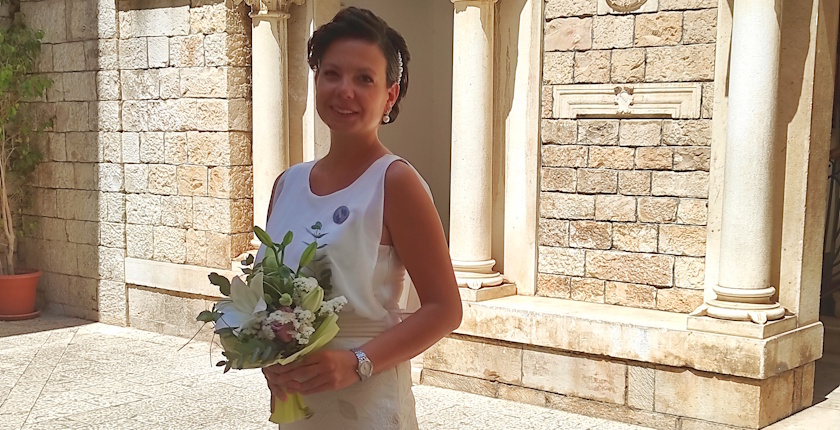
Eco bride Milica Lukić celebrates love with sustainable wedding

Weddings are often associated with celebration, luxury, and significant resource consumption. However, the example of Milica Lukić, a researcher and environmental activist, shows that a celebration of love can be just as festive and emotional while remaining sustainable — without wastefulness or harm to the environment.

For many people, a wedding is one of the most important days of their lives. Choosing a dress, a suit, a venue, food, decorations, and music are just some of the elements that require detailed planning and organization. However, bringing a large number of people together in one place, along with traditional customs, often comes with a darker side: high carbon emissions, food waste, and excessive resource use. Still, there is another way.

Milica Lukić, a researcher at the Faculty of Geography, University of Belgrade, and a member of the WISE Serbia network, has demonstrated that a wedding can be organised with sustainability and care for the planet in mind. In addition to her academic career, Milica is also known as a dedicated environmental activist and an advocate for a healthier environment.

“When we talk about adopting more eco-friendly practices in everyday life, most people start with reusable shopping bags, refillable water bottles, or separating packaging for recycling. The next step is rethinking. Rethinking whether we can do something differently, which might take a little more time and planning but ultimately brings numerous benefits — for us as individuals, for society, and for nature,” Milica emphasizes.

It was precisely this mindset that inspired Milica to make her special day sustainable while also supporting the local community.

“The thought ‘less is more’ guided me throughout the entire process. That’s why I want to inspire others with my story so that, in the future, we have more examples like this,” she says.

The dress can wait for the right moment.

Choosing the right dress, the centerpiece of the celebration and likely the most eye-catching detail, can be a challenging task. It’s common for people to spend several hundred euros on this special garment, but Milica opted for a second-hand dress instead.

“The dress is always the biggest challenge, but luckily, there’s @retro.to.the.rescue, where I’ve been buying second-hand clothes for years. I bought the dress earlier and waited for the right moment,” Milica explains.

Retro to the Rescue is a charity-driven initiative, with all proceeds from sales donated to animal welfare organizations.

Love without a golden wedding ring

A wedding outfit is often paired with carefully selected jewelry made of precious metals and gemstones. However, behind the sparkling pieces lies a darker side. The jewelry industry is linked to numerous ethical and environmental issues: child labor, human rights violations, conflict financing, pollution, and environmental destruction.

That’s why Milica decided to use what she already had. “I’m most proud that I managed to resist the pressure when it came to wedding rings because gold reminds me of exploitation, mining, pollution — everything we are fighting against. Love doesn’t need a golden ring,” says Lukić, sending her support to activists in Eastern Serbia who have long been battling the consequences of mining and the influence of mining companies.

Responsible choices in beauty products protect the environment

The eco-conscious approach to Milica’s wedding was also reflected in her choice of makeup. The cosmetics industry produces around 120 billion units of packaging every year, most of which is non-recyclable plastic. It also relies on animal-derived ingredients and toxic chemicals such as parabens and phthalates.

Sustainable makeup involves products that are not tested on animals, contain no animal-derived ingredients, use natural pigments, and come in recyclable packaging. There are even zero-waste makeup options, such as refillable lipsticks packaged in metal or glass containers.

Milica chose a minimalist, sustainable approach — using vegan mascara and lipstick — and had her hair styled at a small local salon, explaining that she enjoys supporting small businesses, especially those owned by women.

She also bought her bouquet at a local market from an elderly woman selling flowers. “The night before, I tried making my own bouquet from flowers I picked in the neighborhood, but by morning, it had wilted. Even water didn’t help. Still, it won’t go to waste — it’ll continue its life in compost,” Milica says.

Sustainability reflects respect for nature, people, and the community

Instead of hosting a big wedding celebration, Milica chose a small family lunch at a local restaurant, with a vegan and vegetarian menu.

Through her example, Milica has shown that love doesn’t have to be celebrated according to traditional norms. What matters most is making the day authentic and aligned with the values we live by. Her wedding is a reminder that sustainability isn’t about giving things up — it’s about celebrating in a way that reflects respect for nature, people, and the community.

by in News

Applications for 2025 Female Leader in Sustainable Energy Award in Serbia opened

WISE Serbia, the Network of Women in Sustainable Energy, Climate Action, and Environment, under the auspices of the German development cooperation GIZ, announces the call for nominations for the 2025 Female Leader in Sustainable Energy Award. The call is intended for women who are professionally engaged in the energy and related sectors in the Republic of Serbia and who have demonstrated outstanding results in their careers. Application process is open until September 10.

The call for nominations for the 2025 Female Leader in Sustainable Energy Award aims to recognize women who, through their leadership, outstanding achievements, and vision, have demonstrated significant contribution to the sustainable development of the Serbia’s energy and related sectors, energy transition acceleration, improvement of energy efficiency, energy security, and safety, as well as the greater recognition of women in this field.

The Female Leader in Sustainable Energy award was established in 2023 by the Center for the Promotion of Sustainable Development, the founder of the WISE Serbia women’s network, under the auspices of the German development cooperation GIZ. The WISE Serbia network was established in 2018 and is among the first of its kind globally.

The recipient for the previous year, was Svetlana Cerović, Director of Specialized Financing at UniCredit Bank Serbia

The title of the Female Leader of Sustainable Energy has been awarded to several notable individuals. For 2023, the recipients are Dubravka Đedović Handanović, Minister of Mining and Energy in the Government of the Republic of Serbia; Maja Turković, Executive Vice President at CWP Global; and Ana Džokić, co-founder of the energy cooperative Elektropionir. The recipient for the previous year, 2024, was Svetlana Cerović, Director of Specialized Financing at UniCredit Bank Serbia.

Photo: GIZ’s Project Director Till Barmeier with the laureate, Svetlana Cerović from UniCredit Bank Serbia

“The Female Leader in Sustainable Energy Award is an opportunity to learn more about the achievements, initiatives, and enthusiasm of women who push boundaries through their engagement and contribution to sustainable energy. It is also an exceptional opportunity for networking and exchanging knowledge and experiences within the WISE initiative and beyond,” said Cerović.

Last year’s award winner invited all interested women to take part in this year’s award process and emphasized that she looks forward to future cooperation and joint initiatives.

Information about the Award competition

Women professionally engaged in the energy sector, climate action, or environmental protection in Serbia are eligible to apply, both citizens of Serbia and foreign nationals working in Serbia. The candidates themselves can submit applications, as well as their employers, colleagues, or teams who wish to highlight the outstanding achievements of their associates.

The pannel discussion at 2024 annual event of the WISE Serbia women’s network : pictured from left: Maja Turković, Ankica Babulov, Dušan Macura, Ana Džokić

The call is open to all profiles – decision-makers, employees in business, public enterprises, academia, civic energy, non-governmental sector, international organizations, consulting teams, legal and financial institutions, IT experts, as well as media representatives.

The call is open from August 25 to September 10.

The call for nominations for the Leader of Sustainable Energy is open from August 25 to September 10, 2025. The application needs to be emailed by September 10, 2025, to [email protected]. It needs to include:

  1. Nomination letter presenting the candidate and listing the significant results and achievements, nominating her for the selection.
  2. Professional résumé.
  3. A short nomination statement to present the shortlisted candidate to the wider public (on the WISE Serbia website and social media platforms). The statement should be up to 100 words.
  4. Photo portrait in high resolution.
  5. Contact info – email address, phone number, social network accounts that the candidate is actively using.

Applications should be sent by email to [email protected].

After processing the submitted applications, the candidates’ profiles will be published on the WISE Serbia Network website – wisesrbija.org, and the voting will be open to the public. The candidate with the highest number of votes will be awarded the title of Leader in Sustainable Energy.

The announcement ceremony for the Leader in Sustainable Energy 2025 will take place during the WISE Serbia Women’s Network annual conference in mid-October in Belgrade.

by in News

WISE Serbia mentorship program successfully completed: trust, support, and personal growth

The first mentorship program of the WISE Serbia women’s network, focusing on sustainable energy, the green economy, and climate action, and implemented with the support of German development cooperation GIZ, was successfully concluded with an event held in Belgrade. Over six months of intensive collaboration, seven mentor-mentee pairs built mutual trust, exchanged knowledge, and developed leadership potential, demonstrating the vital role of support in career development.

The WISE Serbia mentorship program brought together 14 remarkable women. Seven experienced leaders from the energy and environmental sectors shared their extensive knowledge with seven young network members in the early stages of their careers.

The mentorship pairs included:

  1. Maja Adamović, Director of the Transmission System Maintenance Division at Serbia’s electricity transmission system operatorElektromreža Srbije (EMS), and Jelena Perović, ESG Consultant at Deloitte Advisory d.o.o.;
  2. Ivona Milić, Senior ESG Specialist for Corporate Clients at Raiffeisen Bank, and Marija Rošulj, Credit and Environmental Risk Officer at ProCredit Bank;
  3. Maja Turković, Executive Vice President at CWP Europe, and Marina Arsenijević, Project Manager at Voltiza Inc.;
  4. Aleksandra Lukić, Chief Engineer in the thermal energy production department at municipal heating utility JKP Novosadska toplana in Novi Sad, and Bojana Petrović Raičević, Senior Specialist for Energy and Environmental Law at NIS a.d. Novi Sad;
  5. Svetlana Cerović, Head of Specialized Financing at UniCredit Bank, and Ana Minić, Technical Consultant for Renewable Energy and Energy Efficiency at MACS Energy & Water;
  6. Ankica Barbulov, Director of Negawatt Solutions, and Milica Vujošević, Energy Efficiency Manager at Delta Holding;
  7. Nataša Zdravković, Investment Manager at Ezpada Group, and Sara Ostojić, Lawyer at SOG a.o.d. in cooperation with Kinstellar.

The closing event was held in partnership with and under the patronage of Kinstellar, one of the leading law firms in Belgrade, operating across Central and Eastern Europe, Southeastern Europe, and Central Asia.

Founded in 2008, Kinstellar now operates in 12 countries and employs more than 300 lawyers. In Serbia, it is particularly recognized for its work in the energy and infrastructure sectors, advising on some of the region’s largest energy investments, including wind farms, mining projects, and renewable energy transactions.

Photo (Balkan Green Energy News): Radovan Grbović, Partner at Kinstellar, welcomes program participants

One of the mentees, Sara Ostojić, is an attorney at Kinstellar and Head of the Energy Sector in Serbia. She expressed great satisfaction that her firm was hosting the closing event.

Radovan Grbović, partner and attorney with over 20 years of experience, addressed the participants, emphasizing the importance of mutual support and a stronger role for women in sustainable energy and the green transition.

Mentorship is about sharing life experience

The program’s outcomes were presented by Nataša Vukmirović, professional mentorship coach from the International Institute for Coaching and Mentoring, who highlighted that the program’s goals had been fully achieved. She noted that strong relationships of trust had been built and that most participants had expressed a desire to continue engaging in similar initiatives.

“Through evaluation and facilitation of joint sessions, I had the opportunity to witness meaningful knowledge exchange and feel the power of support, trust, and shared learning. The program demonstrated that developmental mentoring is a valuable approach in the sustainable energy and green economy sectors and can significantly impact participants’ career development,” said Vukmirović.

According to her, the program goes beyond education—it is based on values that empower individuals and protect the common good. This is echoed in the positive experiences of participants.

Marija Rošulj emphasized that her positive experience with Ivona Milić inspired her to become a mentor herself. “Mentorship is not just about work, but about a person’s character and sharing life experience, not just professional experience.”

The pair plans to continue working together and develop a joint project beyond the formal program.

Photo: (Balkan Green Energy News) mentorship pair Marija Rošulj, ProCredit Bank, and Ivona Milić, Raiffeisen Bank

“One of the things I appreciated most was that my mentor helped me achieve a deeper reflection on my career path and supported the development of my emotional intelligence and effective communication,” said Ana Minić, whose mentor was Svetlana Cerović, last year’s recipient of the Female Leader in Sustainable Energy 2024 award.

Photo (Balkan Green Energy News): Ana Minić, MACS Energy & Water

Mutual learning – the heart of the program

Mentors noted the process was reciprocal, and that through working with young women, they carried out a kind of introspection of their career paths. “It was especially interesting to identify what made me successful, which I could share with Milica, who also works in renewables and energy efficiency. I tried, by talking about my career, my development path, my ups and downs, to identify the golden thread that has kept me afloat and thanks to which I can say that I am doing well in business today,” said Ankica Barbulov, co-founder and director of Negawatt Solutions and the first to introduce the ESCO financing model in Serbia.

Mentee Milica Vujošević said that her mentor was an inspiration and that working with her was a great honor.

Photo (Balkan Green Energy News): Mentorship pair Milica Vujošević, Delta Holding, and Ankica Barbulov, Negawatt Solutions

Aleksandra Lukić, Chief Engineer and one of the first women in the thermal energy production department at heating utility JKP Novosadska Toplana, emphasized that she and her mentee, Bojana Petrović Raičević, are very different and that this was a strength in their relationship.

“At first, I wondered how I could help someone from a completely different profession. I’m a mechanical engineer, and Bojana is a lawyer. But our differences allowed for deeper exchange, not only about careers but also life values, work-life balance, and personal development. In the end, I think we both gained more than we expected.”

Bojana added: “Aleksandra helped me clarify my goals and map out a plan for my career, both short-term and long-term steps. I’m grateful she was my mentor.”

Photo (Balkan Green Energy News): Mentorship pair Aleksandra Lukić, JKP Novosadska Toplana, and Bojana Petrović Raičević, NIS

Maja Adamović, Director at Elektromreža Srbije, saw the program as an opportunity to learn and improve future programs. She highlighted progress in strengthening women’s networks in the energy sector, citing the launch of the Women in Energy section within CIGRE Serbia as a great example of women’s growing interest in connection, empowerment, and collective impact.

Photo (Balkan Green Energy News): Maja Adamović, Elektromreža Srbije

Maja Turković, Executive Vice President of CWP Europe and co-founder of WISE Serbia, also served as a mentor. “Marina and I worked on identifying her potential in line with her education, interests, and labor market trends, as well as on shaping her career profile. I think we have defined a direction for her professional development and competencies she can further build on,” said Turković, adding she would gladly be a mentor again.

Marina Arsenijević, her mentee, said the program came at the right time: “After this program, I’m more aware of who I am and what I want to do in the next five or ten years.”

Photo (Balkan Green Energy News): Mentorship pair Maja Turković, CWP Europe, and Marina Arsenijević, UGT Renewables

Throughout the program, mentors generously shared knowledge, experiences, and insights, while mentees showed openness to learning and a willingness to build their leadership capacities. All mentors expressed great satisfaction with participation in the program, highlighting mutual learning as one of its most valuable aspects.

The WISE Serbia program demonstrated how important mentorship is for women’s professional and personal development in green industries. Through experience-sharing, knowledge transfer, and mutual support, participants not only strengthened their capacities but also contributed to creating a strong community of women working on a more sustainable and equitable future.