by in News

EU’s Modernisation Fund disburses EUR 3.66 billion for clean energy projects in nine countries

Energy modernization projects in nine member states of the European Union will receive a total of EUR 3.66 billion from the Modernisation Fund, in the largest disbursement to date from the facility financed by carbon pricing revenues, according to a press release from the European Commission. The selected projects focus on renewable energy, grid upgrades, energy storage, and energy efficiency.

The largest beneficiary of the latest disbursement is Poland, which will receive EUR 1.33 billion for its projects, followed by the Czech Republic, with EUR 1.05 billion, and Romania, with EUR 712.3 million. Hungary will get EUR 181.3 million, Croatia EUR 170 million, and Greece EUR 113.6 million. The rest will go to Latvia (EUR 40 million), Lithuania (EUR 37 million), and Slovenia (EUR 19.7 million).

Croatia will finance renewable heat production and zero-emission transportation, and Slovenia will upgrade power grid to integrate renewables

In Croatia, EUR 80 million will be used for the production and use of heat from renewable energy sources and energy efficiency improvement in heating and cooling systems. The rest will go to investments in zero-emission transportation. In Slovenia, the funding will facilitate renewables integration through the modernization and development of the electricity transmission and distribution network.

Greece, which became a Modernisation Fund beneficiary in January 2024, intends to replace urban diesel buses with new electric buses, improve energy efficiency in municipal swimming pools, and switch the heating and cooling systems in its greenhouse infrastructure to renewables.

In Romania, the funding will help improve the energy efficiency of facilities covered by the European Union’s Emissions Trading System (EU ETS), support the contract-for-difference (CfD) scheme for onshore wind and solar, and finance the installation of solar and wind power plants for self-consumption in the agricultural and food sectors and public institutions. It is also intended for investments in new solar, wind, and hydropower capacities and to support the modernization and rehabilitation of the district heating network.

In the Czech Republic and Lihtuania, the funding will support energy storage projects

Other example projects include investments in storage capacity for renewable electricity in the Czech Republic, investments in large-scale energy storage capacities in Lithuania, and a clean air program in Poland that focuses on energy efficiency improvements and heat source replacements in single-family houses, according to the press release.

The investments will reduce greenhouse gas emissions in the energy, industry, and transportation sectors, improve energy efficiency, and help the beneficiary states meet climate and energy targets, the commission said.

The projects will also help improve people’s everyday lives, by reducing bills, improving public services, creating jobs, and making the energy transition real, fair, and beneficial for all, according to Teresa Ribera, the European Commission’s Executive Vice-President for Clean, Just and Competitive Transition.

With this latest round of funding, the total disbursements from the Modernisation Fund since January 2021 have climbed to EUR 19.1 billion. The fund is financed by revenues from the auctioning of emission allowances under the EU ETS.
by in News

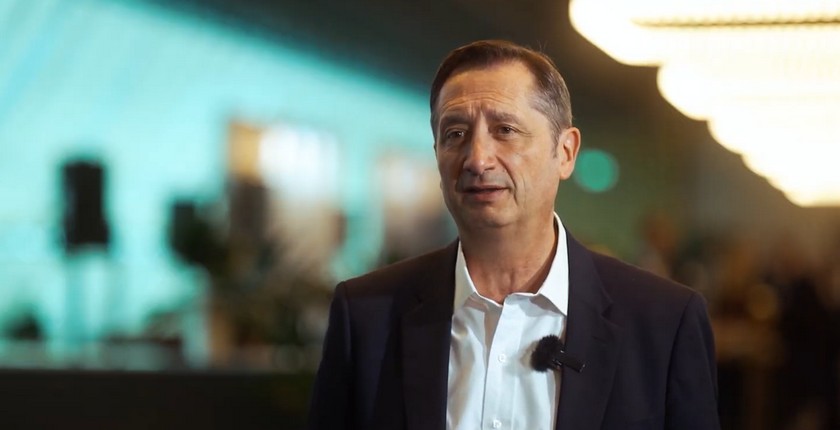
Eric Scotto: Falling storage and renewables costs will help meet rising electricity demand

Declining energy storage costs and expanding renewables capacity will enable Europe to meet the challenge of intensified electrification and rising consumption, according to Eric Scotto, CEO of Akuo Energy. Thanks to falling costs, renewable energy has already won the race against nuclear power, he emphasized at Belgrade Energy Forum 2025.

The price of energy storage today is ten times lower than it was ten years ago, and the density of storage has tripled in the last three years, Eric Scotto said. Speaking at a panel on decarbonization in Southeast Europe, he explained that the operating power of a battery system in a standard TEU container, twenty feet or 6.1 meters long, now reaches 6 MW.

“Today, the challenge is flexibility. We know how to produce cheap, but what is important is to reconcile offer and demand… Thanks to storage, we can do that today,” Scotto said on the sidelines of the conference.

Renewables have already won the race against nuclear energy

Talking about the cost of generation from renewable sources and nuclear power, he argued that the race has already been decided. “It’s over. We won the race. Renewable is the cheapest way to produce energy,” he underscored.

[wpcc-iframe title=”Eric Scotto, CEO, Akuo Energy at the Belgrade Energy Forum” width=”500″ height=”281″ src=”https://www.youtube.com/embed/ZVg8ole0VaM?feature=oembed” frameborder=”0″ allow=”accelerometer; autoplay; clipboard-write; encrypted-media; gyroscope; picture-in-picture; web-share” referrerpolicy=”strict-origin-when-cross-origin” allowfullscreen=””]

Scotto emphasized that the Balkan region, which is lagging in the energy transition, can now enjoy the benefits of the latest and cheapest renewable energy and storage technologies. “This morning, some people were saying that we are late in the Balkans, and that’s the best news we could get this morning because renewables are the cheapest way to produce energy, so we’re going to benefit from the latest and most efficient technologies… from solar, from wind, from hydro, and storage,” claims the top man of the French renewable energy company.

The slow energy transition is good news for the Balkans

Scotto stressed the importance of collaboration among Western Balkan countries, adding that he hopes to see more of it in the coming days, weeks, and months. “We have the skills and we have the know-how in those countries. We need to share, we need to work more together, and, of course, we need more international interconnection,” he said.

Akuo Energy has secured a PPA for its Bela Anta 2 wind project in Serbia

Talking about Akuo Energy, Scotto said that it brings to the region its knowledge and experience from numerous project around the world. The France-based independent global renewable energy producer recently signed a power purchase agreement (PPA) with Serbia’s state-owned power utility Elektroprivreda Srbije (EPS) for the Bela Anta 2 wind project.

With a total installed capacity of 80 MW, Bela Anta 2 was among the awarded projects in Serbia’s second round of renewable energy auctions, held in early 2025, securing a contract for difference (CfD).

by in News

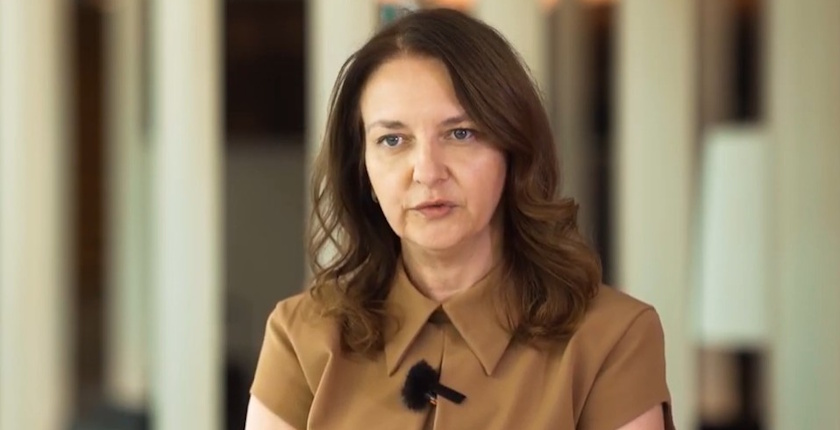
Maja Maćić: Alcazar Energy expands presence in Western Balkans

Alcazar Energy is an independent sustainable infrastructure fund focused on renewable energy in emerging markets. It has been present in the Balkans since 2022 and is developing projects in Serbia, Montenegro, and North Macedonia. Maja Maćić, Balkans Platform Head of Alcazar Energy, said at Belgrade Energy Forum (BEF 2025) that the company expects to launch construction activities for some of its projects later this year.

Alcazar plays a significant role in the development of the renewable energy sector in MENAT (Middle East, North Africa, and Turkey) and the Balkans, including projects in Montenegro, Serbia, and North Macedonia.

The company’s presence in the Western Balkans began with the Bijela wind farm project in Montenegro, planned at 118.8 MW. According to Maja Maćić, Alcazar Energy is in the final stages of preparing the technical and other required documentation for the construction permit.

The Bijela wind farm will be in operation by the end of 2028.

“We expect to have the fully permitted project in the third quarter of this year and to close financing by the end of the year, to initiate some early construction activities within this year, but to have construction in 2026 and 2027, with the main aim to have the operational project by the end of 2028,” Maćić said.

[wpcc-iframe title=”Maja Macic, Balkans Platfrom Head and Country Manager Serbia, Alcazar Energy at the Belgrade Energy” width=”500″ height=”281″ src=”https://www.youtube.com/embed/X_WsAfo_TwQ?feature=oembed” frameborder=”0″ allow=”accelerometer; autoplay; clipboard-write; encrypted-media; gyroscope; picture-in-picture; web-share” referrerpolicy=”strict-origin-when-cross-origin” allowfullscreen=””]

The Celzijus wind farm project is one of the largest in the region

By acquiring the largest wind power project in North Macedonia, for the Štip wind farm, Alcazar Energy has expanded its regional presence by 400 MW.

According to Maćić, the company expects to secure all required permits by the end of the year and begin construction. “Due to an improved legislation framework, we have made significant progress in North Macedonia and Montenegro, and we are proud that soon we will have construction activities and engage local companies on the sites,” she stated.

Last year, Alcazar Energy acquired the Celsius 1 wind farm project in Serbia, for 200 MW in capacity. It signed a deal with RP Global, which was developing the project before that. Their transaction includes a portfolio of additional wind and solar projects, totaling 768 MW. The investment in Celsius 1 is estimated at USD 300 million, which would make it one of the largest wind farms in the region.

“We believe that we will also manage to make significant progress in Serbia in order to deploy local companies and international companies, fulfilling the highest international standards and our local policies,” Maćić said.

by in News

Austria’s Verbund acquires 272 MW wind project in Romania

Verbund Wind Power Romania, a subsidiary of Austria’s Verbund, has acquired a 272 MW wind project from Monsson, a Sweden-based renewable energy group. The project, taken over at a ready-to-build stage, is expected to enter the construction phase in 2026.

The planned wind farm in Caraș-Severin county in Romania is expected to produce 569 GWh of electricity annually, Verbund said in a press release.

Verbund has been present in the Romanian renewables market since 2012, operating the 226 MW Casimcea wind farm in Tulcea county. It also has a portfolio of wind and photovoltaic projects under development.

Verbund already operates a 226 MW wind farm in Romania

Adrian Borotea, General Manager of Verbund Wind Power Romania, said the company looks forward to future opportunities that can help speed up the country’s energy transition. “In Verbund, we continuously seek to stimulate the growth of the clean energy sector in Romania, in line with our sustainable approach to business,” he stressed.

Sebastian Enache, Head of Mergers and Acquisitions and member of the Board of Directors of Monsson, said the need for clean energy as a central point of the energy sector development in Romania and Europe is growing, adding that the company is proud to have started this cooperation with Verbund, one of the largest producers of electricity from renewable sources in Europe.

The Austrian utility expects 25% of its overall electricity output to be generated from solar and wind energy by 2030, with Romania seen as one of the strategic target markets to achieve the objective.

Monsson has over 5 GW of solar and wind projects in Romania

Monsson has a portfolio of more than 5 GW of wind and solar projects in Romania. It offers a full range of services, including the design, development, construction, and operation of renewable energy power plants, as well as the construction and operation of battery-based energy storage solutions.

The company recently said it was preparing to build a manufacturing facility in the Romanian town of Petrila to produce renewable energy equipment, including robots that clean solar panels.