by in News

Leitwind drives energy independence across Balkans

Leitwind makes wind turbines from 250 kW to 3 MW, engineered to perform efficiently under the full range of wind conditions in Southeastern Europe, from the calm Aegean islands to the stronger continental winds of Serbia, Thrace, or the Danube basin.

The Balkans are entering a new phase of wind energy development — one defined not by the largest turbines, but by smart, flexible, medium-scale solutions. Countries including Greece, Romania, Bulgaria, Serbia, Montenegro, Albania, Bosnia Herzegovina and North Macedonia are rapidly expanding their renewable portfolios while facing grid constraints, curtailment risks, and the growing need for decentralized energy supply.

Industrial zones, coastal communities, and remote mountainous regions increasingly require reliable, locally controlled generation that fits their terrain, their infrastructure, and their energy autonomy goals.

As the only Italian manufacturer of megawatt-class wind turbines, Leitwind offers an engineering approach tailor-made for this landscape — delivering advanced Direct-Drive turbines that combine efficiency, durability, and resilience in even the most demanding environments.

Smarter engineering for tougher terrains

At the center of Leitwind’s technology is its Direct-Drive generator, which eliminates the gearbox entirely — removing the single most failure-prone component in conventional wind turbines.

With fewer mechanical parts, Leitwind turbines ensure:

  • Lower energy losses
  • Minimal maintenance requirements
  • Higher availability and longer operating life

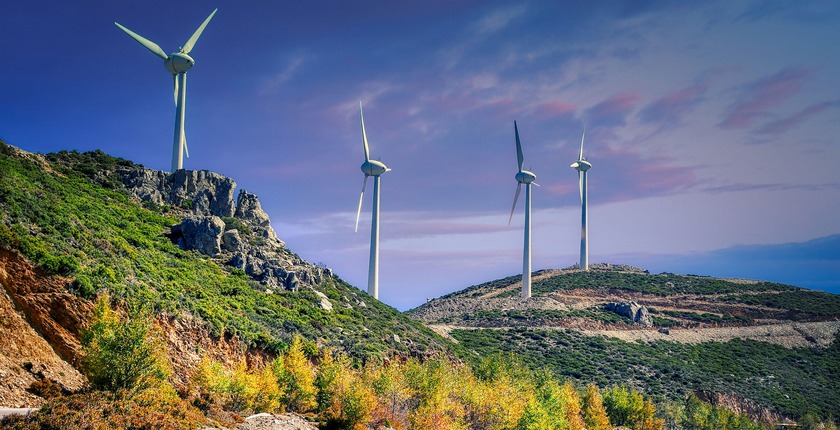
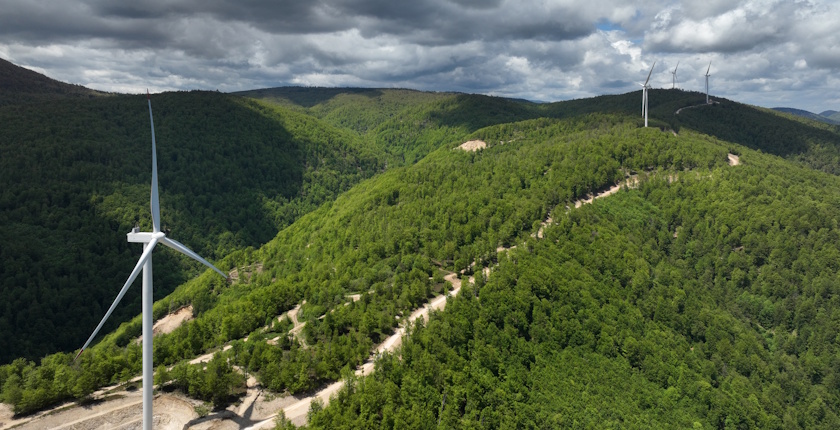
These advantages are especially important in the Balkans, where wind projects often sit atop mountain ridges, on isolated plateaus, or along rugged coastlines. Leitwind’s portfolio — from 250 kW to 3 MW — is engineered to perform efficiently under the full range of regional wind conditions, from the calm Aegean islands to the stronger continental winds of Serbia, Thrace, or the Danube basin.

Leitwind’s engineering philosophy is simple and powerful: Simplify the mechanics. Strengthen performance. Maximize lifetime.

Empowering energy autonomy in industry

A new trend is emerging across the Balkans: industrial self-generation.

Manufacturers, logistics hubs, agricultural units, and food-processing facilities are increasingly adopting on-site energy production to protect against volatile energy prices and grid interruptions.

Leitwind’s medium-scale turbines (250 kW – 2.0 MW):

  • Enable self-generation directly at the point of consumption
  • Integrate seamlessly into microgrids
  • Support both grid-connected and stand-alone operation
  • Require low maintenance, an essential benefit for industrial sites
  • Offer compact footprints suitable for constrained areas

The result is a new level of operational resilience: companies produce clean, stable, low-cost electricity while simultaneously enhancing their environmental credentials.
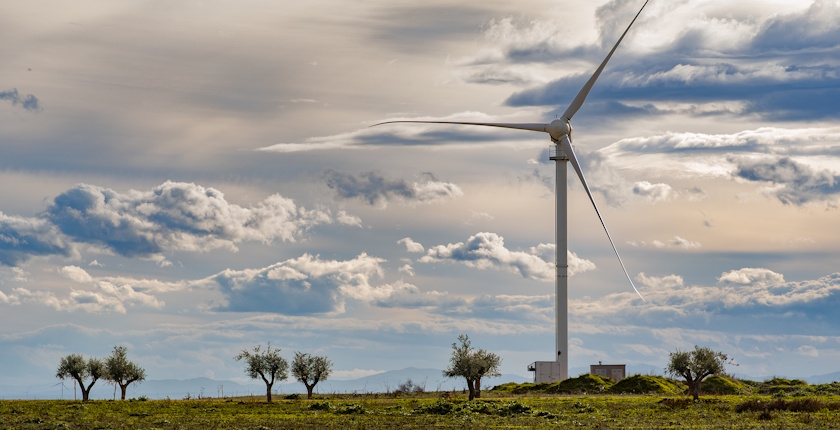
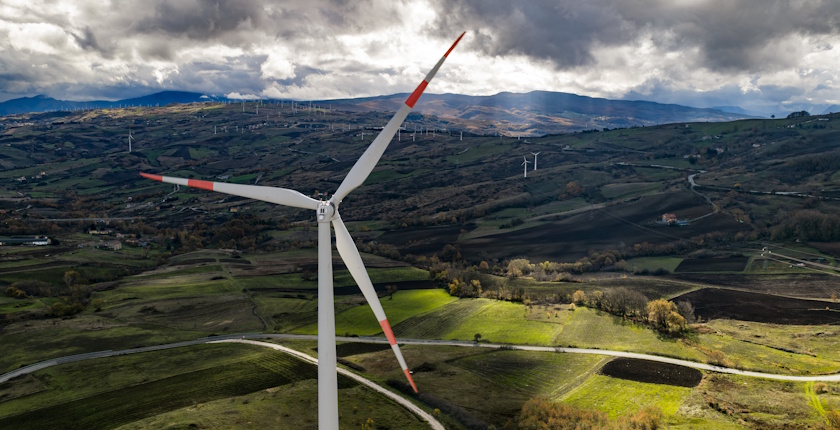
Leitwind2025@michaelschweigkofler-104
Photo: Leitwind2025 @michaelschweigkofler-104


Hybrid and island systems: independence by design

In island regions, remote communities, and areas with weak grid infrastructure — found in Greece, Cyprus, Croatia, and Montenegro — Leitwind turbines are increasingly deployed within hybrid systems combining wind, solar, and storage.

These systems:

  • Create independent renewable microgrids
  • Stabilize energy supply, even under poor grid conditions
  • Reduce or eliminate diesel dependency
  • Lower curtailment by absorbing excess production
  • Ensure 24-hour renewable availability

Leitwind’s modular architecture allows easy transportation, installation, and maintenance — even in locations where access is limited or environmental conditions are harsh.

Revitalizing the Balkan wind fleet: a regional repowering imperative

Across the Balkans — including Greece — a substantial portion of the wind fleet consists of early-generation turbines, typically 500 kW to 1 MW, installed between the late 1990s and mid-2000s. After 20+ years of operation, these machines face escalating maintenance needs, reduced availability, and outdated control systems. Yet the sites they occupy remain among the most promising wind locations in the region, with valuable existing grid connections.

This landscape creates one of the most attractive repowering opportunities in Europe.

Leitwind’s Direct-Drive portfolio (250 kW – 3 MW) is engineered specifically to unlock this potential:

  • Higher AEP through optimized aerodynamics
  • Superior durability thanks to gearbox-free design
  • Reduced O&M costs and fewer mechanical interventions
  • Compliance with modern Balkan grid codes, including demanding voltage-ride-through and frequency-support functions
  • Re-use of existing infrastructure, where applicable, reducing investment costs and permitting complexity

At many Balkan sites, replacing a cluster of old 660 kW–900 kW turbines with one or two modern Leitwind units can double the energy yield, significantly improve local grid stability, and extend the lifetime of the park by 20–25 years.

For developers, EPCs, and investors, modernizing these sites is not simply a technical improvement — it is a strategic and highly profitable modernization step.

With its proven direct-drive technology, adaptable tower configurations, and strong field presence across Southeastern Europe, Leitwind stands as the ideal partner for repowering projects that deliver greater performance with far fewer turbines.

Powering a regional wind renaissance

From industrial microgrids to island hybrid systems and fleet-wide repowering, Leitwind is redefining how wind energy supports energy independence across the Balkans. Its technology directly addresses the region’s three critical energy pillars:

  • Efficiency, driven by Direct-Drive simplicity and aerodynamic optimization
  • Autonomy, through on-site energy generation and decentralized solutions
  • Resilience, enabled by hybrid integration and robust engineering

As the Balkans transition toward a cleaner, more decentralized, and more self-reliant energy landscape, Leitwind stands as a strategic partner and technology enabler — not merely supplying turbines, but powering long-term independence, reliability, and economic growth.

In a region where every kilowatt counts, Leitwind delivers not just wind turbines — but energy freedom.

For further inquiries, technical information, or commercial cooperation, write to [email protected] or call +39 0472 722 000.

Leitwind is part of HTI Group.
by in News

Serbia launches construction of two transmission lines as part of BeoGrid 2025 project

Serbia has launched works as part of the BeoGrid 2025 project, aimed at improving the power transmission infrastructure in Serbia, the region, and Europe, as well as facilitating electricity offtake from renewable energy power plants in the South Banat region of Vojvodina.

The BeoGrid 2025 project, worth EUR 205 million, comprises six distinct components, according to Radoš Popadić, Assistant Minister of Mining and Energy in charge of the power engineering sector. He attended the start of works in Belgrade’s Surčin suburb together with Jelena Matejić, the general manager of Serbia’s transmission system operator, Elektromreža Srbije (EMS).

“Construction is being launched today on two new high-voltage transmission lines that will connect Belgrade and Novi Sad, with a total value of around EUR 22 million,” he said, adding that work on a substation in Belgrade is also expected to begin soon.

The project is valued at EUR 205 million

The substation will be connected to the Čibuk 1 substation [wind farm Čibuk 1] by a new 83-kilometer transmission line, ensuring a stable transmission of electricity produced from renewable energy sources in South Banat, as well as reducing strain on the existing network, Popadić explained.

Radoš Popadić and Jelena Matejić (photo: Ministry of Mining and Energy/Danilo Mijatović)

Two single-circuit 400 kV transmission lines, intended for connecting transmission line 450 (switching station Mladost – substation Novi Sad 3) to the future 400/110 kV substation Beograd 50, will have a total length of 25.5 kilometers.

EMS General Manager Jelena Matejić said that BeoGrid 2025 is of particular importance for Serbia, but also part of the broader North Continental South East (CSE) Corridor project, which includes doubling the existing 400 kV interconnection between hydropower plant Đerdap 1 and Portile de Fier in Romania.

Matejić: The North CSE Corridor is part of the European ten-year network development plan, TYNDP 2020

The North CSE Corridor project is part of the European ten-year network development plan (TYNDP 2020) and the regional investment plan (RgIP 2020). It is supported by the Romanian transmission system operator, Transelectrica, as well as the German development bank KfW, with a feasibility study.

The North CSE Corridor is of regional importance as it increases the transmission capacity between Serbia and Romania, helping create an integrated European electricity market, Matejić pointed out, adding that BeoGrid 2025 is also important for additional backup power supply for the EXPO 2027 project.

The project aims to enable the transmission of electricity generated from renewable sources in the South Banat region and to ease the load on the 220/110/35 kV Beograd 5 substation, which supplies a large part of Belgrade, particularly parts of New Belgrade and Zemun, EMS stated.

Popadić: The total value of all planned projects is EUR 1 billion

Photo: Ministry of Mining and Energy/Danilo Mijatović

Radoš Popadić recalled that large investments in the transmission network are underway.

“Serbia has recognized the importance of investing in the power transmission system to enable the integration of more renewable energy capacity, increase the exchange of electricity with neighbors, and ensure a secure, stable, and efficient supply to consumers. That is why we launched investments in interconnection with the transmission systems of eight neighboring countries, with EUR 500 million to be invested in priority projects by the end of the decade. The total value of all planned projects will amount to around one billion euros,” said Popadić.

BeoGrid 2025 is financed partly from the Serbian budget, as well as from EMS’ own funds. The project consists of six distinct components, or investments:

  • 400/110 kV substation Beograd 50;
  • Two-circuit 400 kV transmission line between substation Beograd 50 and Čibuk 1, including the installation of a 400 kV bay at switching station Čibuk 1;
  • Single-circuit 400 kV transmission lines for the integration of transmission line 450 (switching station Mladost – substation Novi Sad 3) into substation Beograd 50;
  • Two double-circuit 110 kV transmission lines for the integration of transmission line 104/8 (substation Stara Pazova – substation Inđija 2) into substation Beograd 50;
  • two double-circuit 110 kV transmission lines for the integration of transmission line 1178 AB (substation Beograd 5 – substation Beograd 9) into substation Beograd 50;
  • Double-circuit 110 kV cable between substation Beograd 50 and substation Beograd 49 (Airport).

Photo: Ministry of Mining and Energy/Danilo Mijatović

by in News

Montenegro’s power utility gets EUR 25 million loan to expand Gvozd wind farm

Montenegrin state-owned power utility Elektroprivreda Crne Gore (EPCG) said it signed a EUR 25 million loan contract with the European Bank for Reconstruction and Development (EBRD) for expanding the Gvozd wind farm to 75.6 MW. Once fully operational, it will be the largest wind farm in Montenegro.

The Gvozd 2 project involves the installation of three additional wind turbines, with a combined capacity of 21 MW. It will increase the wind farm’s total projected annual production to over 210 GWh, enough to cover the needs of about 36,000 households and reduce CO2 emissions by almost 137,000 tons a year, EPCG said following the signing of the loan agreement.

The expansion project involves three additional wind turbines with a combined capacity of 21 MW

An EUR 82 million loan for the first, 54.6 MW phase of the wind farm, including the grid connection infrastructure, was signed with the EBRD in June 2023. Gvozd will be EPCG’s first large-scale power generation facility built in more than 40 years.

Construction on the first phase, featuring eight turbines, began in November 2024. EPCG expects the power plant to enter trial operation by the end of this year, with a projected annual electricity output of 150 GWh.

Construction on the first, 54.6 MW phase of wind farm Gvozd was launched in late 2024

Commissioning of the full 75 MW capacity is expected by the end of 2026, according to a press release from the EBRD.

A key step in Montenegro’s energy transition

Milutin Đukanović, President of EPCG’s Board of Directors, described the expansion of Gvozd as a key step in Montenegro’s energy transition. In the press release, EPCG stated that the wind park would significantly contribute to achieving the European goal to produce electricity exclusively from clean sources by 2050 at the latest.

Minister of Energy and Mining Admir Šahmanović noted that the Gvozd project would strengthen Montenegro’s energy security, reduce CO2 emissions, and pave the way for sustainable development.

Francesco Corbo, the EBRD’s Regional Head of Energy for the Western Balkans and Croatia, recalled that the bank, through its Renewable Energy Market Accelerator (REMA) program, helped the Montenegrin authorities organize the country’s first renewable energy auction, for solar projects totaling 250 MW.

by in News

New systems protecting birds from wind turbine collisions

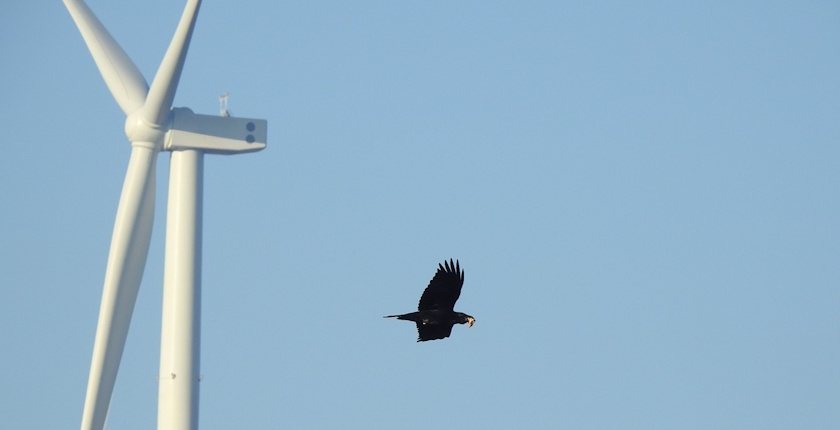
Wind power technology is often criticized because birds collide with turbine blades. As the number of wind farms in Southeast Europe grows, bird protection is increasingly important. A solution exists. Croatian environmental consultancy Oikon has become the regional representative for three systems that detect the presence of birds and temporarily halt wind turbines to prevent collisions and reduce the impact on biodiversity.

Wind farms produce clean energy and contribute to the fight against climate change. On the other hand, wind turbines can often harm biodiversity. Birds’ vision has evolved toward finding food and detecting predators—but not for avoiding tall turbine towers with fast-spinning blades. To help prevent bird collisions, so-called shutdown on demand (SDOD) solutions stop turbines when necessary.

SDOD refers to the temporary shutdown of turbines when individuals from protected or sensitive bird species are detected entering a high-risk collision zone.

Oikon is the regional representative for three bird detection and turbine control systems

Bird protection is increasingly important amid the wind energy expansion in Southeast Europe. Croatian environmental consultancy Oikon Ltd. – Institute of Applied Ecology announced that it has become the regional representative for three internationally recognized systems for bird detection and turbine control technologies.

SDOD is rapidly becoming a standard requirement for wind projects operating near sensitive bird habitats, Oikon’s CEO Dalibor Hatić says. “These technologies are already being requested by permitting authorities. We’re helping developers access proven and reliable systems to fulfil those obligations,” he asserted.

One of the systems that Oikon provides to its clients is IdentiFlight from the United States. It is three-dimensional, with artificial intelligence and high-speed cameras to identify birds in real time. Installed on separate towers, it gives optimal coverage of protected areas.

Photo: Identiflight (Ryan Luttrell / Oikon)

Max, developed by Dutch company Robin Radar Systems, uses a 3D radar specifically designed for bird monitoring. It enables the tracking of birds and bats over long distances, both day and night. The technology can simultaneously monitor and log thousands of flights with high precision.

Photo: Dutch company Robin Radar Systems named its solution Max (Oikon)

AVES Wind, the third system in the portfolio, was developed by German company ProTecBird. The device is installed on the turbine itself. It combines pan-tilt-zoom cameras, real-time tracking software and AI to detect and identify bird species, calculate their 3D position, control turbine operations and generate documentation for regulatory compliance.

Photo: AVES Wind system, developed by German company ProTecBird (Oikon)

SDOD reduces bird mortality and energy production losses

Unlike long turbine curtailments or seasonal restrictions, SDOD is activated only when needed – when birds enter a risk zone. The approach reduces both bird mortality and energy production losses.

“Oikon’s role is to make these internationally proven technologies available in Southeast Europe and ensure their integration aligns with local ecological, technical, and regulatory conditions. The company supports developers in meeting the requirements set by the European Union and national nature protection laws, including mitigation measures often mandated by environmental authorities,” the company said.

It pointed out all SDOD systems can be used for research purposes and that they utilize high-quality military-grade resilient components and technology, ensuring their functionality regardless of weather conditions.

by in News

Montenegrin power utility to borrow EUR 25.6 million for phase 2 of Gvozd wind farm

Montenegro’s state-owned power utility Elektroprivreda Crne Gore (EPCG) plans to take out a EUR 25.6 million loan from the European Bank for Reconstruction and Development (EBRD) to finance the second phase of the Gvozd wind farm project, with an installed capacity of 21 MW. The first phase of wind farm Gvozd, which is under construction, will have a capacity of 54.6 MW.

Announcing its request for government consent, EPCG stated that the capacity increase through the second phase of Gvozd would improve the security of electricity supply, increase the share of renewable energy in the country’s energy mix, and help Montenegro meet its international climate policy commitments.

EPCG previously announced that it expected the start of construction of the Gvozd 2 wind farm in early 2026.

The new document also states that EPCG has submitted a viability assessment of the Gvozd 1 and Gvozd 2 projects, prepared by German consultancy Fichtner GmbH & Co. KG for the purpose of securing financing from the EBRD.

The first phase of wind farm Gvozd will cost EUR 82 million

The first phase of the Gvozd wind farm, with eight turbines, is financed by an EUR 82 million loan from the EBRD. The groundbreaking ceremony was held in November 2024, and EPCG expects the power plant to enter trial operation by the end of this year. Its planned annual electricity output is 150 GWh.

A contract for the design, procurement, supply, and installation of equipment, as well as the commissioning and long-term maintenance of the future wind power plant, was signed with German company Nordex. EPCG said at the time that wind farm Gvozd would be its first large-scale power generation facility built in more than 40 years.

SCADA and ADMS will be introduced through a EUR 35 million project

In the announcement, EPCG also says it signed an agreement with the EBRD in January on financing a project to introduce the SCADA and ADMS systems into Montenegro’s power system. The implementation of SCADA (supervisory control and data acquisition) and ADMS (advanced distribution management system) is a key step towards modernizing the electricity distribution network, the document states.

SCADA enables remote control, monitoring, and automation of electricity distribution, while ADMS supports the integration of renewable energy sources. Together, these systems significantly improve the reliability, efficiency, and security of the power system, EPCG explains.

by in News

Interenergo launches its first wind farm in Bosnia and Herzegovina

The Ivan Sedlo wind farm, located on the mountain of the same name in the municipality of Hadžići, is the first power-generating wind facility in Sarajevo Canton. The project was developed by Slovenian company Interenergo, owned by Austria-based energy group Kelag. It is it’s first wind power plant in Bosnia and Herzegovina.

With a total installed capacity of 25 MW, the wind farm is equipped with five Siemens Gamesa 5.0 turbines. According to the company’s update, the wind farm will generate enough green electricity to power approximately 11,000 households in Bosnia and Herzegovina and prevent over 32,000 tons of CO2 emissions annually.

The construction of the Ivan Sedlo wind farm began in late September 2022, following more than six years of preparation. Interenergo acquired the project from the previous investor, Suzlon Energy BH, a company owned by Danish firm Suzlon Wind Energy.

“We’re proud to launch our first wind project in Bosnia and Herzegovina. Despite challenging site conditions, the project was delivered without major delays or compromises in quality. This achievement reflects the strong cooperation we’ve built with the Municipality of Hadžići and the surrounding communities, whose support was vital throughout the development process”, stated David Huber, Director of Interenergo.

According to him, the wind farm is expected to generate over 65 GWh annually, marking a significant milestone in the development of clean energy for Hadžići, Bosnia and Herzegovina, and the wider Balkan region.

Photo: Interenergo

“The importance of the investment for the local community is diverse — from a cleaner environment and new jobs to additional funds for the Municipality of Hadžići’s budget. I believe this is just the beginning, as we have a clear goal: the development of environmentally sustainable, long-term profitable, and socially responsible energy solutions. We also have the potential and the will to continue in that direction,” said Eldar Čomor, Mayor of Hadžići.

Nihad Uk, the prime minister of Sarajevo Canton, emphasized at the inauguration that projects like this are becoming increasingly important because, as he said, it’s not a question of years, but months before the European Union introduces so-called carbon taxes.

Interenergo has been active in the Bosnia and Herzegovina market since 2007.  Today, in addition to the wind park, the company operates eight hydropower plants with a total capacity of 43 MW and an average annual production of over 125 GWh — enough to supply more than 31,000 households and avoid 61,500 tons of CO2 emissions each year.

By 2032, Interenergo plans to develop new renewable energy projects across the region, aiming to add more than 300 MW of new capacity.

by in News

Alcazar Energy, EPCG open talks on PPA for Montenegro’s biggest wind farm

Renewable energy investor Alcazar Energy Partners has signed a memorandum of understanding with Montenegrin state power utility Elektroprivreda Crne Gore (EPCG), initiating negotiations on a power purchase agreement (PPA) for electricity that will be produced by Alcazar’s future 118.8 MW Bijela wind farm.

Alcazar Energy acquired the rights to the Bijela wind farm project in September 2023. A year later, it signed a contract for the construction of infrastructure for connecting the facility to the grid.

A key component of the government’s 2040 National Development Strategy, Bijela will support Montenegro’s commitment to reducing greenhouse gas emissions, Alcazar said in a press release. The largest wind farm in Montenegro will provide clean energy to more than 16,000 households while preventing the release of up to 230,000 tons of CO2 annually, according to the statement.

The wind farm will provide green energy to more than 16,000 homes

The development of Bijela, backed by the European Bank of Reconstruction and Development (EBRD), will support Alcazar’s strategic expansion in the Western Balkans and it target of developing 1GW of renewable energy in the region, according to the statement.

“This partnership is continued evidence of our commitment to developing the largest renewable energy platform in the Western Balkans,” said Daniel Calderon, Co-Founder and Managing Partner of Alcazar Energy Partners.

The Bijela project supports Alcazar’s ambition to develop 1 GW of renewables in the Western Balkans

Ivan Bulatović, the executive director of EPCG, described the memorandum of understanding as “a crucial step in strengthening Montenegro’s energy stability.”

“Cooperation with renowned international partners, such as Alcazar Energy Partners, not only enables the modernization of the sector but also accelerates the transition to cleaner and more sustainable energy sources,” he added.

Alcazar Energy Partners is an independent sustainable investment manager with a strong track record in developing utility-scale renewable energy projects in emerging and growth markets since 2014, reads the press release.