EDF, Westinghouse complete technical feasibility studies for Krško 2 nuclear power plant
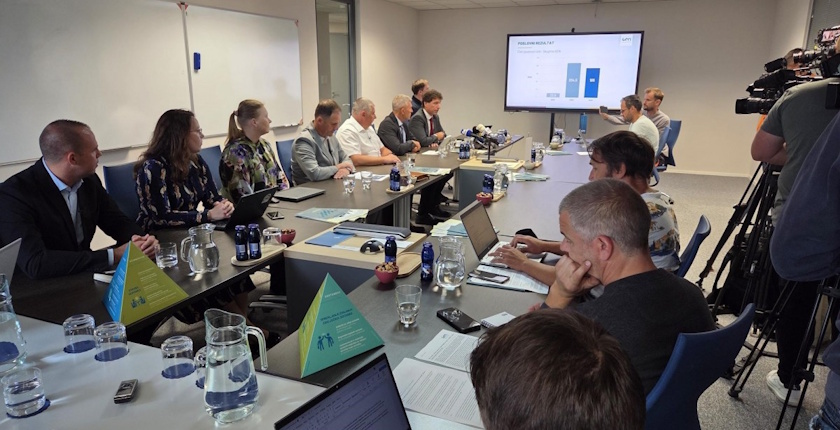
Three reactor projects offered by EDF and Westinghouse have been assessed as technically feasible for the site of the future Krško 2 nuclear power plant, according to technical feasibility studies presented by GEN Energija during the announcement of its 2024 results. GEN Group ended last year with a EUR 186 million profit, down 9% from 2023, when it posted a profit of EUR 204.5 million.
GEN Energija, the parent company of GEN Group, noted that the Krško 2 (JEK2) project is going ahead according to the previously confirmed timeline. In October 2024, Slovenia canceled a referendum on building the second nuclear unit.
In January, it was announced that Westinghouse Electric and EDF would conduct technical feasibility studies for the deployment of their reactor models.
In July, the Ministry of Natural Resources and Spatial Planning initiated the preparation of a spatial plan for the second unit of nuclear power plant Krško and invited the public to submit comments.
GEN Energija has now presented the results of the technical feasibility studies. The reactor projects – EDF’s EPR or EPR1200 and Westinghouse’s AP1000 – were found to be technically feasible for the JEK 2 site.
Planinc: Both technologies include cooling by a natural draft cooling tower
According to Vinko Planinc, head of GEN Energija’s New Nuclear Build Division, the studies confirm that the project enables safe and efficient installation within the existing environment, taking into account flood and earthquake protection requirements.
The expected operational lifespan of both proposed reactors is 60 years, but it could be extended to 80 years if conditions are met, he added.
The location will also allow for the appropriate storage of used nuclear fuel, as well as low- and intermediate-level radioactive waste. Both technologies, he said, use natural draft cooling towers – the most environmentally friendly solution, minimizing the impact on the Sava River and creating the smallest carbon footprint.
The estimated investment from the studies matches the amount in GEN Energija’s study presented in 2024, which projected that JEK 2 would cost at least EUR 9.3 billion for 1,000 MW.
The financing method significantly affects the project’s viability
Regarding an analysis of the JEK2 investment by NGO Mladi za Podnebno Pravičnost (Youth for Climate Justice), Jan Lokar, lead engineer at GEN Energija, said the company estimates the minimum electricity price needed for the project’s economic feasibility at EUR 70.2 per MWh, compared to the NGO’s estimate of EUR 107.
The differences arise primarily from varying assumptions about capital costs, he stressed. GEN Energija expects state support in financing, while the NGO estimate assumes private capital investment.
Paravan: 2024 results exceed planned targets
GEN Energija CEO Dejan Paravan presented GEN Group’s business results for 2024. The group had revenues of EUR 2.2 billion, a net profit of EUR 186 million, and added value per employee of EUR 276,000, all exceeding the annual financial targets, he added.
“All our production units operated safely and without major interruptions, reflecting years of investment in knowledge, technology, and maintenance. The important role of GEN Group in Slovenia’s energy supply is confirmed by the fact that in 2024, we reliably supplied Slovenian consumers exclusively with low-carbon electricity at affordable and predictable prices,” Paravan noted.
Alongside the JEK2 project studies, the company said, a small modular reactor (SMR) study is underway, aiming to identify possible locations for this type of reactor in Slovenia.