by in News

Waste Management: New Monitoring and Tracking System in Albania for Exports and Transit

Albania is set to implement a new system for monitoring and tracking waste exports and transit movements, aiming to strengthen oversight, transparency, and compliance with environmental standards.

The initiative is designed to improve control over the cross-border movement of waste, ensuring that all shipments are properly documented, traceable, and in line with both national legislation and international obligations.

Digital Monitoring and Traceability

The new system introduces a digital platform that will enable real-time monitoring of waste shipments. Authorities will be able to track the movement of waste from its origin to its final destination, reducing the risk of illegal trafficking or mismanagement.

The system is expected to include detailed reporting requirements for operators, including information on the type, quantity, origin, and destination of waste. This will allow for more accurate data collection and better policy planning in the waste management sector.

Strengthening Control Over Exports and Transit

A key objective of the reform is to tighten controls over waste exports and transit passing through Albania. The system will ensure that only authorized operators can engage in such activities and that all procedures are carried out in compliance with environmental and safety standards.

Authorities aim to prevent the misuse of Albania as a transit route for unauthorized or hazardous waste shipments, an issue that has raised concerns in the past.

Alignment with European Standards

The new monitoring framework is aligned with European Union requirements for waste management and cross-border movement. It reflects Albania’s broader efforts to harmonize its environmental legislation with EU directives and improve institutional capacity.

By adopting stricter monitoring mechanisms, Albania seeks to meet international standards and enhance its credibility in environmental governance.

Institutional and Operational Impact

The implementation of the system will involve coordination between several institutions responsible for environmental protection, customs, and transport oversight. It is expected to improve inter-agency cooperation and streamline administrative procedures.

For businesses operating in the waste sector, the system will introduce additional compliance obligations but is also expected to create a more predictable and transparent regulatory environment.

Towards Greater Environmental Accountability

The introduction of this monitoring and tracking system marks a step forward in Albania’s efforts to strengthen environmental accountability and combat illegal waste activities.

By ensuring full traceability of waste flows, the authorities aim to protect public health, reduce environmental risks, and promote more sustainable waste management practices across the country.
by in News

Zagreb to invest EUR 56 million in waste management, low-emission machinery

Croatia’s capital, Zagreb, intends to invest EUR 56 million in waste management, green areas, and low-emission machinery. It expects the investment to reduce the environmental footprint of its municipal utilities and their operating costs.

Zagreb Holding (ZGH), the umbrella firm for the city’s utility companies, has requested approval from the authorities for a long-term EUR 56 million green loan agreement.

The Zagreb city assembly will decide on the request on December 16.

The green loan agreement with the International Finance Corporation (IFC) would finance investments aimed at supporting the development of circular waste management by procuring lower-emission vehicles and machinery for separate waste collection, developing green spaces, and maintaining roads.

ZGH to introduce smart waste management technologies

The loan would also be used for primary waste separation infrastructure, bio-waste treatment facilities, as well as information and communication technologies for data-driven smart waste management operations, ZGH said.

The company intends to replace its existing outdated machinery by acquiring municipal vehicles, machines, and equipment, with the aim of increasing operational efficiency and the scope of services provided to citizens.

Additionally, this investment will have a significant environmental impact by reducing greenhouse gas emissions.

NOx and PM emissions will be reduced by up to 80%

According to an analysis by ZGH, the average age of more than 300 vehicles, machines, and pieces of equipment is 14 years, which significantly exceeds the average economic service life of vehicles and machines. More than 70% of the vehicles do not meet current environmental standards (EURO 6), which leads to negative impacts on the environment and rising maintenance costs.

Thanks to the investment in EURO 6 and Stage V compliant vehicles, emissions of nitrogen oxides (NOx) and PM particles would be reduced by up to 80%, the update reads.

ZGH plans to introduce digital systems to increase the operational efficiency of its vehicles and machinery, such as monitoring fuel consumption, technical condition, and mileage.

The loan proceeds will be allocated to the city’s public utilities.

The waste utility Čistoća will receive EUR 22.2 million, road utility Zagrebačke Ceste EUR 14.9 million, green areas utility Zrinjevac EUR 16.4 million, cemetery utility Gradska Groblja EUR 861,000, the ICT Sector EUR 1.5 million, and the customer relations sector EUR 120,000.

by in News

Novi Sad plans to build waste-to-energy cogeneration plant

The City of Novi Sad plans to produce electricity and heat from solid municipal waste and has invited bids for a preliminary feasibility study for a cogeneration plant that would burn processed waste from a planned regional waste management center. Surplus energy could be stored within the future solar thermal system.

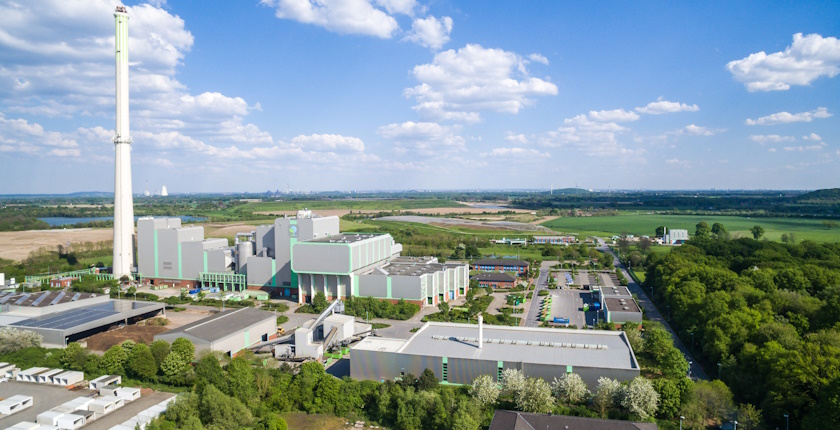
Serbia’s capital, Belgrade, already has a combined heat and power plant (CHP) that uses municipal waste. As such facilities exist all over Europe, Novi Sad’s district heating enterprise Novosadska toplana specified in the public call that the study must include an overview of relevant examples and best practices.

The document is to assess the feasibility of obtaining energy from waste processed into refuse-derived fuel (RDF) and solid recovered fuel (SRF). The fuel would be produced in a mechanical-biological treatment (MBT) plant for biodegradable waste within the future regional waste management center for Novi Sad and the municipalities of Bačka Palanka, Bački Petrovac, Beočin, Žabalj, Srbobran, Temerin, and Vrbas, according to the public call.

The bid submission deadline is December 15, and the study must be completed within 180 days of the contract signing. The job is valued at RSD 22 million.

The purpose of the study is to provide a preliminary assessment of the potential for and benefits of using available solid fuel from waste for high-efficiency cogeneration for the city’s needs, as well as the feasibility of building a CHP plant fueled by RDF and SRF, according to the public call.

The cogeneration plant could burn up to 40,000 tons of solid waste fuel per year

The MBT plant at the regional waste management center is expected to produce between 30,000 and 40,000 tons of solid fuel for cogeneration. The planned location of the plant, along with a fuel storage facility, is adjacent to the existing landfill in Novi Sad, according to the documentation.

The preliminary feasibility study should propose the optimal site for the cogeneration plant, taking into account the infrastructural capacity for connection to Novi Sad’s district heating system and the distance from the fuel storage facility.

The authorities suggest that the site should be in the vicinity of the TE-TO cogeneration plant in Novi Sad, Serbia’s second-largest city, due to its excellent connections to the power grid and the city’s district heating system. In addition, this site will host a planned solar thermal system, whose underground storage facility would be able to store excess energy from the waste-to-energy plant during the summer.

Surplus energy could be stored in the future solar thermal system

The project has secured an EUR 85 million loan from the European Bank for Reconstruction and Development (EBRD) and a grant of EUR 24.7 million from the Western Balkans Investment Fund (WBIF). The system will have a storage capacity of around 870,000 cubic meters, solar collectors with a total capacity of 31 MW, heat pumps with a capacity of 17 MW, and two electric boilers with a combined capacity of 60 MW, according to the EBRD website.

The bank said the launch of the public procurement is expected on November 26.

The proposed location for the cogeneration plant should also take into account Novi Sad’s newly-built heating plant, Majevica, which is expected to become operational by the end of the year.

The study should propose the optimal technology for solid fuel incineration, a preliminary design for the cogeneration plant, as well as systems for flue gas cleaning and ash management, according to the documentation.

Since the City of Novi Sad plans to apply for grants from international institutions and funds for the preparation of technical documentation and further project development, the public call states that the study should be carried out in line with the methodology of international financial institutions such as the World Bank, the German development bank KfW, and the EBRD, including a financial analysis and an assessment of CO₂ emission reductions.

by in News

City of Osijek has highest waste separation rate in Croatia

Osijek has reached a 57.92% waste separation rate in 2024, the highest score among the four largest cities in the country.

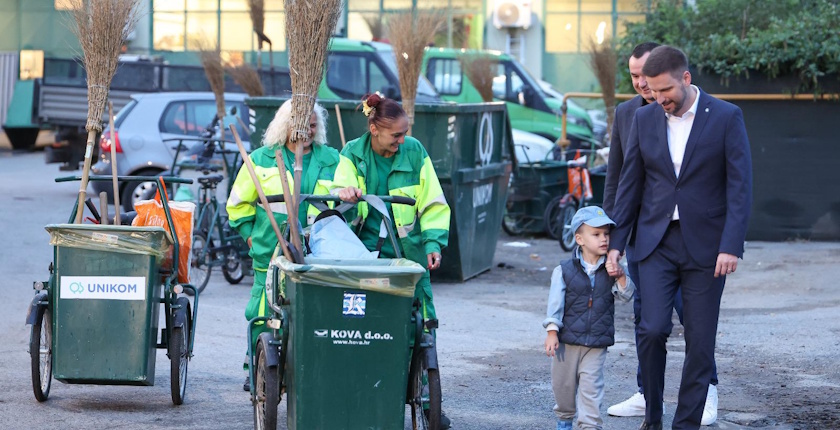
Osijek, with a share of 57.92% of separately collected waste, is again the best among large cities in Croatia, according to Mayor Ivan Radić. Because of the achievement, he visited the employees of the city’s waste utility Unikom in the early morning hours.

He stressed that the success is the result of responsible citizens who separate waste, the dedicated work of Unikom employees, and ongoing investments in infrastructure.

Osijek has four recycling yards, including a mobile one. They are able to separate 52 types of waste. There is also a composting facility. As the mayor pointed out, the local authority invests in consumer education, from kindergartens to its Eco City Waste Fest, because it aims to maintain and improve the achieved results.

Osijek is the only major Croatian city that doesn’t pay penalties for not achieving waste separation targets

Radić underlined that Osijek is the only large Croatian city that, thanks to waste separation above 50%, doesn’t pay penalties.

Municipal authorities in Croatia pay fines per ton of landfilled waste that was supposed to be separated and properly processed in line with waste management rules. The fine for 2025 was set at EUR 30 per ton. The obligatory separation rate for 2025 is 50%.

Unikom CEO Igor Pandžić highlighted that in 2024, a total of 36,000 tons of municipal waste were collected, of which nearly 21,000 tons were recyclable waste. The largest portion was biodegradable waste, thanks to the composting unit, into which the city continues to invest.

Osijek has maintained a waste separation rate above 57% for two consecutive years

Paper, plastic, glass, and metal accounted for over 9,000 tons, Pandžić said, and recalled that Osijek achieved a waste separation rate above 57% for two consecutive years.

He said more projects are underway, including the expansion of the composting facility and the establishment of a center for recycling bulky waste, which would further reduce the quantities ending up at the Lončarica Velika landfill.

In Pandžić’s words, they are important steps in terms of the circular economy. “What our fellow citizens separate, we process into a new product like compost, which then goes back into gardens and yards,” he explained.

At the meeting with the workers, the mayor and the CEO announced a 10% salary bonus as a reward for their work.

by in News

Race against time to secure EU funding for waste-to-energy plants in Greece

Hostile reactions from citizens and the opposition by municipal authorities threaten to derail Greece’s efforts to build six waste-to-energy plants. Moreover, time is running out to secure EUR 800 million in European funding.

The Ministry of Environment and Energy is expected to publish a call for waste-to-energy projects planned in Attica, Western Macedonia, Rodopi, Peloponnese, Boeotia (Viotia) and Crete. Total investment would amount to EUR 1 billion, for 1.19 million tons in capacity. However, time is running out to secure EUR 800 million in European funding set aside for them and the accompanying recycling plants.

Greece has been warned several times by the European Commission and fined for failing to fulfil its obligations in waste management. The country still relies mostly on landfills to handle municipal waste, instead of modern solutions. Ideally, useful materials should be sorted for recycling before the waste gets burned in incinerators to produce energy.

Two of the proposed units, the ones in Rodopi and Western Macedonia, are expected to provide district heating. The Ptolemaida 5 lignite-fired plant supplies district heating in the coal region of Western Macedonia in the country’s north, but it is scheduled to be decommissioned by 2028 at the latest.

Its owner, Public Power Corporation (PPC or DEI) aims to complete a waste-to-energy plant by then. Other prospective investors include GEK Terna, Metlen, Aktor and Motor Oil Hellas, all big players in the country’s energy market.

High fees and pollution worry municipalities

Many local authorities have expressed their objections to hosting these plants, fearing a rise in municipal fees and pollution. A discussion is underway in numerous municipal councils. They could lodge appeals to the Supreme Court and delay the process.

Amanatidis: Cancel all waste-to-energy plans

The regional council of Western Macedonia recently voted overwhelmingly to reject the plan for PPC’s planned unit from the ministry’s strategic environmental assessment (SEA). Governor Giorgos Amanatidis called on the government to withdraw the study and cancel the project. Municipalities in the same region and other institutions are also against an incinerator.

European funding through the National Strategic Reference Framework (NSRF) ends in 2027. The government and investors have until mid-2026 for implementation, Newmoney reported, adding that waste-to-energy projects take two to three years to complete.

Recently, another initiative, the Apollo program, for investments in renewable energy to lower energy costs for vulnerable consumers, lost EUR 100 million from the EU’s Recovery and Resilience Facility (RRF).

by in News

Montenegro’s capital Podgorica preparing feasibility study for waste incinerator

Municipal waste utility Deponija has made the first step towards building a waste-to-energy facility.

Deponija, the utility in charge of waste management in Montenegro’s capital, launched a public call for the production of a feasibility study for the construction of a municipal waste incinerator within the territory of the city of Podgorica.

The task should be implemented in line with the requirements of sustainable waste management, circular economy, and the European Union’s environmental standards, the call reads.

There is only one waste incinerator in the Western Balkans

Of note, in the Western Balkans region, there is only one waste-to-energy plant, located in Belgrade. Utilizing waste to generate energy is a legitimate component of waste management hierarchy. Incinerators are present all over Europe. Croatia and Slovenia are planning to build such facilities, though some citizens oppose it.

Deponija also listed several motives for preparing the study. They include modernization of the municipal waste management system in Podgorica, reduction of the amount of waste that ends up in the landfill, and the production of renewable energy from waste.

The enterprise also aims to align its operations with the European Union’s waste management directives and gather data for potential partners and investors to assess the project.

The main goal of the study is to establish a sustainable and economically justified system for thermal treatment of municipal waste that will contribute to solving waste management problems in Podgorica, the call reads.

Deponija requested an analysis of different thermal treatment technologies

Deponija said that the study would include technological options or comparative analysis of various waste thermal treatment technologies such as incineration, refuse-derived waste, gasification and pyrolysis.

A key part of the future document is the environmental impact assessment (EIA), which will identify potential impacts on air, water, and land, mitigation measures, and monitoring.

Mayor of Podgorica Saša Mujović supported last year the idea of building a waste-to-energy plant. At that time, he was the minister of energy.

by in News

Photovoltaics recycling gains traction in Greece with new facilities

Two recycling facilities for solar panels are complete in Greece, while another one is expected to follow soon.

The business case behind the investments in recycling is solid, as more and more older solar farms will reach the end of their operational life, which is 20-25 years. European and national laws stipulate that such equipment must be recycled to reduce pollution and reuse critical minerals as much as possible.

However, owners who prefer to replace their equipment even before the end date is reached are also interested in recycling. The reason is the much higher efficiency of modern photovoltaics.

The factor is gaining in importance as solar panel prices have dropped, while curtailments have been on the rise for two years.

Fotokiklosi is currently the only active licensed company in the sector. It exports photovoltaic waste to Italy for recycling and also specializes in appliances, bulbs and electronics.

However, new opportunities emerge, as other companies have invested in the country’s first recycling facilities. They are situated in Ritsona in Central Greece, in the island of Crete and in Kozani in the Western Macedonia province in northern Greece. The first two are already operational, while the third one is almost complete.

Massive drop in prices

Competition seems to be heating up. According to energypress.gr, Fotokiklosi was charging EUR 300 per ton of photovoltaic waste six years ago, EUR 150 per ton in 2023-2024, and after that only EUR 90 per ton.

It should be noted that the process begins with the payment of a fee from the retailer or importer of panels to the recycling system operator. The recycling company collects the money and pledges to handle the waste after the panels’ operational life has ended.

Fotokiklosi is currently awaiting a new license from the Hellenic Recycling Agency (HRA or EOAN), based a suggested price of EUR 90 per ton.

With the new plants in Greece, old panels will no longer have to be transferred to Italy for recycling. The lower overall cost makes the choice easier for Greek solar farm owners.

by in News

Rörig (E.ON): Croatia charges up to six times higher e-waste fees on solar panels than other EU states

Croatia charges a waste fee on solar panels of EUR 300 per ton, up to six times more than other European Union countries. The levy slows down the expansion of solar energy, Andreas Rörig, president of the Management Board of E.ON Croatia, told Balkan Green Energy News.

In addition to the one-off e-waste management fee, hindering investments, another issue is that Croatia doesn’t have a system for collecting and recycling solar panels.

Andreas Rörig’s post on LinkedIn received a lot of public attention. He wrote that in Croatia high fees and regulatory barriers, including the ones related to waste, are holding back solar’s potential. With a waste fee of EUR 0.3 per kilogram (EUR 300 per ton), the profitability of solar investments is at risk, he added.

The fee in other EU countries ranges from EUR 50 to EUR 150

Rörig explained that a comparison with other EU member states demonstrates that fees in Croatia are significantly higher than in neighboring countries. For example, they range from EUR 50 to EUR 150 in the Netherlands, Belgium, Slovenia, and Hungary.

The fee is paid on total weight, which is more than 20 kilograms per panel, according to E.ON. Even more concerning is the disproportionate taxation: 80% to 90% of a solar panel’s mass consists of easily recyclable materials that aren’t classified as e-waste, yet the fee is charged on the total weight.

“This approach discourages investment, slows Croatia’s progress toward energy transition, and contradicts the country’s goals of reducing emissions and increasing energy efficiency. A practical example of why solar energy accounts for less than 2% of Croatia’s energy mix – far below its true potential,” Rörig stated.

There are signs that things are about to change

Therefore he recommended reducing the electronic waste management fee for solar panels and suspending the obligation until a functional disposal system is in place. He confirmed there is currently no functional system for the collection, processing, and recycling of e-waste from solar panels in Croatia.

“However, there are positive indications that the fee will be reduced and that the system will be established. We believe that the Environmental Protection and Energy Efficiency Fund or FZOEU has recognized the needs of the industry. E.ON supports such measures because we believe that they will fix the problem and enable easier waste management,” Rörig stressed.

by in News

Kosovo* gets EUR 12.6 million for waste management

Kosovo Landfill Management Company (KMDK) has signed a EUR 12.6 million grant agreement with Kosovo’s* Ministry of Finance, Labor and Transfers and Germany’s KfW Development Bank for waste management in Prishtina, Prizren and Gjilan.

The European Union provided the funding while the KfW would be in charge of the project implementation.

Kosovo Landfill Management Company (KMDK) CEO Dardan Velija said the project is essential for the company and Kosovo*. The activities would drastically change the condition of landfills operating without adequate permits, he added.

The sites would be transformed into sanitary ones with modern infrastructure in line with European standards and environmental regulations.

According to Minister Hekuran Murati, the project aims to improve the quality of life of citizens by securing a cleaner environment. It would provide adequate infrastructure for waste management, he noted.

Müller: It is urgent to take action in this sector

KfW’s director for Southeast Europe and Turkey Klaus Müller expressed the bank’s willingness to support the Government of Kosovo. It is urgent to take action in this sector, to overcome the problems with waste and to finish the project on time, he stressed.

The signing was attended by KfW’s director for Kosovo* and North Macedonia Moritz Remé, leader of the German Development Cooperation at the Embassy of Germany in Kosovo* Daniel Alker, and Deputy Head of Cooperation at the EU Office in Kosovo Alessandro Bianciardi.

Of note, in August last year, the EU suspended grants and investments in wastewater treatment systems in Kosovo* as part of sanctions against Prime Minister Albin Kurti and his government.

At the time, Mayor of Hani i Elezit Mehmet Ballazhi said the EU suspended a wastewater treatment project that was supposed to tackle pollution including asbestos. The town and municipality on the border with North Macedonia is also known as Elez Han and Đeneral Janković.

* This designation is without prejudice to positions onstatus and is in line with UNSCR 1244/99 and the ICJ Opinion on the Kosovo declaration of independence.