by in News

Novi Sad plans to build waste-to-energy cogeneration plant

The City of Novi Sad plans to produce electricity and heat from solid municipal waste and has invited bids for a preliminary feasibility study for a cogeneration plant that would burn processed waste from a planned regional waste management center. Surplus energy could be stored within the future solar thermal system.

Serbia’s capital, Belgrade, already has a combined heat and power plant (CHP) that uses municipal waste. As such facilities exist all over Europe, Novi Sad’s district heating enterprise Novosadska toplana specified in the public call that the study must include an overview of relevant examples and best practices.

The document is to assess the feasibility of obtaining energy from waste processed into refuse-derived fuel (RDF) and solid recovered fuel (SRF). The fuel would be produced in a mechanical-biological treatment (MBT) plant for biodegradable waste within the future regional waste management center for Novi Sad and the municipalities of Bačka Palanka, Bački Petrovac, Beočin, Žabalj, Srbobran, Temerin, and Vrbas, according to the public call.

The bid submission deadline is December 15, and the study must be completed within 180 days of the contract signing. The job is valued at RSD 22 million.

The purpose of the study is to provide a preliminary assessment of the potential for and benefits of using available solid fuel from waste for high-efficiency cogeneration for the city’s needs, as well as the feasibility of building a CHP plant fueled by RDF and SRF, according to the public call.

The cogeneration plant could burn up to 40,000 tons of solid waste fuel per year

The MBT plant at the regional waste management center is expected to produce between 30,000 and 40,000 tons of solid fuel for cogeneration. The planned location of the plant, along with a fuel storage facility, is adjacent to the existing landfill in Novi Sad, according to the documentation.

The preliminary feasibility study should propose the optimal site for the cogeneration plant, taking into account the infrastructural capacity for connection to Novi Sad’s district heating system and the distance from the fuel storage facility.

The authorities suggest that the site should be in the vicinity of the TE-TO cogeneration plant in Novi Sad, Serbia’s second-largest city, due to its excellent connections to the power grid and the city’s district heating system. In addition, this site will host a planned solar thermal system, whose underground storage facility would be able to store excess energy from the waste-to-energy plant during the summer.

Surplus energy could be stored in the future solar thermal system

The project has secured an EUR 85 million loan from the European Bank for Reconstruction and Development (EBRD) and a grant of EUR 24.7 million from the Western Balkans Investment Fund (WBIF). The system will have a storage capacity of around 870,000 cubic meters, solar collectors with a total capacity of 31 MW, heat pumps with a capacity of 17 MW, and two electric boilers with a combined capacity of 60 MW, according to the EBRD website.

The bank said the launch of the public procurement is expected on November 26.

The proposed location for the cogeneration plant should also take into account Novi Sad’s newly-built heating plant, Majevica, which is expected to become operational by the end of the year.

The study should propose the optimal technology for solid fuel incineration, a preliminary design for the cogeneration plant, as well as systems for flue gas cleaning and ash management, according to the documentation.

Since the City of Novi Sad plans to apply for grants from international institutions and funds for the preparation of technical documentation and further project development, the public call states that the study should be carried out in line with the methodology of international financial institutions such as the World Bank, the German development bank KfW, and the EBRD, including a financial analysis and an assessment of CO₂ emission reductions.
by in News

Montenegro’s capital Podgorica preparing feasibility study for waste incinerator

Municipal waste utility Deponija has made the first step towards building a waste-to-energy facility.

Deponija, the utility in charge of waste management in Montenegro’s capital, launched a public call for the production of a feasibility study for the construction of a municipal waste incinerator within the territory of the city of Podgorica.

The task should be implemented in line with the requirements of sustainable waste management, circular economy, and the European Union’s environmental standards, the call reads.

There is only one waste incinerator in the Western Balkans

Of note, in the Western Balkans region, there is only one waste-to-energy plant, located in Belgrade. Utilizing waste to generate energy is a legitimate component of waste management hierarchy. Incinerators are present all over Europe. Croatia and Slovenia are planning to build such facilities, though some citizens oppose it.

Deponija also listed several motives for preparing the study. They include modernization of the municipal waste management system in Podgorica, reduction of the amount of waste that ends up in the landfill, and the production of renewable energy from waste.

The enterprise also aims to align its operations with the European Union’s waste management directives and gather data for potential partners and investors to assess the project.

The main goal of the study is to establish a sustainable and economically justified system for thermal treatment of municipal waste that will contribute to solving waste management problems in Podgorica, the call reads.

Deponija requested an analysis of different thermal treatment technologies

Deponija said that the study would include technological options or comparative analysis of various waste thermal treatment technologies such as incineration, refuse-derived waste, gasification and pyrolysis.

A key part of the future document is the environmental impact assessment (EIA), which will identify potential impacts on air, water, and land, mitigation measures, and monitoring.

Mayor of Podgorica Saša Mujović supported last year the idea of building a waste-to-energy plant. At that time, he was the minister of energy.

by in News

University in Antalya signs deal for 50.4 MW solar power plant

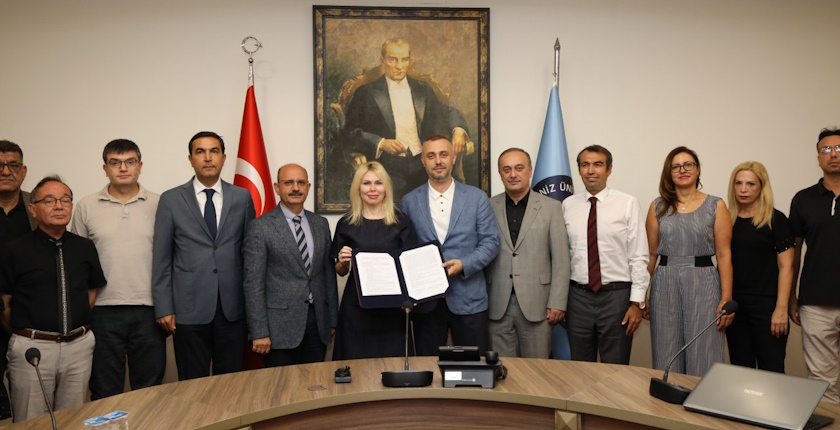
Akdeniz University in Antalya established a partnership with Kopuz Group, which will build and operate a solar power plant of 50.4 MW in peak capacity. The company is completely covering the cost for the facility, which they expect to meet the university’s entire electricity needs.

Municipal authorities in Turkey are emerging as a pillar of the country’s energy transition. They are not only covering public buildings with solar panels, but also investing in larger ground-mounted photovoltaic systems. The trend has also spread to sports venues, particularly football stadiums, alongside educational institutions, infrastructure and transportation including railways, and a range of other social, industrial and commercial activities. Akdeniz University in Antalya particularly stands out with its new deal.

Rector Özlenen Özkan said the aim of the project for a solar power plant of 50.4 MW is to meet the entire electricity demand at the complex home to some 100,000 people. Antalya, located on the Mediterranean coast, was one of the first cities in Turkey that introduced solar power for their own needs.

Akdeniz University to offtake 24% of PV plant’s output

A partnership was launched with Kopuz Group and Kopuz Energy, selected through a tender. The company will build the facility in Yeşiloba in the Korkuteli district. The cooperation works under a build-operate-transfer model, for 25 years.

The private partner bears all the costs of construction and commissioning, estimated at EUR 52.6 million. The company has two years to complete the PV plant, by far the biggest among all universities in Turkey. It is also the largest public-private partnership involving a university, in the solar power segment, Rector Özkan stressed.

The solar power plant will save EUR 2.3 million in electricity costs

In her words, the facility will generate 100 GWh per year, of which Akdeniz University would offtake 24%. The deal will lower its electricity costs by 31%, Özkan added and pointed out that it translates to EUR 2.3 million. The electricity bill of the university hospital in July amounted to almost EUR 650,000, she revealed.

The site for the PV plant is in a mountainous area and on non-agricultural land, Özkan pointed out.

Antalya is in Turkey’s top league in energy transition

As for the Antalya Metropolitan Municipality, it has almost 15 MW in peak capacity in 22 PV units in operation or under construction. They include a 5 MW ground-mounted solar farm.

The facilities cover more than half of the electricity needs of the local authority. Notably, it uses solar power to assist farmers, produce drinking water and treat wastewater.

According to the city government, Antalya is the first in Turkey to generate and store its own electricity. Moreover, it produces energy from waste and biomass.

A major solar cell factory located just outside the city is undergoing expansion and the complex will also make PV panels. Turkey hosts more than 23 GW of solar power capacity.

by in News

Croatia changing law on renewables – new rules for prosumers, decentralized power production

The Government of Croatia has adopted the amendments to the law on renewable energy sources and high-efficiency cogeneration. They change rules for consumers producing electricity for self-consumption, facilitate the establishment of citizen energy communities and regulate decentralized energy production.

The amendments align the Croatian legislation with the European Union’s Renewable Energy Directive and bring benefits to citizens, entrepreneurs, and investors, the Ministry of Economy said.

One of important innovations is a new scheme for the production of energy for self-consumption. Instead of the current net metering mechanism, the new law introduces net billing. It values more fairly the surplus electricity that prosumers deliver to the grid, according to the ministry.

The grid costs charged to prosumers will be aligned with the actual amount of electricity that they take from the grid

Consumers – citizens and entrepreneurs that produce energy for their own needs, will pay grid costs matching the amount of electricity they actually take from it, enabling a sustainable and fair system for all users, the ministry added.

Existing prosumers will have ten years for the transition to the new scheme.

The bill enables the production of electricity for self-consumption in remote locations, provided that all metering points are registered with the same consumer. The ministry expects the measure to pave the way for greater investments, flexibility, and decentralized energy production.

Waste separation is a condition for granting incentives for waste incineration

The rules for establishing citizen energy communities have been simplified, to further strengthen their role in the energy transition. The amendments stricten the criteria for the sustainability of biofuels and they prohibit incentivizing the incineration of waste not from a system of separate collection.

The upcoming law sets the basis for a plan for the development of electricity infrastructure and storage capacities. It will create the conditions for greater integration of renewable energy sources into the grid, the ministry stressed.

“With this law we are taking an important step forward in the energy transition, ensuring a balance between the interests of citizens, the economy, and the energy system, and creating the foundations for a sustainable development of the Croatian energy sector in the long term,” Minister Ante Šušnjar stated.