by in News

Serbia secures EUR 50 million loan for air quality projects

The Government of Serbia has secured a EUR 50 million loan to fund a series of air quality projects across several cities. The funds will primarily go towards replacing coal- and fuel oil-fired boiler rooms in six cities.

For years, air pollution has been one of the biggest environmental issues in Serbia.

Minister of Environmental Protection Sara Pavkov and First Deputy Prime Minister and Minister of Finance Siniša Mali have signed two agreements with the European Bank for Reconstruction and Development (EBRD), which will soon lead to significant investments in air protection projects in multiple Serbian cities, the Ministry of Environmental Protection said.

Mali signed a EUR 50 million loan agreement, while Pavkov inked the project agreement. On behalf of the bank, both documents were signed by Matteo Colangeli, EBRD Regional Head of the Western Balkans.

EUR 50 million will be invested in cities with the highest levels of harmful emissions

Pavkov noted that based on these agreements, EUR 50 million would be invested in cities mapped as those with the largest excesses of harmful emissions. This is good news for residents of Belgrade, Niš, Valjevo, Zaječar, Novi Pazar, and Smederevo, where the projects will be implemented, she added.

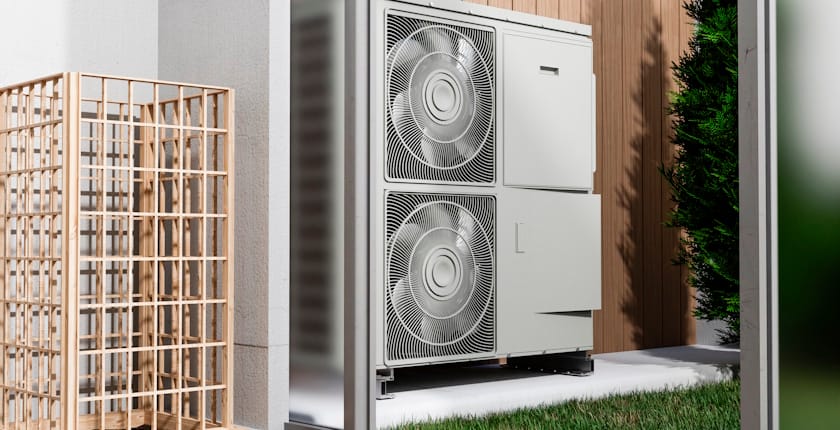
In these cities, old, outdated boilers running on fuel oil, coal, and other fuels with an adverse impact on air quality will be replaced. Modern and sustainable heat energy sources, such as heat pumps, biomass, and industrial waste heat, will be installed, she stressed.

The projects will also include, where possible, connection to district heating systems or natural gas networks.

An air protection law is in the process of adoption

“These projects are the culmination of years of work. We have entered a phase where we can expect the launch of construction and intensification of the efforts for cleaner air, which remains one of our top priorities,” Pavkov stressed.

She recalled that an EBRD loan had helped replace 50-year-old coal boilers with state-of-the-art gas boilers at the Kragujevac district heating plant. The second phase, the remediation of the ash landfill, has also begun, she added.

From 2021 to 2024, the ministry has implemented projects to replace 169 boiler rooms in public institutions across 76 local authorities, according to Pavkov.

Under a public call, funds have been allocated for projects in 18 municipalities in 2025, with another call currently underway. An air protection bill is now before the National Assembly, intended to provide a new overarching framework and fresh momentum in the fight for better air quality, Pavkov noted.
by in News

Bring clean heating and cooling to buildings: a circular energy economy in urban environments

Author: Thomas Nowak, EUSEW’s digital ambassador

Efficient heating and cooling is essential, yet much thermal energy goes to waste. What if we could avoid this thermal pollution and instead establish a circular energy economy in urban areas by recovering and recycling waste heat? Thermal networks as heat collectors and transport means, heat pumps as energy lifts, storage, and clean renewable energy sources can turn this dream into reality today.

Clean heating and cooling in cities is not happening

As the climate crisis worsens and urban populations grow, cities face increasing pressure to improve infrastructure and services. Cities need to be made more resilient against extreme weather incidents and heat waves. The use of fossil energy must be replaced by clean alternatives. This is not only a response to climate change, but also an obligation codified in EU law, notably the EU Energy performance of buildings and the Renewable Energy Directives.

The symbiosis of heat pumps, low temperature energy grids and the use of renewable electricity/heat provides a solution.

Low temperature thermal networks to unlock “the energy chest” of cities

Traditional district heating and cooling distributes high temperature thermal energy generated in central plants to its clients. Even using insulated pipes, some energy is lost in the distribution. Changing from central to decentralised networks and reducing operating temperature avoids this disadvantage. Low temperature, multi-input-output networks connect all types of buildings requiring heating and cooling. They collect waste heat from many different sources (e.g. industrial processes, offices, data centres, or public infrastructure) and distribute it where it is needed.  Heat pumps raise the temperature to the required level at the point of demand.

Photo: The symbiosis of heat pumps, thermal energy grids and multiple energy sources for clean heating and cooling of apartments and buildings in cities. Source: Qvantum Industries
© Qvantum Industries AB

Heat pumps for clean thermal energy

Heat pumps extract heat from a source (air, water, ground or a thermal network), lifting it to a higher temperature level to provide heating. At the same time the source is slightly cooled. Heat pumps always provide useful heating and cooling and it depends on the system design which of these services can be used.

Connecting the many energy users and (waste) heat providers in a city through a thermal network and adding heat pumps of different types and capacities in apartments and buildings (see circles) enables the collection of waste heat and highest heating and cooling efficiency. One user’s waste heat becomes another users heat source (see figure 1).

Multiple benefits for cities

The benefits for cities of transforming their heating and cooling infrastructure are plentiful.

  • Replacing fossil fuels with clean energy reduces CO₂ emissions and air pollution, leading to better air quality.
  • Collecting waste heat from cooling limits the heat island effect in cities. Buildings equipped with cooling help citizens withstand heat waves. Cities and citizens are more resilient to already observable climate change.
  • Storage tanks and the energy grid itself operate as thermal battery, balancing the electric grid.
  • Local energy sources, used by European technology solutions and designed and installed by a European workforce, help Europe become largely independent of fossil energy.

Breaking barriers to adoption

Implementing heat pump technology and thermal networks faces challenges. Upfront investment costs, regulatory hurdles, and limited public awareness can slow progress. Cities and policymakers should incentivise modern heat pump-based heating and cooling by making deployment easy and economically attractive. Cities should make thermal networks part of their public waste heat collection infrastructure.

Convincing humans is also key. Campaigns explaining policy, highlighting the benefits of clean heating and cooling and explaining how end users will be supported in their decision making will create trust and accelerate adoption by decision makers.

A path to sustainable cities

Urban heating can become decarbonised, efficient and sustainable while creating cleaner, more affordable, and more resilient communities. The technology exists, its potential is enormous. Let’s make use of it. Clean heating and cooling is not just a choice – it is the cornerstone of Europe’s energy and climate policy.

This opinion editorial is produced in co-operation with the European Sustainable Energy Week 2025. See ec.europa.eu/eusew for open calls.

Disclaimer: This article is a contribution from a partner. All rights reserved.