by in News

EU Eyes Urgent Gas Price Cap as Geopolitical Tensions Destabilize Energy Markets

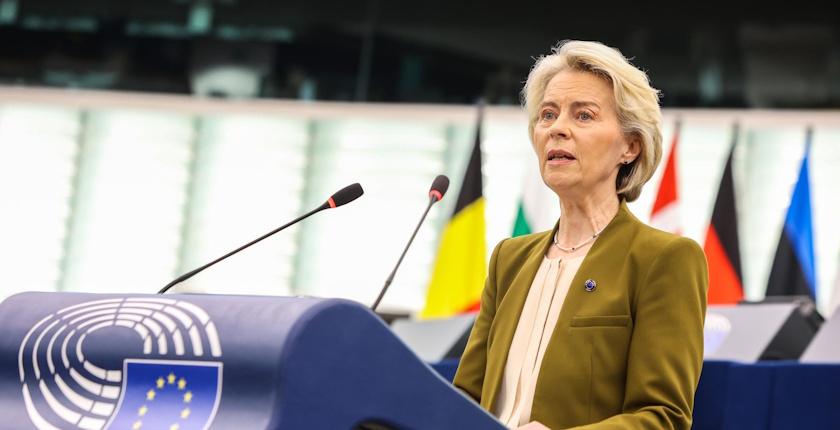
The European Commission is weighing aggressive interventions in the energy market—including a potential cap on natural gas prices—to shield consumers and industries from a sharp spike in electricity costs. Speaking at a European Parliament plenary debate, Commission President Ursula von der Leyen signaled that the executive branch is preparing a suite of emergency measures to decouple gas prices from broader power bills.

Geopolitical Volatility Hits the Grid

The move comes as energy markets face renewed turbulence driven by the armed conflict involving the US and Israel against Iran. The escalation has severely disrupted shipping lanes in the Strait of Hormuz, a vital chokepoint for global oil and liquefied natural gas (LNG) supplies.

The impact on European benchmarks has been immediate and severe:

  • Late February: TTF gas traded at a relatively stable €31 per MWh.

  • Peak Surge: Following the escalation, prices spiked by 100%, briefly eclipsing €62 per MWh.

  • Current Standing: Prices have leveled off slightly but remain elevated at over €51 per MWh.

The “Merit Order” Dilemma

Under the EU’s current “merit order” system, electricity prices are determined by the most expensive power plant required to meet total demand. Because natural gas plants are frequently the final resources called upon to balance the grid, they effectively set the price for the entire market—even when cheaper renewables are available.

“It is crucial that we reduce the cost impact when gas sets the electricity price,” von der Leyen stated. “We are exploring better use of Power Purchase Agreements (PPAs), Contracts for Difference (CfDs), and direct gas price caps to break this link.”

Breakdown of the Average EU Electricity Bill

To address the crisis holistically, the Commission is analyzing the four primary drivers of consumer costs:

Component Share of Bill Commission Strategy
Energy Generation 56% Gas price caps, subsidies, and state aid.
Grid Charges 18% Increasing grid productivity to reduce waste.
Taxes & Levies 15% Encouraging member states to lower local burdens.
Carbon Costs (ETS) 11% Modernizing the Emissions Trading System.

Beyond Price Caps: A Long-Term Overhaul

While a gas cap serves as a “firebreak,” the Commission’s strategy extends to structural reforms. Von der Leyen emphasized that increasing the productivity of existing grids is a priority to ensure that renewable energy is not “wasted” during periods of peak production. Furthermore, the Commission aims to modernize the EU Emissions Trading System (EU ETS) to ensure carbon pricing remains a tool for transition rather than a prohibitive burden during supply shocks.

By targeting every component of the power bill—from the raw commodity cost to the underlying taxes Brussels hopes to stabilize a continent currently caught in the crosshairs of global conflict.
by in News

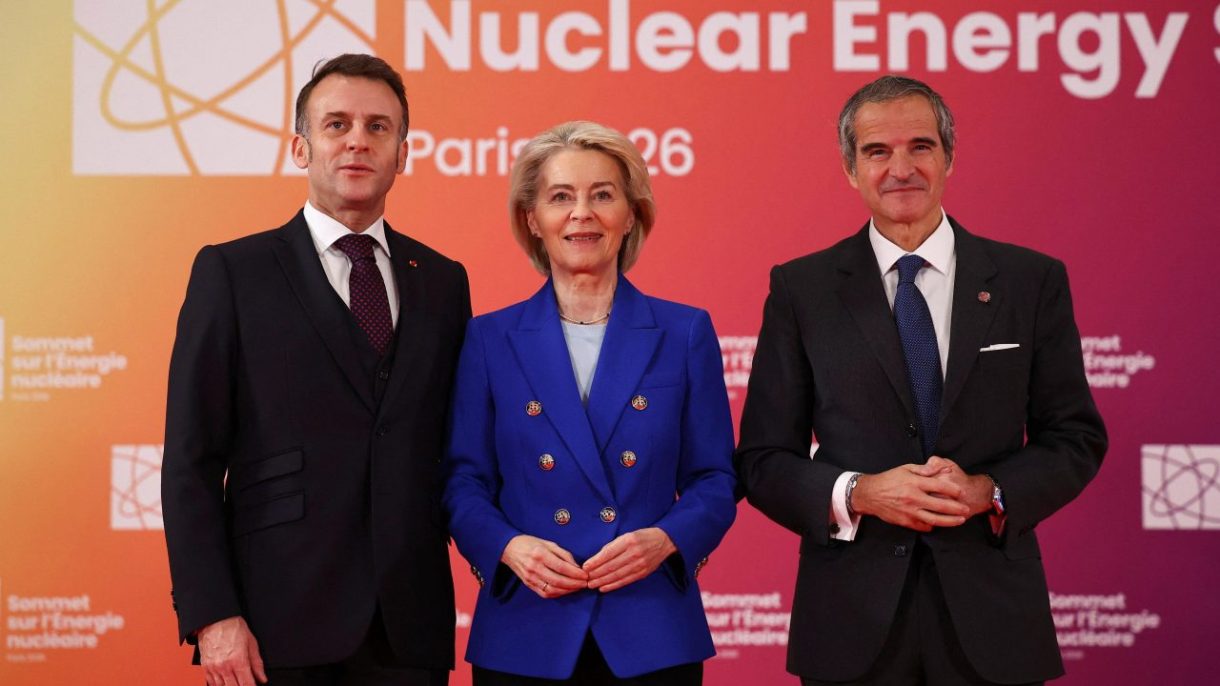
The Great Atomic Pivot: EU Reclaims Nuclear Power as a Strategic Pillar for Energy Security

In a significant rhetorical shift for the European Union’s energy policy, Commission President Ursula von der Leyen characterized the continent’s historical move away from nuclear power as a “strategic mistake.” Speaking at the Nuclear Energy Summit in Paris, hosted by the International Atomic Energy Agency (IAEA), von der Leyen argued that turning away from the atom left Europe dangerously exposed to the volatility of global fossil fuel markets.

A Continent Re-evaluating its Baseload

The President noted a stark decline in nuclear’s contribution to the European grid, falling from one-third of total electricity generation in 1990 to approximately 15% today. This retreat, she argued, exacerbated Europe’s dependence on expensive, imported oil and gas—a vulnerability underscored by ongoing instability in the Middle East.

“I believe it was a strategic mistake for Europe to turn its back on a reliable, affordable source of low-emissions power,” von der Leyen stated.

She outlined a vision for a modernized energy system where nuclear works in tandem with renewables, supported by robust storage and smart grids.

The Rise of Small Modular Reactors (SMRs)

The EU’s strategy is increasingly focused on the next generation of nuclear technology. Key initiatives include:

  • Regulatory Reform: Recent changes to state aid rules now allow for expanded support for nuclear fission and fuel cycles.

  • Industrial Alliance: The launch of the world’s first industrial alliance dedicated to Small Modular Reactors (SMRs).

  • Financial Backing: Proposed investments of over €5 billion in fusion research and an additional €200 million in guarantees through 2028 to support the first commercial units of innovative nuclear technologies.

The goal is to have SMRs operational across Europe by the early 2030s to complement existing traditional plants.

Regional Expansion: Greece, Romania, and Serbia

The shift in sentiment at the Commission level is mirrored by renewed interest among member states and neighboring nations:

  • Greece: Prime Minister Kyriakos Mitsotakis echoed von der Leyen’s sentiments, noting that it is time for Greece to explore how SMRs could be integrated into the domestic grid. While Greece remains committed to renewables and gas as a bridge, a new committee will officially study nuclear integration.

  • Romania: Energy Minister Bogdan Ivan announced plans to triple the nation’s nuclear capacity over the next decade. This includes the modernization of the Cernavodă plant and the development of a pioneering SMR project in Doicești.

  • Serbia: Minister of Mining and Energy Dubravka Đedović Handanović signaled Serbia’s intent to join the “nuclear revival.” To support a growing economy and AI infrastructure, Serbia aims to select a technology by 2032, with the goal of bringing a plant online by approximately 2040.

As Europe seeks to reconcile its climate goals with energy security, the message from Paris was clear: the nuclear option is no longer on the sidelines—it is back at the center of the strategy.

by in News

Fearful about oil sanctions, Serbia’s Vučić seeks support from EU leaders

Facing an imminent halt of the Gazprom-owned Serbian oil company NIS due to US sanctions, President Aleksandar Vučić met with EU leaders António Costa and Ursula von der Leyen in Brussels. “I don’t have such a strong fear regarding gas as I do about oil,” he revealed and said they spoke about the possibilities for importing derivatives from Romania, Bulgaria and other countries in the region. Costa and Von der Leyen urged Serbia to further align with the EU’s foreign and security policy.

Serbia hasn’t received a single drop of crude oil for two months, President Aleksandar Vučić noted as he addressed the press in Brussels after meeting European Council President António Costa and European Commission President Ursula von der Leyen. The country’s only refinery is run by NIS (Naftna industrija Srbije), which Russian state-owned Gazprom controls through its subsidiaries. Entirely stripped of oil supply since United States sanctions against the Serbian company kicked in, the facility recently ground to a halt.

There is apparently no progress in talks about the sale of Gazprom’s share. The authorities expect that Serbia will have to freeze NIS completely in the next few days, for its financial system to avoid secondary sanctions.

NIS and Lukoil together hold over one quarter of fuel stations in Serbia

The company, which is also present in some neighboring countries, supplied 80% of derivatives in the domestic market. Moreover, one in five fuel stations in Serbia is branded NIS or Gazprom. They account for more than a quarter together with Russia-based Lukoil. It is also under US sanctions, though able to operate almost until the end of April.

Vučić: It will only get harder each coming day

Vučić said he and Costa and Von der Leyen spoke about the key energy concerns that Serbia is facing. “It’s not easy for us already today, and it will only get harder each coming day… I don’t have such a strong fear regarding gas as I do about oil. Of course I am fearful, as a responsible man. I am always fearful, but we sought solutions and worked on it and I hope we will have EU’s support in these very important matters,” he stated.

Namely, Serbia is dependent on Russian gas and its transit through Bulgaria. The fuel comes via the Balkan Stream pipeline, an extension of TurkStream. If NIS is nationalized, the Kremlin could slash or even end the supply in case. Serbia is buying gas under short-term arrangements since May. The EU has launched measures to end most of the remaining supply from Russia next year.

According to the president, possibilities were discussed at the meeting of importing oil derivatives from Romania, Bulgaria and other countries in the region.

There was also word about where Serbia would build gas and oil pipelines, Vučić added and hinted at projects for liquid fuel pipelines as well. He mentioned the possibility of transporting diesel that way from Constanța, Romania’s Black Sea port city. Near it is the Petromidia refinery, owned by Rompetrol, a 100% subsidiary of Kazakhstan’s state-owned KazMunayGas (KMG).

Vučić said he spoke with the two top officials about the plan for a gas interconnector with North Macedonia.

Europe has consistently shown solidarity with Serbia, according to both top officials

Costa and Von der Leyen issued short and essentially identical messages after the meeting with the Serbian president. They highlighted the importance of accelerating reforms in the country, particularly with regard to the rule of law and media freedom.

“We stressed that enlargement is a geostrategic imperative and the need for Serbia to further align with the EU’s foreign and security policy. We also welcomed Serbia’s steps to diversify its energy sources and routes and to reduce dependency on Russia, whose unreliability has been repeatedly demonstrated. Europe has consistently shown solidarity with Serbia through major investments in energy infrastructure and support to vulnerable households,” they wrote on social media.

Two months ago, Von der Leyen said the EU is a guarantee that Serbian families would be safe and warm in winter and that the country can enter its joint gas procurement mechanism.

by in News

Von der Leyen: EU is guarantee that Serbian families will be warm in winter

The European Union is connecting Serbia to its energy market, and it is the true guarantee that Serbian families will be safe and warm in winter, European Commission President Ursula von der Leyen said in Belgrade. She expressed preparedness to invest further in the country’s gas interconnector with Bulgaria.

In her speech during the visit to Serbia, European Commission President Ursula von der Leyen didn’t address the looming energy crisis caused by the sanctions that the United States imposed on Russian-owned oil company NIS. Moreover, she demanded greater alignment with the EU foreign policy from President of Serbia Aleksandar Vučić, including on sanctions against Russia.

“The EU membership offer is an opportunity. It is the promise of peace. Of prosperity. And of solidarity. Especially in times of crisis. You have seen this in practice,” she stated and pointed to the energy crisis of 2022.

EU showed equal solidarity with Western Balkans

After Russia invaded Ukraine, the EU introduced the same measures of solidarity to its Western Balkan partners as to its own member states, Von der Leyen stressed. “This is what it means to be a reliable partner. You can continue to count on us. We are connecting Serbia to the EU’s energy market. This is the true guarantee that Serbian families will be safe and warm in winter,” she stated.

The head of the 27-member bloc’s executive body pointed to ongoing investments like the Trans-Balkan Electricity Corridor. The mostly completed route stretches from Romania to Bosnia and Herzegovina and Montenegro and its MONITA undersea link with Italy.

Von der Leyen: Collective market power to secure better energy prices

Von der Leyen highlighted the Serbia-Bulgaria gas interconnector as well. The pipeline was completed almost two years ago. “We are prepared to invest further in it. We also invited Serbia to join the EU’s joint gas procurement mechanism. Together we are using our collective market power to secure better energy prices,” she said.

The administration in Brussels introduced the AggregateEU platform for joint procurement of gas in 2023. It expired earlier this year, but the EU is preparing another mechanism.

Serbia is planning an oil interconnector with Hungary and gas links with Romania and North Macedonia. Vučić said the upcoming winter would not be an easy one for Serbia.

by in News

CWP Europe gets European Commission’s backing for renewables projects in Albania, Montenegro

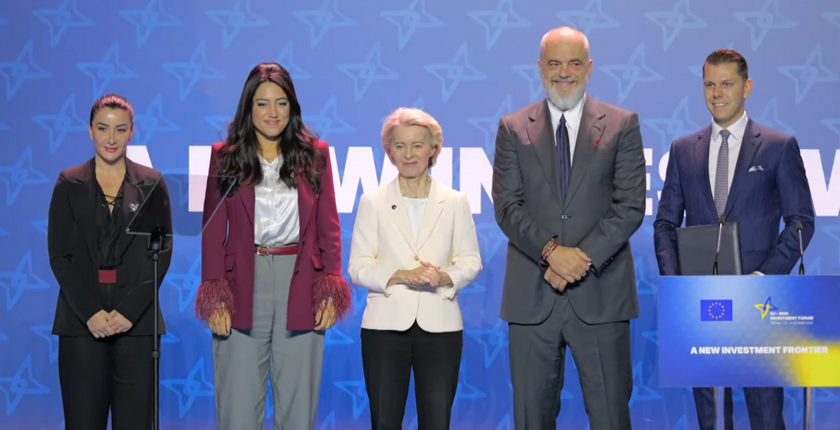
CWP Europe has signed a joint declaration with the European Commission, the Albanian Investment Development Agency, and the Montenegrin Investment Agency in support of its two landmark renewable energy projects – the Tropoja wind farm in Albania and the Montechevo solar farm with battery storage in Montenegro.

The declaration of support for CWP Europe’s projects was signed during the EU-Western Balkans Investment Forum in Albania’s capital, Tirana, in the presence of Albanian Prime Minister Edi Rama and European Commission President Ursula von der Leyen, according to a press release from CWP Europe, a leading renewable energy project developer in Southeast Europe.

The 600 MW Tropoja wind farm will advance Albania’s energy independence by providing clean, affordable electricity, supporting the country’s energy strategy, the company stressed.

The 600 MW Tropoja wind farm will boost Albania’s energy independence

In Montenegro, the 400 MW Montechevo solar farm will combine solar generation with battery storage directly connected to the country’s new 400 kV transmission grid. It will leverage Montenegro’s strategic interconnections – including the undersea power cable to Italy – to maximize the export of clean electricity and its integration into the European energy market.

A new energy backbone for the Western Balkans and Europe

Speaking at the signing ceremony, von der Leyen emphasized the Western Balkans’ increasing role in Europe’s clean energy transition.

“Today you are signing several investments that will do just that. From clean energy production in all six Western Balkan partners to energy storage in Montenegro. They will bring the cost of electricity down. And they will also contribute to our collective energy independence. You are building a new energy backbone not only for the Western Balkans. But for all of Europe,” said von der Leyen.

CWP Europe CEO Dimitar Enchev signed the declaration on behalf of the company, alongside Executive Vice Presidents Maja Turković and Viktor Garbev.

Enchev: We are unlocking the region’s immense renewable energy potential

“With Tropoja and Montechevo, we are unlocking the region’s immense renewable energy potential and strengthening cooperation across the Western Balkans. We greatly appreciate the support of the European Commission, the Albanian Investment Development Agency, and the Montenegro Investment Promotion Agency in advancing this shared vision for a clean, economically competitive and secure energy future of the region and Europe as a whole,” said Enchev.

Over the past 17 years, CWP has invested in sustainable development and the energy transition, successfully developing the largest wind farms in the region, including the largest one in Europe – the 600 MW Fântânele-Cogealac project in Romania. It is currently developing over 7 GW of renewable energy capacity, according to the statement.

by in News

Von der Leyen: EU needs more homegrown renewables with nuclear as baseload

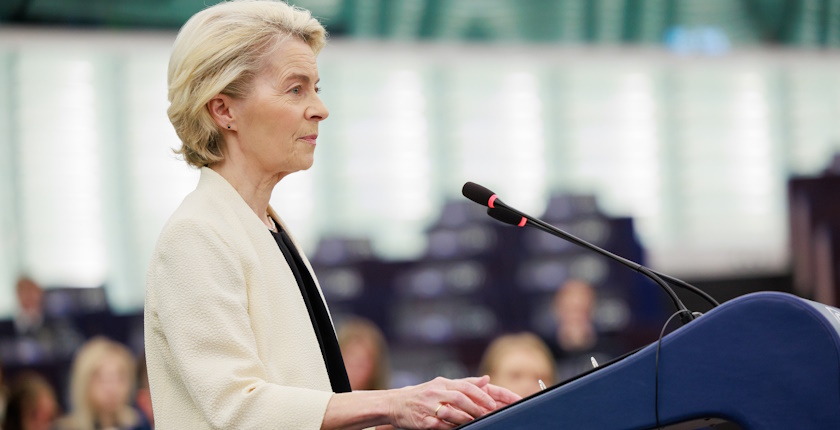
European Commission President Ursula von der Leyen delivered her 2025 State of the Union address at the European Parliament in Strasbourg. She said the single energy market would be completed and pointed out that clean homegrown energy is a tool to lower energy prices.

Ursula von der Leyen said the European Union’s greatest asset is the single market, but that it remains incomplete. The IMF, she noted, has estimated that the internal barriers within the single market are equivalent to a 45% tariff on goods, and 110% on services.

Most gaps are in three domains: finance, energy, and telecommunications.

“We need clear political deadlines. This is why we will present a single market roadmap to 2028. On capital, services, energy, telecoms,” she stated.

Energy bills are still a real source of anxiety for millions of Europeans

The EU’s top official said the commission would put forward a series of packages on affordability and the cost of living. One would be for energy.

Von der Leyen recalled that the EU managed to stabilize prices and secure supply during the energy crisis, and insisted that the 27-member bloc is now on the path to energy independence.

But, she told EU lawmakers, energy bills are still a real source of anxiety for millions of Europeans.

Von der Leyen unveiled an initiative called Energy Highways

“We know what drove prices up: dependency on Russian fossil fuels. So it is time to get rid of dirty Russian fossil fuels. And we know what brings prices down: clean homegrown energy. We need to generate more homegrown renewables – with nuclear as a baseload,” Von der Leyen stressed.

She reiterated that the commission would propose a grids package to strengthen infrastructure and speed up permitting.

Von der Leyen unveiled an initiative called Energy Highways. “We have identified eight critical bottlenecks in our energy infrastructure. From the Øresund Strait to the Sicilian Canal. We will now work to remove these bottlenecks one by one,” the European Commission president asserted.

by in News

Clean transition, decarbonization among priorities in EU’s draft budget

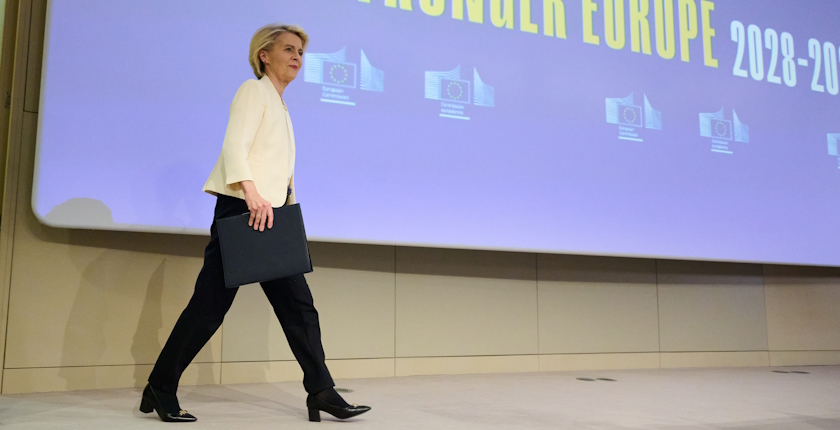
Within the European Union’s proposed budget for the period from 2028 to 2034, the EUR 409 billion European Competitiveness Fund is for investments in strategic technologies, including for the clean transition and decarbonization. The new Connecting Europe Facility (CEF), worth EUR 81.4 billion, would finance the completion of Trans-European Networks and foster the EU’s green and clean transition in energy and transportation.

The European Commission proposed the next long-term budget of almost EUR 2 trillion, of which 35% would be earmarked for climate and environment. Energy infrastructure spending in the so-called Multiannual Financial Framework (MFF) for 2028-2034 will be EUR 29.5 billion, five times higher than in the previous seven-year period, it said, arguing it would reinforce energy independence and accelerate the clean transition.

The entire proposed sum amounts to 1.26% of the expected gross national income, on average. The framework is aimed at an independent, prosperous, secure, and thriving society and economy, the update adds.

“Europe faces an increasing number of challenges in numerous areas such as security, defence, competitiveness, migration, energy and climate resilience. These are not temporary but reflect systemic geopolitical and economic shifts that require a strong and forward-looking response,” the EU’s top executive body said.

Adapting to local needs

The European Commission pointed out that the budget would be tailored to local needs. National and regional partnership plans based on investments and reforms would be introduced, for targeted impact where it matters most and ensuring a faster and more flexible support for more economic, social and territorial cohesion across the union, according to the outlined measures.

“Our new long-term budget will help protect European citizens, strengthen Europe’s social model and make our European industry thrive,” European Commission President Ursula von der Leyen stated.

For the first time, the spending plan would enable member states to invest more in the EU objectives, with loans of up to 150 billion EUR altogether. “We will call it Catalyst Europe. The loans are backed by the EU budget. It targets common European priorities. You can invest it – for example in defence industry or energy infrastructure or strategic technologies,” Von der Leyen said.

The budget plan includes a European Competitiveness Fund, worth EUR 409 billion, for investment in strategic technologies. Operating under one rulebook, and offering a single gateway to funding applicants, it aims to simplify and accelerate EU funding and catalyse private and public investment. The focus is on four areas:

  • clean transition and decarbonization,
  • digital transition,
  • health, biotech, agriculture and bioeconomy,
  • defense and space.

In close connection with the European Competitiveness Fund, the EU research framework, with its flagship Horizon Europe worth EUR 175 billion, will continue to finance world-class innovation, the commissioners revealed.

Commissioners line up EUR 81.4 billion in budget for next Connecting Europe Facility

The next Connecting Europe Facility (CEF), worth EUR 81.4 billion, would finance the completion of Trans-European Networks and foster the EU’s green and clean transition in energy and transportation. It covers cross-border projects for energy, transportation and military mobility that are essential for competitiveness and security and reducing strategic dependencies.

To simplify external action financing, the EU’s top executive body envisaged an item called Global Europe, of EUR 200 billion, to maximise impact on the ground and improve visibility of EU external action in partner countries. It would allow the EU budget to step up support to candidate countries and prepare for their accession.

Among other segments, the European Commission said it plans to direct 75% of revenues from the Carbon Border Adjustment Mechanism (CBAM) to the EU budget. It expects the resource to generate EUR 1.4 billion per year.

by in News

EU outlines measures to end Russian gas, oil imports by end-2027

The European Commission set out a plan to phase out by the end of 2027 the purchases of Russian natural gas, including in the form of LNG, and oil. The package includes proposals aiming to replace Russian nuclear fuel and materials as well.

The European Union will end its dependency on Russian energy by stopping the import of Russian gas and oil and phasing out Russian nuclear energy, while ensuring stable energy supplies and prices, the European Commission said. Its new REPowerEU Roadmap targets full energy independence from Russia.

Since Russia’s invasion of Ukraine in 2022, the EU was lowering the share of Russian fossil fuels under the REPowerEU plan and via sanctions. However, Russian gas imports rebounded last year by 18%, led by Italy, Czechia and France. The commissioners argued that the “overdependency on Russian energy imports is a security threat” and called for new coordinated actions.

Von der Leyen: It is now time for Europe to completely cut off its energy ties with an unreliable supplier

“The war in Ukraine has brutally exposed the risks of blackmail, economic coercion and price shocks. With REPowerEU, we have diversified our energy supply and drastically reduced Europe’s former dependency on Russian fossil fuels. It is now time for Europe to completely cut off its energy ties with an unreliable supplier. And energy that comes to our continent should not pay for a war of aggression against Ukraine. We owe this to our citizens, to our companies and to our brave Ukrainian friends,” European Commission President Ursula von der Leyen stated.

The volumes of imported Russian gas fell to last year’s 52 billion cubic meters from 150 billion in 2021. The share of Russian gas imports dropped from 45% to 19%. All imports of the country’s coal have been banned by sanctions. Russian oil imports have shrunk from 27% at the beginning of 2022 to the current 3%.

Member states need to roll out national plans by end-2025

The new measures have been designed to preserve the security of energy supply while limiting any impact on prices and markets. They would be applied in parallel to advancing the energy transition.

“Last year we in the EU paid EUR 23 billion to Russia for our energy imports. That is EUR 1.8 billion per month. This needs to stop,” European Commissioner for Energy Dan Jørgensen stressed.

The administration in Brussels expects to replace up to 100 billion cubic meters of natural gas by 2030, which means a decrease in demand by 40-50 billion by 2027. It sees an increase in liquefied natural gas (LNG) capacities by 200 billion cubic meters by 2028, which is five times more than current EU imports of Russian gas. The EU still hasn’t imposed sanctions on Russian LNG.

Member states will be asked to prepare national plans by the end of this year, the announcement reveals. All the measures will be accompanied by continuous efforts to accelerate the energy transition and diversify energy supplies, including via the aggregation of gas demand and a better use of infrastructure, according to the document.

Administration in Brussels intends to tackle Russian shadow tanker fleet carrying oil

The European Commission said the proposed measures would improve the transparency, monitoring and traceability of Russian gas.

“Crucially, new contracts with suppliers of Russian gas (pipeline and LNG) will be prevented, and existing spot contracts will be stopped by the end of 2025. This measure will ensure that already by the end of this year, the EU will have slashed by one third remaining supplies of Russian gas. The commission will further propose to stop all remaining imports of Russian gas by the end of 2027,” the plan reads.

Under the roadmap, the commission will put forward new actions to address Russia’s shadow fleet transporting oil. It said the vessels are circumventing sanctions and the international oil price cap.

EU depends on Russia for quarter of its uranium conversion, enrichment needs

As regards nuclear, the proposals coming next month cover enriched uranium and supply contracts co-signed by the Euratom Supply Agency (ESA) for uranium, enriched uranium and other nuclear materials. The EU intends to increase its production of medical radioisotopes.

“While diversification efforts might create uranium and fuel price volatility over access to uranium supply on global markets, major impacts on electricity prices are unlikely as the price of nuclear fuel and related services represent only a small portion of the final cost of electricity from nuclear power plants,” the plan adds.

The EU intends to increase its production of medical radioisotopes

More than 14% of uranium was sourced in the EU from Russia in 2024. The commissioners highlighted the concentration of uranium conversion and enrichment services – needed to transform processed uranium into the material for nuclear fuel manufacturing – in a limited number of companies.

In 2024, around 23% of the whole EU demand for uranium conversion services and almost 24% of enrichment was covered by Russia.

While more than 85% of uranium is produced in Kazakhstan, Canada, Australia, Namibia, Niger and Russia, uranium mines currently operate in many countries and unmined deposits exist in some EU member states.

It will take years to make use of domestic, other Western resources

European enrichment companies have expansion plans but the first new enrichment installation is not expected earlier than 2027.

“Moreover, the global uranium conversion industry is facing obstacles in ramping up production due to technological complexity and market uncertainties, and new conversion capacities are currently announced only for early 2030s. The EU’s nuclear sector also continues to rely on Russia for some spare parts and maintenance services,” the European Commission said.

EEB: Replacing Russian gas with US gas is senselless

The European Environmental Bureau (EEB) noted that imports of Russian gas including LNG rose 18% in 2024 despite no growth in demand.

Numbers of shadow LNG tankers from Russia have also increased, as have indirect imports of Russian energy via third countries, it added. Plans to tackle the shadow fleet are vague, the organization claimed. It went on to label the United States a clearly unreliable trade partner.

“Phasing out Russian coal and gas only to replace it with a dependence on US fracking gas is not in the EU’s security or financial interests. EU countries should instead focus on accelerating their deployment of wind and solar energies. The technologies to move to 100% renewable energy are available,” EEB’s Policy Manager for Climate and Energy Luke Haywood underscored.

by in News

EU gives European carmakers more time to comply with CO2 standards

The European Commission has decided to give more time to the automotive industry to meet CO2 standards for new cars and vans. Transport & Environment says the delay must be the final concession.

The European Commission has proposed an amendment to the regulation that sets CO2 emission performance standards for new cars and vans. It would add a flexibility measure within the targets for 2025-2027, the commission said.

According to the EU’s executive arm, manufacturers’ compliance with the CO2 targets for the three calendar years would be assessed over the entire period, averaging the performances, instead of annually.

The solution allows the companies to balance any excessive annual emissions by outperforming the target in the remaining years, the commission added.

European Commission says it would help the industry to invest in the clean transition while maintaining the 2025 target

It sees the additional flexibility as help to the industry to invest in the clean transition while maintaining the 2025 target and keeping the industry on track for the next round of emissions reductions.

The proposal was announced as part of the European Commission’s Industrial Action Plan for the European automotive sector, adopted on March 5.

According to President of the European Commission Ursula von der Leyen, the EU’s highly innovative automotive industry is decarbonizing to contribute to the fight against climate change but also to maintain its competitive edge in the world markets.

“We grant more flexibility to this key sector, and at the same time we stay the course of our climate goals,” she stated.

T&E: European carmakers used unrepresentative 2024 sales data to argue for flexibilities

Transport & Environment pointed out that the commission has formally proposed legislation to give carmakers until 2027 to comply with their 2025 emissions reduction targets. The delay to EU car climate rules must be the final concession to European carmakers which used unrepresentative 2024 sales data to argue for flexibilities, the organization added.

It expressed the belief that the concession was a mistake, arguing that battery electric car sales in Europe increased by 28% over the first two months of the year as the industry prepared to comply with the existing 2025 target.

According to Julia Poliscanova, senior director for vehicles and e-mobility supply chains at T&E, the EV sales rebound shows that the existing EU target is working.

“Require carmakers to sell more electric cars and the buyers will come. This must be the last flexibility carmakers are given. Let’s allow the 2030 and 2035 targets to do their work and bring affordable EVs and cleantech investment into Europe,” she stressed.