by in News

Econergy secures financing for 87 MW Oradea solar plant in Romania

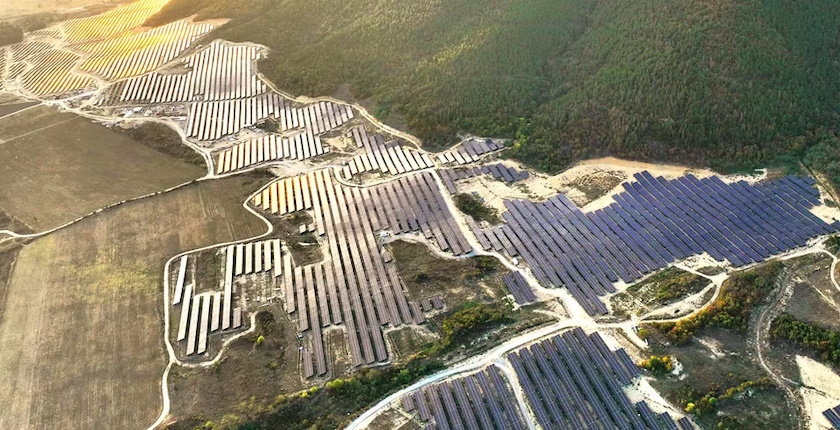
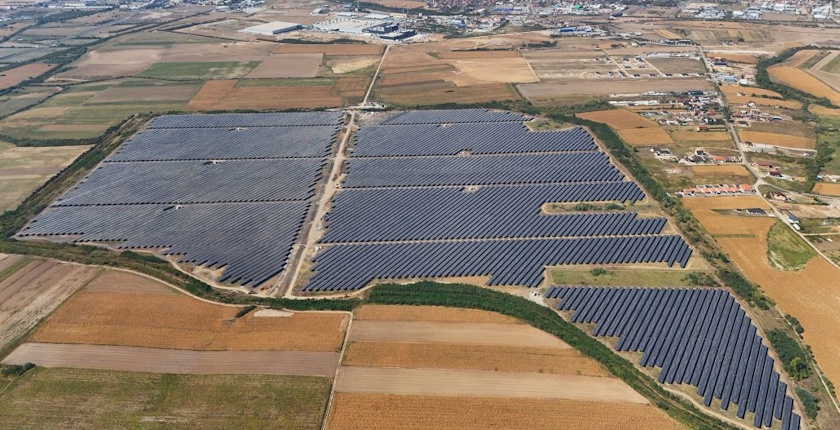
Econergy Renewable Energy has signed a EUR 40.5 million project finance agreement with UniCredit Bank for its 87 MW Oradea solar power plant in the Crișana region in north-west Romania.

The Oradea photovoltaic facility has been fully connected to the grid since August 2025, and is generating revenues, according to Israel-based Econergy.

The proceeds will be used for various purposes including refinancing of the loans spent to construct the power plant, the company explained.

Within a strategy to hybridize its Romanian solar portfolio, Econergy plans to add a 68 MW BESS component at the Oradea site.

It is the second project finance agreement secured with UniCredit

The expected investment in energy storage is about EUR 21 million, with an estimated annual contribution of EUR 8.4 million in revenues and EUR 6.7 million in EBITDA, based on the first five full operating years, the update reads.

The company said it is its second project finance agreement secured with UniCredit.

Econergy Group is operating in key European markets, including Germany, the UK, Italy, Spain, Romania, Poland, and Greece. It develops photovoltaic, wind, and energy storage projects.

The current project pipeline exceeds 14 GW, according to the company’s website.

Econergy is the owner of the largest PV facility in Romania

The company generates revenue by selling electricity, earning development and operation fees, and selling projects at various stages of development.

Of note, Econergy is the owner of the largest PV facility in Romania. In October it agreed to buy out Nofar’s 50% stake in the 155 MW Rătești solar power plant. The firm plans to add a 120 MW BESS.

Econergy has four PV plants in Romania. With the inauguration of Oradea, the company’s operational and ready-to-connect capacity in the country has reached 447 MW. It is building another 788 MW and expects to start the construction of 559 MW more by the end of 2025.

The project was developed with Phoenix Holdings.

by in News

Renewables investors are seeking tailored financing services as they add BESS, adapt to risks

Market conditions have become challenging for renewables in the CEE region, alongside uncertainties in the regulatory sphere, which calls for advanced and tailored financing solutions, according to participants in UniCredit Serbia’s workshop on navigating capital flows in the segment, including mergers and acquisitions (M&A). Investors, UniCredit’s clients, highlighted the growing importance of battery energy storage systems – and especially adding co-located storage to photovoltaics.

The renewable energy market is evolving in Central and Eastern Europe, as large players join the game and developers emerge as producers. With its surge in photovoltaic capacity and the revival in the construction of wind power plants, Romania has become a frontrunner. In neighboring Bulgaria, the first power purchase agreements (PPAs) are indicating a strong perspective, while Serbia might become more relevant soon, investors agreed at an event that UniCredit Bank Serbia organized in Belgrade.

M&A and financing trends in the region were the central topics. The idea was to have an open discussion with industry players active in the region about their investment strategies and the bank support, said the Head of Specialized Lending in UniCredit Serbia Svetlana Cerović, who moderated a panel within the conference.

A stable top line and a legal framework is the key driver for investments, with a particular emphasis on grid connections

Cerović pointed out that volatility has been on the rise for the last couple of years, after a huge wave of investments that followed the Paris Agreement and the European Green Deal. Sound and predictable regulatory framework along with stable revenues is key. To assure market flexibility and grid stability, new investments in western Europe and in the region are supported with the government programs including investments in battery energy storage systems (BESS). Thus, one of the prerequisites for the execution of future projects in local market will be certainty regarding the third auction timeline and availability of the longer term PPAs.

The participants at the workshop on navigating capital flows in renewables said a stable legal framework is the key driver for investments – grid connections especially, and permitting as a whole. On that note, developers will lean on the slowly maturing PPA market, though support from banks is necessary in the equation. Battery energy storage systems are a game changer, particularly colocated with solar parks for the optimization of the project returns.

UniCredit is strongest player in renewables financing in Serbia

UniCredit has a wide set of tailor-made project finance loans as well as a full range of services from advisory to various financing solutions, Head of Project and Structured Finance in Serbia Jelena Nestorović said.

The Italy-based bank has financed a string of major wind power and photovoltaic projects in the region, including facilities with colocated BESS, like Sunterra RE’s Galabovo in Bulgaria.

As for Serbia, it is the strongest player in the renewable energy segment. UniCredit financed six wind parks in the country, of 430 MW in total, and of which three as the sole lender. Notably, Čibuk 1 and 2 are the largest in Serbia.

UniCredit Bank Serbia is financing the country’s biggest wind power plants – Čibuk 1 and 2

Some of the participants and winners at the first two domestic auctions for contracts for difference (CfDs) are among the bank’s clients as well. Nestorović stressed that Bank is financing in total 30MW of smaller scale solar power plants .

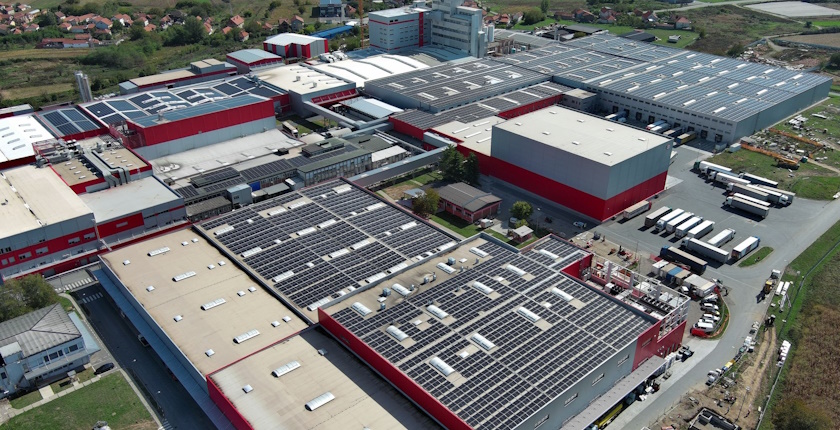
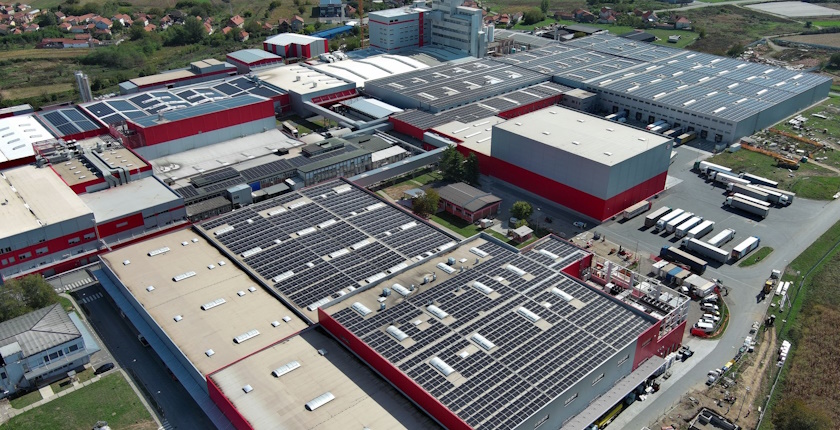
She pointed to one of the largest industrial rooftop solar power plants in the region. UniCredit provided EUR 3.1 million facility and acts as a hedging and account bank for CWP Europe and Resalta’s project company. It built a PV system of 6 MW on a rooftop of Henkel Serbia facility in Kruševac, under an ESCO (energy service company) model.

Since 2019, the bank has participated in the financing of first waste-to-energy cogeneration plant,  located just outside of Belgrade. UniCredit is financing energy efficiency projects in the country, too.

Jelena Nestorovic UniCredit Renewables investors tailored financing services BESS adapt risks
Photo: UniCredit’s Jelena Nestorović presenting

Priority in Europe shifted from energy transition to energy security

Maria Vastola, Managing Director of UniCredit’s Energy Advisory Team covering Power & Utilities across the Group’s core countries, said valuations for renewable energy stocks on public markets are strongly down compared to 2021-2022 period and below the 3Y historical average. Independent power producers (IPPs) are factoring in a great uncertainty related to the permitting process, the regulatory framework in certain countries and the macroeconomic environment, she explained.

The bottom line is the shift in the European paradigm from the energy transition to energy security, due to geopolitical tensions, Vastola underscored. On the other hand, M&A still has good valuations, she said at the panel discussion.

Investors are focusing on operational quality, meaning high-quality assets, returns and value creation, as opposed to growing at any cost, Vastola added.

“There are more investors ready to put capital in projects and in the region. Private capital flow is a good bridge and a complementary tool for banks’ balance sheets,” she asserted and placed an emphasis on large corporations, private equity and M&A.

Scale creates efficiency, and efficiency and flexibility create value in a challenging market, Vastola stressed, highlighting investments in hybrid power plants that include battery storage. Over the past few years, corporates, traders and utilities are flocking into the renewables realm in “a big shift from big oil to big energy,” she said.

Actis to invest in infrastructure projects across region

Vice President for Energy Charles Lachapelle from Actis agreed with the other panelists about the significance of hybrid power plants and underscored that the sustainable infrastructure investment firm is mostly doing very large projects as they are much more competitive.

“Definitely, for solar, I think having a BESS is a must,” he said and added that “it goes without saying at this point.” As for batteries with wind parks, they enable flexibility for offtake, Lachapelle noted.

Actis is a growth market investor in the infrastructure and energy space, best known in the region for Rezolv Energy. In Romania, the company obtained a financing package for the first phase of its giant Vifor wind farm via PPAs with companies in the commercial and industrial (C&I) sector. The second part was secured thanks to the CfD from a renewable energy auction.

The next chapter for Actis could involve more than a billion euros

Among other investments in Romania, Rezolv has the Dama Solar project for 1.2 GW in peak capacity. It would currently be one of the biggest in Europe. The company is also active in Bulgaria.

Actis is looking at a pipeline of projects across the region, including in Serbia, Lachapelle revealed. Asked about the next auction that the country is planning, he said a wind power project in the 200 MW range would be suitable.

Lachapelle specified that the next chapter may involve over EUR 1 billion and that Actis would require support in financing.

On the subject of power purchase agreements, he said the optimal tenure is longer than ten years, with more than 70% of output contracted. “However, we’ve done cross-border PPAs. We’ve looked at solutions, in the past, combining wind, solar and BESS. We can be creative on that front,” Lachapelle stated.

Regulatory stability is essential for investor-friendly countries

While the PPAs of 70% and at least 10 years are necessary for non-EU countries, banks in the EU are more risk-hungry, according to CWP Europe’s General Counsel Jovana Rubežić.

One of the most important factors is how investor-friendly a country is, she added. “When I say investor-friendly, I mean the regulatory framework… The next thing we look at is whether we can connect our project and can the power markets absorb the power,” Rubežić said.

The rules have basically stayed the same in all of CWP Europe’s key markets, except with respect to grid connection, as transmission system operators are becoming stricter, she underscored. The company is transitioning from project development to the IPP sector, Rubežić said. She pointed to the need for support in regulatory matters, especially in sleeved PPAs, both from the government and government-owned utilities such as Elektroprivreda Srbije (EPS) in Serbia.

Structured portfolio transactions are facilitating growth for companies with multiple projects

Bankers generally seem to prefer co-located batteries to standalone ones, UniCredit’s Head of Infrastructure and Export Financing Lazar Nikolić said.

The main reason is the more diversified revenue stack, as a combination of BESS and a renewable electricity plant is effectively a single asset. With global battery storage capacity on a steep growth trajectory, banks and investors will need to look for bankable solutions to enable that.

Firstcomers in the standalone battery segment may have an extremely short payoff period ahead, but the bank needs a revenue stack

Nikolić stressed that developers need advanced capital solutions such as structured portfolio transactions, saying that they pave the way for renewables platforms to grow. Namely, firstcomers in the standalone battery segment may have an extremely short payoff period ahead, however a solid revenue stack remains key for the bank to take on risk. Countries with strong state support schemes will enable standalone BESS faster, he added.

In structured portfolio financing, the client company has different BESS, power plants and projects grouped.

“The assets can be different in terms of technology, they can be different in terms of location, they can be different in terms of offtake, in terms of also the cycle of the assets. We pack them together, bundle assets and structure debt solution on top of them, significantly enhancing portfolio diversification,” Nikolić said.

Lazar Nikolic UniCredit
Photo: UniCredit’s Lazar Nikolić presenting structured portfolio financing options

Battery storage is natural hedge for green power production

Enery, headquartered in Austria, decided at one point to add battery storage across its power plants as well as both mature and greenfield projects in Romania, Vice President for Financing Sebastian Staicu said. BESS is “a natural hedge” and it has become very cheap, he noted.

UniCredit acted as the lead bank for the company’s 230 MW portfolio of wind, photovoltaics and battery storage in the country. “That’s a smart structure where, instead of having to negotiate financing for each project, you have this wholesale facility and you just bring in new projects, which contribute to the diversification element,” Staicu said.

by in News

GGF ushers in new wave of energy transition investments in Western Balkans with eight deals

The Green for Growth Fund has signed a series of agreements on green lending and support for major solar power and energy storage projects throughout the Western Balkans. The new commitments, backed by an investment from KfW, will lift its green financing portfolio in the region by up to EUR 176 million.

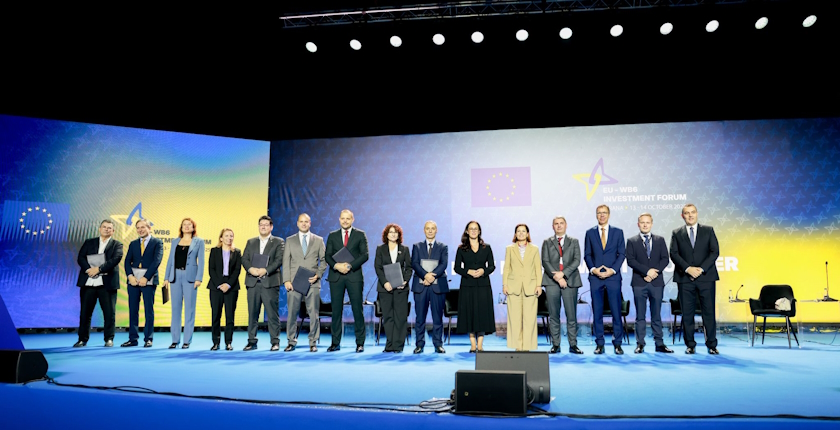
At the EU–Western Balkans Investment Forum in Tirana, held in October, GGF announced the European Union’s EUR 20 million investment in its class C shares, via Germany’s KfW Development Bank. It was accompanied by a EUR 4 million donation to the climate action fund’s capacity building and advisory facility, its advisor Finance in Motion said.

The proceeds are set to mobilize more private capital for renewable energy, energy efficiency and climate resilience across the region, the update revealed.

The Green for Growth fund signed a series of agreements at the forum for green lending, and for financing solar power and battery projects in North Macedonia, Kosovo* and Albania.

Von der Leyen: The time to invest in the Western Balkans is now

The event was attended by European Commission President Ursula von der Leyen and Albanian Prime Minister Edi Rama.

“Your economies are already set to grow rapidly in the coming years. We established the Western Balkans Growth Plan for exactly that. The EU opens sectors of its economy for your business. Together, we work on reforms for a level playing field. And alongside reforms comes investment. The Western Balkans Growth Plan aims at doubling regional GDP in the next decade. So my message to investors today is straightforward: Do not let this opportunity pass by. The time to invest in the Western Balkans is now,” Von der Leyen said.

The commitments signed within a special segment of the Tirana conference are boosting the fund’s cumulative investments into the region to more than EUR 850 million. Earlier it provided over EUR 675 million overall in green finance in the Western Balkans in support of climate action, energy security and sustainable industry.

The new commitments are expected to avoid emissions of some 175,000 tons of CO2. It is equivalent to 400,000 barrels of oil not being burnt.

Trailblazing investments ahead in photovoltaics, BESS

The Green for Growth Fund intends to provide funding for one of the first grid-scale battery projects in North Macedonia and the Western Balkans.

Renalfa IPP is about to expand its 50 MW photovoltaic plant in Oslomej, on the site of a former coal mine, with a 200 MWh battery energy storage system (BESS). GGF has already provided debt financing for the solar installation, and the two sides signed a mandate letter for EUR 24 million for the BESS investment. It is one of the investments for the transformation of the REK Oslomej coal mine and power plant complex.

Renalfa IPP’s pioneering PV plant Oslomej on coal land will get a battery facility

GGF also signed a term sheet for Quant Renewables’ solar power project in Kosovo* for 142.2 MW in peak capacity. It comprises PV plants Tucep (98.5 MW) and Veriq (43.7 MW) on land previously designated for lignite mining.

The Green for Growth Fund would support it with up to EUR 12 million in preferred equity, complementing senior debt financing led by the European Bank for Reconstruction and Development (EBRD). Set to become Kosovo’s* biggest solar park, its estimated annual output would match the electricity needs of 63,000 households.

The facility would save an estimated 168,138 tons of carbon dioxide equivalent per year (22,529 tons prorated to GGF’s investment).

The third renewables project is HD Solar Park in Albania. Through a letter of intent, GGF expressed its goal to provide up to EUR 30 million in senior debt financing. Bindi, the developer, has envisaged 60 MW of peak capacity and a co-located 120 MWh battery system. It would be one of the first large-scale solar-plus-storage initiatives in the country.

Five new deals with financial institutions for as much as EUR 110 million in total

The partner financial institutions that signed agreements with the Green for Growth Fund will channel the financing to their clients for investments in renewables, sustainable mobility, and energy and resource efficiency in buildings and industrial production.

There are five new deals for as much as EUR 110 million in credit lines and subordinated loans.

Two credit lines for partners in Kosovo*

The KRK microfinance institution in Kosovo* aims to utilize a new credit line, of EUR 5 million, for efficiency refurbishments and retrofits of the residential sector as well as small-scale renewable energy. It would be its sixth investment with the Green for Growth Fund since establishing the partnership in 2017.

BpB, the first bank in Kosovo* founded with fully local capital, finances households and small and medium-sized enterprises. Building on a previous partnership, it will channel GGF’s senior credit line of EUR 5 million into energy efficiency and renewable energy.

It will particularly benefit SMEs, including clients in the agricultural sector seeking to upgrade energy systems or invest in low-carbon vehicles, efficient equipment and modern irrigation systems, the fund added.

EUR 95 million in total for Serbian lenders

The Green for Growth Fund signed a loan agreement with UniCredit Bank Serbia for a EUR 50 million senior credit line. The focus is on commercial-scale solar and wind power, helping decarbonize Serbia’s coal-dependent electricity system.

GGF expects it to become one of the fund’s most impactful investments, by avoiding 84,550 tons of emissions in CO2 equivalent terms – equivalent to taking 44,500 cars off the road. The fund has invested EUR 115 million in UniCredit Bank Serbia to decarbonize the country’s electricity system.

Another Serbian lender in the group is AikBank, eligible for a EUR 45 million subordinated loan. The deal is for financing renewables and energy efficiency projects of corporate clients.

The bank will additionally benefit from GGF’s technical assistance for technical due diligence and environmental and social assessments, for the implementation of green energy projects in line with the best practices, the partners stressed.

ProCredit Bank in BiH is eyeing solar power projects

ProCredit Bank in Bosnia and Herzegovina is getting a subordinated loan of up to EUR 5 million, following two such facilities in 2022 and last year. The Green for Growth Fund’s investment is for maintaining the partner’s capital position and supporting the expansion of its green portfolio. The bank especially sees opportunities in solar power, where there is significant potential for BiH to catch up with regional leaders.

“We thank our investors for their continued confidence. This kind of catalytic capital drives tangible impact in Southeast Europe and shows how aligning investment with ambitious climate goals accelerates the green transition,” Finance in Motion said.

* This designation is without prejudice to positions onstatus and is in line with UNSCR 1244/99 and the ICJ Opinion on the Kosovo declaration of independence.
by in News

Maglizh solar power plant of 161 MW in Bulgaria enters commercial operation

Maglizh solar park in central Bulgaria has begun commercial operation, according to 360 Energy, which has built it in partnership with the majority shareholders of Eurohold (Evrohold). The facility has 160.5 MW in peak capacity. A project to add batteries is underway.

Bulgaria’s photovoltaic capacity is growing rapidly while the battery storage segment and other energy storage solutions are picking up speed. One of the biggest solar power plants, Maglizh, has just entered regular operation, 360 Energy said.

The company built the facility in parthership with the majority shareholders of Eurohold (Evrohold). Their project firm is called Belozem Solar Park 2. The project has overcome complex issues from permitting to environmental protection.

Maglizh spans 127 hectares at the foot of Mt. Stara planina in central Bulgaria. It has 160.5 MW in peak capacity.

The partners have built the grid connection facilities and handed them over to ESO

The facility cost EUR 100 million to build, according to earlier updates, of which the grid segment amounted to more than EUR 10 million. The connection facilities belong to Electricity System Operator (ESO), the country’s transmission system operator.

Bulgarian-German company Sunotec was the main contractor, under a turnkey deal. It also manufactured the metal structures for the solar panels.

Green Solar Energy was responsible for two overhead power lines and the reconstruction of another one and a substation. The companies partly covered the investment with a syndicated loan. They obtained it from UniCredit Bulbank Raiffeisen Bank International and United Bulgarian Bank Postbank (Eurobank Bulgaria).

Colocated BESS system to be completed in March

The PV plant in the municipality of Maglizh is on municipal land grade 9 and 10, the lowest levels on the agricultural scale. The project firm obtained the rights for 30 years and paid a one-off fee.

Eurohold’s subsidiary Electrohold is responsible for the sale of electricity, according to 360 Energy.

The solar park consists of Jinko Solar’s panels. The company revealed it would soon be complemented by a battery energy storage system (BESS). It expects to complete it in March.

ESCO Bulgaria is the contractor for the BESS of 80 MWh, made of Huawei batteries, the statement adds.

Biodiversity preservation efforts

After already passing environmental procedures, the investors detected a habitat of the protected European ground squirrel (Spermophilus citellus), also called European souslik. They introduced special measures including the exemption of an area of more than five hectares.

In 2023, the same partnership has commissioned Verila, Bulgaria’s biggest solar power plant at the time. The project firm is called Belozem Solar Park 3.

by in News

Applications for 2025 Female Leader in Sustainable Energy Award in Serbia opened

WISE Serbia, the Network of Women in Sustainable Energy, Climate Action, and Environment, under the auspices of the German development cooperation GIZ, announces the call for nominations for the 2025 Female Leader in Sustainable Energy Award. The call is intended for women who are professionally engaged in the energy and related sectors in the Republic of Serbia and who have demonstrated outstanding results in their careers. Application process is open until September 10.

The call for nominations for the 2025 Female Leader in Sustainable Energy Award aims to recognize women who, through their leadership, outstanding achievements, and vision, have demonstrated significant contribution to the sustainable development of the Serbia’s energy and related sectors, energy transition acceleration, improvement of energy efficiency, energy security, and safety, as well as the greater recognition of women in this field.

The Female Leader in Sustainable Energy award was established in 2023 by the Center for the Promotion of Sustainable Development, the founder of the WISE Serbia women’s network, under the auspices of the German development cooperation GIZ. The WISE Serbia network was established in 2018 and is among the first of its kind globally.

The recipient for the previous year, was Svetlana Cerović, Director of Specialized Financing at UniCredit Bank Serbia

The title of the Female Leader of Sustainable Energy has been awarded to several notable individuals. For 2023, the recipients are Dubravka Đedović Handanović, Minister of Mining and Energy in the Government of the Republic of Serbia; Maja Turković, Executive Vice President at CWP Global; and Ana Džokić, co-founder of the energy cooperative Elektropionir. The recipient for the previous year, 2024, was Svetlana Cerović, Director of Specialized Financing at UniCredit Bank Serbia.

Photo: GIZ’s Project Director Till Barmeier with the laureate, Svetlana Cerović from UniCredit Bank Serbia

“The Female Leader in Sustainable Energy Award is an opportunity to learn more about the achievements, initiatives, and enthusiasm of women who push boundaries through their engagement and contribution to sustainable energy. It is also an exceptional opportunity for networking and exchanging knowledge and experiences within the WISE initiative and beyond,” said Cerović.

Last year’s award winner invited all interested women to take part in this year’s award process and emphasized that she looks forward to future cooperation and joint initiatives.

Information about the Award competition

Women professionally engaged in the energy sector, climate action, or environmental protection in Serbia are eligible to apply, both citizens of Serbia and foreign nationals working in Serbia. The candidates themselves can submit applications, as well as their employers, colleagues, or teams who wish to highlight the outstanding achievements of their associates.

The pannel discussion at 2024 annual event of the WISE Serbia women’s network : pictured from left: Maja Turković, Ankica Babulov, Dušan Macura, Ana Džokić

The call is open to all profiles – decision-makers, employees in business, public enterprises, academia, civic energy, non-governmental sector, international organizations, consulting teams, legal and financial institutions, IT experts, as well as media representatives.

The call is open from August 25 to September 10.

The call for nominations for the Leader of Sustainable Energy is open from August 25 to September 10, 2025. The application needs to be emailed by September 10, 2025, to [email protected]. It needs to include:

  1. Nomination letter presenting the candidate and listing the significant results and achievements, nominating her for the selection.
  2. Professional résumé.
  3. A short nomination statement to present the shortlisted candidate to the wider public (on the WISE Serbia website and social media platforms). The statement should be up to 100 words.
  4. Photo portrait in high resolution.
  5. Contact info – email address, phone number, social network accounts that the candidate is actively using.

Applications should be sent by email to [email protected].

After processing the submitted applications, the candidates’ profiles will be published on the WISE Serbia Network website – wisesrbija.org, and the voting will be open to the public. The candidate with the highest number of votes will be awarded the title of Leader in Sustainable Energy.

The announcement ceremony for the Leader in Sustainable Energy 2025 will take place during the WISE Serbia Women’s Network annual conference in mid-October in Belgrade.

by in News

CWP Europe invests in rooftop solar plant for Henkel Serbia

In partnership with Resalta, CWP Europe led the investment in a rooftop photovoltaic system of 6 MW in peak capacity in Kruševac in Serbia. They completed the project under an innovative ESCO model, contributing to the decarbonization efforts of the manufacturer of detergents and other chemical products.

CWP Europe has successfully completed and commissioned a rooftop solar power plant for Henkel Serbia’s facility in Kruševac. The facility has 6 MW in peak capacity. Developed in partnership with Resalta and financed by UniCreditBank, the project was realized under an innovative ESCO (energy services company) model, with CWP Europe as the key investor.

Now fully operational, the photovoltaic plant is producing an estimated 6,278 MWh of green electricity annually, meeting 21% of the facility’s total energy consumption. The solar power plant will ensure optimal performance for the next 15 years.

The new PV system’s operations prevent an equivalent of 5,857 tons of carbon dioxide emissions per year, according to the update.

Special investment in distributed generation segment

While CWP Europe’s core focus remains on large-scale renewable energy assets across the region, this rooftop project represents a targeted engagement in the distributed generation space – undertaken to support a leading industrial partner in advancing its decarbonization and sustainability objectives.

With a proven track record in developing impactful renewable energy projects, the company is proud to have brought its expertise and investment capacity to a project that sets a new benchmark for industrial decarbonization in Serbia, the statement reads.

CWP Europe has more than 10 GW in its project pipeline

CWP Europe is a leading renewable energy project development company in Southeast Europe. Over the past 17 years, CWP has invested in sustainable development and the energy transition, successfully developing the largest wind farms in the region including the largest wind farm in Europe – the 600 MW Fântânele-Cogealac project in Romania.

It is currently developing over 10 GW of renewable energy project capacity. CWP Europe is a joint venture between CWP Global, a leading global renewable energy company, and Mercuria Energy Trading, one of the world’s largest independent energy traders, with over USD 140 billion in revenue.

[wpcc-iframe title=”CWP x Henkel Serbia – 6 MWp Rooftop Solar Plant Cutting 6,000 Tons CO₂ Annually” width=”500″ height=”281″ src=”https://www.youtube.com/embed/5nY4-zq5ckc?feature=oembed” frameborder=”0″ allow=”accelerometer; autoplay; clipboard-write; encrypted-media; gyroscope; picture-in-picture; web-share” referrerpolicy=”strict-origin-when-cross-origin” allowfullscreen=””]

by in News

CWP Europe completes rooftop PV plant for Henkel Serbia

In partnership with Resalta, CWP Europe led the investment in a rooftop photovoltaic system of 6 MW in peak capacity in Kruševac in Serbia. They completed the project under an innovative ESCO model, contributing to the decarbonization efforts of the manufacturer of detergents and other chemical products.

CWP Europe has successfully completed and commissioned a rooftop solar power plant for Henkel Serbia’s facility in Kruševac. The facility has 6 MW in peak capacity. Developed in partnership with Resalta and financed by UniCreditBank, the project was realized under an innovative ESCO (energy services company) model, with CWP Europe as the key investor.

Now fully operational, the photovoltaic plant is producing an estimated 6,278 MWh of green electricity annually, meeting 21% of the facility’s total energy consumption. The solar power plant will ensure optimal performance for the next 15 years.

The new PV system’s operations prevent an equivalent of 5,857 tons of carbon dioxide emissions per year, according to the update.

Special investment in distributed generation segment

While CWP Europe’s core focus remains on large-scale renewable energy assets across the region, this rooftop project represents a targeted engagement in the distributed generation space – undertaken to support a leading industrial partner in advancing its decarbonization and sustainability objectives.

With a proven track record in developing impactful renewable energy projects, the company is proud to have brought its expertise and investment capacity to a project that sets a new benchmark for industrial decarbonization in Serbia, the statement reads.

CWP Europe has more than 10 GW in its project pipeline

CWP Europe is a leading renewable energy project development company in Southeast Europe. Over the past 17 years, CWP has invested in sustainable development and the energy transition, successfully developing the largest wind farms in the region including the largest wind farm in Europe – the 600 MW Fântânele-Cogealac project in Romania.

It is currently developing over 10 GW of renewable energy project capacity. CWP Europe is a joint venture between CWP Global, a leading global renewable energy company, and Mercuria Energy Trading, one of the world’s largest independent energy traders, with over USD 140 billion in revenue.

[wpcc-iframe title=”CWP x Henkel Serbia – 6 MWp Rooftop Solar Plant Cutting 6,000 Tons CO₂ Annually” width=”500″ height=”281″ src=”https://www.youtube.com/embed/5nY4-zq5ckc?feature=oembed” frameborder=”0″ allow=”accelerometer; autoplay; clipboard-write; encrypted-media; gyroscope; picture-in-picture; web-share” referrerpolicy=”strict-origin-when-cross-origin” allowfullscreen=””]

by in News

Production starts at new 38.4 MW wind farm northeast of Bucharest

Eximprod, which installed the first wind turbine in Romania more than two decades ago, delivered the first megawatt-hours to the grid from its new wind farm in the country’s east. In addition, it is about to receive a commercial operating license for a 49.5 MW solar park in Prahova county.

Several other wind parks are also under construction amid a revival in investments in Romania. Rezolv recently secured financing for phase 2 of its Vifor wind power plant, set to become one of the largest in Europe.

Romania has been enjoying a solar power boom for the past three years, and the pace of the construction of battery energy storage facilities (BESS) is accelerating. On the wind energy front, the country’s capacity has barely held above 3 GW for a long time after the 3.24 GW peak in 2014, due to the failure of an incentives mechanism. But the investment momentum is strengthening – notably, Eximprod said it launched the operation of its 38.4 MW wind power plant in the Galați area.

The company actually installed the first wind turbine in Romania. In 2003, it put online the Vestas V 47 machine of 660 kW in Topolog in Tulcea County in the country’s east.

Eximprod Group (EPG) also provides equipment and services in the energy sector. The company’s contractor Lemacons poured concrete less than half a year ago for the foundation of the first wind turbine in the new Cudalbi 2 facility. It is located in Galați county in eastern Romania, in the Western Moldavia region.

Eximprod received support through National Recovery and Resilience Plan

Cudalbi 2 is the first wind park in the country with Enercon turbines in 12 years. The model is E-160 EP5 E2, of 5.5 MW. Eximprod has won state support for the project northeast of Bucharest via the National Recovery and Resilience Plan (NRRP or, in Romanian, PNRR). The funds are approved under the European Union’s Recovery and Resilience Facility (RRF).

The company has also built the nearby Cudalbi 1 wind farm of 54 MW, consisting of nine turbines.

In addition, Eximprod is about to receive the commercial operating license from National Energy Regulatory Authority (ANRE) for its Solar System Project photovoltaic plant. It completed the facility with 49.5 MW in connection capacity in April. According to its documentation, the facility has 65 MW in peak capacity. It consists of five units with grid connections of 9.9 MW each.

The solar park is in Ciorani, Prahova county, north of the capital city. The endeavor was reportedly worth EUR 56.2 million including a grant of EUR 13.4 million from the NRRP. The company plans to add a BESS unit of 21 MW in operating power. The said final permit will allow the project firm to sell electricity.

Lenders indicate confidence in Romania’s wind power market with financing package for Vifor

In other recent news, Rezolv secured a EUR 331 million financing package for the 269 MW second phase of its Vifor wind farm in Buzău county. It includes EUR 44 million from the European Bank for Reconstruction and Development (EBRD).

Erste Group, UniCredit Group, International Finance Corp. (IFC), Intesa Sanpaolo Group, OTP Bank and Raiffeisenlandesbank Niederösterreich-Wien all participate in the arrangement.

The Vifor wind park would consist of 72 turbines of 6.4 MW each

The first part of Vifor is under construction and scheduled for commissioning in the spring. Rezolv plans to complete phase two in late 2027.  The wind park would be one of the biggest in Europe, at 461 MW. The company is installing 72 Vestas V162 turbines of 6.4 MW.

Rezolv won a contract-for-difference (CfD) at the country’s first renewable energy auctions for phase 2, for 240 MW. The government approved 1.1 GW for wind power. The qualifications phase is ongoing for the second round of auctions, for 2 GW for wind park projects and 1.47 GW for photovoltaics.

Several wind farms under construction

According to the International Renewable Energy Agency (IRENA), Romania had just under 3.1 GW in wind power capacity in operation at the end of 2024.

Eurowind Energy built the turbines earlier this year at its Pecineaga wind park. Greece-based Public Power Corp. (PPC) is supposed to connect its Deleni facility to the grid before the end of the year.

OX2 is building the Green Breeze wind farm as the turnkey contractor for the investor, Nala Renewables.

by in News

WISE Serbia mentorship program successfully completed: trust, support, and personal growth

The first mentorship program of the WISE Serbia women’s network, focusing on sustainable energy, the green economy, and climate action, and implemented with the support of German development cooperation GIZ, was successfully concluded with an event held in Belgrade. Over six months of intensive collaboration, seven mentor-mentee pairs built mutual trust, exchanged knowledge, and developed leadership potential, demonstrating the vital role of support in career development.

The WISE Serbia mentorship program brought together 14 remarkable women. Seven experienced leaders from the energy and environmental sectors shared their extensive knowledge with seven young network members in the early stages of their careers.

The mentorship pairs included:

  1. Maja Adamović, Director of the Transmission System Maintenance Division at Serbia’s electricity transmission system operatorElektromreža Srbije (EMS), and Jelena Perović, ESG Consultant at Deloitte Advisory d.o.o.;
  2. Ivona Milić, Senior ESG Specialist for Corporate Clients at Raiffeisen Bank, and Marija Rošulj, Credit and Environmental Risk Officer at ProCredit Bank;
  3. Maja Turković, Executive Vice President at CWP Europe, and Marina Arsenijević, Project Manager at Voltiza Inc.;
  4. Aleksandra Lukić, Chief Engineer in the thermal energy production department at municipal heating utility JKP Novosadska toplana in Novi Sad, and Bojana Petrović Raičević, Senior Specialist for Energy and Environmental Law at NIS a.d. Novi Sad;
  5. Svetlana Cerović, Head of Specialized Financing at UniCredit Bank, and Ana Minić, Technical Consultant for Renewable Energy and Energy Efficiency at MACS Energy & Water;
  6. Ankica Barbulov, Director of Negawatt Solutions, and Milica Vujošević, Energy Efficiency Manager at Delta Holding;
  7. Nataša Zdravković, Investment Manager at Ezpada Group, and Sara Ostojić, Lawyer at SOG a.o.d. in cooperation with Kinstellar.

The closing event was held in partnership with and under the patronage of Kinstellar, one of the leading law firms in Belgrade, operating across Central and Eastern Europe, Southeastern Europe, and Central Asia.

Founded in 2008, Kinstellar now operates in 12 countries and employs more than 300 lawyers. In Serbia, it is particularly recognized for its work in the energy and infrastructure sectors, advising on some of the region’s largest energy investments, including wind farms, mining projects, and renewable energy transactions.

Photo (Balkan Green Energy News): Radovan Grbović, Partner at Kinstellar, welcomes program participants

One of the mentees, Sara Ostojić, is an attorney at Kinstellar and Head of the Energy Sector in Serbia. She expressed great satisfaction that her firm was hosting the closing event.

Radovan Grbović, partner and attorney with over 20 years of experience, addressed the participants, emphasizing the importance of mutual support and a stronger role for women in sustainable energy and the green transition.

Mentorship is about sharing life experience

The program’s outcomes were presented by Nataša Vukmirović, professional mentorship coach from the International Institute for Coaching and Mentoring, who highlighted that the program’s goals had been fully achieved. She noted that strong relationships of trust had been built and that most participants had expressed a desire to continue engaging in similar initiatives.

“Through evaluation and facilitation of joint sessions, I had the opportunity to witness meaningful knowledge exchange and feel the power of support, trust, and shared learning. The program demonstrated that developmental mentoring is a valuable approach in the sustainable energy and green economy sectors and can significantly impact participants’ career development,” said Vukmirović.

According to her, the program goes beyond education—it is based on values that empower individuals and protect the common good. This is echoed in the positive experiences of participants.

Marija Rošulj emphasized that her positive experience with Ivona Milić inspired her to become a mentor herself. “Mentorship is not just about work, but about a person’s character and sharing life experience, not just professional experience.”

The pair plans to continue working together and develop a joint project beyond the formal program.

Photo: (Balkan Green Energy News) mentorship pair Marija Rošulj, ProCredit Bank, and Ivona Milić, Raiffeisen Bank

“One of the things I appreciated most was that my mentor helped me achieve a deeper reflection on my career path and supported the development of my emotional intelligence and effective communication,” said Ana Minić, whose mentor was Svetlana Cerović, last year’s recipient of the Female Leader in Sustainable Energy 2024 award.

Photo (Balkan Green Energy News): Ana Minić, MACS Energy & Water

Mutual learning – the heart of the program

Mentors noted the process was reciprocal, and that through working with young women, they carried out a kind of introspection of their career paths. “It was especially interesting to identify what made me successful, which I could share with Milica, who also works in renewables and energy efficiency. I tried, by talking about my career, my development path, my ups and downs, to identify the golden thread that has kept me afloat and thanks to which I can say that I am doing well in business today,” said Ankica Barbulov, co-founder and director of Negawatt Solutions and the first to introduce the ESCO financing model in Serbia.

Mentee Milica Vujošević said that her mentor was an inspiration and that working with her was a great honor.

Photo (Balkan Green Energy News): Mentorship pair Milica Vujošević, Delta Holding, and Ankica Barbulov, Negawatt Solutions

Aleksandra Lukić, Chief Engineer and one of the first women in the thermal energy production department at heating utility JKP Novosadska Toplana, emphasized that she and her mentee, Bojana Petrović Raičević, are very different and that this was a strength in their relationship.

“At first, I wondered how I could help someone from a completely different profession. I’m a mechanical engineer, and Bojana is a lawyer. But our differences allowed for deeper exchange, not only about careers but also life values, work-life balance, and personal development. In the end, I think we both gained more than we expected.”

Bojana added: “Aleksandra helped me clarify my goals and map out a plan for my career, both short-term and long-term steps. I’m grateful she was my mentor.”

Photo (Balkan Green Energy News): Mentorship pair Aleksandra Lukić, JKP Novosadska Toplana, and Bojana Petrović Raičević, NIS

Maja Adamović, Director at Elektromreža Srbije, saw the program as an opportunity to learn and improve future programs. She highlighted progress in strengthening women’s networks in the energy sector, citing the launch of the Women in Energy section within CIGRE Serbia as a great example of women’s growing interest in connection, empowerment, and collective impact.

Photo (Balkan Green Energy News): Maja Adamović, Elektromreža Srbije

Maja Turković, Executive Vice President of CWP Europe and co-founder of WISE Serbia, also served as a mentor. “Marina and I worked on identifying her potential in line with her education, interests, and labor market trends, as well as on shaping her career profile. I think we have defined a direction for her professional development and competencies she can further build on,” said Turković, adding she would gladly be a mentor again.

Marina Arsenijević, her mentee, said the program came at the right time: “After this program, I’m more aware of who I am and what I want to do in the next five or ten years.”

Photo (Balkan Green Energy News): Mentorship pair Maja Turković, CWP Europe, and Marina Arsenijević, UGT Renewables

Throughout the program, mentors generously shared knowledge, experiences, and insights, while mentees showed openness to learning and a willingness to build their leadership capacities. All mentors expressed great satisfaction with participation in the program, highlighting mutual learning as one of its most valuable aspects.

The WISE Serbia program demonstrated how important mentorship is for women’s professional and personal development in green industries. Through experience-sharing, knowledge transfer, and mutual support, participants not only strengthened their capacities but also contributed to creating a strong community of women working on a more sustainable and equitable future.

by in News

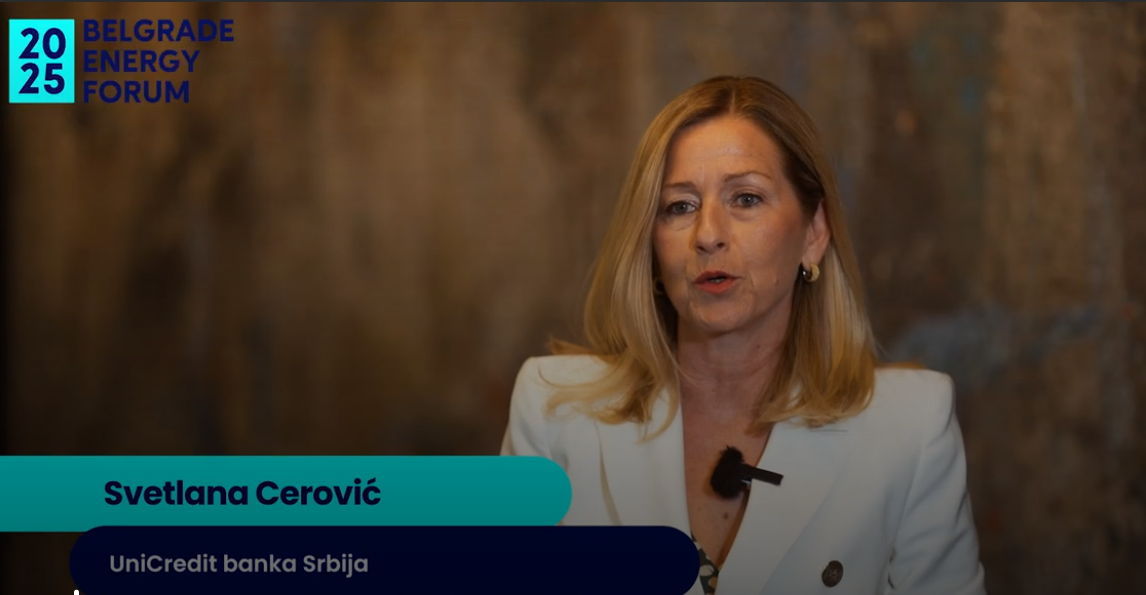
Svetlana Cerović: Serbia should consider the role of batteries in next renewables auction

Serbia is expected to finish drafting its energy storage regulations by the end of the year, completing its already strong regulatory framework for renewables, according to Svetlana Cerović, Head of Specialized Lending at UniCredit Bank Serbia. In the next auction for market premiums, Serbia should consider recognizing the contribution of projects involving energy storage, she said at Belgrade Energy Forum 2025.

The two renewable energy auctions Serbia has held so far have shown that its regulatory framework is exceptionally good, Svetlana Cerović said on the sidelines of BEF 2025, adding that it is very important for a third auction to take place to ensure the development of additional renewable energy capacities.

[wpcc-iframe title=”Svetlana Cerovic, Head of specialized lending, UniCredit Bank Serbia, at Belgrade Energy Forum 2025″ width=”500″ height=”281″ src=”https://www.youtube.com/embed/014aj5PLOx0?feature=oembed” frameborder=”0″ allow=”accelerometer; autoplay; clipboard-write; encrypted-media; gyroscope; picture-in-picture; web-share” referrerpolicy=”strict-origin-when-cross-origin” allowfullscreen=””]

Initiating and financing investments in renewable energy requires a stable, predictable, and transparent regulatory framework, she stressed.

When it comes to regulations covering energy storage, Cerović said she was encouraged to hear that they were being drafted quickly and could be finalized before the end of this year.

“When we talk about renewable energy sources, we talk about long-term financing. Most of these projects are financed through project financing without the right of recourse, and in this sense, the regulatory framework and the predictability of cash flows are very important,” she reiterated.

UniCredit, as a pioneer in the field of renewable energy financing, offers various types of services and has already supported several projects that have been awarded market premiums and guarantees, according to Cerović. “We continue to actively finance these projects and remain open to dialogue,” she said.

UniCredit has financed several projects that have won market premiums

Speaking at a panel on energy storage in Southeast Europe, Cerović said that Serbia should consider involving energy storage in the next auction for market premiums and facilitate flexibility services, adding that the first renewables projects in Serbia that are required to include energy storage are already negotiating financing.

Cerović: The state should subsidize batteries for prosumers and back smaller renewables projects

She also recommended subsidizing battery storage for prosumers as an energy efficiency measure and allocating part of the auction quota for smaller renewables projects, which find it difficult to secure long-term power purchase agreements (PPA).

Talking about BEF 2025, she said the forum had demonstrated its exceptional significance and relevance by bringing together key players in the financing and development of energy projects. The conference was extremely useful for UniCredit, allowing it to make important contacts and initiate potential partnerships, according to her.

  • 1
  • 2