by in News

European day-ahead power market rolls out 15-minute trading intervals

The Single Day-Ahead Coupling area split its hourly units into 15-minute intervals for electricity trading. The change, affecting most European markets, is aimed at enhancing the integration of renewables by making flexibility and balancing more efficient.

After delays and intensive testing, the European wholesale electricity market switched to a 15-minute market time unit (MTU) from hourly blocks within the Single Day-Ahead Coupling (SDAC) mechanism. The transition was implemented across all bidding zones and bidding zone borders, according to the All NEMOs Committee, gathering nominated electricity market operators.

Thirty transmission system operators were involved in the move, aimed at creating an integrated pan-European cross-zonal day-ahead electricity market. Only Great Britain, Switzerland, the Western Balkans, Turkey and Cyprus, the European Union’s only non-interconnected member state, are outside of the SDAC region.

The first trading sessions were held at power exchanges yesterday, for delivery today. So far there were no indications of glitches with the quarter-hourly products.

A more than a year-long testing campaign for the 15-minute MTU solution included the validation of local, regional and cross-border functionalities, verification of connectivity between parties and confirmation of overall system readiness, the Market Coupling Steering Committee, MCSC, said last month.

Also of note, Cyprus launched its electricity exchange yesterday, with day-ahead, forward and balancing markets. In spot trading, the interval is 30 minutes.

Benefits from trading blocks with shorter intervals

The European Union is pushing the electricity market to improve efficiency by matching production and consumption more accurately. With the rising shares of solar and wind power in the energy mix, the frequency and intensity of fluctuations from weather changes are growing as well.

As the energy transition and digitalization progress, market time units could get shorter and shorter

The 15-minute interval captures the changes better than the one-hour block, reducing balancing needs and costs and freeing up capacity. As the energy transition and digitalization progress, market time units could get shorter and shorter. Importantly, it implies an exponential rise in computing power.

Wind and clouds aren’t very predictable, so unmatched production forecasts cause imbalances. It can burden the intraday market, where they are corrected. Shorter intervals lower the deviations.

Opportunity for battery storage deployment

With 15-minute products, more short-term fluctuations will already be captured in the day-ahead auction, Vattenfall said in a comment.

“Generation and demand can now be mapped much more precisely. We can submit more accurate forecasts, market renewables more effectively, deploy batteries and pumped storage more efficiently, and significantly increase system flexibility,” the company’s Head of Short-Term Asset Optimization Jörg Seidel pointed out.

Consumers could also benefit, according to the Swedish energy producer and supplier. More precise price signals open new savings potential through dynamic tariffs and smart meters, enabling households to use electricity when it is cheapest, it explained. It could make heat pumps, photovoltaic systems, batteries, and electric vehicle charging more efficient and affordable.

“Flexibility is becoming the currency of the energy transition,” Seidel stressed.

Nevertheless, nothing changes for small consumers including households until they get an electricity meter that can track quarter-hourly blocks.

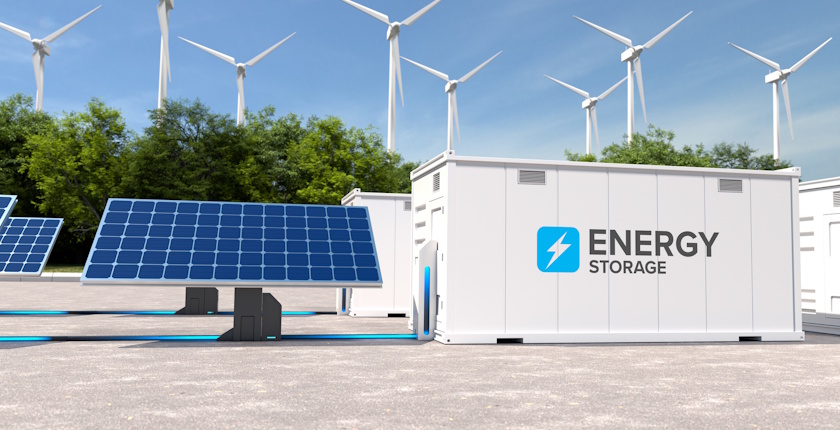
With higher fluctuations in shorter intervals, opportunities arise for operators of battery energy storage systems (BESS) and other storage and balancing technologies, which stabilizes the electricity system. The switch to the 15-minute MTU is mostly beneficial for aggregators as well, reducing their exposure to penalties for failing to meet forecasted levels of production.
by in News

Slovenia’s TSO ELES joins forces with army to develop hydrogen technologies

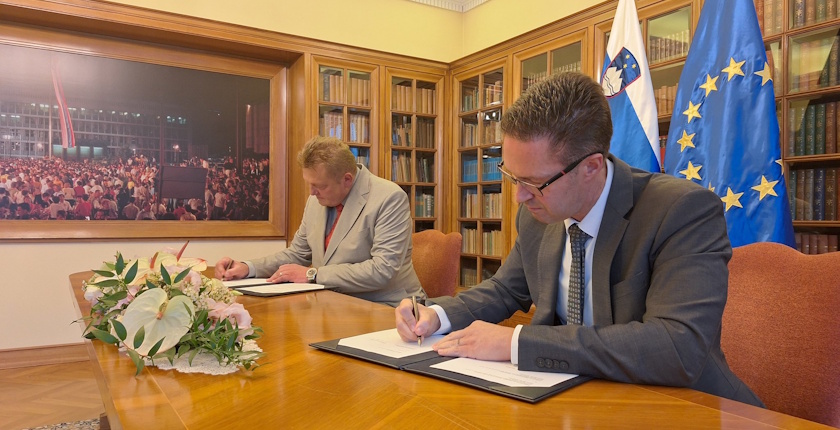
Slovenia’s transmission system operator ELES and the Ministry of Defence have signed a cooperation agreement for the Defence Resilience Hub Network in Europe – RESHUB project.

Last year, the Ministry of Defence of Slovenia initiated the Defence Resilience Hub Network in Europe (RESHUB) project, which aims to establish self-sufficient energy hubs in Slovenian military barracks.

As part of the initiative, the military barracks in Kranj will be transformed into a demonstration center for energy self-sufficiency, integrating military infrastructure with innovative solutions in renewable energy and hydrogen technologies.

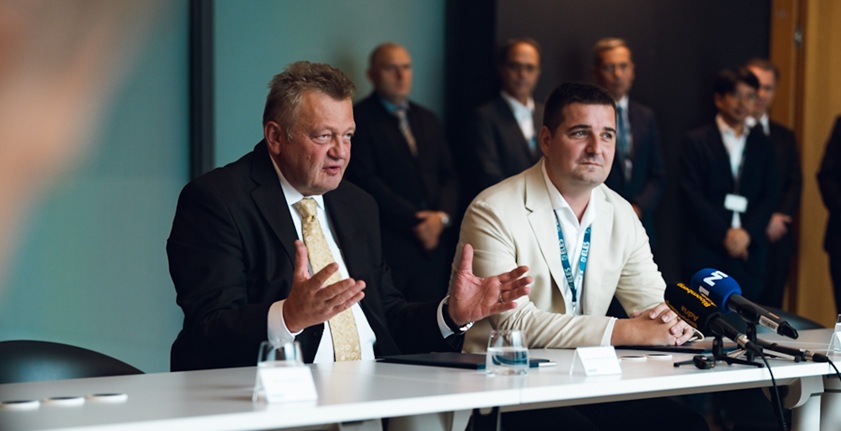
Aleksander Mervar, CEO of ELES, and Marko Lovše, State Secretary of the Ministry of Defence, now signed the agreement, during the Slovenia-Japan Business Conference.

The deal outlines cooperation in the field of energy self-sufficiency and the development of hydrogen technologies, according to state-owned ELES.

The Kranj military barracks will be converted into a demonstration center for energy self-sufficiency

The project will turn the Kranj military barracks into a demonstration center for energy self-sufficiency by integrating military infrastructure with innovative technology for renewables and hydrogen.

ELES will contribute to the development of the RESHUB (Resilience Hub) pilot project concept, which focuses on the production, storage, and use of hydrogen, the country’s TSO noted.

The company will be involved in all phases of the project — from preparing expert studies and technical groundwork to providing professional support for documentation development.

ELES considers hydrogen a potential key energy carrier for storing surplus energy from low-carbon sources

“At ELES, we recognize hydrogen as a potentially key energy carrier for storing surplus energy from low-carbon sources, which can later be reused in the energy sector, transport, and industry,” according to the company.

ELES recalled that in 2024 it established a consortium to build a hydrogen ecosystem based on low-carbon sources.

Collaboration with Japanese partners, who have been actively developing and, in some cases, successfully deploying hydrogen technologies for decades, is essential for the company. ELES has already established several partnerships with Japanese companies and is now exploring new opportunities for deeper cooperation in the further development and application of hydrogen technologies.

In recognition of Mervar’s outstanding contribution to strengthening bilateral economic and technological ties, Japanese Ambassador to Slovenia Akiko Yoshida awarded him an honorary recognition at the business conference.

Akiko Yoshida and Aleksander Mervar (photo: ELES)
by in News

ELES, Hitachi Energy launch Next Generation Control System project

Slovenia’s transmission system operator ELES and Hitachi Energy have signed a strategic cooperation agreement for the implementation of their Next Generation Control System project.

ELES and Hitachi Energy plan to develop advanced digital solutions for transmission grid control centers, according to Slovenia’s TSO.

The Next Generation Control System project is a continuation of their cooperation within the internationally recognized and awarded NEDO project. The project has laid the foundation for collaboration between ELES and Hitachi, representing a key step in the said activities.

The companies will develop three key functionalities of the new generation

Within the project, the two companies intend to work on three core functionalities of the next generation.

An Enterprise Service Bus (ESB) is a software solution that connects various applications, enabling them to communicate and exchange data — even if they use different languages, protocols, or formats. In practice, it will be implemented for the system that determines operational limits.

Voltage Var Control is an upgrade to the existing voltage management system, introducing complex functions and advanced control methods.

The Common Information Model enhances the efficiency of network data models exchanged between different systems and organisations, particularly in the context of TSOs.

The project will last two years

The firms plan to implement and finance the two-year project by themselves. ELES would invest in improvements, while Hitachi Energy develops the agreed functions, to verify them together with the Slovenian state-owned company. Hitachi Energy intends to incorporate the new functionalities into its standard energy management system offering (Network Manager).

The agreement was signed by Aleksander Mervar, CEO of ELES, and Lars Wiklander, Business Operations Strategy & Planning Executive at Hitachi Energy. However, he was unable to attend the signing ceremony and conference.

The speakers at the event were Lazar Bizumić, Head of Product Management at Hitachi Energy; Jurij Klančnik, Transmission System Operation Director at ELES, and Janko Kosmač, Process Systems Manager at ELES, who is also the head of the technical part of the joint project.

Mervar: An important step in the digital transformation of the Slovenian electricity sector

Janko Kosmač, Aleksander Mervar and Lazar Bizumić (photo: ELES)

Aleksander Mervar highlighted the agreement as a significant step in the digital transformation of Slovenia’s electricity sector. At the same time, in his words, it reinforces the role of ELES and Slovenia as an innovative environment for developing advanced energy solutions.

“New digital solutions will enable better integration of various systems, smarter voltage management in the grid, and more efficient and transparent data exchange. This is a technologically advanced project that will significantly contribute to the safer, more efficient, and sustainable operation of the Slovenian electricity system. It is an important step in Slovenia’s green transition,” Mervar added.

Wiklander: The grid management software and systems ecosystem of the future must be built on a flexible, modular architecture

The grid management software and systems ecosystem of the future must be built on flexible, modular architecture to give TSOs and utilities the scale they need to manage a changing and dynamic grid, the flexibility to integrate proprietary and third-party applications, and the control and visibility necessary to manage and deliver a reliable, resilient power supply, Lars Wiklander asserted.

“This collaboration with ELES is an important proof point in our strategy to deliver the leading grid management ecosystem with Network Manager,” he pointed out.

by in News

Severe electricity price spikes in SEE in summer 2024 could have been avoided – report

If 70% of the physical capacity of all power lines had been offered for cross-zonal trade by transmission system operators, half of the most severe price spikes or 147 spikes could have been avoided in South-East Europe in the summer of 2024, according to the latest report of the EU Agency for the Cooperation of Energy Regulators (ACER).

The 2025 Monitoring Report examines the role of cross-zonal electricity trade in shaping a more integrated and efficient European Union electricity market. It also tracks progress, challenges and benefits in the implementation of the 70% requirement.

During the summer of 2024, the EU saw a significant increase in electricity prices, affecting mostly bidding zones in central and south-eastern Europe. Some countries experienced an unseen price increase on power exchanges, from 50% to 170%.

ACER noted that prices particularly spiked during the evening hours, reaching up to EUR 1,000 per MWh.

The prices were highest in Hungary, Romania, Bulgaria and Greece

Prices were the highest in Hungary, Romania, Bulgaria and Greece. At the time, Prime Minister of Greece Kyriakos Mitsotakis wrote to European Commission President Ursula von der Leyen. Greece, Romania and Bulgaria were preparing a proposal for an intervention mechanism.

According to ACER’s report, during the high-price events, spreads at several bidding zone borders in central Europe rose to unprecedented levels, signalling insufficient availability of cross-zonal capacity to accommodate the market’s need for cross-zonal exchanges.

The 70% requirement would have enabled an average reduction of peak prices by up to EUR 78 per MWh

The authors’ comparison of the average realized day-ahead prices during the evening peaks with the counterfactual scenario showed a considerable mitigation of prices.

It revealed that the implementation of the 70% requirement would have enabled an average reduction of peak prices by up to EUR 78 per MWh in central and south-east bidding zones, underlining the dampening effect of cross-zonal trade, the document reads.

According to ACER, higher availability of cross-zonal capacities in central Europe would have mitigated both the frequency and the severity of the high price events, as cross-zonal trade provides flexibility to the system.

End-2025 deadline is at risk

The 2019 Clean Energy Package introduced a legal requirement on EU electricity transmission system operators (TSOs) to offer at least 70% of their physical capacity on all lines of relevance for cross-zonal trade.

The obligation is intended to maximise cross-zonal trade and mitigate its discrimination over internal trade, ACER explained.

The 70% requirement ensures that domestic electricity flows are not prioritized over cross-border trade, mitigates price spikes, such as those seen in summer 2024 across South-East Europe, and brings significant additional welfare to EU electricity markets, it added.

The agency stressed that the end-2025 deadline is at risk.

by in News

Romanian prosumers propose measures to cut electricity bills by up to 60%

The Association of Energy Prosumers and Communities in Romania has called on the government to implement five measures that could swiftly reduce electricity bills.

The measures target both individual homes and multi-apartment buildings, and results could be visible in up to 12 months, according to the Association of Energy Prosumers and Communities (APCE).

The association pointed out that the measures are needed because consumers in Romania pay some of the highest energy prices in Europe.

The first measure is related to energy communities, as the country is lagging in implementing the relevant EU legislation. The association claims that the introduction of energy communities lowered energy bills in Spain by 60%.

The association called on the authorities to involve civil society in the lawmaking process

Such structures allow citizens to directly manage their energy production, distribution, and storage, achieving independence from traditional suppliers and producers, the APCE noted.

The association called on the authorities to involve civil society in the lawmaking process, and underlined that adoption could be completed in three months, with bill reductions within 3–12 months.

The second measure involves multi-apartment buildings. Through a simple legislative change, residents could become direct beneficiaries of solar energy produced on the roofs of their buildings, the APCE pointed out.

Romania could install up to 4,000 MW of rooftop solar on multi-apartment buildings

Romania, the association notes, could install up to 4,000 MW of solar power plants on 4,200 hectares of apartment building roofs. The proposed legislative changes could be adopted within three months, with results visible after 3–12 months.

Mini-PV systems for balconies have the potential to lower electricity bills by 60%, according to the APCE’s calculation. In Germany, over a million such systems have already been installed, leading to monthly bill reductions of more than 60%.

The association estimates that the legislation needed for their rollout could be adopted within 30 days, and results could be visible immediately after installation.

Tackling suppliers’ excessive profit margins

The regulation of the supply margin for energy produced by prosumers is the fourth proposed measure. The association said that in 2025, a surplus of almost 2 billion kWh of renewable energy would be injected into the grid by prosumers.

Romania’s regulator, ANRE, left it to suppliers to set their profit margins, resulting in high prices for electricity resold to consumers.

PACE calls for a clear regulation of the supply margin to ensure that electricity produced by prosumers reduces consumer bills.

Reducing transmission tariffs for the TSO

The estimated timeframe is up to three months for the measure to be adopted, with visible reductions in bills expected immediately after implementation.

The final measure is a reduction of transmission tariffs for the transmission system operator (TSO) Transelectrica.

Even though the TSO does not transport prosumers’ surplus electricity, it still charges them for the service. It collected over EUR 18 million in 2024, the APCE claims, adding that the figure for 2025 is estimated to be EUR 35 million.

by in News

Energy Traders Europe calls for clear rules before CBAM implementation

Energy Traders Europe has sent proposals to the European Commission on how to ensure that the Carbon Border Adjustment Mechanism puts a fair price on carbon-intensive electricity imports and facilitates low-carbon flows.

On July 1, the European Commission’s Directorate-General for Taxation and Customs Union launched a public consultation on the potential downstream extension of the Carbon Border Adjustment Mechanism (CBAM), as well as additional anti-circumvention measures and rules for electricity as a CBAM good.

Energy Traders Europe participated in the call for evidence, which was open until August 26. The organization pointed out that the CBAM application to electricity imports shouldn’t start without a thorough impact assessment and a clear legislative framework.

Clarity is urgently needed for contracts for the delivery year 2026

Contracts for the delivery year 2026 are already traded on electricity markets, so clarity about how these will be treated from a customs perspective is urgently needed, the trade association stressed.

In its reaction, Energy Traders Europe argued that the inclusion of electricity imports within the scope of CBAM should respect the principle of proportionality, ensuring that European businesses face no excessive costs or administrative burdens and that a proportionate carbon price is applied.

For the calculation of the carbon price, default emission factors should reflect the actual carbon intensity of the electricity mix imported from a third country, as accurately and as close to real-time as possible.

Therefore, Energy Traders Europe insists that:

  • All generation technologies are taken into account to calculate the emission factor of third countries from which electricity is imported
  • The carbon intensity of electricity imports should be measured with an hourly granularity.

The association also proposes improvements for the utilization of the actual embedded emissions of imported electricity, to reflect the reality of electricity trading:

  • Power purchase agreement (PPA) – The definition should recognise PPAs concluded via intermediaries, such as when a CBAM declarant is reporting via an indirect representative, as well as both physical and virtual PPAs
  • Physical network congestion – Once an importer can prove the hourly matching between electricity production and capacity nomination, and that guarantees of origin (GOs) eventually issued are immediately cancelled, this criterion becomes redundant and hence should be removed
  • Capacity nomination and electricity production – Imports should be reported (and accounted for) based on the hourly confirmed scheduled quantities provided by the TSOs to each market participant, to be linked back to the hourly data of the generation plant underpinning the PPA.

According to Energy Traders Europe, the listed improvements are crucial to ensure that CBAM is fit for purpose for electricity imports, leading to more efficient use of cross-border interconnections between the EU and third countries, preventing renewable curtailments, and promoting the uptake of low-carbon electricity production in third countries.

by in News

Bulgaria to add batteries of up to 10,000 MWh in capacity within months – ESO

Bulgaria’s Electricity System Operator has received applications for the connection of batteries with 12 GW in total capability, according to the transmission system operator’s Executive Director Angelin Tsachev.

Bulgaria currently has 500 MW in battery energy storage systems (BESS), with a capacity of 1,300 MWh. The facilities are in private ownership.

Angelin Tsachev told Bulgarian National Radio that the Electricity System Operator (ESO) received applications for about 12,000 MW, with a capacity of 35,000 MWh.

The TSO’s technical council has considered each grid connection request. The operator issued its opinions on the possibilities for enabling network access to the batteries when the conditions are met, Tsachev pointed out.

BESS can now cover about 1.5% of the country’s daily consumption

BESS can now cover about 1.5% of the country’s daily consumption, he revealed. However, in the coming months, batteries with a combined capacity of 7,000 MWh to 10,000 MWh are expected to be installed, the official added. They would be a serious factor, Tsachev stressed.

No state-owned or private conventional power plants are currently equipped with energy storage systems, he asserted.

After the balancing methodology was changed, commercial developers of projects for intermittent power plants became more disciplined, and now there are no concerns about the balancing of the system, Tsachev said. Electricity exports in the first seven months of this year were higher than in the same period of 2024. Net exports reached almost 230,000 MWh, Tsachev noted.

Good investment opportunity

According to an earlier analysis by Rystad Energy, the best potential profits in battery storage in Europe in 2013 were in Greece and Bulgaria. The country’s city of Lovech, northeast of Sofia, hosts the strongest BESS in the Balkans.

The Ministry of Energy of Bulgaria is reportedly working on a public call for EUR 120 million in state aid for investments in battery energy storage systems of 1.5 GWh overall. In April, it granted EUR 587 million to 82 battery storage projects.

The pace of large photovoltaic projects in Bulgaria indicates that total capacity can reach 6 GW by the middle of next year.

However, the Association for Production, Storage and Trading of Electricity (APSTE) warned that the government’s disproportionately high fees for solar panels and energy storage batteries are preventing the possibility of having permanently low electricity prices in Bulgaria.

by in News

Montenegro’s transmission system operator CGES boosts profit by 28.1%

Montenegro’s transmission system operator CGES achieved a net income of EUR 12.9 million in the first six months of this year. It is 28.1% more than in the same period of 2024 and on a 2.5% higher revenue.

The dedication to quality and operational efficiency is materializing in concrete results, and the outlook remains bright, the management of Montenegro’s electricity transmission system operator (TSO) said. In the semiannual financial report that it published on the website of the Montenegro Stock Exchange, Crnogorski elektroprenosni sistem (CGES) revealed that its total revenue came in at EUR 47.9 million or 2.5% more than in the first half of last year.

Expenditures grew 0.27% to EUR 33.3 million. The company achieved a net income, after tax, of EUR 12.9 million. It is a substantial, 28.1% rise against the result from the equivalent period of 2024.

CGES doesn’t expect that power price volatility and growth would significantly affect its financial stability

“The volatility and growth of electricity prices in the market that was caused by problems in the delivery of oil and gas in Europe, and later with the war in Ukraine, represent a risk affecting a potential increase in costs for the procurement of energy to cover allowed losses in the transmission system; however, without a more pronounced effect on the company’s financial stability throughout the current year. CGES has already launched certain activities to partly mitigate the impact of this risk,” the document said.

The government has a 55.4% stake in CGES. The next-biggest shareholder is Italy’s TSO Terna, which controls 22.1%, while Serbia’s TSO Elektromreža Srbije (EMS) holds 15%.

The Podgorica-based company had a EUR 24.8 million profit in 2024, after EUR 35.7 million the year before.

Of note, CGES signed a letter of intent in March with the two other state-owned electricity companies – power producer Elektroprivreda Crne Gore (EPCG) and CEDIS, the country’s distribution system operator (DSO) – on establishing strategic cooperation for the Consolidated Data Center (CDC) project.

by in News

Serbia’s power demand soars 20%

Electricity consumption in Serbia has increased by 15% to 20% over the past three weeks compared to the same period last year, according to Dragan Rakić, the head dispatcher of Serbia’s transmission system operator Elektromreža Srbije.

The main reason for the rise in electricity consumption is the increased use of air conditioning units due to the heat wave, which began as early as mid-June this summer.

Dragan Rakić, the head dispatcher of TSO Elektromreža Srbije (EMS), told public broadcaster RTS that the system remains stable despite high temperatures and the reduction of electricity production in hydropower plants.

The record high for summer electricity consumption was set on July 17 last year

Daily consumption in recent days has been 92 GWh to 95 GWh, with the peak of 98.5 GWh reached on June 26. Rakić recalled that the all-time summer consumption record was 105.8 GWh on July 17 last year.

The highest consumption occurs in major cities such as Belgrade, Novi Sad, and Niš. Air conditioners are on even at night, both at home and at work, he added.

Rakić stressed that the electricity supply situation is stable, although hydrological conditions are negatively affecting electricity production in hydropower plants, and partially coal-fired power plants, which require water for cooling.

He added that much of Europe was affected by the dry spell.

EMS is also prepared for extreme weather events

Meanwhile, European think tank Ember noted that record solar power production, backed by energy storage capacity, helped maintain the stability of the electricity system in Europe during the latest heatwave.

Temperatures across Europe jumped to more than 40 degrees Celsius, triggering an increase in electricity demand as the use of air conditioners soared. Daily electricity demand on July 1 was up to 6% higher in Germany, 9% in France, and 14% in Spain than on June 24.

Rakić claimed EMS is ready for extreme weather conditions as well as other emergencies. The company has emergency power line towers and crews on standby when a red weather alert is issued, he explained.

by in News

Hungary’s MAVIR commissions 60 MWh battery energy storage system

MAVIR, the Hungarian electricity transmission system operator (TSO), put into operation a battery energy storage system, BESS, of 20 MW in capability and a three-hour cycle. It will help grid security and the integration of renewable energy sources.

After entering the world’s top ten in photovoltaic capacity per capita, Hungary is picking up pace in terms of batteries as well. Energy storage units are coming online to maintain grid stability and bridge the hours between the peaks of daily solar power production and electricity consumption. Transmission system operator MAVIR commissioned a BESS of 20 MW in operating power and a three-hour cycle, translating to 60 MWh in capacity.

The EUR 20.3 million project received support in the form of a grant via the European Union. MET Group also put into operation a similarly-sized BESS last month in Hungary, while MOL Group launched construction of another one.

MAVIR’s battery energy storage system is in Szolnok, southeast from the capital Budapest. The company picked Forest-Vill as the contractor in late 2023. They signed the contract in February 2024. The same firm built MET Group’s BESS and also used equipment from Huawei Technologies.

Investors in BESS in Hungary are benefiting from EU grants

MAVIR’s new facility will contribute to grid security and a more efficient integration of renewable energy sources and support a sustainable, green future, said Deputy Minister of Energy and Parliamentary State Secretary of the Ministry of Energy Gábor Czepek.

The government’s EUR 45.1 million subsidy program for residential and corporate investments resulted in the installation of 12,000 batteries in households of 109 MWh in total, the official pointed out. Hungary now hosts 114 MW in battery capability.

Czepek estimated that the grants would bring 1 GW online by 2030, as targeted. Another call, of EUR 12.5 million, will soon be launched for energy storage for the industrial sector, he stressed.

Notably, the Ministry of Energy said solar power production reached 6.25 GW around noon on June 25. It was more than the country’s entire electricity demand at the time, it added.