by in News

CGES Secures €15 Million Investment to Upgrade Tri-Nation Power Infrastructure in the Western Balkans

Crnogorski Elektroprenosni Sistem (CGES), Montenegro’s national transmission system operator, has successfully secured a €15 million loan to finance the modernization of the 220-kilovolt (kV) power line connecting Montenegro, Bosnia and Herzegovina, and Albania.

This strategic initiative is designed to enhance the efficiency and reliability of Montenegro’s domestic electricity transmission network while simultaneously fortifying cross-border energy connectivity throughout the Western Balkans. According to CGES, the project represents a critical step toward the broader regional integration of power systems.

The financial agreement was formally signed by CGES Chief Executive Officer Ivan Asanović, European Bank for Reconstruction and Development (EBRD) Vice President Mark Bowman, and Montenegrin Minister of Finance Novica Vuković. The Ministry of Finance backed the initiative by issuing a state guarantee, underscoring the government’s steadfast commitment to supporting strategic investments that bolster both national infrastructure and regional connectivity.

Detailing the technical improvements, CEO Ivan Asanović noted that the modernization project will effectively double the transmission line’s current capacity from 300 megawatts (MW) to approximately 600 MW. He characterized the upgrade as a foundational investment in a secure, stable, and integrated energy future for the region, resulting in a more resilient grid capable of meeting increasing systemic demands and facilitating deeper regional cooperation.

EBRD Vice President Mark Bowman echoed these sentiments, emphasizing that reinforcing transmission networks is essential for securing long-term energy security and regional integration in the Western Balkans. Bowman noted that the project will overhaul vital infrastructure in Montenegro, aligning with the EBRD’s mandate to foster sustainable and resilient infrastructural development.

Looking forward, this project falls under a broader capital expenditure strategy for CGES, which plans to invest a total of €200 million into transmission infrastructure over the next five years.
by in News

Slovenia draws up first climate vulnerability, risks assessment for energy sector

In cooperation with the Jožef Stefan Institute, the Ministry of the Environment, Climate and Energy has issued the first national assessment of climate vulnerability and risks for the energy sector. The analysis shows that the sector is moderately vulnerable under current climate conditions.

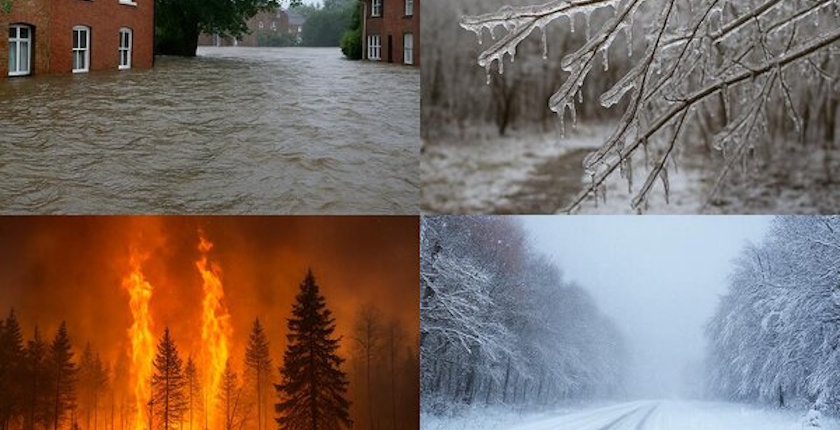
The main threats to the energy sector in Slovenia are floods, fires, storms, landslides, sleet and wet snow, heatwaves, and drought.

The assessment of climate vulnerability and risks for the energy sector was produced in line with the IPCC AR5 methodology and the national guidelines of the Faculty of Biotechnology.

The greatest threat to the energy sector are floods, which jeopardize fuel storage, substations, electricity distribution networks, and other elements of the supply chain, the ministry underscored.

The most important subsystem is liquid fuels

By using weighting and considering the current energy mix and the state of infrastructure, the most important subsystems for the functioning of the overall system are liquid fuels (34%) and electricity (33%), followed by natural gas (18%), solid fuels (10%), and heat (5%), the assessment reads.

This reflects a high dependence on imported liquid fuels and the key role of electricity in all consumption sectors, the ministry explained.
The overall weighted vulnerability score for the energy sector is 2.3 on a scale of one to five, with the electricity subsystem having the highest vulnerability, 2.6.

Electricity distribution grids, solar power plants, and fuel transport and logistic routes also show high vulnerability, according to the assessment.

Subsector ratings:

  • electricity subsector (2.6)
  • liquid fuel supply (2.2)
  • solid fuel supply (2.2)
  • natural gas supply (around 2.0)
  • heat supply (1.9)

Regarding individual elements of the sector, the most vulnerable are the electricity distribution network (3.5), electricity transmission system and imports (3), preparation of firewood, wood chips and pellets, and photovoltaic plants (3); vehicles/tanks for liquid fuels and vehicles/trucks for solid fuels, fuel stations, and other renewable energy sources (2.5).

The identified risks are expected to intensify in the future

The assessment reveals that Slovenia’s energy sector comprises critical elements whose failure could lead to significant supply disruptions.

It provides a technical basis and starting point for preparing a climate change adaptation strategy and for drafting measures such as strengthening infrastructure resilience, reviewing planning for new facilities, and incorporating climate risks into strategic documents and investment plans, according to the ministry.

Climate change scenarios indicate that the already identified risks will intensify in the future – especially floods, storms, and heatwaves.

The ministry said it would be necessary to implement adaptation measures to ensure a reliable energy supply.

by in News

Turkey’s TEİAŞ signs USD 750 million loan contract with World Bank

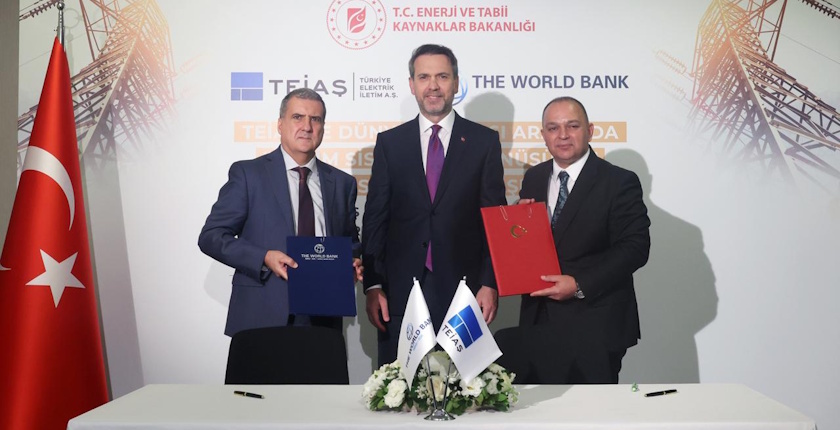
Turkish Electricity Transmission Corporation and the World Bank signed a USD 750 million loan agreement.

A USD 750 million loan will be used for the Transforming Power Transmission System Project. It would make the country’s energy future more reliable and efficient, Turkey’s transmission system operator (TSO) TEİAŞ said.

The agreement was signed in Istanbul vby the bank’s Country Director Humberto Lopez and Orhan Kaldırım, the company’s Chairman of the Board, in the presence of Minister of Energy and Natural Resources Alparslan Bayraktar, at the 11th Energy Efficiency Forum and Exhibition.

Bayraktar: Turkey plans to invest USD 28 billion in the transmission grid

“The World Bank and international financial institutions have a significant interest in Turkey’s energy infrastructure, particularly its electricity and natural gas sectors. Turkey is a hub country,” Bayraktar stated.

He recalled that the country plans to invest USD 28 billion in electricity transmission infrastructure by 2035.

The minister revealed that discussions on such projects are ongoing with financial institutions from both Asia and the West. Financing agreements can be expected in the foreseeable future, he added.

Lopez: The transition requires reliable transmission

World Bank Country Director Humberto Lopez stressed that Turkey’s clean energy ambitions depend on strong transmission infrastructure.

“Turkey has one of the most ambitious renewable energy plans, and this transition requires reliable transmission,” he said, as quoted by Anadolu Agency.

Lopez explained that it is very difficult for a new company to install solar or wind power facilities without a transmission grid connection secured. The USD 750 million investment aims to address the need and it is central to the government’s energy transition plan, he underlined.

The Transforming Power Transmission System Project marks the first phase of a USD 1.5 billion financing package aimed at expanding grid capacity, enhancing digital management, and accelerating the integration of renewable energy.

It will include feasibility studies for Turkey’s first high-voltage direct current (HVDC) transmission line, according to the article.

by in News

GridFlex to install standalone BESS in Serbia

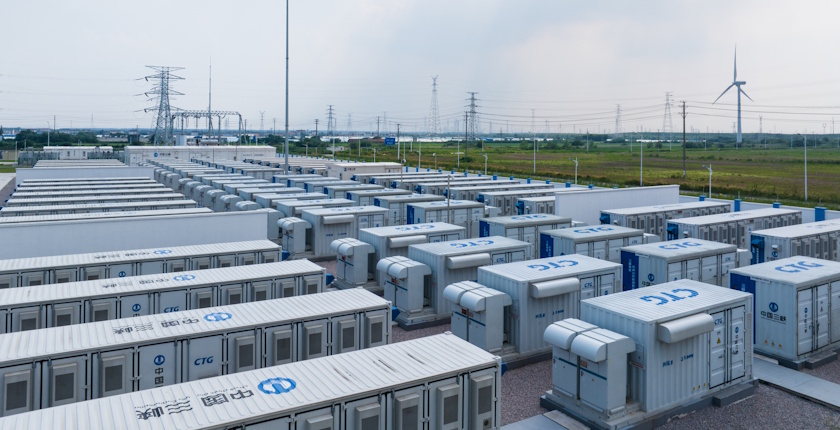
GridFlex plans to install a standalone battery energy storage system with a capacity of 125 MWh near the city of Leskovac, in southern Serbia. The investment is estimated at EUR 17 million.

Serbia doesn’t have any utility-scale batteries, but many are in the project pipeline. GridFlex is one of 11 companies in the process of obtaining approvals from transmission system operator (TSO) Elektromreža Srbije (EMS) for the connection of planned standalone battery energy storage systems (BESS) to the network.

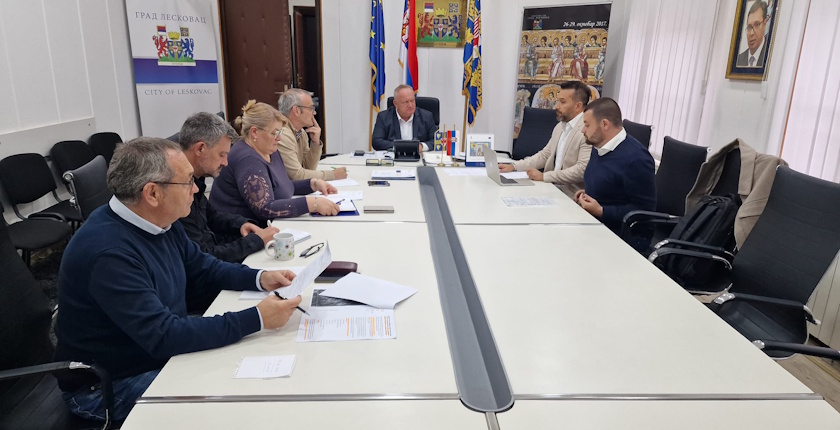
Mayor of Leskovac Goran Cvetanović met with representatives of Turkish company GridFlex, which has an office in Belgrade.

Battery systems provide flexibility to the system

The company is developing a project for a BESS that would provide system flexibility, support the integration of renewable energy sources, and contribute to the local economy, the city authority said.

GridFlex plans to invest EUR 17 million in the installation of an energy storage facility in Leskovac, the update revealed.

Owner and CEO of GridFlex Alkin Yaman participated in the meeting.

The deadline for completing the construction is the end of 2026

The planning and technical documentation for the facility is under development. The deadline for completing the facility is the end of 2026, while commissioning is expected in early 2027, the city stressed.

The battery would be installed on 1.5 hectares of privately owned land that the firm purchased near the Leskovac 2 substation.

The city will provide assistance to GridFlex for project implementation.

Three co-owners

The investment will secure numerous benefits for the city – the possibility of new investments, weakened load and voltage fluctuations in the power system, and an increase in the capacity for connecting new local consumers and producers to the grid, the local authority stressed.

According to data from the Business Registers Agency, the owners of GridFlex are Alkin Sevket Yaman, Sirin Cem, and Denis Severinov Karamov.

Of note, investors in Serbia are in the process of obtaining approvals for connecting their planned BESS facilities of an overall 2,021 MW and 5,899 MWh to the grid. They would be standalone batteries and ones co-located with power plants.

by in News

Batteries totaling 5,899 MWh in grid connection procedure in Serbia

Investors in Serbia are obtaining approvals for connecting their planned battery energy storage systems of an overall 2,021 MW and 5,899 MWh to the grid. The projects are for standalone batteries and ones that would be co-located with power plants.

Battery energy storage systems (BESS) are rapidly expanding worldwide, and Southeast Europe is no exception. European Union member states in the region such as Bulgaria and Romania are making major strides, while the other countries are trying to catch up. For example, Bosnia and Herzegovina, Montenegro, North Macedonia and Serbia.

As of September 29, Serbia’s transmission system operator (TSO) Elektromreža Srbije (EMS) received a total of 12 applications for the development of connection studies for standalone BESS, Nebojša Vučinić, manager of the Development Division of EMS, told Balkan Green Energy News.

Two applications were submitted in January for the study development interval of March 1 to June 30, 2025, and ten more were received for the current interval, which lasts from September 1 to December 31. Out of the first two applications, the one from Green BESS KV is no longer valid, because the firm didn’t submit a bank guarantee.

EMS develops connection studies every year in two intervals.

The following companies are in the process of connecting standalone BESS:

  • MKBDP Energy
  • Green Land New Energy
  • Green Mountain New Energy
  • BP WPP
  • Blue BESS KV
  • Red BESS KV
  • Yellow BESS KV
  • ENLIGHTNES PV OPERATIONS
  • ENLIGHTNES PV PARK
  • Gridflex

As for the status of their applications, MKBDP Energy has submitted a bank guarantee, and the signing of the grid connection contract is expected.

For the other ten requests, the grid connection studies are underway. They are expected to be completed by December 31.

Standalone storage facilities are planned in Valjevo, Vranje, Subotica, Kovačica, Vršac, Leskovac, Kragujevac, Kruševac, Jagodina, and Ćuprija.

A total of 55 battery projects are in the connection procedure

The 11 standalone storage projects amount to 1,072.66 MW and 2,981.98 MWh altogether, Vučinić said.

The 44 storage facilities that would be co-located with power plants utilizing variable renewable energy sources would have 948.46 MW and 2,917.31 MWh, as stipulated in the Law on the Use of Renewable Energy Sources.

All battery storage projects in the grid connection process amount to 2,021.12 MW and 5,899.29 MWh, Vučinić stressed.

MKBDP Energy’s project has advanced the most in the connection process

According to Vučinić, implementation of BESS projects depends on the progress that an investor achieves. Currently, MKBDP Energy’s investment has passed the most milestones in the connection process, he added.

EMS noted that the grid connection process for standalone battery storage is defined by the Law on Energy and bylaws.

The deployment of standalone batteries complements the integration of power plants running on variable renewable sources

The state-owned company sees no obstacles to integrating standalone BESS into the transmission system. The TSO expressed commitment to assisting investors while maintaining the safety of the entire power system’s operation.

EMS also called the increase in applications for standalone batteries a positive development.

The emergence of standalone batteries complements the integration of power plants utilizing variable renewable energy, and since a large number of such power plants are expected to be connected, the integration of standalone storage helps the power system’s flexibility and safety, Vučinić underlined.

by in News

Serbia launches construction of two transmission lines as part of BeoGrid 2025 project

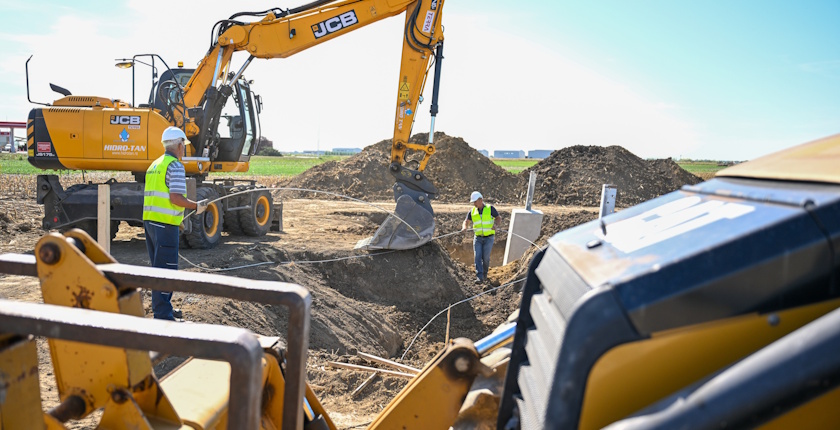
Serbia has launched works as part of the BeoGrid 2025 project, aimed at improving the power transmission infrastructure in Serbia, the region, and Europe, as well as facilitating electricity offtake from renewable energy power plants in the South Banat region of Vojvodina.

The BeoGrid 2025 project, worth EUR 205 million, comprises six distinct components, according to Radoš Popadić, Assistant Minister of Mining and Energy in charge of the power engineering sector. He attended the start of works in Belgrade’s Surčin suburb together with Jelena Matejić, the general manager of Serbia’s transmission system operator, Elektromreža Srbije (EMS).

“Construction is being launched today on two new high-voltage transmission lines that will connect Belgrade and Novi Sad, with a total value of around EUR 22 million,” he said, adding that work on a substation in Belgrade is also expected to begin soon.

The project is valued at EUR 205 million

The substation will be connected to the Čibuk 1 substation [wind farm Čibuk 1] by a new 83-kilometer transmission line, ensuring a stable transmission of electricity produced from renewable energy sources in South Banat, as well as reducing strain on the existing network, Popadić explained.

Radoš Popadić and Jelena Matejić (photo: Ministry of Mining and Energy/Danilo Mijatović)

Two single-circuit 400 kV transmission lines, intended for connecting transmission line 450 (switching station Mladost – substation Novi Sad 3) to the future 400/110 kV substation Beograd 50, will have a total length of 25.5 kilometers.

EMS General Manager Jelena Matejić said that BeoGrid 2025 is of particular importance for Serbia, but also part of the broader North Continental South East (CSE) Corridor project, which includes doubling the existing 400 kV interconnection between hydropower plant Đerdap 1 and Portile de Fier in Romania.

Matejić: The North CSE Corridor is part of the European ten-year network development plan, TYNDP 2020

The North CSE Corridor project is part of the European ten-year network development plan (TYNDP 2020) and the regional investment plan (RgIP 2020). It is supported by the Romanian transmission system operator, Transelectrica, as well as the German development bank KfW, with a feasibility study.

The North CSE Corridor is of regional importance as it increases the transmission capacity between Serbia and Romania, helping create an integrated European electricity market, Matejić pointed out, adding that BeoGrid 2025 is also important for additional backup power supply for the EXPO 2027 project.

The project aims to enable the transmission of electricity generated from renewable sources in the South Banat region and to ease the load on the 220/110/35 kV Beograd 5 substation, which supplies a large part of Belgrade, particularly parts of New Belgrade and Zemun, EMS stated.

Popadić: The total value of all planned projects is EUR 1 billion

Photo: Ministry of Mining and Energy/Danilo Mijatović

Radoš Popadić recalled that large investments in the transmission network are underway.

“Serbia has recognized the importance of investing in the power transmission system to enable the integration of more renewable energy capacity, increase the exchange of electricity with neighbors, and ensure a secure, stable, and efficient supply to consumers. That is why we launched investments in interconnection with the transmission systems of eight neighboring countries, with EUR 500 million to be invested in priority projects by the end of the decade. The total value of all planned projects will amount to around one billion euros,” said Popadić.

BeoGrid 2025 is financed partly from the Serbian budget, as well as from EMS’ own funds. The project consists of six distinct components, or investments:

  • 400/110 kV substation Beograd 50;
  • Two-circuit 400 kV transmission line between substation Beograd 50 and Čibuk 1, including the installation of a 400 kV bay at switching station Čibuk 1;
  • Single-circuit 400 kV transmission lines for the integration of transmission line 450 (switching station Mladost – substation Novi Sad 3) into substation Beograd 50;
  • Two double-circuit 110 kV transmission lines for the integration of transmission line 104/8 (substation Stara Pazova – substation Inđija 2) into substation Beograd 50;
  • two double-circuit 110 kV transmission lines for the integration of transmission line 1178 AB (substation Beograd 5 – substation Beograd 9) into substation Beograd 50;
  • Double-circuit 110 kV cable between substation Beograd 50 and substation Beograd 49 (Airport).

Photo: Ministry of Mining and Energy/Danilo Mijatović

by in News

Clean energy, grid upgrade projects in Western Balkans to be backed under EU’s Growth Plan

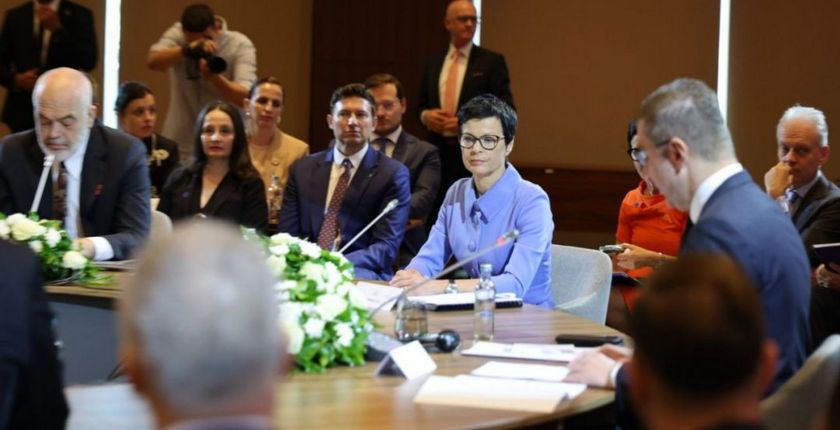
The European Commission has proposed the first support package, of EUR 87.7 million, under the European Union’s Growth Plan for the Western Balkans, to help implement EUR 487.3 million worth of hydropower, solar district heating, and grid modernization projects in Albania, Montenegro, and Serbia. The package was announced following a high-level meeting between European Commissioner for Enlargement Marta Kos and Western Balkan partners in North Macedonia’s capital, Skopje.

The package, funded from the EUR 6 billion Reform and Growth Facility (RGF), set up under the Growth Plan, will be rolled out through the Western Balkans Investment Framework (WBIF). The proposal was made to the WBIF Operational Board, according to a press release from the commission.

The eight proposed projects include building a new generation unit and upgrading existing ones at Serbia’s Potpeć hydropower plant, which would increase its annual production to 236 GWh while reducing CO2 emissions. The investment is valued at EUR 72.1 million, with the RGF support amounting to EUR 15.8 million. The project is targeted for completion in 2030, according to the commission’s fact sheet.

Serbia could get support for introducing solar energy in district heating

The other project in Serbia is the construction of a 31 MW solar-thermal plant and 17 MW heat pump in Novi Sad, which will introduce renewable energy sources to the district heating system. The project would cost a total of EUR 114.3 million, with the RGF support at EUR 25 million. The targeted completion date is 2028.

In Montenegro, the package would support three projects. The first is an EUR 18.3 million investment in building a 38-kilometer 110kV overhead transmission line between Vilusi and Herceg Novi, aimed at increasing transmission capacity and reducing energy losses. It would receive EUR 3.1 million from the RGF.

The EU plans to back Montenegro’s SCADA roll-out

The second project in Montenegro is the introduction of SCADA in the power distribution system, estimated at EUR 26.5 million, with the proposed RGF support of EUR 5 million. The third one is a planned upgrade of the Brezna substation on the Trans-Balkan Electricity Corridor. The EUR 35.6 million investment would be backed with EUR 6.3 million from the RGF.

Albania plans to digitalize its transmission network in EUR 64.2 million project

The support package also includes Albania’s EUR 95.3 million investment in upgrading the Fierza hydropower plant, aimed at increasing its capacity by 10% and extending its lifespan by at least 30 years. The support from the RGF would amount to EUR 10.5 million. The other project to be supported in Albania is the EUR 64.2 million digitalization of the transmission network, which would receive 13.6 million from the RGF.

by in News

Low consumption causes grid failure, power outage in North Macedonia

A grid failure caused a brief power outage in North Macedonia in the early hours on Sunday, May 18. Disruptions at the affected 400/110 kV transformer stations were triggered by high voltage levels in the grid, caused by low consumption, typical for nighttime hours and weekends at this time of year, according to a statement by the country’s transmission system operator, MEPSO.

MEPSO said its teams restored normal electricity supply in about an hour and were working to fully normalize the stability of the power system.

According to the update, grid instability caused by low consumption at nighttime and on weekends is a problem shared by almost all transmission system operators in the region and around Europe.

Bulgaria’s energy minister: Bulgaria played the crucial role in stabilizing North Macedonia’s grid

At the same time, Bulgarian Minister of Energy Zhecho Stankov said that a grid failure had affected several countries in Southeast Europe, though not Bulgaria. He added that his country’s balancing facilities were crucial in stabilizing North Macedonia’s grid, restoring supply, and preventing the crisis from spreading further. In Bulgaria, the Electricity System Operator (ESO) is responsible for the transmission network.

He claimed Serbia and Croatia have also experienced problems due to a lack of balancing facilities. “The colleagues from Serbia also had certain difficulties in the morning hours, and we managed to balance them out,” Stankov stated.

EMS has denied that any disruptions or outages occurred in Serbia

However, Serbia’s transmission system operator Elektromreža Srbije (EMS) told Balkan Green Energy news that the country’s grid did not experience any disruptions or outages and that there was no need for assistance from Bulgaria. EMS said it would not specifically comment on the Bulgarian minister’s statement because it was unclear what it was referring to.

In its reply to Balkan Green Energy News, EMS underscores that there were no consequences for the transmission system of the Republic of Serbia, explaining that EMS, at the request of MEPSO, to facilitate the repairs in North Macedonia, temporarily shut down the 400 kV transmission line between the Vranje 4 transformer station and the North Macedonian border.

Renewables had no share in the problem, according to Stankov

Stankov also stressed that solar power plants did not play a role in the crisis, unlike in Portugal and Spain in late April. The grid failure occurred in the early morning hours and amid low renewable energy generation, he said, adding that “renewable energy had no share in the problem.”

Bulgaria plans to build three new pumped storage hydropower plants

Bulgaria’s system remained stable thanks to its generating and balancing capacities, in Stankov’s view. He told the press that the country possesses 90% of all the reactive energy compensation capabilities in Southeast Europe.

Bulgaria is working with the European Investment Bank (EIB) to build at least three pumped storage hydropower plants in the Rhodope region, aimed at further enhancing regional grid resilience, Stankov pointed out. The minister vowed to keep the country’s grid on standby to support other regional networks in need of stabilization.

Stankov revealed that one such project is being developed for the Vacha dam. The other two pumped storage hydropower plants are planned to be built on the Dospat and Batak dams.

by in News

BiH laying groundwork for battery energy storage systems

Bosnia and Herzegovina is set to have its first battery energy storage systems installed in the transmission network, which will provide auxiliary services.

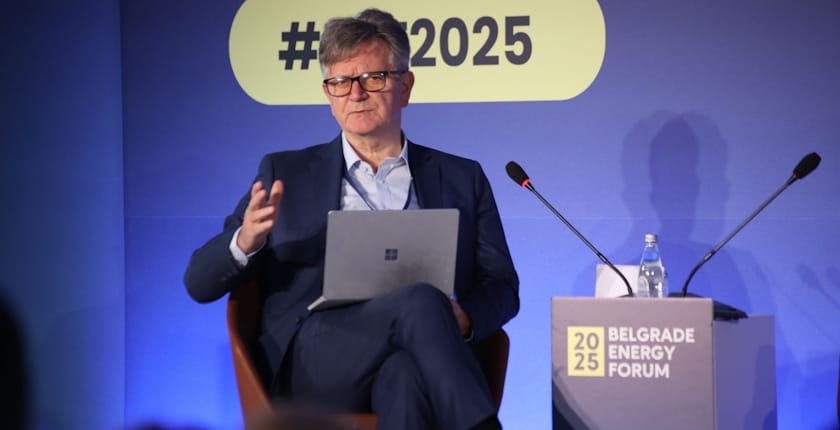
The State Electricity Regulatory Commission is drafting a decision to allow battery energy storage systems (BESS) to offer secondary frequency regulation, Mirza Kušljugić, a member of the Board of the Regional Center for Sustainable Energy Transition (RESET) from BiH, said at Belgrade Energy Forum 2025 (BEF 2025).

Since such a decision does not require a lengthy regulatory procedure, and the balancing market is already regulated, batteries could be installed very soon, he noted.

“I anticipate that private investors will take the lead in this initiative,” Kušljugić added.

He stressed the importance of experimenting with new technologies, noting that batteries represent a technology that can fundamentally transform the energy paradigm.

To be economically viable, batteries must serve multiple functions

The cost of batteries has significantly decreased in recent years. For instance, prices fell by 40% last year and have decreased by an additional 5% so far this year.

According to Kušljugić, batteries should not be limited to providing arbitrage but should also perform additional roles.

“Batteries come in various sizes – small, medium, and large – each with specific functions. They can regulate voltage or enable a black start, especially when equipped with new grid-forming inverters. This is a disruptive technology. It doesn’t matter whether it is installed on the transmission grid, the distribution grid, or behind the meter,” noted Kušljugić, who moderated the BEF panel titled Energy revolution underway – uniting efforts to deliver green, intelligent and sustainable energy solutions.

He added that batteries in the transmission system need to perform two or more functions, including frequency regulation.

Behind-the-meter batteries are also on the way

Historically, secondary regulation in BiH has been provided by any entity capable of offering flexibility, typically through tenders. So far, the service has mostly been provided by hydropower plants. However, due to lower nighttime prices, their operators were not interested in continuing to supply the service, leading to a shortage of secondary regulation. Batteries now have the potential to fill this gap.

Kušljugić believes that batteries installed behind electricity meters will soon become a reality in BiH as well. Currently, there are 300 to 350 MW of solar power capacities installed on the roofs of business premises, but their owners cannot feed excess electricity into the grid. It is only a matter of time before battery prices decrease enough to facilitate their installation, he underlined.

RESET, which advocates for citizen energy and prosumers, suggests that all solar installations should now be equipped with hybrid inverters, making them ready for future battery integration.

This approach is essential for the distribution grid to be ready to integrate excess electricity, Kušljugić concluded.

by in News

Serbia’s TSO EMS inks contract for Obrenovac – Bajina Bašta power line within Trans-Balkan Corridor

Serbia’s transmission system operator Elektromreža Srbije signed a contract for the construction of a two-system 400 kV transmission line from the Obrenovac substation to the Bajina Bašta substation.

The power line from the Obrenovac substation to the Bajina Bašta substation is part of the third section of the Trans-Balkan Corridor for the transmission of electricity, a project of national and regional significance, TSO Elektromreža Srbija (EMS) said.

The Trans-Balkan Corridor connects Romania, Serbia, Bosnia and Herzegovina, Montenegro and Italy.

Apart from the transmission line, the third section comprises equipping two switchyards in the Obrenovac substation and upgrading the Bajina Bašta substation to 400 kV.

The job was awarded to Kodar Energomotaža at an international tender

The transmission line will be 109 kilometers long. The start of construction is planned for April, while the completion is expected in 2027.

The project is financed by EMS, a donation from the Western Balkans Investment Framework (WBIF), and a loan from Germany’s KfW Development Bank.

The EUR 71 million contract was signed by EMS CEO Jelena Matejić and Mladen Žujković, the representative of Kodar Energomontaža, the contractor. The company was selected after a complex international tender, according to Serbia’s TSO.

The first section of the Trans-Balkan Corridor, from Pančevo to the Romanian border, was completed and put online in December 2017.

The second section was finished in June 2022. It consisted of transmission lines between Kragujevac and Kraljevo and upgrading the substations in the two cities.

Matejić: Serbia is a crucial electricity hub in this part of Europe

The corridor plan also has a fourth section. It envisages a double 400 kV power line between the substations in Bajina Bašta in Serbia, Višegrad in Bosnia and Herzegovina and Pljevlja in Montenegro.

“The Trans-Balkan electricity transmission corridor is certainly one of the most important infrastructure projects to safeguard a stable supply of electricity in our country. It will also enable the integration of the electricity market and position Serbia as a crucial electricity hub in this part of Europe,” Matejić stressed.

The importance of the Trans-Balkan Corridor was demonstrated recently by the commissioning of the second system within the transmission link between Romania and Serbia. It increased the cross-border transmission capacity by 80% – from 500 MW to 900 MW.

  • 1
  • 2