by in News

Aktor LNG USA–Albgaz Deal Signals Structural Shift in Western Balkans Gas Market

A landmark long-term gas supply agreement between Aktor LNG USA and Albania’s state-owned Albgaz marks a significant step in the transformation of Southeast Europe’s energy architecture, reinforcing both market diversification and geopolitical realignment.

The agreement, valued at approximately $6 billion, establishes a 20-year framework for the delivery of liquefied natural gas (LNG) sourced from the United States, with contracted volumes of around 1 billion cubic meters annually starting in 2030.

From Hydro Dependence to Gas Integration

For Albania, the deal represents a structural pivot away from near-total reliance on hydropower toward a more diversified energy mix. The introduction of long-term LNG supply contracts provides a stable foundation for baseload generation, system balancing, and regional trading capacity.

The agreement is not limited to commodity supply. It is complemented by a memorandum of understanding between Aktor Energy USA and the Albanian government to develop an integrated energy hub, including a planned gas-fired power plant with an estimated capacity of 380 MW.

This integrated approach reflects a broader transition strategy: linking fuel supply, infrastructure development, and power generation into a single investment framework.

Infrastructure First: Vlora and the Missing Gas System

A central component of the strategy is the planned development of LNG infrastructure in Vlora, which is expected to evolve into a key entry point for imported gas. Until domestic infrastructure is completed, supply will be routed through Greece, leveraging the Revythoussa LNG terminal and the Trans Adriatic Pipeline (TAP) for onward delivery into Albania.

This transitional routing underscores a critical reality: Albania’s gasification remains at an early stage, and the success of the agreement depends heavily on timely infrastructure deployment.

The Vlora energy hub concept—combining LNG import, regasification, and power generation—positions Albania not merely as a consumer, but as a potential transit and redistribution node for the Western Balkans.

The Vertical Gas Corridor: Strategic Context

The deal is embedded within the broader framework of the “Vertical Gas Corridor,” a US-backed initiative aimed at expanding north–south gas flows from Greece into Southeast and Central Europe.

According to Aktor leadership, the agreement is intended to unlock the corridor’s full potential, enabling the distribution of American LNG across multiple Balkan markets and reducing dependency on traditional supply routes.

The corridor concept is particularly relevant as Europe continues to recalibrate its gas supply strategy, with long-term LNG contracts increasingly viewed as essential for supply security beyond 2030.

Geopolitical and Market Implications

The presence of US and Greek stakeholders highlights the geopolitical dimension of the agreement. The United States is actively expanding its LNG footprint in Southeast Europe, using infrastructure and long-term contracts as instruments of strategic influence and market integration.

At the same time, Greece reinforces its role as a regional energy gateway, providing the initial infrastructure backbone for LNG imports and transmission into the Western Balkans.

The agreement also signals potential regional expansion. Discussions are already underway to extend LNG supply arrangements to additional Western Balkan markets, including Serbia and North Macedonia, as interconnection projects progress.

Commercial Structure and Market Significance

From a market perspective, the deal reflects several emerging trends:

  • Shift toward long-term LNG contracting as a hedge against future supply tightness and price volatility
  • Integration of infrastructure and supply agreements to de-risk investment in emerging gas markets
  • Growing role of private-sector intermediaries (such as Aktor LNG USA) in structuring cross-border energy flows

The estimated contract value—around $6 billion over 20 years—indicates a substantial commitment for a relatively small market, underscoring Albania’s ambition to scale beyond domestic demand and participate in regional gas trade.

Execution Risks and Critical Dependencies

Despite its strategic significance, the project faces several execution risks:

  • Infrastructure delivery risk, particularly the timely development of LNG import capacity and internal gas networks
  • Demand risk, given Albania’s currently limited gas consumption base
  • Regulatory and market integration challenges, especially in aligning with EU gas market frameworks

The reliance on interim routing through Greece also introduces transitional dependencies that must be carefully managed.

Conclusion: From Peripheral Market to Emerging Energy Node

The Aktor LNG USA–Albgaz agreement is more than a supply contract—it is a foundational step in repositioning Albania within the regional energy system.

If successfully implemented, it could transform the country from a hydropower-dependent system into a flexible, gas-integrated market with regional relevance. More broadly, it reinforces the Western Balkans’ gradual integration into European energy networks, underpinned by transatlantic LNG flows and new infrastructure corridors.

The real test, however, will lie not in the signing of the agreement, but in its execution—particularly the alignment of infrastructure, regulation, and market demand over the coming decade.
by in News

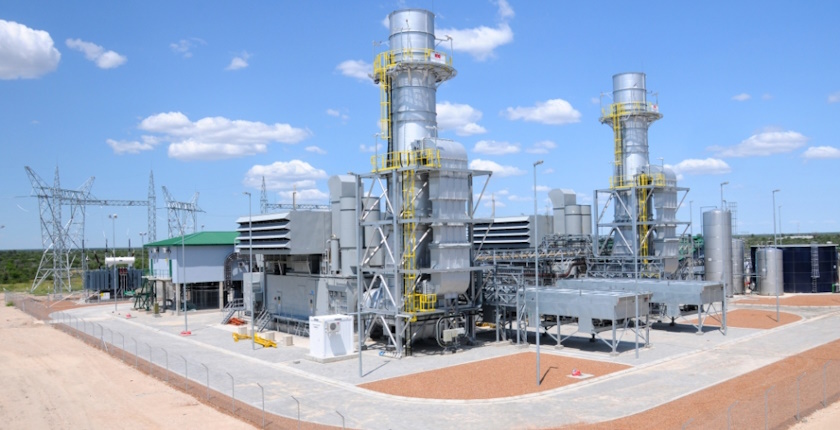
Project for first gas power plant in Albania enters next stage

In partnership with domestic company Gener 2, Greece-based GEK Terna and DEPA Commercial are preparing to build the first gas power plant in Albania. The current phase involves seeking financing. Separately, Azerbaijan’s SOCAR is expected to start installing the first gas distribution network in Albania, in the city of Korça.

Albania is almost 100% dependent on hydropower plants in domestic electricity production. Efforts are underway to diversify the mix with solar and wind energy and introduce storage capacities. Actually, not a single wind turbine has been built yet, but there is another opportunity for strengthening the energy supply: with gas from the Trans Adriatic Pipeline – TAP. Greek conglomerate GEK Terna and state-owned gas supplier, importer and trader DEPA Commercial intend to build the first gas power plant in Albania, with a local partner.

Late last year, the Council of Ministers, the country’s government, approved the project and determined a three-year deadline for completion. The site for the gas plant is in the municipality of Roskovec in Fier in western Albania. Notably, the county attracts most solar power projects in the country.

Gas facility in western Albania reportedly to have 147 MW in capacity

In the current project development phase, Fier Thermoelectric, the joint venture, is seeking financing, Insider.gr reported. The facility is envisaged to have 147 MW in capacity, according to the article. The government’s decision was for 170 MW.

DEPA Commercial, also known as DEPA Emporias (in Greek), DEPA Commerce and DEPA Trading, entered the project in 2023. It took over a 35% stake from GEK Terna and signed a seven-year gas supply contract for the proposed facility.

They have equal ownership, while Albanian company Gener 2 holds the remaining 30%. It is active in construction, infrastructure, civil works, energy, real estate development, telecommunications and retail in Albania and the broader region.

Both GEK Terna and Gener 2 have solar power projects in Albania as well

Gener 2 has submitted a 50 MW solar power project to the government a year ago. The location is in Bistrica in Finiq municipality, Vlora district.

The government’s approval is not for a concession, but the operator is obligated to either deliver 2% of electricity it produces, as royalty – royal right, or give an equivalent sum for the state budget. The permit is for 49 years since the entry of the decision into force. The firm also needs to sell a share of output to the public power supplier, in accordance with the country’s law.

A group of residents of surrounding villages has repeatedly protested against the investment, arguing that they weren’t consulted. The locals even filed a criminal complaint against Roskovec Mayor Majlinda Bufi.

They claim that the gas facility would pollute the area and jeopardize public health while exporting 90% of the produced electricity.

GEK Terna to benefit from synergies with its gas power plants in Greece

GEK Terna has three gas-fired power plants in Greece. The group’s other energy investment in Albania, through its subsidiary Heron, isn’t without controversy either.

The project is for a 93 MW photovoltaic plant in Libohova, near the Greek border, in Gjirokastër county. Project firm Faethon won approval from the Council of Ministers in Tirana in early 2024. It would be valid for up to 49 years.

GEK Terna’s solar power plant project in Gjirokastër was disrupted last year over fake documentation

Local press wrote last summer that some land documentation for the 122-hectare area was forged, prompting a raid and arrests in the cadastral office in Gjirokastër. The operator of the Libohova plant is obligated to deliver 2% of its electricity for free, too.

First gas distribution network in Albania about to be built in Korça

Albania aims to become a net electricity exporter before the end of the decade. There is also a project for a liquefied natural gas (LNG) terminal in the port city of Vlora, where a gas-fired power plant is planned to be built.

A long-awaited project called Nur, for the gasification of Korça, was presented last week. It would be the first city in Albania with gas.

The final investment decision is expected this year. State Oil Company of Azerbaijan (SOCAR) would be tasked with implementation, with financing from its government. The estimated cost is EUR 21 million. The idea is to then expand the local gas distribution network to nearby Pogradec and Erseka.

Fier and Elbasan are next on the schedule. Azerbaijan and its company are also interested in the project for the LNG terminal in Vlora and to connect the facility with TAP.

by in News

Albania’s Gas Master Plan sets out an Exciting Future

Interestingly enough, the gas sector once played an important role in Albania and the country was a relatively large gas producer. In 1982, gas production amounted to one billion cubic metres but has now dropped to mere 0.01 billion cubic metres. It is worth noting that Albania and Kosovo are the only countries in the Western Balkan region which are not connected to international natural gas networks.

The existing oil network, which is 498 km long, is not in a good shape, either. It connects all the existing sources of oil, with the exception of the pipeline that connects the natural oil wells in Delvina with the Ballsh pipeline (the latest one being renovated), but it is no longer functional. Most of it is corroded and defective which makes its use unviable. Consequently, a new oil transmission and supplying system is needed.

by in News

Intesa Sanpaolo increases 2016 GDP growth forecast for Albania to 3%

Intesa Sanpaolo said on Wednesday it has lifted its 2016 economic growth estimate for Albania to 3.0% from 2.8% forecast earlier.

“GDP is forecast to grow by 3% (with possible upside to 3.3%) in 2016, and to further increase by 3.5% (with possible upside to 3.7%) in 2017, which compare to a growth rate of 2.6% in 2015,” Intesa Sanpaolo said in its December forecast note which considers the countries where ISP has subsidiaries.

Albania’s growth will be driven by investments in large FDI-financed energy projects, such as the Trans Adriatic Pipeline (TAP), higher private consumption, and higher revenues in the tourism sector, according to Intesa Sanpaolo.

“The TAP construction project is fully in process in 2016-2017, with a total investment of about 1.5% of GDP per year in each of the two years,” Intesa said.

The bank mentioned the positive trend of decreased unemployment. According to the latest data from the Albanian statistical office, INSTAT, quoted by the bank, the jobless rate in Albania dropped to 14.7% in the third quarter of the year from 15.5% in the second quarter.

Consumer prices, which are the main focus of the monetary policy, are returning to an upward trajectory, the lender said. Inflation is expected to progressively approach the central bank’s target of 3% by 2018.

In November, consumer prices in Albania increased by 1.9% on the year. Intesa Sanpaolo projects an annual average inflation of 1.3% in 2016 and 2.0% in 2017.

The level of public debt is expected at 71.4% of the country’s gross domestic product (GDP) in 2016, and 69.1% of the GDP in 2017, Intesa Sanpaolo said.

Bank lending in Albania has gathered pace, supported mainly by domestic currency lending, though non-performing loans, 21.4% of all credits as of end-October, continue to be a drag on credit growth, Intesa Sanpaolo noted.

The bank also said that the increased NPLs and the environment of near-zero interest rates are the main reason for the decrease of the Albanian banking sector’s net profit.

Intesa Sanpaolo Bank Albania was the country’s fourth largest lender by assets at the end of the third quarter. It had a net profit of 1.9 billion leks (14.6 million euro) in the January-September period.


by in News

SOCAR JOINS NEW ADRIATIC PIPE PROJECT

P-H20160826000549 1_f960x260
Four western Balkans nations signed a memorandum of understanding with Azerbaijan state Socar on co-operation on building the Ionian Adriatic pipeline (IAP) on the sidelines of a Dubrovnik forum 25-26 August.

The declaration of intent to develop the 5bn m³/year line was originally signed in 2007 by Croatia, Montenegro and Albania. The length of the line from Split in Croatia to Fier in  Albania will be around 530 km and cost around €610mn ($683mn).

Socar will join Croatia, Albania, Bosnia & Herzegovina and Montenegro in the project which will include a section of the Trans-Adriatic-Pipeline (TAP) designed to bring gas from Shah Deniz 2 field in the Caspian Sea to EU through the so-called Southern Gas Corridor (SGC) after 2020.

Socar’s goal is to connect the Caspian Sea and the Adriatic Sea, the head of Socar Balkans, Murad Heydarov, said after the signing ceremony. “The SGC, which includes the Ionian-Adriatic gas pipeline is an important part of our plans, we have good co-operation with the countries involved in this project,” he said, according to Socar sources.

Croatia’s economy minister Tomislav Panenic said that the future pipeline would provide gas supplies for southeastern Europe. “We have defined our joint initiative for the development of the Ionian-Adriatic gas pipeline as a route that will make sure that these markets are provided with gas. We hope that this route will be a connection between the north and the south and that this may pave the way for a full liberalisation of the gas market in Europe,” he said, Croatian news agency Hina reported.

Montenegro’s economy minister Vladimir Kavaric said that IAP was the only opportunity for the gasification of Montenegro and “the government is ready to do everything to accelerate and successfully implement the project.”

According to Bosnia & Herzegovina’s foreign trade minister Mirko Sarovic, “Bosnia & Herzegovina supports this regional project and approach and ask the partners to ensure that a section of the route goes through Bosnia & Herzegovina.”

Dubrovnik Forum. From left: Presidents of Hungary Janos Ader, Lithuania Dalia Grybauskaite, Poland Andrzej Duda, Croatia Kolinda Grabar-Kitarovic, Bulgaria Rosen Plevneliev and Slovenia Borut Pahor.

Dubrovnik Forum. From left: Presidents of Hungary Janos Ader, Lithuania Dalia Grybauskaite, Poland Andrzej Duda, Croatia Kolinda Grabar-Kitarovic, Bulgaria Rosen Plevneliev and Slovenia Borut Pahor.

According to preliminary design IAP aims to connect existing transmission system of Croatia via Bosnia & Herzegovina (offshore), Montenegro and Albania to the TAP.

The Baltic-Adriatic-Black Sea (BABS) forum brought together six presidents and high-ranking government officials from 12 EU countries and Albania on  August 25-26 in Dubrovnik, Croatia. A panel discussion at the “Strengthening European energy security” looked at the benefits of energy cooperation in BABS and the role of LNG terminals linking north and south Europe.

Connecting the LNG terminal in Poland with one planned on the island of Krk in Croatia is among the energy projects that BABS region countries want to implement in order to boost competitiveness and development, Croatia’s president Kolinda Grabar-Kitarovic and Poland’s president, Andrzej Duda, said addressing  forum at the opening ceremony August 25. 

President Duda pointed out the importance of energy connections.“The dominance of a single supplier for the region is harmful and dangerous”, he said adding that development of the gas corridor between the north and the south, as well as the LNG terminal on the island of Krk are important.  

The next meeting of BABS will take place in Wroclaw in June 2017.

by in News

TAP says construction of pipeline’s Albanian section on track

tap_080816__(1)
The Trans Adriatic Pipeline (TAP) AG has announced that the construction of the pipeline on the territory of Albania is progressing without delays.

TAP AG tweeted that 87.5 percent of access roads and bridges in Albania have already been upgraded.

TAP’s route through Albania is approximately 215 kilometers onshore and 37 km offshore in the Albanian section of the Adriatic Sea. It starts at Bilisht Qendër in the Korça region at the Albanian border with Greece, and arrives at the Adriatic coast 17 km north-west of Fier, 400 meters inland from the shoreline.

In the summer of 2015, TAP started the construction and rehabilitation of access roads and bridges along the pipeline’s route in Albania. The work is expected to be completed during 2016.

tap_080816__(2)TAP project envisages transportation of gas from the Stage 2 of development of Azerbaijan’s Shah Deniz gas and condensate field to the EU countries.

The 870-kilometer pipeline will be connected to the Trans Anatolian Pipeline (TANAP) on the Turkish-Greek border, run through Greece, Albania and the Adriatic Sea, before coming ashore in Italy’s south.

TAP’s shareholding is comprised of BP (20 percent), SOCAR (20 percent), Snam S.p.A. (20 percent), Fluxys (19 percent), Enagás (16 percent) and Axpo (5 percent).