by in News

Terna Energy Secures Environmental Approval for Major Pumped Storage Project in Northern Greece

Northern Greece is emerging as a critical hub for large-scale energy storage, with several twin pumped storage hydropower (PSH) systems moving through the regulatory pipeline. In the latest development, the Ministry of Environment and Energy has granted environmental clearance—specifically the Approval of Environmental Terms (AEPO)—for the first phase of the Vrohonera project.

The Vrohonera endeavor is being spearheaded by Terna Energy, a subsidiary of Masdar. This milestone follows closely on the heels of similar approvals granted to the Katselis family for their nearby Flampouro and Trani Vrachi twin PSH projects.

Pumped storage hydropower design

Pumped storage hydropower design

Strategic Location and Technical Specifications

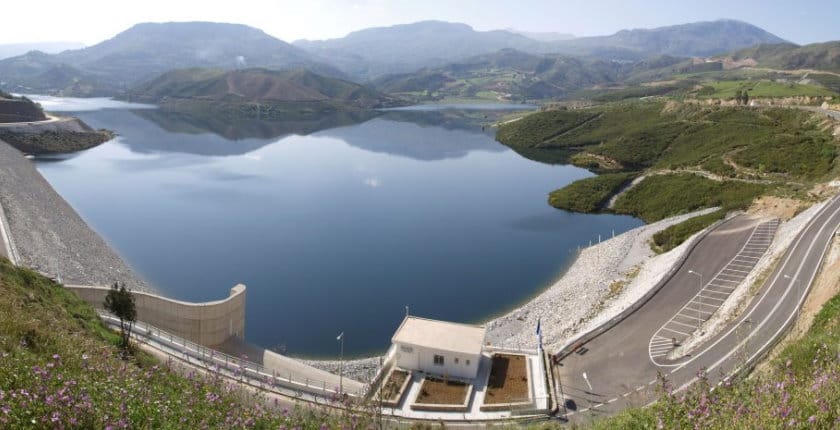
Located southeast of Veria in the Imathia region of Central Macedonia, the Vrohonera complex will utilize the Agia Varvara artificial lake as its lower reservoir. This reservoir is situated on the Haliacmon (Aliakmonas) River, Greece’s longest waterway.

The project has seen significant scaling since its initial “producer certificates” were issued in 2021:

  • Vrohonera 1: The latest AEPO outlines a generation capacity of 450 MW via three turbines and a pumping capacity of 537 MW. This represents a substantial increase from the 2021 proposal of 401 MW and 372 MW, respectively.

  • Vrohonera 2: Initial proposals for the second phase included 131.5 MW in production and 217.8 MW in pumping capacity.

  • Storage & Efficiency: Integrated into the European Network of Transmission System Operators for Electricity (ENTSO-E) development plan, the combined Vrohonera complex is designed to provide 8 GWh of storage with an estimated cycle efficiency of 73% and an operational lifespan of 50 years.

The total investment for the Vrohonera complex is valued at €1.1 billion, with commissioning currently targeted for 2031.

Expanding the PSH Portfolio

Terna Energy’s commitment to Greek energy storage extends beyond Vrohonera. The company is currently executing several other high-stakes projects included in the ENTSO-E list:

  1. Amfilochia: This flagship PSH plant is nearing the finish line, with completion expected within the current year.

  2. Ladonas: A joint venture with the Public Power Corp. (PPC Group), this 220 MW generation (231 MW pumping) facility is slated for completion in 2032 and will provide 2 GWh of storage capacity.

  3. Amari: Located on Crete, this project represents a sophisticated hybrid PSH and wind power solution, further diversifying Greece’s largest island’s energy mix.

By advancing these projects, Terna Energy and Masdar are positioning themselves as primary architects of Greece’s energy transition, providing the long-duration storage essential for a renewables-heavy grid.
by in News

Greece adds 340 MW of wind farms in 2025, acceleration seen for this year

New wind capacity came in at 340 MW in Greece last year, with 76 onshore turbines installed, according to the Hellenic Wind Energy Association (HWEA or ELETAEN).

Installations increased by 6.4% on an annual scale and represented EUR 420 million in investment. Total wind capacity reached 5,695 MW in the country, with HWEA expecting a 900 MW rise in 2026.

Papastamatiou: 2 GW await connection

Based on these numbers, the wind sector appears to be going through rebirth, after several years of low to average installations. Currently, 1.1 GW of new projects are under construction or contracted and the majority is expected to come online within the next 18 months.

Added on top are 200 MW from previous auctions, which took place during the period 2018-2022. HWEA said that even though 1,592 MW was awarded, only 852.4 MW managed to connect to the grid by the end of 2025.

“Right now, about 2 GW of wind farms have an installation license, but have not been completed. Half of those are under construction or contracted. There are also 3 GW who have completed environmental licensing and await grid connection terms. Naturally, there are even more projects that go through the licensing jumble. All of them – especially the most efficient – constitute national wealth and can reduce energy costs for consumers,” said HWEA’s General Director, Panagiotis Papastamatiou.

Terna Energy and Vestas top the charts

The top 5 operators by capacity in Greece are Terna Energy (18.2%), MORE (13.6%), Iberdrola Rokas (7.2%), Principia (6.5%) and PPC Renewables (5.6%).

Vestas has the highest share among manufacturers, 44%. Enercon accounts for 25%, followed by Siemens Gamesa with 15.8% and Nordex, which is at 9.2%.

Notably, the day with the highest hourly wind share in power production was April 28, 2025, when wind farms supplied 97.2%. In total, these units covered more than 50% of the demand for 616 hours of the year.

by in News

Greece adds 340 MW of wind farms in 2025, acceleration seen for this year

New wind capacity came in at 340 MW in Greece last year, with 76 onshore turbines installed, according to the Hellenic Wind Energy Association (HWEA or ELETAEN).

Installations increased by 6.4% on an annual scale and represented EUR 420 million in investment. Total wind capacity reached 5,695 MW in the country, with HWEA expecting a 900 MW rise in 2026.

Papastamatiou: 2 GW await connection

Based on these numbers, the wind sector appears to be going through rebirth, after several years of low to average installations. Currently, 1.1 GW of new projects are under construction or contracted and the majority is expected to come online within the next 18 months.

Added on top are 200 MW from previous auctions, which took place during the period 2018-2022. HWEA said that even though 1,592 MW was awarded, only 852.4 MW managed to connect to the grid by the end of 2025.

“Right now, about 2 GW of wind farms have an installation license, but have not been completed. Half of those are under construction or contracted. There are also 3 GW who have completed environmental licensing and await grid connection terms. Naturally, there are even more projects that go through the licensing jumble. All of them – especially the most efficient – constitute national wealth and can reduce energy costs for consumers,” said HWEA’s General Director, Panagiotis Papastamatiou.

Terna Energy and Vestas top the charts

The top 5 operators by capacity in Greece are Terna Energy (18.2%), MORE (13.6%), Iberdrola Rokas (7.2%), Principia (6.5%) and PPC Renewables (5.6%).

Vestas has the highest share among manufacturers, 44%. Enercon accounts for 25%, followed by Siemens Gamesa with 15.8% and Nordex, which is at 9.2%.

Notably, the day with the highest hourly wind share in power production was April 28, 2025, when wind farms supplied 97.2%. In total, these units covered more than 50% of the demand for 616 hours of the year.

by in News

Greek offshore wind farm program at standstill for more than one year

More than three years after the first offshore wind law, Greece made little progress toward achieving the national goal.

According to the National Energy and Climate Plan (NECP), the country should have its first 1.9 GW of offshore wind farms by 2030.

However, the entire program seems to be on hold. No government official has mentioned it within the past year.

The next steps in the process should be the approval of the National Offshore Wind Program through a joint ministerial decree. According to Insider.gr, the decree has been ready for more than a year now, waiting for the signature. It sent a message to investors that the pace is slow.

Companies selected in the initial auctions would conduct exploration in each allocated offshore zone. The main auctions would follow, for the winners to install the wind power plants.

Exploration permits have so far been provided only to Public Power Corporation (PPC), Terna Energy and Motor Oil Hellas, for a zone in the northeast, offshore Alexandroupolis. It is for pilot projects totaling 600 MW. The wind parks are supposed to become operational by 2029, but the Ministry of Environment and Energy has not yet requested approval from the European Commission for a support mechanism through contracts for difference (CfDs).

More wind needed for the energy mix

It should be noted that the government has acknowledged the need for more wind energy in the country’s renewables mix. Currently, it is dominated by photovoltaics, leading to an imbalance and ever-higher curtailments.

Offshore wind farms are seen more as a source of baseload electricity than solar and onshore wind power, given their high capacity factor, at around 50%.

Advisory firm Ricardo said recently that the Greek NECP is likely going to fail, partly as a result of missing its offshore wind goal.

by in News

Agios Efstratios becomes Greece’s first energy-autonomous island

A hybrid energy project transforming Agios Efstratios into the first energy-autonomous island in Greece is in trial operation. The system consists of a wind turbine, solar power plant, batteries, electric boilers and a district heating network.

It is a benchmark for the non-interconnected islands that won’t be connected to the mainland grid with undersea power cables.

Agios Efstratios is no longer renowned only for its history and natural beauty. It is an example of energy autonomy and sustainability. The island, also known as Ai Stratis, became the first non-interconnected Greek island with a 100% electricity supply from renewables. And more.

A pioneering energy complex is in trial operation. Agios Efstratios, which has only some 250 permanent residents, is in a group of small islands undergoing transformation through projects launched at the national level and benefiting from European Union funding.

Terna Energy completed hybrid energy system in Agios Efstratios

The Centre for Renewable Energy Sources and Saving (CRES or KAPE), an independent public entity, is responsible for the endeavor, on behalf of the Municipality of Agios Efstratios. Terna Energy, owned by Masdar, is the contractor for the works in the small North Aegean island.

The new hybrid energy system includes a 900 kW Enercon E44 wind turbine and a solar power unit of 225 kW. Their combined annual output is estimated at above 3 GWh.

Excess electricity is stored. One unit is a Tesla Megapack battery energy storage system (BESS) of 1.25 MW in operating power and a two-hour duration. It means the capacity is 2.5 MWh. There is also an electric boiler facility of 1 MW with hot water storage tanks that can hold 500 cubic meters of water at 120 degrees Celsius. It corresponds to 25 MWh.

The district heating network in Agios Efstratios is four kilometers long. It will be tested in the winter.

An oil-fired generator operated by state-controlled Public Power Corp. (PPC) remains as backup. It can work alongside the hybrid power plant.

Greece is connecting many islands to mainland power grid

The solutions from Agios Efstratios can be applied in other islands or in microgrids, CRES noted and said residents are getting cheaper energy.

The government launched its Islands Decarbonization Fund last year, with financing from the European Investment Bank (EIB). Together they aim to provide at least EUR 1.6 billion, and mobilize total investments of EUR 3 billion to EUR 5 billion.

In the hot summer months, there are many non-interconnected islands that can’t meet their power demand, especially because of the tourist season. Some are also struggling with water supply, prompting the need for desalination, which requires electricity. They rely on fuel oil generators.

The country’s Independent Power Transmission Operator (IPTO or, in Greek, Admie) is investing in major interconnection projects. A link to the mainland grid has improved the living conditions in the Cyclades islands of Syros, Paros and Mykonos. Together with a project for the western part of the archipelago, the transmission system operator is planning subsea cables to the Dodecanese and the Northeast Aegean.

by in News

With 152 MW of wind power installed in H1 2025, Greece continues low trajectory

Just 152.2 MW of wind farms were installed in Greece in the first half of 2025, thus continuing the low trajectory of recent years.

According to the Hellenic Wind Energy Association (HWEA or ELETAEN), total wind capacity in the country reached 5,507 MW at the end of June. In the first six months of the year, 37 new wind turbines were installed in Greece, with a capacity of 152.2 MW, representing a total investment of EUR 180 million.

New capacity doubled compared to the same period of 2024, but is not enough to support a more balanced renewable mix, HWEA said. In comparison, photovoltaics consistently add similar capacity in just one month on average.

The association also mentioned that currently there is 1 GW of wind projects under construction, or contracted. The majority are expected to launch operations within the next 18 months. There is another 300 MW selected through auctions for which letters of guarantee were submitted, and it is expected to reach completion. As a result, total capacity is projected to reach 6.5 GW within the period.

HWEA: Red tape is delaying 846 MW of wind projects

HWEA stressed that due to red tape, the construction of over half of the wind power capacity awarded at renewable energy auctions in the period 2018-2022 has been delayed. Namely, 1.592 MW was selected, but just 746 MW is operational today.

“If they had been completed on time, these wind projects, with a total capacity of 846 MW, would have provided more cheap energy and permanent relief to Greek consumers and the national economy,” HWEA pointed out.

Terna Energy and Vestas lead the pack

When it comes to wind energy’s geographical dispersion, Central Greece (Sterea Ellada) leads with 2.427 MW, followed by 709 MW in the Peloponnese and 535 MW in Eastern Thrace.

The top 5 market players are Terna Energy (1,034 MW – 18.8%), owned by Masdar, Motor Oil Hellas’s subsidiary MORE (774 MW – 14.1%), Iberdrola Rokas (409 MW – 7.4%), Principia (368 MW – 6.7%) and PPC Renewables (308 MW – 5.6%), which operates within state-controlled Public Power Corp. or PPC).

The most prominent wind turbine suppliers are Vestas, with 45.1% of the market, followed by Enercon, with 25.7%, and Siemens Gamesa, with 16.4%. They are trailed by Nordex, with 7.6%, GE Renewable Energy (now GE Vernova), with 3.7%, and EWT, Goldwind and Leitwind.

by in News

Terna Energy to make pumped storage, wind power hybrid in Amari in Crete

Greek renewable energy company Terna Energy, recently acquired by Masdar, made a step forward in its Amari hybrid power plant project in Crete.

The facility in the country’s largest island would comprise two wind farms with a total capacity of 81.6 MW and a pumped storage hydropower station, at the Amari dam reservoir, of 50 MW. The Ministry of Environment and Energy approved a construction site study, advancing the investment.

It should be noted that the project has been plagued by delays. The initial environmental license was published back in 2019. The total planned capacity has been reduced from 161.1 MW to 131.6 MW.

The pumped storage system would consist of two turbines and four pumps, the update shows. The sites for the wind farms are in the municipality of Sitia.

Terna Energy has said it would be the largest hybrid power plant in Europe, valuing the investment at EUR 280 million. Masdar’s subsidiary is also building its Amfilochia pumped storage hydropower plant in mainland Greece, which will have a capacity of 680 MW.

Investors mainly interested in standalone storage, not hybrids

Interest in hybrid power plants has been low in Greece, as there are only a few small investment proposals per licensing cycle.

But companies are keen on building standalone pumped hydropower units. In the April round, Freenergy submitted seven proposals of 80 MW apiece. It follows 14 applications in March by various groups, each for more than 100 MW.

Greek authorities are eager to facilitate the first standalone storage projects, including batteries. The country faced a grid overload issue during the Easter holiday, as electricity from photovoltaics far exceeded demand and it had to be heavily curtailed. The first storage installations are expected this year. The technology is seen gradually easing the curtailments and allowing further renewable energy penetration.

by in News

MORE puts 43.2 MW wind park in northern Greece into regular operation

Motor Oil Renewable Energy (MORE) received the operating license for its 43.2 MW wind power plant near the border with North Macedonia. The facility was in test operation since the fourth quarter of 2023.

MORE has 839 MW in renewable electricity plants in operation, aiming to reach 2 GW by 2030. There is already almost 3 GW in the project pipeline. The subsidiary of oil refiner Motor Oil Hellas recently received the operating license for its Kellas (Kella) wind park in Amyntaio in the Western Macedonia region.

The facility was in test operation since the fourth quarter of 2023. It has 43.2 MW in nominal capacity, while the maximum is 40 MW. The wind power plant, consisting of nine Nordex N-149 turbines, is near the border with North Macedonia.

The parent company financed the endeavor by buying a EUR 41.3 million bond that a project firm issued. In 2023 it refinanced it with EUR 47 million. MORE said that it recently also completed a wind farm in Phocis (Fokida). The combined capacity with the one in Amyntaio is 65 MW.

Partnership with Terna Energy for Greece’s first offshore wind park

The renewable energy company is planning floating and conventional wind farms as well. Its joint venture with Masdar’s Terna Energy, called Aioliki Provata Traianoupoleos, is developing a 400 MW project for a site on the Ionian Sea between Alexandroupolis and the island of Samothrace. It would be Greece’s first offshore wind power plant.

MORE’s solar power joint venture with PPC Renewables, the green energy branch of government-controlled Public Power Corp., has received final connection offers earlier this month for 882.4 MW. Six locations, for 742.4 MW altogether, are in the Kozani region, a 92 MW project is in Kilkis and another one, of 48 MW, is in Serres, all in northern Greece.

The idea is to sell the electricity to the Greek industry through bilateral power purchase agreements (PPAs), as well as to support farmers participating in the GAIA program, with a special tariff.

The two renewable energy companies already have final connection offers for 300 MW and they expect another 311 MW soon. Separately, PPC and Motor Oil are planning a 50 MW hydrogen production facility, as Hellenic Hydrogen.

MORE invested over EUR 1.6 billion in past two years

MORE said it invested over EUR 1.6 billion in the past two years. It entered a partnership in 2024 in Romania with Premier Energy for solar power plants with storage. MORE’s battery projects are underway in Greece, too.

GEK Terna and Motor Oil have built an 877 MW gas power plant in Komotini, in the region of East Macedonia and Thrace. The facility is about to enter regular operation, Energypress reported.

by in News

Terna Energy to build solar power plant of 130 MW in Bulgaria

Terna Energy is developing a project for a 130 MW photovoltaic plant near Burgas in Bulgaria. The company, owned by Masdar, plans to connect it to the grid already by the end of next year. Recently it also reached landmark points in the development of wind power projects in Greece.

Abu Dhabi Future Energy Co. (Masdar), which has high ambitions for its expansion in Southeastern Europe, relies to a great extent on its recently acquired subsidiary Terna Energy. The Greek company revealed that it is preparing to install a 130 MW solar park near the village of Vratitsa in eastern Bulgaria.

The project in the municipality of Kameno in Burgas province includes design and procurement, as well as grid connection works including a new 33/110 kV substation. Terna Energy Group said it is targeting completion by the end of 2026.

As part of the strategic cooperation with the former parent company, GEK Terna, its construction arm Terna SA was selected as the contractor, the announcement reads.

Terna Energy operates two wind farms in Bulgaria, with 30 MW in overall capacity.

With its recent share purchases, Masdar boosted its stake in the Greek company to 97.6% from 87.9%. The green energy giant based in the United Arab Emirates acquired Terna Energy last year.

Wind power projects in Evia progressing

In other recent news, Terna Energy received operating licenses for four projects for a wind power complex. The sites are in Karystos in Greece’s second largest island – Evia, also known as Euboea. It is one of the country’s wind power hubs and an important area for the company.

The Terna Energy Omalies subsidiary is responsible for the said investments, of 78 MW in total. They are part of an endeavor consisting of 11 wind farms.

The location for the biggest of the four, at 36 MW and with 12 turbines, is called Praro. The company ordered 3 MW machines from Enercon for all the sites. Molizeza 1 and Kalamaki 2 are for 18 MW each, and Kalamaki would have 6 MW.

Joint venture with MORE for Greece’s first offshore wind farm

Of note, the construction of wind parks in the Balkans has mostly slowed down. Moreover, Bulgaria has been at a standstill since the first wave of investments died down more than a decade ago, while Romania is struggling to pick up pace. Greece added only 125 MW last year.

Terna Energy is counting on opportunities in the offshore wind domain. In January, it joined forces with Greek refiner Motor Oil in the pilot project for the country’s first facility of the kind.

Motor Oil Renewable Energy (MORE) now holds 50% of joint venture Aioliki Provata Traianoupoleos. The project firm is tasked with developing a 400 MW offshore wind power plant on the Ionnian Sea between Alexandroupolis and the island of Samothrace. The two companies aim to complete it by the end of the decade.

by in News

Greek companies expand to Bulgaria with solar power investments

Greece’s government-controlled power utility PPC and Masdar’s subsidiary Terna Energy are separately building two photovoltaic plants in Bulgaria, worth an estimated EUR 190 million in total.

The biggest two renewable energy companies in Greece have taken over one major project each in neighboring Bulgaria, where domestic investors dominated the photovoltaics market until recently. Soon after government-controlled Public Power Corp. (PPC) said it began building a 165 MW solar power plant with batteries, Capital reported that Terna Energy plans to complete a 130 MW project by the end of next year.

The segment appears saturated, given the lack of energy storage capacities in Bulgaria to balance high PV output at times of abundant sunshine. Permits that the Sustainable Energy Development Agency (SEDA) issued show 4 GW in overall installed solar power capacity. Nevertheless, Executive Director of Electricity System Operator (ESO) Angelin Tsachev estimated there is as much as 5 GW, the media outlet noted.

In its annual statistics update, the International Renewable Energy Agency (IRENA) said Bulgaria hosted 3.9 GW of PV capacity at the end of 2024.

Terna Energy bought out initial developer one year ago

Terna Energy became a subsidiary of Abu Dhabi Future Energy Co. (Masdar) last year. The Greek company entered the ownership of the project firm Bio PD Solar Energy for the 130 MW facility three years ago with a 25% stake.

In mid-2024, Terna Energy Overseas Ltd., registered in Cyprus, became the sole owner. It invested some EUR 25 million and bought out Helios Construction Project. According to the article, the previous parent company is associated with businessman Ahmed Dogan. He was the founder and long-time leader of the Movement for Rights and Freedoms party, representing Muslim minorities.

Both projects are on municipal land

The project spanning more than 200 hectares was initially planned at 180 MW. The lot is on municipal land in Kameno in eastern Bulgaria.

According to the news website, the investment amounts to EUR 92 million. The location near the village of Vratitsa isn’t subject to an environmental impact assessment study except for the intended construction of a 33/110 kV substation.

Terna Energy said its former affiliate Terna, part of the GEK Terna conglomerate, is building the solar power plant in Burgas province.

New hybrid power plant in Bulgaria is part of PPC’s regional expansion

PPC is building its PV plant in the Chirpan municipality in Stara Zagora province. Having included a battery energy storage system in the project, and given the power links with its assets in Romania and Greece, the company is counting on a strategic advantage in the market with the new hybrid facility. PPC is pursuing major expansion in the region, including Italy.

The investment is valued at EUR 97 million, of which the energy storage segment accounts for EUR 10.2 million to EUR 12.8 million, the article adds.

The Colosseum site consists of 11 municipal properties formerly designated as agricultural land, on 200 hectares altogether. PPC bought the project from Enery. The company is headquartered in Austria and active in the renewables sector in Romania as well.