by in News

Đedović Handanović: Construction of 1 GW solar project to start in 2026

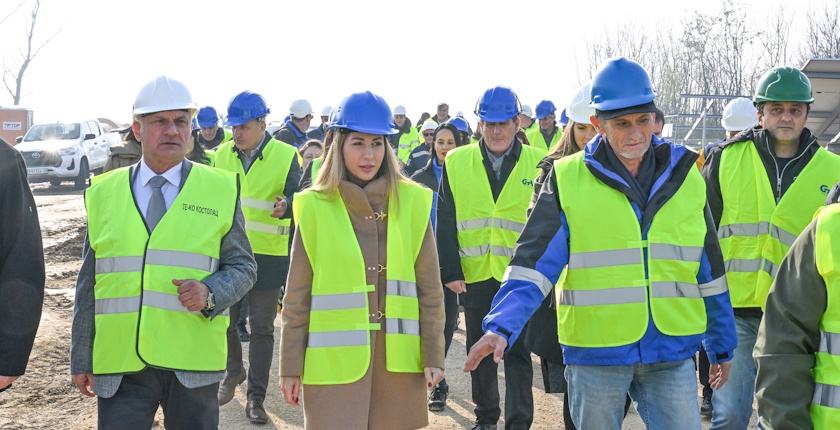
The start of construction of solar power plants in a project for a total capacity of 1 GW is expected in 2026, Minister of Mining and Energy of Serbia Dubravka Đedović Handanović said.

State-owned power utility Elektroprivreda Srbije (EPS) announced that its shareholders’ assembly adopted the Three-Year Business Plan for the period 2026-2028.

Dubravka Đedović Handanović pointed out that the company had good production and financial results for three consecutive years. According to the adopted three-year business plan, this trend will continue in 2026, she added.

EPS will invest EUR 1 billion in 2026

The minister recalled that in 2025 EPS built its first wind farm – Kostolac, and the Petka solar power plant, with a combined capacity of 76 MW. The company also finished the construction of the desulfurization facility at its coal-fired power plant Nikola Tesla B (TENT B), allowing the reduction of sulfur dioxide (SO2) emissions by 20 to 40 times, she added.

“Investments this year have also been at a high level, 97% in fact, considering that due to the scope and complexity of preparatory activities, the start of materialization of the project for the construction of solar power plants of 1 GW is expected in 2026. The focus of investments of around EUR 1 billion in 2026 will be on maintenance and improvement of the reliability of the power system and, primarily, on increasing the share of renewable energy sources in EPS’s energy mix,” Đedović Handanović stressed.

The company will build new solar power plants as well

The largest portion of the investments, in her words, is planned for new renewable energy plants, such as the construction of solar power plants totaling GW and pumped storage hydropower plant Bistrica, as well as the development of a larger number of solar power plants on land owned by EPS.

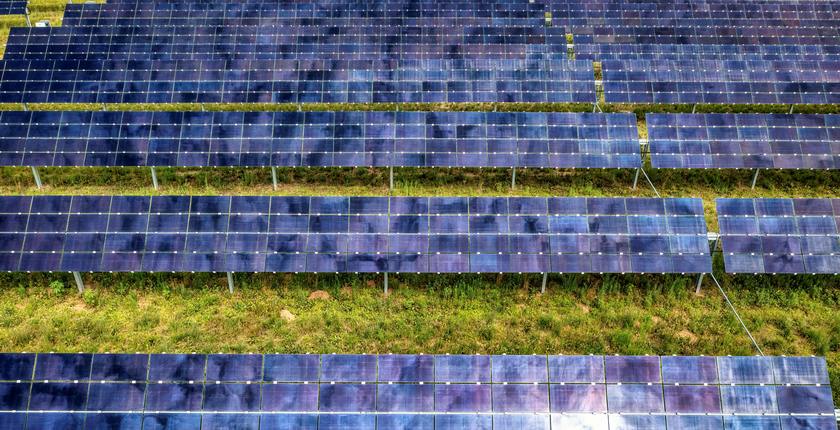
Of note, the company is developing the 1 GW solar project, which includes batteries, in collaboration with a consortium comprising Hyundai Engineering and UGT Renewables.

EPS yesterday invited bids for a preliminary feasibility study and conceptual design for a solar power plant on the ash disposal site of TENT A.

The minister revealed that next year’s plan includes an increase in employees’ salaries.

The company will continue its transformation activities, she added. Đedović Handanović welcomed the fact that EPS didn’t take out liquidity loans this year.
by in News

Đedović Handanović: Construction of 1 GW solar project to start in 2026

The start of construction of solar power plants in a project for a total capacity of 1 GW is expected in 2026, Minister of Mining and Energy of Serbia Dubravka Đedović Handanović said.

State-owned power utility Elektroprivreda Srbije (EPS) announced that its shareholders’ assembly adopted the Three-Year Business Plan for the period 2026-2028.

Dubravka Đedović Handanović pointed out that the company had good production and financial results for three consecutive years. According to the adopted three-year business plan, this trend will continue in 2026, she added.

EPS will invest EUR 1 billion in 2026

The minister recalled that in 2025 EPS built its first wind farm – Kostolac, and the Petka solar power plant, with a combined capacity of 76 MW. The company also finished the construction of the desulfurization facility at its coal-fired power plant Nikola Tesla B (TENT B), allowing the reduction of sulfur dioxide (SO2) emissions by 20 to 40 times, she added.

“Investments this year have also been at a high level, 97% in fact, considering that due to the scope and complexity of preparatory activities, the start of materialization of the project for the construction of solar power plants of 1 GW is expected in 2026. The focus of investments of around EUR 1 billion in 2026 will be on maintenance and improvement of the reliability of the power system and, primarily, on increasing the share of renewable energy sources in EPS’s energy mix,” Đedović Handanović stressed.

The company will build new solar power plants as well

The largest portion of the investments, in her words, is planned for new renewable energy plants, such as the construction of solar power plants totaling GW and pumped storage hydropower plant Bistrica, as well as the development of a larger number of solar power plants on land owned by EPS.

Of note, the company is developing the 1 GW solar project, which includes batteries, in collaboration with a consortium comprising Hyundai Engineering and UGT Renewables.

EPS yesterday invited bids for a preliminary feasibility study and conceptual design for a solar power plant on the ash disposal site of TENT A.

The minister revealed that next year’s plan includes an increase in employees’ salaries.

The company will continue its transformation activities, she added. Đedović Handanović welcomed the fact that EPS didn’t take out liquidity loans this year.
by in News

EPS plans to build solar power plant on TENT A ash dump

Serbia’s state power utility, Elektroprivreda Srbije (EPS), has invited bids for producing a preliminary feasibility study and conceptual design for a solar power plant on the ash disposal site of the Nikola Tesla A (TENT A) thermal power plant in Obrenovac.

The study should assess the feasibility and viability of the project, as well as the total solar potential of the site. The estimated value of the contract is RSD 14.91 million, and the deadline to submit bids is 23 January 2026.

The document must clearly define the proposed capacity of the planned solar power plant, the grid connection method, and the expected operating regime, according to the public call.

The capacity of the future solar power plant will be determined by the study

The project aims to expand EPS’ renewable energy capacities, reduce dependence on fossil fuels, and remediate the ash disposal site.

In July, EPS connected to the grid its first larger photovoltaic facility, the 10 MW Petka solar power plant. The plant is located in the Kostolac coal mining complex east of Belgrade, next to a 66 MW wind farm, which was put into trial operation in late November.

The design of the planned solar power plant at the TENT A ash disposal site should allow for integration with TENT’s existing safety and SCADA systems, while energy stability should be ensured through backup power sources, including solar panels with battery storage and/or an uninterruptible power supply (UPS) system.

The project should envisage battery energy storage

The photovoltaic panels should have a minimum power of 600 Wp, a minimum efficiency of 24%, and guaranteed production over 30 years of operation, while the efficiency of the inverters must be around 98% by European standards.

The part of the TENT A ash disposal site allocated for the solar power plant is slated for closure, and its usable area is about 67.2 hectares. The exact usable area will be determined following the completion of the study.

The selected bidder will be required to complete the task within six months of receiving all necessary documentation from EPS.

by in News

EPS plans to build solar power plant on TENT A ash dump

Serbia’s state power utility, Elektroprivreda Srbije (EPS), has invited bids for producing a preliminary feasibility study and a conceptual design for a solar power plant on the ash disposal site of the Nikola Tesla A (TENT A) thermal power plant in Obrenovac.

The study should assess the feasibility and viability of the project, as well as the total solar potential of the site. The estimated value of the contract is RSD 14.91 million, and the deadline to submit bids is 23 January 2026.

The document must clearly define the proposed capacity of the planned solar power plant, the grid connection method, and the expected operating regime, according to the public call.

The capacity of the future solar power plant will be determined by the study

The project aims to expand EPS’ renewable energy capacities, reduce dependence on fossil fuels, and remediate the ash disposal site.

In July, EPS connected to the grid its first larger photovoltaic facility, the 10 MW Petka solar power plant. The plant is located in the Kostolac coal mining complex east of Belgrade, next to a 66 MW wind farm, which was put into trial operation in late November.

The design of the planned solar power plant at the TENT A ash disposal site should allow for integration with TENT’s existing safety and SCADA systems, while energy stability should be ensured through backup power sources, including solar panels with battery storage and/or an uninterruptible power supply (UPS) system.

The project should envisage battery energy storage

The photovoltaic panels should have a minimum power of 600 Wp, a minimum efficiency of 24%, and guaranteed production over 30 years of operation, while the efficiency of the inverters must be around 98% by European standards.

The part of the TENT A ash disposal site allocated for the solar power plant is slated for closure, and its usable area is about 67.2 hectares. The exact usable area will be determined following the completion of the study.

The selected bidder will be required to complete the task within six months of receiving all necessary documentation from EPS.

by in News

First desulfurization system test completed at coal plant in Serbia

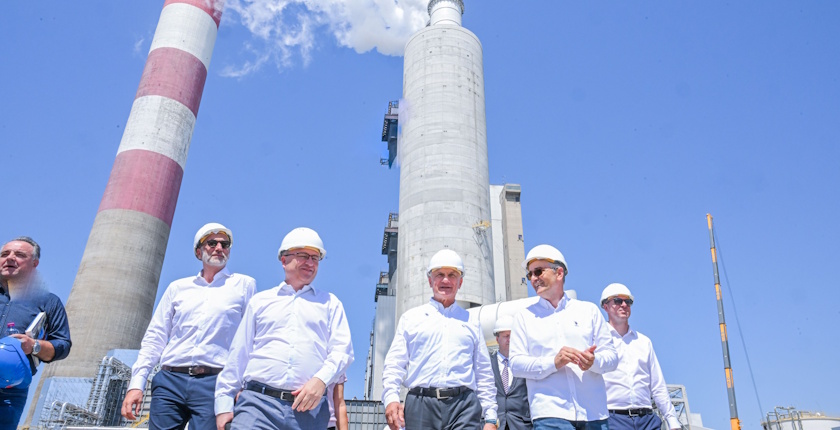
All construction work on the desulfurization system at coal-fired thermal power plant Nikola Tesla B (TENT B) near Obrenovac, Serbia, has been completed, and individual components of the system are now undergoing testing, the Ministry of Mining and Energy said.

The first test, in which flue gases and limestone slurry were injected through the absorber at unit B1, was completed. The same procedure is planned for absorber B2 in mid-August.

The units utilize the wet desulfurization method. The lime milk solvent is sprayed in absorbers-scrubbers to take in sulfur dioxide (SO2) from flue gas, resulting in the creation of gypsum.

Over EUR 400 million has been invested in desulfurization systems at TENT A and TENT B

Milan Aleksić, advisor to the Minister of Mining and Energy of Serbia, said during his visit to the site that more than EUR 400 million has been invested in the construction of desulfurization systems at TENT A and TENT B. He emphasized that the facility at TENT B is one of the largest environmental investments by state-owned power utility Elektroprivreda Srbije – EPS. “Last year, a similar system was built in TENT A. It is important that both facilities will contribute to better environmental protection and the health of the residents of Obrenovac and surrounding areas,” said Aleksić.

Thanks to the two systems, both thermal power plants, which still represent the backbone of Serbia’s electricity generation, will be able to operate longer, he asserted.

Aleksić pointed out that the ministry would continue to support EPS in planning and securing funds for environmental projects, with a particular focus on implementing environmental protection measures at thermal energy facilities.

TENT A is in the town of Obrenovac, while TENT B is further west in the same municipality, which is part of the territory of Serbia’s capital, Belgrade.

Cement to be produced using ash from TENT B

EPS’s General Manager Dušan Živković said that with desulfurization systems at three units at the Kostolac B thermal power plant, four units at TENT A, and both units at TENT B, all large EPS thermal power plants would be fully environmentally compliant with both the European Union’s and national standards.

“The hot test, injecting flue gases and limestone slurry through absorber B1, was successfully carried out. This is a key milestone in the technological process. The white plume from the stack is proof that the process is functioning, and we are now entering the phase of fine-tuning all parameters. We expect the desulfurization system at TENT B to begin trial operations in mid-December,” said Živković.

Lafarge plans cement plant and quarry

Another major project is being prepared in Obrenovac. Lafarge BFC Serbia plans to build a cement factory that would use ash from TENT B’s ash landfill as raw material for the production of construction materials. In the first phase, an investment of EUR 110 million is planned. The Government of Serbia has initiated the development of a special purpose spatial plan for the industrial complex.

The project includes a future factory in Ratari, a settlement in the municipality of Obrenovac, and a quarry in the Jazovnik–Svileuva area, spanning the municipalities of Vladimirci and Koceljeva. They would be logistically connected with TENT B. The project addresses the issue of electrostatic precipitator ash disposal and creates opportunities for its reuse in industry, contributing to the sustainability of Serbia’s energy sector.

by in News

Serbia’s EPS starts trial operation of its Petka PV plant on coal tailings dump

Serbian state-owned power utility Elektroprivreda Srbije, EPS, connected its first larger photovoltaic unit to the grid. The new solar power plant is called Petka and it has a 10 MW grid connection. It is located in the Kostolac coal mining complex east of Belgrade, next to a wind park that is nearing completion. Each new megawatt is important, according to Minister of Mining and Energy Dubravka Đedović Handanović and the company’s Chief Executive Officer Dušan Živković.

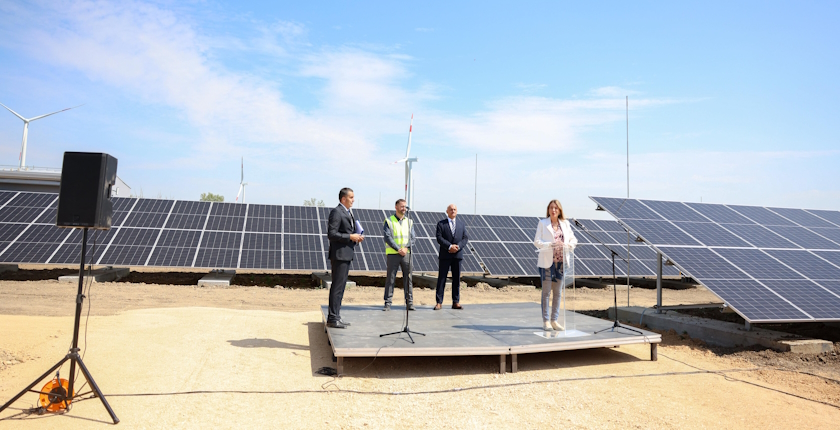
After many years of planning and launching numerous solar power projects, EPS launched the trial operation of its first larger facility of the kind. The Petka PV system has 10 MW in connection capacity. It is located on a former tailings dump of the Ćirikovac open pit coal mine in the Kostolac complex.

“It is another important pioneering milestone in our energy sector. We are now producing clean, green energy on the site of an old mining dump, which is a turning point and the beginning of the energy transition of Elektroprivreda Srbije and an example how we can use old energy for new energy,” Minister of Mining and Energy Dubravka Đedović Handanović stated.

Of note, EPS recently installed solar panels of 948 kW total on the buildings within the Termoelektrana Nikola Tesla A (TENT A) coal power plant and of TENT’s rail transportation arm. Another photovoltaic system is on the Lazići dam in Zaovine, belonging to the state-owned utility’s Bajina Bašta hydropower plant.

EPS to connect adjacent wind park Kostolac to grid next month

There are no big or small projects, as every megawatt is important for Serbia’s energy security and it means greater security, Đedović Handanović pointed out.

“In addition to the Petka solar power plant, wind generators of EPS’s first wind park stand tall today in the mining area. They are also built mainly on recultivated tailings dumps. We expect the connection to the grid in August and a testing phase, when the blades will start spinning. That way we will strengthen our electricity system here in Kostolac by 76 MW of green energy,” the minister said.

The ministry’s priorities are the projects for the Bistrica pumped storage hydropower plant and battery-backed solar power plants of 1 GW in total connection capacity

She recalled that the strategic goal of the Government of Serbia is defined by the Energy Development Strategy, to reach a 45% share of renewable energy sources by 2030.

“We have much more to do and put in maximum efforts, because ahead of us are strategic projects which will change Serbia’s electricity bloodflow to a significant extent. They primarily entail the construction of the Bistrica pumped storage hydropower plant and the project for solar power plants of 1 GW with battery storage units. Energy investments necessary in the next ten years are estimated at about EUR 14 billion. Therefore, we must make up for all the delays and be up to the task, to secure energy tranquility for the future generations”, Đedović Handanović added.

EPS continuing with other green projects in its coal mining areas

EPS’s Chief Executive Officer Dušan Živković said each new megawatt is important for the company and the electricity system, especially in tropical days, when electricity demand is getting higher and higher.

“Not only are we strengthening our green portfolio that way, but also the reliability of the entire energy system, while citizens and companies have a secure supply, the same as until now. Projects like this one are concrete steps toward decarbonization and a sustainable energy development, which are also our goals for the decades to come. We will continue with the similar projects both here in Kostolac and also at dumping and landfilling sites in other parts of EPS,” he asserted.

Petka is one of the first PV facilities in the Western Balkans on former coal exploitation locations.

In addition, the construction of the Kostolac B3 coal plant in the same complex was finished last year. It was EPS’s first big energy production system in more than three decades.

by in News

Western Balkan coal plants cut harmful emissions in 2024 but breaches remain extreme

In 2024, Western Balkan governments’ chronic law enforcement failures allowed sulphur dioxide (SO2) pollution from the region’s antiquated coal power plants to exceed legal limits by six times, according to the Comply or Close report. The overall particulate matter (PM or dust) and nitrogen oxides (NOx) pollution from coal plants continued to exceed legal limits.

Emissions of the three pollutants were actually the lowest since at least 2018, altogether, but the legal upper limits were reduced as well. Serbian coal plants released almost a third less SO2 than in 2023 thanks to desulfurization units. The drop was greater than the total decrease in the region.

Seven years since pollution control rules came into force under the Energy Community Treaty, SO2 emissions from coal plants included in the national emission reduction plans (NERPs) of Bosnia and Herzegovina, Kosovo*, North Macedonia and Serbia were still collectively six times as high as allowed, Bankwatch said in its Comply or Close annual report.

Region-wide, SO2 emissions decreased 12.1% year over year, to 518,248 tons, but it’s only 14.5% down from 2018. The limits were more stringent in 2024 than in previous years, as is the case with PM pollution and NOx, which widened the compliance gap.

BiH becomes biggest SO2 polluter in Western Balkans

For the first time, Bosnia and Herzegovina’s NERP coal plants were the highest SO2 emitters, with 212,840 tons altogether – an increase of 17.1% from the previous year – and 11.3 times as high as allowed. The group excludes the Stanari facility, built in 2016. It has complied with the European Union’s Large Combustion Plants Directive since the start.

Serbia followed, with 205,925 tons, or 4.6 times as high as allowed. The total amount of SO2 emissions fell 30.1% on an annual basis, landing at the lowest level since at least 2018. The decrease in the country was higher than in the whole region. Of note, Serbia has a new coal plant, too – Kostolac B3.

The Kostolac B coal plant has a desulfurization unit, but its SO2 emissions in 2024 were 2.3 times more than allowed

The (insufficient) drop in SO2 emissions from the NERP facilities in the country is due to desulfurization units. Some of the other improvements in the region regarding air pollution came from a decrease in production.

Kostolac B finally started to decrease its emissions in 2024 with its desulfurization system, but it still emitted 2.3 times as much as allowed.

In April 2024, the EUR 215 million desulfurisation system at Termoelektrane Nikola Tesla (TENT) A3-A6 was commissioned. It was 13 years after securing funding. The units still emitted more than twice as much sulphur dioxide as allowed in 2024. Another desulfurization facility, at TENT B, was 91% complete at the end of the year.

Ugljevik accounts for over one fifth of SO2 emissions in region as desulfurization unit is idle

For the fifth time since 2018, the biggest individual SO2 polluter in the Western Balkans was Ugljevik in BiH, with 112,943 tons – more than the previous year. It includes a desulfurization unit since 2020, but it hasn’t been working as the operator considers it an “economic burden.”

In 2024, the only potentially significant development regarding pollution control in the region was the signing of a contract for the construction of a desulfurisation unit at Kakanj 6 and 7, the report notes. It is projected to cost just under EUR 63 million. But the authors of Comply and Close pointed to the slow progress in the reconstruction of the Pljevlja coal power plant in Montenegro, which is also conducted by a consortium of China-based Dongfang.

Five coal units operating illegally

Pljevlja is the only coal plant in Montenegro. The facility isn’t under NERP rules, but under a so-called opt-out mechanism. The deadlines have expired for closing the smallest and oldest plants under the opt-out limited lifetime derogation.

Pljevlja has been running illegally since late 2020, and in 2022 was joined by Tuzla 4 and Kakanj 5 in Bosnia and Herzegovina and Morava in Serbia. The Kolubara A plant, also in Serbia, failed to stop operating at the end of 2023.

The Energy Community Secretariat has opened several infringement-type cases against the three countries, but not a single government has imposed penalties on the coal plants in question. Nor do they have clear, updated and realistic plans for compliance or closure.

Montenegro, Serbia and BiH have no clear plans for the coal plants that operate after ther their opt-out deadlines expired

“In six months, the EU’s Carbon Border Adjustment Mechanism (CBAM) will finally limit exports of Western Balkan countries’ carbon-intensive electricity by imposing fees on imports to the EU. This will make their ageing, inefficient coal plants even less economic. But the Balkan governments and utilities seem oblivious, as if they have all the time in the world. Clear, workable plans are urgently needed,” said Balkan Energy Coordinator at Bankwatch Davor Pehchevski.

Six units exceeded their individual ceilings for sulfur dioxide emissions by more than ten times – Ugljevik, Gacko, Tuzla 6 and Kakanj 7 in Bosnia and Herzegovina; Kostolac A2 in Serbia; and Bitola B1 and B2 in North Macedonia.

In 2024, Pljevlja’s SO2 emissions dropped 11.1% to 39,140 tons, the lowest level since at least 2018. Dust emissions decreased to 793 tons from a record high of 1,130 tons, but this was still higher than any other year since the beginning of the period. NOx emissions – 3,682 tons, the second-lowest result, compare to 3,982 tons registered in 2023.

Gacko coal plant tops chart in particulate matter emissions

Dust pollution from NERP coal plants in the region was 1.9 times higher than allowed last year. It dropped slightly from 2023 but remained similar to 2018 levels.

The highest emitter was Gacko in Bosnia and Herzegovina. It emitted 3,339 tons – 13.7 times above the limit. After protests by local people, improvements were announced in autumn 2023, however the plant’s pollution grew last year. Overall, dust in BiH decreased for the third time in a row, landing at 4,146 tons. The emissions in the segment peaked in 2021 at 6,040 tons.

Serbia is the only country in the region with emissions of PM particles within legal limits

Nitrogen oxides pollution in the region totaled 1.4 times above the limit, after 1.3 times more than allowed in 2023. BiH, Kosovo* and Serbia all continued to breach their NOx limits, with TENT B in Serbia emitting the most – 12,418 tons.

Kosovo* had the highest exceedance – 3.1 times as high as its ceiling. The reconstruction and modernization of one of the two units in the Kosovo B coal power plant started recently.

North Macedonia is the only country complying with the rule on nitrogen oxides. Serbia is the only one below the limit for PM particles.

“EU enlargement is back on the agenda, but the harsh reality is that Western Balkan governments are showing no interest in people’s health or the environment. Instead of a robust response to these chronic breaches, the European Commission recently prioritised the Jadar lithium mine in Serbia as strategic, rewarding the regime’s failure to uphold the rule of law. This has to change, and fast,” said Bankwatch’s Southeast Europe Energy Policy Officer Pippa Gallop.

* This designation is without prejudice to positions onstatus and is in line with UNSCR 1244/99 and the ICJ Opinion on the Kosovo declaration of independence.