by in News

New auction announced in Greece for 600 MW for electricity for vulnerable households

The Greek government specified terms and conditions for participation in a new kind of renewable energy auction, covering both wind and solar energy.

The auction comes as part of the Apollo initiative, aimed at reducing energy costs for vulnerable households across the country and fighting energy poverty. In total, 200 MW of solar plus batteries and 400 MW of wind will be auctioned.

Wind power projects of at least 60 kW may participate, with no limit set for photovoltaics. All applicants must have final connection terms from the distribution or transmission operator. Their remuneration will be based on a contract for difference (CfD). Investors can also gain a grant from European Union programs, the National Development Plan or other sources, according to the decree.

This will be a single-step static auction, with the offer price ceiling set at EUR 80 per MWh for wind projects and EUR 75 per MWh for photovoltaics with battery storage.

Equally important, the competition level is 40%, meaning that 60% of the offered capacity will be awarded up to a maximum of 600 MW. On top of that, at least three projects from different investors must participate in the process. Furthermore, no participant can apply for more than 25% of the total offered capacity, to ensure a level playing field.

Steep timeframe for selected projects

Concerning next steps, the Regulatory Authority for Energy, Waste and Water (RAEWW or RAAEY) is expected to officially proclaim the auction in the next few weeks, before the end of January. The regulator will also specify the letter of guarantee investors will have to submit, as well as the rest of the details. The submission of offers is expected to last by the end of February.

The ministry said the construction of solar farms with batteries must be completed by the end of 2027, while wind farms need to come online by September 2028.

Consumers who will benefit from cheaper renewable electricity will be notified via their power suppliers about their eligibility.

by in News

New auction announced in Greece for 600 MW for electricity for vulnerable households

The Greek government specified terms and conditions for participation in a new kind of renewable energy auction, covering both wind and solar energy.

The auction comes as part of the Apollo initiative, aimed at reducing energy costs for vulnerable households across the country and fighting energy poverty. In total, 200 MW of solar plus batteries and 400 MW of wind will be auctioned.

Wind power projects of at least 60 kW may participate, with no limit set for photovoltaics. All applicants must have final connection terms from the distribution or transmission operator. Their remuneration will be based on a contract for difference (CfD). Investors can also gain a grant from European Union programs, the National Development Plan or other sources, according to the decree.

This will be a single-step static auction, with the offer price ceiling set at EUR 80 per MWh for wind projects and EUR 75 per MWh for photovoltaics with battery storage.

Equally important, the competition level is 40%, meaning that 60% of the offered capacity will be awarded up to a maximum of 600 MW. On top of that, at least three projects from different investors must participate in the process. Furthermore, no participant can apply for more than 25% of the total offered capacity, to ensure a level playing field.

Steep timeframe for selected projects

Concerning next steps, the Regulatory Authority for Energy, Waste and Water (RAEWW or RAAEY) is expected to officially proclaim the auction in the next few weeks, before the end of January. The regulator will also specify the letter of guarantee investors will have to submit, as well as the rest of the details. The submission of offers is expected to last by the end of February.

The ministry said the construction of solar farms with batteries must be completed by the end of 2027, while wind farms need to come online by September 2028.

Consumers who will benefit from cheaper renewable electricity will be notified via their power suppliers about their eligibility.

by in News

Montenegro launches second BESS tender but for drastically smaller capacity

Power utility Elektroprivreda Crne Gore has launched its second battery energy storage system procurement tender. The required capacity is drastically lower than in the first call.

The initial public procurement was canceled because state-owned energy company Elektroprivreda Crne Gore (EPCG) didn’t obtain approval from the Government of Montenegro to take a loan for a EUR 58 million project.

The new tender envisages the procurement of a battery between 100 kW and 130 kW, with 200 kWh to 260 kWh in capacity. This is a pilot project, and the procurement is valued at EUR 75,000.

The canceled purchase was for two battery energy storage systems (BESS), at 30 MW and 120 MWh each.

The battery will be used on the distribution network

Potential locations include hydropower plant (HPP) Perućica, EPCG’s steel mill Željezara Nikšić, and the Pljevlja thermal power plant.

In the new call, the winning bidder will be obliged to secure a location for installing and testing the pilot BESS, according to the documentation.

EPCG explained that over the previous three years, its projects Solari 3000+, 500+, and 5000+ enabled a strong pace of the addition of prosumer solar power plants to the low-voltage, distribution network in Montenegro.

Although distributed generation has clear financial and ecological benefits, its rapid growth simultaneously brings a string of technical challenges for the distribution network, which was historically developed solely for supplying consumers and for unidirectional energy flow, according to the tender’s documentation.

EPCG sees the installation of batteries in substations as a solution to technical challenges caused by prosumers

The company sees the installation of BESS units within 10/0.4 kV substations as the solution for these challenges.

These batteries would be charged during the hours when photovoltaic facilities have high output in order to reduce and prevent reverse power flow. The idea is to discharge BESS units during hours of peak consumption and low voltage.

The main goal is to minimize voltage deviations in areas that the substations cover, during periods of production and consumption fluctuations. It would increase the hosting capacity for new prosumers, and enhance the stability of the distribution grid under an increased PV plant integration.

Scalability of the battery is one of the conditions for the bidders set by EPCG.

by in News

Novi Sad plans to build waste-to-energy cogeneration plant

The City of Novi Sad plans to produce electricity and heat from solid municipal waste and has invited bids for a preliminary feasibility study for a cogeneration plant that would burn processed waste from a planned regional waste management center. Surplus energy could be stored within the future solar thermal system.

Serbia’s capital, Belgrade, already has a combined heat and power plant (CHP) that uses municipal waste. As such facilities exist all over Europe, Novi Sad’s district heating enterprise Novosadska toplana specified in the public call that the study must include an overview of relevant examples and best practices.

The document is to assess the feasibility of obtaining energy from waste processed into refuse-derived fuel (RDF) and solid recovered fuel (SRF). The fuel would be produced in a mechanical-biological treatment (MBT) plant for biodegradable waste within the future regional waste management center for Novi Sad and the municipalities of Bačka Palanka, Bački Petrovac, Beočin, Žabalj, Srbobran, Temerin, and Vrbas, according to the public call.

The bid submission deadline is December 15, and the study must be completed within 180 days of the contract signing. The job is valued at RSD 22 million.

The purpose of the study is to provide a preliminary assessment of the potential for and benefits of using available solid fuel from waste for high-efficiency cogeneration for the city’s needs, as well as the feasibility of building a CHP plant fueled by RDF and SRF, according to the public call.

The cogeneration plant could burn up to 40,000 tons of solid waste fuel per year

The MBT plant at the regional waste management center is expected to produce between 30,000 and 40,000 tons of solid fuel for cogeneration. The planned location of the plant, along with a fuel storage facility, is adjacent to the existing landfill in Novi Sad, according to the documentation.

The preliminary feasibility study should propose the optimal site for the cogeneration plant, taking into account the infrastructural capacity for connection to Novi Sad’s district heating system and the distance from the fuel storage facility.

The authorities suggest that the site should be in the vicinity of the TE-TO cogeneration plant in Novi Sad, Serbia’s second-largest city, due to its excellent connections to the power grid and the city’s district heating system. In addition, this site will host a planned solar thermal system, whose underground storage facility would be able to store excess energy from the waste-to-energy plant during the summer.

Surplus energy could be stored in the future solar thermal system

The project has secured an EUR 85 million loan from the European Bank for Reconstruction and Development (EBRD) and a grant of EUR 24.7 million from the Western Balkans Investment Fund (WBIF). The system will have a storage capacity of around 870,000 cubic meters, solar collectors with a total capacity of 31 MW, heat pumps with a capacity of 17 MW, and two electric boilers with a combined capacity of 60 MW, according to the EBRD website.

The bank said the launch of the public procurement is expected on November 26.

The proposed location for the cogeneration plant should also take into account Novi Sad’s newly-built heating plant, Majevica, which is expected to become operational by the end of the year.

The study should propose the optimal technology for solid fuel incineration, a preliminary design for the cogeneration plant, as well as systems for flue gas cleaning and ash management, according to the documentation.

Since the City of Novi Sad plans to apply for grants from international institutions and funds for the preparation of technical documentation and further project development, the public call states that the study should be carried out in line with the methodology of international financial institutions such as the World Bank, the German development bank KfW, and the EBRD, including a financial analysis and an assessment of CO₂ emission reductions.

by in News

Serbia’s distribution system operator plans comprehensive restructuring

Serbia’s distribution system operator, Elektrodistribucija Srbije (EDS), plans a comprehensive restructuring to improve financial stability, operational efficiency, and investment planning capacity, in line with the country’s stand-by arrangement with the International Monetary Fund (IMF).

EDS has launched a tender to select a consultant to develop a restructuring plan. The deadline for submitting bids is set for November 28.

The consultant’s job will consist of two phases. The first phase involves analyzing the existing business model and designing and developing a new sustainable model. In the second phase, the consultant will support the implementation of the recommendations defined in the first phase, as well as the guidelines arising from the proposed financial restructuring plan, EDS has announced.

The consultant is to develop a restructuring plan and support its implementation

During the first phase, the consultant will analyze EDS’ current operations, including its financial position, key business processes, management structure, and IT systems. Based on the analysis, a target business model and a financial restructuring plan will be developed, including scenarios and stress tests to assess the company’s resilience to potential challenges.

The second phase will focus on implementing the recommendations and the proposed model, including coordination with internal teams, monitoring progress, evaluating the effectiveness of changes, and supporting employee training. Special attention will be given to digitalization, business process optimization, and customer service improvements.

The project should help digitalize business processes

Some elements of EDS’s operations that are expected to be improved include meter issuance and reading, as well as electricity loss management. The consultant’s job also involves mapping IT systems and projects that support the automation and digitalization of business processes, according to EDS.

The consultant will also be expected to develop a comprehensive implementation plan, including timelines, resource allocation, and project risk management strategies, and provide regular progress reports highlighting challenges and proposing steps to address them.

A final report on the restructuring efforts will also be required, including lessons learned and recommendations for future initiatives, according to EDS.

by in News

Serbia plans hydrogen transport through gas pipelines

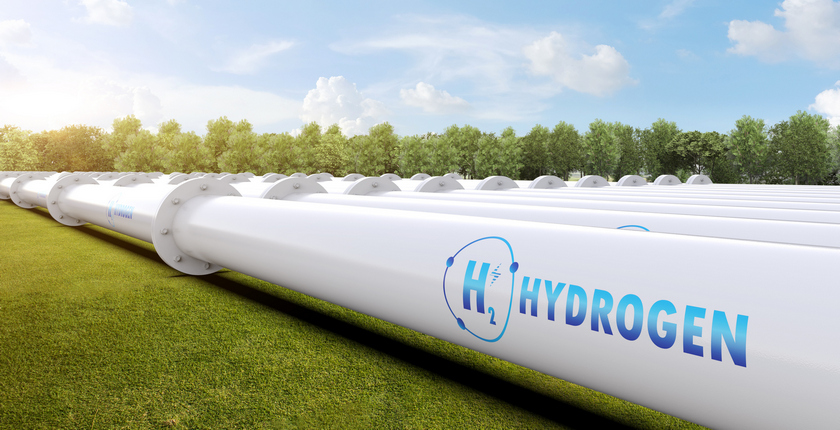
Serbia’s natural gas transmission system operator, Transportgas Srbija, has invited bids for the preparation of a study on the technical feasibility of transporting hydrogen through the gas network. The study should assess the quantities of hydrogen that can be transported, as well as the impact of blending hydrogen with natural gas on the transmission system and key consumers. The goal is to determine the technical, investment, and regulatory measures necessary for integrating hydrogen into Serbia’s gas infrastructure.

Transportgas notes that hydrogen, as an alternative fuel, is becoming increasingly important in the context of decarbonization and energy security. It also recalls that the Energy Community has set goals for defining natural gas quality for all transmission system operators in Southeast Europe, with special emphasis on the introduction and application of hydrogen.

Serbia would transport hydrogen by blending it with natural gas. Transportgas recalled that gas pipelines built in recent years or currently under construction in Europe are capable of transporting 100% pure hydrogen.

Transportgas: New gas pipelines in Europe can transport pure hydrogen

The study should, among other things, determine the maximum percentage of hydrogen that can be blended with natural gas, as well as the impact on equipment and transmission system losses.

The selected consultant will also be required to determine the chemical composition of the hydrogen-natural gas blend, define the blending procedure, and identify the optimal blending points within the transmission system, as well as suitable sites for hydrogen production and storage in Serbia.

The study should also assess how much hydrogen blended with natural gas can be transported through existing gas pipelines, taking into account the varying qualities of natural gas from different supply routes. The construction of the Balkan Stream gas pipeline and the interconnector with Bulgaria near Dimitrovgrad has enabled Serbia to diversify its gas supplies, Transportgas pointed out.

The study should also identify suitable sites for hydrogen production and storage in Serbia

The study must include an assessment of the impact of the chemical composition and quality of the hydrogen-natural gas blend on major gas consumers in Serbia – steelworks Železara Smederevo, asphalt plants, compressed natural gas (CNG) filling stations, oil refinery Rafinerija nafte Pančevo, cogeneration plants TE-TO Pančevo and TE-TO Novi Sad, petrochemical plant HIP-Petrohemija Pančevo, methanol producer MSK Kikinda, and district heating plants in Belgrade and Zrenjanin.

The consultant will be required to recommend investments needed to introduce hydrogen, such as installing gas analyzers, building new gas pipelines, and upgrading existing infrastructure.

The consultant will be expected to recommend necessary regulatory changes

The consultant’s obligation will also be to propose regulatory changes to enable the introduction of hydrogen into the gas infrastructure, the invitation states, noting that the regulations in question include the Law on Energy and the government decree on terms of natural gas delivery and supply.

The deadline to submit bids is July 23, and the selected consultant will have 180 days to complete the work.

by in News

Energy Community says it will call two tenders under WB6 electricity market

The Energy Community Secretariat has published service prior information notices regarding two upcoming tender procedures under WB6 electricity market integration initiative which are to be launched at the end of August or beginning of September 2017.

The tenders will be launched for technical assistance in the implementation of the Western Balkan six day-ahead market coupling (WB6 DA MI) Program, and for technical assistance to the implementation of cross-border electricity balancing, the statement said.

The first technical assistance will consist of providing project management support to the related governance bodies and expert support needed throughout different phases of the implementation of any individual market coupling project that will be defined in the WB6 DA MI roadmap for the implementation of regional market coupling.

The technical assistance for the implementation of cross-border electricity balancing will consist of providing expert support needed to develop a consistent and feasible roadmap for cross-border balancing cooperation in the WB6 region and its integration into the pan-European market.

The tender documents will be published on the website of the Energy Community and Wiener Zeitung, the official publication body of Austria. The launch of the tenders is intended for end August/beginning September 2017 and will follow an “open procedure” as defined by Austrian public procurement law.

The tenders are part of the project activities set out in the work program for the provision of technical assistance to Western Balkan 6 Contracting Parties under the project “Technical Assistance to Connectivity in the Western Balkans – Component 2: Regional Energy Market” funded by the European Union and implemented by the Energy Community Secretariat.

by in News

Greece to launch tender for power grid operator end June

Lower_provisions_and_energy_costs_boost_Greeces_PPC_Q3_profit_1Greece’s main power utility will formally launch the sale of a stake in its power grid operator ADMIE in June, a step towards opening up its electricity market and complying with the terms of its international bailout.

PPC controls almost 95 percent of the Greek retail market and must reduce this to below 50 percent by 2020 under its third bailout.

Greece has also promised to sell up to 24 percent in ADMIE, a grid of more than 11,000 km of high-voltage power cables which is fully owned by PPC.

PPC’s Chairman and Chief Executive Manolis Panagiotakis said on Wednesday the tender process is expected to start at the end of the month and conclude in October. He said however that it was important that it remained under state control.

“The launch of the tender will be approved by the general assembly (on June 30) and will be published a few days later,” Panagiotakis told Reuters on the sidelines of a press briefing.

“We hope that it will be concluded by mid-October and that there will be interest from investors.”

Earlier, he said that it was important that PPC received ‘just compensation’.

Greece has tried to sell PPC before. Soon after winning parliamentary elections, Greece’s leftist Syriza government froze the process, but later pledged that to keep the asset at least partly state-controlled.

Panagiotakis called conditions “adverse and unprecedented”.

Owed about 2.5 billion euros ($2.8 billion) in unpaid bills after Greece’s deep recession, the company has announced a 15 percent tariff cut for customers who pay consistently on time, a move which may crimp revenues.

Panagiotakis could not estimate the exact impact and said it could be ‘negligible’.

However the company was optimistic that collection of overdue payments would improve overall and that state arrears would be settled after the disbursement of fresh bailout loans expected this month.

ADMIE planned to invest in Albania’s electricity market, he said, and would also revise costs and take investment and business initiatives.

PPC reported a 10 percent rise in first-quarter core profit, helped by energy savings from declining oil prices and lower provisions for unpaid bills. It plunged into loss last year as it set aside hundreds of millions of euros to cover the unpaid bills. ($1 = 0.8793 euros)