by in News

Skopje Declaration signed as International Forum on Energy for Sustainable Development wraps up

The 14th International Forum on Energy for Sustainable Development (IFESD-14) concluded yesterday with the signing of the Skopje Declaration. During the three-day summit, North Macedonia’s capital became a global center of dialogue, ideas, and visions for the future, according to the Ministry of Energy, Mining and Mineral Resources of North Macedonia.

This year’s edition of the International Forum on Energy for Sustainable Development (IFESD-14), themed From Goals to Action: Powering the Future with Sustainable Energy, was closed in Skopje yesterday. The event was organized by the Ministry of Energy, Mining and Mineral Resources of North Macedonia, in cooperation with the United Nations Development Programme (UNDP) and the UN’s five regional commissions – UNECE, UNESCAP, UNECLAC, UNECA, and UNESCWA.

Representatives of the UN and the five regional commissions described the organization of the event as flawless, and praised North Macedonia and Skopje as excellent hosts on the global energy scene, the Ministry pointed out.

The forum brought together over 500 participants from more than 70 countries

The forum brought together over 500 participants from more than 70 countries. Over 150 speakers took part in 35 themed sessions and panels, presenting ideas, solutions, and concrete steps for the future of the global energy transition.

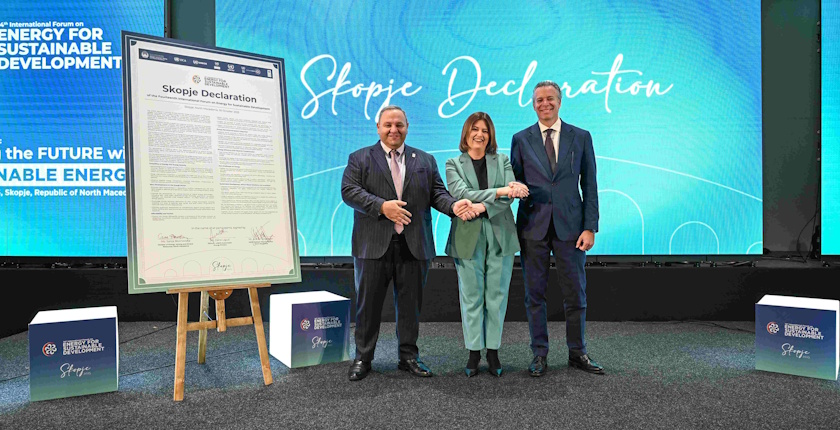
On behalf of all participants, the Declaration was signed by Minister of Energy, Mining and Mineral Resources Sanja Božinovska, UNDP Resident Representative for North Macedonia Armen Grigoryan, and Dario Liguti, Director of the Sustainable Energy Division at UNECE.

The signatories agreed that the way forward requires regional connectivity, smart investments, digital transformation, and an inclusive energy transition that leaves no one behind.

Božinovska: A new impetus for energy cooperation, solidarity, and vision

[wpcc-iframe title=”Sanja Božinovska statement on the occasion of IFEST25 Skopje and signing the Skopje Declaration” width=”500″ height=”281″ src=”https://www.youtube.com/embed/ZgcrsSuNVes?start=1&feature=oembed” frameborder=”0″ allow=”accelerometer; autoplay; clipboard-write; encrypted-media; gyroscope; picture-in-picture; web-share” referrerpolicy=”strict-origin-when-cross-origin” allowfullscreen=””]

In her closing address, Božinovska emphasized that the forum represented a turning point for the region.

“Over the past three days, Skopje has been a global stage for energy vision and dialogue on sustainable development. What we witnessed here was a wave of knowledge, cooperation, and ambition – a forum that demonstrated that when institutions, scientists, businesses, and international partners sit at the same table, change happens,” she stressed.

Božinovska emphasized that the Skopje Declaration sends a strong signal that the Western Balkan region is not just a follower of the global energy transition, but an active driver.

The future was not just discussed, but also set in motion

“I am proud that it is from Skopje, at the heart of the Balkans, that a new impetus for energy cooperation, solidarity, and vision is emerging. This is proof that North Macedonia can be a platform for ideas that will transform the region. The 14th International Forum on Energy for Sustainable Development will be remembered as the place where the future was not just discussed, but also set in motion. Let us continue to build the energy future that our citizens deserve,” said Božinovska.

Grigoryan: Skopje has demonstrated global solidarity in action

[wpcc-iframe title=”Mr Armen Grigoryan, UNDP Resident Representative, statement on IFESD25 Skopje” width=”500″ height=”281″ src=”https://www.youtube.com/embed/uH2-5cr5ju0?feature=oembed” frameborder=”0″ allow=”accelerometer; autoplay; clipboard-write; encrypted-media; gyroscope; picture-in-picture; web-share” referrerpolicy=”strict-origin-when-cross-origin” allowfullscreen=””]

Armen Grigoryan, UNDP Resident Representative for North Macedonia, said that the path to sustainable, reliable, and affordable energy is clear, but that it requires unity and vision.

According to him, it requires political will, global solidarity, and commitment.

UNDP is pleased to work together with the Government and the Ministry of Mining, Energy and Mineral Resources, as well as regional commissions, on policies, emission reduction solutions, inclusivity, and air quality improvements, according to him. UNDP invests in people and innovation to achieve measurable results that citizens can feel at home, at work, and everywhere, he added.

Liguti: The Skopje Declaration is a signal of the region’s ambition and vision

According to Dario Liguti, Director of the UNECE Sustainable Energy Division, the document signed in Skopje will remain an important reference point in global energy processes.

He said that the Skopje Declaration represents a strong signal of the regional and global cooperation and ambition, confirming the shared commitment to accelerating a just and inclusive energy transition – a transition that delivers real progress for people and the planet.

Conclusion: smart technologies, a just transition, and green investments

Božinovska, Grigorian, and Liguti (phto: Ministry of Mining, Energy and Mineral Resources)

The document states that signatories will work on integrated and inclusive energy policies; the modernization of power grids and digitalization; investments in renewable energy sources and a just transition; and the promotion of green financing and gender equality in energy.

“Together, we can transform the global energy system into one that safeguards our climate, drives innovation, ensures affordability, and delivers prosperity for all,” reads the closing paragraph of the Skopje Declaration.
by in News

Europe’s Environment 2025 report: Not good

Biodiversity is declining and water stress is affecting one third of Europe’s population and territory, while the frequency and magnitude of climate-related disasters are increasing. In short, this is the message from the report Europe’s Environment 2025.

​Europe’s Environment 2025 is the most comprehensive analysis on the current state and outlook for the continent’s environment, climate, and sustainability, building on data from across 38 countries, according to the European Environment Agency (EEA).

The outlook for most environmental trends is concerning and poses major risks to Europe’s economic prosperity, security, and quality of life, the authors warned. The agency said climate change and environmental degradation pose a direct threat to Europe’s competitiveness, pointing out that it depends on natural resources.

Progress on a range of factors that enable the shift towards sustainability – such as innovation, green employment, and sustainable finance – gives cause for hope, EEA added.

​More than 80% of protected habitats are in a poor or bad state

The report shows biodiversity is declining across terrestrial, freshwater, and marine ecosystems in Europe due to persistent pressures driven by unsustainable production and consumption patterns, demonstrated most notably in the food system.

More than 80% of protected habitats are in a poor or bad state, with 60% to 70% of soils degraded, the document reads.

On a positive note, the extent of protected areas increased over the past decade – by 2022, 26.1% of the European Union’s land and 12.3% of its seas were protected. However, designating protected areas alone does not guarantee that biodiversity is effectively protected, the authors wrote.

​Water stress is affecting one third of Europe’s population and territory

The report’s findings point to severe pressure on water resources: water stress is affecting one third of Europe’s population and territory.

Only 37% of surface water bodies had a good or high ecological status in 2021, with the degradation of aquatic ecosystems threatening Europe’s water resilience. Agriculture is responsible for the most significant pressure on both surface and groundwater, data revealed.

EEA recalled that Europe is the fastest-warming continent on the planet.

Weather- and climate-related extremes caused economic losses of assets estimated at EUR 738 billion in the EU’s 27 member states over the period 1980-2023, with over EUR 162 billion in costs from 2021 to 2023 alone, the report reads.

Over 70,000 people in Europe are estimated to have died from heat in 2022.

The average annual economic losses in the 2020‑2023 period were 2.5 times as high as in the preceding decade, from 2010 to 2019, according to the report.

Downpours are increasing in severity, with several regions subject to catastrophic floods in recent years, while extreme heat, once rare, is becoming more frequent, with deadly consequences: over 70,000 people in Europe are estimated to have died from heat in 2022.

The greatest challenges call for a need to rethink the links between the economy and the natural environment, land, water and natural resources, EEA underscored.

“We cannot afford to lower our climate, environment and sustainability ambitions. Our state of environment report, co-created with 38 countries, clearly sets out the science-based knowledge and demonstrates why we need to act. In the European Union, we have the policies, the tools and the knowledge, and decades of experience in working together towards our sustainability goals. What we do today will shape our future,” EEA Executive Director Leena Ylä-Mononen said.

Bright spots

The report also highlighted the good results of environmental protection policies in Europe.

The EU has cut its domestic greenhouse gas (GHG) emissions by 37% since 1990, largely driven by reducing fossil fuel use and doubling the share of renewables since 2005.

All member states have reduced their reliance on fossil fuels and shifted towards more sustainable energy sources over the last decade, while increased energy efficiency has brought down demand.

In 2023, renewable energy sources represented over 24% of the EU’s final energy use, a record high.

The bloc’s industrial system has managed to reduce emissions by more than 35% from 2005 to 2023, while emissions from buildings fell by more than 35% between 2005 and 2023.

Significant progress has been made in reducing pollution in Europe. EU policies led to improvements in air quality and reduced premature deaths attributable to fine particulate matter from 2005 to 2022 by 45%, according to the Europe’s Environment 2025 report.

by in News

Green solutions in practice: Roundtable in Knjaževac points the way to a sustainable, energy-efficient future

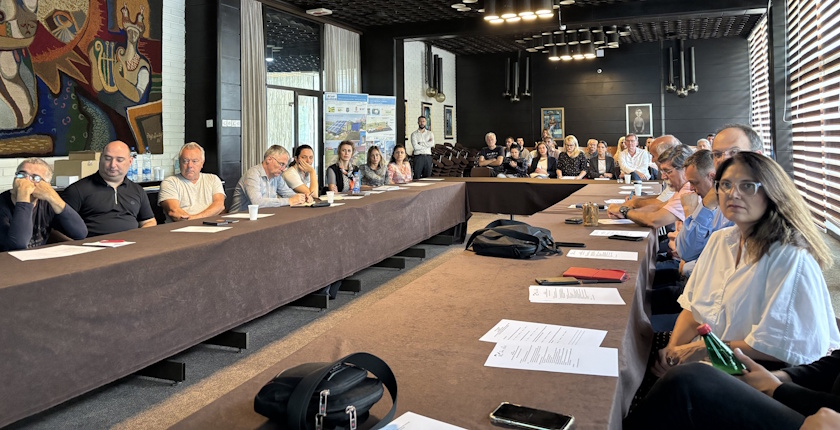
A roundtable titled Green Solutions in Practice, held in the eastern Serbian town of Knjaževac, brought together local government officials, experts, rural tourism providers, entrepreneurs, and citizens to exchange experiences on renewable energy sources and energy efficiency.

The event was organized by the Regional Development Agency of Eastern Serbia (RARIS) as part of the Promotion of Renewable Energy Sources and Energy Efficiency in Eastern Serbia project, implemented by German Cooperation in Serbia GIZ. The gathering demonstrated that eastern Serbia is becoming an increasingly active player in implementing green solutions and strengthening energy sustainability.

The roundtable Green Solutions in Practice was opened by Saša Petrović, Deputy Mayor of Knjaževac, who highlighted the importance of the green transition for promoting rural development and improving the quality of life.

Daniela Kostadinova, a representative of GIZ, presented the organization’s contribution to achieving energy sustainability in Serbia. She said that the project’s results so far have been highly significant, but added that she believes further development and awareness-raising are still necessary.

Photo: RARIS

Kostadinova also stressed the importance of financial support for citizens to implement energy efficiency measures, and she pointed out that energy poverty should be the next priority to address. She expressed hope that some ideas would be realized by the end of the Promotion of Renewable Energy Sources and Energy Efficiency in Serbia project, which runs until December.

Expressing her satisfaction at the opportunity to visit partner municipalities, Kostadinova noted that GIZ strives to provide both advice and support to its partners in the implementation of projects. She added that long-term success is extremely important to GIZ, which seeks to maintain its reputation as a high-quality and reliable partner.

Empowering eastern Serbia through renewable energy

Vladan Jeremić, Director of RARIS, presented the results of the Promotion of Renewable Energy Sources and Energy Efficiency in Eastern Serbia project. Four key results have been achieved: establishing a regional platform for renewable energy and energy efficiency in Eastern Serbia as a mechanism for aligning the positions, interests, and policies of key local and regional stakeholders; strengthening regional capacities; opening the Energy Advisory Center; and raising public awareness about the importance of renewable energy sources and energy efficiency.

Jeremić: People are eager to learn about renewable energy sources and energy efficiency

As a result of the regional platform’s work, the first renewable energy and energy efficiency fair was held in Zaječar. Numerous workshops and training sessions have been organized, and a guide on applying renewable energy and energy efficiency in rural tourism has been produced.

According to Jeremić, the project has shown that people are eager to acquire the knowledge they need to improve their lives in practice, making them more cost-effective, affordable, and sustainable, while also contributing to the energy transition.

“At the initiative of citizens, although it wasn’t planned within the project, we organized the fair. Even though we didn’t have an appropriate exhibition space, and despite the demanding nature of such events, we worked with great enthusiasm. The fair brought together technicians, engineers, and representatives of local governments and the private sector, many of whom are here today, which we see as a strong indicator of our success,” he said.

Managing energy efficiently in rural tourism

As part of the project, an interesting guide has been prepared for owners of rural tourism households, offering practical tips for improving energy efficiency, reducing costs, and introducing sustainable solutions into their business.

Ivan Svetozarević, the author of the guide and owner of a rural tourism household called Gorski konak in the village of Zubetinac, presented the guide through an engaging presentation filled with personal examples. The presentation addressed the question of how to manage energy efficiently in rural tourism. Situated on the slopes of Stara Planina, Gorski konak stands out as a model of sustainability.

Photo: Ivan Svetozarević / RARIS

The Svetozarević family equipped the household with solar panels, solar collectors for water heating, and a heat pump. Guests can use electric bicycles to reduce car use and emissions. Cooperation with neighbors and local producers further enhances the sustainability of the entire complex.

“My wife and I have been in this for over 20 years, but only a few years ago did we have the opportunity to install solar panels and a heat pump. Sustainability is actually our way of life,” said Svetozarević.

Multidisciplinary approach as a key to communication

Maja Lalić, Creative Director of the Mikser Festival, emphasized the importance of communication in promoting sustainable practices and raising public awareness about renewable energy sources and energy efficiency.

“The Mikser Festival is a partner of GIZ in popularizing these topics, seeking to involve the culture and creative industries sector, which has so far been rarely represented in discussions on renewable energy and energy efficiency. As a multidisciplinary platform, Mikser brings together numerous actors from different fields and engages in citizen education to bring these important topics closer to a wider audience,” she said.

For years, the organization has been staging events in revitalized abandoned industrial facilities as part of circular economy measures, applying various sustainable practices, such as issuing e-tickets, using reusable cups, and avoiding PVC branding.

Photo: RARIS

In cooperation with GIZ, this year’s edition of the festival developed an interactive educational program to increase energy literacy among three target groups: architecture and design professionals, young people, and the general population. The program included a panel discussion titled New Citizen Energy, where experts and prosumers dispelled myths about energy, shared experiences, and presented local challenges and solutions.

A special focus was placed on youth and children through workshops, empowering them to become agents of community change and develop creative ways to raise energy awareness and sustainable habits.

Mikser as a communicator and a dissemination platform

Maja Lalić highlighted the importance of decentralization, noting that successful initiatives from different parts of Serbia are encouraging, though they often remain less known to the wider public.

“Mikser positions itself as a communicator and a platform for disseminating success stories, giving people and communities space to share their experiences and inspire others. It is precisely this openness that makes the festival a dynamic place of meeting and exchange, supporting the further development of sustainability,” she said.

Examples of good practice

The application of renewable energy sources and energy efficiency measures goes far beyond installing solar panels or replacing windows, as demonstrated by various innovative examples of good practice.

Ilija Stevanović from the Mihajlo Pupin Institute presented innovative solutions developed in cooperation with farmers, schools, and festivals. As a special example, he cited the “digitalized field” implemented in collaboration with farmer Nikola Lončar from Belegiš and the smart device Mobisan – a mobile solar power generator.

Mobisan combines soil sensors, a weather station, and wireless communication to collect data on microclimate and soil conditions, enabling automated irrigation and fertilization. The device is controlled remotely and powered by solar panels, saving resources and reducing the use of chemicals.

Ognjen Tomašević from the Exit Foundation presented the “Green Exit” initiative and plans to improve the energy efficiency of one of the region’s largest events.

Innovative solutions are contributing to the festival’s energy efficiency

In addition to recycling, which has been a focus of the Exit Festival’s activities for five years, a “solar guitar” and gramophone-shaped solar collectors have been developed in cooperation with the Mihajlo Pupin Institute. These two devices provide electricity and hot water to Exit camp users, aiming to improve its energy efficiency.

Photo: Solar guitar / Mihajlo Pupin Institute

Aleksandar Branković, the owner of one of the first home solar power plants in eastern Serbia, presented his 6.7-kilowatt system installed back in 2013, making it one of the first in Serbia.

Vladan Dragićević, energy manager at the Municipality of Knjaževac, presented the achievements of the Energy Advisory Center. “The Energy Advisory Center is not just a place – it is a network of trust, a space where knowledge turns into savings and the energy transition into an opportunity for all,” he emphasized.

More than 70 citizens have received support at the Energy Advisory Center

The center provides relevant information and advice enabling citizens and businesses to use energy more efficiently, reduce costs, and even generate additional income. To date, more than 70 citizens have received advisory support.

The center is open for both individual consultations and group discussions on various topics, and it offers all necessary advice related to energy efficiency.

by in News

September 15 – new deadline for applications for 2025 Female Leader in Sustainable Energy

WISE Serbia, women’s network in sustainable energy, climate action, and environment, under the auspices of the German development cooperation GIZ, has extended the deadline for applications within the 2025 Female Leader in Sustainable Energy award. The new application deadline is September 15.

The call for nominations aims to recognize women who, through their leadership, outstanding achievements, and vision, have demonstrated significant contributions to the sustainable development of Serbia’s energy and related sectors, energy transition acceleration, improvement of energy efficiency, energy security, and safety, as well as the greater recognition of women in this field.

Information about the Award competition

Women professionally engaged in the energy sector, climate action, or environmental protection in Serbia are eligible to apply, both citizens of Serbia and foreign nationals working in Serbia. The candidates themselves can submit applications, as well as their employers, colleagues, or teams who wish to highlight the outstanding achievements of their associates.

The invitation is open to all profiles – decision-makers, employees in business, public enterprises, academia, civic energy, non-governmental sector, international organizations, consulting teams, legal and financial institutions, IT experts, as well as media representatives.

The application needs to be emailed by September 15, 2025, to [email protected]. It needs to include:

  1. Nomination letter presenting the candidate and listing the significant results and achievements nominating her for the selection.
  2. Professional résumé.
  3. A short nomination statement to present to the wider public on the WISE Serbia website and social media platforms. The statement should be up to 100 words.
  4. Photo portrait in high resolution.
  5. Contact info – email address, phone number, social network accounts that the candidate is actively using.

Applications should be sent by email to [email protected].

After processing the submitted applications, the candidates’ profiles will be published on the WISE Serbia network website – wisesrbija.org, and the voting will be open to the public. The candidate with the highest number of votes will be awarded the title of Female Leader in Sustainable Energy.

The announcement ceremony for the Leader in Sustainable Energy 2025 will take place during the WISE Serbia women’s network annual conference in mid-October in Belgrade.

by in News

Applications for 2025 Female Leader in Sustainable Energy Award in Serbia opened

WISE Serbia, the Network of Women in Sustainable Energy, Climate Action, and Environment, under the auspices of the German development cooperation GIZ, announces the call for nominations for the 2025 Female Leader in Sustainable Energy Award. The call is intended for women who are professionally engaged in the energy and related sectors in the Republic of Serbia and who have demonstrated outstanding results in their careers. Application process is open until September 10.

The call for nominations for the 2025 Female Leader in Sustainable Energy Award aims to recognize women who, through their leadership, outstanding achievements, and vision, have demonstrated significant contribution to the sustainable development of the Serbia’s energy and related sectors, energy transition acceleration, improvement of energy efficiency, energy security, and safety, as well as the greater recognition of women in this field.

The Female Leader in Sustainable Energy award was established in 2023 by the Center for the Promotion of Sustainable Development, the founder of the WISE Serbia women’s network, under the auspices of the German development cooperation GIZ. The WISE Serbia network was established in 2018 and is among the first of its kind globally.

The recipient for the previous year, was Svetlana Cerović, Director of Specialized Financing at UniCredit Bank Serbia

The title of the Female Leader of Sustainable Energy has been awarded to several notable individuals. For 2023, the recipients are Dubravka Đedović Handanović, Minister of Mining and Energy in the Government of the Republic of Serbia; Maja Turković, Executive Vice President at CWP Global; and Ana Džokić, co-founder of the energy cooperative Elektropionir. The recipient for the previous year, 2024, was Svetlana Cerović, Director of Specialized Financing at UniCredit Bank Serbia.

Photo: GIZ’s Project Director Till Barmeier with the laureate, Svetlana Cerović from UniCredit Bank Serbia

“The Female Leader in Sustainable Energy Award is an opportunity to learn more about the achievements, initiatives, and enthusiasm of women who push boundaries through their engagement and contribution to sustainable energy. It is also an exceptional opportunity for networking and exchanging knowledge and experiences within the WISE initiative and beyond,” said Cerović.

Last year’s award winner invited all interested women to take part in this year’s award process and emphasized that she looks forward to future cooperation and joint initiatives.

Information about the Award competition

Women professionally engaged in the energy sector, climate action, or environmental protection in Serbia are eligible to apply, both citizens of Serbia and foreign nationals working in Serbia. The candidates themselves can submit applications, as well as their employers, colleagues, or teams who wish to highlight the outstanding achievements of their associates.

The pannel discussion at 2024 annual event of the WISE Serbia women’s network : pictured from left: Maja Turković, Ankica Babulov, Dušan Macura, Ana Džokić

The call is open to all profiles – decision-makers, employees in business, public enterprises, academia, civic energy, non-governmental sector, international organizations, consulting teams, legal and financial institutions, IT experts, as well as media representatives.

The call is open from August 25 to September 10.

The call for nominations for the Leader of Sustainable Energy is open from August 25 to September 10, 2025. The application needs to be emailed by September 10, 2025, to [email protected]. It needs to include:

  1. Nomination letter presenting the candidate and listing the significant results and achievements, nominating her for the selection.
  2. Professional résumé.
  3. A short nomination statement to present the shortlisted candidate to the wider public (on the WISE Serbia website and social media platforms). The statement should be up to 100 words.
  4. Photo portrait in high resolution.
  5. Contact info – email address, phone number, social network accounts that the candidate is actively using.

Applications should be sent by email to [email protected].

After processing the submitted applications, the candidates’ profiles will be published on the WISE Serbia Network website – wisesrbija.org, and the voting will be open to the public. The candidate with the highest number of votes will be awarded the title of Leader in Sustainable Energy.

The announcement ceremony for the Leader in Sustainable Energy 2025 will take place during the WISE Serbia Women’s Network annual conference in mid-October in Belgrade.

by in News

Cities are driving the transition to climate neutral and fair housing

Author: Anna Iafisco, policy adviser for housing at Eurocities, EUSEW’s partner organisation

City governments are ready to lead the transition to climate-neutral buildings by 2050, but they cannot do it alone. To ensure a fair transition, they need EU and national support to help low- and middle-income households access renovation support. With better funding, aligned policies, and tools like one-stop shops, cities can deliver warmer homes, lower bills, and a liveable future for everyone.

The road to climate neutrality runs through our homes – and cities are taking the lead. Buildings account for 40% of Europe’s energy use and 36% of emissions, making the decarbonisation of our built environment both a major challenge and a vital opportunity.

By improving energy efficiency, particularly in the residential housing stock, cities are not only cutting emissions and boosting energy security, but they are also improving people’s quality of life. Crucially, this transformation offers a chance to tackle energy poverty, which still leaves too many households without adequate heating, cooling or lighting, while also addressing the question of equitable access to green and healthy living spaces.

For the transition to succeed, it must be fair. At Eurocities, we believe no one should be left behind, especially vulnerable and low- to middle-income households, often exposed to high energy bills and inadequate living conditions.

Reaching a climate-neutral building stock by 2050 will depend on inclusive, well-funded renovation policies that reflect the realities of Europe’s diverse housing systems, and on empowering cities to lead the way.

A diversity of housing systems, a common challenge

Europe’s housing systems are highly diverse, from strong social and cooperative housing sectors in some countries to more privatised or market-driven systems in others. Any EU-wide building policy must allow for flexibility, enabling local, regional and national governments to tailor solutions to their specific situations.

A one-size-fits-all approach to financing renovation risks excluding those who fall outside strict income thresholds or tenancy rules, particularly in private rental markets, where incentives often do not reach either landlords or tenants. Elsewhere, outdated ownership structures or limited municipal control over social housing create further obstacles.

This diversity must be explicitly acknowledged in EU policy frameworks. We need adaptable rules that empower local authorities to reach those most in need, protect tenants from the risk of displacement, and ensure that EU funding tools match the real conditions on the ground.

One-stop shops: making renovation simple and inclusive

One of the most effective ways cities can support households through the transition to energy-efficient and sustainable homes is by setting up one-stop shops. These local services provide clear, accessible information about renovation options, available grants and loans, technical support, and trusted contractors – all in one place.

In Milan, the ‘Sportello Energia’ (Energy Desk) helps residents navigate energy efficiency improvements, with a special focus on reaching low-income and energy-poor households. The city combines this advisory service with targeted financial support, enabling families to carry out renovations they otherwise could not afford.

Similarly, in Rotterdam, the ‘WoonWijzerWinkel’ offers a physical and digital one-stop-shop, where residents can get free independent advice tailored to their homes. The shop has become a trusted go-to point for citizens who may otherwise be excluded from renovation schemes.

These examples show how local services, when designed with people’s needs in mind, can build trust and boost the renovation rate, especially among the most vulnerable.

Targeting support where it matters most

We know that comprehensive renovations are costly, and many households cannot afford them. That is why targeted public investment is vital. Renovation efforts must focus first on the worst-performing buildings, which are often home to people at risk of energy poverty. This is where we can achieve the greatest impact, both for the climate and for residents’ wellbeing.

In Vienna, a long-standing commitment to affordable housing has positioned the city as a leader in socially inclusive climate action. The city is implementing a large-scale renovation programme for its social housing stock, combining energy efficiency improvements with tenant protection measures and cost control.

Meanwhile, in Ghent, Belgium, the city has partnered with social organisations to reach vulnerable households and co-develop tailored renovation plans. This collaborative model ensures that support reaches those who need it most, while building long-term capacity within communities.

These experiences offer valuable lessons for the implementation of the EU’s revised Energy Performance of Buildings Directive. Cities are ready to roll out building upgrades, but they need clear standards, funding and flexibility to adapt to their local realities.

Decarbonising heating, improving lives

Renovating buildings is only part of the solution. Most homes in Europe are still heated with fossil fuels, particularly natural gas. To meet the EU’s 2050 climate targets, we must rapidly phase out fossil fuel boilers and invest in renewable, efficient heating and cooling systems. This is a crucial step to reduce emissions and protect residents from rising fuel costs and energy insecurity.

Cities are already taking action. In Paris, the city is expanding its district heating network based on renewable energy sources, prioritising connections for social housing and public buildings. This approach not only cuts emissions but also shields residents from volatile energy prices, demonstrating the power of public infrastructure to deliver a just transition.

A vision for truly affordable climate-neutral homes

To fully realise the transformation of the built environment, Europe must also advance a shared agenda for affordable, inclusive, and healthy housing. The upcoming European Affordable Housing Plan presents an opportunity to address the affordability crisis by supporting investment in affordable housing, improving existing stock through deep renovation, and aligning climate, environment and social objectives.

Cities are implementing change, but they need greater support to deliver renovation programmes for social and affordable housing, to develop new housing construction that meets climate neutrality and environmental objectives, affordability and accessibility standards. At the same time, EU funding instruments must be better coordinated and easier to access, so they reflect local priorities and realities.

By embedding the principle of housing as a human right into the green transition, the EU can drive a shift towards housing systems that are not only sustainable, but also fair, resilient and inclusive.

A call to action

If we want to reach climate neutrality by 2050, there is no time to lose. A swift, ambitious implementation of the Energy Performance of Buildings Directive, in alignment with the EU Nature Restoration Law, is essential to meet the 2030 targets and to lay the foundation for a fair, sustainable future.

Despite political pressure, the EU should remain focused on putting the recently adopted directive and regulation into practice, rather than adding further uncertainty to an already complex political landscape.

Cities stand ready to lead this transformation. But they cannot do it alone. We call on the EU and Member States to work closely with city governments, empower them through direct access to funding, and ensure that climate, environment and housing policies support the same goal: better homes, healthier lives, and a liveable planet for all.

The building transition must be about more than cutting emissions. It must ensure that everyone, regardless of income or housing tenure, can live in a decent, energy-efficient and quality home.

If we get this right, we will not just reduce carbon and help restore nature, we will ensure a better future for the people of Europe.

This opinion editorial is produced in co-operation with the European Sustainable Energy Week (EUSEW) 2025. See ec.europa.eu/eusew for more details.