by in News

Albania’s Hydropower Surge Strengthens Its Position in Regional and EU Energy Markets

The first three months of 2026 marked a substantial increase in electricity generation in Albania, driven primarily by a sharp rise in hydropower output. Production from hydropower plants was 70% higher in January–March 2026 compared to the same period a year earlier.

According to data published in the report of the Energy Community on the Carbon Border Adjustment Mechanism (CBAM), Albania gained a clear advantage over other regional countries in exporting electricity generated from renewable sources.

Specifically, the first quarterly report on CBAM implementation highlights that Albania’s hydropower generation increased significantly, positioning the country as a far more aggressive net exporter of electricity to both the regional market and the European Union.

“Hydropower production in Albania increased by 1.34 TWh (+70%) in the first quarter of 2026 compared to the same period in 2025, rising from 1.93 TWh to 3.27 TWh,” the report states. This growth was concentrated in January and February, with increases of +72% and +84% respectively, reflecting exceptionally favorable hydrological conditions.

This surplus translated directly into higher exports. Albania increased scheduled electricity exports by approximately 4,100 MWh per day to Greece, 3,700 MWh per day to Kosovo, and 2,000 MWh per day to Montenegro.

The report estimates that “these shifts in trade flows represent a net movement of approximately 1.2 TWh of Albanian electricity exported in the first quarter of 2026,” a volume that closely matches the incremental increase in hydropower generation.

The economic impact is further amplified by how CBAM treats Albanian electricity. Unlike Serbia, Bosnia and Herzegovina, or Montenegro, Albania benefits from a zero emissions factor. This means its electricity exports to the European Union are not subject to additional carbon costs.

“Electricity imported into the European Union from Albania was not financially affected by CBAM,” the report notes, adding that this “created a commercial incentive to import Albanian electricity into EU markets.”

Such dynamics position Albania as a preferential energy corridor դեպի the European market, particularly through Greece and onward to Italy. The report observes that exports from Albania to Greece intensified, with Albanian electricity—combined with strong Greek domestic production—subsequently redirected toward Bulgaria and Italy.

The Energy Community further warns that hydropower-dominated systems like Albania’s “appear to be in a structurally more competitive position,” suggesting that CBAM is already creating long-term winners and losers in the region. In contrast, countries with higher coal-based generation face substantial financial penalties.

For example, Montenegro pays approximately €73.8 per MWh of electricity exported to the European Union, while Albania pays zero. “The contrast between Albania and Montenegro illustrates how country-level emission factors shape cross-border electricity trade,” the report concludes, placing Albania firmly on the side of Europe’s evolving energy transition.

by in News

Environmental monitoring in 2026 put to the test: Albania has 59 stations on paper, only 9 operational

The government-approved National Environmental Monitoring Program for 2026 promises a nationwide network of measurement stations for air, water, soil and biodiversity but the gap between design and reality is stark. On paper the plan foresees 59 urban air-quality monitoring stations; in practice only nine are currently functioning, concentrated mainly in Tirana and a handful of other major cities. That shortfall makes 2026 a decisive year for whether the monitoring system will deliver real, transparent environmental data to the public and policy-makers.

Map of the distribution of monitoring stations for environmental indicators in the territory of Albania

Under the Program, urban air monitoring is to cover the principal pollutants: PM10 and PM2.5 (particulate matter), benzene, nitrogen oxides, sulfur dioxide, ozone and carbon monoxide, along with priority heavy metals such as lead and arsenic. Noise monitoring is also a component: a planned national network of 67 noise-monitoring stations contrasts with current coverage of 43 stations across 11 urban centers; noise measurements will follow 14-day and continuous 24-hour cycles to assess daytime and nighttime population exposure.

Surface-water monitoring (rivers, lakes, lagoons, coastal waters) and groundwater are included in the Program with standard indicators — total suspended solids, dissolved oxygen, total phosphorus, heavy metals and other priority substances and a monitoring frequency calibrated to basin and water-type characteristics. The Program also calls for an annual emissions inventory by economic sector (industry, energy, transport, services) following international methodologies under the Convention on Long-Range Transboundary Air Pollution, plus greenhouse-gas emission tracking for 2020–2030. Biodiversity and forest monitoring components list systematic sampling plots for threatened species, migration monitoring for key bird species, wildlife surveillance in protected areas and targeted monitoring where chemical or heavy-metal concentrations are high.

Crucially, the Program states that collected data will be processed and incorporated into an annual State of the Environment Report to serve both national policy formulation and reporting obligations to the European Environment Agency. Whether the monitoring network can be brought up to its planned capacity and whether the resulting data will be published with full transparency and timely accessibility remains the central test for 2026

by in News

Air under pressure: new report monitoring finds pockets of hazardous air and chronic noise across Tirana

A new annual monitoring report produced by Co-PLAN under the GreenAL project paints a stark picture: parts of Tirana regularly record pollutant concentrations and noise levels that pose real risks to public health. The study, based on an “alternative” (low-cost, widely distributed) monitoring network, identifies clear hotspots tied to traffic, construction and dense urban activity and lays out a rapid expansion plan to scale monitoring across six municipalities.

What the data show

Distribution of CO₂ pollution in the first (left) and second (right) rounds of monitoring.

Distribution of CO₂ pollution in the first (left) and second (right) rounds of monitoring.

  • CO₂ and urban emissions remain problematic. The report notes stations where CO₂ is “above acceptable limits,” especially along major boulevards and compact urban corridors where vehicle combustion and lack of green space concentrate emissions. The authors link persistent high CO₂ to heavy traffic and limited vegetation for removal.

  • Fine and coarse particulates (PM₂.₅ and PM₁₀) exceed health guidelines in many locations. The monitoring finds repeated exceedances at arterial roads such as Rruga e Kavajës and at zones named “Zogu i Zi” and “Kryqëzimi i 21 Dhjetorit” — areas with intense traffic and construction activity. The report compares measured values against national, EU, US and WHO limits (Table 1).

  • Nitrogen dioxide (NO₂) spikes in traffic hotspots. High NO₂ concentrations were recorded near the Kryqëzimi i 21 Dhjetorit and Pazari i Ri intersections — locations directly tied to combustion emissions from vehicles and some industrial sources. The report flags chronic NO₂ exposure as linked to rising asthma and other respiratory illnesses.

  • Noise pollution is widespread and sometimes severe. Acoustic monitoring reveals daytime peaks and persistent high levels in market and major-road areas. Sheshi Italia registered the highest single measurement in round 1 (72.2 dB); Rruga e Kavajës and Shkolla M. Grameno recorded ~70–71 dB. Quieter residential spots such as Zogu i Zi measured ~61 dB. The report stresses that sustained exposure at these levels is linked to stress, sleep disruption and cardiovascular effects.

Context and method

GreenAL’s monitoring uses an “alternative” methodology of many low-cost sensors and mobile/portable stations to map pollution spatially and temporally across the city (the project builds on the Green Lungs initiative and is funded by Sida). The approach produces high-resolution snapshots across dozens to hundreds of points — useful for revealing local hotspots that fixed, sparse regulatory stations can miss. The report explicitly frames these data as complementary to official monitoring and as a basis for targeted interventions.

Notable numbers and comparisons

The report reproduces a comparative table of limit values used for reference: for example, Albania’s annual PM₂.₅ limit is listed as 20 µg/m³, while the EU reference is 10 µg/m³ and the WHO guideline 5 µg/m³ (the report uses these benchmarks when judging exceedances). It also notes earlier monitoring rounds where NO₂ reached roughly EU normative levels and CO₂ was reported as multiple times higher than benchmark values.

Hotspots and likely causes

The spatial maps and station lists in the report consistently point to the same drivers:

  • Traffic corridors (commuter boulevards, intersections) — engines and stop-and-go flow concentrate NO₂ and particulates.

  • Construction and material burning near roads — elevate PM₁₀/PM₂.₅ locally.

  • Dense urban fabric with little greenery — increases CO₂ retention and amplifies urban heat/island effects, which in turn can worsen pollutant chemistry and human exposure.

Stations with the highest PM₂.₅ and PM₁₀ pollution during the monitoring period

Public-health implications

GreenAL frames the findings in public-health terms: repeated exceedances of PM₂.₅/PM₁₀ and elevated NO₂ are associated with acute and chronic respiratory disease, cardiovascular risk and — for noise — sleep disturbance, cognitive impacts on children and increased stress. The most exposed populations are people living and working along the identified corridors, market workers, schoolchildren near busy roads, and residents adjacent to construction sites.

The report’s response plan 

Përmbledhje e shpërndarjes së ndotjes akustike gjatë periudhës së monitorimit

Përmbledhje e shpërndarjes së ndotjes akustike gjatë periudhës së monitorimit

GreenAL commits to scaling monitoring from the current network to ~800 monitoring points distributed across six municipalities (Tiranë 300; Shkodër, Elbasan, Korçë, Durrës and Fier  each 100). The plan emphasizes low-cost sensor deployment, community engagement, and an open Green-Lungs web/GIS platform for publishing data and increasing transparency. These steps should improve spatial coverage and public access to data — but the report also acknowledges that data alone do not reduce emissions without accompanying policy measures.

What the data imply for policy — investigative analysis

  1. Targeted traffic management now, structural change next. The strong concentration of pollution on boulevards and intersections implies that immediate gains could come from congestion-reduction (low-emission zones, targeted traffic calming, improving public transport frequency and reliability) while planning for structural shifts (modal shift to public and active transport).

  2. Construction controls and road dust mitigation. Frequent exceedances near construction sites point to a need for stricter dust control (water suppression, covered loads, restricted working hours) and enforcement of construction permits tied to pollution mitigation.

  3. Protect sensitive sites (schools, markets) quickly. Relocating high-exposure activities, installing protective vegetation buffers, or limiting heavy traffic during school hours can reduce exposure for vulnerable groups.

  4. Pair expanded monitoring with clear regulatory thresholds and action triggers. Low-cost networks are valuable for detection — but they must be tied to predefined response actions (e.g., temporary traffic restrictions, emissions inspections) so data lead to measurable reductions.

  5. Use open data to empower citizens and accountability. The planned Green-Lungs platform can increase transparency; civil society and local media should use these data to press municipal authorities for time-bound measures.

Caveats and further scrutiny

GreenAL’s methodology is explicitly described as “alternative” and complementary; low-cost sensors can have inter-sensor variability and need calibration against reference instruments for regulatory decisions. The report notes meteorology, diurnal variability and episodic activities (e.g., construction) as factors that affect readings  so trend assessments and seasonally robust datasets will be essential before assuming long-term averages. The authors plan deeper methodological analysis in subsequent reports.

by in News

The Great Atomic Pivot: EU Reclaims Nuclear Power as a Strategic Pillar for Energy Security

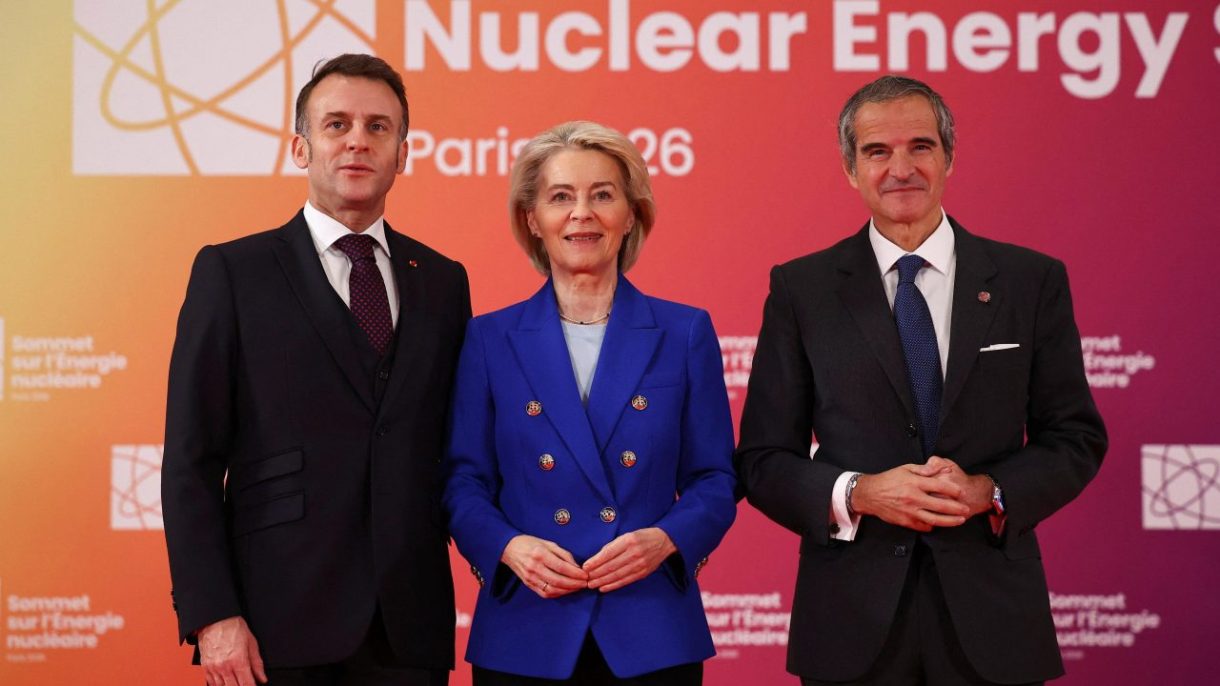
In a significant rhetorical shift for the European Union’s energy policy, Commission President Ursula von der Leyen characterized the continent’s historical move away from nuclear power as a “strategic mistake.” Speaking at the Nuclear Energy Summit in Paris, hosted by the International Atomic Energy Agency (IAEA), von der Leyen argued that turning away from the atom left Europe dangerously exposed to the volatility of global fossil fuel markets.

A Continent Re-evaluating its Baseload

The President noted a stark decline in nuclear’s contribution to the European grid, falling from one-third of total electricity generation in 1990 to approximately 15% today. This retreat, she argued, exacerbated Europe’s dependence on expensive, imported oil and gas—a vulnerability underscored by ongoing instability in the Middle East.

“I believe it was a strategic mistake for Europe to turn its back on a reliable, affordable source of low-emissions power,” von der Leyen stated.

She outlined a vision for a modernized energy system where nuclear works in tandem with renewables, supported by robust storage and smart grids.

The Rise of Small Modular Reactors (SMRs)

The EU’s strategy is increasingly focused on the next generation of nuclear technology. Key initiatives include:

  • Regulatory Reform: Recent changes to state aid rules now allow for expanded support for nuclear fission and fuel cycles.

  • Industrial Alliance: The launch of the world’s first industrial alliance dedicated to Small Modular Reactors (SMRs).

  • Financial Backing: Proposed investments of over €5 billion in fusion research and an additional €200 million in guarantees through 2028 to support the first commercial units of innovative nuclear technologies.

The goal is to have SMRs operational across Europe by the early 2030s to complement existing traditional plants.

Regional Expansion: Greece, Romania, and Serbia

The shift in sentiment at the Commission level is mirrored by renewed interest among member states and neighboring nations:

  • Greece: Prime Minister Kyriakos Mitsotakis echoed von der Leyen’s sentiments, noting that it is time for Greece to explore how SMRs could be integrated into the domestic grid. While Greece remains committed to renewables and gas as a bridge, a new committee will officially study nuclear integration.

  • Romania: Energy Minister Bogdan Ivan announced plans to triple the nation’s nuclear capacity over the next decade. This includes the modernization of the Cernavodă plant and the development of a pioneering SMR project in Doicești.

  • Serbia: Minister of Mining and Energy Dubravka Đedović Handanović signaled Serbia’s intent to join the “nuclear revival.” To support a growing economy and AI infrastructure, Serbia aims to select a technology by 2032, with the goal of bringing a plant online by approximately 2040.

As Europe seeks to reconcile its climate goals with energy security, the message from Paris was clear: the nuclear option is no longer on the sidelines—it is back at the center of the strategy.

by in News

Albania as a Regional Outlier: Diesel Dominance Persists Amid Europe’s Green Transition

New data from Eurostat reveals a significant divergence in automotive trends between Albania and the European Union. While the EU moves aggressively toward decarbonization, Albania has emerged as the country with the highest share of diesel-powered vehicles among first-time passenger car registrations in 2024.

This trend stands in sharp contrast to the broader European trajectory, where environmental regulations and technological shifts are rapidly phasing out internal combustion engines in favour of electric and hybrid alternatives.

The Data: A Stark Statistical Divide

According to Eurostat’s latest report on transportation, 66.2% of all passenger vehicles registered for the first time in Albania during 2024 were diesel-powered. To put this in perspective, the EU average for diesel registrations has plummeted to just 14.9%.

The regional comparison further highlights Albania’s unique position:

  • Albania: 66.2% diesel share

  • Moldova: 47.0%

  • Bosnia and Herzegovina: 34.5%

  • Other Balkan neighbors: Generally below 30% (excluding Kosovo and North Macedonia, for which data was unavailable).

In absolute numbers, out of the 85,700 passenger vehicles registered for the first time in Albania in 2024, approximately 56,700 were diesel. Conversely, gasoline vehicles accounted for only 17.6% of registrations—one of the lowest shares in Europe—while electric vehicles (EVs) represented a mere 3.3% of the total.

The European Shift Toward Electrification

The European landscape tells a completely different story. The transition to Battery Electric Vehicles (BEVs) is accelerating, driven by the EU’s ambitious climate goals to reduce the 27% of greenhouse gas emissions currently attributed to transport.

  • Denmark: Over half (51.3%) of new registrations are fully electric.

  • Sweden, Malta, and the Netherlands: EVs account for more than one-third of the market.

  • EU Average: Electric vehicle registrations reached 13.5% in 2024.

Looking back at the decade between 2014 and 2024, the shift is even more dramatic. In 20 representative EU countries, the registration of diesel vehicles fell by 67%, while registrations for fully electric cars grew by 45 times, moving from a negligible 0.3% share in 2014 to nearly 14% today.

Why is Albania Lagging Behind?

The dominance of diesel in Albania is not a matter of consumer preference alone but is rooted in several structural and economic factors:

  1. Second-Hand Market Dominance: The Albanian market is heavily reliant on imported used cars from Western Europe. As EU consumers sell off their older diesel models to switch to EVs, these vehicles often find a second life in the Albanian market.

  2. Initial Cost Barriers: The upfront cost of electric or hybrid vehicles remains high compared to older diesel models, making them less accessible to the average Albanian consumer.

  3. Infrastructure Gaps: The national charging network for electric vehicles is still in its infancy, leading to “range anxiety” and deterring potential EV buyers.

  4. Policy Incentives: There is a lack of robust fiscal incentives or subsidies to encourage the adoption of “green” vehicles compared to the aggressive tax breaks seen in EU member states.

Looking Ahead

While Albania remains a diesel stronghold for now, the European trend is inevitable. As EU emission standards tighten and the production of internal combustion engines scales down, the supply of diesel vehicles will eventually dwindle.

For Albania to bridge this gap, experts suggest a dual approach: investing in charging infrastructure and implementing fiscal policies that make cleaner alternatives more competitive. Without these interventions, Albania risks becoming a “parking lot” for Europe’s aging, high-emission fleet.

by in News

International Forum on Energy for Sustainable Development kicks off in Skopje: reliance on single supplier is risk of past

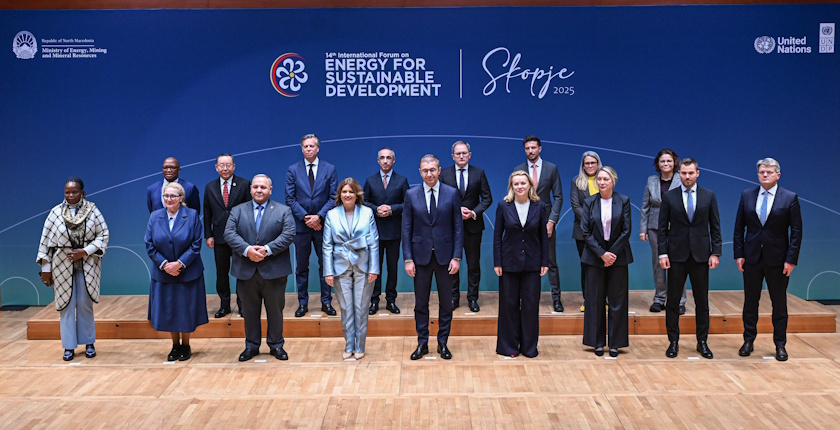
Reliance on a single source or supplier is a risk of the past – the future belongs to diversified, sustainable, and safe energy solutions, Minister of Energy, Mining and Mineral Resources of North Macedonia Sanja Božinovska said at the opening of the 14th International Forum on Energy for Sustainable Development in Skopje.

The three-day International Forum on Energy for Sustainable Development (IFESD-14), with the theme From Goals to Action: Powering the Future with Sustainable Energy, gathered more than 500 participants from more than 70 countries, including high-level representatives of international institutions, companies, as well as academics and experts.

The meeting is organized by the Ministry of Energy, Mining and Mineral Resources of North Macedonia, in cooperation with the United Nations Development Programme (UNDP) and the UN’s five regional commissions – UNECE, UNESCAP, UNECLAC, UNECA, and UNESCWA.

The Skopje Declaration will be signed at the forum. The document will remain as an important permanent record of the commitment of the participating countries to a sustainable, safe, and inclusive energy future, according to the ministry.

Sanja Božinovska, Minister of Energy, Mining and Mineral Resources, underlined that North Macedonia would be the center of the global energy dialogue for the next three days.

Božinovska: Energy transition is not a race between countries​

Energy resilience today is the ability of the system to withstand, adapt, and continue to function stably even in conditions of global uncertainty and geopolitical upheaval, she said.

“In this new era, technology and artificial intelligence are our allies, not a threat. They can help us forecast demand, optimize consumption, and improve energy accessibility. But energy must be used wisely, focusing on people, not just machines,” Božinovska stated.

Sanja Božinovska (photo: Ministry of Energy, Mining and Mineral Resources)​

​Energy transition is not a race between countries but a shared journey, in the minister’s view. No country, regardless of size, can handle climate challenges alone, she added.

“Our role, as ministers and leaders, is to create conditions for this transition to be fair, sustainable, and inclusive and to ensure that no one is left behind; no country, no community,” Božinovska stressed.

The actions of the Government of North Macedonia confirm the stance, she asserted and highlighted the construction of natural gas interconnectors with Greece and Serbia. The investment will enable supplying thousands of households and businesses and help Europe achieve better connectivity and security of gas supply, she explained.

Grid modernization and investments in digitalization and energy storage are the country’s policy as well, she added.

Mickoski: Energy is high on the government’s agenda

Hristijan Mickoski (photo: Ministry of Energy, Mining and Mineral Resources)

Prime Minister Hristijan Mickovski said the forum is an opportunity for North Macedonia to show that a small country can have a big impact – when it has a clear vision, determination, and leadership.

He highlighted the role and vision of Minister Božinovska, saying she is determined to move things forward even in the short term, to accelerate processes and not let Macedonia fall behind in the race against time.

“As someone who comes from the energy sector, I know very well how important that feeling of constant movement, change, and responsibility is. That’s why energy is high on the government agenda – not as a technical matter, but as a national priority and state strategy,” he asserted.

Every solar panel, every wind farm, every new power plant fueled by clean energy – this is part of the modern struggle for the independence of North Macedonia, he explained.

“Our vision is clear: to prepare the country for the future – for climate challenges, technological changes and global risks. To make an example in the region of a stable, clean and independent energy economy,” Mickoski said.

Molcean: The forum has developed into a leading global platform for the promotion of sustainable energy

Tatiana Molcean, United Nations Under-Secretary-General and Executive Secretary of the United Nations Economic Commission for Europe (UNECE), pointed out that the forum, which was launched in 2010, has evolved into a leading global platform for advancing sustainable energy.

“Today, we stand at a crossroads when it comes to multilateralism in energy. The global energy transition represents not only a historic opportunity for sustainable development but also a profound responsibility. We must build resilient energy systems that ensure a secure, affordable, and environmentally sustainable supply of energy,” she stressed and added: “None of us will succeed if we work in isolation.”

Tatiana Molcean (photo: Ministry of Energy, Mining and Mineral Resources)

​UNECE is here together with other UN partners to help make energy not only a driver of just transition and economic growth, but also a catalyst for sustainability and resilience, Molcean told the audience.

In the view of Resident Representative of UNDP in North Macedonia Armen Grigoryan, the forum’s theme, From Goals to Action: Powering the Future with Sustainable Energy, reflects urgency and growing consensus among nations that sustainable energy solutions are urgent.

Grigoryan: We have to move from commitments to concrete implementation

“Now we have to move from commitments to concrete implementation and steps. Sustainable energy stands as a cornerstone of our collective sustainable future. Around the world, the UNDP programme is deeply engaged in advancing this agenda,” he stressed.

Grigoryan recalled that the work of UNDP in North Macedonia, but also elsewhere, through the green finance facility and tackling air pollution initiatives, is about the people.

“By helping families heat their homes with green and affordable energy, enabling businesses to invest in green solutions, we are creating healthier communities and new opportunities for growth,” he asserted.

Photo: Ministry of Energy, Mining and Mineral Resources
by in News

Europe’s Environment 2025 report: Not good

Biodiversity is declining and water stress is affecting one third of Europe’s population and territory, while the frequency and magnitude of climate-related disasters are increasing. In short, this is the message from the report Europe’s Environment 2025.

​Europe’s Environment 2025 is the most comprehensive analysis on the current state and outlook for the continent’s environment, climate, and sustainability, building on data from across 38 countries, according to the European Environment Agency (EEA).

The outlook for most environmental trends is concerning and poses major risks to Europe’s economic prosperity, security, and quality of life, the authors warned. The agency said climate change and environmental degradation pose a direct threat to Europe’s competitiveness, pointing out that it depends on natural resources.

Progress on a range of factors that enable the shift towards sustainability – such as innovation, green employment, and sustainable finance – gives cause for hope, EEA added.

​More than 80% of protected habitats are in a poor or bad state

The report shows biodiversity is declining across terrestrial, freshwater, and marine ecosystems in Europe due to persistent pressures driven by unsustainable production and consumption patterns, demonstrated most notably in the food system.

More than 80% of protected habitats are in a poor or bad state, with 60% to 70% of soils degraded, the document reads.

On a positive note, the extent of protected areas increased over the past decade – by 2022, 26.1% of the European Union’s land and 12.3% of its seas were protected. However, designating protected areas alone does not guarantee that biodiversity is effectively protected, the authors wrote.

​Water stress is affecting one third of Europe’s population and territory

The report’s findings point to severe pressure on water resources: water stress is affecting one third of Europe’s population and territory.

Only 37% of surface water bodies had a good or high ecological status in 2021, with the degradation of aquatic ecosystems threatening Europe’s water resilience. Agriculture is responsible for the most significant pressure on both surface and groundwater, data revealed.

EEA recalled that Europe is the fastest-warming continent on the planet.

Weather- and climate-related extremes caused economic losses of assets estimated at EUR 738 billion in the EU’s 27 member states over the period 1980-2023, with over EUR 162 billion in costs from 2021 to 2023 alone, the report reads.

Over 70,000 people in Europe are estimated to have died from heat in 2022.

The average annual economic losses in the 2020‑2023 period were 2.5 times as high as in the preceding decade, from 2010 to 2019, according to the report.

Downpours are increasing in severity, with several regions subject to catastrophic floods in recent years, while extreme heat, once rare, is becoming more frequent, with deadly consequences: over 70,000 people in Europe are estimated to have died from heat in 2022.

The greatest challenges call for a need to rethink the links between the economy and the natural environment, land, water and natural resources, EEA underscored.

“We cannot afford to lower our climate, environment and sustainability ambitions. Our state of environment report, co-created with 38 countries, clearly sets out the science-based knowledge and demonstrates why we need to act. In the European Union, we have the policies, the tools and the knowledge, and decades of experience in working together towards our sustainability goals. What we do today will shape our future,” EEA Executive Director Leena Ylä-Mononen said.

Bright spots

The report also highlighted the good results of environmental protection policies in Europe.

The EU has cut its domestic greenhouse gas (GHG) emissions by 37% since 1990, largely driven by reducing fossil fuel use and doubling the share of renewables since 2005.

All member states have reduced their reliance on fossil fuels and shifted towards more sustainable energy sources over the last decade, while increased energy efficiency has brought down demand.

In 2023, renewable energy sources represented over 24% of the EU’s final energy use, a record high.

The bloc’s industrial system has managed to reduce emissions by more than 35% from 2005 to 2023, while emissions from buildings fell by more than 35% between 2005 and 2023.

Significant progress has been made in reducing pollution in Europe. EU policies led to improvements in air quality and reduced premature deaths attributable to fine particulate matter from 2005 to 2022 by 45%, according to the Europe’s Environment 2025 report.

by in News

WISE Serbia Annual Women’s Network Event – October 16 in Belgrade

The Center for the Promotion of Sustainable Development and Deutsche Gesellschaft für Internationale Zusammenarbeit (GIZ) GmbH are organizing the annual WISE Serbia Women’s Network event, which will take place on October 16 at Fabrika Events in Belgrade.

The WISE Serbia Women’s Network in sustainable energy, climate action, and environmental protection has been in existence since 2018 and is one of the first networks of its kind worldwide. WISE Serbia brings together over 250 female experts from the energy sector and related fields, promoting their role in the energy transition, as well as in the democratization and decentralization of the energy sector. The network is recognized as a platform that connects knowledge, experience, and vision of women shaping a sustainable energy and climate future in Serbia.

Registration is open until October 10 or until places are filled via this LINK. The program begins at 4:30 PM at Fabrika Events, Poenkareova 32, Belgrade. Participation in the event is free of charge.

This year, 10 outstanding women have been nominated for the Female Leader in Sustainable Energy 2025 award. Voting is open until October 10 on the WISE Serbia website. Take the opportunity to support the woman you believe deserves the title of leader in sustainable energy.

“This is the third edition of the Female Leader in Sustainable Energy award. Year after year, we celebrate exceptional women professionally engaged in the energy sector, climate action, and environmental protection. Each nominee could rightfully earn the title of leader. Their biographies and professional achievements speak for themselves. They are recognized in their teams as women who drive change and serve as inspiration and motivation for all of us to continue building a sustainable present and future,” emphasized Branislava Jovičić, cofounder of the WISE Serbia Women’s Network.

Photo: Branislava Jovičić, co-founder of the WISE Serbia women’s network, and Svetlana Cervovic, last year’s winner of the Female Leader in Sustainable Energy award.

The event will be officially opened by H.E. Anke Konrad, Ambassador of the Federal Republic of Germany, and Jovana Joksimović, Assistant Minister for International Cooperation, European Integration, and Project Management at the Ministry of Mining and Energy.

The program will continue with a panel discussion moderated by Maja Turković, Executive Vice President at CWP Europe and the 2023 Leader in Sustainable Energy awardee.

Following the panel discussion, the finalists for the Leader in Sustainable Energy award will be announced, followed by the winner’s presentation and the ceremonial award presentation.

The media sponsor of the event is Balkan Green Energy News.

by in News

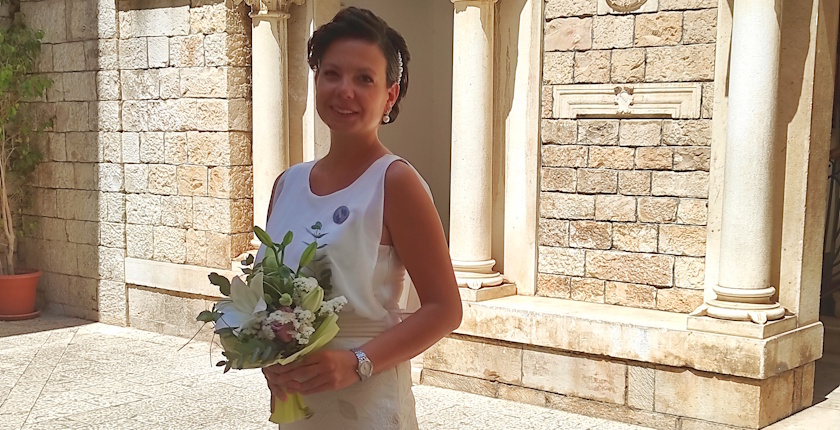
Eco bride Milica Lukić celebrates love with sustainable wedding

Weddings are often associated with celebration, luxury, and significant resource consumption. However, the example of Milica Lukić, a researcher and environmental activist, shows that a celebration of love can be just as festive and emotional while remaining sustainable — without wastefulness or harm to the environment.

For many people, a wedding is one of the most important days of their lives. Choosing a dress, a suit, a venue, food, decorations, and music are just some of the elements that require detailed planning and organization. However, bringing a large number of people together in one place, along with traditional customs, often comes with a darker side: high carbon emissions, food waste, and excessive resource use. Still, there is another way.

Milica Lukić, a researcher at the Faculty of Geography, University of Belgrade, and a member of the WISE Serbia network, has demonstrated that a wedding can be organised with sustainability and care for the planet in mind. In addition to her academic career, Milica is also known as a dedicated environmental activist and an advocate for a healthier environment.

“When we talk about adopting more eco-friendly practices in everyday life, most people start with reusable shopping bags, refillable water bottles, or separating packaging for recycling. The next step is rethinking. Rethinking whether we can do something differently, which might take a little more time and planning but ultimately brings numerous benefits — for us as individuals, for society, and for nature,” Milica emphasizes.

It was precisely this mindset that inspired Milica to make her special day sustainable while also supporting the local community.

“The thought ‘less is more’ guided me throughout the entire process. That’s why I want to inspire others with my story so that, in the future, we have more examples like this,” she says.

The dress can wait for the right moment.

Choosing the right dress, the centerpiece of the celebration and likely the most eye-catching detail, can be a challenging task. It’s common for people to spend several hundred euros on this special garment, but Milica opted for a second-hand dress instead.

“The dress is always the biggest challenge, but luckily, there’s @retro.to.the.rescue, where I’ve been buying second-hand clothes for years. I bought the dress earlier and waited for the right moment,” Milica explains.

Retro to the Rescue is a charity-driven initiative, with all proceeds from sales donated to animal welfare organizations.

Love without a golden wedding ring

A wedding outfit is often paired with carefully selected jewelry made of precious metals and gemstones. However, behind the sparkling pieces lies a darker side. The jewelry industry is linked to numerous ethical and environmental issues: child labor, human rights violations, conflict financing, pollution, and environmental destruction.

That’s why Milica decided to use what she already had. “I’m most proud that I managed to resist the pressure when it came to wedding rings because gold reminds me of exploitation, mining, pollution — everything we are fighting against. Love doesn’t need a golden ring,” says Lukić, sending her support to activists in Eastern Serbia who have long been battling the consequences of mining and the influence of mining companies.

Responsible choices in beauty products protect the environment

The eco-conscious approach to Milica’s wedding was also reflected in her choice of makeup. The cosmetics industry produces around 120 billion units of packaging every year, most of which is non-recyclable plastic. It also relies on animal-derived ingredients and toxic chemicals such as parabens and phthalates.

Sustainable makeup involves products that are not tested on animals, contain no animal-derived ingredients, use natural pigments, and come in recyclable packaging. There are even zero-waste makeup options, such as refillable lipsticks packaged in metal or glass containers.

Milica chose a minimalist, sustainable approach — using vegan mascara and lipstick — and had her hair styled at a small local salon, explaining that she enjoys supporting small businesses, especially those owned by women.

She also bought her bouquet at a local market from an elderly woman selling flowers. “The night before, I tried making my own bouquet from flowers I picked in the neighborhood, but by morning, it had wilted. Even water didn’t help. Still, it won’t go to waste — it’ll continue its life in compost,” Milica says.

Sustainability reflects respect for nature, people, and the community

Instead of hosting a big wedding celebration, Milica chose a small family lunch at a local restaurant, with a vegan and vegetarian menu.

Through her example, Milica has shown that love doesn’t have to be celebrated according to traditional norms. What matters most is making the day authentic and aligned with the values we live by. Her wedding is a reminder that sustainability isn’t about giving things up — it’s about celebrating in a way that reflects respect for nature, people, and the community.

by in News

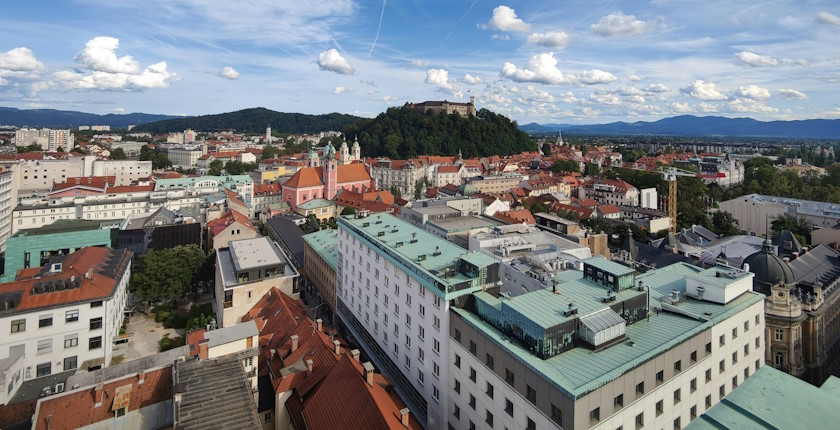
Slovenia sells Europe’s first sustainability bond, worth EUR 1 billion

Slovenia accessed the international markets with its inaugural sustainability-linked bond, oversubscribed by more than 6.5 times. The interest payable can grow or drop by 50 basis points depending on the country’s progress in cutting greenhouse gas emissions. It is the first-ever sustainability-linked bond issue from a European sovereign, the Ministry of Finance pointed out.

Bankers and fund managers flocked around the first sustainability-linked bond that Slovenia offered in the market. Demand reached over 6.5 times more than the EUR 1 billion available, with a 10-year maturity. It is also the first-ever sustainability-linked bond issue from a European sovereign, the Ministry of Finance pointed out.

The country’s Sustainability Bond Framework is also in line with the Green Bond Principles of the International Capital Market Association – ICMA, and it takes into account the Green Bond Standard of the European Union. The proceeds from sustainability bonds are for financing or refinancing eligible green or social projects.

If Slovenia doesn’t achieve a 35% cut in total greenhouse gas emissions by 2030, relative to the 2005 baseline, the interest payable on the note will increase by 50 basis points, commencing nine years after the settlement date. If the emissions cuts surpass 45%, the rate will go 50 points lower, the documentation shows.

High demand resulted in a drop in the price spread from 70 to 61 basis points above the benchmark

The initial price guidance was at 70 basis points above the mid-interest rate swap as benchmark. Strong demand, including EUR 435 million in joint lead managers (JLM) interest, slashed the spread to 61 points. The note has a 3.125% fixed-rate coupon, reoffer yield of 3.155% and reoffer price of 99.746%, the ministry revealed.

As for the geographical distribution of the buyers, 23% are in the United Kingdom or Ireland, 20% is in the region comprising Belgium, Netherlands and Luxembourg, and 15% are from Germany, Austria or Switzerland. Next is Southern Europe, with 12%, followed by Slovenia’s 11%, a 9% Nordics share and 5% for France.

Asset managers amounted to 54% of the total sum. Central banks and other official institutions, at 18%, were just barely ahead of other banks (17%). Insurance and pension funds purchased 5% and hedge funds now hold 4% of the issue.

  • 1
  • 2