by in News

Sunotec secures financing for Bulgarian BESS, renewables portfolio

Sunotec has secured financing for a portfolio of seven projects in Bulgaria. The deals were agreed in September.

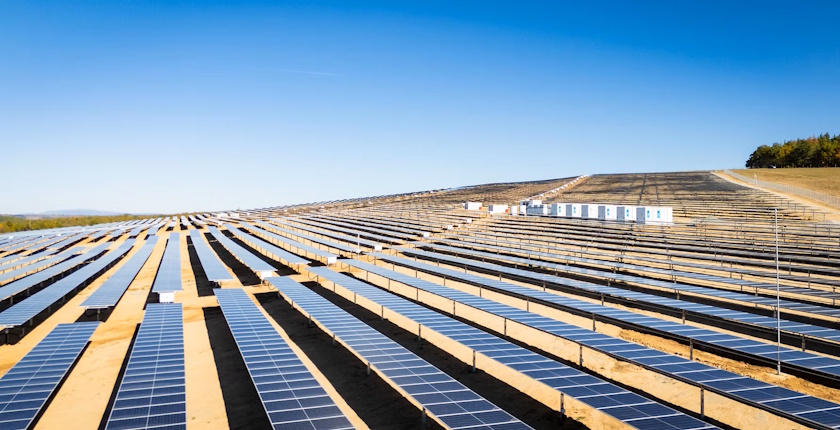
The portfolio, for 115 MW in peak solar power capacity and 763 MWh of battery storage, significantly expands Sunotec‘s investment presence in its home market, according to the update.

Six projects are for standalone battery energy storage systems (BESS) and one is for a solar power plant with a colocated BESS.

According to the firm, they are either wholly owned or partially, through Solaris Holding AD, a 50/50 joint venture with the main shareholders of Eurohold Bulgaria AD.

The standalone battery energy storage system projects are part of the government’s RESTORE program

The seven projects contribute to decarbonizing Bulgaria’s power sector, enhancing its grid stability and energy independence, Sunotec stressed.

The Bulgarian Ministry of Energy has approved the said standalone BESS projects to receive subsidies under the RESTORE program, the company added.

In the first round of the National Infrastructure for Storage of Electricity from Renewable Sources (RESTORE) program, Bulgaria approved EUR 587 million in subsidies for 82 BESS projects totaling 9.71 GWh.

In late July, Sunotec and Sungrow agreed to install 2.4 GWh of BESS

In late August, the ministry launched the public consultation process for a proposed new round of its subsidy program for BESS.

Viktor Stefanov, Head of IPP at Sunotec, said the seven investments mark a major milestone in its evolution.

The company added that they further strengthen its position, as well as of Solaris Holding, among Bulgaria’s leading investors in photovoltaics and energy storage.

In late July, China-based Sungrow achieved an agreement with Sunotec on installing 2.4 GWh of BESS in Europe. The portfolio includes several large-scale projects across Bulgaria, which will serve energy storage needs.
by in News

Principia builds CfD-backed battery storage facility in Greece

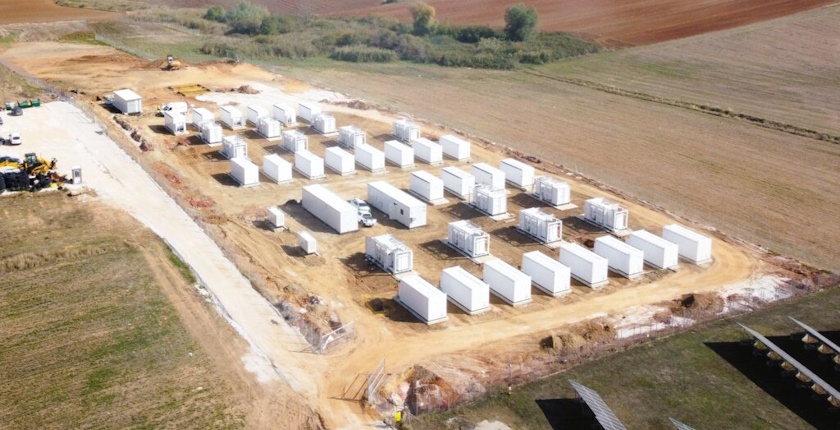
Principia built its first battery system in just six months. The Themelio facility in Chalkidiki in northern Greece, with 49 MW in operating power, will help reduce curtailments from wind and solar power plants and contribute to grid stability.

One of the first standalone battery energy storage systems (BESS) in Greece is coming online in December. Principia said it built the Themelio facility in the Vouno area of Chalkidiki peninsula, aligned with the national plan for grid stability and electrification.

The BESS has 49 MW in capability and a two-hour duration, translating to a guaranteed capacity of 98 MWh, while the nominal capacity is 127 MWh.

Principia is an equally-owned joint venture of Italy-based Enel and funds managed by Macquarie Asset Management, headquartered in Australia. The company said the name Themelio, foundation, symbolizes the beginning of its new era, diversifying beyond renewables.

The construction of the battery system near the town of Polygyros in the Central Macedonia region began in April. It will help reduce curtailments from wind and solar plants, especially in grid-congested areas, by absorbing excess electricity and injecting it back into the system when needed, Principia explained.

The battery energy storage system features a guaranteed capacity of 98 MWh

BESS also enhances system stability by providing power during peak demand and ensuring smooth grid operation. In addition, the unit promotes energy decentralization, as it is located close to renewable energy production sites, contributing to the creation of a more flexible and intelligent energy environment, the joint venture pointed out.

Eurobank financed half of the EUR 28 million project.

The new system in northern Greece consists of 26 Sungrow battery containers, each with a maximum capacity of 5 MWh and equipped with advanced CALB 314 Ah cells. Themelio includes 13 Sungrow power stations, containing 5,140 kW transformers and 33 kV medium-voltage switchgear, as well as two medium-voltage terminal substations.

The project won government support last year, in the form of a contract for difference (CfD), in Greece’s second auction for standalone energy storage systems. Almost all other beneficiaries of the program are struggling with strict deadlines.