by in News

Šahmanović: Montenegro is facing its most challenging year for energy sector

Montenegro is facing its most challenging year for the energy sector, Minister of Energy and Mining Admir Šahmanović stressed.

State-owned power utility Elektroprivreda Crne Gore (EPCG) will suffer a loss of around EUR 80 million given that the Pljevlja coal power plant is offline, while electricity consumption is rising amid increases in prices of other energy sources, Admir Šahmanović told TV Vijesti.

He explained that development is focusing on the reconstruction of the thermal power plant, addressing delays in connecting solar power plants to the grid, and plans for projects including within cooperation with the UAE and an agreement with Italy on a second subsea cable.

Šahmanović: We entered this year quite wounded

The priority will be price stability and increasing the use of renewable sources, along with strengthening Montenegro’s position as an energy hub between the region and the European Union, he added.

“I can freely say that, regarding this year, it is perhaps the most challenging year in the modern history of Montenegro, exactly for the energy sector. We entered this year quite wounded given the fact that last year the hydrological conditions were the worst in the country’s history,” he asserted.

Šahmanović added the electricity demand in Montenegro has jumped 6%.

Climate change is playing its part

One of the reasons is the increase in the price of energy sources such as wood and coal, according to the minister.

He pointed to climate change as another factor. There is a growing need to install air conditioning units even in northern Montenegro, where there was previously no need for it, he added.

Therefore, in the minister’s words, the construction of other production facilities is inevitable.

Of note, EPCG’s executive manager of supply Jovan Kasalica said in April that electricity consumption in Montenegro has risen by 25% over the previous four years.
by in News

Šahmanović: Second submarine cable line with Italy to be installed by 2031

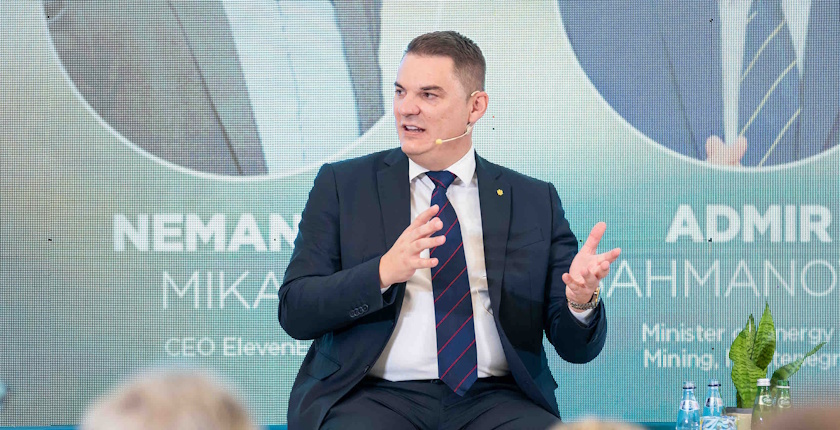
The second line of the submarine cable connecting Montenegro and Italy is expected to be completed by 2031, Montenegro’s Minister of Energy and Mining Admir Šahmanović said at the European Union – Montenegro Investment Conference.

The two-day conference, titled Smart Growth, Green Future: Accelerating Investment in Montenegro, was opened yesterday in Luštica, near Tivat, by European Commission President Ursula von der Leyen and Prime Minister of Montenegro Milojko Spajić.

Fourteen cooperation projects between Montenegrin and European companies have been initiated at the conference, including investments in wind farms, solar parks, energy storage, and grids. It shows the great significance of the energy sector for investments.

A panel called Renewables: Scaling Montenegro’s Energy Transition examined the possibilities for accelerating the country’s energy transition and enhancing the sector’s attractiveness for investment in renewables.

Šahmanović: Montenegro strives to position green energy as an export product

Prominent international experts and investors took part in the discussion. Representing the Government of Montenegro, Minister of Energy and Mining Admir Šahmanović outlined the country’s renewable energy priorities and highlighted Montenegro’s role as a regional leader in clean energy.

Montenegro has fully harmonized its legislation with EU standards, creating a stable and predictable investment environment, in his words. Šahmanović highlighted the launch of the first solar power auction as a significant step forward in the development of renewables.

Photo: Đorđe Cmiljanić/Government of Montenegro

“The government invests in battery energy storage systems (BESS), ensuring the flexibility and stability of the grid. Montenegro strives to position green energy as a recognizable export product, thereby strengthening the country’s economic sustainability,” Šahmanović stated.

He revealed that Montenegro is about to sign a memorandum of understanding with Italy that would additionally position Montenegro as an energy bridge between the Western Balkans and the EU.

Montenegro is looking for strategic partners and investors ready to jointly implement capital projects in the energy sector

The government is wrapping up the work concerning the oil and gas sector to close chapter 15 in its accession negotiations with the EU, further strengthening investor trust, Šahmanović said.

“The implementation of the project for the construction of the second phase of the subsea cable link with Italy is expected by 2031, which will further strengthen Montenegro’s role in regional and European energy connectivity. Montenegro is looking for strategic partners and investors ready to jointly materialize capital projects in energy and contribute to regional energy stability,” the minister underlined. The investment is estimated at EUR 500 million, he asserted.

In a message to investors, Šahmanović said Montenegro is open for investments and added: “Now is the time for you to invest. We will be your service 24 hours a day, seven days a week.”

Participants at the panel included Daniel Calderon, Alcazar Energy Co-Founder and Managing Partner, Yann Guinard, EDF Director of Development for Europe, Louis Blanchard, Qair Energy President, and Nemanja Mikać, ElevenEs CEO.

Memorandum with EDF

Admir Šahmanović and Yann Guinard (photo: Ministry of Energy and Mining)

Within the conference, the Ministry of Energy and Mining of Montenegro and EDF International Networks signed a memorandum of understanding. It establishes a framework for future cooperation on modernizing the distribution network, digitizing smart grids, and integrating renewable energy sources, according to the ministry.

The memorandum foresees the implementation of pilot projects and feasibility studies that will contribute to the acceleration of the energy transition of Montenegro.

Admir Šahmanović said the deal is an important step towards strengthening green and innovative energy projects. Cooperation with EDF confirms the position of Montenegro as a country with a clear vision and open opportunities for investors, he underscored.

“EDF International Networks, as part of the global EDF Group, brings international expertise in the sector of power distribution, grid upgrade and digital transformation, which opens up space for new strategic partnerships and capital infrastructure projects,” the minister pointed out.

The memorandum confirmed the joint commitment to sustainability, integrity and energy security, with a clear focus on the well-being of citizens and the economy of Montenegro, the ministry said.

by in News

Greece launches Attica-Crete subsea power interconnector

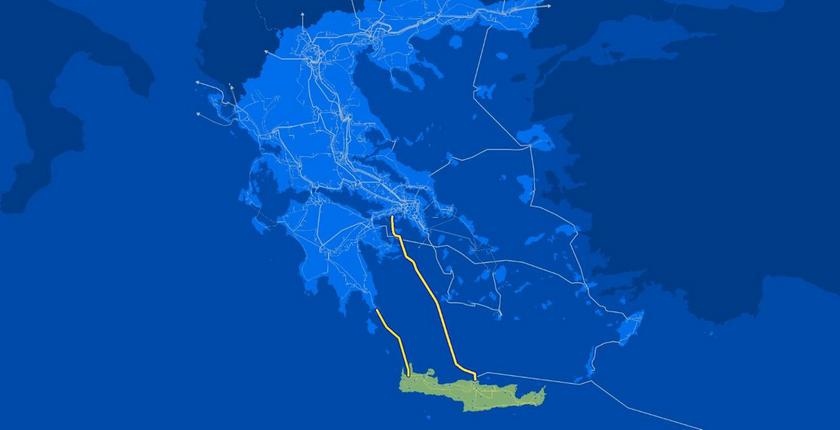
The Attica-Crete subsea power interconnector has been put into trial operation, marking a milestone for Greece’s transmission system. The country now has a high-voltage direct current (HVDC) interconnection, and its largest island is fully integrated into the national electricity system, according to an announcement by the Independent Power Transmission Operator (IPTO or Admie).

The Ariadne subsea power interconnector entered into operation on May 24 with the successful transfer of direct current electricity, said IPTO, whose subsidiary Ariadne implemented the project. The trial operation phase is expected to last throughout the summer, IPTO added.

The two submarine power links have ended Crete’s electrical isolation

Combined with the existing interconnection via the Peloponnese peninsula, the new cable has completely ended Crete’s electrical isolation, making it an energy hub with significant environmental and economic benefits for the country and the local community, according to IPTO.

The first power link between Crete and the mainland is the 174-kilometer alternating current (AC) cable linking the island with the Peloponnese. It was completed in 2021, following an investment of EUR 380 million.

The EUR 1.1 billion Ariadne interconnector is among the deepest in the world

The Ariadne interconnector, which cost over EUR 1.1 billion to build, is one of the deepest subsea power cables in the world. It consists of two 500 kV cables of 500 MW each, laid at depths of up to 1,200 meters. The construction lasted 4.5 years.

Greek Minister of Environment and Energy Stavros Papastavrou stated that the new power link has made Crete a “central pillar in the country’s energy transition,” and IPTO CEO Manos Manousakis claimed it is opening “a new chapter for the island’s energy security.”

The project was co-financed through the National Strategic Reference Framework (NSRF 2014-2020 and NSRF 2021-2027), via the European Union, with up to EUR 535.5 million.

IPTO recalled that the project consisted of many large subprojects, with contractors including Siemens, Terna, Nexans, Prysmian, NKT, and Hellenic Cables.

by in News

Investors seek to install 5.5 GW of renewables in Montenegro – minister

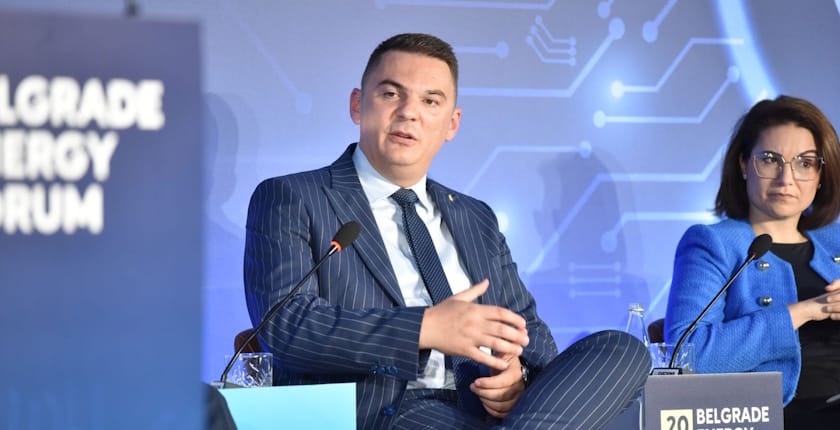
Montenegro has received applications for building solar power plants and wind farms with a total capacity of 5.5 GW, Admir Šahmanović, the Minister of Energy and Mining, said at Belgrade Energy Forum 2025.

Montenegrin Minister of Energy and Mining Admir Šahmanović said the country has made significant progress in shaping its regulatory framework.

Montenegro has passed new laws on energy and renewable energy sources, while a draft law on the exchange of electricity and natural gas has been prepared.

“We are currently drafting a national energy and climate plan, which will be finalized by the end of next month,” Šahmanović stressed.

Montenegro currently has about 1,000 MW of renewable energy capacity

He also recalled that the government is preparing renewable energy auctions in collaboration with the European Bank for Reconstruction and Development (EBRD). The minister expects these auctions will significantly boost investments in renewables.

According to Šahmanović, the country has made considerable efforts to improve the investment climate.

“As a result, we have received 45 applications for the construction of renewable power plants with a combined capacity of 5.5 GW. For comparison, the country’s current capacity is slightly over 1 GW, which demonstrates our success,” he explained.

A memorandum on market coupling with Italy would be signed very soon

He said that a memorandum on market coupling with Italy would be signed next month. “We will also discuss the installation of another subsea cable for electricity transmission between Montenegro and Italy,” Šahmanović noted.

Montenegro plans to couple its day-ahead electricity market with Italy, linking it to the single European market. It previously considered two options for its first market coupling: with Serbia and with Albania, Kosovo*, North Macedonia, and Greece.

The third Belgrade Energy Forum 2025 (BEF 2025), started today welcoming four hundred participants from more than 30 countries from the region, Europe and beyond. The two-day conference is organized by Balkan Green Energy News.

by in News

4 GW of solar, wind projects in pipeline in Montenegro – minister

Montenegro has solar and wind projects in the pipeline with a total capacity of 4,000 MW, according to Admir Šahmanović, Minister of Mining, Oil and Gas and the Coordinator of the Ministry of Energy.

Speaking at the Economic Dialogue Montenegro-Italy round table, minister Admir Šahmanović called for stronger cooperation between the two countries in the energy sector.

Montenegro offers exceptional opportunities for investors, especially in the field of renewable energy sources, Šahmanović added. Of note, he will be one of the key speakers at the Belgrade Energy Forum conference on May 14 and 15.

The planned solar power plants and wind farms would increase the country’s production capacity from the current 1 GW to 5 GW, representing a huge potential for the energy transition and long-term supply stability, he pointed out.

A second line within the underwater power link with Italy would further increase energy security

The minister also stressed the importance of expanding the power interconnection with Italy with a second line of the subsea link. The project would further increase the transmission capacity and ensure even greater energy security, he underlined.

Since 2019, the underwater cable has been enabling stable transmission of electricity between the Balkans and the European Union. In the minister’s words, the second line would further strengthen energy security and increase the use of renewable energy sources in the region.

Photo: Government of Montenegro

In addition to renewables, Šahmanović sees the mining sector as another opportunity for cooperation. A more detailed analysis of existing resources is needed, he said and added that Montenegro has valuable mineral resources that must be used with the implementation of sustainability standards.

The country needs strategic partners to modernize the sector while implementing the highest environmental standards, Šahmanović pointed out.

The round table was organized by the Embassy of Italy and the Italian Trade Agency (ICE), in cooperation with the Chamber of Commerce of Montenegro.

Ambassador of Italy Andreana Marcella said the event was a result of earlier talks between the governments of the two countries. She expects the final B2B and B2G meetings to bring concrete results in the energy, agriculture, and infrastructure sections.

According to ICE manager Antonio Ventresca, the round table marks the beginning of long-term cooperation. The event was also attended by the Montenegrin ministers of ecology and tourism Damjan Ćulafić and Simonida Kordić, respectively.