by in News

Policy changes in US will have marginal impact on global energy transition

Policy changes in the United States introduced by the administration of President Donald Trump will have only a marginal impact on the global energy transition, according to the latest Energy Transition Outlook, produced by DNV.

Norwegian consulting firm DNV pointed out in a report that energy use by artificial intelligence may seem alarming, but that it is projected to stay below booming sectors like electric vehicle (EV) charging and cooling of buildings.

“DNV’s annual Energy Transition Outlook has consistently forecast a shift from today’s 80/20 fossil/non-fossil primary energy mix to a 50/50 mix by 2050. That is still our prediction this year. Although some aspects of the transition are supercharged and progressing rapidly, other aspects have hit turbulence and are delayed. This leads to a marginally slower transition than our forecast last year,” CEO Remi Eriksen said.

According to the report, in the US, fossil fuel promotion and the reversal of clean energy support policies are slowing the nation’s transition.

However, China continues to set renewables buildout records with 390 GW of solar PV (56% share of new global capacity) and 86 GW of wind (60% share) expected to be installed this year. The country is also fueling the transition in the rest of the world with its cleantech exports.

In the meantime, Europe is seeking to balance climate action with competitiveness, the report reads.

The continent is having a slow success with harder-to-decarbonize sectors, but renewable energy buildout remains relatively strong.

In the rest of the world, most countries are embracing competitive Chinese technologies, with year-on-year growth in installations at around 25%, data showed.

Eriksen said cheap renewable electrons stored when necessary in ever-cheaper batteries are already an unstoppable force.

“We forecast that solar – both with and without storage – and wind will be 32% of the global power mix by 2030. We expect a resurgence in offshore wind by 2030, such that variable renewables will provide more than 50% of all electricity by 2040,” he stated.

Solar power is 10% of all power produced worldwide today, and DNV projected it will be 20% in 2029 and 40% in 2045. Renewables would reach 65% in the global electricity mix by 2040, the firm added.

AI’s energy demand would be lowered by efficiency effects

According to Eriksen, soaring power demand from AI data centers is placing additional strain on already congested grids, particularly in North America.

DNV ‘s analysis finds that AI’s energy demand growth is likely to become more linear over time, outpaced, for instance, by EV charging and cooling demand, even as the cognitive services of AI expand exponentially. The main reason is growing efficiency.

AI’s energy use is forecasted at only 3% of global electricity by 2040. Data center energy use will quintuple by 2040, equalling 5% of all global electricity. AI’s share would be 3%, with the remaining 2% for general purpose data centers.

The report highlighted large regional variations – AI is the biggest driver of electricity consumption growth in North America, compared to EV charging in Europe and EVs and cooling in China and India.

For the first time, this year’s analysis extends to 2060

The report noted that this year, the world reached the milestone of more than 50 million EVs on the road. Most of them, 60%, are in China, with Europe at 21%, and North America at 13%.

The point of inflection — EVs at 50% of global new passenger vehicle sales — will be reached in 2032, the report projected.

For the first time, this year’s analysis extends to 2060 to reflect the continued transformation of the energy system after 2050. The report recalled that it is now widely acknowledged that the world will not achieve net zero emissions by 2050, meaning warming would exceed 1.5 degrees Celsius.

A decarbonization of energy mix is unstoppable but too slow, setting up grave risks for future generations, Eriksen concluded.
by in News

Enery, Teva sign 15-year virtual PPA for solar, BESS in Bulgaria

Renewable energy firm Enery and Teva Pharmaceutical Industries have signed a 15-year hybrid power purchase agreement.

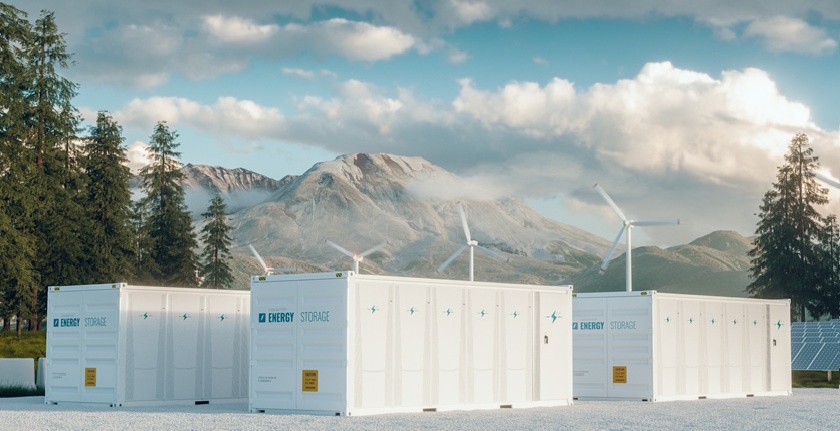
Under a financial or virtual power purchase agreement (PPA), a future solar power plant with two battery energy storage systems (BESS) will supply 60,000 MWh of electricity annually to Teva’s two plants in Bulgaria.

The landmark agreement is the first of its kind in the region to include green electricity supply from a newly built solar power plant with BESS and the longest one in Bulgaria so far, Enery said.

It is the Austrian company’s 15th PPA signed in the last four years across Central and Eastern Europe and the second one involving a Bulgaria-based offtaker.

The PPA sets a precedent for integrating storage within virtual PPA structures

Over the 15 years, the project is expected to avoid emissions of 15,840 metric tons of CO2 equivalent per year, supporting Teva’s goal to reduce scope 1 and 2 emissions by 46.2% by 2030.

The hybrid PPA also sets a precedent for integrating energy storage within virtual PPA (vPPA) structures, enhancing grid resilience and the value of renewable energy procurement, Enery stressed.

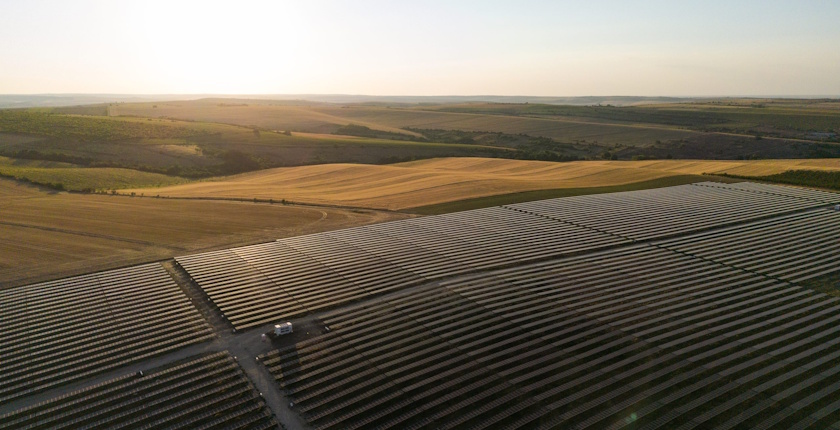
According to the company, the agreement will facilitate the construction of a photovoltaic park of 122 MW in peak capacity, equipped with two BESS installations at the site — one with a capacity of 70 MWh and another of 130 MWh. Located on non-arable land in the villages of Knizhovnik and Dolno Voyvodino in the Haskovo municipality, south Bulgaria, the Knizhovnik solar park is projected to produce 200 GWh of clean electricity per year.

Decktor: Teva is not only securing clean energy but also enhancing grid resilience and flexibility

“This agreement represents another significant step forward in our decarbonization journey,” said Josh Decktor, Teva’s Vice President and Global Head of Environment, Health, Safety and Sustainability.

By investing in a newly built solar asset with integrated storage, Teva is not only securing clean energy but also enhancing grid resilience and flexibility – key components of its strategy to meet its science-based targets, he added.

“We are proud that our projects are being realized thanks to an innovative partnership with companies that are proven leaders in their market niche, such as Teva, and demonstrate a strong commitment to the environment and society,” Enery’s Chief Commercial Officer Severin Vartigov stated.

by in News

Montenegro’s power utility seeks contractor for two battery storage systems

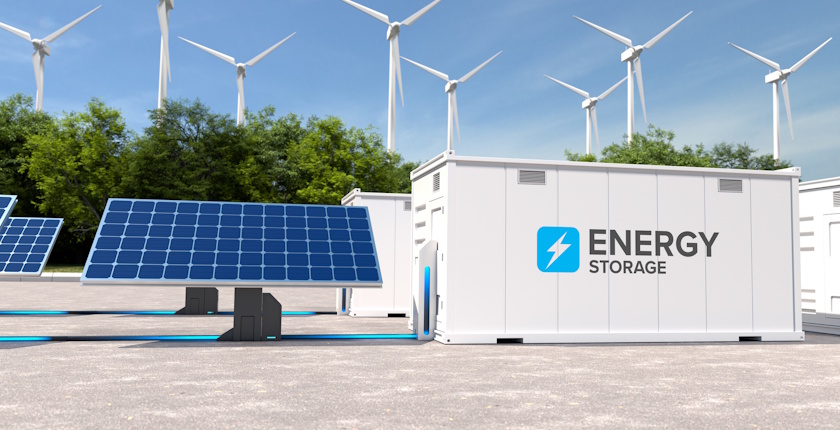
Montenegro’s state-owned power utility, Elektroprivreda Crne Gore, has launched a tender for the procurement and installation of two battery energy storage systems with a total capacity of 60 MW/240 MWh.

Elektroprivreda Crne Gore (EPCG) is seeking a partner for the design, supply, installation, testing, and commissioning of two battery energy storage systems (BESS), each with a capacity of 30 MW and 120 MWh, with an output voltage of 35 kV.

The estimated value of the procurement is EUR 48 million excluding VAT, according to the public call.

The EPC (Engineering, Procurement, and Construction) contract for the batteries is a comprehensive turnkey agreement covering all phases of project development, including design, equipment procurement and delivery, permitting, construction, and commissioning.

The contract also includes training for EPCG personnel

Technical staff training is included to ensure the proper and safe operation of the facilities, as well as to validate their performance in accordance with the contracted terms, which will be mutually confirmed by signing a technical acceptance report.

The EPC covers all technical, engineering, logistical, and construction details, workplace health and safety, environmental protection, and responsibilities for performance guarantees and technical maintenance of the facility, according to the public call.

According to previous announcements, EPCG intends to utilize existing infrastructure for connection to the transmission grid. Potential locations include the 60 MWh hydropower plant Perućica, EPCG’s steel mill Željezara Nikšić with two 60 MWh units, and the 60 MWh Pljevlja thermal power plant.

The first two battery systems will be installed at the Željezara site.

EPCG held talks with several investors

In March, the company announced it had held discussions with several companies and financiers from the region, Europe, and beyond.

EPCG initially announced its intention to install batteries in early September last year. At that time, the EPCG Board of Directors adopted a project task proposal for adding BESS capacities.

According to the project task, EPCG aims to optimize the utilization of all renewable energy sources, alongside numerous new renewable energy projects.

The company plans to secure the flexibility of the power system with energy storage systems based on lithium-ion batteries, according to EPCG.

by in News

Bulgaria to add batteries of up to 10,000 MWh in capacity within months – ESO

Bulgaria’s Electricity System Operator has received applications for the connection of batteries with 12 GW in total capability, according to the transmission system operator’s Executive Director Angelin Tsachev.

Bulgaria currently has 500 MW in battery energy storage systems (BESS), with a capacity of 1,300 MWh. The facilities are in private ownership.

Angelin Tsachev told Bulgarian National Radio that the Electricity System Operator (ESO) received applications for about 12,000 MW, with a capacity of 35,000 MWh.

The TSO’s technical council has considered each grid connection request. The operator issued its opinions on the possibilities for enabling network access to the batteries when the conditions are met, Tsachev pointed out.

BESS can now cover about 1.5% of the country’s daily consumption

BESS can now cover about 1.5% of the country’s daily consumption, he revealed. However, in the coming months, batteries with a combined capacity of 7,000 MWh to 10,000 MWh are expected to be installed, the official added. They would be a serious factor, Tsachev stressed.

No state-owned or private conventional power plants are currently equipped with energy storage systems, he asserted.

After the balancing methodology was changed, commercial developers of projects for intermittent power plants became more disciplined, and now there are no concerns about the balancing of the system, Tsachev said. Electricity exports in the first seven months of this year were higher than in the same period of 2024. Net exports reached almost 230,000 MWh, Tsachev noted.

Good investment opportunity

According to an earlier analysis by Rystad Energy, the best potential profits in battery storage in Europe in 2013 were in Greece and Bulgaria. The country’s city of Lovech, northeast of Sofia, hosts the strongest BESS in the Balkans.

The Ministry of Energy of Bulgaria is reportedly working on a public call for EUR 120 million in state aid for investments in battery energy storage systems of 1.5 GWh overall. In April, it granted EUR 587 million to 82 battery storage projects.

The pace of large photovoltaic projects in Bulgaria indicates that total capacity can reach 6 GW by the middle of next year.

However, the Association for Production, Storage and Trading of Electricity (APSTE) warned that the government’s disproportionately high fees for solar panels and energy storage batteries are preventing the possibility of having permanently low electricity prices in Bulgaria.

by in News

Ex-Yugoslav hydrogen scientists call for funding research with real-world applications

A team of scientists from Slovenia, Serbia, and Bosnia and Herzegovina is working on a hydrogen project based on seawater electrolysis. Dalibor Karačić, Nejc Hodnik, Igor Pašti, and Sanjin Gutić believe their research can deliver a solution fit for commercial use, unlike many hydrogen technologies in development around the world. To unlock the sector’s potential, hydrogen funding schemes must shift the focus from complex and “elegant” solutions to those that can be applied outside the lab, according to the scientists.

Investment in hydrogen technologies worldwide exceeded USD 200 billion in 2023, but most of the research might never produce scalable solutions due to over-complexity and impracticability, according to the four scientists.

Investment in hydrogen research exceeded USD 200 billion in 2023

Karačić, Hodnik, Pašti, and Gutić are working on a NATO-funded project that integrates membrane technology with seawater electrolysis. They claim they are not chasing novelty but “building something that can leave the lab.”

In theory, producing one kilogram of hydrogen requires nine liters of water, and even more in fossil-based hydrogen extraction. On the other hand, their research is based on the assumption that electrolysis from seawater and even wastewater could deliver hydrogen with lower water intensity and without ultrapure inputs, offering significant infrastructure savings.

This is especially relevant for countries like Bosnia and Herzegovina and Serbia, which lack industrial hydrogen infrastructure but possess abundant natural water sources and technical talent, they claim.

Karačić: Balkan countries lack the political will to implement hydrogen solutions

Dalibor Karačić, lead researcher for energy conversion and storage systems at Sarajevo’s Center for Advanced Technologies (CNT), believes that the group’s project can deliver, but warns the region lacks the political will to implement the solution.

“We can deliver, but I don’t know who’s willing to receive it. Political will is lagging behind technical capability,” Karačić said in an interview with Energy News.

Some hydrogen uses do not require expensive high-pressure storage

When it comes to the issue of storage, Igor Pašti, Professor of Electrochemistry at the Faculty of Physical Chemistry of the University of Belgrade, claims that some industrial applications of hydrogen, such as ammonia production or steel processing, do not require expensive high-pressure storage. Tanks at 200 bars can hold hydrogen safely for two years, he explains.

One of the most cited barriers to turning lab success into industrial viability is the fact that many catalyst systems used in lab settings rely on rare metals or unrealistic environmental conditions. According to Nejc Hodnik, Head of Laboratory for Electrocatalysis at the National Institute of Chemistry in Ljubljana, Slovenia, 99% of existing research cannot be scaled because either the material is too unstable or the process cannot work outside the laboratory.

by in News

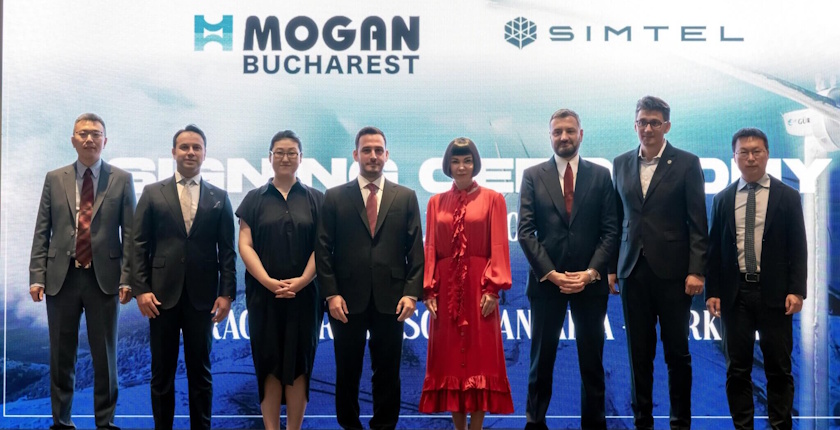
Simtel to install BESS for Güriş in Romania

Romanian engineering and technology company Simtel will install a battery energy storage system in Romania for Turkey-based Güriş.

With a storage capacity of up to 196.4 MWh and an installed power of up to 98.6 MW, it would be one of the largest battery energy storage systems (BESS) in Romania.

Simtel said it signed an engineering, procurement, and construction contract with Energy Capital Group, owned by Mogan Bucharest SRL, part of the Güriş Group from Turkey.

The contract is worth RON 168.9 million (EUR 33.3 million), and the deadline is nine months.

The contract includes the supply of a BESS, the design, construction, installation, commissioning, completion, and testing of the facility. The project will be implemented in the village of Iaz, Obreja commune, Caraș-Severin county.

Energy Capital Group obtained support via the National Recovery and Resilience Plan

Energy Capital Group received support via the National Recovery and Resilience Plan (NRRP) for its project. It is part of the pillar dedicated to the green transition. Romania approved a grant of over RON 50 million (EUR 9.86 million) for the implementation of the battery energy storage project.

With the investment, Romania is taking a significant step towards strengthening its energy infrastructure and increasing flexibility in consumption and production, according to Simtel COE Mihai Tudor. Storage systems are an essential pillar of the energy transition process and in the sustainable development of power grids, he added.

Director of Mogan Bucharest SRL Kaan Yamantürk said the company sees “a great future and opportunity” in Romania.

Güriş is active elsewhere in Southeastern Europe as well.

Simtel: The largest storage project has a capacity of 72 MWh

Simtel pointed out that the size of the facility is significant, considering that, according to the latest data published by Transelectrica, the current total battery energy storage capacity in Romania is 398.8 MWh.

Moreover, the largest storage project completed so far has a maximum capacity of 72 MWh, the firm added.

Of note, in October last year, Monsson said it was completing the second phase of a battery energy storage system within a hybrid power plant project in Constanța. The first phase was inaugurated in April and, with 24 MWh, it was the largest BESS unit in Romania at the time.

A subsidiary of Monsson has submitted a battery storage project of just over 2 GWh in capacity for an environmental permit in Romania. Simtel and Monsson have signed a strategic partnership on the development of solar and energy storage projects in Romania.

by in News

Croatia changing law on renewables – new rules for prosumers, decentralized power production

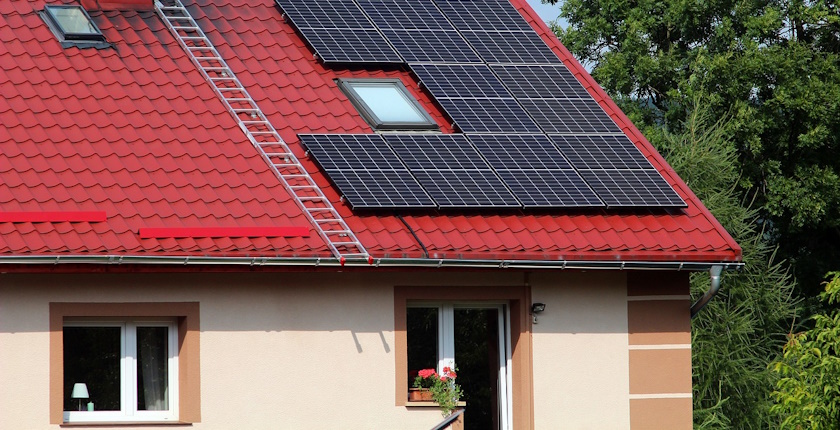
The Government of Croatia has adopted the amendments to the law on renewable energy sources and high-efficiency cogeneration. They change rules for consumers producing electricity for self-consumption, facilitate the establishment of citizen energy communities and regulate decentralized energy production.

The amendments align the Croatian legislation with the European Union’s Renewable Energy Directive and bring benefits to citizens, entrepreneurs, and investors, the Ministry of Economy said.

One of important innovations is a new scheme for the production of energy for self-consumption. Instead of the current net metering mechanism, the new law introduces net billing. It values more fairly the surplus electricity that prosumers deliver to the grid, according to the ministry.

The grid costs charged to prosumers will be aligned with the actual amount of electricity that they take from the grid

Consumers – citizens and entrepreneurs that produce energy for their own needs, will pay grid costs matching the amount of electricity they actually take from it, enabling a sustainable and fair system for all users, the ministry added.

Existing prosumers will have ten years for the transition to the new scheme.

The bill enables the production of electricity for self-consumption in remote locations, provided that all metering points are registered with the same consumer. The ministry expects the measure to pave the way for greater investments, flexibility, and decentralized energy production.

Waste separation is a condition for granting incentives for waste incineration

The rules for establishing citizen energy communities have been simplified, to further strengthen their role in the energy transition. The amendments stricten the criteria for the sustainability of biofuels and they prohibit incentivizing the incineration of waste not from a system of separate collection.

The upcoming law sets the basis for a plan for the development of electricity infrastructure and storage capacities. It will create the conditions for greater integration of renewable energy sources into the grid, the ministry stressed.

“With this law we are taking an important step forward in the energy transition, ensuring a balance between the interests of citizens, the economy, and the energy system, and creating the foundations for a sustainable development of the Croatian energy sector in the long term,” Minister Ante Šušnjar stated.