by in News

Electrica and Liberty Galați to Jointly Develop Up to 500 MW of Solar and Storage

Electrica — in which the Romanian Government holds a 49.8% stake — has signed a memorandum of understanding with Liberty Galați to develop up to 500 MW of combined solar generation and energy storage on land owned by the currently inactive steel works. The agreement, disclosed in a stock-exchange filing, sets out an operating model intended to maximise self-consumption, strengthen supply reliability and optimise long-term costs, the company said.

The proposed structure seeks to capitalise on the strategic complementarities between the two firms: Electrica brings experience as an electricity supplier, distributor and renewable investor, while Liberty Galați contributes the site footprint and industrial scale. The memorandum follows Electrica’s recent emergency move to assume the plant’s electricity supply contract — a step taken two weeks earlier to prevent disconnection over unpaid bills.

Electrica noted that cutting power to a blast furnace would effectively shut the facility down permanently. The steel works is the country’s largest, but is currently inactive, insolvent and carrying substantial debt.

Next steps include feasibility studies for the sites, which are located on land beside the Danube in eastern Romania, near the border with Moldova and Ukraine. According to Electrica’s update, the two parties would develop solar and storage assets with combined capacity of up to 500 MW, with detailed terms to be defined after the feasibility work is completed.

Electrica’s chief executive, Alexandru-Aurelian Chiriță, said the partnership is intended to leverage both companies’ technological and financial capabilities as a catalyst for change in Romania’s energy sector. “Final partnership terms are to be defined following feasibility studies and will be implemented once all corporate approvals are secured,” he said, adding that the initiative aims to create “a model of excellence adapted to current sustainability requirements” and to set a new performance benchmark for the national energy industry.

Earlier, Liberty Galați — part of the Liberty Steel Group — outlined a EUR 1 billion plan to reach carbon neutrality by 2030. When Electrica announced it would take over the plant’s power contract, Chiriță emphasised the strategic importance of preserving the works: “Not now, when Europe is rearming. Not now, when the reconstruction of Ukraine will require millions of tons of steel from our border. Not now, when European steel production can be a real competitive advantage for the first time in decades.”

Electrica supplies electricity to about four million end customers across 18 counties in Northern Transylvania, Southern Transylvania and Northern Muntenia. The group recently reported record preliminary results: consolidated net profit jumped 159% in 2025 to RON 1.22 billion (EUR 239 million), while EBITDA rose to RON 2.38 billion — 64.5% higher than the previous year.

On the renewables and storage front, Electrica currently operates 46.5 MW within a 307.5 MW renewables portfolio. The company also plans 19 energy storage facilities totalling 1.17 GWh and three modular, interoperable data centres as part of its broader transition strategy.
by in News

EU simplifying CBAM exemption for electricity, improving emissions calculation

The European Union is further simplifying the Carbon Border Adjustment Mechanism (CBAM), but with stricter oversight and an extension to 180 steel- and aluminium-intensive downstream products. From January 1, importers of designated goods and commodities will be paying the emissions tax.

Among the novelties, countries in the Energy Community that transposed the relevant EU regulations are getting an opportunity for exemptions for CBAM for electricity earlier than initially planned. The new legislation is tackling the hurdles for electricity transit as well. The calculation of emissions on national levels in the same sector is becoming more favorable for the payers of the cross-border CO2 tax. There is even a possibility, in theory for now, to declare the actual emissions level, which would suit renewable energy producers.

In response to feedback from industrial producers and other stakeholders, the European Commission proposed measures to prevent circumvention of CBAM and strengthen its efficacy. The next step is to expand it to 180 manufactured products with high steel or aluminum content, 79% on average. The list mostly consists of machinery and hardware, and 6% of the items are household appliances.

From January 1, importers will be paying a carbon price within the Carbon Border Adjustment Mechanism, which is tied to the Emissions Trading System (EU ETS). It concerns aluminum, cement, electricity, iron and steel, hydrogen and fertilizers, and the expenses will spill over to their suppliers in third countries such as the Western Balkans and Turkey.

The charge for downstream products is planned to be rolled out in January 2028.

Striving for level playing field

The system gradually levels the field, by the beginning 2034, with producers of the same goods and commodities in the EU. The measures are introduced in the form of delegated and implementing acts. They enter into force if other institutions responsible for them, like the European Parliament, don’t block them.

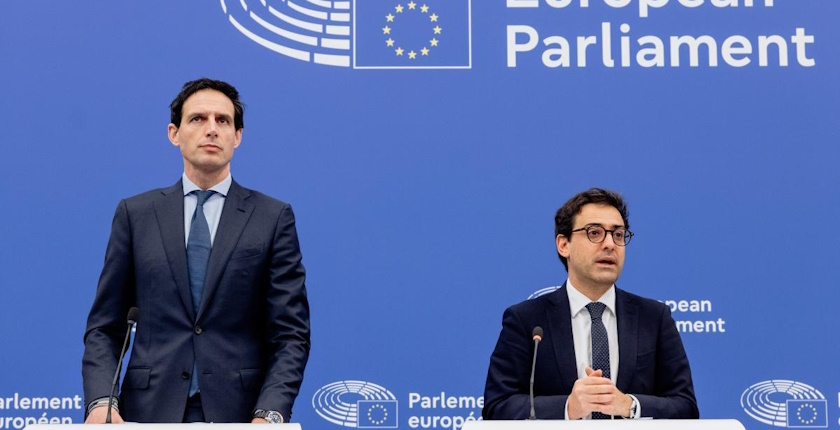
Hoekstra: Our system was too broad, too clunky and had too many loopholes.

“CBAM makes sure there is a level playing field – that we’re not asking anything more, or asking anything less for those goods that come into the EU. And in doing so, we’re rewarding investments in low carbon… We’re not going to ask anything more from others, than we’re asking from ourselves. During the CBAM transition period, we learned important lessons. Our system was too broad, too clunky and had too many loopholes,” said European Commissioner for Climate, Net Zero and Clean Growth Wopke Hoekstra.

Thoroughly against evasion

The tax level is envisaged to be proportional to an established quantity of greenhouse gases released in production. However, if the authorities notice attempts to evade the levy, they can make the process of providing evidence stricter and, in the meantime, switch to a charge under the emissions factor of the particular country of origin.

“If I had to summarize these points in a few words, I would say: a simpler CBAM, more robust in its application, and fairer in its scope,” said the European Commission’s Executive Vice-President for Prosperity and Industrial Strategy Stéphane Séjourné.

Shortcut to exemption from CBAM for electricity

One of the measures is intended for easing the administrative burden for countries in the process of electricity market coupling with the EU, namely the Energy Community contracting parties.

There is going to be a possibility to sign an MoU with the European Commission with a detailed schedule

The commission may sign a memorandum of understanding with a third country, once the commission has assessed that the country has fully transposed the electricity market acquis, the proposal reads. The document would lay down details on the timeline for the CBAM exemption, including in relation to technical work still to be carried out between transmission system operators (TSOs), and for implementing a carbon pricing instrument equivalent to the EU ETS as far as electricity generation is concerned.

Hoekstra said technical adjustments to CBAM would be made to facilitate market coupling when the relevant countries are ready.

Import tax for electricity from Energy Community to be 30% lower on average

Stakeholder feedback and the experience with the implementation of CBAM during the transitional period – before the actual charge – demonstrated that the rules for electricity imports are overly rigid, the European commissioners added. In particular, they ascertained that progress in decarbonizing electricity production isn’t sufficiently acknowledged or encouraged.

Unlike with the goods, for electricity there is a default country-specific emissions value. It is based on production from fossil fuels and a five-year average. Coal is mostly dominant in the Western Balkans, except for Albania, which has a completely green mix. In addition, the conditions which must be met to declare actual emissions of electricity have proven to be almost impossible.

The proposed package is introducing solutions for electricity transit and cross-border PPAs

In the new setting, the national value will reflect the carbon intensity of all sources of electricity. The estimated taxes in the Energy Community would be over 30% lower on average.

The procedure is being streamlined for declaring actual emissions. On the other hand, at least in the Western Balkans, there has been almost no progress in that area. The proposed package is also introducing solutions for the hurdles in electricity transit through Energy Community Contracting Parties and cross-border power purchase agreements (PPAs).

Power imports from the Western Balkans account for 1% of the EU’s demand, but their share in Croatia, Bulgaria and Greece is significant, the European Commission explained. Importantly, exports of electricity to the EU represent some 58% of Montenegro’s exports to the EU, compared to 5% for Serbia and Albania.

Funds for maintaining competitiveness of domestic industrial producers in third countries

A fund has been launched to temporarily support EU producers of CBAM goods and mitigate carbon leakage risks. It addresses the competitiveness loss in third-country markets with a weaker climate policy and lower costs. Potential beneficiaries will have to demonstrate decarbonization efforts.

Th European commission is also preparing proposals for limiting scrap aluminum exports and using more scrap metal. Furthermore, it said pre-consumer metals scrap, from manufacturing, would come under CBAM.

by in News

EU institutions reach deal on CBAM simplification

The Council of the European Union struck a provisional agreement with negotiators from the European Parliament regarding the European Commission’s proposal to simplify the CBAM carbon border tax. The initial levy, which would be gradually increased year by year until it matches the EU ETS price, is coming into force on January 1. The administration in Brussels doesn’t seem willing to consider delaying the date, even though neighboring third countries and their exporters to the EU are struggling to adjust to the new system, especially in the electricity sector.

The Polish presidency of the Council of the EU and European Parliament’s negotiators reached a provisional agreement on one of the proposals of the so-called Omnibus 1 legislative package: a regulation that would simplify and strengthen the Carbon Border Adjustment Mechanism (CBAM).

The proposal seeks to ease compliance without compromising the scheme’s climate goals. The colegislators said it would reduce the regulatory and administrative burden, as well as costs for EU companies, especially small and medium-sized enterprises (SMEs).

CBAM is a tool to equalize the price of carbon paid for EU products operating under the EU Emissions Trading System (EU ETS) with that of imported goods, and to encourage greater climate ambition in non-EU countries.

No relief in scope so far for EU’s neighboring countries

Notably, third countries including the Western Balkans and Turkey and the companies there that export cement, iron and steel, aluminum, fertilizers, electricity and hydrogen to the EU are running out of time before charges are introduced on January 1 next year. Primarily, the governments need to introduce carbon pricing systems to be exempted.

ENTSO-E asked for a one-year delay of the initial CBAM charges for electricity

Earlier this month, the European Network of Transmission System Operators for Electricity (ENTSO-E) highlighted several contradictions in CBAM in its sector. It suggested to the European Commission to prolong the transitional period by one year. The latest update doesn’t indicate any willingness to suspend the levy.

Moreover, the European Commission needs to assess in early 2026 whether to extend the scope to other ETS sectors and how to help exporters of CBAM products at risk of carbon leakage. The EU is set to increase the tariffs every year until they match the EU ETS at the start of 2034.

Boosting EU competitiveness

The European Commission said in February that the measures it proposed would save EUR 6.3 billion.

“Simplification is a top priority for the Polish presidency. Today’s provisional agreement with the parliament is yet another step towards reducing administrative burden for our companies and further boosting EU competitiveness,” Minister for the European Union of Poland Adam Szłapka said about the deal with lawmakers.

The colegislators retained the key components of the commission’s proposal to simplify CBAM rules, according to the Council of the EU. There would be a broader de minimis exemption from obligations applicable to importers that do not exceed a single mass-based threshold set at a level of 50 tons per year. The revised regulation would also permit them to avoid any initial disruptions as they will be able to continue importing while awaiting CBAM registration.

Both institutions must formally adopt the measures before they enter into force, which is expected by September, the Council of the EU said.

According to the European Parliament, 90% of importers would be exempted and 99% of CO2 emissions from iron, steel, aluminium and cement imports are still covered.

by in News

Association of Serbian Energy Intensive Industry is actively participating in decarbonization dialogue

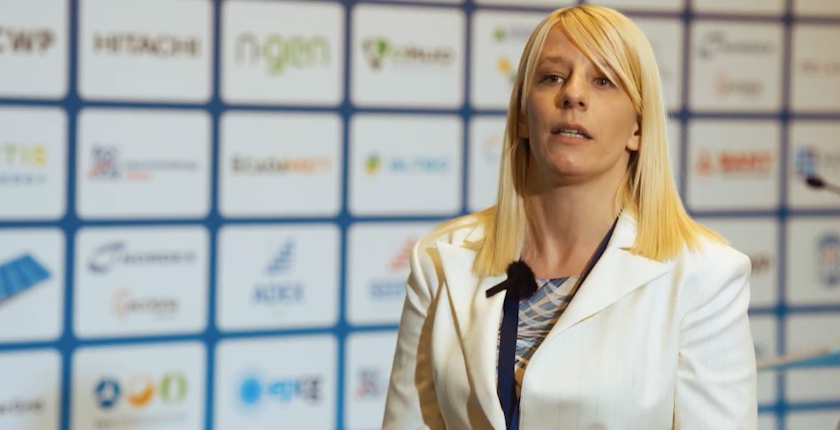
The Association of Serbian Energy Intensive Industry (ASEII), founded in September 2024, advocates for a coordinated national and regional approach to decarbonization that ensures the process strengthens rather than erodes competitiveness. “We believe it is very important that energy-intensive industries have their place in the dialogue around decarbonization, not only as passive observers but as active participants,” Director Svetlana Simić said at Belgrade Energy Forum 2025.

The Association of Serbian Energy Intensive Industry was established at a time when the domestic industry is facing complex challenges associated with the energy transition. Its five founding members represent the core of Serbia’s real economy, operating in the steel, fertilizer, and cement sectors.

“These are five leading companies in their respective fields: Metalfer, Elixir, Lafarge, Titan, and Moravacem. Our mission is clear: to be the voice of industry in the era of the energy transition. We believe it is very important that energy-intensive industries have their place in the dialogue around decarbonization, not only as passive observers but as active participants,” Director of ASEII Svetlana Simić said at Belgrade Energy Forum 2025 (BEF 2025).

The companies can offer solutions through their capacities, know-how, and experience, she underscored.

[wpcc-iframe title=”Stanislava Simic, Director, Association of Serbian Energy Intensive Industry” width=”500″ height=”281″ src=”https://www.youtube.com/embed/LM69KRWjkm4?feature=oembed” frameborder=”0″ allow=”accelerometer; autoplay; clipboard-write; encrypted-media; gyroscope; picture-in-picture; web-share” referrerpolicy=”strict-origin-when-cross-origin” allowfullscreen=””]

State and industry need to be partners in decarbonization

The Association of Serbian Energy Intensive Industry was founded in September. It advocates for a coordinated national and regional approach: one that protects strategic sectors, fosters low-carbon investment, and ensures that decarbonization strengthens rather than erodes competitiveness.

ASEII was a silver sponsor of this year’s conference, organized by Balkan Green Energy News. “We are at Belgrade Energy Forum today to highlight the importance of partnership between the state, the industry, and other stakeholders. We are also facing a serious challenge: the introduction of CBAM,” Simić stated.

Simić: We need legislative mechanisms that recognize how much companies are investing in their processes and innovation to reduce emissions

CBAM – the European Union’s Carbon Border Adjustment Mechanism, is a levy on carbon dioxide emissions for foreign cement, iron and steel, aluminum, fertilizers, hydrogen and electricity. The administration in Brussels launched it to protect its economy from imports from third countries with less stringent or no carbon pricing. CBAM charges are due to be introduced gradually, starting in January.

Serbia, like the entire region, must act wisely, strategically, and swiftly, Simić pointed out. “We need legislative mechanisms that recognize how much companies are investing in their processes and innovation to reduce emissions and secure an equal footing in the market,” she said.

Zečević: Many companies have been preparing for CBAM

Branko Zečević, president of Metalfer Group and one of the founders of the Association of Serbian Energy Intensive Industry, was one of the panelists at BEF 2025, in a session titled Addressing carbon pricing in the Western Balkans – Turning decarbonisation challenges into opportunities through collaboration, innovation and competitiveness.

He said CBAM’s effects on Serbian exports can’t be quantified easily yet, but that many companies have been preparing for it and investing in decarbonization. In Zečević’s view, a much bigger threat for the industry in Serbia and the region is an expected flood of goods that will not be able to enter the EU market anymore. He stressed that a domestic carbon pricing system is necessary.