by in News

The Green Backbone: Albania and Western Balkan Partners Unveil Strategic Energy Projects for 2026 EU Funding

The Energy Community has officially opened the public consultation for the 2026 list of Projects of Energy Community Interest (PECI), marking a pivotal moment for the Western Balkans’ energy infrastructure. Running from March 16 to April 17, 2026, the consultation evaluates eight critical projects designed to dismantle cross-border bottlenecks and pave the way for a massive influx of renewable energy.

For Albania and its neighbours, Kosovo, North Macedonia, Montenegro, and Bosnia and Herzegovina the selected projects represent a shift from traditional hydroelectric production to a sophisticated, integrated system of large-scale storage and high-voltage transmission corridors. These projects are now positioned to seek diverse financing, including EU grants, Western Balkans Investment Framework (WBIF) funds, and favourable loans from international financial institutions.

Below is a detailed technical and strategic breakdown of the flagship projects currently in the PECI selection pipeline.

1. Project E12: Moglice Pumped-Storage – The Balkans’ “Giant Battery”

At the heart of Albania’s green transition is the Moglice Extension Pumped-Storage Hydropower Plant (PSH). Developed by Devoll Hydropower Sh.A. (part of the Statkraft Group), this project is set to become one of the largest flexibility assets in the region.

  • Technical Parameters:

    • Maximum Power (Pmax): 1,620 MW (with a dynamic operational range of -1,620 MW to +1,620 MW).

    • Storage Capacity: 30,000 MWh (approx. 30 GWh).

    • Voltage: 400 kV.

    • Efficiency: 77% roundtrip efficiency.

  • Strategic Role: The plant will function as a “green battery,” utilizing the existing Moglice reservoir (380 million m³) and a new upper reservoir (25 million m³). It is designed to store surplus energy during periods of high production and release it during peak demand, providing critical balancing services to Albania and neighboring EU markets like Greece and Italy.

  • Timeline: Currently in the economic feasibility stage, with the earliest commissioning targeted for 2033.

2. Project E04: The 220 kV Balkan Triangle Rehabilitation

To ensure the reliability of the “Balkan Triangle” (Albania, Montenegro, and Bosnia & Herzegovina), the rehabilitation of the aging 220 kV Trebinje–Vau i Dejës corridor has been prioritized. This line is a vital artery that has recently struggled with congestion due to new solar and hydro capacities.

  • Technical Parameters:

    • Voltage: 220 kV.

    • Length: 162.92 km.

    • Transmission Power: Upgraded to carry 1,500 A using specialized high-capacity conductors.

    • Promoters: NOS BiH, Elektroprijenos-Elektroprenos BiH, and CGES (Montenegro).

  • Strategic Role: The project addresses severe climatic challenges and infrastructure depreciation. By replacing OPGW, insulation, and conductors on existing poles without increasing mechanical load, the project will increase Net Transfer Capacity (NTC) and resolve long-standing congestions between BA–ME, ME–AL, and AL–BA.

  • Timeline: Currently in the Detail Design Study phase, with an expected commissioning date of 2030.

3. Project E05 & Regional Corridors: Integrating Wind and Strengthening East-West Links

The expansion of the 400 kV network is a two-pronged strategy: strengthening regional East-West ties and unlocking wind potential in Northeast Albania.

A. The East-West Western Section (Project E05)

Connecting Kosovo and North Macedonia, this 103 km interconnector is a key link in the regional transmission “rings.”

  • Technical Parameters: 400 kV; 1330 MW Pmax.

  • Objective: Connecting the upgraded Prizren (XK) substation to a new substation in Tetovo (MK). This project enhances the security of supply and supports the large-scale integration of Renewable Energy Sources (RES) across the corridor.

  • Timeline: Expected commissioning by 2035.

B. The Albania–Kosovo Interconnection (Strategic Link)

As highlighted by recent strategic filings, Albania is pushing for a new 400 kV interconnection between Fierza (AL) and Prizren (XK).

  • Strategic Role: This link is deemed essential to facilitate the integration of over 1 GW of planned wind energy capacity in Northeast Albania. It will alleviate existing 220 kV grid overloads and significantly boost regional energy trading.

Financing the Future

These PECI projects are governed by the revised EU TEN-E Regulation, which streamlines the path toward final approval in December 2026. Because these projects provide cross-border benefits, they are eligible for a “blended” financing model. This includes state budget allocations, private investment from promoters like Statkraft and KOSTT, and significant support from European Union grants and loans.

As the Western Balkans move away from coal and toward a renewable-heavy mix, these projects—Moglice’s storage, the 220 kV rehabilitation, and the 400 kV corridors—form the essential hardware of a modernized, secure, and decarbonized European energy market.

by in News

Sunotec advances Germany’s largest EEG hybrid power plant

Sofia-based solar and battery developer Sunotec announced a key milestone in the construction of the Hybrid Power Plant Zerbst. The company claims it is set to become Germany’s largest solar-battery hybrid power plant under the Renewable Energy Sources Act (EEG).

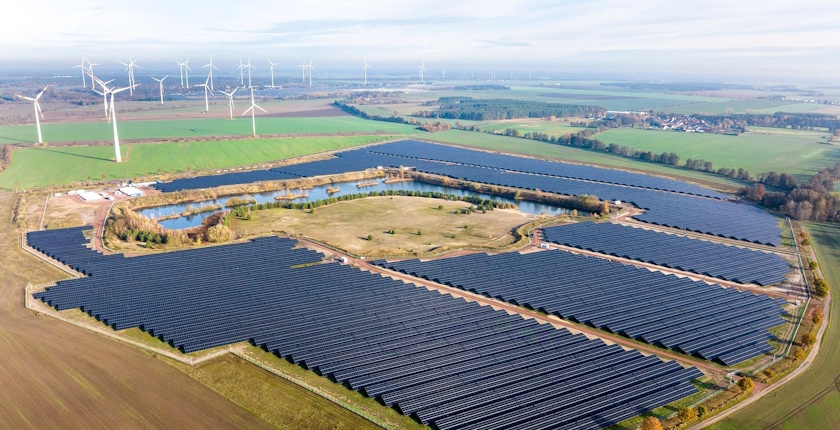
Located on a 41-hectare former gravel pit, the site combines 73,000 solar modules with a capacity of 46.4 MWp and a 57 MWh battery energy storage system (BESS).

The facility is designed and built to operate as a fully co-located hybrid asset, providing grid-supportive, dispatchable renewable power, Sunotec explained.

The project is being developed by Statkraft

The project is being developed by Statkraft. The Hybrid Power Plant Zerbst will deliver 50,000 MWh of renewable electricity per year. It is sufficient for 14,000 households.

This is the company’s first hybrid power plant in Germany and a proof of concept for its fully integrated, beyond-EPC delivery model, according to Sunotec.

The model is different from a traditional EPC contract. Sunotec implemented the core phases of the Zerbst hybrid power plant internally, including engineering, geotechnical assessments, and environmental planning.

Following completion, Sunotec will continue to manage the operations and maintenance of the PV plant.

​Atanasov-Lankes: we demonstrate the strength of Sunotec’s integrated model

This integrated approach reduces interfaces, eliminates fragmentation, and guarantees high-quality delivery, the company said.

“With the Hybrid Power Plant Zerbst, we demonstrate the strength of Sunotec’s integrated model and our ability to deliver complex systems at scale,” Zharin Atanasov-Lankes, Managing Director of Sunotec Germany, stressed.

He underscored that the project reflects the engineering depth and execution capability of the firm’s teams.

Over the last six months, Sunotec has made major steps in developing its operations in Europe.

In November 2025 the company signed an agreement with oil and gas major Shell on the development of battery energy storage systems in Central Eastern Europe. In July it has agreed with China-based Sungrow to install 2.4 GWh of BESSs.

by in News

Sunotec advances Germany’s largest EEG hybrid power plant

Sofia-based solar and battery developer Sunotec announced a key milestone in the construction of the Hybrid Power Plant Zerbst. The company claims it is set to become Germany’s largest solar-battery hybrid power plant under the Renewable Energy Sources Act (EEG).

Located on a 41-hectare former gravel pit, the site combines 73,000 solar modules with a capacity of 46.4 MWp and a 57 MWh battery energy storage system (BESS).

The facility is designed and built to operate as a fully co-located hybrid asset, providing grid-supportive, dispatchable renewable power, Sunotec explained.

The project is being developed by Statkraft

The project is being developed by Statkraft. The Hybrid Power Plant Zerbst will deliver 50,000 MWh of renewable electricity per year. It is sufficient for 14,000 households.

This is the company’s first hybrid power plant in Germany and a proof of concept for its fully integrated, beyond-EPC delivery model, according to Sunotec.

The model is different from a traditional EPC contract. Sunotec implemented the core phases of the Zerbst hybrid power plant internally, including engineering, geotechnical assessments, and environmental planning.

Following completion, Sunotec will continue to manage the operations and maintenance of the PV plant.

​Atanasov-Lankes: we demonstrate the strength of Sunotec’s integrated model

This integrated approach reduces interfaces, eliminates fragmentation, and guarantees high-quality delivery, the company said.

“With the Hybrid Power Plant Zerbst, we demonstrate the strength of Sunotec’s integrated model and our ability to deliver complex systems at scale,” Zharin Atanasov-Lankes, Managing Director of Sunotec Germany, stressed.

He underscored that the project reflects the engineering depth and execution capability of the firm’s teams.

Over the last six months, Sunotec has made major steps in developing its operations in Europe.

In November 2025 the company signed an agreement with oil and gas major Shell on the development of battery energy storage systems in Central Eastern Europe. In July it has agreed with China-based Sungrow to install 2.4 GWh of BESSs.

by in News

Share of private power producers in Albania tops 50%

Since last year, there is more electricity generation capacity in private ownership in Albania than in the system under state-controlled utility KESH. Growth in the solar power segment is the biggest factor for the switch. Its share of capacity has reached 10%.

Government-owned KESH in Albania lost its monopoly in electricity production in 2007 with the introduction of hydropower concessions. According to the Energy Regulatory Authority (ERE), power plants in private ownership account for the majority of the capacity since last year, Monitor reported.

The total grew by 537 MW in 2024 to 3.21 GW, mainly due to a surge in the photovoltaic segment. KESH operated 1.56 GW or 48.6%, against 1.65 GW run by private companies. One year earlier, the state-owned utility held 56%, the article adds. Nevertheless, a hydropower plant usually generates three times more electricity than a PV plant of the same size.

Diversification into photovoltaics, wind, gas, storage

Albania is specific in the Western Balkans region for having no coal power plants and producing almost all its electricity in hydroelectric systems, which makes it vulnerable to droughts. KESH has dominated the sector mainly with its cascade on the Drin (Drim) river.

Private solar parks are leading the way in capacity additions in Albania, but a hydropower plant normally generates three times more electricity than a PV park of the same capacity

Norway-based Statkraft stands out among the largest private companies, with its projects on the Devoll, together with Turkish company Ayen Enerji’s endeavors in the Fan river basin and Austrian Verbund’s Ashta complex, also on the Drin.

Efforts are underway to diversify the country’s mix with solar and wind energy and introduce storage capacity. However, not a single wind turbine has been built yet. In addition, there is an opportunity for strengthening the electricity supply using gas from the Trans Adriatic Pipeline – TAP.

Two major solar power plants commissioned this year

ERE’s data show that in the first eight months of this year, Albania added two solar power plants of an overall 150 MW and a hydropower facility of 48.9 MW to its transmission grid.

The country hosts Karavasta, the biggest photovoltaic park in the region, at 140 MW in peak capacity. Its operator Voltalia, headquartered in France, is building Spitalla, a 100 MW facility. It won both projects at Albania’s renewable energy auctions.

Deputy Prime Minister and Minister of Infrastructure and Energy Belinda Balluku said today that solar power reached 10% of capacity.

In other recent news, CWP Europe recently signed a joint declaration with the European Commission and the Albanian Investment Development Agency in support of its Tropoja wind farm project.

by in News

European electricity industry issues Paris Pledge on pumped storage hydropower

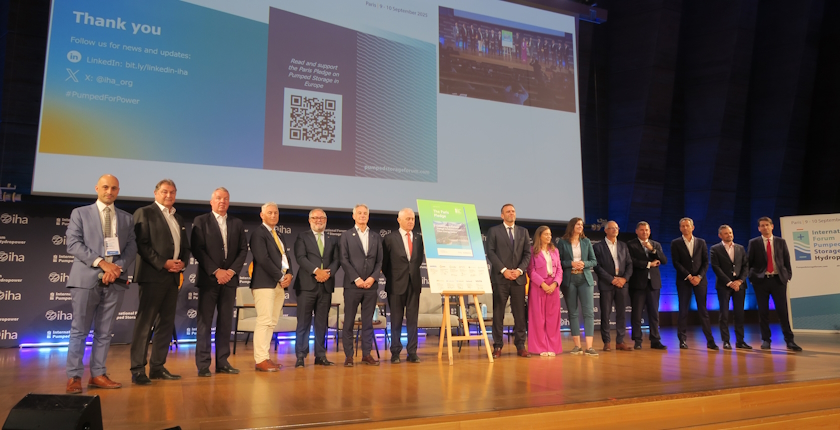
The International Hydropower Association (IHA) and Eurelectric launched the Paris Pledge. It is a collective call to action, aimed at unlocking the potential of pumped storage hydropower in Europe. The signatories urge the European Union and national governments to create the right conditions for long-duration storage to meet clean energy goals.

Over 50 utilities, hydropower suppliers and energy-focused associations have signed the Paris Pledge. The document’s alternative headline is Committing to Pumped Storage to Secure Europe’s Clean Energy Future.

The International Hydropower Association (IHA) and Eurelectric – Union of the Electricity Industry launched the initiative. They warned that Europe faces an urgent and growing need for long-duration electricity storage to secure a reliable, affordable and sustainable energy future.

Amid the transition to a renewables-dominated power system, the ability to store and dispatch electricity over long periods will be critical to balance variable generation from wind and solar, ensure grid stability and resilience, and reduce reliance on imported fossil fuels, the authors stressed. They called pumped storage hydropower or PSH the most important, scalable and cost-effective long-duration electricity storage solution available today. It still provides over 90% of the world’s long-duration electricity storage capacity.

PSH is currently the most important, scalable and cost-effective long-duration electricity storage solution, the industry pointed out

By 2050, around 86% of production capacity in Europe will come from variable sources, according to the material accompanying the Paris Pledge. Encouragingly, 78 pumped storage hydropower projects are under development, for 35 GW overall. The EU accounts for over 32 GW, and the rest is in Switzerland, Norway and Turkey.

The combined pipeline would provide storage capacity in excess of 700 GWh, equivalent to more than 10 hours of consumption of Italy and Spain taken together. There is 3.9 GW in the ready-to-build phase, and 2.8 GW is under construction. Of note, an earlier report showed 52.9 GW of PSH was under development.

The existing capacity amounts to 48 GW, compared to 190 GW globally. In the EU, pumped storage hydropower systems can store 1.2 TWh overall.

Photo: Types of pumped storage (IHA, Eurelectric)

Paris Pledge calls for separate legislation for long-duration energy storage

Among other proposals, the signatories are asking the EU for a dedicated initiative to boost the rollout of electricity storage. They suggested legislation to be separate for long duration, short duration and other solutions.

The Paris Pledge calls on member states to remunerate the provision of system services and security of supply for all time frames. They should eliminate double grid fees on electricity storage technologies and accelerate permitting for PSH, the document reads.

With strong political commitment, Europe can double its pumped storage hydropower capacity in the next 25 years, according to the Paris Pledge. In-person signatories represent EDP, EDF, Iberdrola, Andritz, Enel, Statkraft, Voith, Hydrogrid, Verbund, Landsvirkjun and GE Vernova.

Pumped storage hydropower’s contribution during Iberian Peninsula blackout

During the power blackout in Spain and Portugal on April 28, pumped storage played a pivotal role in balancing and supporting the recovery of the system. In Spain, PSH generated 11 GWh of electricity in the first 12 hours, instead of the planned 12 GWh recharge. Similarly, in Portugal, hydropower and pumped storage covered 80% of the demand in the first ten hours.

Such facilities also made a major contribution to restoring the electricity grid in the entire peninsula, thanks to their so-called black start capability. It allows the power plant to be restarted without relying on external power sources and to reenergise the power system.

“Very few technologies can provide this function. As a result, within a few minutes, the first pumped storage plants were ready for synchronization and awaiting dispatch instruction” from transmission system operators, notes the report published with the Paris Pledge.

by in News

Resalta takes over Statkraft’s operations in Croatia 

Statkraft has sold its Croatian platform to Resalta, according to the two companies. The transaction, which includes the renewable energy project pipeline and the transfer of employees, was signed and closed in July.

Norway-based Statkraft has decided to leave India, the Netherlands and Croatia in October 2024. The company started its Croatian operations in 2021. Resalta is part of Aggreko Group from Scotland.

Statkraft, Europe’s largest renewable energy producer, and Resalta, an international energy services provider operating across Central and Eastern European markets, and with a growing presence in Croatia, said Statkraft sold its Croatian platform to Resalta.

The integration process is now underway, they added.

Bellanger: Resalta will continue to develop the Croatian platform to its full potential

The platform includes a significant pipeline of renewable energy projects fully aligned with Resalta growth plan. The integration of the local team into Resalta’s operations ensures continuity and builds on their expertise to advance future development, the two companies claimed.

“We are delighted to have completed this transaction with Resalta, a company that shares our commitment to renewable energy and sustainability. With the team of seasoned project developers, we are confident that Resalta will continue to develop the Croatian platform to its full potential,” said Arnaud Bellanger, Statkraft Country Manager Croatia and France.

Komazec: Resalta is expanding its footprint in renewable energy sector in Croatia

Resalta Group CEO Luka Komazec stressed that the acquisition represents a significant step forward for Resalta as the company expands its footprint in renewable energy project development in Croatia.

“We are excited to welcome the talented team from Statkraft and look forward to working together to advance our shared vision of a sustainable energy future,” he added.

In Komazec’s words, Resalta is committed to ensuring a smooth transition for all stakeholders involved.

by in News

SolarPower Europe: EU needs ten times more battery storage by 2030 to meet renewables targets

SolarPower Europe believes that the European Union needs ten times more battery storage by 2030 to support the growth of solar and other renewable energy capacities and maintain the pace of the energy transition. To promote battery growth across the EU, SolarPower Europe has launched an initiative called the Battery Storage Europe Platform.

“Battery storage is no longer optional – it is essential. Without urgent action, the EU risks stalling its energy transition,” stated Juhi Dion Sud, the newly appointed Head of the Battery Storage Europe Platform. She added that a tenfold increase in battery storage by 2030 is vital to sustain the rapid growth of solar and other renewables, and to ensure the EU’s energy security, resilience and competitiveness.

Dion Sud: The EU needs to boost BESS capacities from 50 GWh to at least 500 GWh

The EU currently has just over 50 GWh of battery energy storage systems (BESS), but to stay on track for the 2030 renewables targets, the level must increase to between 500 GWh and 780 GWh, explained Dion Sud.

Walburga Hemetsberger, CEO of SolarPower Europe, described solar and storage as “the perfect pair,” adding that battery storage must grow at the same pace as solar installations across Europe.

The platform’s founding partners include REIB, Statkraft and Sunotec

The Battery Storage Europe Platform was launched with support from founding strategic partners, including Renewable Energy Insurance Broker (REIB), Statkraft, and Sunotec. Over 50 representatives from leading battery storage companies joined the kick-off day in Brussels.

The platform will represent the interests of the sector at the EU level, facilitating engagement with policymakers and delivering constructive legislative trade and investment frameworks for battery storage manufacturing and deployment, according to a press release from SolarPower Europe.

Participation in the platform is open to members of SolarPower Europe, with strategic partnership opportunities available for organizations interested in taking a leading role in the work of the platform, it added.