by in News

Slovenia begins preparations for closure of Velenje coal mine

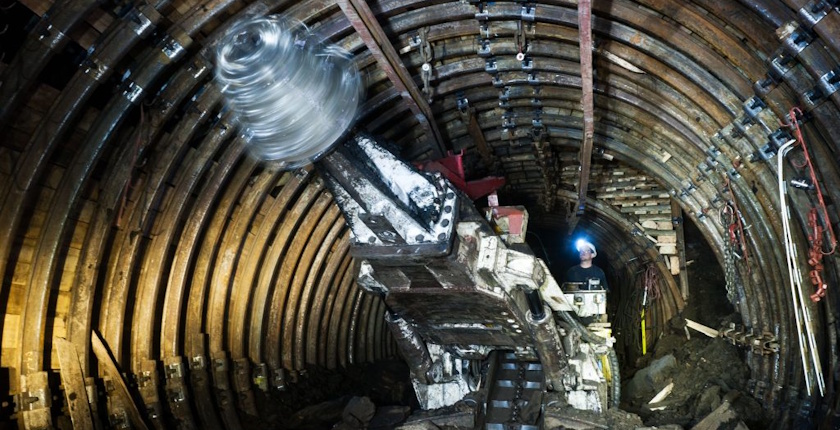
Slovenian Prime Minister Robert Golob visited the Savinja and Šalek region and the Velenje coal mine to present a draft law on the gradual closure of the mine. The event marked the beginning of a public debate on the document. Its implementation is estimated at EUR 1.1 billion. The trade union has raised concerns about the plan.

The Government of Slovenia has initiated a coal phaseout by assuming direct ownership of the Šoštanj coal power plant and coal mine Velenje from state-owned power utility Holding Slovenske Elektrarne (HSE). The first steps towards the closure of Termoelektrarna Šoštanj (TEŠ) have begun, and the decision makers have turned to Premogovnik Velenje.

Slovenia earlier closed the Trbovlje-Hrastnik mine in Zasavje. Zasavje and Savinja and Šalek (in Slovenian language: Savinjsko-šaleška regija – SAŠA) are two of 31 coal regions in the European Union.

Prime Minister Robert Golob held several meetings with representatives of local authorities in the towns of Šoštanj and Velenje, as well as with the management of the mine, union representatives, and businesspeople.

Golob: We have to take care of you because you took care of us

During the discussions, he emphasized that after the first reading of the draft law in the government, the document would be analyzed by the Economic and Social Council.

“We have to take care of you because you took care of us for so many years,” Golob said, as quoted by his government.

The government will, in his words, strive to protect the social security and jobs of miners and their families. Its goal is to reduce the uncertainty linked with the closure of the coal mine and the restructuring of the region, the prime minister added.

Golob: We have become aware of the workers’ concerns

Golob told workers’ representatives and mine management that the law on the coal mine closure would ensure they have a safe future and security, according to the update. He informed them that the law should enter parliamentary procedure by the end of the year.

“I understand the employees’ concerns, which is why I also attended the meeting with them. We became aware of their concerns before the government adopted the law,” he stated.

Golob claimed that solutions were found for 80% of workers’ demands, and that they would be included in the bill. He expressed confidence that the remaining 20% would be resolved at the Economic and Social Council in the coming weeks.

Trade union: The law must define what happens with employees and associated companies

Minister of Natural Resources and Spatial Planning Jože Novak explained that the government agrees with the management of the coal mine on all key elements, while negotiations with the unions are still ongoing, Naš Stik reported.

The management will prepare a twenty-year program for closure and remediation, Novak noted, and added that EUR 1.1 billion is necessary to implement the law.

According to the General Manager of Premogovnik Velenje Marko Mavec, the technical part of the draft law is appropriate, while the social aspect requires additional coordination.

The SPESS trade union President Simon Lamot pointed to controversial issues including the possibility of selling the HTZ Velenje subsidiary and uncertainties regarding early retirement.

The law must clearly define what happens to employees and associated companies – without that, there can be no talk of a just transition, Lamot stressed.
by in News

Celje, Šoštanj among Slovenian municipal authorities pursuing energy independence

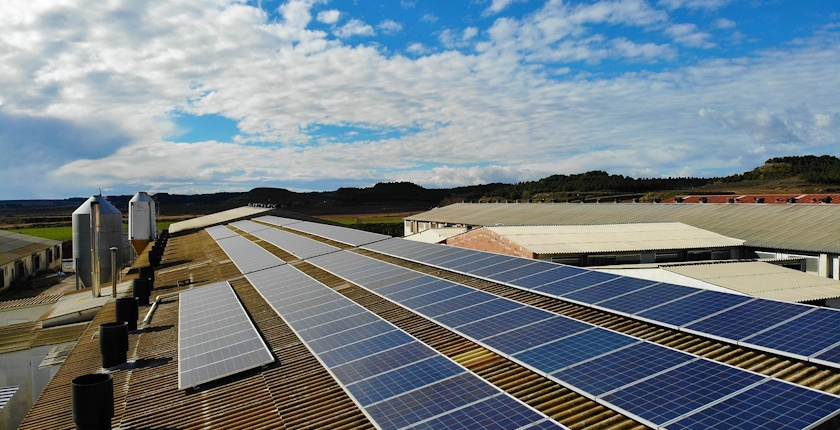
The City of Celje in Slovenia plans to install 11 solar power plants on its public buildings, and the Municipality of Šoštanj agreed contracted four such units. The photovoltaic systems would be part of energy communities. Šoštanj expects to save EUR 70,000 per year while Celje is counting on EUR 200,000.

Novo Mesto, another municipality in Slovenia, recently made a similar move toward achieving energy independence.

The total capacity of the solar power plants in Celje and Šoštanj is 1.9 MW. They have signed contracts with ECE, a subsidiary of state-owned power utility Holding Slovenske Elektrarne (HSE). The projects are funded from the National Recovery and Resilience Plan (NRRP) and by the two municipal authorities.

Šoštanj is set to get solar power plants with a capacity of 500 kW altogether, at four locations: the sports hall of the Karel Destovnik Kajuh elementary school, a music school, health center, and the Pilon Center.

The total investment is EUR 500,000, with the local authority receiving a EUR 450,000 grant via the NRRP.

Both municipal authorities now have energy communities

In Celje, approximately 1.4 MW would be installed at several locations including the Z’dežele Stadium, Celje Summer Pool, Celje Health Center, elementary schools and kindergartens.

The City of Celje secured a EUR 1 million grant from NRRP, and the total investment is estimated at EUR 1.4 million.

Sebastijan Roudi and Boris Goličnik (photo: Municipality of Šoštanj)

In addition to building solar power plants, the contract includes five years of maintenance, offtaking surplus electricity production, and supply during insufficient power generation. It also involves managing the energy community.

In Šoštanj, the energy community would involve more than 15 public buildings, and the one in the City of Celje would consist of PV units on more than 40 public buildings.

The two projects are scheduled for completion in December and November, respectively.

Šoštanj aims to produce 70% of the electricity consumed by its public buildings

When the power plants are built, the municipality expects to cover 70% of the consumption of all public buildings, and the third-largest city in Slovenia aims for a 15% share.

The Šoštanj project is envisaged for 500 MWh of clean electricity output per year, reducing electricity costs by about EUR 70,000. Total savings over the entire lifespan of the solar power systems is seen at EUR 2 million.

Celje’s PV plants would produce 1,462 MWh of energy annually and save approximately EUR 200,000, translating to around EUR 5 million throughout their service life.

Investment for the long-term benefit of the community

Mayor of Šoštanj Boris Goličnik said the contract signifies the continuation of the municipality’s vision of energy independence.

“This is an investment in the future, in the green transition, and for a permanent benefit of our community,” he stated.

According to Celje’s Mayor Matija Kovač, it is a strategic decision on managing energy, costs, and the environment in the future. He said the planned PV units are just the beginning.

Sebastijan Roudi, ECE CEO, asserted that as part of the HSE group, the firm places grea t emphasis on demanding energy projects, developing new billing models, and seeking ways to accelerate the green transition.

by in News

Slovenia’s sole coal-fired power plant Šoštanj to keep main unit offline until fall

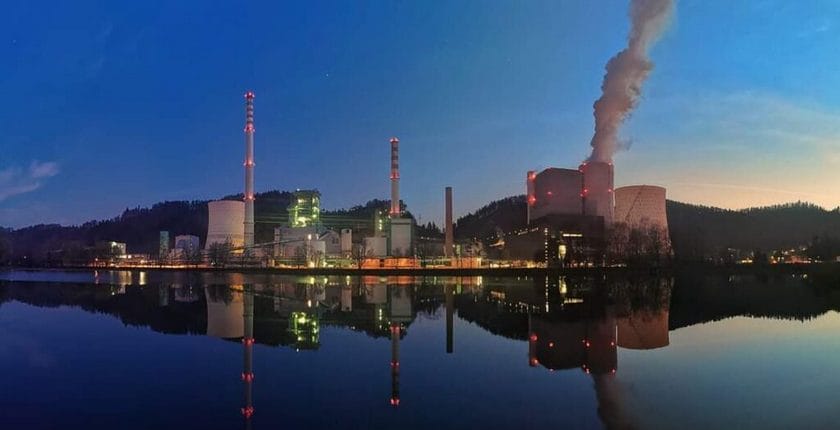
As of this year, Slovenia’s only coal-fired power plant, Termoelektrarna Šoštanj (TEŠ), has shifted its primary focus to supplying heat, with electricity now sold as a byproduct. The ongoing overhaul of its unit 6 is expected to be completed in the coming days, but the 600 MW block will not be restarted until the end of September, when demand for heat is set to rise.

As part of the coal-phaseout process, targeted for completion in 2033, the Government of Slovenia decided last year to set aside EUR 403 million to save TEŠ and coal mine Velenje from bankruptcy and take over both from state-owned power utility Holding Slovenske Elektrarne (HSE).

TEŠ hopes the fall months will drive revenues

TEŠ hopes that the fall months will enable it to meet this year’s revenue target, as the operation of unit 6 is unprofitable in the summer due to low market prices for electricity and reduced demand for heat. This year, the power plant aims to earn EUR 400 million from the sale of heat and electricity.

Apart from unit 6, TEŠ operates only one other coal-fired generator, unit 5, with a capacity of 345 MW, while its first four blocks have been shut down.

The changed circumstances have been challenging for TEŠ, according to its CEO, Branko Debeljak. As HSE no longer sells TEŠ’s electricity, the plant had to set up its own sales department and seek customers on the market. Even so, the first four months of 2025 were quite successful when it comes to electricity sales, says Debeljak. The plant sold 1,045 GWh of electricity, generating revenues of EUR 138 million, or EUR 29 million more than initially planned, according to him.

The overhaul of unit 6 began in April

The overhaul of unit 6 began on April 22 and was expected to be completed by June 20. However, due to delays in the delivery of components, it had to be extended until early July. The completion of the overhaul will be followed by a short trial run, and a restart is planned at the end of September when the need for heat supply is set to rise again.

Slovenia aims at a 55% drop in emissions by 2033, and an early closure of its only coal-fired plant could help achieve that target. It seems likely that TEŠ will be shut down within a few years or operate at minimum capacity.

In June, Ireland’s Moneypoint power plant stopped burning coal, marking the end of coal use in the country. Slovakia and Spain officially intend to exit coal in 2025, followed by Greece (2026), France and Hungary (2027), and Denmark and Italy (2028). However, the dates could be pushed forward, and more countries could join the group in the meantime.