by in News

Greece installs 2.5 GW of solar in 2025 as utility segment dominates

Greece is expected to reach its 2030 goal early in solar installations, according to SolarPower Europe’s latest data.

The association expects Greece to achieve the goal of 13.5 GW this year. By the end of the decade, there will be 21.5 GW in installed solar capacity, based on the most probable scenario, up from 12.22 GW, estimated for 2025.

Greece added 2.5 GW, slightly lower than the record 2.6 GW increase of 2024, the update showed. It places the country at the number seven spot, behind Germany (17.6 GW), Spain (9.2 GW), France (6.7 GW), Italy (5.2 GW), Poland (3.7 GW) and Romania (2.5 GW).

Greece was the fourth-best country in Europe in terms of solar installations per capita, with 1,223 W, trailing the Netherlands (1,582 W), Germany (1,405 W) and Estonia (1,335 W), according to the estimate.

Net billing and delays stymied the rooftops segment expansion

A significant drop took place in the Greek rooftops and commercial and industrial (C&I) segments, as a result of the switch from net metering to net billing, as well as administrative delays. Utility-scale activity offset part of this decline, resulting in only a slight contraction for the year, SolarPower Europe said in its annual outlook. In total, 72% of new capacities were of utility size, with the rest being in all other categories.

Self-consumption systems have surpassed 1 GW in total capacity. While community solar projects account for nearly 20% of total installed photovoltaic capacity, most are not used for self-consumption, and their significance in terms of new installations is declining.

Future growth depends on storage and power demand

Looking ahead, SolarPower Europe considered Greece to be on a strong growth path, with utility-scale projects driving most new additions and a large storage programme expected to ease integration challenges later in the decade.

Residential and C&I segments continue to struggle with policy delays and the shift to net billing, while rising curtailment and low-price hours weigh on investor confidence, the association noted. About 8% of potential renewable energy generation is curtailed, and this rises to over 11% for PV output. The number of hours with zero or negative prices in the day-ahead electricity market almost doubled in 2025. Still, the number of hours impacting power plant revenue remains lower than in many other European countries.

While the overall market is expected to grow in the short term, further expansion is dependent on electricity demand growth, as well on the pace of deploying storage, grid upgrades and self-consumption rules.

by in News

Greece installs 2.5 GW of solar in 2025 as utility segment dominates

Greece is expected to reach its 2030 goal early in solar installations, according to SolarPower Europe’s latest data.

The association expects Greece to achieve the goal of 13.5 GW this year. By the end of the decade, there will be 21.5 GW in installed solar capacity, based on the most probable scenario, up from 12.22 GW, estimated for 2025.

Greece added 2.5 GW, slightly lower than the record 2.6 GW increase of 2024, the update showed. It places the country at the number seven spot, behind Germany (17.6 GW), Spain (9.2 GW), France (6.7 GW), Italy (5.2 GW), Poland (3.7 GW) and Romania (2.5 GW).

Greece was the fourth-best country in Europe in terms of solar installations per capita, with 1,223 W, trailing the Netherlands (1,582 W), Germany (1,405 W) and Estonia (1,335 W), according to the estimate.

Net billing and delays stymied the rooftops segment expansion

A significant drop took place in the Greek rooftops and commercial and industrial (C&I) segments, as a result of the switch from net metering to net billing, as well as administrative delays. Utility-scale activity offset part of this decline, resulting in only a slight contraction for the year, SolarPower Europe said in its annual outlook. In total, 72% of new capacities were of utility size, with the rest being in all other categories.

Self-consumption systems have surpassed 1 GW in total capacity. While community solar projects account for nearly 20% of total installed photovoltaic capacity, most are not used for self-consumption, and their significance in terms of new installations is declining.

Future growth depends on storage and power demand

Looking ahead, SolarPower Europe considered Greece to be on a strong growth path, with utility-scale projects driving most new additions and a large storage programme expected to ease integration challenges later in the decade.

Residential and C&I segments continue to struggle with policy delays and the shift to net billing, while rising curtailment and low-price hours weigh on investor confidence, the association noted. About 8% of potential renewable energy generation is curtailed, and this rises to over 11% for PV output. The number of hours with zero or negative prices in the day-ahead electricity market almost doubled in 2025. Still, the number of hours impacting power plant revenue remains lower than in many other European countries.

While the overall market is expected to grow in the short term, further expansion is dependent on electricity demand growth, as well on the pace of deploying storage, grid upgrades and self-consumption rules.
by in News

RE-Source Platform: Number of PPAs in Europe drops by 60%

The number of power purchase agreements in Europe decreased by 60% compared to the same period last year, while contracted capacity has dropped by 40%, according to RE-Source Platform.

Europe’s power purchase agreement (PPA) market is facing headwinds in grid development, permitting and electrification and from negative electricity prices, RE-Source Platform warned.

RE-Source Platform facilitates corporate renewable energy sourcing in Europe. It was founded by WindEurope, SolarPower Europe, Climate Group RE100, and World Business Council for Sustainable Development, and steered by a group of corporate buyers and developers.

There are four main problems

“This slowdown is very paradoxical. Europe has no path to energy security and competitiveness unless it electrifies its economy – shielding itself from energy shocks and leveraging large scale deployment of wind and solar energy. But the market is facing headwinds,” the update reads.

The platform identified four main problems.

Europe is not expanding its grid infrastructure quickly enough. The main bottleneck is grid permitting with hundreds of gigawatts of projects awaiting grid connection.

The permitting process for renewables remains too slow. The Renewable Energy Directive has set permitting rules for acceleration, but EU member states have not implemented them.

The Clean Industrial Deal rightly names PPAs as a key solution

Direct electrification is the cheapest and most efficient way to decarbonize. It could also improve competitiveness and energy security, however Europe’s electrification rates are stagnating.

The increase of the negative price hours is making PPA negotiations harder. The way out are energy storage solutions.

The platform stressed the importance of PPAs.

“The Clean Industrial Deal rightly names PPAs as a key solution. Without them, we risk losing industrial competitiveness – and missing our climate targets. PPAs are a cornerstone of Europe’s industrial decarbonization,” the platform added.

They also give companies price certainty, help new wind and solar projects get financed and cut buyers’ exposure to volatile energy markets, according to the update.

by in News

EU solar jobs headed to first decrease in decade

Jobs in the European Union’s solar industry reached a record level last year, however they are dropping in 2025.

Nevertheless, the decrease in solar jobs this year could be only temporary, according to SolarPower Europe’s latest report.

Europe’s green job expansion continued in 20254, with EU solar jobs rising to a record high of 865,000. The sector’s 5% increase outperformed the wider EU labour market’s 0.8% growth, the EU Solar Jobs Report 2025 showed.

Most jobs, 86%, are provided by the solar deployment sector.

EU solar employment will face a temporary drop in 2025, of 5% decline to 825,000 jobs, due to slower solar deployment and manufacturing challenges, the update reads.

Nevertheless, the association expects solar workforce to grow over the coming years and reach 916,000 by 2029.

Solar delivers 825,000 quality jobs for Europe in 2025, said Walburga Hemetsberger, CEO of SolarPower Europe. It is incredible, she added.

“However, this falls short of the one million solar job mark we were hoping to reach by now, and for the first time in a decade, solar jobs growth has halted. We can’t ignore this warning. EU leaders have the opportunity to reverse course, stabilise the market, support EU solar manufacturers, and strengthen its skills strategy,” Hemetsberger stated.

The main reason for the decrease this year is a slowdown in residential solar. The share of EU rooftop solar workforce has been shrinking for the last three years, from 73% in 2022, to 59% in 2024, and it is projected to land at 56% in 2029, according to the report.

In July, the association estimated that the EU’s annual solar installations would come in weaker year-on-year in 2025 for the first time in a decade. The warning coincided with the month when solar power became the EU’s biggest electricity source for the first time.

Germany remained the leading EU country for employment

The largest national solar markets also represented the largest sources of solar employment in the EU.

Germany remained in the lead in employment last year, with around 128,000 direct and indirect full-time equivalent (FTE) jobs. However, the level tumbled from 154,000, registered in 2023, despite a jump in new installations to 17.2 GW from 15.1 GW.

Spain ranked second, with 122,000 FTEs. Italy saw significant growth, with the solar job market surpassing 100,000 workers, placing it third in the EU. Other top markets included Poland (90,000), France (66,000), Romania (62,000), and Hungary (47,000), the report adds.

SolarPower Europe issued ten policy recommendations for maintaining job growth:

  1. Establish a European solar skills intelligence hub.
  2. Scale and stabilize funding for renewable skills, with simplified access for small and medium-sized enterprises (SMEs).
  3. Map existing skills initiatives.
  4. Conclude sectoral agreements to enable large-scale retraining.
  5. Run coordinated campaigns to improve the attractiveness of technical green careers as well as apprenticeships and vocational training.
  6. Promote gender balance and diversity in solar careers.
  7. Develop cross-renewable career pathways and portable competence frameworks.
  8. Introduce a European solar skills passport.
  9. Adopt an electrification skills strategy that links photovoltaics with heat, mobility and storage.
  10. Invest in advanced digital and artificial intelligence (AI) training.
by in News

RES Croatia to Brussels: Renewables have no future in Croatia

RES Croatia, together with SolarPower Europe and WindEurope, has sent a letter to the European Commission to raise concerns about the crisis in Croatia’s renewable energy sector.

The three associations emphasized that for several years, 60 projects for investments in solar, wind, geothermal, and batteries have been blocked, and that if nothing is done, many of them would soon be abandoned.

Without urgent deblocking of renewable energy projects, Croatia will lose investments, increase fossil fuel imports, which already exceed 25%, and miss the European Union’s and national target of at least 42.5% of energy consumption coming from renewables by 2030, according to Renewable Energy Sources of Croatia (RES Croatia), SolarPower Europe and WindEurope.

The national organization warned that the government is gradually phasing out subsidies for electricity prices for citizens and entrepreneurs. At the same time, the development of renewable energy sources as the only sustainable solution for lower bills and lowering imports is at a complete standstill, it added.

Projects with a total capacity of 3.5 GW and investments of EUR 3 billion are blocked

Croatia is currently subject to infringement proceedings due to delays in implementing the European Union’s RED II and RED III directive. They aren’t just a piece of paper, but a mechanism to ensure energy security and independence, which is of strategic interest for Croatia and its citizens, RES Croatia underscored.

The organizations are urging the European Commission to use its tools to demand from the government to determine the grid connection fee, but at EUR 0 per kWh, open up the balancing market for renewable energy producers, and integrate battery energy storage systems (BESS) and electrification into national planning.

Currently, 60 projects for solar power plants, wind farms, geothermal power plants, and batteries with a total capacity of 3.5 GW and investments of EUR 3 billion are blocked, according to the letter, accompanied by an annex.

The domestic industry is unable to sign long-term PPAs

For these projects, the state has already charged EUR 25 million through energy approvals— the first in a series of documents that requires payment to the state, which, due to the blockage, are beginning to expire at the end of this year.

Organizations stressed that these projects are permanently losing the paid money, while local communities are losing significant revenues that would have been allocated to them from the implementation of renewable energy projects.

They also drew attention to the domestic industry’s inability to sign long-term power purchase agreements (PPAs) with renewable energy producers, securing more favorable market conditions and thereby increasing its competitiveness in European and global markets.

Of note, the European Commission advised Croatia in June to speed up the installation of renewable energy capacities.

If nothing is done, projects of as much as 2.5 GW overall will be abandoned as early as next week

The associations pointed out that the development of new projects larger than 10 MW has stalled since 2022 because the Croatian Energy Regulatory Agency (HERA) has not set a transmission network connection fee for renewable power plants.

Instead, they added, Croatia’s transmission system operator (TSO) HOPS is trying to shift the costs of network modernization – planned over ten years ago and not related to new projects – to new renewable energy projects.

The minister of economy said in March that the upcoming connection fee would be EUR 0 per kW

It is increasing the project cost by 30% to 40%, making them unprofitable, RES Croatia said.

Such a model for financing the network is not from European practice, because 80% of member states rely on EU funds and their national budgets, rather than on producers.

They also recalled that the minister of economy announced in March that a connection fee would be set at EUR 0 per kW and that developers would be offered flexible contracts to encourage investment in battery storage. But that promise has not yet been fulfilled.

The three organizations warn that if nothing is done, projects of up to 2.5 GW altogether would be abandoned as early as next week after HOPS’s decision,. It means companies would withdraw from the Croatian market and lose millions in investments that would have permanently lowered energy prices in the country, RES Croatia claimed.

The balancing market is not functional

An additional problem is the non-functional balancing market, according to the letter.

HEP Proizvodnja, a subsidiary of state-owned utility Hrvatska Elektroprivreda (HEP), is the dominant provider of balancing services, and often the only one. HOPS is legally obliged to ensure market-based procurement of these services, yet it is itself a wholly owned subsidiary of HEP.

It creates an obvious conflict of interest and undermines market competition, the signatories underlined.

“Despite the demonstrated technical ability of solar and wind power plants to provide balancing services, HOPS doesn’t allow these plants to participate in balancing markets. As a result, HOPS frequently activates extremely expensive balancing resources, often at maximum regulated prices even during hours of high renewable generation and positive market prices,” the letter reads.

Croatia has no serious electrification plan

The organizations pointed out that such pricing constitutes a clear violation of the EU principle that balancing services must reflect only the actual costs incurred by the TSO.

They also stressed that Croatia lacks a concrete electrification plan. In 2022, renewable energy accounted for only 2.4% of final energy consumption in transport, with electricity from renewables contributing just 0.2%.

The target for renewable electricity in transport by 2030 is only 5.8%, reflecting limited ambition compared to the EU ambitions, according to the letter.

Electrification of railways could significantly reduce emissions and accelerate the transition, however, it remains an untapped potential, the signatories organizations noted.

by in News

EU faces first annual solar installation decline since 2015 – report

The European Union is set to install less new solar capacity in 2025 than it did last year – the first annual drop in a decade, according to SolarPower Europe.

In its mid-year analysis of the photovoltaic market in the EU, SolarPower Europe said new installations are expected to decrease 1.4% this year. It would be the first slowdown since 2015. The market increased by 47% in 2022, by 51% in 2023, and by 3.3% in 2024.

The EU is set to add 64.2 GW, compared to 65.1 GW in 2024, SolarPower Europe said.

The update comes after solar became the EU’s largest source of electricity for the first time, in June 2025. According to Ember, photovoltaics generated 22.1% of EU electricity (45.4 TWh) last month, more than any other power source. In absolute terms, it was a year-over-year increase of 22%.

Dries Acke, Deputy CEO of SolarPower Europe, said the 1.4% decline may seem small, but that the symbolism is big. In his view, a market decline, right when solar is meant to be accelerating, deserves EU leaders’ attention.

“Europe needs competitive electricity, energy security, and climate solutions. Solar delivers on all of those needs. Now policymakers must deliver the electrification, flexibility and energy storage frameworks that will drive solar success through the rest of the decade,” Acke stated.

The European Commission’s 2025 target for overal PV capacity is 400 GW, while by the end of the year the bloc should host 402 GW. To meet the 2030 target, and deliver the continent’s decarbonisation and competitiveness goals, Europe must install nearly 70 GW per year through the rest of the decade, according to SolarPower Europe.

Rooftop segment is shrinking

The projected decrease in solar is driven primarily by a declining rooftop segment, particularly home solar, the report reads.

Traditionally strong residential rooftop solar markets, like Italy, the Netherlands, Austria, Belgium, Czechia, and Hungary, are slowing. Households there are now postponing installations as the impact of the 2022 energy crisis wanes, according to the association.

There is one more reason – a withdrawal of incentive schemes without adequate replacements. It resulted in a residential rooftop market collapse of over 60% versus 2023 in most of the group. Similarly, Poland, Spain, and Germany are experiencing a decline of over 40%. Good news comes from utility-scale solar. It is expected to continue growing and amount to around half of all new capacity additions.

The authors of the outlook attributed the confidence to improved auction design, and the boost in auction-deployed solar from hybrid and co-located storage projects, especially in Germany and Bulgaria. Germany leads in solar auctions, followed by the Netherlands, France, and Italy, with Poland and Ireland also scaling up, the report underlines.

It also points to a weakening in the segment of corporate power purchase agreements (PPAs). They have been a key driver of utility-scale solar in recent years. However, in 2025, falling electricity prices have reduced buyers’ incentive to sign long-term deals.

New solar PPA signings have dropped by 41% in the second quarter of this year against end-March, according to the report.

by in News

SolarPower Europe: EU needs ten times more battery storage by 2030 to meet renewables targets

SolarPower Europe believes that the European Union needs ten times more battery storage by 2030 to support the growth of solar and other renewable energy capacities and maintain the pace of the energy transition. To promote battery growth across the EU, SolarPower Europe has launched an initiative called the Battery Storage Europe Platform.

“Battery storage is no longer optional – it is essential. Without urgent action, the EU risks stalling its energy transition,” stated Juhi Dion Sud, the newly appointed Head of the Battery Storage Europe Platform. She added that a tenfold increase in battery storage by 2030 is vital to sustain the rapid growth of solar and other renewables, and to ensure the EU’s energy security, resilience and competitiveness.

Dion Sud: The EU needs to boost BESS capacities from 50 GWh to at least 500 GWh

The EU currently has just over 50 GWh of battery energy storage systems (BESS), but to stay on track for the 2030 renewables targets, the level must increase to between 500 GWh and 780 GWh, explained Dion Sud.

Walburga Hemetsberger, CEO of SolarPower Europe, described solar and storage as “the perfect pair,” adding that battery storage must grow at the same pace as solar installations across Europe.

The platform’s founding partners include REIB, Statkraft and Sunotec

The Battery Storage Europe Platform was launched with support from founding strategic partners, including Renewable Energy Insurance Broker (REIB), Statkraft, and Sunotec. Over 50 representatives from leading battery storage companies joined the kick-off day in Brussels.

The platform will represent the interests of the sector at the EU level, facilitating engagement with policymakers and delivering constructive legislative trade and investment frameworks for battery storage manufacturing and deployment, according to a press release from SolarPower Europe.

Participation in the platform is open to members of SolarPower Europe, with strategic partnership opportunities available for organizations interested in taking a leading role in the work of the platform, it added.

by in News

Spain’s voltage control was insufficient at time of April blackout

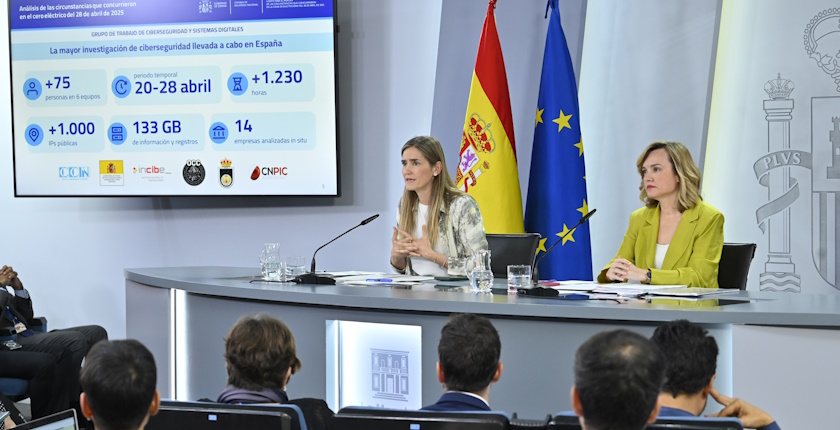
The Government of Spain said the total blackout in the Iberian Peninsula, which occurred on April 28, was caused by overvoltage, with several factors contributing to the crash. Notably, the system run by the country’s TSO Red Eléctrica de España lacked sufficient voltage control. Deputy Prime Minister Sara Aagesen even said the point of no return could have been avoided if voltage control action had been taken earlier.

In a long-awaited document, a government committee that investigated the April 28 collapse of the Iberian electricity network ruled out that a cyberattack caused it. The panel analyzed more than 300 gigabytes of data related to the total blackout, which was one of the worst ever in Europe.

“In 49 days, practically half the timeframe established by the EU, the committee has provided a rigorous and verified diagnosis that will allow us to strengthen the electricity system, a solid foundation on which we can work to design rapid responses to prevent this from happening again. Next week’s Council of Ministers will approve several relevant measures,” said Third Vice-President of the Government of Spain and Minister for Ecological Transition and Demographic Challenge Sara Aagesen.

The cybersecurity investigation, the largest ever undertaken in the country, did identify vulnerabilities that could expose networks or systems to future risks, she asserted.

The blame game is continuing as citizens and businesses are demanding accountability for the massive damage. The European Network of Transmission System Operators for Electricity (ENTSO-E) issued a preliminary report two weeks after the incident.

Overvoltage caused the blackout, according to the new analysis. The committee attributed it to multiple factors. The system had insufficient voltage control capacity, there were frequency oscillations, and power plants were disconnected, “in some cases in an apparently improper manner,” the document reads.

Renewables accounted for 82% of power generation mix just before blackout

The Iberian grid crashed at 12:33. Restoration began with energy from France and Morocco and with self-starting hydroelectric plants in the Duero basin and other locations, which formed energy islands. By 22:00, nearly 50% of demand in Spain was met, reaching 99.95% by 7:00 the next day.

At 12:30 on April 28, renewable energy sources accounted for 82% of the electricity generation mix, followed by nuclear power (10%). Gas plants had a 3% share, coal contributed 1%, while cogeneration and waste amounted to a combined 4%.

Data show a drop in solar generation as prices at the power exchange were going negative, and it coincided with a rise in voltages

There was significant voltage volatility in the transmission system in the morning on the day of the blackout, the document’s authors noted, pointing out that such a situation was also registered on April 22 and 24.

The rise in voltages between 10:30 and 11:10 coincided with a drop in solar generation, probably due to the power market signals, as wholesale prices went negative, the report adds. At the same time, the direction of the exchange with France switched from exports to imports.

Voltage control fleet failed to contain chain reaction

At 12:03, there was an atypical frequency oscillation, by 0.6 hertz, causing large voltage fluctuations for 4.42 minutes. Another one, of 0.2 hertz, occurred at 12:16, followed by an equivalent one at 12:19.

Red Eléctrica de España, the transmission system operator (TSO), conducted mitigation measures, which contributed to the rise in voltages, the committee underscored.

Aagesen said the point of no return could have been avoided if voltage control action had been taken earlier. The government controls 20% of the company, which is listed on the Bolsa de Madrid stock exchange.

At 12:32, voltage began to rise rapidly and steadily, and numerous progressive disconnections of generation facilities were recorded. The names of all power plants in the document are blacked out.

A number of units responsible for voltage control produced reactive power, the opposite of what they were supposed to

The chain reaction could not be contained, as each disconnection contributed to further voltage increases, the analysis showed. A drop in frequency resulted in the loss of synchronization with France, tripping the interconnection with the rest of the continent.

The committee stressed that the number of synchronous plants regulating voltage on the day of the incident was the lowest since the beginning of the year. One of the 10 units that Red Eléctrica scheduled the day before experienced an outage on the same afternoon, and the TSO didn’t replace it in time, the analysis reveals.

Moreover, several units in the group did not respond adequately to the TSO’s instructions to reduce the voltage. Some even produced reactive power, the opposite of what was required, contributing to the issue, the committee added.

Some power plants went offline too early

There were disconnections of the generating power plants that occurred before the voltage thresholds in the 400 kV system were exceeded (380 kV and 435 kV), the report finds.

Among the committee’s recommendations is to allow asynchronous installations to apply power electronics solutions to manage voltage fluctuations. The panel proposed boosting demand, flexibility, storage and interconnection capacities.

Photovoltaics with grid-forming inverters, storage can contribute to voltage control

Photovoltaics are already capable of controlling voltage, but regulations did not allow the application of the technology, according to the Spanish Photovoltaic Union (UNEF), Portuguese Renewable Energy Association (APREN), SolarPower Europe, Global Solar Council and Global Renewables Alliance.

In a joint statement that they issued as a reaction to the report, they called for accelerated investment in grid resilience and system flexibility – especially through grid-forming inverters and battery storage.

The associations recalled that Spain ranked 14th last year in Europe in new battery capacity. Less than 250 MWh came online and nearly all were smaller-scale batteries, not at a utility level. It compares to 9 GW of solar power capacity that the country added in 2024.

by in News

Europe has record battery storage capacity growth in 2024 but expansion slows

New battery storage installations last year in Europe came in at an all-time high 21.9 GWh in capacity, though the leap wasn’t as impressive as in the previous years. The total reached 61.1 GWh. “If Europe has already entered the solar age, the battery storage age is just beginning,” said Walburga Hemetsberger, CEO of SolarPower Europe, which issued the annual report.

Europe marked the eleventh consecutive year of record-breaking battery storage installations – in capacity terms, the addition was 21.9 GWh. According to SolarPower Europe’s update, the new capacity was 15% bigger than in 2023, after effectively doubling for several years in a row.

The battery fleet ended December at 61.1 GWh. The growth rate in 2024 was 56%, compared to the 94% registered one year before.

The region that was tracked consists of the European Union, United Kingdom and Switzerland. The EU alone closed 2024 with 18.5 GWh in newly installed battery storage capacity.

“If Europe has already entered the solar age, the battery storage age is just beginning. With solar energy mainstreaming across the continent, now is the time for European decision makers to put batteries at the centre of a flexible, electrified energy system,” the organization’s Chief Executive Officer Walburga Hemetsberger stated.

She urged the European Commission to double down on its efforts and adopt an action plan as part of a broader energy system flexibility package. “The recent electricity outage in the Iberian Peninsula is a stark reminder of why this is important,” Hemetsberger pointed out.

BESS projection puts EU likely below 2030 target

In the most likely scenario, 29.7 GWh of battery storage will be installed this year, translating to a 36% annual growth in new capacity and 49% in total. The report anticipates a sixfold increase to 118 GWh added in 2029. It would bring the entirety of battery energy storage systems (BESS) to 399 GWh, of which 334 GWh in the EU.

However, it is far below the levels required to meet flexibility needs in a renewables-driven energy system, the annual report’s authors warned. A study showed that the EU needs 780 GWh by 2030 to fully support the transition.

This year the share of the new front-of-meter BESS, in the utility scale segment, is seen at 55%, against last year’s 40%. The absolute level would nearly double. As for behind the meter, commercial and industrial (C&I) systems grow to 12% from 10% of the new fleet while residential installations decline from 50% to 33% in 2025.

Drop in power prices from crisis levels faded appeal of battery storage capacity

Residential battery deployment declined by 11% in 2024 after years of rapid growth. The report attributes it to the drop in electricity prices when the energy crisis subsided, the removal or reduction of subsidies in key markets and a parallel decline in the deployment of residential solar power units.

Home batteries account for 57% of the whole cumulative level.

New large-scale grid batteries surged 79% against 2023, marking a turning point for utility-scale storage.

Last year new C&I installations were 17% bigger, remain below their potential and holding at one tenth of the whole capacity for several years now, the document shows. Companies in the segment generally invest in battery storage to maximize self-consumption from on-site photovoltaics, avoid peak demand charges and reduce reliance on backup diesel generators.

Additionally, solar and storage allow businesses to meet corporate sustainability targets by reducing carbon footprint of operations. Lastly, the electrification of production processes, heating, and transport fleets is driving unique use cases and a need for storage.

Spain lags but seen rebounding, reaching top five in 2025

The top growers and their positions in the chart were the same as in 2023: Germany (6.2 GWh), Italy (6 GWh), the United Kingdom (2.9 GWh), Austria (1.1 GWh) and Sweden (1 GWh). Together they had a 78% share in both new and cumulative installations.

Germany added slightly less on an annual scale than in 2023 amid a drop in newly installed residential units. Italy’s home battery segment also decreased, but the large-scale segment’s capacity surge brought the market to new heights. The UK experienced a temporary slump due to project delays at the large-scale level.

Last year Spain added less than 250 MWh in battery storage capacity, making it the 14th-biggest market in Europe. Overall it reached 1.7 GWh, of which 90% were small-scale systems.

The country’s new battery installations were 41% lower than in 2023. The Spanish market has been declining since 2022, but it is expected to enter the top five this year, with 1.3 GWh, amid a utility-scale segment’s revival.

BESS market requires level playing field

SolarPower Europe said the authorities need to encourage the participation of hybrid projects of solar and BESS in renewable energy auctions.

“Contracts for difference must be settled based on energy production rather than energy injection. This will allow the asset operator to receive the CfD for the PV asset while generating additional market-based revenues from the BESS. These extra revenues will eventually lead to lower bids from developers and reduce the support costs for society,” the document reads.

The EU must ensure transmission system operators (TSOs) procure balancing services in market-based procedures in which batteries can compete on a level playing field, the organization added. Some EU markets still rely on bilateral contracts that limit fair competition and exclude smaller storage assets, it underscored.

by in News

Global solar power capacity hits 2.2 TW in 2024, with Turkey among top growers

The world added 597 GW of photovoltaic capacity last year, achieving an astounding 36% rate of growth, SolarPower Europe found. China accounted for 55.1% of all new installations. Turkey is in the global top ten with its 1.42% annual share, while Greece is sixth in the world in the category of solar capacity per person.

SolarPower Europe calculated a much higher global total, 2.2 TW, for photovoltaic facilities at the end of 2024, than the International Renewable Energy Agency (IRENA) – 1.87 TW. The Global Market Outlook for Solar Power 2025-2029 showed annual growth of 36%, by a record 597 GW. The increase itself was 33% higher than in 2023, the update reads.

Photovoltaics accounted for 81% of all new renewable electricity capacity added worldwide. While remaining a modest contributor to overall electricity generation for now, its share reached 6.9%, nearly doubling in just three years. It took nearly 70 years to reach the first terawatt, but only two to more than double it.

Total global capacity is projected at 7.1 TW by 2030

Other renewables accounted for 25% of electricity output in 2024.

In its “most realistic,” moderate scenario, the report’s authors anticipate a 10% increase in new installations to 655 GW this year. Annual growth rates remain in the low double digits through 2029, reaching 930 GW. Total capacity is projected at 7.1 TW by 2030, compared to the 11 TW renewable energy target from the United Nations Climate Change Conference COP28.

China hosted 44% of global solar fleet at end-2024

A key issue is the uneven distribution of solar market growth, SolarPower Europe pointed out. China grew by 329 GW, which is 30% more than in 2023 and more than the combined total of the other top 10 markets! Of note, IRENA measured just 278 GW.

China’s increase was 55.1% of the global total last year. It hit 985 GW overall, the report reads. It is 44% of the global photovoltaics fleet, after 40% in 2023 and 34% in 2022. In IRENA’s statistics, China topped 50% of all solar power installations in the world.

Turkey spikes 76% to 19.7 GW

Turkey, the largest country in the region that Balkan Green Energy News covers, delivered 8.5 GW, catapulting its capacity by 76% to complete 2024 at 19.7 GW.

Its addition made up 1.42% of the world’s annual increase, earning it the seventh position. Turkey’s absolute increase was five times higher than in 2023. Rooftop photovoltaics attributed a stunning 90%.

There are nearly 70 companies in the country actively engaged in PV module manufacturing, with a total capacity exceeding 40 GW. Several investments in solar cell production increased the segment to 2 GW altogether in annual terms.

The number of countries with expansion greater than 1 GW per year is 35, after 31 in 2023. The group, which includes Greece, Romania and Bulgaria, is seen getting ten more members in 2025.

EU within reach of 2030 target

At the end of last year, Europe had a total installed capacity of 407 GW, which is 25.2% more than in 2023. The European Union accounted for 338 GW, growing 23.9%.

The medium scenario suggests the EU would climb to 797 GW altogether by 2030, exceeding the REPowerEU target of 750 GW. But it is 11% lower than in last year’s outlook.

In 2024, solar power generation in the European Union surpassed coal for the first time. Its share in the electricity mix exceeded 10% and reached 20% or more in markets such as Cyprus, Greece, Hungary and Spain. The last two even touched 25%.

Germany is Europe’s largest solar market for 13 years in a row. Overall capacity surged 21% to 101 GW.

Romania is advancing in 2025 by an estimated 67% to 2.9 GW. The government provided strong backing for the rally, advancing large-scale solar projects.

Greece is sixth in world in watts per capita

The report reveals that Germany became the third country hosting more than 1 kW of solar power per capita. It spiked 20.5% to 1,187 W.

The first is Australia, which leaped 10.9% to 1,521 W per person. The Netherlands advanced 13.4% to 1,491 W.

All other countries in the top 10 chart are in Europe. Greece is in the global vanguard, in the sixth place, after spiking 40.3% to 964 W for every inhabitant.

  • 1
  • 2